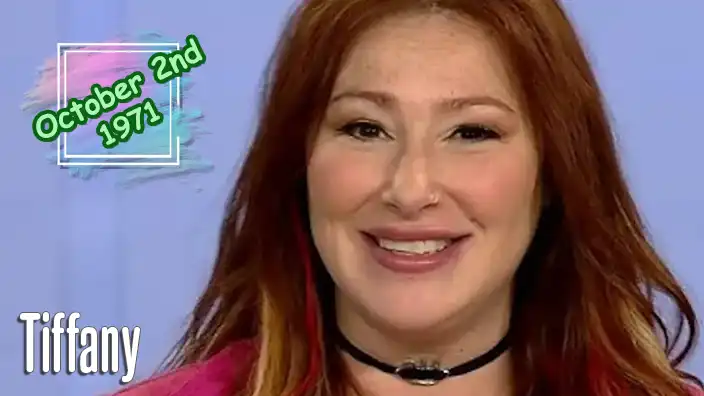
- Details
- Category: Celebrity Birthdays - October
Tiffany became a pop superstar by performing in shopping malls, which must have confused anyone who had only stopped by for socks. With “I Think We’re Alone Now,” two No. 1 singles and one of the most unmistakably 1980s success stories imaginable, she proved that the food court wasn’t necessarily the most exciting thing happening at the mall.
 October 2, 1971, in Norwalk, California

Trivia
- She began performing professionally while still a child.
- Her famous 1987 promotional campaign toured American shopping malls.
- “I Think We’re Alone Now” reached No. 1 on the Billboard Hot 100.
- “Could’ve Been” also reached No. 1.
- Her debut album topped the Billboard 200.
- “I Saw Him Standing There” was adapted from a Beatles classic.
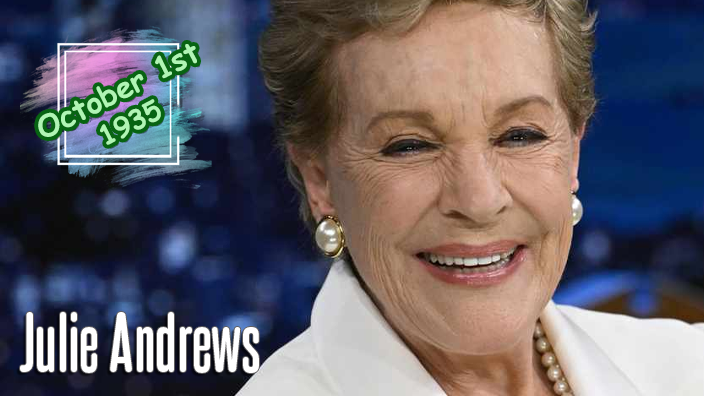
- Details
- Category: Celebrity Birthdays - October
Julie Andrews made raindrops on roses, spoonfuls of sugar and singing on Austrian mountaintops look perfectly normal, then spent the next several decades proving she was far more than Mary Poppins and Maria von Trapp. Few performers could make "Supercalifragilisticexpialidocious" sound dignified. Andrews somehow made it practically royal.
October 1, 1935, in Walton-on-Thames, England
Trivia
- Performed professionally onstage as a child.
- Originated Eliza Doolittle in Broadway's My Fair Lady.
- Mary Poppins was her feature-film debut.
- Won the Best Actress Oscar for Mary Poppins.
- Played Maria in The Sound of Music.
- Was appointed a Dame Commander in 2000.
- Voices Lady Whistledown in Bridgerton.
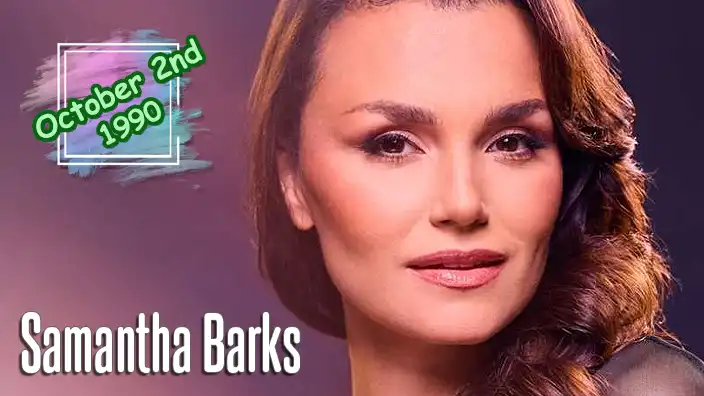
- Details
- Category: Celebrity Birthdays - October
Samantha Barks didn’t win I’d Do Anything, which turned out to be a remarkably minor inconvenience. She simply went on to conquer the West End, play Éponine in the movie Les Misérables, lead a Broadway musical and become Elsa in Frozen. Apparently, finishing third was less a defeat than a scheduling adjustment.
October 2, 1990, on the Isle of Man
Trivia
- Her early stage roles included Sally Bowles in Cabaret.
- She played Éponine in London’s Les Misérables.
- Barks performed at the musical’s 25th-anniversary concert.
- She reprised Éponine in the 2012 movie.
- Barks originated Vivian Ward in Pretty Woman on Broadway.
- She originated Elsa in the West End production of Frozen.
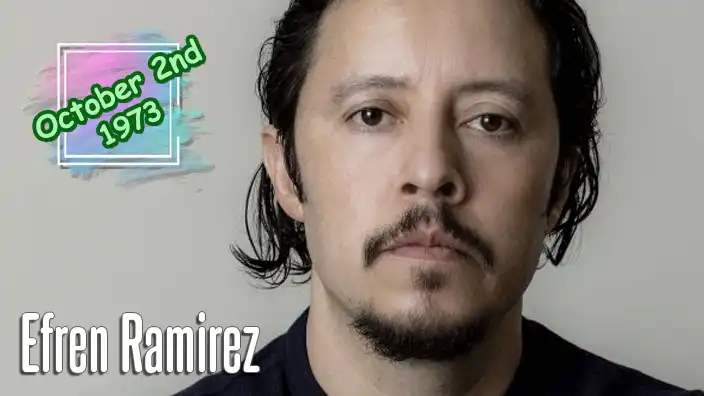
- Details
- Category: Celebrity Birthdays - October
Efren Ramirez became a cult-comedy legend by playing Pedro Sánchez, a man who ran for class president with few speeches, excellent hair decisions and Napoleon Dynamite handling the entertainment. “Vote for Pedro” did the rest, giving Ramirez the rare distinction of winning a fictional election and acquiring campaign merchandise that refuses to concede.
 October 2, 1973, in Los Angeles, California
Trivia
- He has an identical twin brother, Carlos.
- His twin occasionally doubled for him in Napoleon Dynamite.
- “Vote for Pedro” became a major pop-culture slogan.
- Ramirez played Kaylo in the Crank films.
- He voiced Pedro in the animated Napoleon Dynamite series.
- Ramirez is also a professional DJ.
- He performs as a DJ under the name DJ Efra.
- Details
- Category: Celebrity Birthdays - October
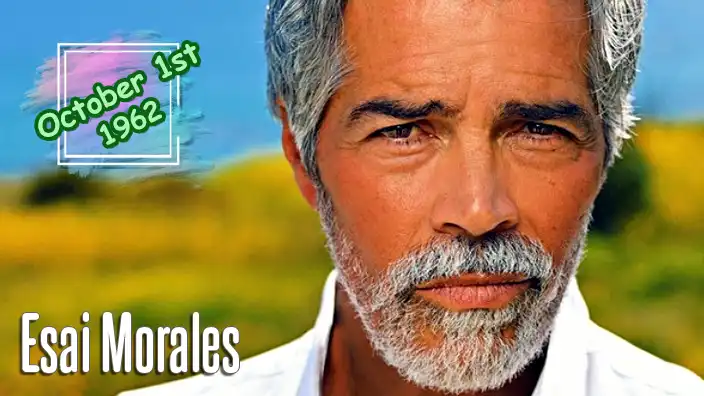
Esai Morales has spent decades playing cops, criminals, presidents, fathers, revolutionaries and assorted men you probably shouldn't annoy. Then Mission: Impossible made him Gabriel and gave him the enviable job of staring calmly at Tom Cruise while Tom did all the running.
October 1, 1962, in Brooklyn, New York
Trivia
- Graduated from New York's High School for the Performing Arts.
- Made his film debut in 1983's Bad Boys.
- Originally auditioned to play Ritchie Valens in La Bamba.
- Played Lt. Tony Rodriguez in 66 episodes of NYPD Blue.
- Co-founded the National Hispanic Foundation for the Arts.
- Played DC villain Deathstroke in Titans.
- Details
- Category: Celebrity Birthdays - October
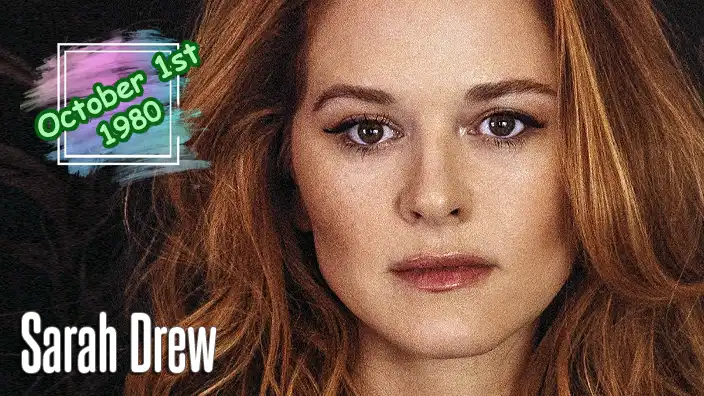
Sarah Drew spent years playing Dr. April Kepner on Grey's Anatomy, where she dealt with romance, trauma, surgery and the general occupational hazard of working at television's most catastrophically unlucky hospital. Remarkably, she kept coming back—which may be the clearest evidence that April was tougher than she looked.
October 1, 1980, in Stony Brook, New York
Trivia
- Studied drama at the University of Virginia.
- Voiced Stacy Rowe in MTV's Daria.
- Played Hannah Rogers on Everwood.
- Appeared as Kitty Romano on Mad Men.
- Joined Grey's Anatomy as April Kepner in 2009.
- Details
- Category: Celebrity Birthdays - October
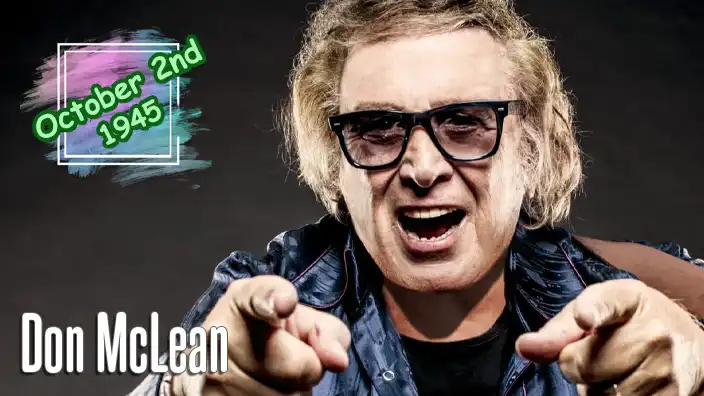
Don McLean wrote one of the most famous songs in American music, turned Vincent van Gogh into a hit record, and somehow persuaded radio stations to play a song lasting more than eight minutes. Best known for “American Pie,” he has spent decades proving that a guitar, a good story and absolutely no concern for the usual three-minute limit can take a songwriter a very long way.
October 2, 1945, in New Rochelle, New York
Trivia
- “American Pie” spent four weeks at No. 1 in the United States.
- McLean wrote “Vincent” in tribute to Vincent van Gogh.
- Perry Como had a major hit with McLean’s “And I Love You So.”
- “American Pie” entered the Grammy Hall of Fame in 2002.
- McLean entered the Songwriters Hall of Fame in 2004.
- “American Pie” joined the National Recording Registry in 2016.
- His “American Pie” manuscript sold for more than $1.2 million.
- Details
- Category: Celebrity Birthdays - October
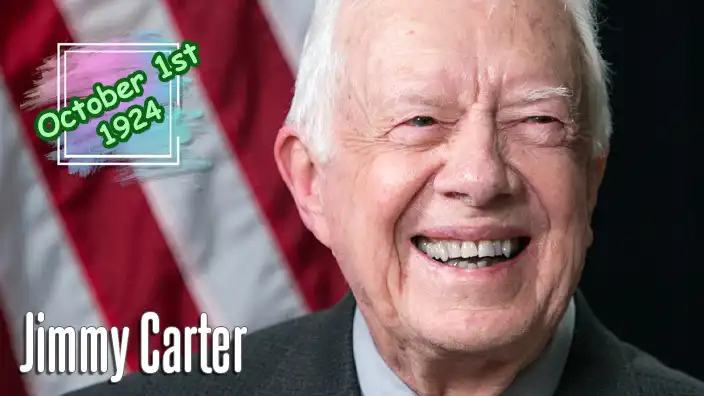
Jimmy Carter went from a Georgia peanut farm to nuclear submarines, the governor’s mansion, the White House and eventually a Nobel Peace Prize. Somewhere along the way, he also found time to build houses, write books, teach Sunday school and make the humble peanut one of the most politically recognizable legumes in history.
October 1, 1924, in Plains, Georgia
 December 29, 2024, in Plains, Georgia,
Trivia
- Graduated from the U.S. Naval Academy in 1946.
- Served as a U.S. Navy submariner.
- Trained for the Navy's nuclear submarine program.
- Became Georgia's governor before becoming president.
- Helped broker the 1978 Camp David Accords.
- Received the 2002 Nobel Peace Prize.
- Details
- Category: Celebrity Birthdays - October
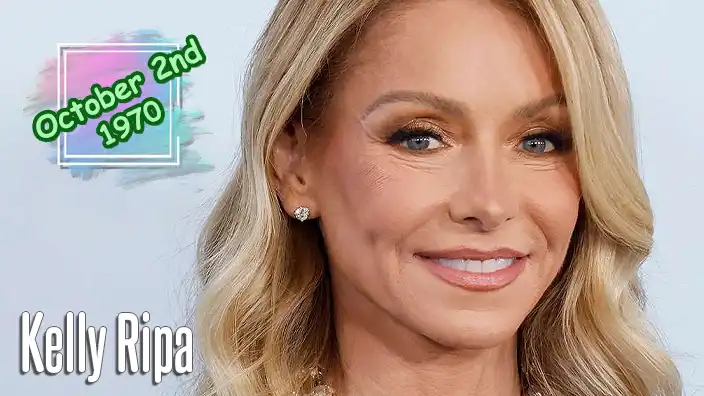
Kelly Ripa started on a soap opera, moved into live television and eventually brought her husband to work every morning, apparently deciding that seeing him at home simply wasn’t enough. Quick-witted, energetic and remarkably comfortable when absolutely anything can happen on camera, she has become one of the most familiar faces in American daytime television.
October 2, 1970, in Stratford, New Jersey
Trivia
- Her breakthrough role was Hayley Vaughan on All My Children.
- She met Mark Consuelos on the soap’s set.
- Ripa joined Live permanently in 2001.
- She starred in three seasons of Hope & Faith.
- She hosted Saturday Night Live in 2003.
- Her Hollywood Walk of Fame star was awarded in 2015.
- Ripa became a Disney Legend in 2024.
- Details
- Category: Celebrity Birthdays - October
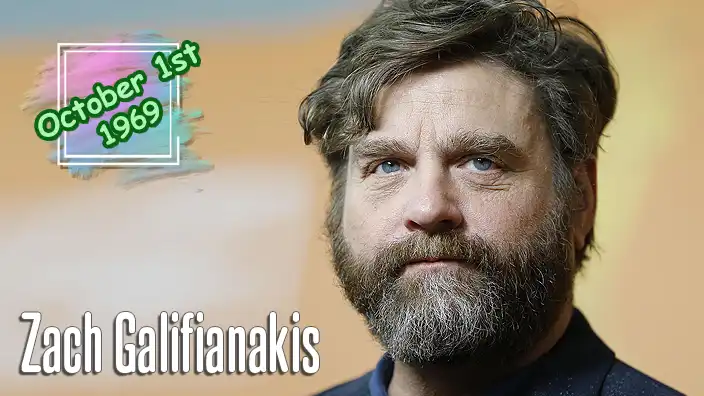
Zach Galifianakis turned an unruly beard, magnificent awkwardness and the ability to insult celebrities beside two potted ferns into an impressive Hollywood career. Then The Hangover put him in a wolf pack, handed him a man-purse and ensured that nobody would ever look at a rooftop quite the same way again.
October 1, 1969, in Wilkesboro, North Carolina
Trivia
- Attended North Carolina State University.
- Played Alan Garner in The Hangover trilogy.
- Won an MTV Movie Award for his first Hangover film.
- Created and hosts Between Two Ferns.
- Interviewed President Barack Obama between the ferns.
- Voiced the Joker in The Lego Batman Movie.
- Played twin brothers Chip and Dale in Baskets.
- Details
- Category: Celebrity Birthdays - October
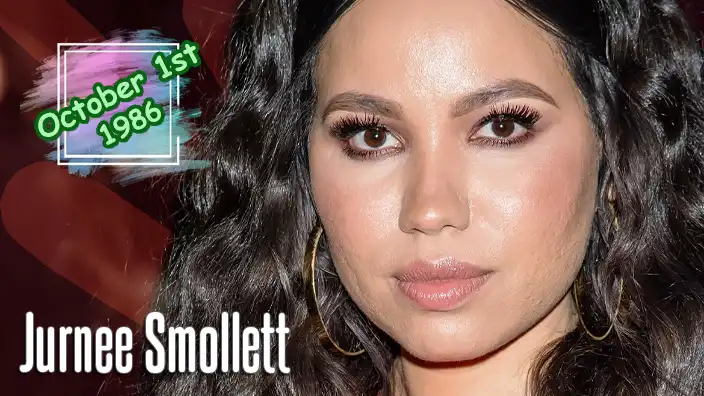
Jurnee Smollett started acting as a child, survived Full House, grew up to battle monsters in Lovecraft Country and eventually became Black Canary in the DC universe. That is quite a career progression, although fighting supernatural creatures may actually have been easier than getting six television siblings organized.
October 1, 1986, in New York City
Trivia
- Began acting professionally as a young child.
- Played Denise Frazer on Full House.
- Starred in the acclaimed 1997 film Eve's Bayou.
- Played Jess Merriweather on Friday Night Lights.
- Portrayed Black Canary in Birds of Prey.
- Earned an Emmy nomination for Lovecraft Country.
- Details
- Category: Celebrity Birthdays - October
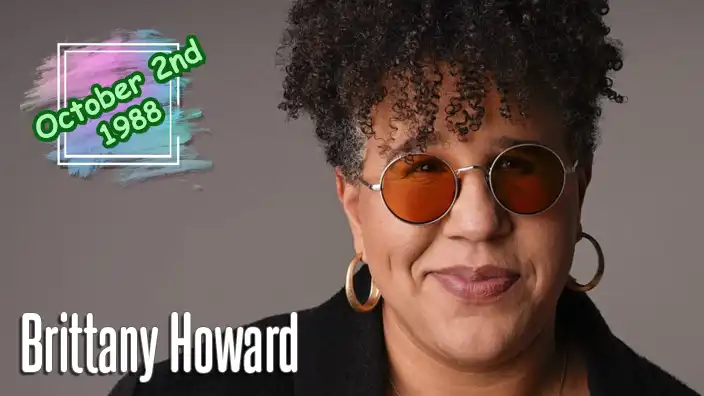
Brittany Howard went from delivering mail in Alabama to delivering vocals powerful enough to make the windows nervous. As the unmistakable voice of Alabama Shakes and a Grammy-winning solo artist, she has mixed rock, soul, blues and just about anything else within reach, while apparently never discovering the volume setting marked “ordinary.”
October 2, 1988, in Athens, Alabama
Trivia
- She worked for the U.S. Postal Service before fame arrived.
- Alabama Shakes formed in Athens around 2009.
- “Hold On” helped launch the band nationally.
- Sound & Color reached No. 1 on the Billboard 200.
- Howard named Jaime in honor of her late sister.
- “Stay High” won the Grammy for Best Rock Song.
- Alabama Shakes returned with a new album in 2026.
- Details
- Category: Celebrity Birthdays - October
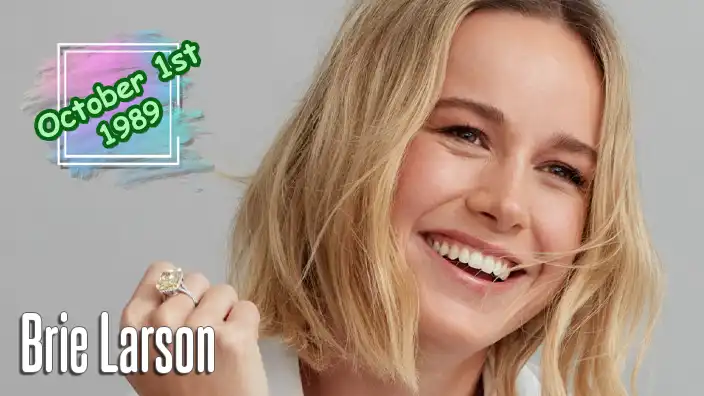
Brie Larson traveled from child acting and a teenage pop career to an Academy Award and command of some fairly serious cosmic firepower as Captain Marvel. It has been an unusual route to Hollywood stardom, but once you're capable of punching a spaceship out of the sky, nobody argues much about your résumé.
October 1, 1989, in Sacramento, California
Trivia
- Began acting professionally as a child.
- Released the album Finally Out of P.E. in 2005.
- Played Envy Adams in Scott Pilgrim vs. the World.
- Won the Best Actress Oscar for Room.
- Made her feature directing debut with Unicorn Store.
- Joined the MCU as Carol Danvers, Captain Marvel.
- Details
- Category: Celebrity Birthdays - October
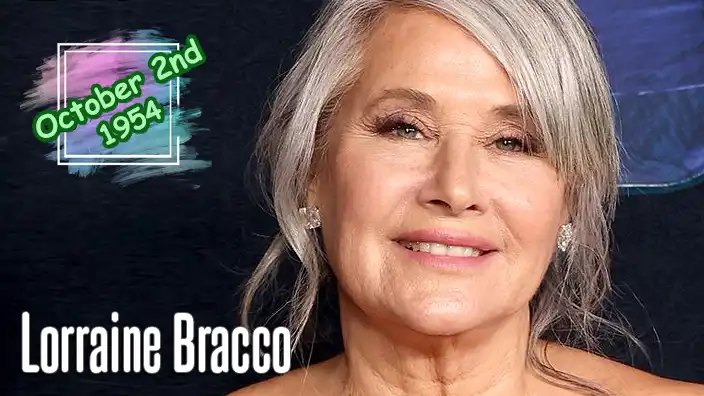
Lorraine Bracco survived Goodfellas, spent years listening to Tony Soprano’s problems and then raised a detective on Rizzoli & Isles, so ordinary family drama probably holds very few terrors. With an Oscar-nominated film performance and one of television’s most memorable psychiatrists to her credit, Bracco has made quite a career from keeping remarkably dangerous company.
October 2, 1954, in Brooklyn, New York
Trivia
- She worked as a model in Paris before becoming an actress.
- Bracco speaks French fluently.
- Goodfellas earned her an Academy Award nomination.
- She chose Dr. Melfi over the role of Carmela Soprano.
- Bracco appeared throughout all six seasons of The Sopranos.
- She played Angela Rizzoli on Rizzoli & Isles.
From Our Marks Catelog
-

Open That Bottle Night is the one evening of the year when your wine rack stops being a museum and...
-

When rhubarb met strawberries, it was less “love at first sight” and more “tolerated each other until...
-

Windows let in sunshine, fresh air, and occasionally, a nosy neighbor’s unsolicited opinions—but...
-

Amagwinya, or as I like to call it, "South Africa's secret weapon," is the ultimate test of...
-

Imagine you’re calmly sitting on your porch, sipping iced tea, when you notice a towering wall of...
-

Flying turns even the most grown-up adults into wide-eyed kids at a magic show? There you are,...


