Mark The Days - June

June doesn’t knock—it kicks the door open wearing sunglasses and dragging a cooler. School’s out, the days are long, and the air smells like SPF 50 and slightly burnt hot dogs. It’s when the grill gets promoted to full-time chef and the phrase “just one more s’more” starts ruining dinner plans. June’s holidays range from honoring dads to celebrating donuts, and frankly, both deserve equal praise. It’s the sweet spot between spring’s fussiness and summer’s chaos—sunny, breezy, and just a little too confident. Basically, June knows it's popular... and we let it be.

- Details
Firm, salty, and often found swimming in martinis like they own the place, this little guy has attitude in every briny bite. It’s the only fruit that shows up to a party already dressed in a tuxedo (black variety) or a sharp green suit, occasionally stuffed with things like garlic, pimento, or blue cheese—as if to say, “Yes, I’m fabulous, and I brought snacks.” You can’t spread it on toast like an avocado, but you can pop it in your mouth and immediately feel like you’ve been invited to a yacht club.
Celebrated: Annually, on June 1st
Celebrate National Olive Day on June 1st! Explore the rich history, fun facts, and cultural significance of olives, a versatile fruit cherished since ancient times.


- Details
The chocolate macaroon is what happens when coconut decides it’s tired of being tropical and wants to be dark and mysterious. It’s the cookie equivalent of that friend who shows up to brunch in sunglasses and all black, even in July—edgy, indulgent, and just a little bit dramatic. It doesn’t just satisfy your sweet tooth; it seduces it, winks at your diet, and then goes back for seconds. One bite and you’re not just eating a cookie—you’re making questionable life choices in the best possible way.
Celebrated: Annually, on June 3rd
Celebrate National Chocolate Macaroon Day with a humorous dive into the sweet conspiracy of macaroons, from coconut classics to chocolatey delights.

- Details
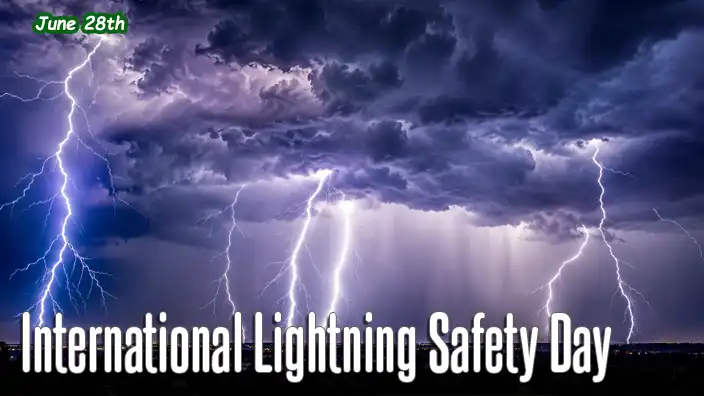
Thunderstorms have a way of reminding us who's really in charge of the weather. One minute you're enjoying a sunny afternoon, and the next you're counting the seconds between lightning and thunder while wondering if that picnic was perhaps a touch too ambitious. International Lightning Safety Day isn't about spoiling outdoor fun—it's about making sure the only shocking thing you experience is the weather forecast. A little common sense today can help ensure tomorrow's adventures don't include an unexpected encounter with millions of volts.
Celebrated: Annually, on June 28th
Celebrate International Lightning Safety Day by learning fascinating lightning facts, essential thunderstorm safety tips, and how to stay safe when storms strike


- Details
Fishing is the only sport where you can sit in a folding chair, stare at the water for three hours, eat half a cooler’s worth of snacks, and still claim you “had a great day.” It’s also the only hobby where the main skill is patience, yet everyone insists on giving advice. You’ll hear things like, “You’ve got to jig the line just right,” or “They’re biting on the north side of the lake today,” as if the fish held a staff meeting and posted the agenda. And of course, no matter how big the fish actually was, by the time the story reaches the kitchen table, it has grown to the size of a small submarine and fought like it had a personal grudge.
Celebrated: Annually, on June 18th
Celebrate National Go Fishing Day with a fun look at fishing’s history, traditions, and humor, plus easy ways to enjoy a relaxing day by the water.


- Details
There’s always that one guest at the party who shows up uninvited, makes a loud entrance, knocks over the lamp, and then spends the rest of the evening bouncing off the walls—literally. Add wings and a deep, inexplicable love for porch lights, and you’ve got summer’s most chaotic plus-one. They don’t mean to be disruptive; they’re just living fast, flying crooked, and making sure no peaceful evening goes unbugged.
Celebrated: Annually, on June 7th
Celebrate June Bug Day on June 7th, honouring the hilariously clumsy June bug. Discover their life, fascination with light, and their role in nature's cycle.


- Details
Rocky Road ice cream is what happens when chocolate decides it’s tired of playing it cool and invites marshmallows and nuts to throw a house party in your mouth. It’s the dessert equivalent of a surprise road trip with your weirdest (but most lovable) friends—messy, unpredictable, and full of questionable decisions you’ll absolutely make again. One bite and you’re not just eating ice cream—you’re committing to a flavor adventure with no seatbelts and extra fudge.
Celebrated: Annually, on June 2nd
Join the celebration of National Rocky Road Day. Explore the history, variations, and fun ways to enjoy this decadent dessert that blends chocolate, nuts, and marshmallows.


- Details
Of all the holidays on the calendar, Juneteenth might be the most powerful reminder that freedom doesn’t always arrive on schedule—but when it does, it changes everything. June 19th marks the day when the news finally caught up with the truth, when liberation long promised was at last spoken out loud in Texas. Juneteenth is part celebration, part reckoning, and part history lesson that still has a lot to teach us. It’s a day to honor resilience, acknowledge hard truths, and recognize that progress—while sometimes painfully late—has a way of ringing louder once it finally arrives.
Celebrated: Annually, on June 19th
Discover the history and significance of Juneteenth, a celebration of freedom for African Americans, marked annually on June 19th, and its evolution into a national holiday.


- Details
Forget glow-in-the-dark snack cakes and cheese that comes in a spray can—there’s something wildly comforting about food that doesn’t require a laboratory warning label. It crunches when it should, spoils when neglected, and never pretends to be “meat-flavored” anything. Real food doesn’t need neon packaging or a cartoon mascot. It just sits there, looking delicious, saying, “Hey, remember me? I’m what your ancestors ate without Googling.”
Celebrated: Annually, on June 19th
Celebrate Real Food Day on June 19 by embracing natural, minimally processed foods. Discover the benefits of eating real food and how to enjoy it.


- Details
Choosing to stay off drugs is one of the most powerful decisions you can make for your future. Drugs promise a fleeting escape but deliver lasting damage to your health, relationships, and dreams. By saying no to drugs, you’re saying yes to a clear mind, a healthy body, and the freedom to chase your goals unencumbered. Remember, your life is too valuable to waste on a temporary high. Stay strong, stay clean, and stay in control.
Celebrated: Annually, on June 26th
Explore the complexities of the global drug problem, including its effects on health, youth, and the environment, and learn how to contribute to solutions.


- Details
Russia Day is like Mother Russia’s birthday party—if your mother were 6.6 million square miles wide, spoke in poetic metaphors, and served vodka instead of cake. It’s a day when history buffs, patriots, and folks just looking for an excuse to dance in public all unite under the tricolor flag. There are parades, fireworks, traditional songs, and enough food to feed a small czardom. It’s equal parts pride, pageantry, and potato-based delicacies—with a side of “Did someone just break into a kazachok dance, or are they dodging mosquitoes?”
Celebrated: Annually, on June 12th
Discover the vibrant celebrations of Russia Day, featuring parades, concerts, and fireworks. Discover Russian traditions like pelmeni, borscht, and vodka toasts.

- Details
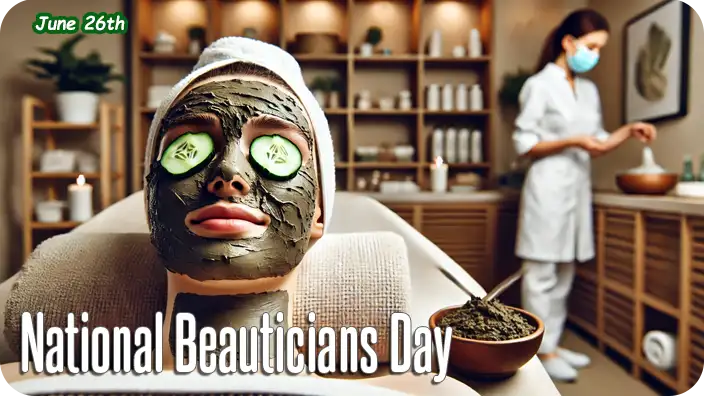
Beauticians are the warriors of transformation, wielding scissors and makeup brushes like magic wands. They have the uncanny ability to turn bedhead disasters into red carpet-ready looks and transform tired faces into glowing masterpieces. For those who wish to be beautified, a trip to the salon is like a mini vacation—without the sand in awkward places. They come in seeking a makeover and leave feeling like a million bucks, ready to face the world with their fabulous new 'do and a face that says, "I woke up like this...with a little help from my beautician."
Celebrated: Annually, on June 26th
Show appreciation for beauticians this National Beauticians Day by booking an appointment, leaving a generous tip, or writing a heartfelt thank-you note.


- Details
On June 8, 1967, the USS Liberty—a lightly armed American intelligence ship—was attacked in international waters, leaving 34 U.S. sailors dead and 171 wounded. What was supposed to be a routine mission became one of the most controversial and heartbreaking incidents in U.S. naval history. For the crew who lived through it, and the families of those who didn’t, the scars remain deep. USS Liberty Remembrance Day honors their courage, their sacrifice, and the quiet dignity with which they bore the burden of being nearly forgotten. This day isn’t about politics—it’s about people who served their country and deserve to be remembered.
Celebrated: Annually, on June 8th
USS Liberty Remembrance Day on June 8th honors the lives lost in the 1967 attack and reflects on the quest for truth and justice surrounding this historical event.


- Details
June 14th marks the birthday of the United States Army—America’s oldest military branch and, somehow, still very proud of walking everywhere. Founded in 1775, the Army has spent centuries mastering the fine arts of discipline, determination, and camouflage that works almost everywhere except the one place Navy people prefer: the ocean. As a sailor being strongly encouraged to write this, I’ll say this much—while we Navy folks enjoy steel decks, sea breezes, and gravity doing half the work, the Army has been carrying the heavy load, literally, since before ships had proper bathrooms. Rivalry aside, this is a day to salute the soldiers who show up early, stay late, and prove—time and again—that freedom isn’t free… and neither are dry socks.
Celebrated: Annually, on June 14th
Celebrate the U.S. Army's birthday with a look at its storied history and dedication. Discover fun facts and more.


- Details
If sand had a personality, it would be that one friend who refuses to sit still—always shifting, always drifting, and somehow ending up everywhere you don’t want it. World Sand Dune Day is our chance to tip our hats to these wind-built wonders that look peaceful from a distance but turn into a full-blown workout the moment you try to climb one. They may not make life easy on your calves, but they quietly protect coastlines, shelter wildlife, and prove that even a pile of sand can hold its ground better than most of us after a long day.
Celebrated: Annually, on the Last Saturday in June
Grab a Camel and come with us for Sand Dune Day. We'll learn how dunes protect coastlines, support wildlife, and shape stunning landscapes around the world


- Details
Imagine the entire world trying to cook dinner at once—7 billion people juggling raw chicken, questionable leftovers, and that one cousin who thinks expiration dates are a conspiracy. Food safety on a global scale is like trying to coordinate a potluck where no one brings salmonella. From street vendors in Bangkok to five-star kitchens in Paris, it’s a delicate dance of handwashing, refrigeration, and please don’t defrost that fish on the dashboard again, Uncle Gary. It’s proof that food safety isn’t just local—it’s international teamwork with fewer trust falls and more thermometers.
Celebrated: Annually, on June 7th
Celebrate World Food Safety Day on June 7th and learn how to keep your meals safe and delicious. Join the global effort to prevent foodborne illnesses with essential safety tips.


- Details
Log cabins may look like cozy hideaways today, but back in the day, they were the ultimate test of human ingenuity and sheer willpower. Picture it: you’re knee-deep in mud, wielding an axe twice your size, trying to notch logs just right to make walls that—fingers crossed—won’t collapse. And all this without a hardware store in sight! Early settlers basically invented DIY, but instead of relaxing in their finished cabin, they were stuffing mud between the logs to keep out drafts, bears, and the occasional nosy raccoon. Yet somehow, this humble log stack has gone from “roughing it” to the epitome of rustic luxury. Today, it’s all roaring fireplaces, cozy throws, and sipping coffee while pretending to be one with nature (from the comfort of your hot tub, of course).
Celebrated: Annually, on the Last Sunday in June
Celebrate Log Cabin Day by exploring the history, craftsmanship, and cultural significance of these iconic American structures. Discover ways to embrace your inner pioneer.


- Details
It sneaks in like it’s here to help—“Oh don’t worry, I’m made with applesauce!”—as if that makes it a responsible choice. One bite in and suddenly you're three slices deep, reevaluating your life choices and pretending fruit-based desserts count as cardio. It’s dense enough to feel like a hug but spiced just enough to keep things interesting, like the dessert version of that one aunt who bakes, knits, and could definitely win a fistfight if provoked.
Celebrated: Annually, on June 6th
Celebrate National Applesauce Cake Day on June 6th with a moist, spiced cake that has warmed hearts for generations. Discover its history and fun ways to enjoy it!


- Details
Moonshine is the drink that says, “I may not be legal, but I sure am enthusiastic.” It’s the only liquor that comes with a backstory, a family legend, and a mild risk of spontaneous combustion. One sip and you’ll understand why it was traditionally served in small quantities—any more and you’re either dancing a jig or seeing through time. Whether it’s clear as glass or flavored like your grandma’s pie, moonshine doesn’t just warm you up—it gives you a temporary superpower called storytelling.
Celebrated: Annually, on June 27th
Join the fun on National Moonshine Day, celebrating the outlawed origins, pop culture influence, and modern legal twist of America's iconic homemade spirit.

From Our Marks Catelog
-

Peace for one hour? That’s like baking a cake and only eating the crumbs! If we can manage to...
-

There was a time when wearing pink to school might earn you a raised eyebrow, a snicker, or a...
-
Picture this: you're rummaging through a drawer, looking for a pen, but instead, you find a flip...
-

There’s nothing light about Good Friday—after all, it commemorates the darkest day in Christian...
-

Mental health is not just a personal matter—it's a global issue that affects millions of lives...
-

Having a hole in your bucket is nature’s way of saying, “You tried.” It’s the DIY version of a practical...

