October 3, 1962, in Athens, Greece
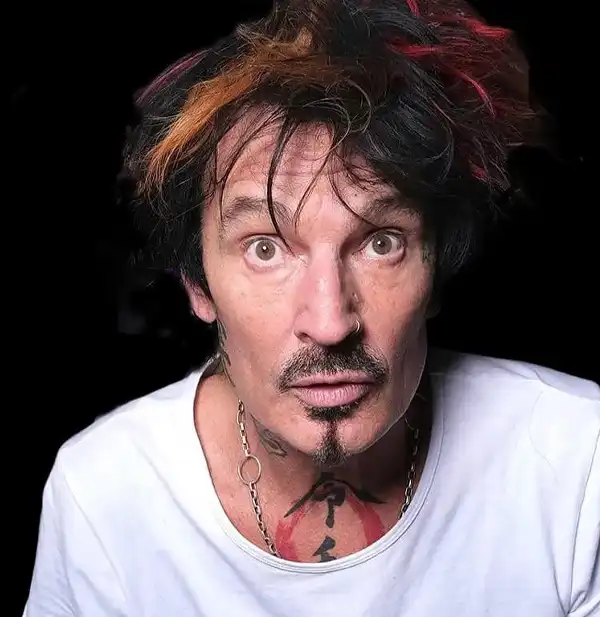
Thomas Lee Bass was born on October 3, 1962, in Athens, Greece. Better known as Tommy Lee, he became famous as the drummer and a founding member of Mötley Crüe, one of the defining hard rock and heavy metal bands to emerge from Los Angeles during the 1980s. Known for his powerful drumming, spectacular concert performances and considerable appetite for excess, Lee helped provide the rhythmic engine behind songs including "Dr. Feelgood," "Girls, Girls, Girls," "Kickstart My Heart" and "Wild Side."
Lee's connection to Greece came through his mother, Vassiliki "Voula" Papadimitriou, who was Greek and had competed in beauty pageants, while his American father, David Lee Thomas Bass, served in the United States Army. The family moved from Greece to California while Tommy was still very young, and he grew up largely in Southern California alongside his younger sister, Athena, who would also become a drummer.
Music attracted Lee early. He received his first drumsticks as a child and later acquired a drum kit, becoming increasingly serious about percussion during his school years. Among his musical influences were major hard rock acts of the 1970s, including Led Zeppelin, Deep Purple, Judas Priest and Kiss. John Bonham's enormous sound with Led Zeppelin proved particularly influential on generations of rock drummers, and Lee was among those who paid attention.
Before Mötley Crüe, Lee played in Los Angeles-area bands including Suite 19. The Southern California music scene was developing rapidly, with musicians moving between groups while searching for the combination that might break through. During this period Lee met bassist Nikki Sixx, who was looking to create a new band after leaving London, the group in which Sixx had been playing.
Lee and Sixx began working together in 1981 and recruited guitarist Mick Mars after responding to an advertisement he had placed seeking musicians. Singer Vince Neil, whom Lee knew from school and the local music scene, completed the original lineup. Mötley Crüe was born, complete with an umlaut that ensured generations of typists would have to learn how to produce "ö" on a keyboard.
The band quickly became part of the thriving Sunset Strip club scene in Los Angeles. Their combination of heavy music, theatrical appearance and outrageous behavior distinguished them even within a scene not exactly suffering from excessive restraint. Mötley Crüe initially released its debut album, Too Fast for Love, independently through the band's own Leathür Records label in 1981. Elektra Records subsequently signed the group and rereleased a remixed version of the album.
Too Fast for Love established many elements that would define Mötley Crüe: aggressive guitars, melodic hooks, Lee's energetic drumming and a visual style influenced by glam rock, punk and heavy metal. The band's second album, Shout at the Devil, released in 1983, dramatically expanded its audience. Songs including the title track and "Looks That Kill" helped make Mötley Crüe a major force in the emerging Los Angeles metal scene.
Lee's drumming became an increasingly important part of the band's identity. He combined hard-hitting rock percussion with a flamboyant performance style perfectly suited to Mötley Crüe's concerts. Where some drummers were partially hidden behind their kits, Lee treated the drum riser as another piece of theatrical equipment waiting to be exploited.
Mötley Crüe's success continued with Theatre of Pain in 1985. The album included the band's cover of Brownsville Station's "Smokin' in the Boys Room" and the power ballad "Home Sweet Home." The latter demonstrated that a band famous for leather, motorcycles and general mayhem could also produce a lighter-waving ballad, an extremely useful discovery during the 1980s.
The band's reputation for excess grew alongside its record sales. Mötley Crüe became almost as famous for its offstage lifestyle as for its music, with stories involving alcohol, drugs, destroyed hotel rooms and various forms of behavior unlikely to appear in a tourism brochure. Lee's larger-than-life personality made him one of the band's most recognizable members, while the group's experiences would later provide substantial material for autobiographies, documentaries and dramatizations.
Girls, Girls, Girls arrived in 1987, featuring the title track and "Wild Side." The album reinforced Mötley Crüe's status as one of the decade's leading hard rock bands. Their concerts became increasingly elaborate, and Lee began developing drum performances that transformed a conventional solo into something resembling an amusement-park ride with cymbals.
One of his most famous stage devices was a rotating drum kit that could lift Lee into the air and turn him upside down while he continued playing. Later tours featured increasingly elaborate variations, including drum rigs traveling over the audience. Rock drummers had spent decades attempting to attract attention from lead singers and guitarists; Lee approached the problem with engineering.
The band's greatest commercial album success came with Dr. Feelgood in 1989. Produced by Bob Rock, the record presented a tighter and more polished Mötley Crüe and reached number one on the Billboard 200. It included "Dr. Feelgood," "Kickstart My Heart," "Without You," "Same Ol' Situation (S.O.S.)" and "Don't Go Away Mad (Just Go Away)."
"Kickstart My Heart," written by Nikki Sixx, became one of the band's signature songs, driven in part by Lee's relentless percussion. Its speed and energy made it particularly effective in concert and helped it endure well beyond the hair-metal era with which Mötley Crüe was frequently associated. Dr. Feelgood ultimately became a defining album for the band and a commercial high point.
The musical climate changed dramatically during the early 1990s as grunge and alternative rock displaced many of the glam and metal acts that had dominated the previous decade. Mötley Crüe experienced its own internal upheaval when Vince Neil left the band in 1992. John Corabi became lead vocalist, and the group released the self-titled Mötley Crüe album in 1994.
Neil eventually returned, and the reunited lineup released Generation Swine in 1997. By then Lee was increasingly interested in musical styles beyond the hard rock that had made him famous. Electronic music, hip-hop and alternative sounds attracted his attention and would become more prominent in his later projects.
Lee left Mötley Crüe in 1999 and formed Methods of Mayhem. The new project allowed him to combine rock with rap, electronic music and other influences that would have been difficult to accommodate within Mötley Crüe's established sound. The group's self-titled debut album featured contributions from numerous guest musicians and demonstrated that Lee had little interest in spending the remainder of his career reproducing the same 1980s formula.
His solo work continued that experimentation. Lee released Never a Dull Moment in 2002 and later Tommyland: The Ride in 2005. Subsequent recordings explored electronic music, alternative rock and hip-hop influences, reinforcing the distinction between Tommy Lee the Mötley Crüe drummer and Tommy Lee the musician interested in whatever happened to catch his ear.
Mötley Crüe reunited during the 2000s, and Lee returned to his familiar position behind the drums. The band released Saints of Los Angeles in 2008, its first studio album featuring the original lineup since Generation Swine. The title track received a Grammy nomination, and the accompanying tour demonstrated that considerable demand remained for the band decades after its Sunset Strip beginnings.
In 2001, the members collaborated with writer Neil Strauss on The Dirt: Confessions of the World's Most Notorious Rock Band. The autobiography chronicled the band's rise, relationships, addictions, conflicts and extraordinary excesses with remarkably little attempt to make anyone involved appear sensible. The book became a bestseller and helped introduce Mötley Crüe's story to readers who had not experienced the band's 1980s peak firsthand.
Netflix later adapted The Dirt into a 2019 feature film. Machine Gun Kelly, credited as Colson Baker, portrayed Lee, while Douglas Booth played Nikki Sixx, Iwan Rheon portrayed Mick Mars and Daniel Webber played Vince Neil. The film renewed popular interest in the band and accompanied the release of new Mötley Crüe recordings.
The group's history included what was announced as a final tour beginning in 2014. The members famously signed a "cessation of touring" agreement and played what was billed as their final concert in Los Angeles at the end of 2015. Retirement from rock music, however, has historically demonstrated roughly the same reliability as weather forecasting several years in advance.
Mötley Crüe subsequently returned to touring, including a major stadium tour with Def Leppard. The band's later years also brought another significant lineup change when founding guitarist Mick Mars stopped touring. John 5 joined as touring guitarist and subsequently became part of Mötley Crüe's continuing musical activities.
Lee's career outside music has also kept him firmly in popular culture. His personal life has received extensive media attention, including his marriages and relationships. He was married to actress Heather Locklear and later to actress and model Pamela Anderson, with whom he has two sons. The enormous public attention surrounding his relationship with Anderson became one of the more notorious celebrity stories of the 1990s.
Lee's marriage to Anderson also included serious legal trouble. In 1998, he served jail time after pleading no contest to felony spousal battery. The episode remains an important part of his biography and sits in sharp contrast to the often humorous mythology surrounding Mötley Crüe's rock-and-roll excesses.
Television provided another outlet for Lee's personality. The reality series Tommy Lee Goes to College followed him attending classes and participating in campus life at the University of Nebraska. He later appeared in other reality and music-related television projects, demonstrating that the extroverted qualities that made him conspicuous from behind a drum kit translated quite naturally to the screen.
For all the celebrity headlines surrounding him, Lee's importance to Mötley Crüe ultimately begins with his musicianship. His drumming helped give the band both its power and its swagger, combining straightforward hard-rock force with fills and rhythms designed to propel songs forward. His physical, theatrical approach also made the drummer a genuine focal point of Mötley Crüe concerts rather than simply the person keeping time at the rear of the stage.
His willingness to experiment beyond hard rock is equally significant. Methods of Mayhem and his solo records reveal influences that might surprise listeners familiar only with Mötley Crüe. Lee has repeatedly embraced electronic production, rap and contemporary recording technology rather than treating the sound of his most commercially successful decade as something that must remain permanently frozen.
Tommy Lee's career therefore contains several overlapping identities: drummer, songwriter, founding member of Mötley Crüe, experimental solo musician, television personality and one of rock music's more notorious public figures. The excesses surrounding his life have frequently competed with the music for attention, sometimes deservedly so, but his distinctive drumming remains fundamental to the records that made Mötley Crüe famous.
From Sunset Strip clubs to number-one albums and stadium tours, Tommy Lee has spent decades ensuring that nobody could reasonably describe Mötley Crüe as understated. Plenty of drummers have performed impressive solos. Lee decided that the entire drum kit should rotate, fly through the air and occasionally carry him over the audience. Apparently simply hitting things very loudly wasn't quite enough.