October 31, 1931, in Wharton, Texas

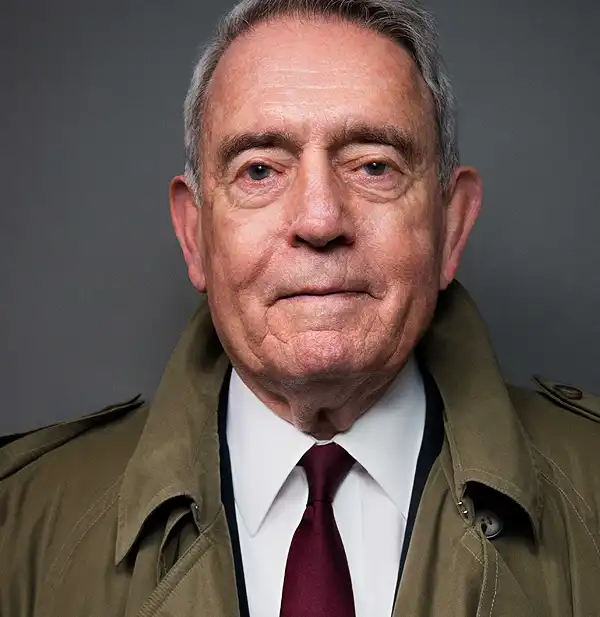
Dan Rather, born Daniel Irvin Rather Jr. on October 31, 1931, in Wharton, Texas, became one of the most recognizable and influential figures in American broadcast journalism. Best known for his 24 years as anchor and managing editor of the CBS Evening News, Rather built a remarkable career reporting on presidential administrations, international conflicts, natural disasters, and some of the most important events in modern history. With his distinctive Texas accent, relentless curiosity, and occasionally colorful expressions, he became a familiar presence in American living rooms. For millions of viewers, hearing Dan Rather deliver the evening news was as much a part of the daily routine as dinner, although the news was frequently considerably harder to digest.
Raised in the working-class Houston Heights neighborhood, Rather developed an interest in news and storytelling at an early age. His father, an oil pipeline worker, encouraged reading and an awareness of the wider world. As a youngster, Rather suffered from rheumatic fever, an illness that confined him to bed for an extended period. During his recovery, he listened intently to radio broadcasts from distinguished journalists such as Edward R. Murrow, whose reports from Europe during World War II helped inspire his ambition to become a reporter. While other children dreamed of becoming baseball stars or Hollywood actors, young Dan was developing a fascination with the people who explained why the world was behaving so badly.
Rather attended Sam Houston State Teachers College, now Sam Houston State University, graduating in 1953 with a bachelor's degree in journalism. His early professional experience included working for the Associated Press, United Press International, local radio stations, and the Houston Chronicle. He developed his reporting skills in an era when journalists relied on telephones, typewriters, notebooks, and an impressive ability to meet deadlines without the assistance of search engines. His work eventually led him into television journalism, where he became news director at KHOU-TV in Houston. Rather's energetic reporting style and willingness to pursue difficult stories quickly distinguished him from more conventional broadcasters.
One of Rather's earliest major achievements came during Hurricane Carla in September 1961, when the powerful storm threatened the Texas Gulf Coast. Working for KHOU-TV, he delivered extensive coverage of the approaching hurricane and helped explain its movement and potential dangers to television viewers. His innovative use of a weather map during the broadcasts attracted national attention, while his reporting helped communicate the urgency of evacuation warnings. The coverage demonstrated the importance of television as a public safety tool and helped establish Rather's reputation as a journalist willing to remain close to a dangerous story. It also proved that reporting from Texas could involve considerably more excitement than covering the local cattle auction.
Rather joined CBS News in 1962, beginning an association with the network that would continue for more than four decades. He initially served as chief of the Southwest bureau in Dallas before taking responsibility for the network's Southern bureau. His assignments placed him at the center of major national developments, including the civil rights movement and the struggle against racial segregation. Rather reported on demonstrations, political confrontations, and the efforts of civil rights leaders, including Dr. Martin Luther King Jr. These experiences helped shape his understanding of the relationship between journalism, public accountability, and social change.
On November 22, 1963, Rather was in Dallas when President John F. Kennedy was assassinated. His reporting during the tragedy became one of the defining moments of his early career. He was among the journalists who helped confirm the president's death and subsequently reported on the unfolding investigation. Rather was also one of the first journalists to view Abraham Zapruder's film of the assassination, describing its contents to television audiences before the footage became widely available. His coverage brought him national recognition and placed him among the correspondents trusted to explain extraordinary events during moments of confusion and national grief.
Throughout the 1960s and 1970s, Rather expanded his international reporting experience, working as a foreign correspondent and covering the Vietnam War. His assignments took him into dangerous conditions alongside American military personnel, where he reported on combat operations, troop morale, and the human consequences of warfare. Unlike journalists who preferred to observe conflicts from a comfortable hotel lobby, Rather frequently traveled into the field to understand events firsthand. His reporting reflected the changing nature of television journalism, which increasingly brought images of war directly into American homes and challenged audiences to confront realities that official statements could not always adequately describe.
Rather also became an important White House correspondent, covering the administrations of Lyndon B. Johnson and Richard Nixon. His persistent questioning and willingness to challenge political leaders occasionally produced tense encounters, particularly during the Watergate scandal. Rather's exchanges with Nixon attracted considerable attention, reinforcing his reputation as a reporter who was not easily intimidated by presidential authority. His approach earned admiration from viewers who valued aggressive journalism, although critics sometimes questioned his objectivity and confrontational style. Whatever one's opinion of his methods, Rather rarely appeared interested in becoming a politician's favorite reporter, which was probably just as well for the politicians.
In 1975, Rather joined the acclaimed CBS investigative news program 60 Minutes, working alongside some of America's most respected television journalists. The program allowed him to pursue longer investigations and interviews, examining political controversies, social problems, corporate misconduct, and international affairs. Rather developed a reputation for asking direct questions and refusing to abandon difficult subjects simply because an interviewee appeared uncomfortable. His work on 60 Minutes further strengthened his national profile and demonstrated that serious investigative journalism could attract large television audiences without requiring car chases, dramatic background music, or somebody being voted off an island.
The defining chapter of Rather's television career began on March 9, 1981, when he succeeded Walter Cronkite as anchor and managing editor of the CBS Evening News. Replacing Cronkite, widely regarded as one of America's most trusted broadcasters, was an enormous responsibility. Rather brought a different personality to the position, combining the authority expected of a national news anchor with the instincts of a field reporter who preferred being close to the action. Over the next 24 years, he guided viewers through presidential elections, international crises, scientific achievements, natural disasters, and the constantly changing political landscape. His competitors included ABC's Peter Jennings and NBC's Tom Brokaw, creating an era when three prominent network anchors dominated American evening television news.
During his years at the CBS anchor desk, Rather reported on events that helped define the late twentieth and early twenty-first centuries. These included the attempted assassination of President Ronald Reagan, the 1986 Space Shuttle Challenger disaster, the collapse of communist governments in Eastern Europe, the fall of the Berlin Wall, and the Persian Gulf War. He also covered the September 11, 2001, terrorist attacks, delivering extensive live reporting as the United States confronted one of the most devastating events in its history. His broadcasts combined breaking developments, interviews, and analysis, reflecting the enormous responsibility placed upon journalists during national emergencies. For viewers seeking reliable information amid uncertainty, the familiar face behind the anchor desk often provided a measure of reassurance.
Rather became equally famous for his unusual and occasionally hilarious expressions, particularly during election-night broadcasts. His colorful sayings, commonly called "Ratherisms," drew upon Texas folklore, Southern storytelling, and a seemingly inexhaustible supply of imaginative comparisons. While other broadcasters carefully described close election results using percentages and electoral calculations, Rather sometimes preferred metaphors involving farm animals, weather, and other unexpected subjects. His colorful language became part of his public identity, inspiring affectionate impersonations, newspaper commentary, and occasional bewilderment among viewers who simply wanted to know which candidate had won Ohio.
Despite his enormous professional success, Rather's career was not without controversy. In September 2004, a 60 Minutes Wednesday report questioned aspects of President George W. Bush's service in the Texas Air National Guard. The report relied in part on documents whose authenticity could not be established, prompting widespread criticism and an independent investigation commissioned by CBS. The investigation identified serious failures in the reporting and editorial review process, and CBS acknowledged that the documents should not have been used. Rather defended aspects of the underlying story but became closely associated with the controversy. He stepped down from the CBS Evening News in March 2005 and departed CBS News in 2006. The episode remains an important part of his professional history and a frequently cited example of the importance of verifying evidence before broadcasting consequential allegations.
Rather's departure from CBS did not mark the end of his journalism career. He continued reporting through Dan Rather Reports, an investigative television program that began on HDNet, later known as AXS TV. The series examined international affairs, political developments, environmental concerns, and social issues, allowing Rather to return to the extended reporting format that had characterized much of his earlier work. He subsequently hosted The Big Interview with Dan Rather, featuring conversations with musicians, entertainers, and other prominent cultural figures. Guests included performers such as Dolly Parton and other influential personalities, demonstrating that a journalist accustomed to questioning presidents could also conduct thoughtful conversations about music, creativity, and personal achievement.
Beyond television, Rather established himself as an accomplished author and commentator. His books include The Camera Never Blinks, The Palace Guard, Rather Outspoken: My Life in the News, and What Unites Us: Reflections on Patriotism. These works explore his experiences in journalism, the responsibilities of the press, and the political and cultural forces shaping American society. He also embraced digital publishing, using social media and his Steady newsletter to share commentary and reflections with readers. His willingness to adapt to new platforms illustrated how an experienced broadcast journalist could continue participating in public debate long after the traditional network evening news had ceased to dominate the media landscape.
Rather's contributions to American journalism have been recognized with numerous professional honors, including multiple Emmy Awards and Peabody Awards. He was inducted into the Television Academy Hall of Fame in 2004 and received a Lifetime Achievement Emmy Award in 2005. His career and influence were also explored in Rather, a documentary directed by Frank Marshall that premiered at the Tribeca Festival in 2023 and reached Netflix audiences in 2024. The film examined his extraordinary reporting experiences, his professional controversies, and his continuing belief in the importance of independent journalism.
Away from the newsroom, Rather shared a long marriage with his wife, Jean Goebel Rather, whom he married in 1957. They raised two children, Robin and Daniel. Jean remained an important presence throughout his demanding career until her death in November 2024. Despite the international travel, presidential interviews, and countless hours spent covering breaking news, Rather maintained strong connections to his Texas upbringing and family life. Those roots helped shape both his public personality and his distinctive approach to storytelling.
Dan Rather's legacy is inseparable from the history of American television news. His career illustrates both the extraordinary influence of broadcast journalism and the responsibility that accompanies such influence. From reporting on Hurricane Carla and the assassination of President Kennedy to covering Vietnam, Watergate, and the September 11 attacks, Rather witnessed and explained events that shaped generations of Americans. His achievements earned considerable admiration, while his controversies encouraged continuing debate about journalistic standards, credibility, and accountability. Through it all, he remained a recognizable voice in American public life, demonstrating that the pursuit of a good story can become a lifelong occupation. And for a man born on Halloween, he certainly spent enough time uncovering frightening things—although most of them were happening in Washington rather than haunted houses.
Dan Rather – Official Biography – Detailed biographical information, reporting history, career achievements, and publications. CBS News – Dan Rather: Witness to History – Career history, assignments, and significant reporting accomplishments. Television Academy – Dan Rather – Television career, Hall of Fame recognition, and professional background. Television Academy – Dan Rather Hall of Fame Tribute – Early influences, broadcasting experiences, and professional legacy. CNN – Dan Rather Fast Facts – Personal information, family history, career milestones, and awards. Encyclopedia of Television and Radio – Dan Rather – Historical overview of Rather's broadcasting career and influence on television journalism.References & Sources