- Details
- Category: Celebrity Birthdays - October
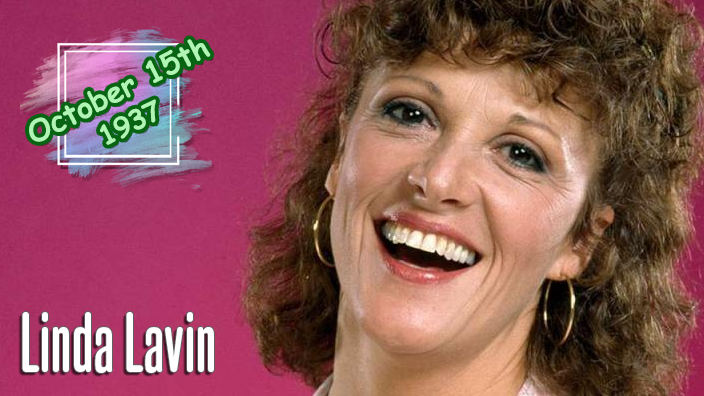
Linda Lavin could sing, dance, act, and deliver a sarcastic remark with the precision of a seasoned Broadway performer. Whether she was commanding the stage or serving coffee at Mel's Diner, she proved that a talented actress could steal the show without spilling a single cup. And if anyone deserved a generous tip for keeping television audiences entertained, it was Linda.
 October 15, 1937, in Portland, Maine
 December 29, 2024, in Los Angeles, California

Trivia
- Began performing onstage as a child.
- Studied theater at the College of William & Mary.
- Played Detective Janice Wentworth on Barney Miller.
- Starred in Alice for nine television seasons.
- Won two Golden Globe Awards for Alice.
- Won a Tony Award for Broadway Bound in 1987.
- Entered the American Theater Hall of Fame in 2010.
- Details
- Category: Celebrity Birthdays - October
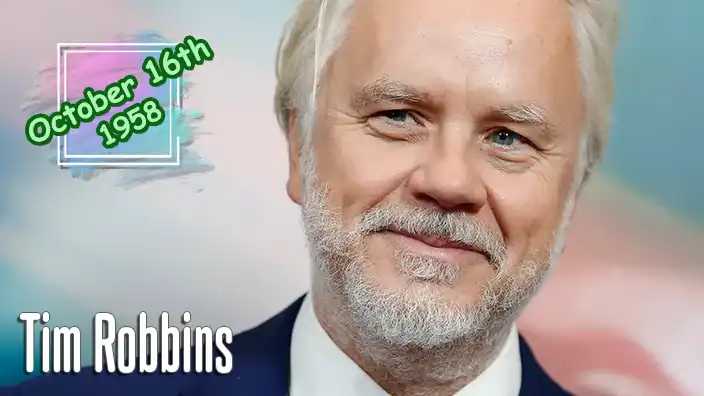
Tim Robbins has escaped from Shawshank Prison, navigated Hollywood's political minefields, and directed an Oscar-winning prison drama without ever needing to serve a sentence himself. Best known for his unforgettable portrayal of Andy Dufresne in The Shawshank Redemption, Robbins has spent decades proving that a thoughtful performance, a towering screen presence, and an occasional wicked sense of humor can make an actor impossible to ignore.
 October 16, 1958, in West Covina, California
Trivia
- He played the unpredictable baseball pitcher Nuke LaLoosh in Bull Durham.
- He won an Academy Award for his performance in Mystic River.
- He directed Susan Sarandon to an Oscar-winning performance in Dead Man Walking.
- He portrayed Andy Dufresne in The Shawshank Redemption but received no Oscar nomination for the role.
- He co-founded the experimental theater company the Actors' Gang in 1981.
- He received a star on the Hollywood Walk of Fame in 2008.
- Details
- Category: Celebrity Birthdays - October
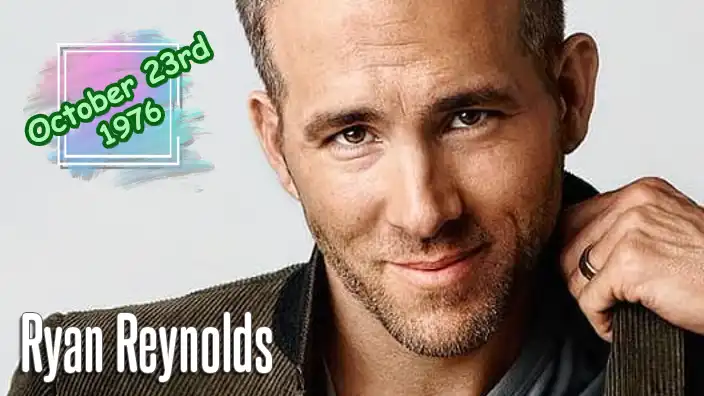
Ryan Reynolds has built an extraordinary career by combining Hollywood good looks, impeccable comic timing, and the remarkable ability to insult practically everyone while making them laugh. Best known as the wisecracking superhero Deadpool, the Canadian-American actor and film producer has battled villains, romanced Sandra Bullock, voiced a talking Pokémon, and even purchased a Welsh soccer club. Somewhere along the way, he also became a successful businessman, proving that a sharp tongue and a questionable sense of humor can be surprisingly profitable.
October 23, 1976, in Vancouver, Canada
Trivia
- His first major television role was in Fifteen.
- He met Blake Lively while filming Green Lantern.
- He received a Hollywood Walk of Fame star in 2016.
- He voiced Detective Pikachu in 2019.
- He co-owns Wales's Wrexham soccer club.
- He has won two Primetime Emmy Awards.
- Details
- Category: Celebrity Birthdays - October
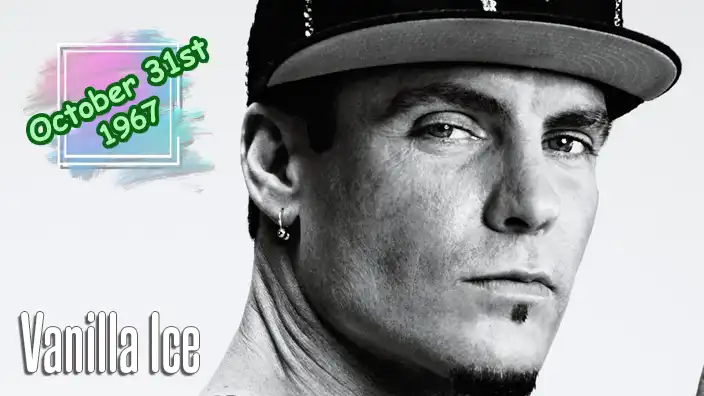
Vanilla Ice, born Robert Van Winkle, brought baggy pants, gravity-defying hair, and an unforgettable bass line to the music charts. With his smash hit "Ice Ice Baby," he helped turn early 1990s hip-hop into a worldwide phenomenon. And while fashion trends have thankfully moved on, his signature song can still fill a dance floor faster than someone shouting, "Free pizza!"
October 31, 1967, in Dallas, Texas
Trivia
- His stage name originated from his breakdancing days.
- Wrote "Ice Ice Baby" while still a teenager.
- "Ice Ice Baby" became the first hip-hop single to top the Billboard Hot 100.
- To the Extreme spent 16 weeks at number one.
- Performed "Ninja Rap" in a Teenage Mutant Ninja Turtles movie.
- Details
- Category: Celebrity Birthdays - October
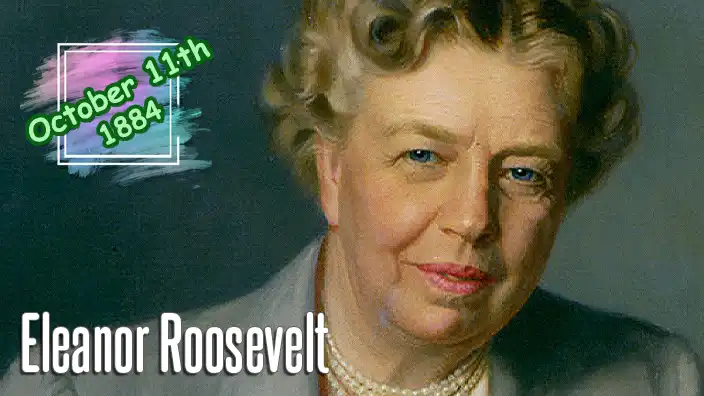
Eleanor Roosevelt, the longest-serving First Lady of the United States, diplomat, humanitarian, and pioneering champion of human rights, transformed what had traditionally been a ceremonial White House position into a powerful platform for social change. As the wife of President Franklin D. Roosevelt, she traveled tirelessly, challenged discrimination, supported ordinary Americans during the Great Depression, and later helped shape the Universal Declaration of Human Rights. She was outspoken, determined, and famously difficult to persuade into remaining quietly in the background. Washington had plenty of politicians accustomed to making speeches, but Eleanor Roosevelt had an even more effective habit: she went out, discovered what was happening, and expected somebody to do something about it.
October 11, 1884, in New York City
November 7, 1962, in New York City
Trivia
- She attended school in England.
- She married Franklin D. Roosevelt in 1905.
- She was First Lady for more than twelve years.
- She wrote the newspaper column My Day.
- She helped arrange Marian Anderson's 1939 Lincoln Memorial concert.
- She chaired the UN Commission on Human Rights.
- Details
- Category: Celebrity Birthdays - October
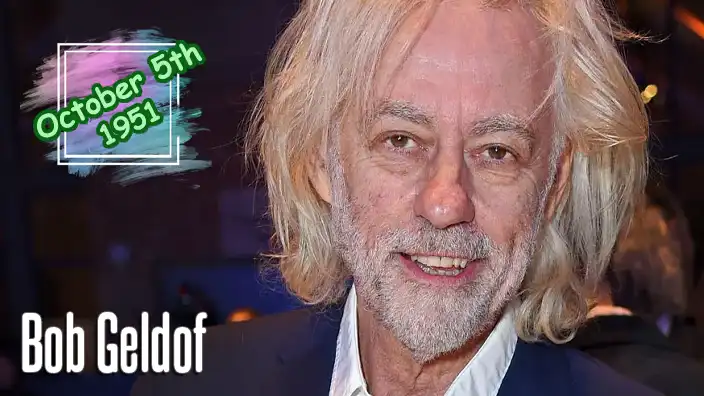
Bob Geldof began by fronting a band called The Boomtown Rats, became famous singing about Mondays, and then somehow found himself telephoning some of the biggest musicians on Earth and telling them where to be. Music made him famous, but Band Aid and Live Aid transformed the outspoken Irish singer into one of rock's most recognizable campaigners—and proved that occasionally being extremely difficult to ignore is precisely the qualification a job requires.
October 5, 1951, in Dún Laoghaire, Ireland
Trivia
- Geldof played Pink in Pink Floyd – The Wall.
- He co-wrote “Do They Know It's Christmas?”
- He helped organize Live Aid in 1985.
- Geldof received an honorary knighthood in 1986.
- The Boomtown Rats reunited in 2013.
- Details
- Category: Celebrity Birthdays - October
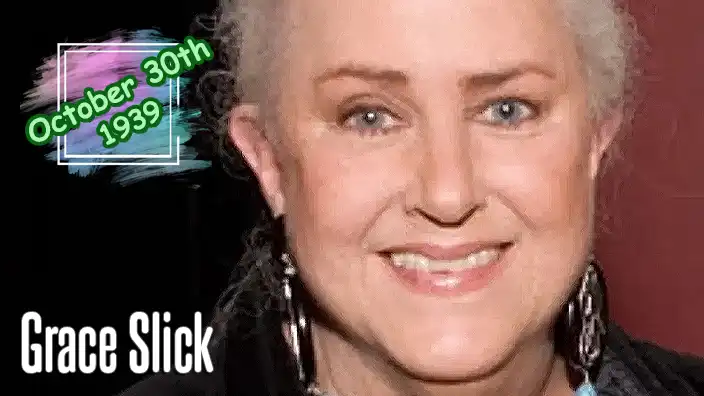
Grace Slick didn't just help define psychedelic rock—she gave it a voice powerful enough to wake the neighbors three counties away. As the unforgettable frontwoman of Jefferson Airplane, she delivered classics such as White Rabbit and Somebody to Love, challenged convention, and helped turn San Francisco's counterculture into a musical revolution. And she did it all without showing much interest in behaving herself.
October 30, 1939, in Highland Park, Illinois
Trivia
- Formed the Great Society with her husband and his brother.
- Wrote White Rabbit, inspired by Lewis Carroll's Alice stories.
- Joined Jefferson Airplane in 1966.
- Performed at both Woodstock and Altamont in 1969.
- Sang on Starship's number-one hit We Built This City.
- Became a professional visual artist after retiring from music.
- Details
- Category: Celebrity Birthdays - October
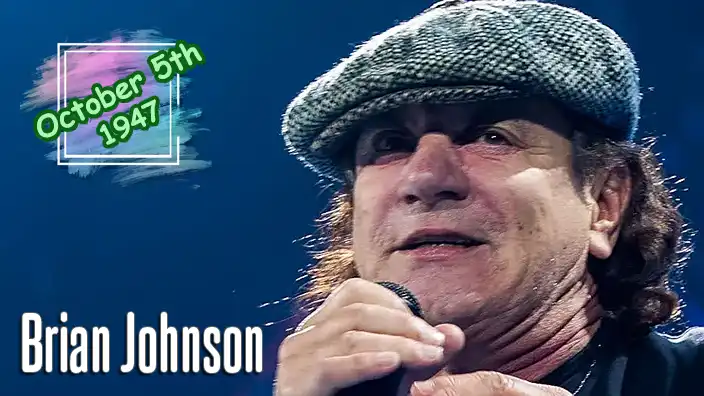
Brian Johnson possesses the sort of singing voice that makes ordinary loud noises reconsider their career choices. As the flat-capped frontman of AC/DC, the English singer stepped into an almost impossible position following the death of Bon Scott and promptly helped create Back in Black, one of rock music's defining albums. More than four decades later, that unmistakable rasp remains capable of making an amplifier nervous.
October 5, 1947, in Dunston, England
Trivia
- Johnson served in Britain's Territorial Army.
- He fronted the British rock band Geordie.
- Bon Scott had seen Johnson perform before AC/DC hired him.
- His famous flat cap originally helped keep sweat from his eyes.
- Back in Black was his first AC/DC album.
- Johnson is an enthusiastic car collector and racer.
- Details
- Category: Celebrity Birthdays - October
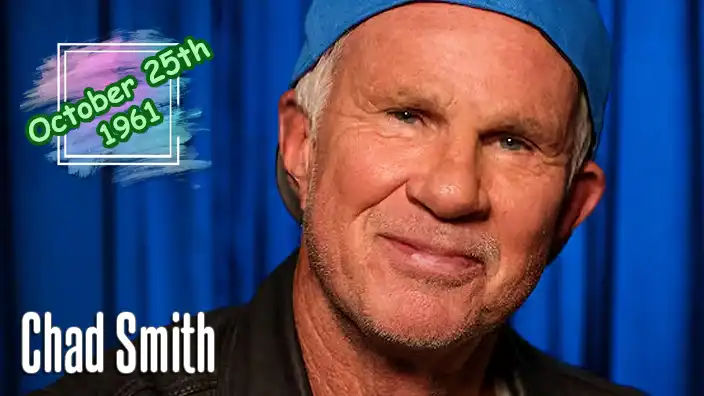
Chad Smith has spent decades providing the thunderous heartbeat of the Red Hot Chili Peppers, proving that a drum kit can survive almost anything if the drummer is sufficiently determined. Famous for his explosive playing, backward baseball cap, and remarkable resemblance to actor Will Ferrell, Smith has helped turn funk-rock into a worldwide phenomenon. And unlike most people accused of making too much noise, he's won Grammy Awards for it.
October 25, 1961, in Saint Paul, Minnesota
Trivia
- He joined the Red Hot Chili Peppers in 1988.
- John Bonham was one of his major drumming influences.
- He is also a member of the rock supergroup Chickenfoot.
- He famously challenged Will Ferrell to a televised drum battle.
- He performed on the Rolling Stones' Hackney Diamonds album.
- Details
- Category: Celebrity Birthdays - October
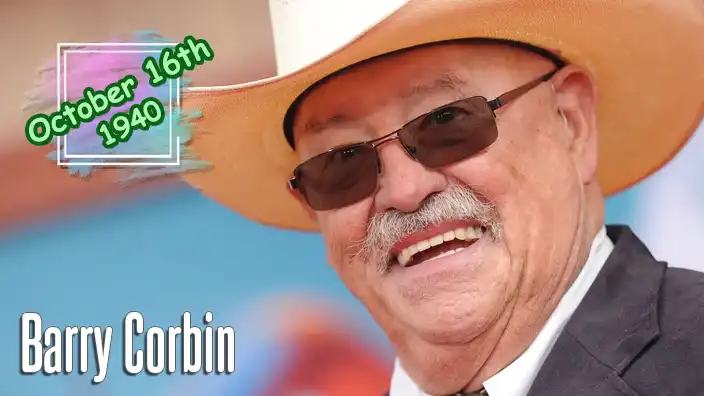
Barry Corbin has spent more than six decades playing cowboys, generals, sheriffs, politicians, and cantankerous old gentlemen who generally believe they're the smartest person in the room. From the eccentric Alaskan community of Northern Exposure to the rugged ranching world of Yellowstone, this unmistakably Texan actor has made a career out of delivering straight talk, raising eyebrows, and occasionally making life miserable for anyone foolish enough to disagree with him. With his gravelly voice, commanding presence, and natural Western charm, Corbin doesn't need to announce that he's arrived. One look usually does the job.
October 16, 1940, in Lamesa, Texas
Trivia
- He portrayed General Jack Beringer in the 1983 thriller WarGames.
- He received two Emmy nominations for playing Maurice Minnifield in Northern Exposure.
- He learned to drive a six-horse team in two days for Conagher.
- He portrayed basketball coach Whitey Durham in One Tree Hill.
- He played Uncle Ellis opposite Tommy Lee Jones in No Country for Old Men.
- He once rode a horse to the Emmy Awards ceremony.
- Details
- Category: Celebrity Birthdays - October
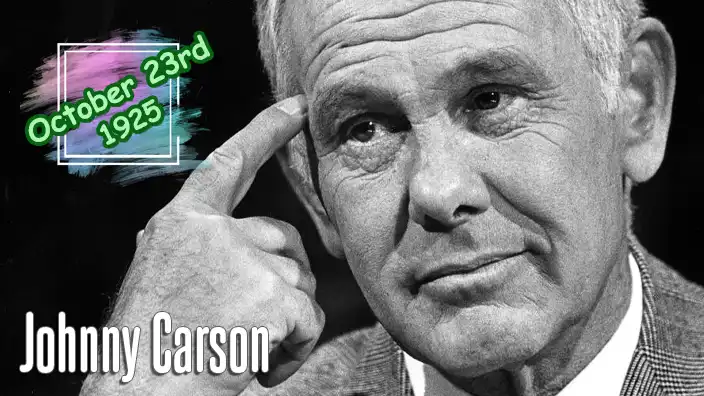
Johnny Carson could make millions of Americans stay awake long past their bedtime, laugh at jokes that occasionally deserved a public apology, and believe that a man sitting behind a desk was their favorite evening companion. Armed with impeccable timing, a mischievous grin, and an unforgettable golf swing, the legendary host of The Tonight Show ruled late-night television for three decades. When a joke fell flat, Johnny didn't panic. He simply made the failure funnier than the joke itself. Now that's talent!
October 23, 1925, in Corning, Iowa
January 23, 2005, in Los Angeles, California
Trivia
- Johnny Carson performed magic tricks as a youngster under the stage name "The Great Carsoni."
- He entertained fellow servicemen with magic tricks while serving in the U.S. Navy during World War II.
- Carson studied physics alongside radio and speech at the University of Nebraska.
- His imaginary golf swing became one of the most recognizable trademarks of The Tonight Show.
- A joke Carson made about toilet paper in 1973 helped spark nationwide panic buying.
- His famous Carnac the Magnificent character drew upon his lifelong fascination with magic.
- After retiring, Carson occasionally wrote jokes for David Letterman's late-night television program.
- Details
- Category: Celebrity Birthdays - October
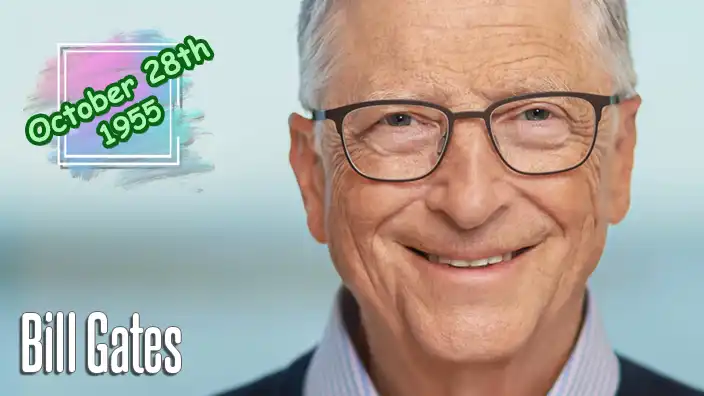
Bill Gates helped put a computer on nearly every desk, introduced the world to Microsoft Windows, and made the phrase "Have you tried restarting it?" part of everyday life. From teenage computer enthusiast to billionaire philanthropist, Gates has spent decades changing how the world works, communicates, and occasionally loses an entire afternoon to a software update. Not bad for a fellow who left Harvard before collecting his diploma!
October 28, 1955, in Seattle, Washington
Trivia
- He wrote his first computer program at Lakeside School.
- His first business with Paul Allen was Traf-O-Data.
- He left Harvard to help build Microsoft.
- Microsoft's original name was Micro-Soft.
- He enjoys playing bridge with Warren Buffett.
- He received an honorary British knighthood in 2005.
- He published his memoir Source Code in 2025.
- Details
- Category: Celebrity Birthdays - October
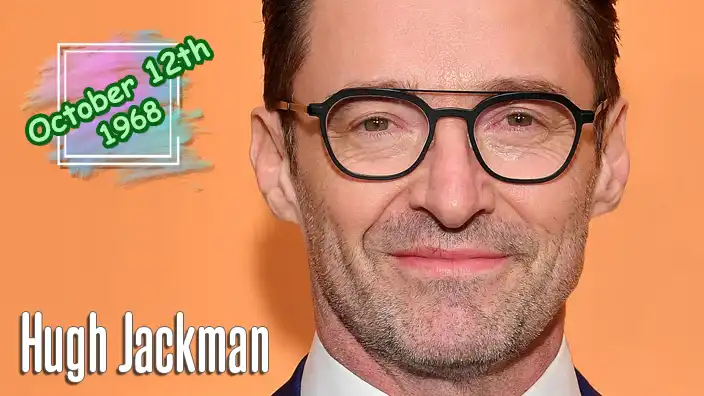
Hugh Jackman has spent his career proving that a man can have razor-sharp claws, sing his heart out on Broadway, dance like a professional, and still look perfectly comfortable wearing a tuxedo. From the ferocious Wolverine in X-Men to the charismatic showman P. T. Barnum in The Greatest Showman, this Australian entertainer has conquered Hollywood and musical theater with a smile that suggests he's enjoying every minute of it.
October 12, 1968, in Sydney, Australia
Trivia
- He trained at Australia's WAAPA drama school.
- He turned down an opportunity to play James Bond.
- He won a Tony Award for The Boy from Oz.
- He hosted the Academy Awards in 2009.
- He co-founded Laughing Man Coffee.
- He received Australia's prestigious AC honor in 2019.
- Details
- Category: Celebrity Birthdays - October
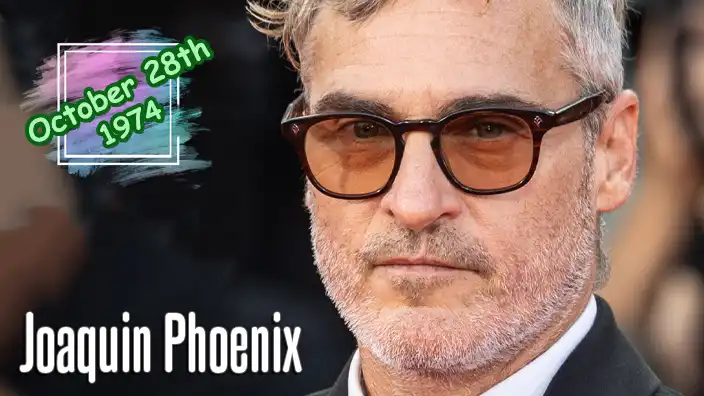
Joaquin Phoenix has conquered ancient Rome, become the Joker, impersonated Johnny Cash, and even played Napoleon Bonaparte. Apparently, ordinary characters simply aren't complicated enough for him. With an Academy Award, a reputation for extraordinary transformations, and a talent for making audiences gloriously uncomfortable, Phoenix has built a Hollywood career where the only predictable thing is that absolutely nothing will be predictable.
October 28, 1974, in San Juan, Puerto Rico
Trivia
- His older brother was actor River Phoenix.
- He performed his own singing in Walk the Line.
- He won a Grammy Award for the Walk the Line soundtrack.
- His Joker performance earned him his first Oscar.
- He has followed a vegan lifestyle since childhood.
- Details
- Category: Celebrity Birthdays - October
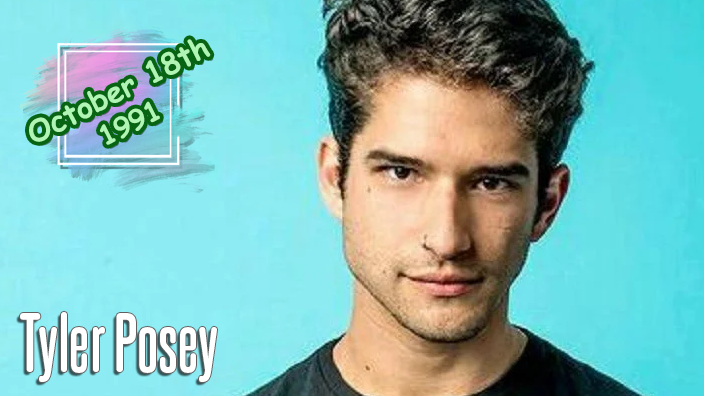
Tyler Posey has spent much of his career proving that growing up in Hollywood can be a particularly hairy experience. Best known as Scott McCall in MTV's supernatural hit Teen Wolf, he transformed from a child actor playing Jennifer Lopez's son into a television werewolf with extraordinary powers and an alarming number of dangerous acquaintances. When he's not battling supernatural creatures, Posey plays punk rock, directs films, and occasionally enjoys a role that doesn't require extensive facial hair and glowing eyes.
October 18, 1991, in Santa Monica, California
Trivia
- He played Jennifer Lopez's son in Maid in Manhattan.
- He portrayed Scott McCall in all 100 episodes of Teen Wolf.
- He directed a Teen Wolf episode in 2017.
- He was considered for Jacob Black in Twilight.
- He voiced Tony Toretto in Fast & Furious Spy Racers.
- Details
- Category: Celebrity Birthdays - October
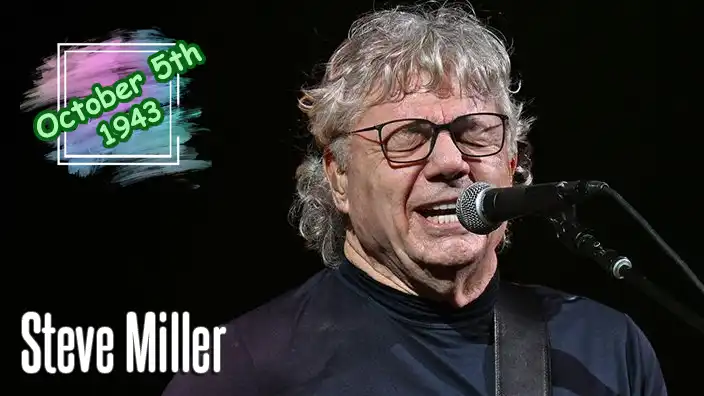
Steve Miller has spent decades flying like an eagle, collecting money, taking it and running, and answering to the entirely self-appointed title of Space Cowboy. Behind those wonderfully peculiar lyrics is a serious guitarist, songwriter and bandleader whose combination of blues, rock and irresistible pop hooks turned the Steve Miller Band into one of American rock music's enduring institutions.
October 5, 1943, in Milwaukee, Wisconsin
Trivia
- Miller formed his first band while still at school.
- Boz Scaggs was one of his early bandmates.
- Paul McCartney played on “My Dark Hour.”
- “The Joker” introduced the mysterious word “pompatus.”
- “Rock'n Me” became a U.S. No. 1 hit.
- “Abracadabra” also topped the Billboard Hot 100.
- Miller entered the Rock and Roll Hall of Fame in 2016.
- Details
- Category: Celebrity Birthdays - October
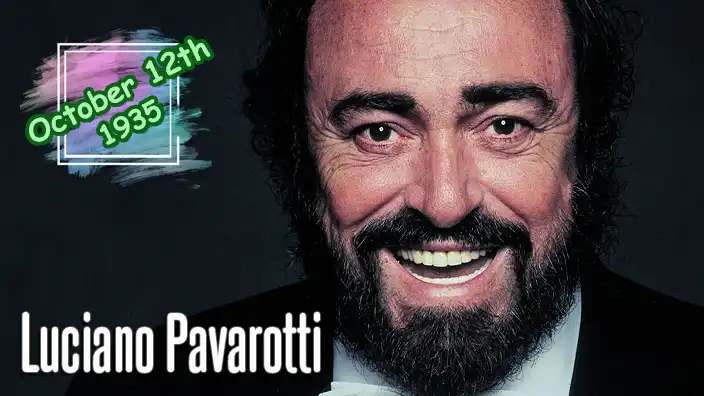
Luciano Pavarotti possessed a voice so magnificent that even people who thought opera was something best avoided found themselves cheering for an encore. With his famous white handkerchief, enormous personality, and unforgettable performances of Nessun dorma, the legendary Italian tenor transformed classical music into international entertainment. From the grandest opera houses to stadiums packed with thousands of admirers, Pavarotti proved that a truly remarkable voice needs no translation, although it certainly helps if someone explains what everyone is singing about.
October 12, 1935, in Modena, Italy
September 6, 2007, in Modena, Italy
Trivia
- He once dreamed of becoming a soccer goalkeeper.
- He worked as a schoolteacher and insurance salesman.
- He sang nine high Cs in a single famous aria.
- He received seventeen curtain calls at the Met in 1972.
- His white handkerchief became his trademark.
- He performed before over 500,000 people in Central Park.
- Details
- Category: Celebrity Birthdays - October
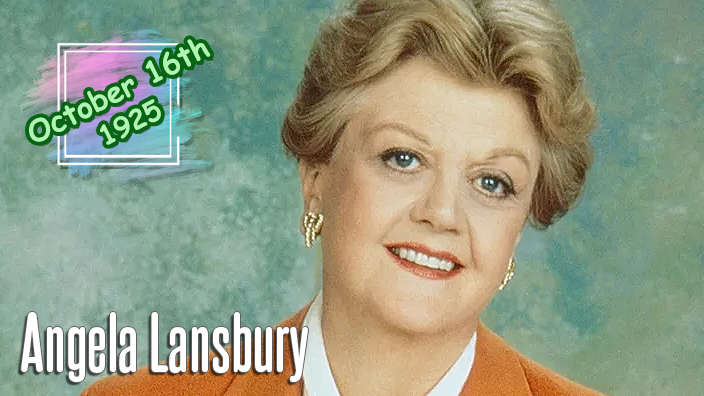
Dame Angela Lansbury could solve a murder before breakfast, charm a Broadway audience before dinner, and still find time to voice a teapot with impeccable manners. From Hollywood classics to Broadway triumphs and the enormously popular Murder, She Wrote, the British-born actress and singer built an extraordinary career spanning eight decades. She played villains, heroines, witches, mothers, and amateur detectives, proving that talent, versatility, and a perfectly raised eyebrow could take an actress almost anywhere.
October 16, 1925, in Regent's Park, England
October 11, 2022, in Los Angeles, California
Trivia
- She played Laurence Harvey's mother in The Manchurian Candidate.
- She received 12 nominations for Jessica Fletcher without winning.
- She voiced Mrs. Potts in Beauty and the Beast.
- Her starring role in Mame earned her first Tony Award.
- She appeared in all 264 episodes of Murder, She Wrote.
- Queen Elizabeth II appointed her a Dame in 2014.
- Details
- Category: Celebrity Birthdays - October
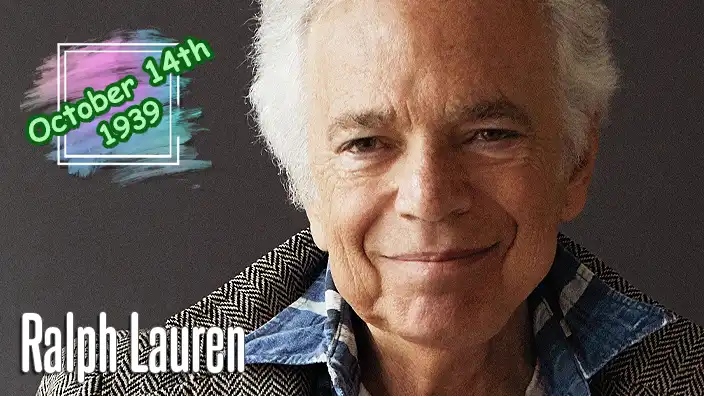
Ralph Lauren took an ordinary necktie, made it wider, gave it a little personality, and eventually built a global fashion empire around the idea that Americans might enjoy dressing as though they owned a country estate. From his modest beginnings in the Bronx to the famous Polo pony, luxury clothing, fragrances, home furnishings, and international fashion shows, Lauren transformed a distinctive sense of style into one of the world's best-known brands. Not bad for a fellow who never attended fashion school and whose original business plan involved selling ties!
October 14, 1939, in the Bronx, New York City
Trivia
- His business began with neckties in 1967.
- The famous Polo Pony first appeared on women's shirts.
- He designed a pink suit for The Great Gatsby.
- He made a cameo appearance in Friends in 1999.
- He owns a celebrated collection of classic automobiles.
- He received the Presidential Medal of Freedom in 2025.
- Details
- Category: Celebrity Birthdays - October
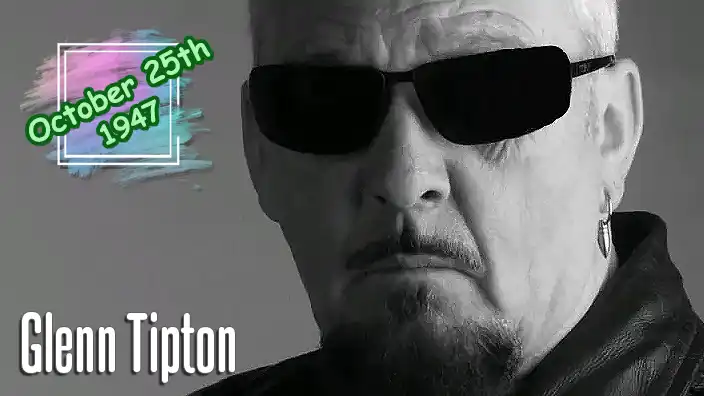
Glenn Tipton helped turn heavy metal into a musical force capable of rattling windows, terrifying unsuspecting neighbors, and convincing generations of teenagers that owning an electric guitar was a perfectly reasonable career plan. As one half of Judas Priest's legendary twin-guitar partnership, he helped create some of the most recognizable riffs in rock history, proving that two guitars played at enormous volume can occasionally accomplish more than an entire committee of sensible adults. With blistering solos, thunderous rhythms, and enough leather and studs to keep a motorcycle outfitter in business.
October 25, 1947, in the Birmingham, England
Trivia
- He began playing guitar seriously in his late teens.
- He joined Judas Priest in 1974.
- He played piano on the song "Epitaph."
- He released Baptizm of Fire as a solo album in 1997.
- He helped pioneer heavy metal's twin-guitar sound.
- He founded a Parkinson's research charity in 2018.
- Details
- Category: Celebrity Birthdays - October
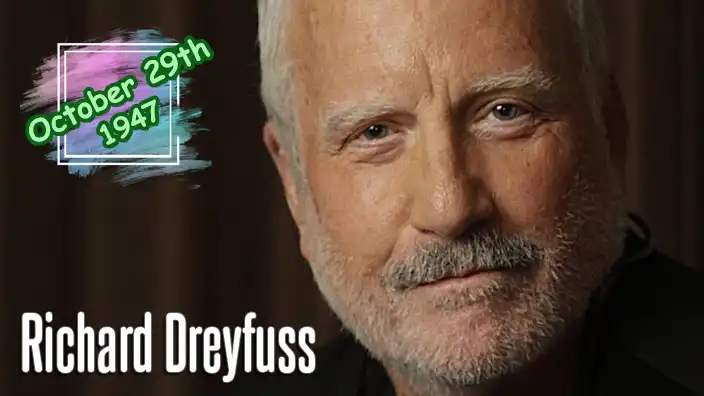
Richard Dreyfuss has spent his Hollywood career dealing with some remarkably difficult situations, including a hungry shark in Jaws, mysterious visitors in Close Encounters of the Third Kind, and Bill Murray in What About Bob?. Throw in an Academy Award and a classroom full of aspiring musicians in Mr. Holland's Opus, and it's clear that this is a man who has never been particularly interested in a quiet working life.
October 29, 1947, in Brooklyn, New York
Trivia
- He played marine biologist Matt Hooper in Jaws.
- He won an Oscar for The Goodbye Girl.
- He narrated the classic film Stand by Me.
- He voiced Centipede in James and the Giant Peach.
- He received a Hollywood Walk of Fame star in 1996.
- He founded the Dreyfuss Civics Initiative.
From Our Marks Catelog
-

American Football Day is that magical time when perfectly reasonable adults suddenly start yelling at...
-

There’s something about that golden cloud of meringue that makes you forget all your worries, at...
-

Posttraumatic growth isn’t about silver linings or pretending that pain was somehow “worth it.” It’s...
-

On a hot day, when the sun is cooking the sidewalk and even the lawn chairs are sweating, there’s one...
-
Sacagawea wasn’t just a guide—she was the ultimate multitasker. Imagine a teenager navigating the...
-
If peaches could talk, they would probably spend most of the year bragging about becoming...

