- Details
- Category: Celebrity Birthdays - October
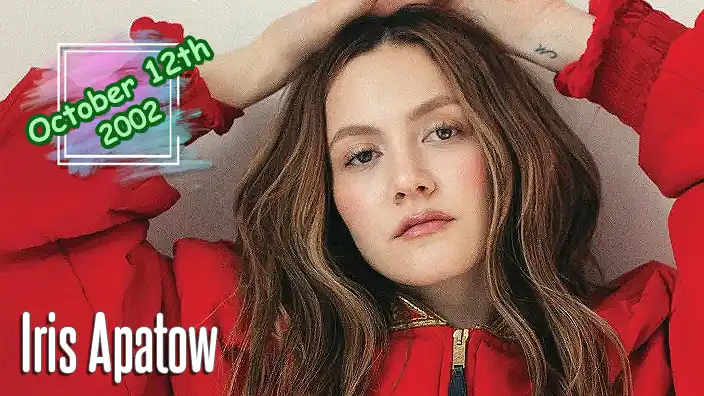
Iris Apatow was practically born into the comedy business, with filmmaker Judd Apatow for a father and actress Leslie Mann for a mother. But this young American actress has been doing more than borrowing the family spotlight, appearing in Love, The Bubble, and several memorable Hollywood comedies. From playing the mischievous daughter on screen to navigating pandemic-era filmmaking, Iris has demonstrated that growing up around funny people is excellent preparation for show business, although family dinners must have been exhausting for anyone trying to deliver a serious sentence.
 October 12, 2002, in Los Banos, California

Trivia
- Her mother is actress Leslie Mann.
- Her older sister is actress Maude Apatow.
- Her film debut was Knocked Up (2007).
- She played Arya Hopkins in Netflix's Love.
- She appeared in Olivia Rodrigo's bad idea right? video.
- She plays Proserpina Trinket in a Hunger Games prequel.
- Details
- Category: Celebrity Birthdays - October
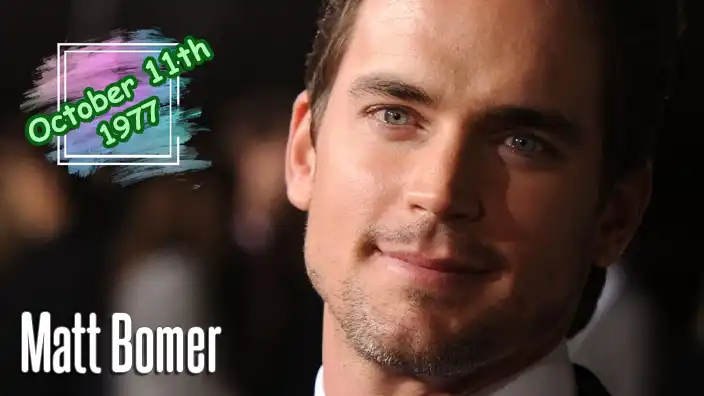
Matt Bomer, the Golden Globe-winning American actor celebrated for White Collar, The Normal Heart, and Fellow Travelers, has made a career out of combining leading-man charm with impressive dramatic talent. Whether playing a sophisticated con artist who could probably talk his way out of a bank vault, a determined journalist navigating forbidden love, or a superhero with a surprisingly complicated personal life, Bomer brings intelligence, warmth, and unmistakable screen presence to his performances. His career has taken him from television crime dramas to Broadway, Hollywood films, and prestigious award ceremonies, proving that there's considerably more to his success than an excellent collection of suits.
 October 11, 1977, in Webster Groves, Missouri
Trivia
- He graduated from Carnegie Mellon University.
- He played Neal Caffrey in White Collar for six seasons.
- He won a Golden Globe for The Normal Heart.
- He played Superman in Superman: Unbound.
- Details
- Category: Celebrity Birthdays - October
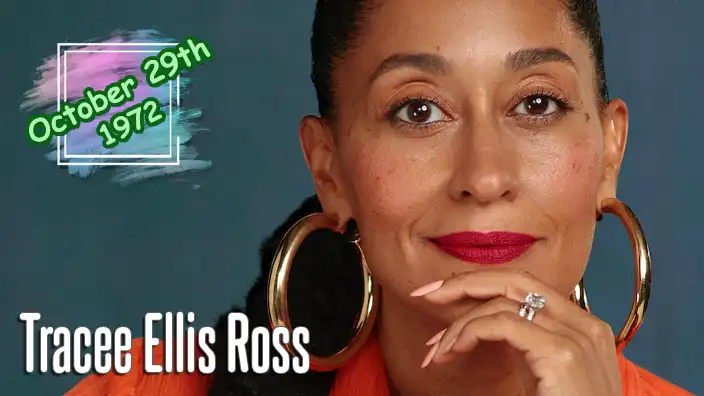
Tracee Ellis Ross was born into musical royalty but decided that making people laugh was more her style. From the romantic disasters of Girlfriends to the family chaos of black-ish, she's mastered the art of delivering a devastating one-liner while looking as though she just stepped off a fashion runway. Talent clearly runs in the family, although Tracee occasionally prefers punchlines to platinum records.
October 29, 1972, in Los Angeles, California
Trivia
- She graduated from Brown University in 1994.
- She worked as a fashion editor before acting.
- She played Joan Clayton for eight seasons.
- She won a Golden Globe for black-ish in 2017.
- She launched PATTERN Beauty in 2019.
- She became a Disney Legend in 2022.
- Details
- Category: Celebrity Birthdays - October
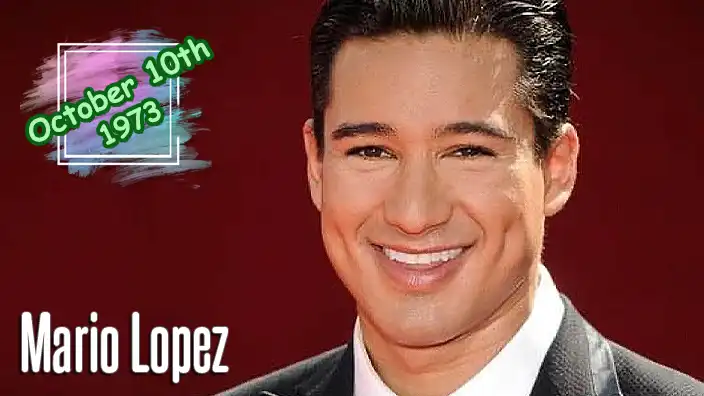
Mario Lopez first became famous as A.C. Slater, the muscular, wisecracking heartthrob of Saved by the Bell, and somehow managed to turn a high school wrestling uniform into a lifelong television career. Since then, he has hosted entertainment programs, interviewed celebrities, competed on Dancing with the Stars, and appeared on enough red carpets to qualify as an expert in expensive flooring. Decades after leaving Bayside High, he remains one of television's most recognizable personalities, with a smile that apparently comes with its own lighting department.
October 10, 1973, in San Diego, California
Trivia
- He was a competitive high school wrestler.
- He played A.C. Slater in Saved by the Bell.
- He finished second on Dancing with the Stars in 2006.
- He appeared on Broadway in A Chorus Line.
- He returned as Coach Slater in the Saved by the Bell revival.
- Details
- Category: Celebrity Birthdays - October
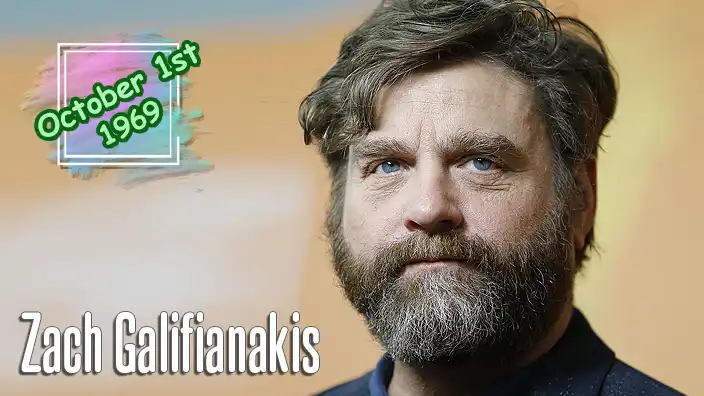
Zach Galifianakis turned an unruly beard, magnificent awkwardness and the ability to insult celebrities beside two potted ferns into an impressive Hollywood career. Then The Hangover put him in a wolf pack, handed him a man-purse and ensured that nobody would ever look at a rooftop quite the same way again.
October 1, 1969, in Wilkesboro, North Carolina
Trivia
- Attended North Carolina State University.
- Played Alan Garner in The Hangover trilogy.
- Won an MTV Movie Award for his first Hangover film.
- Created and hosts Between Two Ferns.
- Interviewed President Barack Obama between the ferns.
- Voiced the Joker in The Lego Batman Movie.
- Played twin brothers Chip and Dale in Baskets.
- Details
- Category: Celebrity Birthdays - October
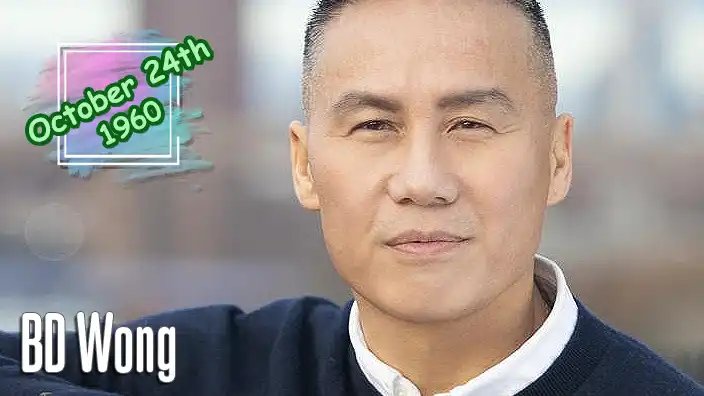
BD Wong has enjoyed a remarkable acting career playing everyone from a brilliant dinosaur geneticist with questionable judgment to a calm FBI psychiatrist surrounded by people who could clearly benefit from professional help. Throw in a mysterious hacker, a sinister comic-book scientist, a Disney warrior, and a Tony Award-winning Broadway performance, and you've got an actor who has apparently never met a challenging role he didn't fancy tackling.
October 24, 1960, in San Francisco, California
Trivia
- He won five major theater awards for his Broadway debut in M. Butterfly.
- He played Dr. Henry Wu in four Jurassic Park and Jurassic World films.
- He voiced Captain Li Shang in Disney's Mulan.
- He portrayed Dr. George Huang on Law & Order: SVU.
- His performance in Mr. Robot earned him a 2017 Emmy nomination.
- He published his personal memoir, Following Foo, in 2003.
- Details
- Category: Celebrity Birthdays - October
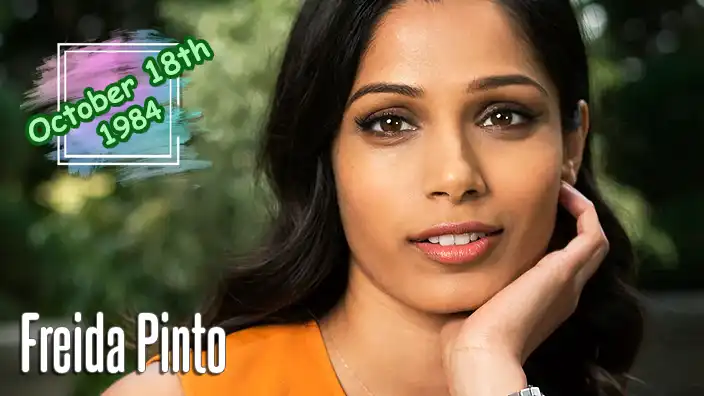
Freida Pinto made one of Hollywood's most spectacular entrances when her first feature film, Slumdog Millionaire, swept the Academy Awards and introduced her to audiences around the world. Since then, the Mumbai-born actress has worked with legendary directors, survived an uprising of remarkably intelligent apes, encountered ancient Greek gods, and explored everything from romantic drama to historical injustice. For someone who began her career as a model and travel presenter, she's certainly accumulated enough adventures to make an ordinary vacation seem rather dull.
October 18, 1984, in Bombay, India
Trivia
- She graduated from St. Xavier's College in Mumbai.
- She worked as a model before becoming an actress.
- She hosted the travel television program Full Circle.
- Slumdog Millionaire was her feature-film debut.
- She received a BAFTA nomination for playing Latika.
- She shared a Screen Actors Guild Award with the Slumdog Millionaire cast.
- Details
- Category: Celebrity Birthdays - October
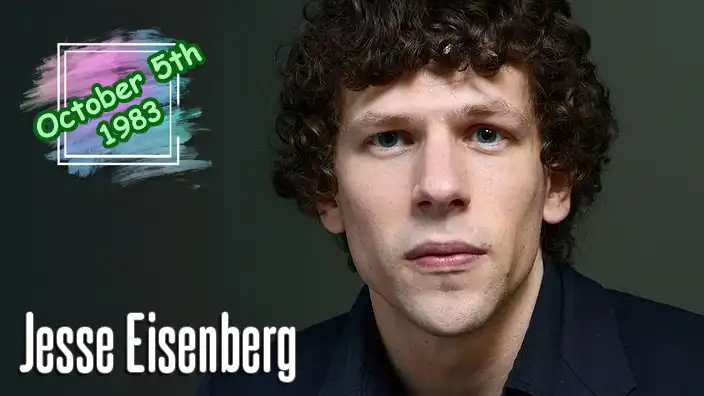
Jesse Eisenberg has made a remarkably successful career out of looking as though his brain has already reached the end of the conversation while everyone else is still clearing their throat. From Facebook billionaire Mark Zuckerberg to magician J. Daniel Atlas, zombie survivor Columbus and Superman's troublesome nemesis Lex Luthor, Eisenberg has turned rapid-fire speech, nervous energy and intellectual intensity into a distinctly recognizable screen presence.
October 5, 1983, in Queens, New York City
Trivia
- The Social Network earned him a Best Actor Oscar nomination.
- He voices Blu in Rio and Rio 2.
- He has written several stage plays.
- His first book was Bream Gives Me Hiccups.
- A Real Pain earned him an Oscar screenplay nomination.
- Details
- Category: Celebrity Birthdays - October
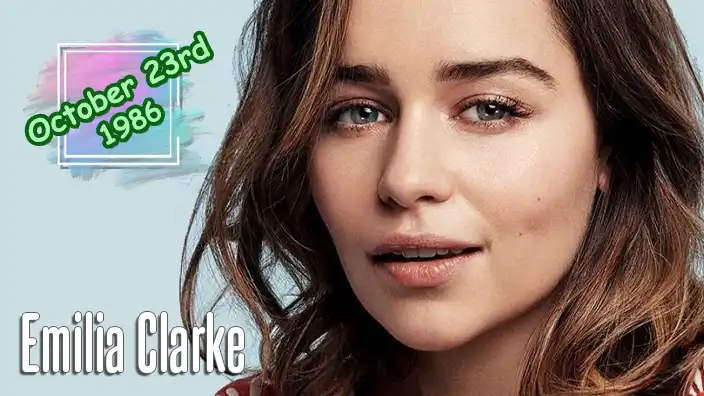
Emilia Clarke has enjoyed a spectacular career in which she has commanded dragons, conquered kingdoms, battled Terminators, and traveled through the Star Wars galaxy. Best known as Daenerys Targaryen in Game of Thrones, the English actress became internationally famous for playing a queen whose preferred method of settling disagreements occasionally involved setting things on fire. Fortunately, Clarke's real-life personality is considerably more cheerful, and her infectious smile has become almost as recognizable as her television dragons. From romantic comedies to science-fiction adventures, she has demonstrated that Hollywood's greatest challenges are no match for a determined actress—although a reliable fire extinguisher might still be advisable!
October 23, 1986, in London, England
Trivia
- She graduated from Drama Centre London.
- She played Daenerys in all eight seasons of Game of Thrones.
- She received four Emmy nominations.
- She portrayed Sarah Connor in Terminator Genisys.
- She played Qi'ra in Solo: A Star Wars Story.
- She co-founded the brain injury charity SameYou.
- Details
- Category: Celebrity Birthdays - October
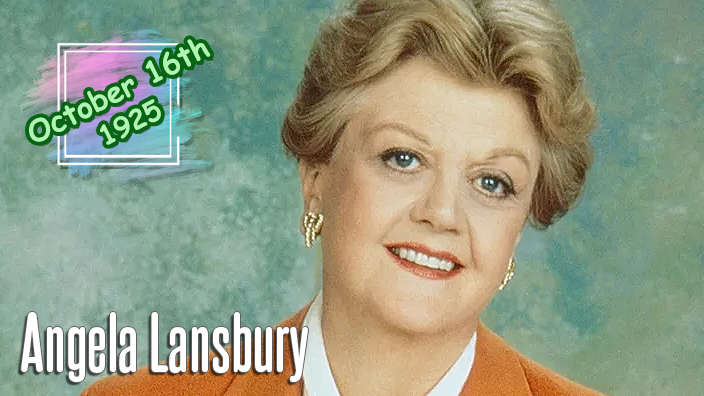
Dame Angela Lansbury could solve a murder before breakfast, charm a Broadway audience before dinner, and still find time to voice a teapot with impeccable manners. From Hollywood classics to Broadway triumphs and the enormously popular Murder, She Wrote, the British-born actress and singer built an extraordinary career spanning eight decades. She played villains, heroines, witches, mothers, and amateur detectives, proving that talent, versatility, and a perfectly raised eyebrow could take an actress almost anywhere.
October 16, 1925, in Regent's Park, England
 October 11, 2022, in Los Angeles, California
Trivia
- She played Laurence Harvey's mother in The Manchurian Candidate.
- She received 12 nominations for Jessica Fletcher without winning.
- She voiced Mrs. Potts in Beauty and the Beast.
- Her starring role in Mame earned her first Tony Award.
- She appeared in all 264 episodes of Murder, She Wrote.
- Queen Elizabeth II appointed her a Dame in 2014.
- Details
- Category: Celebrity Birthdays - October
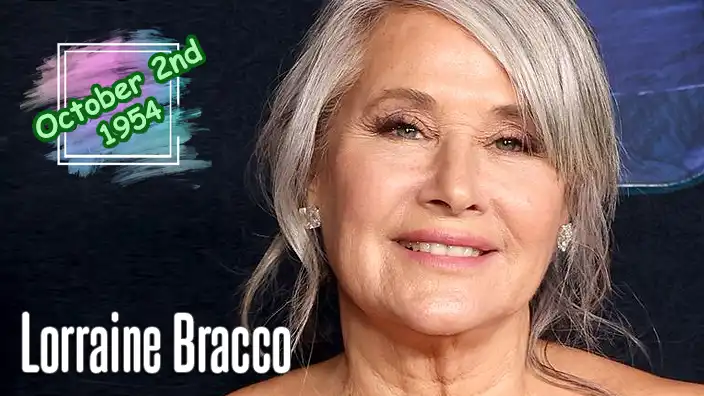
Lorraine Bracco survived Goodfellas, spent years listening to Tony Soprano’s problems and then raised a detective on Rizzoli & Isles, so ordinary family drama probably holds very few terrors. With an Oscar-nominated film performance and one of television’s most memorable psychiatrists to her credit, Bracco has made quite a career from keeping remarkably dangerous company.
October 2, 1954, in Brooklyn, New York
Trivia
- She worked as a model in Paris before becoming an actress.
- Bracco speaks French fluently.
- Goodfellas earned her an Academy Award nomination.
- She chose Dr. Melfi over the role of Carmela Soprano.
- Bracco appeared throughout all six seasons of The Sopranos.
- She played Angela Rizzoli on Rizzoli & Isles.
- Details
- Category: Celebrity Birthdays - October
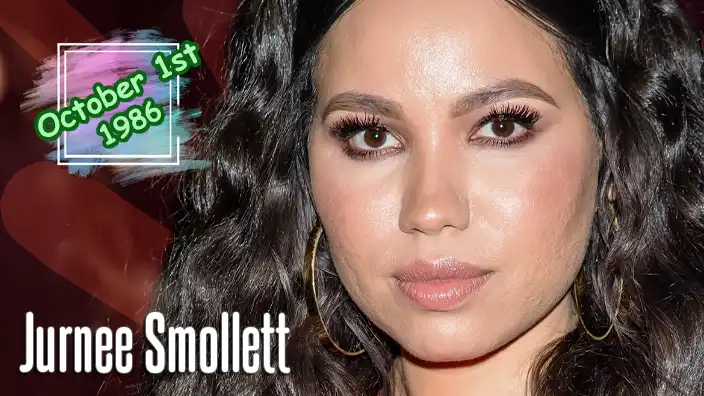
Jurnee Smollett started acting as a child, survived Full House, grew up to battle monsters in Lovecraft Country and eventually became Black Canary in the DC universe. That is quite a career progression, although fighting supernatural creatures may actually have been easier than getting six television siblings organized.
October 1, 1986, in New York City
Trivia
- Began acting professionally as a young child.
- Played Denise Frazer on Full House.
- Starred in the acclaimed 1997 film Eve's Bayou.
- Played Jess Merriweather on Friday Night Lights.
- Portrayed Black Canary in Birds of Prey.
- Earned an Emmy nomination for Lovecraft Country.
- Details
- Category: Celebrity Birthdays - October
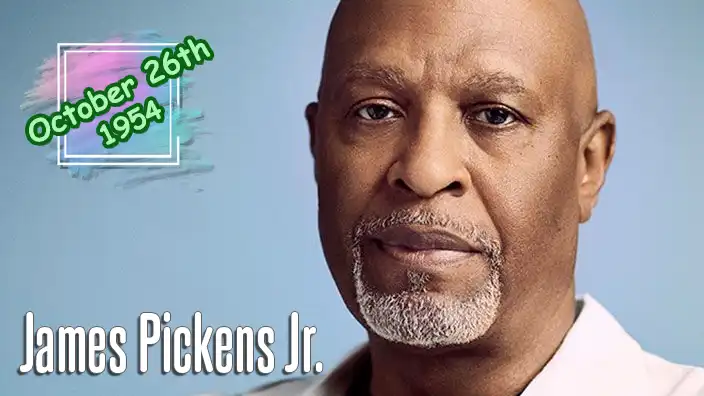
James Pickens Jr. has spent decades entertaining audiences, but he's best known as Dr. Richard Webber on Grey's Anatomy, where he has survived hospital politics, medical emergencies, complicated romances, and enough workplace drama to make an ordinary staff meeting look like a relaxing vacation. After so many years wearing surgical scrubs, he could probably find his way around a fictional operating room blindfolded.
October 26, 1954, in Cleveland, Ohio
Trivia
- He graduated from Bowling Green State University in 1976.
- He performed alongside Denzel Washington and Samuel L. Jackson in A Soldier's Play.
- His first film appearance was in F/X (1986).
- He played FBI official Alvin Kersh on The X-Files.
- He has portrayed Dr. Richard Webber since 2005.
- He is an accomplished competitive team roper.
- Details
- Category: Celebrity Birthdays - October
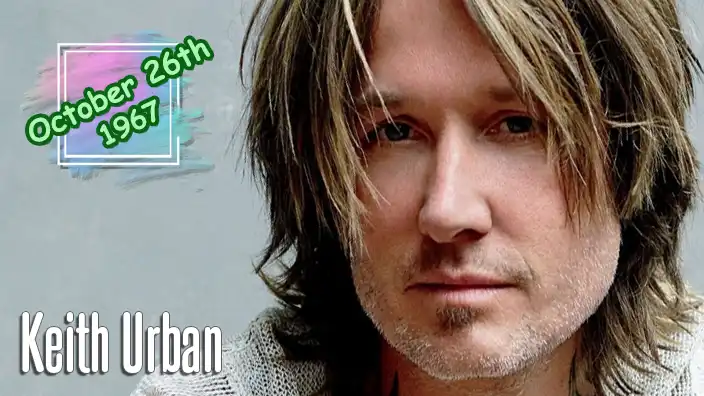
Keith Urban brought Australian charm, extraordinary guitar skills, and a collection of chart-topping country hits to Nashville, proving that cowboy boots work just as well with an accent from Down Under. The Grammy-winning superstar has conquered concert stages, television screens, and millions of hearts, all while making complicated guitar solos look easier than finding a parking space at the Grand Ole Opry.
October 26, 1967, in Whangārei, New Zealand
Trivia
- He won Australia's Toyota Star Maker competition in 1990.
- He moved to Nashville in 1992.
- His first American band was called The Ranch.
- He has won four Grammy Awards.
- He joined the Grand Ole Opry in 2012.
- He entered the Nashville Songwriters Hall of Fame in 2023.
- Details
- Category: Celebrity Birthdays - October
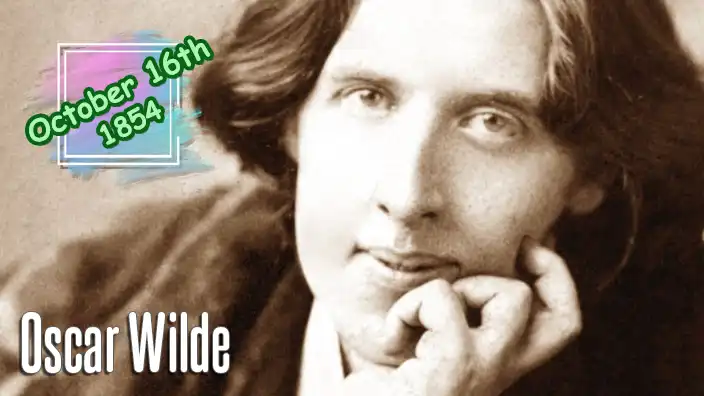
Oscar Wilde could dismantle a pompous argument with a single sentence, turn a drawing-room conversation into a theatrical performance, and make Victorian society laugh at itself without always realizing it was the target. The celebrated Irish playwright, novelist, poet, and master of the perfectly timed insult gave the world The Picture of Dorian Gray, The Importance of Being Earnest, and enough memorable quotations to keep literary enthusiasts entertained for centuries. Unfortunately, his brilliance also came with a dangerous disregard for Victorian respectability, and the society that applauded his wit eventually punished him for refusing to live by its rules.
October 16, 1854, in Dublin, Ireland
November 30, 1900, in Paris, France
Trivia
- He toured the United States and Canada as a lecturer in 1882.
- He wrote only one completed novel, The Picture of Dorian Gray.
- The Importance of Being Earnest premiered on Valentine's Day in 1895.
- He published The Ballad of Reading Gaol under his prison identification, C.3.3.
- His tomb in Paris's Père Lachaise Cemetery features a sculpture by Jacob Epstein.
- He received a posthumous pardon in 2017 under legislation known as the Alan Turing law.
- Details
- Category: Celebrity Birthdays - October
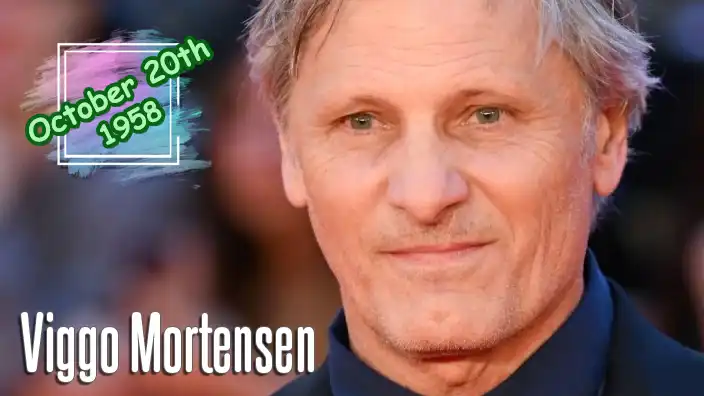
Viggo Mortensen has enjoyed one of Hollywood's most fascinating careers, although millions of moviegoers will always remember him as the rugged, sword-wielding Aragorn in The Lord of the Rings. With his commanding screen presence, extraordinary dedication to his roles, and an impressive ability to look heroic while covered in mud, Mortensen transformed a wandering ranger into one of cinema's most beloved characters. Yet his achievements extend far beyond Middle-earth. An accomplished actor, director, poet, photographer, painter, and musician, he has built a remarkable artistic career by choosing challenging projects rather than simply chasing Hollywood fame. And unlike most actors who become famous for playing a king, Mortensen seems perfectly content to spend his spare time writing poetry instead of demanding that someone polish his crown.
October 20, 1958, in New York City
Trivia
- He speaks fluent English, Danish, and Spanish.
- His son encouraged him to play Aragorn.
- He broke two toes kicking a helmet in The Two Towers.
- He purchased horses used in The Lord of the Rings.
- He founded the independent publisher Perceval Press.
- Details
- Category: Celebrity Birthdays - October
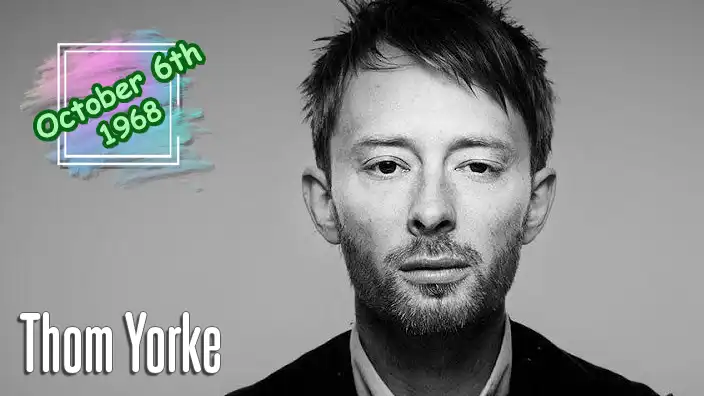
Thom Yorke is the unmistakable voice of Radiohead, a singer, songwriter and composer who helped turn alternative rock into something atmospheric, experimental and occasionally capable of making a perfectly contented person stare thoughtfully out of a rainy window.
October 7, 1968, in Wellingborough, England
Trivia
- He received his first guitar as a child.
- Radiohead was originally called On a Friday.
- The name Radiohead came from a Talking Heads song.
- "Creep" became Radiohead's breakthrough international hit.
- Yorke studied fine art and English at university.
- He formed Atoms for Peace with musicians including Flea.
- He composed the score for the 2018 film Suspiria.
- Details
- Category: Celebrity Birthdays - October
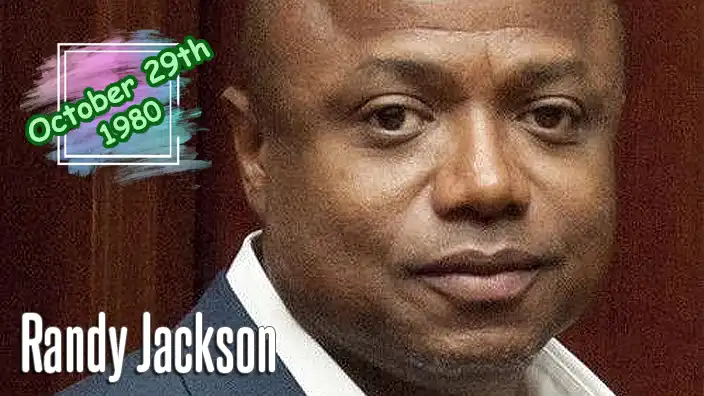
Randy Jackson grew up in a family where musical talent was practically a household requirement. As the youngest Jackson brother to perform with the legendary group, he helped keep the family's famous sound alive with keyboards, percussion, songwriting, and plenty of energy. In the Jackson household, asking someone to play a little music could apparently turn into an international concert tour.
October 29, 1961, in Gary, Indiana
Trivia
- He is the youngest Jackson brother.
- His childhood nickname was "Little Randy."
- He officially joined The Jacksons in 1975.
- He co-wrote "Shake Your Body" with Michael.
- He survived a serious automobile accident in 1979.
- He released Randy & the Gypsys in 1989.
- Details
- Category: Celebrity Birthdays - October
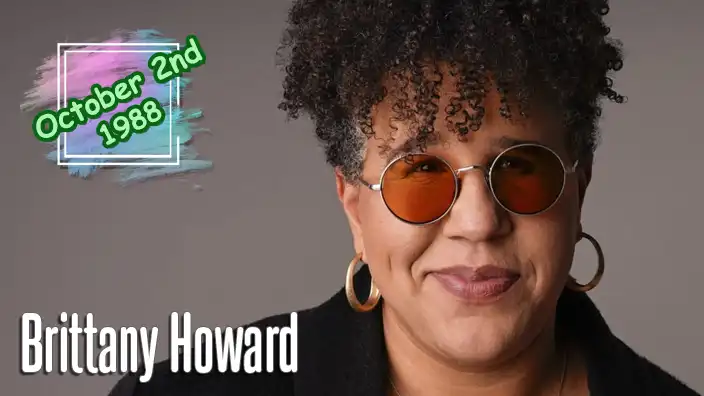
Brittany Howard went from delivering mail in Alabama to delivering vocals powerful enough to make the windows nervous. As the unmistakable voice of Alabama Shakes and a Grammy-winning solo artist, she has mixed rock, soul, blues and just about anything else within reach, while apparently never discovering the volume setting marked “ordinary.”
October 2, 1988, in Athens, Alabama
Trivia
- She worked for the U.S. Postal Service before fame arrived.
- Alabama Shakes formed in Athens around 2009.
- “Hold On” helped launch the band nationally.
- Sound & Color reached No. 1 on the Billboard 200.
- Howard named Jaime in honor of her late sister.
- “Stay High” won the Grammy for Best Rock Song.
- Alabama Shakes returned with a new album in 2026.
- Details
- Category: Celebrity Birthdays - October
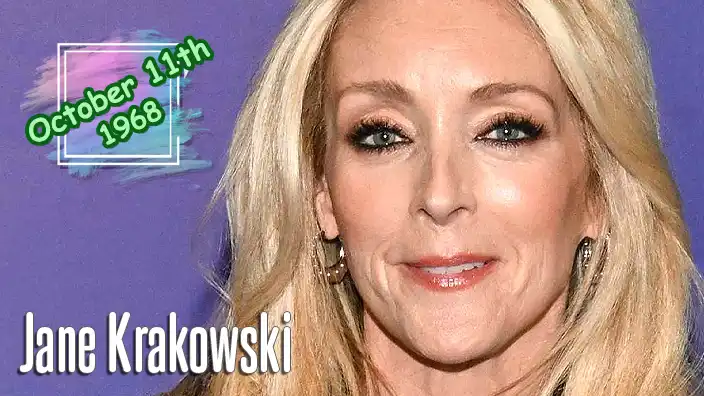
Jane Krakowski, the Tony Award-winning actress and singer celebrated for 30 Rock, Unbreakable Kimmy Schmidt, and her dazzling Broadway performances, has made a career out of playing characters who rarely suffer from a shortage of self-confidence. Whether portraying the gloriously self-absorbed Jenna Maroney, delivering a showstopping musical number, or causing elegant chaos as Jacqueline White, Krakowski combines impeccable comic timing with an extraordinary singing voice. She can dance, act, sing, and make an outrageous facial expression without missing a beat. Frankly, it's rather inconsiderate to leave so little talent for everyone else!
October 11, 1968, in Parsippany, New Jersey
Trivia
- She began ballet lessons at three.
- She played Cousin Vicki in National Lampoon's Vacation.
- She made her Broadway debut on roller skates.
- She won a Tony Award for Nine in 2003.
- She won an Olivier Award for Guys and Dolls.
- She has received five Primetime Emmy nominations.
- Details
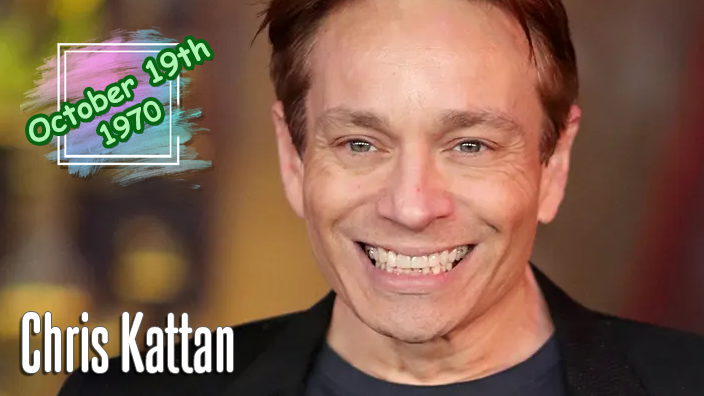
- Category: Celebrity Birthdays - October
Chris Kattan made television history by playing a hyperactive monkey-man, an irresistible dancer named Mango, and a nightclub enthusiast who apparently believed that romance began with vigorous head-bobbing. As one of Saturday Night Live's most memorable comedians, he demonstrated that a complete disregard for dignity could become a successful career. Alongside Will Ferrell, he even turned repeatedly nodding to "What Is Love?" into a Hollywood movie. Somewhere, a chiropractor is still shaking his head.
October 19, 1970, in Culver City, California
Trivia
- His father, Kip King, was a comedian and actor.
- He grew up partly in a Buddhist mountain community.
- He trained with The Groundlings comedy troupe.
- Mango was one of his most famous SNL characters.
- He played Buck Dharma in the "More Cowbell" sketch.
From Our Marks Catelog
-

American Football Day is that magical time when perfectly reasonable adults suddenly start yelling at...
-

There’s something about that golden cloud of meringue that makes you forget all your worries, at...
-

Posttraumatic growth isn’t about silver linings or pretending that pain was somehow “worth it.” It’s...
-

On a hot day, when the sun is cooking the sidewalk and even the lawn chairs are sweating, there’s one...
-
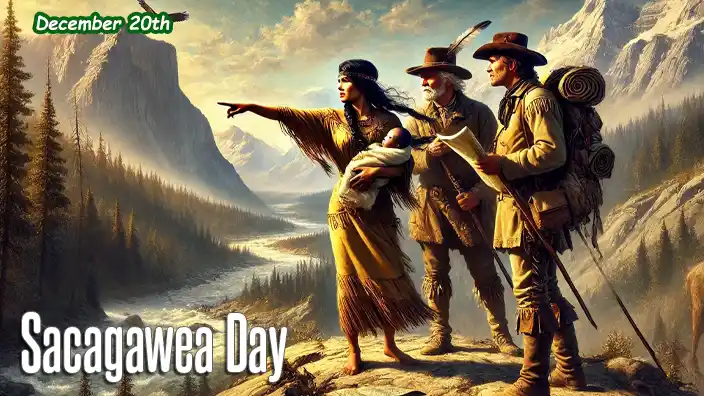
Sacagawea wasn’t just a guide—she was the ultimate multitasker. Imagine a teenager navigating the...
-
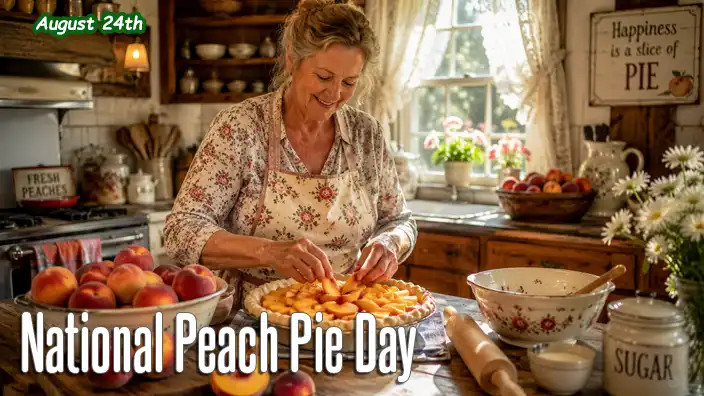
If peaches could talk, they would probably spend most of the year bragging about becoming...

