- Details
- Category: Celebrity Birthdays - October
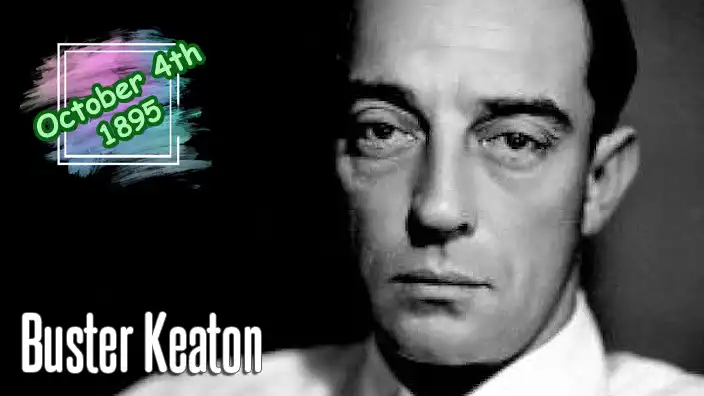
Buster Keaton became one of silent cinema’s greatest comedians without so much as cracking a smile. Trains chased him, houses fell on him and machinery routinely tried to finish him off, while the Great Stone Face calmly carried on as though this sort of thing happened every Tuesday.
 October 4, 1895, in Piqua, Kansas
 February 1, 1966, in Woodland Hills. California

Trivia
- His trademark pork pie hat became instantly recognizable.
- Keaton began performing with his parents in vaudeville.
- He fractured his neck while making Sherlock Jr.
- Baseball was one of his favorite pastimes.
- He received an Honorary Academy Award.
- Details
- Category: Celebrity Birthdays - October
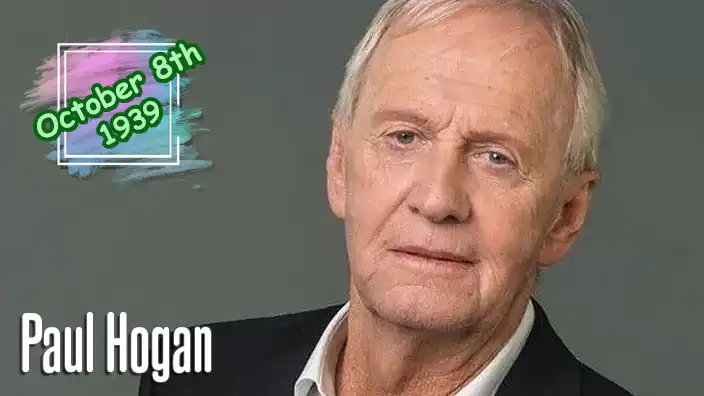
Paul Hogan spent years making Australians laugh before the rest of the world discovered him carrying an enormous knife and explaining that it was, in fact, a knife. Long before Crocodile Dundee, Hogan had already transformed himself from a Sydney Harbour Bridge rigger into one of Australia’s best-known comedians. Hollywood simply arrived late to the party.
October 8, 1939, in Lightning Ridge, Australia
Trivia
- His television breakthrough came through New Faces.
- He starred in The Paul Hogan Show before becoming a movie star.
- Hogan helped write Crocodile Dundee.
- He won a Golden Globe for playing Mick Dundee.
- Crocodile Dundee earned him an Oscar nomination for screenwriting.
- His Australian tourism commercials became famous in America.
- Details
- Category: Celebrity Birthdays - October
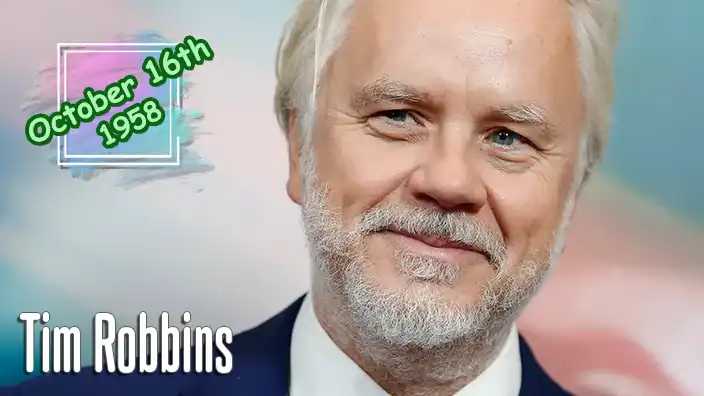
Tim Robbins has escaped from Shawshank Prison, navigated Hollywood's political minefields, and directed an Oscar-winning prison drama without ever needing to serve a sentence himself. Best known for his unforgettable portrayal of Andy Dufresne in The Shawshank Redemption, Robbins has spent decades proving that a thoughtful performance, a towering screen presence, and an occasional wicked sense of humor can make an actor impossible to ignore.
October 16, 1958, in West Covina, California
Trivia
- He played the unpredictable baseball pitcher Nuke LaLoosh in Bull Durham.
- He won an Academy Award for his performance in Mystic River.
- He directed Susan Sarandon to an Oscar-winning performance in Dead Man Walking.
- He portrayed Andy Dufresne in The Shawshank Redemption but received no Oscar nomination for the role.
- He co-founded the experimental theater company the Actors' Gang in 1981.
- He received a star on the Hollywood Walk of Fame in 2008.
- Details
- Category: Celebrity Birthdays - October
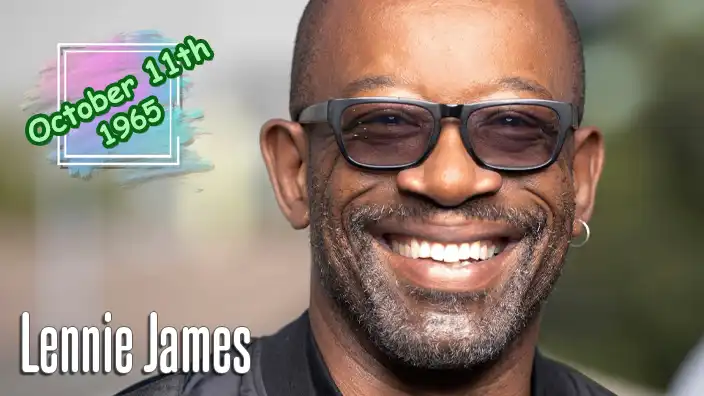
Lennie James, the acclaimed English actor, screenwriter, and playwright best known for portraying Morgan Jones in The Walking Dead and Fear the Walking Dead, has spent decades bringing complicated characters to life. Whether battling zombies with a wooden staff, investigating corruption in Line of Duty, or delivering award-winning performances in Save Me and Mr Loverman, James has mastered the art of making audiences care about people whose lives are spectacularly difficult. His characters rarely enjoy a peaceful afternoon, and when they do, there's usually something unpleasant waiting around the corner. Fortunately, James himself has enjoyed a much more rewarding career than most of the unfortunate individuals he portrays!
October 11, 1965, in Nottingham, England
Trivia
- He graduated from Guildhall in 1988.
- He originally wanted to play professional rugby.
- He played Morgan Jones in two Walking Dead series.
- He voices Lord Shaxx in the Destiny video games.
- He won the 2025 BAFTA for Mr Loverman.
- Details
- Category: Celebrity Birthdays - October
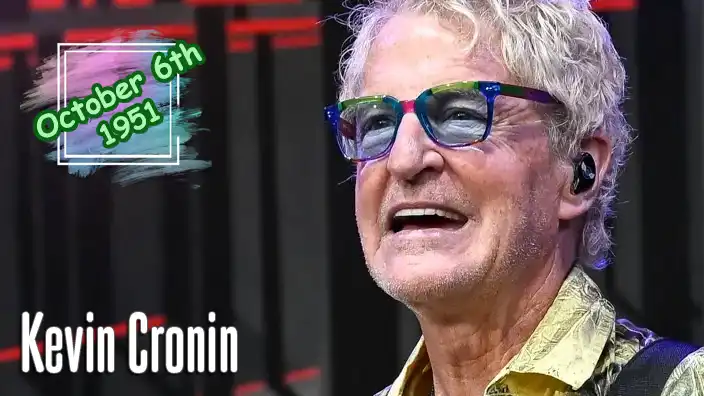
Kevin Cronin supplied the unmistakable voice behind REO Speedwagon and wrote enough enormous rock songs to keep classic-rock radio busy indefinitely. From “Keep On Loving You” and “Can't Fight This Feeling” to “Roll With the Changes” and “Time for Me to Fly,” Cronin discovered that complicated relationships become considerably easier to manage once you add a piano, several guitars and a packed arena.
October 6, 1951, in Evanston, Illinois
Trivia
- He first joined REO Speedwagon in 1972.
- He returned to the band in 1976.
- He wrote “Keep On Loving You.”
- He wrote “Can't Fight This Feeling.”
- He wrote “Roll with the Changes” while traveling west.
- Details
- Category: Celebrity Birthdays - October
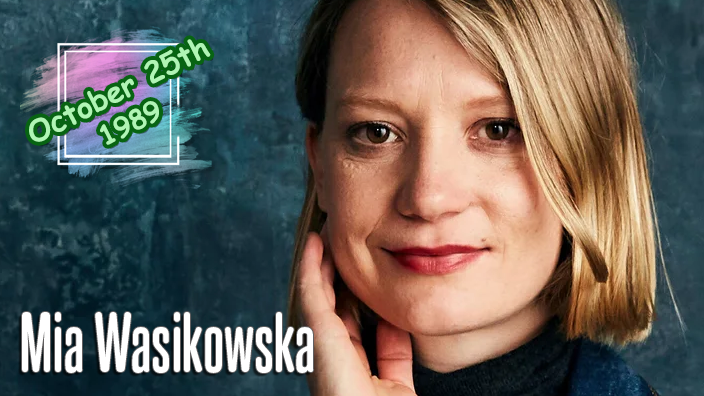
Mia Wasikowska became an international star by following a white rabbit into a world of talking animals, disappearing cats, and a queen with serious anger-management problems. Best known for playing Alice in Tim Burton's Alice in Wonderland, the Australian actress has since built a career portraying complex characters in everything from Gothic romances to psychological thrillers. Apparently, after surviving Wonderland, ordinary Hollywood drama seemed positively relaxing.
 October 25, 1989, in Canberra, Australia
Trivia
- She trained seriously in classical ballet.
- Her American breakthrough came with HBO's In Treatment.
- Tim Burton cast her as Alice Kingsleigh in 2010.
- She portrayed Jane Eyre in the 2011 adaptation.
- She played Robyn Davidson in Tracks.
- Photography is one of her major creative interests.
- Details
- Category: Celebrity Birthdays - October
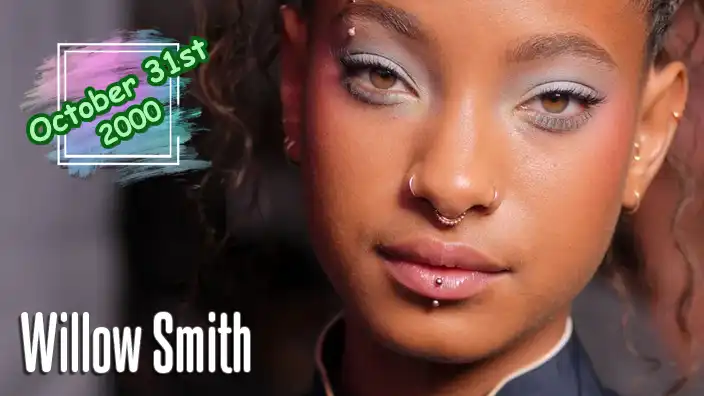
Willow Smith was born on Halloween, which seems appropriate for someone who has spent her career frightening record executives by refusing to stay in one musical genre. From whipping her hair at an age when most children were still negotiating bedtime to exploring alternative rock, jazz, and experimental pop, Willow has proved that musical talent runs in the family—even if the family dinner conversations probably require a recording contract and a sound engineer.
October 31, 2000, in Los Angeles, California
Trivia
- Made her film debut alongside her father in I Am Legend.
- Released "Whip My Hair" at just nine years old.
- Signed with Jay-Z's Roc Nation record label.
- Voiced young Gloria in Merry Madagascar.
- Formed the musical duo The Anxiety with Tyler Cole.
- Co-hosted Red Table Talk with her mother and grandmother.
- Details
- Category: Celebrity Birthdays - October
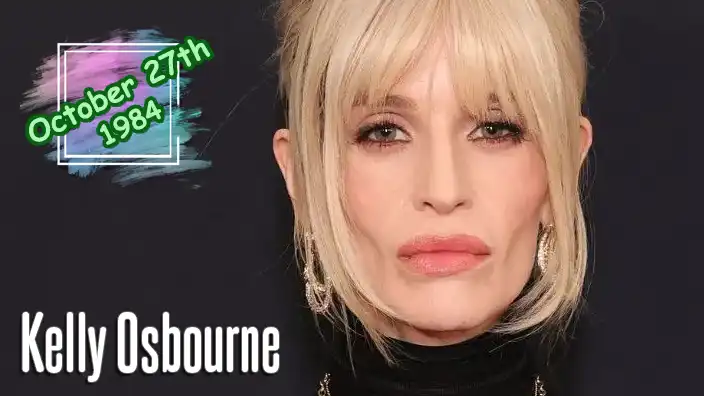
Kelly Osbourne was born into rock-and-roll royalty, where family dinners were rarely quiet and ordinary childhood rebellion probably seemed a little pointless. The daughter of Ozzy and Sharon Osbourne, she turned reality television fame into a career spanning music, acting, fashion, and television presenting. With her colorful hairstyles, sharp wit, and unmistakable personality, Kelly has proved that being an Osbourne is practically a full-time occupation — and occasionally a contact sport.
October 27, 1984, in Westminster, England
Trivia
- Her duet with Ozzy, Changes, topped the UK charts.
- She finished third on Dancing with the Stars in 2009.
- She voiced the witch Hildy Gloom in The 7D.
- She performed as Ladybug on The Masked Singer.
- She launched a fashion collection called Stories... By Kelly Osbourne.
- Details
- Category: Celebrity Birthdays - October
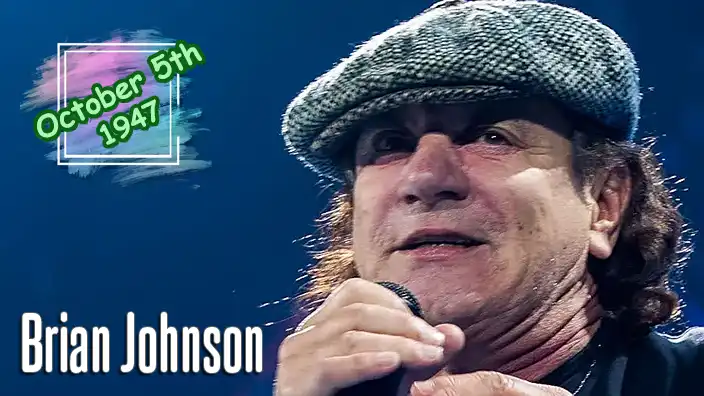
Brian Johnson possesses the sort of singing voice that makes ordinary loud noises reconsider their career choices. As the flat-capped frontman of AC/DC, the English singer stepped into an almost impossible position following the death of Bon Scott and promptly helped create Back in Black, one of rock music's defining albums. More than four decades later, that unmistakable rasp remains capable of making an amplifier nervous.
October 5, 1947, in Dunston, England
Trivia
- Johnson served in Britain's Territorial Army.
- He fronted the British rock band Geordie.
- Bon Scott had seen Johnson perform before AC/DC hired him.
- His famous flat cap originally helped keep sweat from his eyes.
- Back in Black was his first AC/DC album.
- Johnson is an enthusiastic car collector and racer.
- Details
- Category: Celebrity Birthdays - October
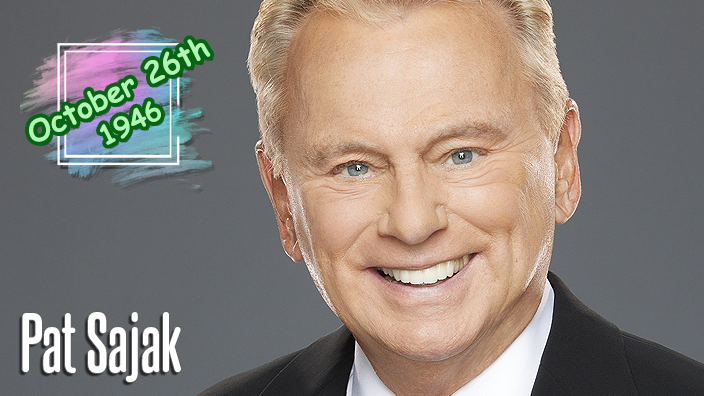
Pat Sajak turned spinning a giant wheel, buying vowels, and watching contestants lose everything to Bankrupt into one of television's most beloved traditions. For more than four decades, the legendary Wheel of Fortune host kept America entertained with quick wit, impeccable timing, and the remarkable ability to smile politely when someone guessed a puzzle that made absolutely no sense.
October 26, 1946, in Chicago, Illinois
Trivia
- He worked as a military radio DJ in Vietnam.
- He was a Los Angeles television weatherman.
- Merv Griffin personally selected him for Wheel of Fortune.
- He received a Hollywood Walk of Fame star in 1994.
- He hosted a CBS late-night talk show from 1989 to 1990.
- His daughter Maggie became a Wheel of Fortune correspondent.
- Details
- Category: Celebrity Birthdays - October
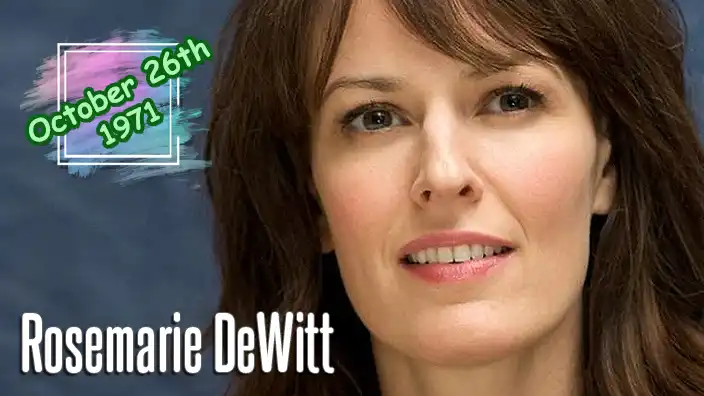
Rosemarie DeWitt has built an impressive acting career playing complicated women, navigating troubled families, and occasionally attending weddings that would make even the most experienced wedding planner consider early retirement. From Rachel Getting Married and The United States of Tara to La La Land, she has mastered the art of making difficult relationships look remarkably believable. Fortunately, her performances are considerably more enjoyable than most of the family arguments her characters endure.
October 26, 1971, in Flushing, Queens, New York
Trivia
- She appeared in Cinderella Man, the film about her grandfather.
- She studied at Hofstra University.
- She met husband Ron Livingston while filming Standoff.
- She won a Satellite Award for Rachel Getting Married.
- She played Don Draper's girlfriend Midge on Mad Men.
- She portrayed Sebastian's sister in La La Land.
- Details
- Category: Celebrity Birthdays - October
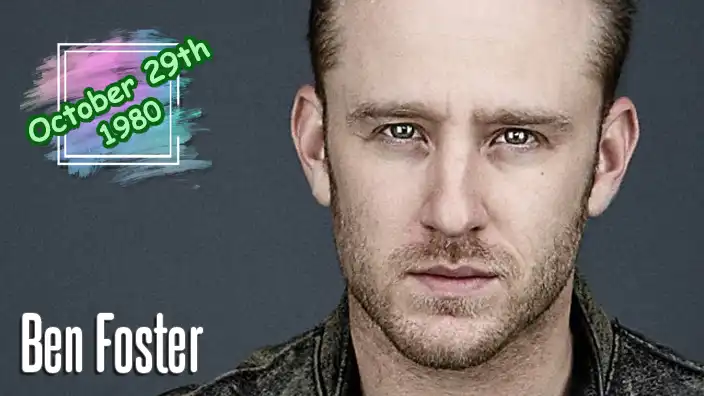
Ben Foster has made a career out of portraying men who are complicated, unpredictable, and occasionally best avoided in a dark alley. From his ruthless outlaw in 3:10 to Yuma to his desperate bank robber in Hell or High Water and troubled father in Leave No Trace, Foster brings extraordinary intensity to every performance. If he ever appears at your front door wearing a cowboy hat, it might be wise to ask what movie he's filming before inviting him inside.
October 29, 1980, in Boston, Massachusetts
Trivia
- He wrote an award-winning play at twelve.
- His younger brother, Jon Foster, is also an actor.
- His first major television role was in Disney's Flash Forward.
- He played Angel in X-Men: The Last Stand.
- He portrayed Lance Armstrong in The Program.
- He won an Independent Spirit Award for Hell or High Water.
- Details
- Category: Celebrity Birthdays - October
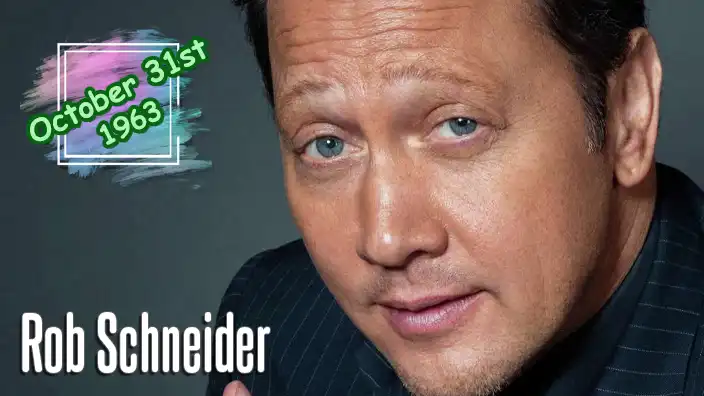
Rob Schneider has made a career out of playing outrageous characters, delivering ridiculous catchphrases, and proving that absolutely anything can become a comedy if you're willing to embarrass yourself sufficiently. Born on Halloween, the Saturday Night Live veteran and Hollywood funnyman has spent decades making audiences laugh, occasionally making critics groan, and demonstrating that dignity is terribly overrated when there's a good joke involved.
October 31, 1963, in San Francisco, California
Trivia
- Opened comedy shows for Jay Leno and Jerry Seinfeld.
- Joined Saturday Night Live in 1990.
- Earned three Primetime Emmy nominations for SNL writing.
- His Copy Guy character popularized "Makin' copies!"
- Is the father of singer-songwriter Elle King.
- Directed and starred in the comedy Big Stan.
- Details
- Category: Celebrity Birthdays - October
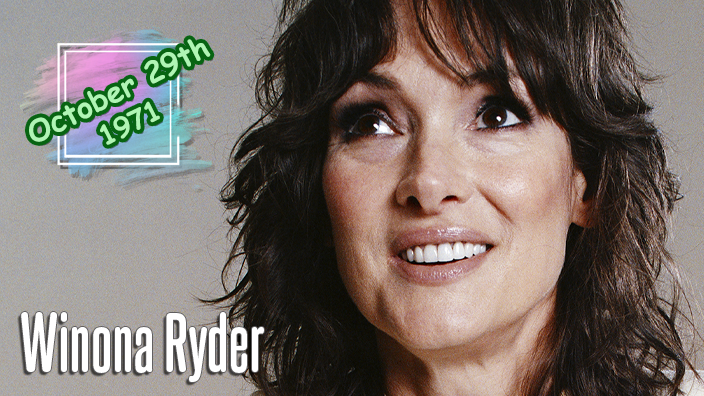
Winona Ryder has spent decades making the strange seem perfectly normal, whether she's befriending ghosts, surviving supernatural adventures, or communicating with another dimension using Christmas lights. From Beetlejuice to Stranger Things, she's demonstrated that when life gets weird, the best response is usually to get weirder.
October 29, 1971, in Winona, Minnesota
Trivia
- She was named after Winona, Minnesota.
- Her godfather was psychologist Timothy Leary.
- Her stage surname was inspired by musician Mitch Ryder.
- She grew up in a commune without electricity.
- She has received two Academy Award nominations.
- She received a Grammy nomination for narrating Anne Frank's Diary.
- Details
- Category: Celebrity Birthdays - October
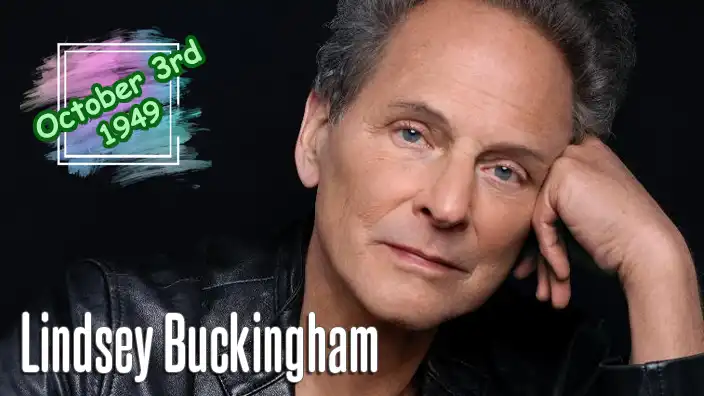
Lindsey Buckingham helped give Fleetwood Mac its unmistakable sound with a guitar, a distinctive voice and enough creative intensity to power a small town. He also proved that band relationships can be complicated enough without everybody writing hit songs about each other.
October 3, 1949, in Palo Alto, California
Trivia
- Buckingham is largely a self-taught guitarist.
- He usually plays guitar with his fingers rather than a pick.
- He and Stevie Nicks released Buckingham Nicks in 1973.
- He wrote Fleetwood Mac's "Go Your Own Way."
- His first solo album was Law and Order.
- Details
- Category: Celebrity Birthdays - October
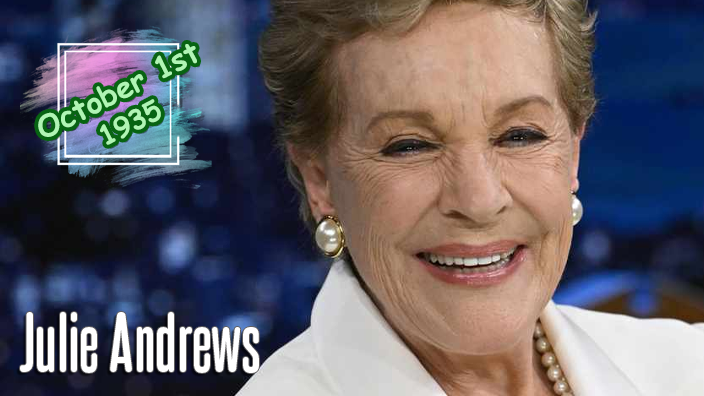
Julie Andrews made raindrops on roses, spoonfuls of sugar and singing on Austrian mountaintops look perfectly normal, then spent the next several decades proving she was far more than Mary Poppins and Maria von Trapp. Few performers could make "Supercalifragilisticexpialidocious" sound dignified. Andrews somehow made it practically royal.
October 1, 1935, in Walton-on-Thames, England
Trivia
- Performed professionally onstage as a child.
- Originated Eliza Doolittle in Broadway's My Fair Lady.
- Mary Poppins was her feature-film debut.
- Won the Best Actress Oscar for Mary Poppins.
- Played Maria in The Sound of Music.
- Was appointed a Dame Commander in 2000.
- Voices Lady Whistledown in Bridgerton.
- Details
- Category: Celebrity Birthdays - October
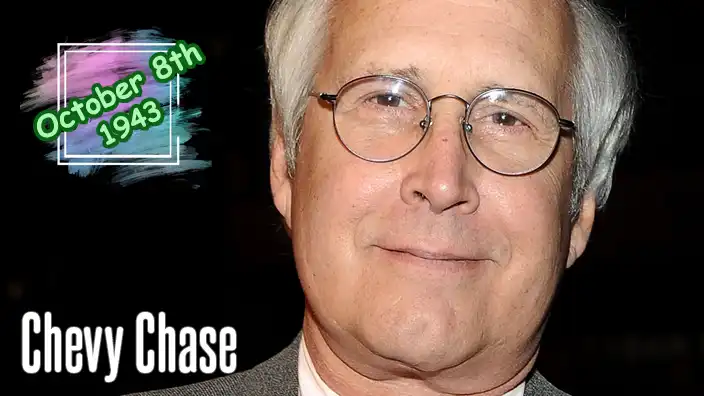
Chevy Chase has spent decades proving that a perfectly timed stare, a spectacular fall and the confidence to behave as though everyone else is the problem can constitute a remarkably successful career. From Saturday Night Live and Caddyshack to Clark Griswold’s increasingly hazardous family vacations, Chase developed a style of comedy that could make arrogance, confusion and minor physical injury extremely funny.
October 8, 1943, in Lower Manhattan, New York
Trivia
- His grandmother gave him the nickname “Chevy.”
- He was valedictorian of his high school class.
- Chase was an original Saturday Night Live cast member.
- He was the first original SNL cast member to leave.
- He has won three Primetime Emmy Awards.
- Details
- Category: Celebrity Birthdays - October
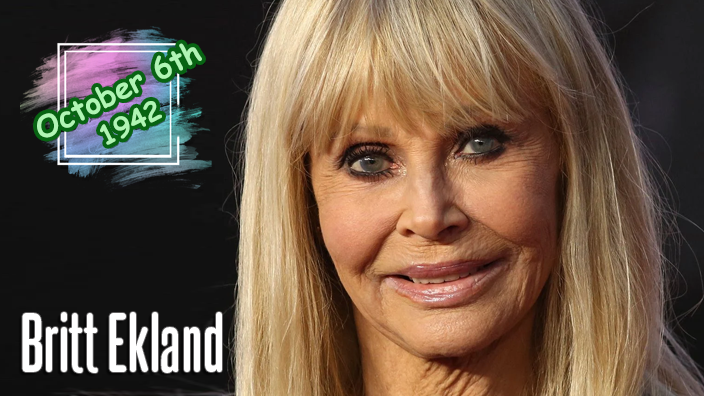
Britt Ekland brought Swedish glamour, a mischievous screen presence and an impressive ability to survive James Bond’s particular brand of workplace chaos to international cinema. From Get Carter and The Wicker Man to playing Mary Goodnight opposite Roger Moore in The Man with the Golden Gun, Ekland became one of the most recognizable European actresses of the 1960s and 1970s — and considerably more than simply another beautiful blonde standing beside 007.
October 6, 1942, in Stockholm, Sweden
Trivia
- She once hoped to become a veterinarian.
- She married Peter Sellers in 1964.
- She played Willow in The Wicker Man.
- Mary Goodnight was her James Bond role.
- She became friends with fellow Bond actress Maud Adams.
- She contributed spoken French to Rod Stewart's “Tonight's the Night.”
- Details
- Category: Celebrity Birthdays - October
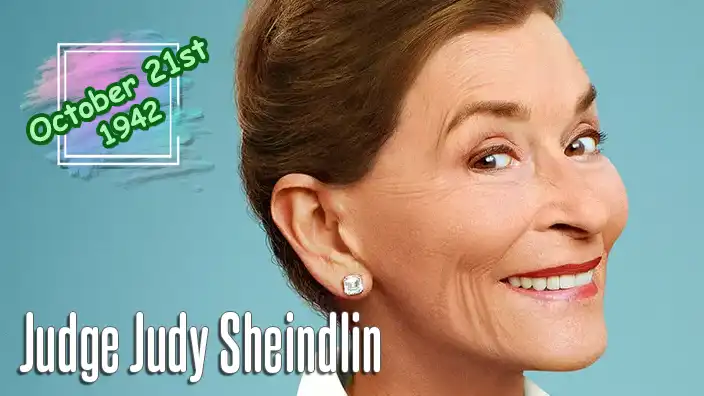
Judge Judy Sheindlin has spent decades proving that justice can be swift, television can be entertaining, and foolish excuses have a remarkably short life expectancy. Armed with a law degree, razor-sharp wit, and a stare capable of making grown adults reconsider their entire existence, she transformed small-claims disputes into one of television's greatest success stories. From feuding neighbors to unpaid loans and spectacularly questionable explanations, Judge Judy has heard just about everything. And if you ever find yourself standing before her, remember one simple rule: she asked you a question, not for your life story.
October 21, 1942, in Brooklyn, New York
Trivia
- Earned her law degree from New York Law School in 1965.
- Appointed to the New York City bench by Mayor Ed Koch in 1982.
- Handled more than 20,000 cases before retiring from the bench.
- Her original Judge Judy series ran for 25 seasons.
- Received a star on the Hollywood Walk of Fame in 2006.
- Won a Daytime Emmy Lifetime Achievement Award in 2019.
- Details
- Category: Celebrity Birthdays - October
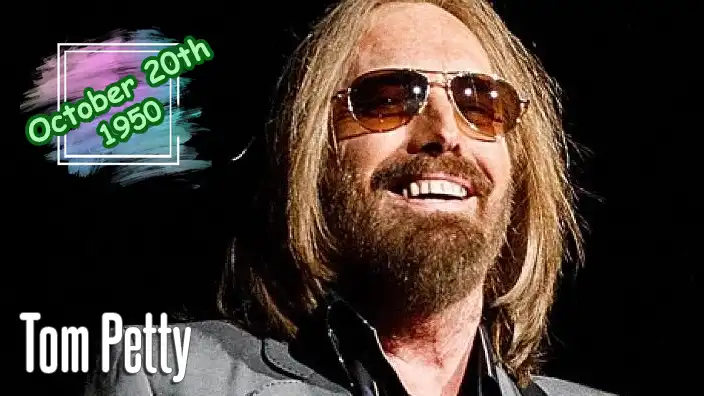
Tom Petty was the sort of rock musician who could make an entire stadium sing along with a song about heartbreak, freedom, or refusing to back down, all while looking as though he'd just wandered in from the garage to see what the noise was about. With his distinctive nasal voice, unmistakable blond hair, and a collection of songs that became permanent fixtures on American radio, Petty helped define heartland rock for generations. As the leader of Tom Petty and the Heartbreakers, he proved that great rock music didn't require complicated arrangements, extravagant costumes, or a guitarist suspended from the ceiling. Sometimes all it needed was a good melody, an honest lyric, and an amplifier turned up just enough to annoy the neighbors.
October 20, 1950, in Gainesville, Florida
October 2, 2017, in Santa Monica, California
Trivia
- Meeting Elvis Presley helped inspire his musical ambitions.
- His early band was called Mudcrutch.
- He was Charlie T. Wilbury Jr. in the Traveling Wilburys.
- He voiced Lucky on King of the Hill.
- The Heartbreakers performed at Super Bowl XLII.
- His final concert was at the Hollywood Bowl in 2017.
- Details
- Category: Celebrity Birthdays - October
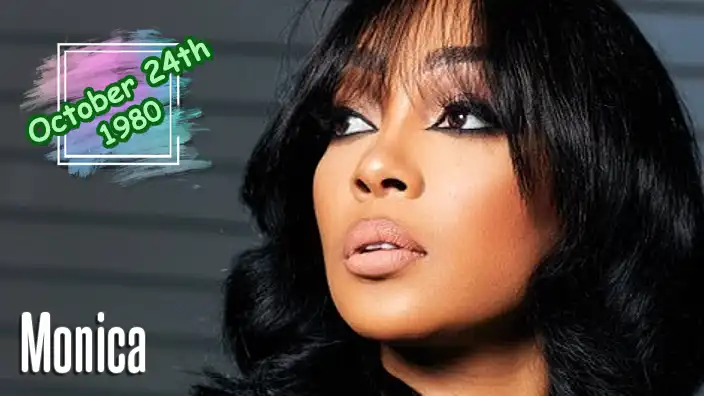
Monica has spent much of her life proving that a powerful voice, a little Southern attitude, and absolutely no patience for musical mediocrity can take a girl a very long way. From singing in a Georgia church choir to collecting Grammy Awards, topping the Billboard charts, and becoming one of R&B's most recognizable voices, she has enjoyed the sort of career most aspiring singers can only dream about. And when she teamed up with Brandy to announce that "The Boy Is Mine," millions of listeners joined the argument, although nobody ever established whether the gentleman in question was actually worth all the trouble.
October 24, 1980, in College Park, Georgia
Trivia
- She began singing in her church choir at four years old.
- She joined a traveling gospel choir at ten.
- She reportedly won more than twenty childhood talent competitions.
- She graduated from high school early with a 4.0 GPA.
- "The Boy Is Mine" spent thirteen weeks atop the Billboard Hot 100.
- She won a Grammy Award with Brandy in 1999.
From Our Marks Catelog
-

American Football Day is that magical time when perfectly reasonable adults suddenly start yelling at...
-

There’s something about that golden cloud of meringue that makes you forget all your worries, at...
-

Posttraumatic growth isn’t about silver linings or pretending that pain was somehow “worth it.” It’s...
-

On a hot day, when the sun is cooking the sidewalk and even the lawn chairs are sweating, there’s one...
-
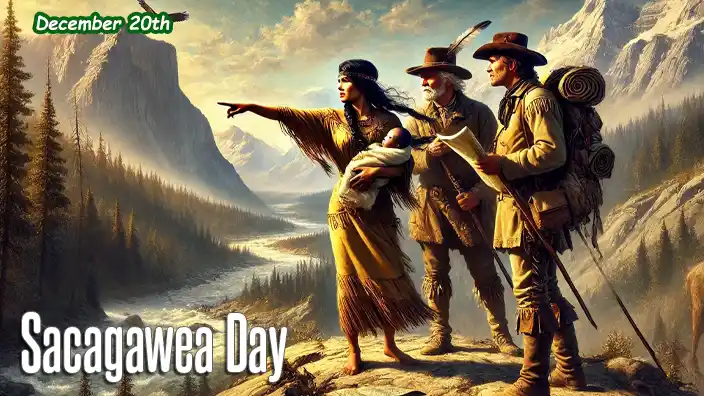
Sacagawea wasn’t just a guide—she was the ultimate multitasker. Imagine a teenager navigating the...
-
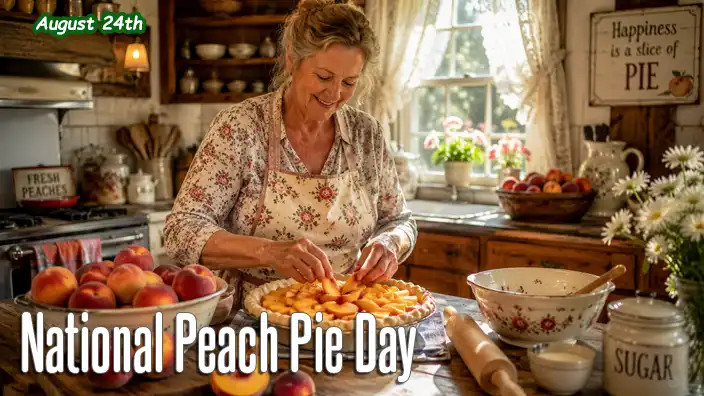
If peaches could talk, they would probably spend most of the year bragging about becoming...

