- Details
- Category: Celebrity Birthdays - October
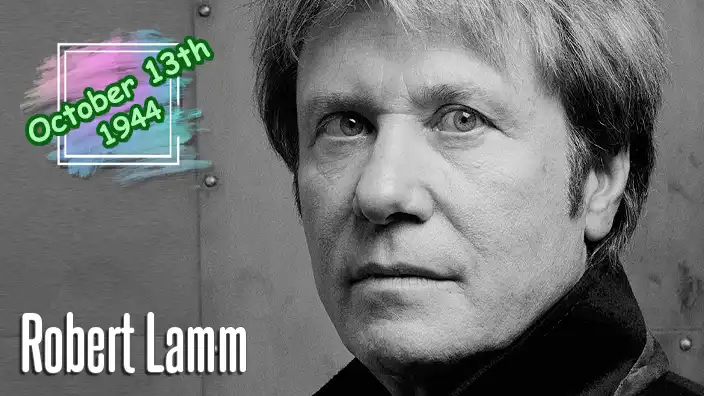
Robert Lamm helped give Chicago its name, its distinctive sound, and enough unforgettable songs to keep radio stations busy for generations. As a founding member, keyboardist, vocalist, and prolific songwriter, he brought jazz sophistication, rock energy, and a remarkable talent for asking musical questions nobody could quite answer. After all, anyone who can write "Does Anybody Really Know What Time It Is?" and "25 or 6 to 4" clearly has a complicated relationship with clocks. Fortunately, his timing at the keyboard has always been considerably more reliable!
 October 13, 1944, in Brooklyn, New York

Trivia
- Sang in a church choir as a youngster.
- Studied music at Roosevelt University.
- Wrote seven songs on Chicago's debut album.
- "25 or 6 to 4" describes an early-morning songwriting session.
- Released his first solo album, Skinny Boy, in 1974.
- Entered the Songwriters Hall of Fame in 2017.
- Details
- Category: Celebrity Birthdays - October
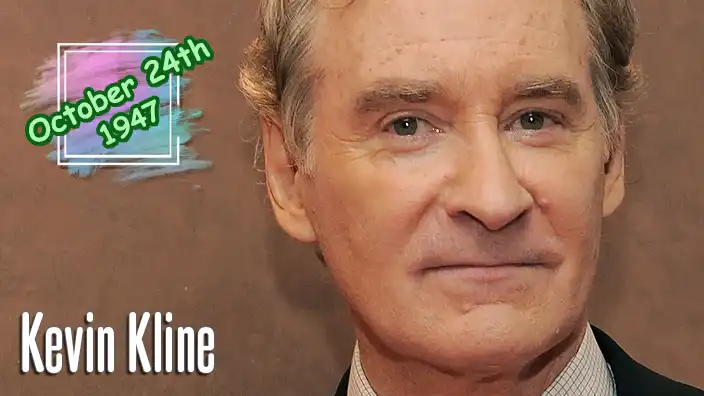
Kevin Kline has spent decades proving that a classically trained Shakespearean actor can be just as convincing playing a dignified king as he is playing a spectacular idiot. From winning an Oscar for his gloriously unhinged performance in A Fish Called Wanda to collecting three Tony Awards, impersonating the President of the United States, and lending his voice to a wealthy cartoon eccentric, Kline has mastered practically every corner of show business.
October 24, 1947, in St. Louis, Missouri
Trivia
- He originally studied music before switching to theater.
- He graduated from Indiana University in 1970.
- He was a founding member of The Acting Company in 1972.
- He won an Oscar for A Fish Called Wanda in 1989.
- He has won three Tony Awards for his Broadway performances.
- Details
- Category: Celebrity Birthdays - October
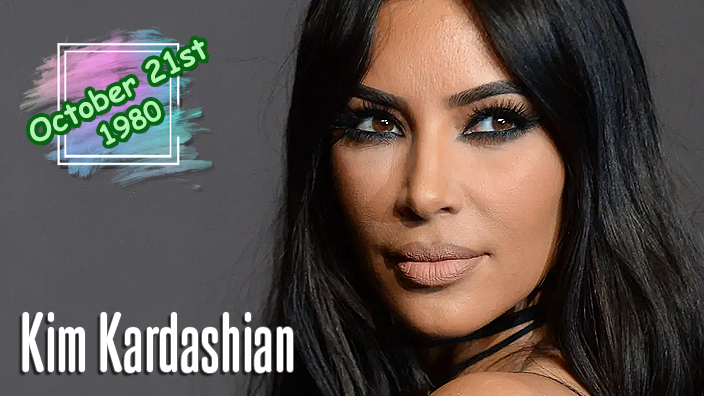
Kim Kardashian has accomplished something remarkable: turning reality television fame into a business empire while convincing millions of people that keeping up with her family is practically a full-time occupation. From glamorous red carpets and billion-dollar brands to legal advocacy and social media domination, Kim has mastered the art of staying in the spotlight. Somewhere along the way, she also proved that having cameras follow you around the house can be considerably more profitable than having them installed for security.
 October 21, 1980, in Los Angeles, California
Trivia
- Competed on Dancing with the Stars in 2008.
- Co-authored the bestselling book Kardashian Konfidential in 2010.
- Inspired the popular mobile game Kim Kardashian: Hollywood.
- Has Armenian ancestry through her father, Robert Kardashian.
- Voiced Delores the poodle in two PAW Patrol movies.
- Passed California's baby bar examination in 2021.
- Details
- Category: Celebrity Birthdays - October
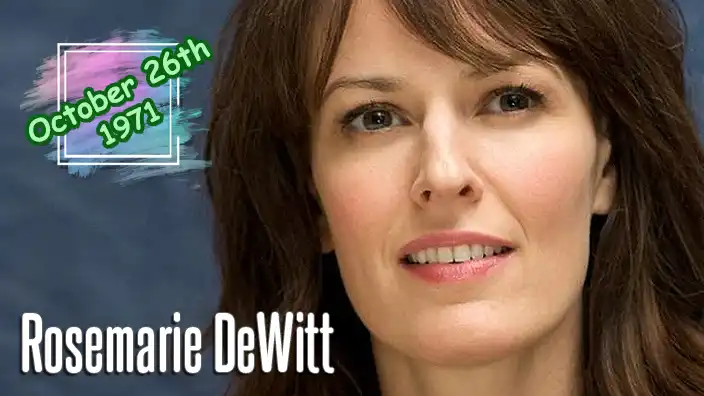
Rosemarie DeWitt has built an impressive acting career playing complicated women, navigating troubled families, and occasionally attending weddings that would make even the most experienced wedding planner consider early retirement. From Rachel Getting Married and The United States of Tara to La La Land, she has mastered the art of making difficult relationships look remarkably believable. Fortunately, her performances are considerably more enjoyable than most of the family arguments her characters endure.
October 26, 1971, in Flushing, Queens, New York
Trivia
- She appeared in Cinderella Man, the film about her grandfather.
- She studied at Hofstra University.
- She met husband Ron Livingston while filming Standoff.
- She won a Satellite Award for Rachel Getting Married.
- She played Don Draper's girlfriend Midge on Mad Men.
- She portrayed Sebastian's sister in La La Land.
- Details
- Category: Celebrity Birthdays - October
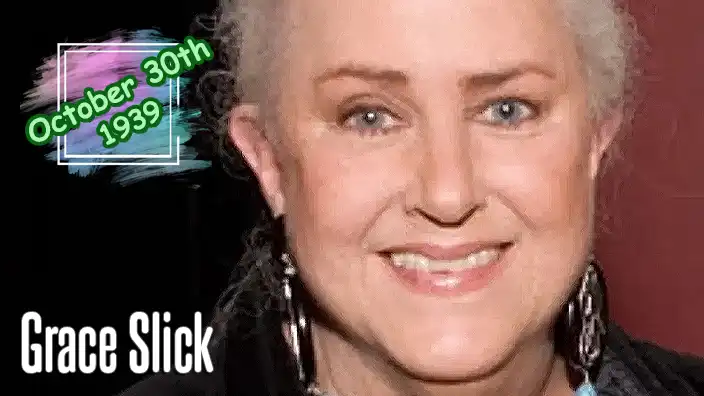
Grace Slick didn't just help define psychedelic rock—she gave it a voice powerful enough to wake the neighbors three counties away. As the unforgettable frontwoman of Jefferson Airplane, she delivered classics such as White Rabbit and Somebody to Love, challenged convention, and helped turn San Francisco's counterculture into a musical revolution. And she did it all without showing much interest in behaving herself.
October 30, 1939, in Highland Park, Illinois
Trivia
- Formed the Great Society with her husband and his brother.
- Wrote White Rabbit, inspired by Lewis Carroll's Alice stories.
- Joined Jefferson Airplane in 1966.
- Performed at both Woodstock and Altamont in 1969.
- Sang on Starship's number-one hit We Built This City.
- Became a professional visual artist after retiring from music.
- Details
- Category: Celebrity Birthdays - October
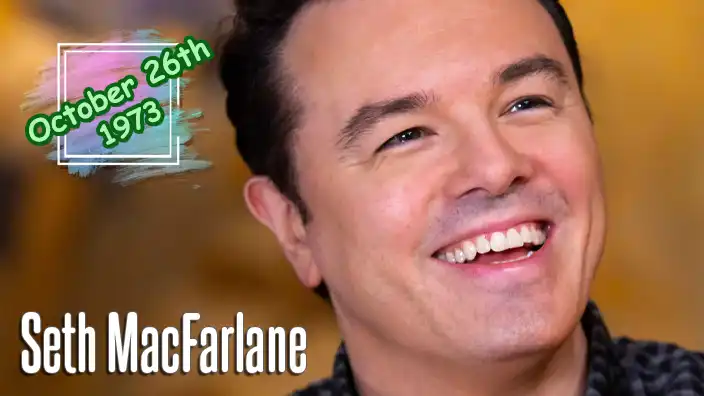
Seth MacFarlane has built an entertainment empire around a dysfunctional family, a talking dog, an alien in disguise, and a teddy bear who desperately needs adult supervision. The creator of Family Guy, American Dad!, and Ted has also conquered Hollywood as a writer, animator, director, voice actor, and surprisingly sophisticated singer. Apparently, having several voices in your head can be a very profitable career choice.
October 26, 1973, in Kent, Connecticut
Trivia
- He published a newspaper comic strip as a child.
- His college thesis film inspired Family Guy.
- He voices Peter, Stewie, Brian, and Quagmire.
- Family Guy was canceled before its successful revival.
- He hosted the Academy Awards in 2013.
- He was inducted into the Television Academy Hall of Fame in 2020.
- Details
- Category: Celebrity Birthdays - October
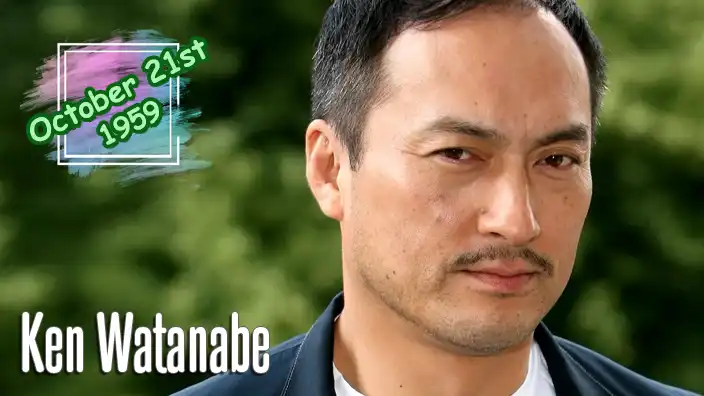
Ken Watanabe has made a remarkable career out of being the calmest man in some of cinema's most chaotic situations. He's faced Tom Cruise with a samurai sword, navigated Leonardo DiCaprio's complicated dreams, confronted Godzilla, and even managed to keep a straight face while explaining Batman's training. With his commanding presence, unmistakable voice, and extraordinary acting ability, this Japanese star can make a simple conversation feel like an important historical event.
October 21, 1959, in Hirokami, Japan
Trivia
- Became famous in Japan playing samurai leader Date Masamune.
- Earned an Oscar nomination for The Last Samurai.
- Appeared in two Christopher Nolan films, Batman Begins and Inception.
- Played scientist Dr. Serizawa in two Godzilla movies.
- Became the first Japanese actor nominated for a leading-actor Tony in a musical.
- Details
- Category: Celebrity Birthdays - October
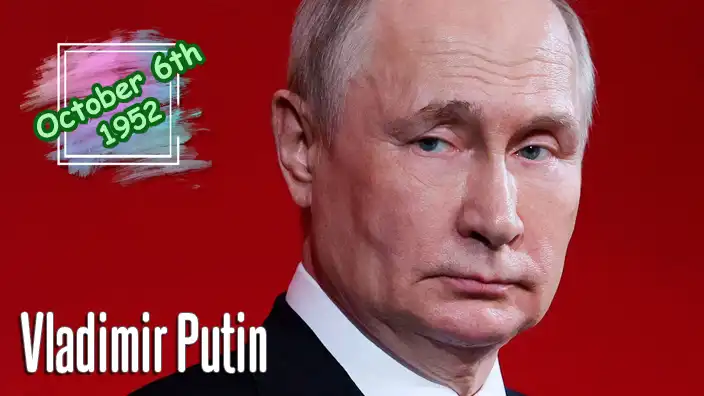
Vladimir Putin has gone from studying law in Leningrad to working for the KGB, running the Russian government and becoming one of the most recognizable world leaders of modern times. It is an unusual career path, although probably considerably more effective than answering an advertisement saying, “President Wanted — Previous Intelligence Experience Helpful.”
October 7, 1952, in Leningrad, Soviet Union
Trivia
- Graduated from Leningrad State University with a law degree.
- Served as a KGB foreign intelligence officer.
- Spent several years stationed in Dresden, East Germany.
- Holds a black belt in judo.
- Became acting Russian president on December 31, 1999.
- Served as both president and prime minister of Russia.
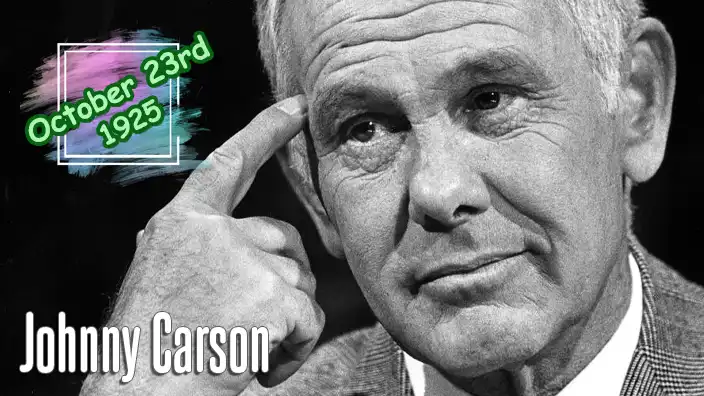
- Details
- Category: Celebrity Birthdays - October
Johnny Carson could make millions of Americans stay awake long past their bedtime, laugh at jokes that occasionally deserved a public apology, and believe that a man sitting behind a desk was their favorite evening companion. Armed with impeccable timing, a mischievous grin, and an unforgettable golf swing, the legendary host of The Tonight Show ruled late-night television for three decades. When a joke fell flat, Johnny didn't panic. He simply made the failure funnier than the joke itself. Now that's talent!
October 23, 1925, in Corning, Iowa
 January 23, 2005, in Los Angeles, California
Trivia
- Johnny Carson performed magic tricks as a youngster under the stage name "The Great Carsoni."
- He entertained fellow servicemen with magic tricks while serving in the U.S. Navy during World War II.
- Carson studied physics alongside radio and speech at the University of Nebraska.
- His imaginary golf swing became one of the most recognizable trademarks of The Tonight Show.
- A joke Carson made about toilet paper in 1973 helped spark nationwide panic buying.
- His famous Carnac the Magnificent character drew upon his lifelong fascination with magic.
- After retiring, Carson occasionally wrote jokes for David Letterman's late-night television program.
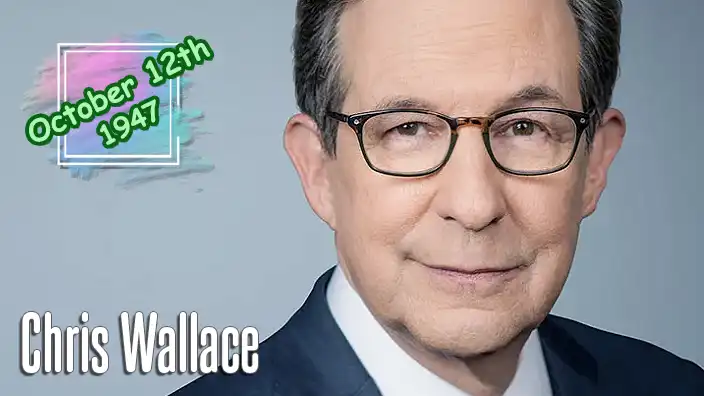
- Details
- Category: Celebrity Birthdays - October
Chris Wallace has spent more than five decades asking presidents, politicians, and powerful personalities the questions they'd probably prefer to answer sometime next Thursday. From Meet the Press and Fox News Sunday to CNN and presidential debates, this veteran American journalist has built a career around preparation, persistence, and the occasional raised eyebrow. As the son of legendary 60 Minutes correspondent Mike Wallace, he inherited a formidable broadcasting surname, but he certainly didn't need Dad to teach him how to ask an awkward follow-up question.
October 12, 1947, in Chicago, Illinois
Trivia
- His father was 60 Minutes legend Mike Wallace.
- His stepfather was CBS executive Bill Leonard.
- He assisted Walter Cronkite as a teenager.
- He graduated from Harvard University in 1969.
- He hosted both Meet the Press and Fox News Sunday.
- He has won three Emmy Awards.
- His Hollywood star sits beside his father's.
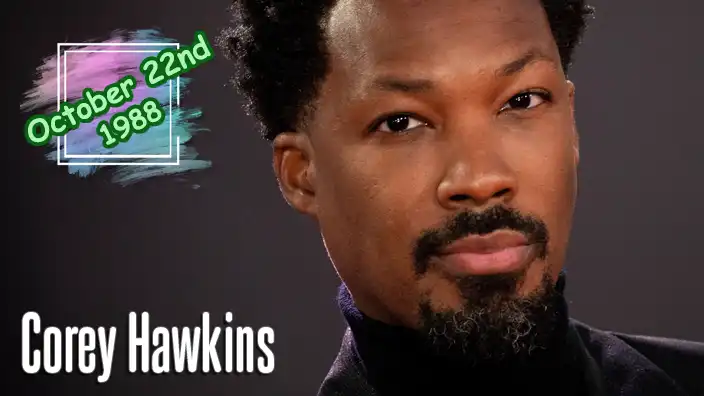
- Details
- Category: Celebrity Birthdays - October
Corey Hawkins has built a remarkable Hollywood career by proving that one actor can convincingly portray a legendary rapper, a Shakespearean warrior, a determined musical dreamer, and a man desperately trying to avoid becoming a zombie's lunch. Best known for his breakout performance as Dr. Dre in Straight Outta Compton and his charismatic appearance in In the Heights, Hawkins has established himself as one of the most versatile performers working in film, television, and theater. Whether he's delivering powerful dramatic speeches, singing through the streets of New York, or confronting monsters on a mysterious island, Hawkins brings intelligence, intensity, and unmistakable screen presence to every performance. His résumé suggests a man who has never encountered a difficult role without immediately wondering where the audition is being held.
October 22, 1988, in Washington, D.C.
Trivia
- He attended the Duke Ellington School of the Arts.
- He graduated from the Juilliard School.
- He received Juilliard's John Houseman Award.
- He portrayed Dr. Dre in Straight Outta Compton.
- He earned Tony nominations for two Broadway plays.
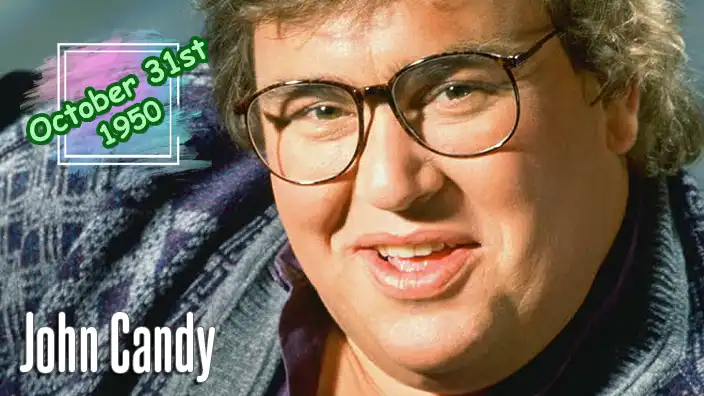
- Details
- Category: Celebrity Birthdays - October
John Candy could make audiences laugh with a raised eyebrow, an awkward smile, or the simple act of squeezing himself into an airplane seat. The beloved Canadian comedian gave us unforgettable performances in Planes, Trains and Automobiles, Uncle Buck, and Cool Runnings, proving that a big heart and impeccable comic timing were a winning combination. Hollywood has produced plenty of funny people, but very few could make being stranded in a motel room with Steve Martin quite so entertaining.
October 31, 1950, in Newmarket, Canada
March 4, 1994, in Durango, Mexico
Trivia
- Won two Primetime Emmy Awards for SCTV writing.
- Played Barf, the half-man, half-dog character in Spaceballs.
- Improvised much of his memorable Home Alone appearance.
- Co-owned the Toronto Argonauts with Wayne Gretzky and Bruce McNall.
- Inducted into Canada's Walk of Fame in 1998.
- Details
- Category: Celebrity Birthdays - October
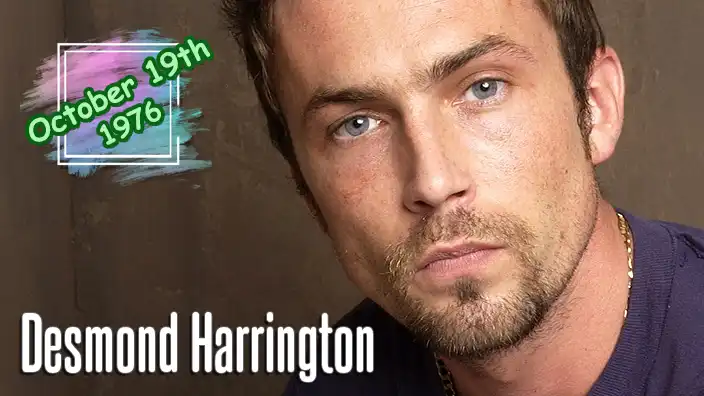
Desmond Harrington has spent much of his acting career investigating murderers, surviving horror movies, and causing trouble among Manhattan's wealthy elite. Best known for playing Detective Joey Quinn in Dexter and the thoroughly untrustworthy Jack Bass in Gossip Girl, Harrington has perfected the art of looking innocent while giving audiences every reason to suspect otherwise. If he ever invites you on a weekend trip to an isolated cabin, politely decline.
October 19, 1976, in Savannah, Georgia
Trivia
- Worked as a Manhattan bartender before acting.
- An acting class was suggested by a coworker.
- His film debut was in The Messenger (1999).
- Played Chuck Bass's uncle in Gossip Girl.
- Portrayed astronaut Alan Shepard in 2015.
- Returned as Joey Quinn in Dexter: Resurrection
- Details
- Category: Celebrity Birthdays - October
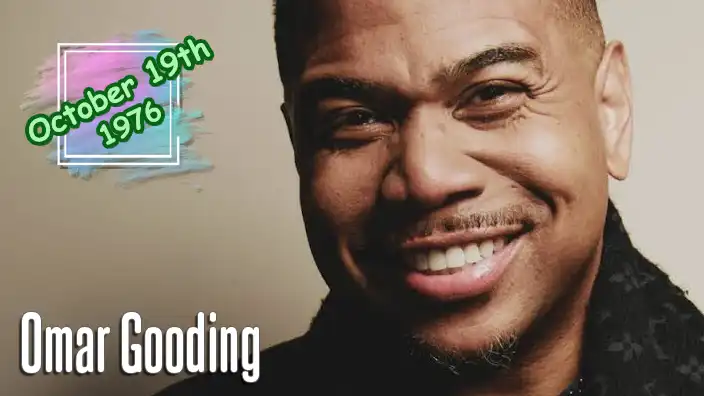
Omar Gooding was practically born into show business, with a famous singer for a father and an Oscar-winning actor for a brother. But rather than simply borrow the family spotlight, he went looking for his own. From Hangin' with Mr. Cooper and Smart Guy to Baby Boy and Family Time, Gooding has built a career filled with comedy, drama, music, and enough television appearances to make the remote control request overtime.
October 19, 1976, in Los Angeles, California
Trivia
- He's Cuba Gooding Jr.'s younger brother.
- He co-hosted Nickelodeon's Wild & Crazy Kids.
- He graduated from North Hollywood High School.
- His hip-hop stage name is Big O.
- He played Sweetpea in Baby Boy.
- He reunited with Angell Conwell in Family Time.
- Details
- Category: Celebrity Birthdays - October
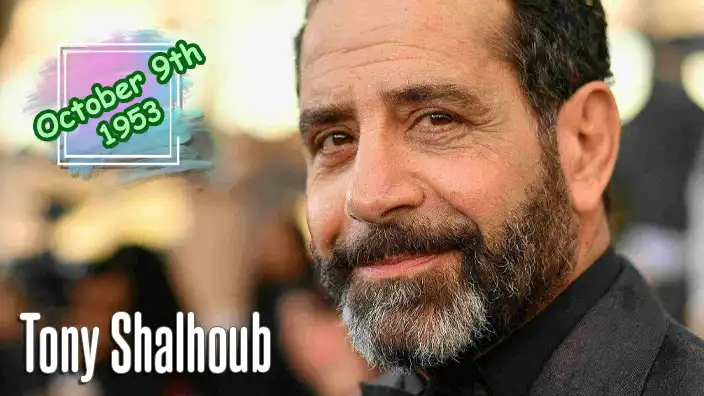
Tony Shalhoub could read your grocery list and still make it sound like an award-winning monologue. He’s the guy who can switch from heartwarming to hilarious in under three seconds, all while making you wonder if you, too, might have an undiagnosed case of Monk’s obsessive tendencies. If acting were a sport, Shalhoub would be the MVP who somehow wins in every category—even “Best Use of a Windex Bottle in a Dramatic Scene.”
October 9, 1953, in Green Bay, Wisconsin
Trivia
- First acted in a school production of The King and I.
- Earned a Master of Fine Arts degree from Yale.
- Played Antonio Scarpacci in Wings.
- Won three Emmys for playing Adrian Monk.
- Voiced Luigi in Pixar's Cars movies.
- Details
- Category: Celebrity Birthdays - October
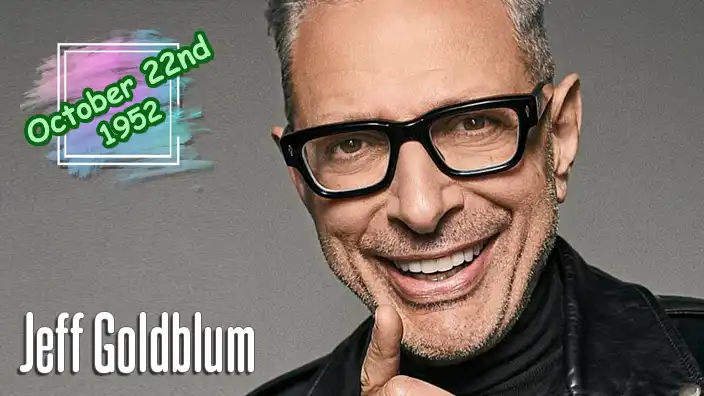
Jeff Goldblum has spent his extraordinary acting career proving that dinosaurs, alien invasions, and unfortunate scientific experiments are no match for a raised eyebrow and a perfectly timed pause. Best known for Jurassic Park, The Fly, and Independence Day, this wonderfully unconventional Hollywood star has entertained generations with his distinctive voice, unpredictable humor, and an almost supernatural ability to make scientific nonsense sound perfectly reasonable. He's survived prehistoric predators, extraterrestrial attackers, and transformation into a giant insect. Frankly, the man deserves a very long vacation somewhere without a laboratory.
October 22, 1952, in the Pittsburgh, Pennsylvania
Trivia
- He studied acting under Sanford Meisner.
- His film debut was in Death Wish (1974).
- He won a Saturn Award for The Fly.
- He directed the Oscar-nominated Little Surprises.
- He received a Hollywood Walk of Fame star in 2018.
- He leads the Mildred Snitzer Orchestra.
- Details
- Category: Celebrity Birthdays - October
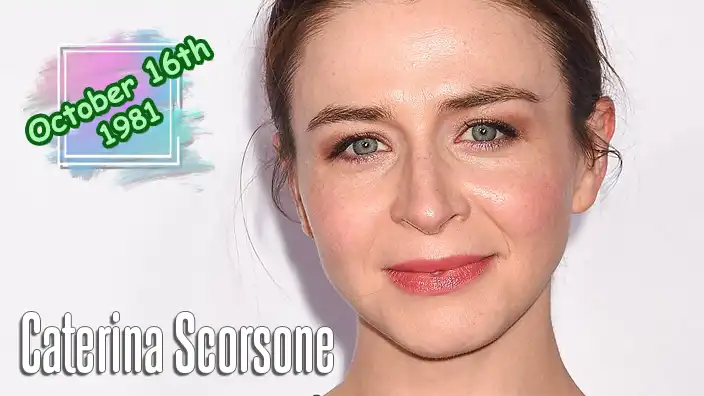
Caterina Scorsone has spent years performing delicate brain surgery, navigating complicated hospital romances, and surviving enough medical emergencies to make any sensible person reconsider visiting Seattle. Fortunately, most of it happens on television. Best known for portraying Dr. Amelia Shepherd on Grey's Anatomy, the Canadian actress has transformed a complicated, emotionally vulnerable neurosurgeon into one of television's most compelling characters. And unlike her fictional patients, audiences can enjoy her dramatic performances without worrying about their insurance coverage.
October 16, 1981, in Toronto, Ontario, Canada
Trivia
- She studied literature, philosophy, and comparative religion at the University of Toronto.
- She received two Gemini Award nominations for her television performances.
- She portrayed Jess Mastriani in the supernatural crime drama Missing.
- She starred alongside Kathy Bates and Tim Curry in the fantasy miniseries Alice.
- She won a PRISM Award for her portrayal of Amelia Shepherd's struggles with addiction.
- Actor and director Eric Stoltz helped bring her to the attention of Private Practice producers.
- Details
- Category: Celebrity Birthdays - October
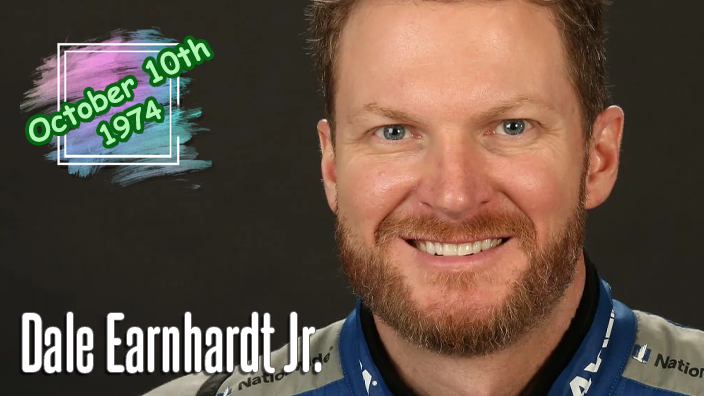
Dale Earnhardt Jr. has spent much of his life going around in circles, and somehow that made him one of the most successful and beloved personalities in American motorsports. From winning the Daytona 500 to becoming a NASCAR team owner and television analyst, Junior has proved that retirement from racing doesn't necessarily mean slowing down. It just means somebody else gets to wear out the tires.
October 10, 1974, in Concord, North Carolina
Trivia
- He won the Daytona 500 twice, in 2004 and 2014.
- He was NASCAR's Most Popular Driver 15 consecutive times.
- His first Cup Series victory came at Texas in 2000.
- He won four consecutive Cup races at Talladega.
- He voiced a race car in Pixar's Cars.
- He collects and preserves pieces of NASCAR history.
- Details
- Category: Celebrity Birthdays - October
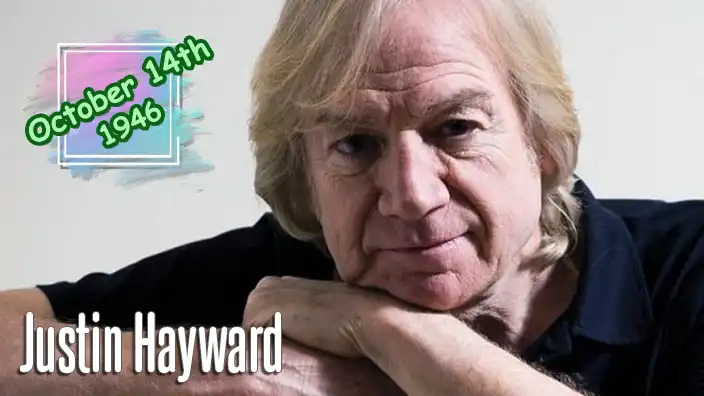
Justin Hayward helped turn the Moody Blues into progressive rock royalty, armed with a distinctive voice, a guitar, and a remarkable talent for writing songs that could make an entire concert audience suddenly remember their first romance. From "Nights in White Satin" to "Tuesday Afternoon" and "Your Wildest Dreams," the English singer-songwriter has spent decades providing the soundtrack to love, longing, and occasionally staring thoughtfully out of a window. Not bad for a young musician from Swindon who originally answered a newspaper advertisement looking for a guitarist!
October 14, 1946, in Swindon, England
Trivia
- He played guitar for British rocker Marty Wilde.
- He joined the Moody Blues in 1966.
- "Nights in White Satin" reached No. 2 in America in 1972.
- He sang "Forever Autumn" on The War of the Worlds.
- He appeared as himself on The Simpsons.
- Details
- Category: Celebrity Birthdays - October
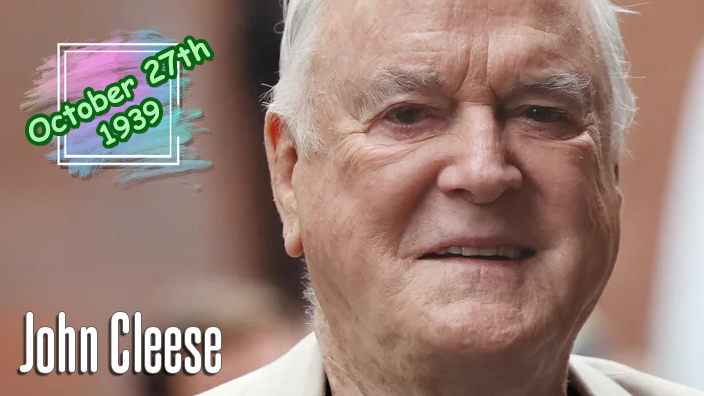
John Cleese is the towering British comedy legend who gave us dead parrots, ridiculous walks, spectacular hotel disasters, and some of the finest displays of controlled outrage ever captured on television. From Monty Python to Fawlty Towers, he has spent decades proving that British eccentricity is not merely a national characteristic — it can also be a highly successful profession.
October 27, 1939, in Weston-super-Mare, England
Trivia
- He studied law at Cambridge University.
- He stands approximately 6 feet 5 inches tall.
- He co-wrote all twelve episodes of Fawlty Towers.
- He played Nearly Headless Nick in two Harry Potter films.
- He played both R and Q in the James Bond franchise.
- He voiced King Harold in three Shrek films.
- Details
- Category: Celebrity Birthdays - October
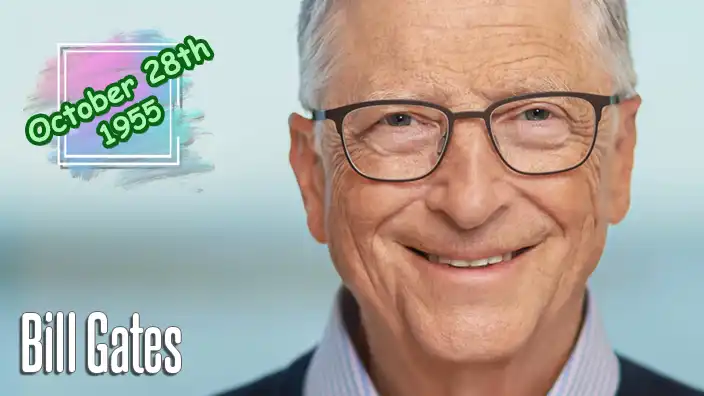
Bill Gates helped put a computer on nearly every desk, introduced the world to Microsoft Windows, and made the phrase "Have you tried restarting it?" part of everyday life. From teenage computer enthusiast to billionaire philanthropist, Gates has spent decades changing how the world works, communicates, and occasionally loses an entire afternoon to a software update. Not bad for a fellow who left Harvard before collecting his diploma!
October 28, 1955, in Seattle, Washington
Trivia
- He wrote his first computer program at Lakeside School.
- His first business with Paul Allen was Traf-O-Data.
- He left Harvard to help build Microsoft.
- Microsoft's original name was Micro-Soft.
- He enjoys playing bridge with Warren Buffett.
- He received an honorary British knighthood in 2005.
- He published his memoir Source Code in 2025.
From Our Marks Catelog
-

American Football Day is that magical time when perfectly reasonable adults suddenly start yelling at...
-

There’s something about that golden cloud of meringue that makes you forget all your worries, at...
-

Posttraumatic growth isn’t about silver linings or pretending that pain was somehow “worth it.” It’s...
-

On a hot day, when the sun is cooking the sidewalk and even the lawn chairs are sweating, there’s one...
-
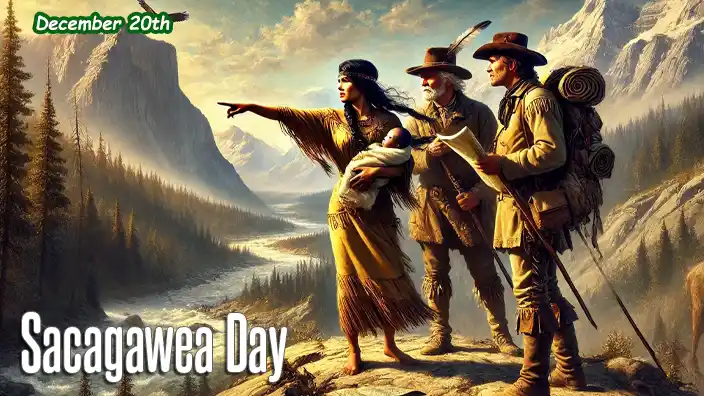
Sacagawea wasn’t just a guide—she was the ultimate multitasker. Imagine a teenager navigating the...
-
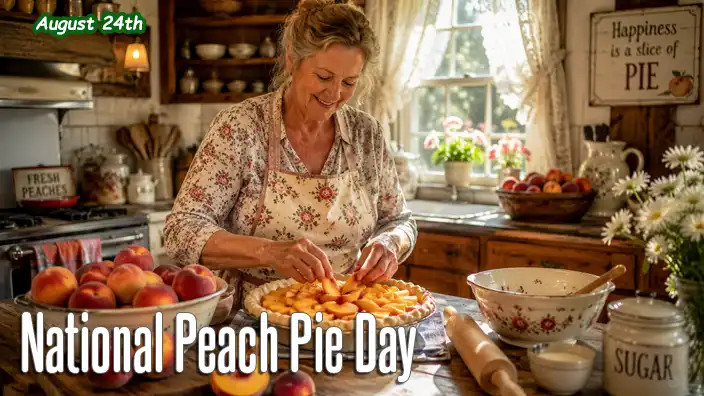
If peaches could talk, they would probably spend most of the year bragging about becoming...

