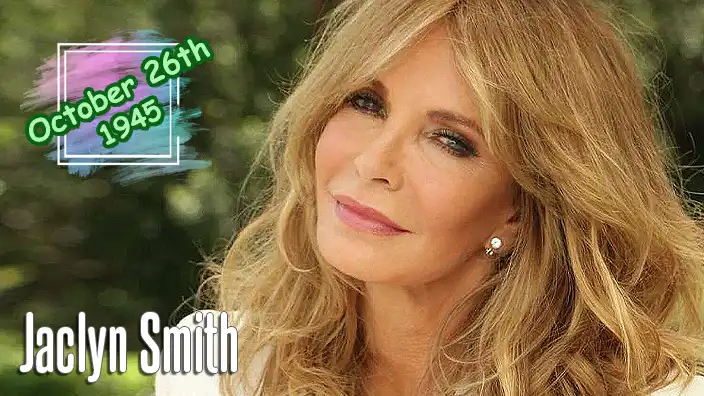
- Details
- Category: Celebrity Birthdays - October
Jaclyn Smith became a television legend as Kelly Garrett on Charlie's Angels, solving crimes, chasing villains, and somehow keeping her hair absolutely perfect through every dangerous assignment. While other Angels came and went, she stayed for all five seasons, proving that loyalty, intelligence, and a good blow-dryer could take a woman a very long way in Hollywood.
 October 26, 1945, in Houston, Texas

Trivia
- She originally dreamed of becoming a ballerina.
- She appeared in Breck shampoo commercials.
- She was the only original Angel to remain for all five seasons.
- She portrayed Jacqueline Kennedy in a Golden Globe-nominated performance.
- She launched her Kmart fashion collection in 1985.
- She received a Hollywood Walk of Fame star in 1989.
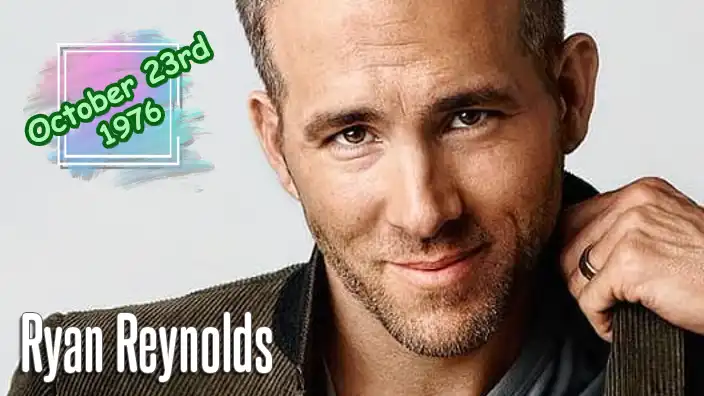
- Details
- Category: Celebrity Birthdays - October
Ryan Reynolds has built an extraordinary career by combining Hollywood good looks, impeccable comic timing, and the remarkable ability to insult practically everyone while making them laugh. Best known as the wisecracking superhero Deadpool, the Canadian-American actor and film producer has battled villains, romanced Sandra Bullock, voiced a talking Pokémon, and even purchased a Welsh soccer club. Somewhere along the way, he also became a successful businessman, proving that a sharp tongue and a questionable sense of humor can be surprisingly profitable.
 October 23, 1976, in Vancouver, Canada
Trivia
- His first major television role was in Fifteen.
- He met Blake Lively while filming Green Lantern.
- He received a Hollywood Walk of Fame star in 2016.
- He voiced Detective Pikachu in 2019.
- He co-owns Wales's Wrexham soccer club.
- He has won two Primetime Emmy Awards.
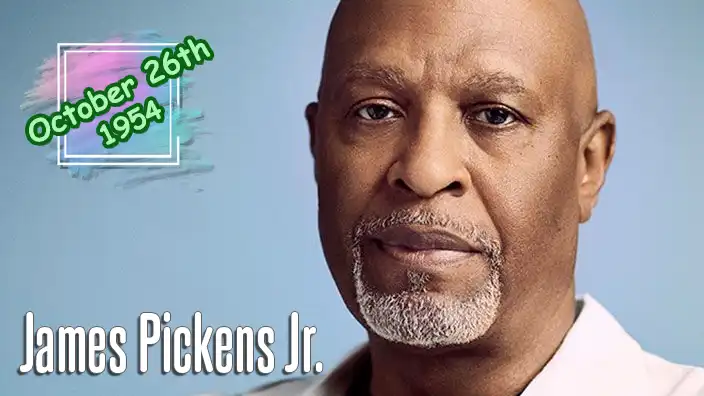
- Details
- Category: Celebrity Birthdays - October
James Pickens Jr. has spent decades entertaining audiences, but he's best known as Dr. Richard Webber on Grey's Anatomy, where he has survived hospital politics, medical emergencies, complicated romances, and enough workplace drama to make an ordinary staff meeting look like a relaxing vacation. After so many years wearing surgical scrubs, he could probably find his way around a fictional operating room blindfolded.
October 26, 1954, in Cleveland, Ohio
Trivia
- He graduated from Bowling Green State University in 1976.
- He performed alongside Denzel Washington and Samuel L. Jackson in A Soldier's Play.
- His first film appearance was in F/X (1986).
- He played FBI official Alvin Kersh on The X-Files.
- He has portrayed Dr. Richard Webber since 2005.
- He is an accomplished competitive team roper.
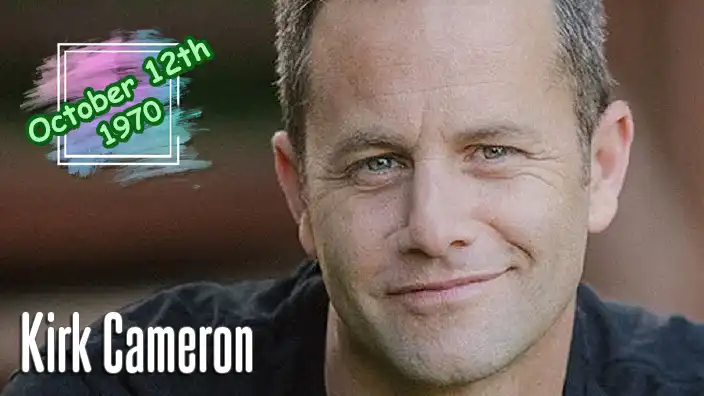
- Details
- Category: Celebrity Birthdays - October
Kirk Cameron became a teenage television sensation as the mischievous Mike Seaver on Growing Pains, winning hearts, creating headaches for his fictional parents, and proving that a charming smile could get a teenager out of almost anything. From 1980s sitcom fame to family films, faith-based productions, and children's books, Cameron has followed a career path that has been anything but ordinary. And unlike Mike Seaver, he eventually discovered that growing up involves considerably more than finding creative excuses for unfinished homework.
October 12, 1970, in Panorama City, California
Trivia
- He appeared in Count Chocula cereal commercials.
- His sister is Full House star Candace Cameron Bure.
- He played Mike Seaver for seven seasons.
- He received two Golden Globe nominations.
- He married his Growing Pains co-star Chelsea Noble.
- Details
- Category: Celebrity Birthdays - October
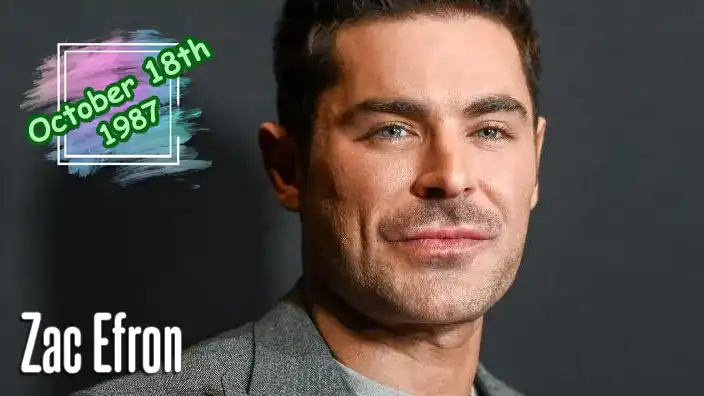
Zac Efron went from singing basketball captain in High School Musical to muscle-bound professional wrestler in The Iron Claw, proving that Hollywood careers can take some wonderfully unexpected turns. Along the way, he has danced with Hugh Jackman, battled Seth Rogen's fraternity, played a notorious serial killer, and demonstrated that escaping the Disney Channel's teenage heartthrob label requires considerably more than a new haircut.
October 18, 1987, in San Luis Obispo, California
Trivia
- He began acting in local theater productions as a child.
- Drew Seeley provided much of Troy's singing in the first High School Musical.
- He played Link Larkin in Hairspray (2007).
- He portrayed serial killer Ted Bundy in a 2019 film.
- He won a Daytime Emmy for Down to Earth with Zac Efron.
- He received a Hollywood Walk of Fame star in 2023.
- Details
- Category: Celebrity Birthdays - October
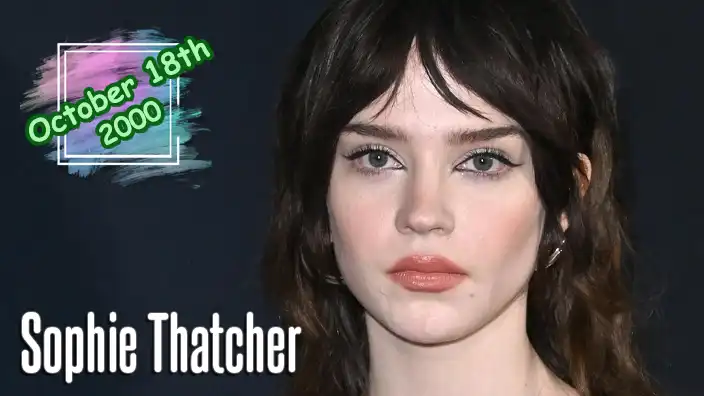
Sophie Thatcher has made a remarkable career out of surviving situations that would send most sensible people running for the nearest exit. From the wilderness nightmares of Yellowjackets to the supernatural terror of The Boogeyman and the psychological twists of Companion, this Chicago-born actress has become one of Hollywood's most exciting young performers. With her distinctive screen presence, musical talents, and apparent willingness to accept roles involving absolutely dreadful vacations, Thatcher is proving that being frightened can be excellent for your career.
October 18, 2000, in Chicago, Illinois
Trivia
- She began performing in musical theater as a child.
- Her feature-film debut was Prospect (2018).
- She played Drash in The Book of Boba Fett.
- She appeared in Pavement's Harness Your Hopes music video.
- She released her debut EP, Pivot & Scrape, in 2024.
- Details
- Category: Celebrity Birthdays - October
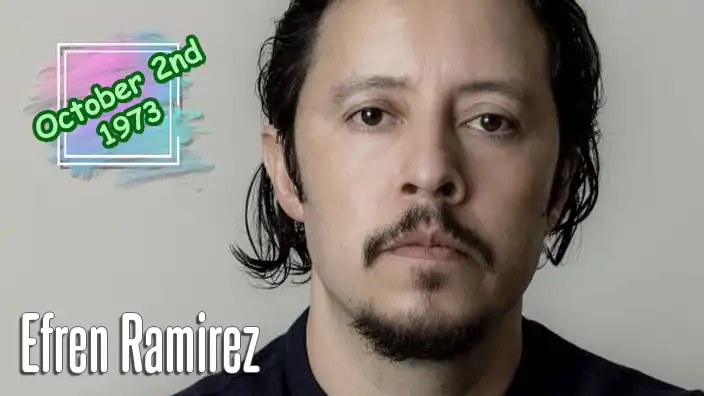
Efren Ramirez became a cult-comedy legend by playing Pedro Sánchez, a man who ran for class president with few speeches, excellent hair decisions and Napoleon Dynamite handling the entertainment. “Vote for Pedro” did the rest, giving Ramirez the rare distinction of winning a fictional election and acquiring campaign merchandise that refuses to concede.
October 2, 1973, in Los Angeles, California
Trivia
- He has an identical twin brother, Carlos.
- His twin occasionally doubled for him in Napoleon Dynamite.
- “Vote for Pedro” became a major pop-culture slogan.
- Ramirez played Kaylo in the Crank films.
- He voiced Pedro in the animated Napoleon Dynamite series.
- Ramirez is also a professional DJ.
- He performs as a DJ under the name DJ Efra.
- Details
- Category: Celebrity Birthdays - October
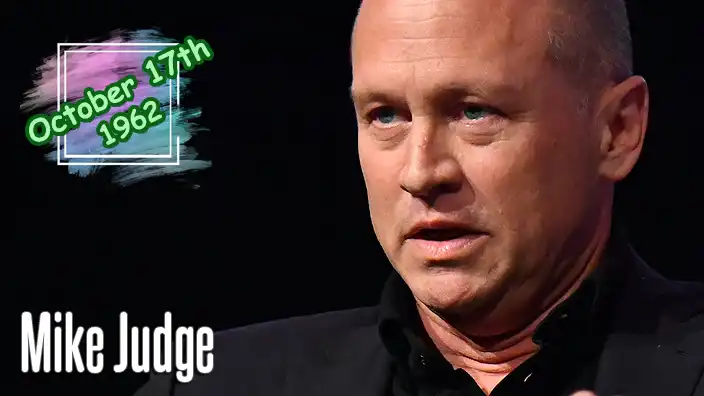
Mike Judge has built an extraordinary entertainment career by observing human behavior and asking a simple question: what if everyone involved were just a little more ridiculous? The creator of Beavis and Butt-Head, co-creator of King of the Hill and Silicon Valley, and the filmmaker behind Office Space and Idiocracy has spent decades exposing the absurdities of modern life. Armed with a physics degree, a talent for unforgettable voices, and an apparently endless supply of foolish characters, Judge has proved that intelligence and stupidity can make a remarkably successful partnership. And if you've ever wanted to attack an office printer with a baseball bat, he probably understands you better than your human resources department.
October 17, 1962, in Guayaquil, Ecuador
Trivia
- He earned a university degree in physics.
- He once worked as a Silicon Valley engineer.
- He played bass guitar in professional blues bands.
- He voices both Beavis and Butt-Head.
- He also provides the voice of Hank Hill.
- Office Space grew out of his animated Milton shorts.
- He received the Winsor McCay Award in 2009.
- Details
- Category: Celebrity Birthdays - October
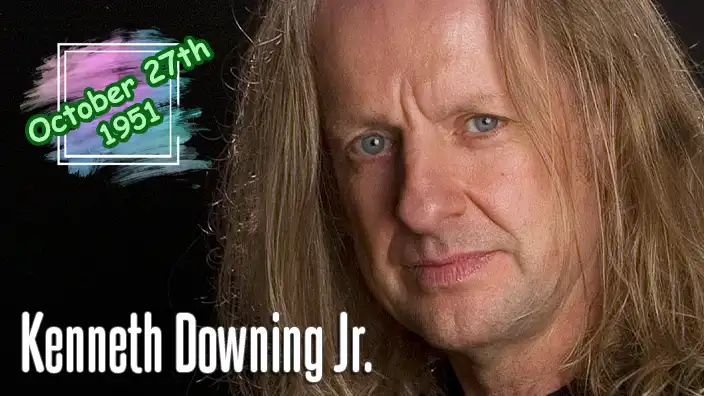
Kenneth “K.K.” Downing Jr. is the English guitar legend who helped turn Judas Priest into one of heavy metal's most influential bands. Armed with a Flying V guitar, thunderous riffs, and enough volume to frighten the neighbors three counties away, he helped define the sound of British heavy metal. And just when everyone thought he'd retired, he returned with KK's Priest, proving that you can leave the band, but the metal never leaves you.
October 27, 1951, in West Bromwich, England
Trivia
- He bought his first acoustic guitar for £10.
- Jimi Hendrix was one of his greatest influences.
- He co-founded Judas Priest with bassist Ian Hill.
- His trademark instrument is the Flying V guitar.
- He spent approximately 40 years with Judas Priest.
- His autobiography is titled Heavy Duty.
- He owns KK's Steel Mill, a Wolverhampton music venue.
- Details
- Category: Celebrity Birthdays - October
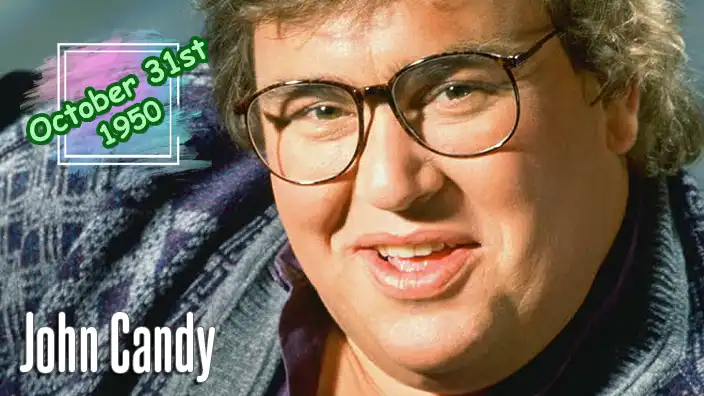
John Candy could make audiences laugh with a raised eyebrow, an awkward smile, or the simple act of squeezing himself into an airplane seat. The beloved Canadian comedian gave us unforgettable performances in Planes, Trains and Automobiles, Uncle Buck, and Cool Runnings, proving that a big heart and impeccable comic timing were a winning combination. Hollywood has produced plenty of funny people, but very few could make being stranded in a motel room with Steve Martin quite so entertaining.
October 31, 1950, in Newmarket, Canada
 March 4, 1994, in Durango, Mexico
Trivia
- Won two Primetime Emmy Awards for SCTV writing.
- Played Barf, the half-man, half-dog character in Spaceballs.
- Improvised much of his memorable Home Alone appearance.
- Co-owned the Toronto Argonauts with Wayne Gretzky and Bruce McNall.
- Inducted into Canada's Walk of Fame in 1998.
- Details
- Category: Celebrity Birthdays - October
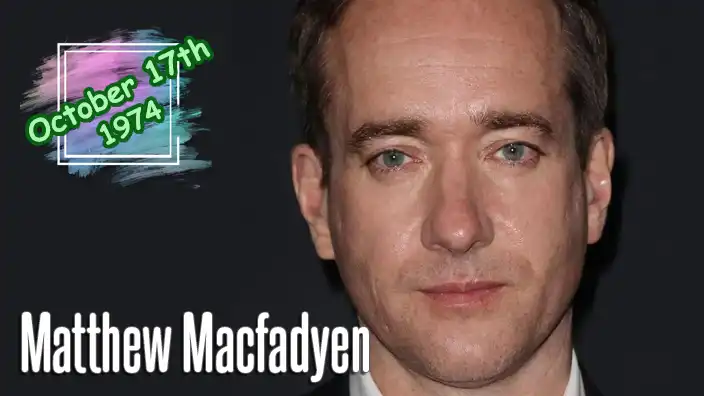
Matthew Macfadyen has mastered the remarkable art of looking dignified while everything around him falls spectacularly apart. Whether he's making hearts flutter as Mr. Darcy in Pride & Prejudice, navigating corporate treachery as Tom Wambsgans in Succession, or investigating international espionage in Spooks, this Emmy-winning British actor brings intelligence, dry humor, and unmistakable screen presence to every performance. With a distinguished career spanning theater, television, and film, Macfadyen has proved that a gentleman can be charming, terrifying, hopelessly awkward, and thoroughly ridiculous—sometimes all before lunch.
October 17, 1974, in Great Yarmouth, England
Trivia
- He entered RADA at seventeen.
- He met his wife, Keeley Hawes, while filming Spooks.
- He played Mr. Darcy opposite Keira Knightley.
- He won two Primetime Emmy Awards for Succession.
- He played Mr. Paradox in Deadpool & Wolverine.
- He portrayed Charles Guiteau in Death by Lightning.
- Details
- Category: Celebrity Birthdays - October
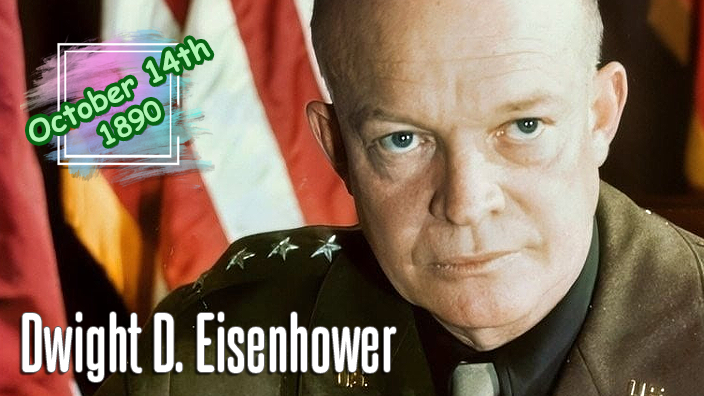
Dwight D. Eisenhower had a rather unusual career path: first, he helped defeat Nazi Germany, and then he decided that running the United States might be an interesting change of pace. Known affectionately as "Ike," this five-star general and 34th American president commanded enormous armies, navigated Cold War tensions, and helped build the Interstate Highway System. Apparently, after organizing the liberation of Western Europe, he thought Americans deserved a decent road trip.
October 14, 1890, in Denison, Texas
March 28, 1969, at Walter Reed Army Medical Center in Washington, D.C.
Trivia
- He graduated first in his 1926 Army staff college class.
- He never served in overseas combat during World War I.
- He was one of America's five-star generals.
- He loved golf and enjoyed painting.
- His presidency saw Alaska and Hawaii become states.
- His 1952 campaign popularized "I Like Ike."
- Details
- Category: Celebrity Birthdays - October
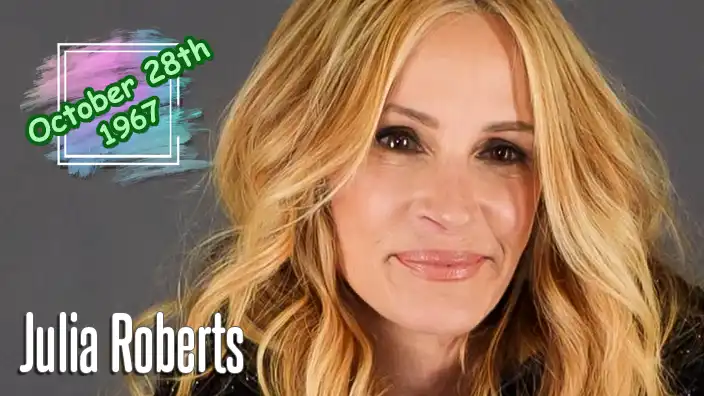
Julia Roberts has spent decades proving that a dazzling smile, impeccable comic timing, and a little Southern charm can conquer Hollywood. From Pretty Woman to Erin Brockovich, she's made audiences laugh, cry, and occasionally wonder why Richard Gere keeps turning up. With an Academy Award, unforgettable performances, and one of cinema's most recognizable smiles, Roberts has earned her place among Hollywood royalty—without needing a crown or a royal scandal.
October 28, 1967, in Atlanta, Georgia
Trivia
- Her brother Eric Roberts and niece Emma Roberts are also actors.
- She received $20 million for Erin Brockovich, a Hollywood milestone.
- She has received four Academy Award nominations, winning once.
- Her parents operated an acting school attended by Martin Luther King Jr.'s children.
- She played a character impersonating herself in Ocean's Twelve.
- Details
- Category: Celebrity Birthdays - October
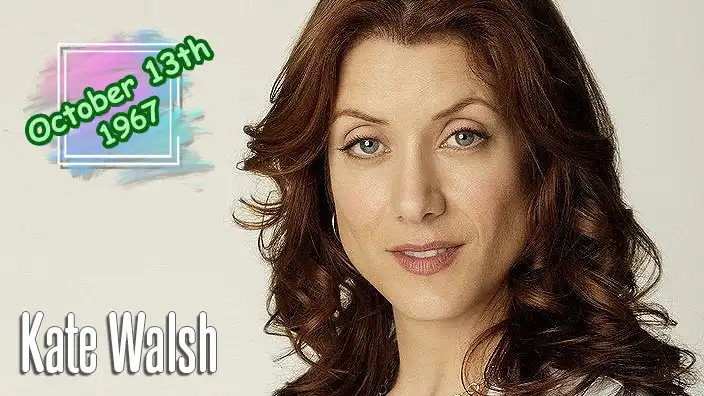
Kate Walsh has made a remarkable career out of arriving at precisely the wrong moment, particularly when that moment involves a handsome neurosurgeon, his unsuspecting girlfriend, and a marriage nobody bothered to mention. Best known as the sophisticated, sharp-tongued Dr. Addison Montgomery on Grey's Anatomy and Private Practice, Walsh has also played everything from a terrifying supernatural bureaucrat to an ambitious Paris-bound marketing executive. With impeccable comic timing, dramatic talent, and an ability to deliver devastating remarks while looking absolutely fabulous, she's proved that stealing a scene is considerably easier when you arrive wearing designer heels.
October 13, 1967, in San Jose, California
Trivia
- Worked as a model in Japan.
- Trained with Chicago's Piven Theatre Workshop.
- Made Addison Montgomery famous on Grey's Anatomy.
- Launched her Boyfriend fragrance brand in 2010.
- Played the villainous Handler in The Umbrella Academy.
- Details
- Category: Celebrity Birthdays - October
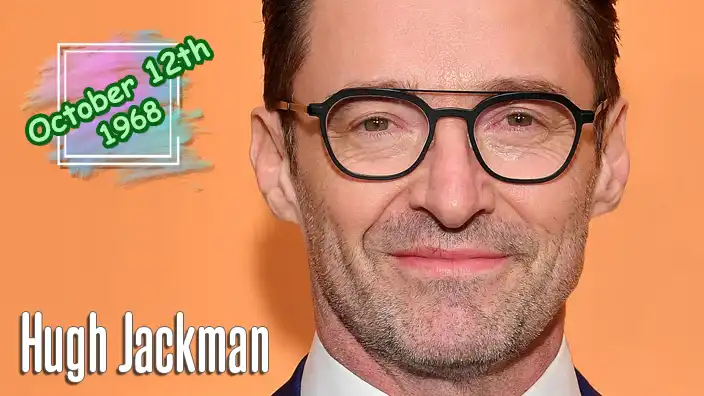
Hugh Jackman has spent his career proving that a man can have razor-sharp claws, sing his heart out on Broadway, dance like a professional, and still look perfectly comfortable wearing a tuxedo. From the ferocious Wolverine in X-Men to the charismatic showman P. T. Barnum in The Greatest Showman, this Australian entertainer has conquered Hollywood and musical theater with a smile that suggests he's enjoying every minute of it.
October 12, 1968, in Sydney, Australia
Trivia
- He trained at Australia's WAAPA drama school.
- He turned down an opportunity to play James Bond.
- He won a Tony Award for The Boy from Oz.
- He hosted the Academy Awards in 2009.
- He co-founded Laughing Man Coffee.
- He received Australia's prestigious AC honor in 2019.
- Details
- Category: Celebrity Birthdays - October
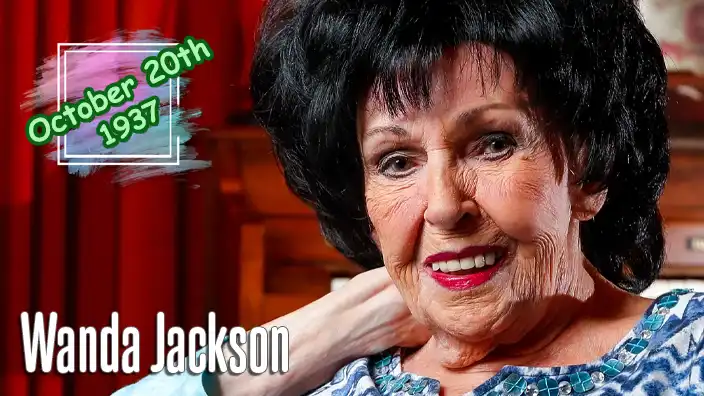
Wanda Jackson didn't ask permission to become the Queen of Rockabilly. She simply picked up a guitar, stepped onto the stage, and delivered a performance powerful enough to make the boys reconsider who was running the show. With her fiery vocals, swinging fringe dresses, and an attitude that could make a jukebox nervous, Jackson helped revolutionize rock and roll when female performers were generally expected to sing sweetly and behave themselves. Fortunately for music history, Wanda apparently missed that particular instruction. From touring with Elvis Presley to recording some of rockabilly's most electrifying songs, she became a pioneering American singer whose influence continues to echo through rock, country, and popular music.
October 20, 1937, in Maud, Oklahoma
Trivia
- Elvis Presley encouraged her to sing rock and roll.
- Her first guitar was a gift from her father.
- She hosted a radio show while still in school.
- "Fujiyama Mama" became a major hit in Japan.
- Her mother created her famous fringe dresses.
- She was inducted into the Rock and Roll Hall of Fame in 2009.
- Details
- Category: Celebrity Birthdays - October
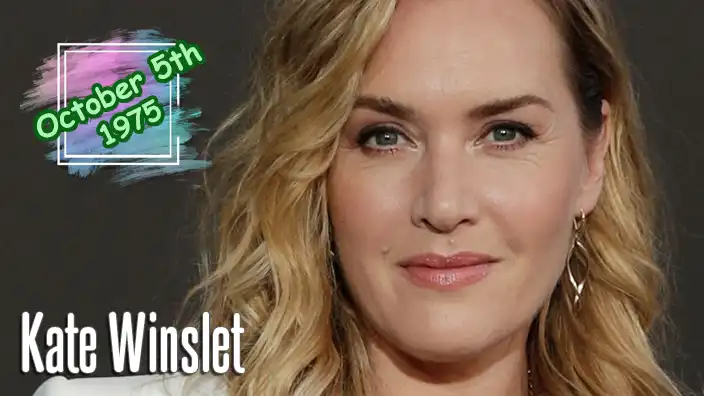
Kate Winslet boarded the Titanic, survived the iceberg, endured decades of people arguing about whether Jack could have fitted on the door, and somehow emerged with one of the most respected acting careers of her generation. From corsets and doomed romances to complicated mothers, detectives and morally uncomfortable characters, Winslet has repeatedly demonstrated that being a movie star need not prevent someone from being a formidable actress.
October 5, 1975, in Reading, England
Trivia
- Kate was working in a deli when she landed Heavenly Creatures.
- Sense and Sensibility brought her first Oscar nomination.
- Her favorite performance is reportedly Clementine in Eternal Sunshine.
- She won her Oscar for The Reader.
- She recorded the song “What If?” for Christmas Carol: The Movie.
- She was appointed CBE for services to drama.
- She has worked repeatedly with Leonardo DiCaprio and James Cameron.
- Details
- Category: Celebrity Birthdays - October
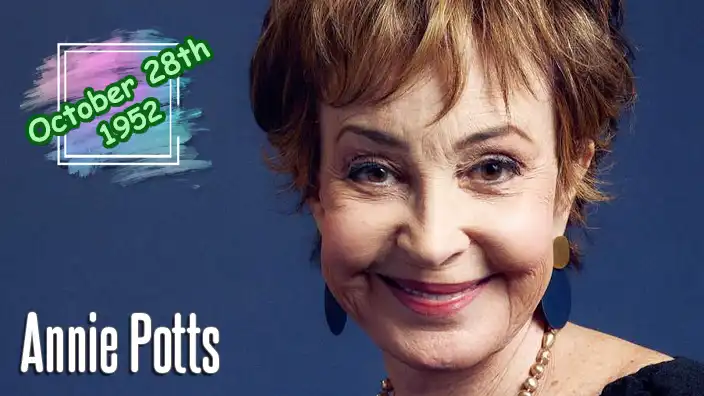
Annie Potts has spent decades proving that a sharp tongue, perfect comic timing, and a Southern accent can be more powerful than a proton pack. From answering phones for the Ghostbusters to delivering priceless wisdom as Meemaw in Young Sheldon, she's become one of television and cinema's most beloved personalities. Whether she's dealing with ghosts, eccentric Southern women, or a pint-sized scientific genius, Potts always seems to be the smartest person in the room—and usually the funniest.
October 28, 1952, in Nashville, Tennessee
Trivia
- She graduated from Stephens College in Missouri.
- Her film debut was alongside Mark Hamill in Corvette Summer.
- She voiced Bo Peep in Pixar's Toy Story films.
- She received an Emmy nomination for Love & War.
- She played Mary Jo Shively throughout all seven seasons of Designing Women.
- She made her Broadway debut in God of Carnage.
- Details
- Category: Celebrity Birthdays - October
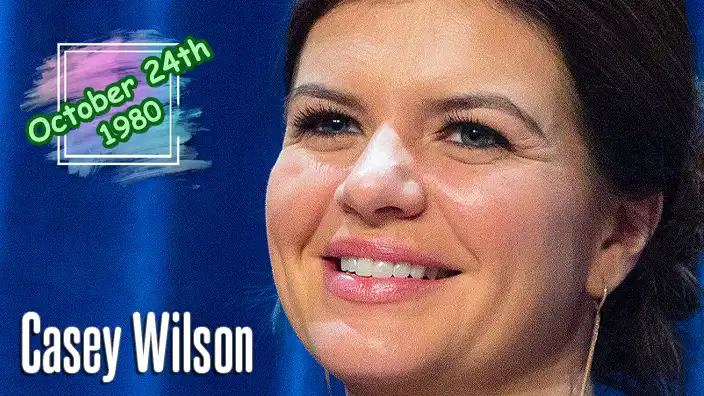
Casey Wilson has made a successful career out of turning awkward situations, questionable decisions, and spectacularly disastrous relationships into comedy gold. Best known for playing the gloriously unlucky-in-love Penny Hartz on Happy Endings, this American actress, comedian, and screenwriter has also survived Saturday Night Live, written Hollywood movies, hosted a podcast devoted to reality television, and somehow found time to become a bestselling author. With impeccable comic timing and a remarkable talent for making embarrassment entertaining, Wilson has demonstrated that life doesn't always provide a happy ending, but it certainly helps if somebody remembers to write a decent punchline.
October 24, 1980, in Alexandria, Virginia
Trivia
- A childhood visit to Cats inspired her interest in acting.
- Her father built a backyard stage for her childhood performances.
- She graduated from NYU's Tisch School of the Arts in 2002.
- She appeared on Saturday Night Live from 2008 to 2009.
- She co-wrote Bride Wars with her friend June Diane Raphael.
- She married Happy Endings creator David Caspe in 2014.
- Details
- Category: Celebrity Birthdays - October
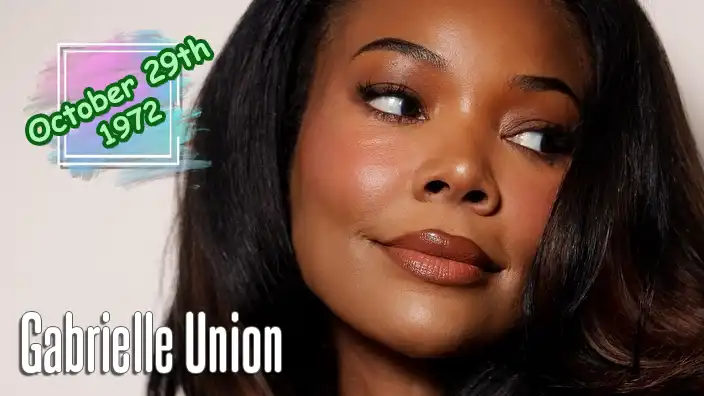
Gabrielle Union has gone from ruling the cheerleading sidelines in Bring It On to commanding a television newsroom in Being Mary Jane, proving that confidence, intelligence, and a well-timed comeback can take you a long way in Hollywood. Whether she's starring in a romantic comedy or delivering a dramatic performance, Union rarely needs a megaphone to make herself heard.
October 29, 1972, in Omaha, Nebraska
Trivia
- She graduated from UCLA with honors in sociology in 1996.
- She played soccer at the University of Nebraska.
- Her breakthrough role was Isis in Bring It On.
- She won an NAACP Image Award for Being Mary Jane.
- She married basketball star Dwyane Wade in 2014.
- She is a bestselling memoirist and children's author.
- Details
- Category: Celebrity Birthdays - October
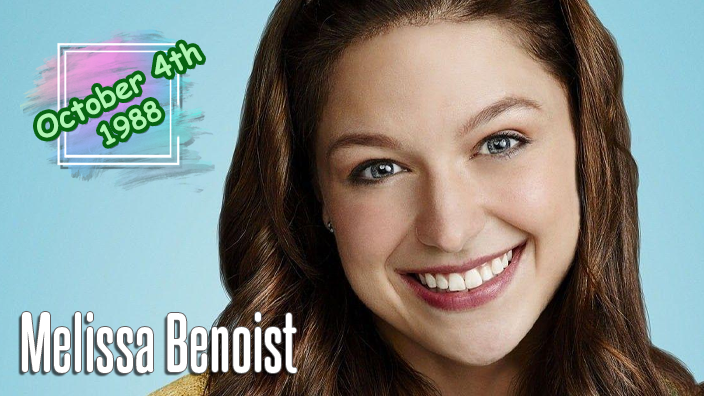
Melissa Benoist made flying, heat vision and regularly saving an entire city look remarkably cheerful in Supergirl. As Kara Danvers, she gave one of DC Comics' mightiest heroes plenty of heart, while building a career that also includes Glee, Whiplash, Broadway, directing and producing.
October 4, 1988, in Houston, Texas
Trivia
- She studied theatre at Marymount Manhattan College.
- Benoist played Marley Rose on Glee.
- She appeared in the Oscar-winning film Whiplash.
- She portrayed Supergirl for six seasons.
- Benoist made her Broadway debut as Carole King.
- She directed an episode of Supergirl.
From Our Marks Catelog
-

American Football Day is that magical time when perfectly reasonable adults suddenly start yelling at...
-

There’s something about that golden cloud of meringue that makes you forget all your worries, at...
-

Posttraumatic growth isn’t about silver linings or pretending that pain was somehow “worth it.” It’s...
-

On a hot day, when the sun is cooking the sidewalk and even the lawn chairs are sweating, there’s one...
-

Sacagawea wasn’t just a guide—she was the ultimate multitasker. Imagine a teenager navigating the...
-
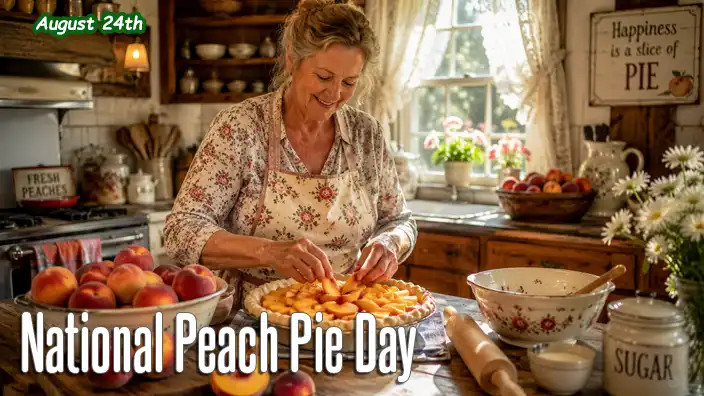
If peaches could talk, they would probably spend most of the year bragging about becoming...

