October 16, 1981, in Toronto, Ontario, Canada
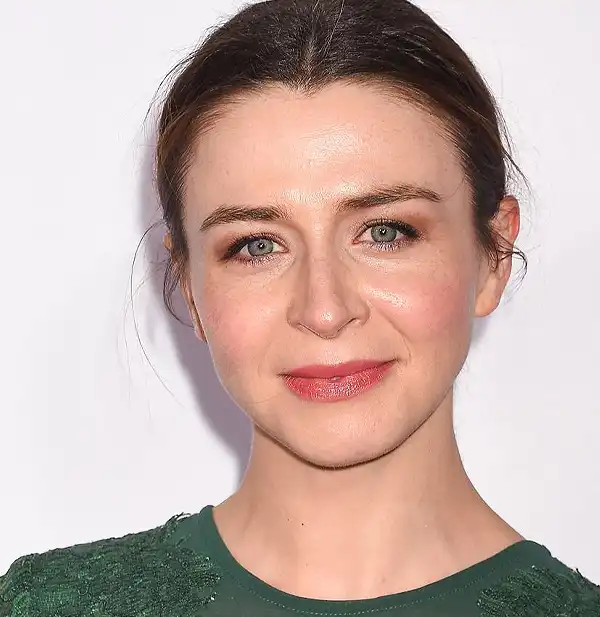
Caterina Reminy Scorsone was born on October 16, 1981, in Toronto, Ontario, Canada. An accomplished actress whose career began during childhood, she became internationally recognized for her portrayal of Dr. Amelia Shepherd in the popular ABC medical dramas Private Practice and Grey's Anatomy. Her performances have earned praise for their emotional intensity, authenticity, and willingness to explore difficult subjects, including addiction, grief, family relationships, and personal recovery. Although her work as Amelia Shepherd has become her defining television achievement, Scorsone's career also includes fantasy adventures, crime dramas, psychological thrillers, and feature films. Her professional journey illustrates how a talented child performer can develop into a respected dramatic actress capable of carrying some of television's most demanding storylines.
Scorsone grew up in a family that encouraged intellectual curiosity, education, and creative expression. Her father, Antonio Bruno Scorsone, worked as a social worker, while her mother, Suzanne Rozell Scorsone, was a social anthropologist. Caterina was one of five children, and the household provided an environment in which artistic interests and academic achievement were valued. Her family background included Italian ancestry through her father and northern European ancestry through her mother. From an early stage, Scorsone showed enthusiasm for performing, participating in theatrical activities and developing the confidence that would eventually lead her into professional television work. Unlike many aspiring performers who wait until adulthood to pursue acting, Scorsone entered the entertainment industry while still attending school.
Her first television experience came on the long-running Canadian children's program Mr. Dressup, where she began performing as a child. The series, which entertained generations of Canadian children through imaginative storytelling, crafts, costumes, and educational activities, provided a welcoming introduction to television production. Appearing on a children's program might seem a modest beginning for an actress who would later perform fictional brain surgery before millions of viewers, but it offered valuable experience working with cameras, production crews, and professional performers. Scorsone continued developing her acting skills while attending school in Toronto, gradually moving into more substantial dramatic roles.
During her teenage years, Scorsone attended Cardinal Carter Academy for the Arts, a Toronto school recognized for its emphasis on artistic education. Her theatrical interests continued alongside her academic studies, and she participated in school productions while pursuing professional acting opportunities. She later attended the University of Toronto, where she studied subjects including literary studies, philosophy, and comparative religion. Her academic background reflected an interest in human behavior, storytelling, and the complicated questions surrounding personal identity and relationships. These interests would become particularly relevant to the emotionally demanding characters she portrayed throughout her television career. Rather than abandoning education in favor of immediate professional success, Scorsone balanced her studies with the growing demands of the entertainment industry.
One of her early notable film appearances came in All I Wanna Do (1998), also released under the title Strike!, a coming-of-age comedy-drama directed by Sarah Kernochan. The film featured an ensemble cast that included Kirsten Dunst, Rachael Leigh Cook, and Merritt Wever, exploring friendship, independence, and rebellion at an all-girls boarding school during the 1960s. Scorsone portrayed Susie, contributing to a story about young women challenging institutional expectations and discovering their independence. The film offered an opportunity to work alongside other emerging performers while gaining experience in a feature-length production. It also demonstrated her ability to participate in ensemble storytelling, a skill that would later prove particularly valuable in the large casts of network television dramas.
Scorsone subsequently appeared in The Third Miracle (1999), a religious drama directed by Agnieszka Holland and starring Ed Harris. She portrayed Maria Witkowski, a troubled young woman whose experiences become connected to the film's examination of faith, miracles, and spiritual uncertainty. The role required emotional maturity and an ability to communicate psychological vulnerability, qualities that would become increasingly recognizable in her later performances. Working with experienced actors and filmmakers helped broaden Scorsone's professional range and introduced her to dramatic material considerably more challenging than the lighthearted entertainment of her earliest television appearances.
Her growing reputation in Canadian television was strengthened by her performance in Power Play, a drama series set within the competitive world of professional ice hockey. Scorsone portrayed Michelle Parker, a character whose personal relationships unfolded against the backdrop of sports management, ambition, and professional rivalries. The series offered a behind-the-scenes examination of the business of hockey, an especially appropriate subject for Canadian television, where the sport occupies a position somewhere between national entertainment and a second language. Her performance earned a Gemini Award nomination, one of Canada's major television honors at the time. The recognition demonstrated that Scorsone was developing into a capable dramatic performer with the potential to pursue more prominent roles.
A significant breakthrough arrived when Scorsone was cast as Jess Mastriani in the television drama 1-800-Missing, subsequently known simply as Missing. The series premiered in 2003 and followed a young woman whose unusual psychic abilities enabled her to experience visions connected to missing persons. Working alongside Gloria Reuben, Scorsone portrayed a character who combined youthful determination with the psychological burden of possessing information that ordinary investigators could not obtain. The program blended crime investigation, supernatural mystery, and character-driven drama, giving Scorsone an opportunity to lead a television series and develop a recognizable screen identity.
Missing ran for three seasons, concluding in 2006, and provided Scorsone with extensive experience as a leading actress. Her character frequently encountered dangerous situations while attempting to interpret disturbing visions and assist investigators searching for missing individuals. The demanding production schedule required her to maintain emotional consistency across multiple episodes while balancing suspense, action, and personal relationships. The series helped establish her reputation beyond Canada and demonstrated her ability to carry a television production. It also introduced an interesting pattern in her career: characters who possess unusual abilities, confront extraordinary problems, and rarely enjoy what most people would consider a relaxing working day.
Following Missing, Scorsone continued expanding her television credits. She appeared in the Starz drama Crash, inspired by the Academy Award-winning film of the same name, portraying Callie Wilkinson. The series explored complicated relationships, social divisions, and personal conflicts in Los Angeles. Working within a large ensemble cast provided further opportunities to develop characters whose motivations and emotional experiences were not always straightforward. Scorsone's willingness to explore morally complicated and psychologically demanding roles helped distinguish her from performers whose careers remained concentrated in a single television genre.
In 2009, Scorsone took on the title role in Alice, a fantasy television miniseries produced for Syfy. Inspired by Lewis Carroll's Alice's Adventures in Wonderland, the production reimagined the familiar story in a darker, more contemporary fantasy setting. Scorsone portrayed Alice Hamilton, a determined young woman who enters a mysterious alternate world populated by unusual characters, dangerous political interests, and imaginative reinterpretations of Wonderland's traditional inhabitants. The cast included Kathy Bates, Tim Curry, and Andrew-Lee Potts. Her performance combined action, humor, vulnerability, and determination, demonstrating her ability to lead an ambitious fantasy production. The role earned Scorsone another Gemini Award nomination, reinforcing her reputation as a versatile Canadian actress.
Her feature-film work also included Edge of Darkness (2010), a crime thriller directed by Martin Campbell and starring Mel Gibson. Scorsone portrayed Melissa, appearing in a story involving a police detective investigating the death of his daughter and uncovering a complex conspiracy. She later appeared in The November Man (2014), an espionage thriller starring Pierce Brosnan and Olga Kurylenko. In that film, she played Celia, a character connected to the dangerous world of intelligence operations and international intrigue. Although Scorsone's greatest recognition came through television, these film appearances demonstrated her ability to move between different production styles and work alongside established Hollywood performers.
The defining turning point in Scorsone's career arrived when she joined Private Practice, the ABC medical drama created by Shonda Rhimes as a spin-off from Grey's Anatomy. Scorsone was cast as Dr. Amelia Shepherd, a talented neurosurgeon and the younger sister of Dr. Derek Shepherd, portrayed by Patrick Dempsey. Amelia made her first appearance on Private Practice in 2010, introducing audiences to a brilliant but emotionally complicated physician whose professional confidence often concealed considerable personal turmoil. Her relationship with Derek connected the character to the larger Grey's Anatomy universe, while her independent storylines allowed Scorsone to establish Amelia as a compelling personality in her own right.
Amelia Shepherd quickly became one of the most emotionally demanding characters in Private Practice. Her storylines explored substance addiction, relapse, recovery, grief, professional ambition, and the consequences of traumatic experiences. Scorsone approached these subjects with considerable seriousness, portraying addiction as a complex medical and psychological condition rather than simply a convenient source of television drama. Her performance received particular recognition for its sensitive depiction of substance use disorder and recovery. In 2012, she received a PRISM Award for Female Performance in a Drama Series, recognizing her work on Private Practice and the program's treatment of addiction-related issues.
One of Amelia's most heartbreaking storylines involved pregnancy and the devastating discovery that her baby had a fatal medical condition. The narrative explored grief, difficult medical decisions, and the emotional consequences of losing a child. Scorsone delivered a deeply affecting performance that required extraordinary emotional vulnerability. The storyline also addressed organ donation, emphasizing how an unimaginably painful experience could become connected to opportunities to help other families. Such material demanded sensitivity from the writers and performers, and Scorsone's portrayal contributed to Amelia's development as a character whose strength was inseparable from her personal suffering.
After Private Practice concluded in 2013, Scorsone continued portraying Amelia Shepherd within the broader Grey's Anatomy universe. She had already made crossover appearances on the original series, but her role expanded significantly when she joined the main cast in 2014. Her arrival at Grey Sloan Memorial Hospital introduced new professional rivalries, family tensions, and personal relationships. As Derek Shepherd's younger sister, Amelia initially faced comparisons with her celebrated brother, a renowned neurosurgeon whose reputation loomed large within the fictional medical community. Over time, however, Amelia established herself as an accomplished surgeon with her own professional identity, complicated personal history, and distinctive approach to medicine.
The relationship between Amelia and Derek became an important element of Grey's Anatomy, particularly as the series explored their family history and differing personalities. Patrick Dempsey's character had long been one of the program's central figures, and introducing his sister provided opportunities to examine family loyalty, professional competition, and unresolved emotional conflicts. Following Derek's death in the series, Amelia faced the additional challenge of coping with grief while continuing her demanding medical career. Scorsone's performance emphasized the complicated nature of bereavement, portraying a character who could be professionally confident one moment and emotionally overwhelmed the next.
Amelia's romantic relationships also became a significant part of her storyline. Her marriage to Dr. Owen Hunt, portrayed by Kevin McKidd, involved emotional misunderstandings, conflicting expectations, and the lingering effects of previous trauma. Later relationships introduced further questions about identity, emotional compatibility, parenting, and personal independence. These storylines reflected the broader dramatic traditions of Grey's Anatomy, where hospital corridors frequently serve as locations for romantic revelations, professional confrontations, and conversations that sensible people might prefer to have somewhere other than beside an operating room.
Another major storyline involved the discovery that Amelia had a brain tumor, a development that placed the neurosurgeon in the unfamiliar position of becoming a patient. The diagnosis raised questions about how her medical condition might have influenced her behavior, decisions, and relationships. For Scorsone, the storyline provided an opportunity to explore vulnerability from a different perspective, as a character accustomed to controlling difficult medical situations suddenly faced uncertainty about her own health. The narrative also allowed the series to examine how physicians respond when their professional knowledge cannot eliminate the fear associated with serious illness.
As Grey's Anatomy continued, Amelia's character became increasingly important to its examination of family relationships, motherhood, and personal recovery. Her experiences reflected the challenges of balancing a demanding medical career with the emotional responsibilities of parenting and maintaining meaningful relationships. Scorsone's portrayal allowed Amelia to remain imperfect, occasionally impulsive, and frequently frustrating without losing the audience's sympathy. Rather than presenting a conventional television heroine who consistently makes sensible decisions, she created a character whose mistakes, resilience, and determination made her recognizably human.
Scorsone also portrayed Amelia Shepherd in crossover appearances on Station 19, the firefighting drama connected to the Grey's Anatomy universe. These appearances demonstrated the continuing integration of the franchise's fictional emergency services and medical professionals. The interconnected series provided opportunities for storylines involving emergency response, hospital treatment, and the personal relationships connecting characters across different workplaces. For viewers following all three programs, Scorsone's character became a familiar presence in a television universe where medical emergencies, fires, and romantic complications appeared to occur with remarkable regularity.
Away from television, Scorsone has become a prominent advocate for disability awareness and inclusion. Her daughter Paloma, affectionately known as Pippa, has Down syndrome, and Scorsone has spoken publicly about how motherhood transformed her understanding of disability, human worth, and social expectations. She has challenged assumptions that a person's value should be measured primarily through conventional standards of achievement, independence, or productivity. Her advocacy emphasizes that individuals with disabilities deserve dignity, opportunity, meaningful representation, and full participation in society. Through interviews and public appearances, she has encouraged audiences to reconsider stereotypes and recognize the importance of inclusive communities.
Scorsone's advocacy has also brought attention to the experiences of parents raising children with disabilities. She has discussed the importance of appropriate support, access to services, and the recognition that every child possesses individual abilities, needs, and personality traits. Rather than treating disability as a subject defined exclusively by medical challenges, she has emphasized the importance of family relationships, belonging, and unconditional love. Her willingness to discuss these experiences publicly has made her an influential voice in conversations about disability representation, particularly among families who appreciate seeing their experiences reflected in mainstream entertainment.
In 2023, Scorsone revealed that she and her three daughters had escaped a devastating house fire that destroyed their home. The fire spread rapidly, leaving the family very little time to evacuate. Although Scorsone successfully brought her children to safety, the family tragically lost four pets. She subsequently expressed gratitude to firefighters, neighbors, friends, colleagues, and members of her community who provided assistance following the disaster. Her public reflections focused particularly on the generosity and compassion shown by others during a frightening and emotionally difficult experience. The incident attracted widespread attention and demonstrated how quickly an ordinary family evening can become a life-threatening emergency.
Throughout her career, Caterina Scorsone has balanced professional achievement with family responsibilities and public advocacy. She shares three daughters with musician Rob Giles, whom she married in 2009 and from whom she separated in 2020. Although her personal experiences have occasionally attracted media attention, she has generally used her public platform to discuss subjects she considers meaningful, particularly parenting, disability inclusion, and the importance of community support. Her approach has helped establish a public identity extending beyond the fictional medical dramas that made her famous.
Scorsone's performances have earned recognition not only because she portrays dramatic situations convincingly, but also because she brings emotional depth to characters who might otherwise become predictable television personalities. Her work as Amelia Shepherd has required her to depict addiction, grief, professional ambition, complicated family relationships, serious illness, and recovery across many years of serialized storytelling. Maintaining a recognizable character through such a wide range of experiences requires consistency, adaptability, and a willingness to explore difficult emotional territory. Scorsone has repeatedly demonstrated those qualities while remaining an important presence in one of American television's most enduring medical franchises.
From her beginnings on Canadian children's television to her internationally recognized role on Grey's Anatomy, Caterina Scorsone has built a career characterized by versatility, emotional honesty, and professional determination. Her earlier performances in Missing, Alice, and Private Practice established her range, while her portrayal of Amelia Shepherd introduced her to audiences around the world. Beyond acting, her advocacy for disability inclusion and her openness about family experiences have given her public work an additional dimension. Whether confronting a difficult surgical procedure, navigating an emotionally complicated storyline, or encouraging greater understanding of people with disabilities, Scorsone continues to demonstrate that meaningful storytelling can entertain audiences while encouraging them to think more deeply about the world around them. And after years of fictional hospital emergencies, she has certainly earned the right to enjoy an occasional quiet afternoon without anyone shouting for a crash cart.