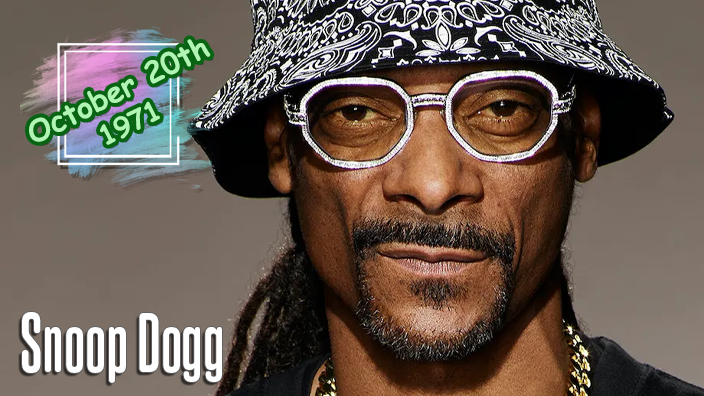
October 20, 1971, in Long Beach, California

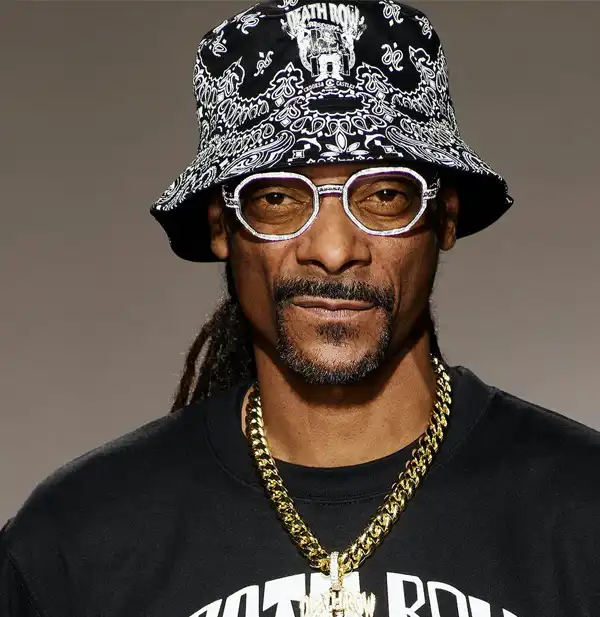
Born Calvin Cordozar Broadus Jr. on October 20, 1971, in Long Beach, California, Snoop Dogg grew up in a working-class environment where music, family, and neighborhood life played important roles in his development. His mother, Beverly Tate, gave him the childhood nickname Snoopy because she thought he resembled the beloved cartoon beagle from Charles M. Schulz's Peanuts. The nickname remained with him as he grew older, eventually evolving into the stage name that would become familiar around the world. His biological father, Vernell Varnado, was largely absent during his early childhood, and Snoop was named after his stepfather, Calvin Cordozar Broadus Sr. The family circumstances and social environment of his upbringing would later influence the stories and observations that appeared in his music.
Music became an important part of Snoop's childhood, particularly through his involvement in church. He sang in the choir and played piano at the Golgotha Trinity Baptist Church, developing an early appreciation for rhythm, melody, and performance. Gospel music introduced him to the expressive power of the human voice, while the soul, funk, and rhythm-and-blues recordings popular in Southern California exposed him to a broader musical landscape. Artists such as Parliament-Funkadelic, the Ohio Players, and other influential funk performers helped shape the musical environment from which West Coast hip-hop would eventually emerge. Snoop's early musical experiences provided a foundation for the smooth, melodic delivery that later distinguished him from many other rappers.
During his school years, Snoop began experimenting with rap, discovering that his distinctive voice and natural sense of rhythm attracted attention from classmates. He reportedly enjoyed performing in school hallways, where students gathered to listen to his improvised rhymes. These informal performances helped him develop confidence and an understanding of how to hold an audience's attention. Unlike rappers who relied primarily on aggressive shouting or rapid-fire delivery, Snoop developed a relaxed, conversational style that allowed his words to move smoothly across a musical beat. His ability to sound almost effortlessly confident would eventually become one of his greatest trademarks.
Growing up in Long Beach also exposed Snoop to the social challenges associated with poverty, neighborhood violence, and gang culture. As a teenager and young adult, he experienced encounters with law enforcement and periods of incarceration related to drug offenses. He has also spoken about his involvement with neighborhood gangs during his youth. These experiences influenced his early lyrics, which frequently explored street life, criminal activity, and the pressures confronting young people in urban communities. Although his music would later generate considerable controversy, it also reflected the environment in which he had grown up and the complicated realities of life in parts of Southern California.
After graduating from Long Beach Polytechnic High School, Snoop continued developing his musical interests with friends and relatives. He formed a group called 213 with his cousin Nate Dogg and friend Warren G, who was the stepbrother of producer Dr. Dre. The group's name referenced the telephone area code associated with Los Angeles at the time. Their early recordings combined rap with melodic influences from funk and rhythm and blues, creating a sound that would become increasingly important in the development of West Coast hip-hop. The trio recorded homemade demonstration tapes and circulated their music among friends, hoping to attract professional attention. At this stage, international fame remained a distant possibility, but the recordings were about to reach exactly the right person.
Warren G helped bring Snoop's music to the attention of Dr. Dre, a pioneering producer and former member of the influential rap group N.W.A. Dre recognized something distinctive in Snoop's voice and delivery, particularly his ability to combine relaxed phrasing with sharp rhythmic precision. Their first major collaboration appeared on "Deep Cover," a song recorded for the soundtrack of the 1992 crime thriller of the same name. The recording introduced Snoop Doggy Dogg, as he was then known, to a wider audience and demonstrated the remarkable musical chemistry between the young rapper and the established producer.
Dr. Dre's debut solo album, The Chronic, released in December 1992, became the breakthrough that transformed Snoop's professional prospects. He appeared prominently throughout the album, contributing memorable performances to songs including "Nuthin' but a 'G' Thang," "Dre Day," and other recordings. The album helped popularize G-funk, a style of West Coast hip-hop characterized by slow, rolling rhythms, prominent bass lines, synthesizer melodies, and samples influenced by 1970s funk music. Snoop's smooth vocal delivery complemented Dre's production perfectly, creating a distinctive sound that quickly attracted national attention.
The success of The Chronic established Snoop as one of the most promising new voices in hip-hop, even before he had released a solo album. His relaxed flow and memorable personality distinguished him from many contemporary rappers, while his collaboration with Dre demonstrated the commercial potential of G-funk. The album's influence extended beyond record sales, helping reshape the sound of American rap music during the early 1990s. Its musical approach inspired numerous artists and producers, while its success strengthened the growing prominence of West Coast hip-hop within an industry that had previously been dominated by performers from New York and other East Coast cities.
In November 1993, Snoop released his debut solo album, Doggystyle, through Death Row Records. Produced primarily by Dr. Dre, the album became an immediate commercial sensation, debuting at number one on the Billboard 200 chart. It sold more than 800,000 copies during its first week, establishing a remarkable record for a debut release at the time. The album featured songs including "Who Am I? (What's My Name?)," "Gin and Juice," and "Doggy Dogg World," recordings that helped define the sound and personality of early 1990s West Coast rap. With its distinctive production, memorable hooks, and Snoop's effortless delivery, Doggystyle became one of the most influential debut albums in hip-hop history.
"Gin and Juice" became particularly important to Snoop's public identity, combining an infectious rhythm with lyrics depicting parties, neighborhood life, and the relaxed atmosphere associated with Southern California. Its chorus and musical arrangement made it one of the most recognizable rap recordings of the decade. "Who Am I? (What's My Name?)" similarly introduced audiences to Snoop's playful self-presentation, incorporating funk influences and memorable vocal hooks. These songs helped establish his distinctive image, including his laid-back delivery, characteristic slang, and relaxed approach to performance. The recordings became enduring elements of hip-hop culture, remaining familiar to listeners long after their original release.
Despite its commercial success, Doggystyle generated controversy because of its explicit lyrics and depictions of violence, sexuality, and criminal activity. Critics questioned whether gangsta rap glorified dangerous behavior, while supporters argued that the music reflected social realities often ignored by mainstream entertainment. The debate became part of a broader national conversation about freedom of expression, popular culture, and the responsibilities of recording artists. Snoop's early career developed amid these disagreements, demonstrating how hip-hop had become both a major commercial force and a focal point for arguments about American society.
Snoop's personal life also attracted significant public attention during this period. In 1993, he was charged in connection with the shooting death of Philip Woldemariam, an incident involving his bodyguard. Snoop and his bodyguard maintained that the shooting occurred in self-defense, and both were acquitted of murder charges in 1996. The case received extensive media coverage and placed considerable pressure on the young rapper during a period of extraordinary professional success. Its resolution marked an important turning point, allowing him to concentrate more fully on his recording career and future opportunities.
In 1996, Snoop released his second studio album, Tha Doggfather, following the departure of Dr. Dre from Death Row Records. The album debuted at number one on the Billboard 200 and demonstrated that Snoop remained a major commercial attraction despite changes within the record label. Its production differed from the distinctive sound of Doggystyle, reflecting both the absence of Dre and the changing circumstances surrounding Death Row. The album also appeared during a difficult period in hip-hop history, following the death of Tupac Shakur in September 1996 and amid growing tensions within the music industry.
Snoop's relationship with Death Row Records became increasingly complicated, and he eventually left the label to pursue greater professional independence. In 1998, he signed with No Limit Records, the influential New Orleans-based company founded by Master P. The move represented a significant change in his career, introducing him to a different business environment and production style. His first album for the label, Da Game Is to Be Sold, Not to Be Told, debuted at number one on the Billboard 200, demonstrating that his popularity extended beyond his original association with Dr. Dre and Death Row.
His No Limit period continued with No Limit Top Dogg in 1999 and Tha Last Meal in 2000. These albums helped maintain his commercial presence while allowing him to explore different musical collaborations and approaches. The period also demonstrated his ability to adapt to changing trends within hip-hop, an essential skill in a genre where new artists and production styles frequently emerge. Rather than becoming permanently associated with the G-funk sound of his debut, Snoop continued experimenting while retaining the vocal personality that made his recordings immediately recognizable.
In 2002, Snoop released Paid tha Cost to Be da Boss, an album that included the successful single "Beautiful," featuring Pharrell Williams and Charlie Wilson. The recording combined hip-hop with smooth rhythm-and-blues influences, demonstrating his ability to create music appealing to audiences beyond traditional rap listeners. His collaboration with Pharrell and the Neptunes became especially important during this period, introducing a polished production style that complemented Snoop's relaxed delivery. "Beautiful" became a major crossover success and helped reinforce his position as a versatile performer capable of adapting to contemporary popular music.
Another extraordinary commercial achievement arrived in 2004 with "Drop It Like It's Hot," featuring Pharrell Williams. The minimalist production, unusual rhythmic arrangement, and memorable vocal performances created one of the most distinctive rap singles of the decade. The song reached number one on the Billboard Hot 100, becoming Snoop's first single to top that chart as a lead artist. Its success demonstrated his ability to remain commercially relevant more than a decade after his original breakthrough. The recording also became one of his signature songs, inspiring numerous references, advertisements, and popular culture appearances.
The album R&G (Rhythm & Gangsta): The Masterpiece, released in 2004, continued Snoop's commercial success and featured collaborations with numerous prominent artists. Its mixture of hip-hop, funk, rhythm and blues, and contemporary pop influences reflected the increasingly diverse musical environment in which he operated. Snoop's willingness to collaborate with performers from different genres helped expand his audience while preserving his distinctive identity. His ability to move between musical styles without losing his recognizable vocal character became one of the central reasons for his extraordinary professional longevity.
Throughout the 2000s, Snoop continued recording successful albums and singles, including Tha Blue Carpet Treatment in 2006 and Ego Trippin' in 2008. His 2007 single "Sensual Seduction," also released in a more explicit version under a different title, incorporated synthesizers, electronic rhythms, and prominent Auto-Tune effects. The recording demonstrated his willingness to experiment with contemporary production techniques rather than remain confined to the sound that had originally established his reputation. Although some listeners were surprised by the musical departure, the song became another commercial success and reinforced his ability to adapt to changing popular tastes.
Snoop also developed a substantial career in film and television, appearing in productions that ranged from comedy and drama to animation and reality programming. His film credits included Training Day in 2001, Starsky & Hutch in 2004, and Soul Plane in 2004. These appearances demonstrated his ability to translate his distinctive public personality into screen performances, often incorporating humor and an awareness of his established image. His recognizable voice also made him a natural choice for animated productions, while his willingness to participate in unconventional projects helped broaden his appeal beyond the recording industry.
One of his more unusual television ventures was Snoop Dogg's Father Hood, a reality series that premiered in 2007 and explored his family life. The program introduced audiences to a more domestic side of the rapper, contrasting his public image with the responsibilities of marriage and parenthood. The series helped demonstrate that his life extended beyond recording studios, concerts, and the controversial subjects associated with his early music. For viewers accustomed to his gangsta rap persona, seeing Snoop navigate ordinary family disagreements provided a considerably different form of entertainment.
Snoop married his longtime partner, Shante Taylor, in 1997. The couple had met during their school years and built a family together while navigating the pressures of his growing celebrity. They have three children together, and Snoop also has a son from another relationship. Although their marriage experienced difficulties, including a period when Snoop filed for divorce before the couple reconciled, they renewed their wedding vows in 2008. His family relationships have remained an important part of his public story, particularly as his career expanded into activities associated with parenting, education, and community involvement.
One of Snoop's most meaningful projects has been his work with youth football. In 2005, he established the Snoop Youth Football League, an organization designed to provide opportunities for children to participate in organized sports, develop discipline, and benefit from positive mentorship. The program has served young athletes in Southern California and has helped participants develop skills extending beyond football. Snoop has frequently emphasized the importance of providing children with constructive activities and supportive adult role models, particularly in communities facing economic and social challenges. His involvement demonstrated a commitment to helping young people pursue opportunities that might otherwise remain unavailable.
The youth football program also revealed a side of Snoop that contrasted with the controversies surrounding his early career. Rather than simply providing financial support, he became personally involved in coaching and encouraging young players. The experience required patience, organization, and the ability to communicate with children and their families, skills not always associated with the glamorous world of international music entertainment. His work became the subject of the documentary series Coach Snoop, which followed the experiences of young athletes participating in the program and explored the challenges they faced both on and off the field.
Snoop's musical experimentation reached another unexpected stage in 2012 when he adopted the name Snoop Lion and began exploring reggae music. Following a visit to Jamaica, he developed an interest in Rastafarian culture and collaborated with producers including Diplo on a reggae-influenced album. The resulting project, Reincarnated, was released in 2013 and accompanied by a documentary exploring his experiences and artistic transformation. The album represented a substantial departure from his established hip-hop sound, incorporating reggae rhythms and themes associated with spirituality, peace, and personal reflection.
The Snoop Lion project attracted both interest and criticism. Some listeners appreciated his willingness to explore a different musical tradition, while others questioned aspects of his presentation of Rastafarian culture. Nevertheless, the experiment demonstrated his continuing desire to explore new artistic directions. His career had already survived numerous changes in musical fashion, and the reggae project reinforced his reputation for reinvention. Not many entertainers could move from gangsta rap to reggae and then return to mainstream hip-hop without appearing particularly concerned about whether anyone had updated the business cards.
In 2016, Snoop released Coolaid, an album that returned to his hip-hop roots while incorporating contemporary production styles. The project featured collaborations with several prominent performers and demonstrated his continued interest in recording music that connected with both longtime fans and younger audiences. His ability to maintain an active recording career across multiple decades reflected the strength of his musical identity and the relationships he had developed throughout the entertainment industry.
Another important musical departure came in 2018 with the release of Bible of Love, a gospel album featuring numerous guest performers. The project drew upon the church music that had influenced Snoop during his childhood and introduced his voice to audiences associated with contemporary gospel music. The album's spiritual themes contrasted sharply with the material that had originally established his reputation, illustrating the remarkable range of his artistic interests. Although his musical choices sometimes surprised listeners, the gospel project demonstrated that the influences of his early life remained important to his creative identity.
Snoop's growing reputation as a television personality became particularly evident through his friendship with Martha Stewart. Their unlikely partnership developed through television appearances and shared interests in entertainment and cooking. In 2016, they launched Martha & Snoop's Potluck Dinner Party, a cooking and entertainment program that combined celebrity guests, culinary challenges, and humorous conversations. The show's appeal depended heavily upon the contrast between Stewart's carefully organized domestic expertise and Snoop's relaxed, playful personality. Their friendship became one of popular culture's most entertaining partnerships, proving that people from remarkably different backgrounds could develop genuine affection and professional chemistry.
The success of Martha & Snoop's Potluck Dinner Party introduced Snoop to audiences who might never have purchased one of his rap albums. His willingness to laugh at himself, participate in cooking challenges, and engage in good-natured exchanges with Stewart helped soften the controversial image associated with his early career. The program also demonstrated the importance of personality in modern entertainment, where a recognizable performer can develop successful projects across multiple media platforms. Snoop's transition into mainstream television was particularly remarkable because he maintained his distinctive mannerisms and humor rather than attempting to adopt an entirely different public identity.
Snoop's entrepreneurial interests expanded alongside his entertainment career. He became involved in businesses associated with music, clothing, technology, food, beverages, and lifestyle products. His ventures included cannabis-related brands, reflecting his longstanding public association with marijuana culture, as well as more conventional consumer products and entertainment partnerships. He also invested in digital projects and developed relationships with companies seeking to connect their products with his recognizable personality. These activities demonstrated his understanding that a successful entertainment career could provide opportunities to build businesses extending far beyond record sales and concert performances.
In 2018, Snoop received a star on the Hollywood Walk of Fame, recognizing his contributions to the recording industry and broader popular culture. The ceremony brought together family members, fellow musicians, and entertainment personalities who celebrated his extraordinary career. The honor reflected his transformation from a promising young rapper discovered by Dr. Dre into an internationally recognized cultural figure. His acceptance speech became particularly memorable because he humorously thanked himself for his hard work and determination. It was an entertaining moment of self-appreciation, although after decades of recording albums, performing concerts, and developing businesses, one could reasonably argue that he had earned the opportunity.
Snoop's involvement with professional wrestling provided another unexpected dimension to his career. A longtime fan of the sport, he appeared at several WWE events and participated in entertainment segments that combined music, comedy, and wrestling theatrics. In 2016, he was inducted into the celebrity wing of the WWE Hall of Fame, recognizing his contributions to the organization's entertainment programming. His appearances reflected his enthusiasm for sports and spectacle, as well as his willingness to participate in productions that emphasized humor and audience interaction. Considering the elaborate personalities involved in professional wrestling, Snoop's relaxed confidence made him seem almost suspiciously normal.
In 2022, Snoop achieved a particularly meaningful business milestone when he acquired Death Row Records, the label that had released his groundbreaking debut album. The acquisition represented a remarkable reversal of circumstances for an artist who had once experienced professional difficulties within the company's original structure. By becoming the owner of the label, Snoop gained an opportunity to influence the future of a brand that had played a central role in the development of West Coast hip-hop. The acquisition also demonstrated his evolution from recording artist to music industry executive, giving him greater involvement in business decisions and the management of creative properties.
The same year, Snoop performed during the Super Bowl LVI halftime show at SoFi Stadium in Inglewood, California, alongside Dr. Dre, Eminem, Mary J. Blige, Kendrick Lamar, and special guest 50 Cent. The performance celebrated the influence of hip-hop and its development into one of the world's most important musical genres. For Snoop, appearing alongside Dr. Dre was especially meaningful because their original collaboration had launched his career three decades earlier. The show attracted enormous international attention and received recognition for its production and cultural significance, demonstrating how far hip-hop had progressed from its early struggles for mainstream acceptance.
Snoop's musical collaborations have remained an essential part of his career, connecting him with artists from hip-hop, pop, country, reggae, and other genres. He has worked with performers including Katy Perry, Wiz Khalifa, Akon, Pharrell Williams, and numerous others. His appearance on Perry's 2010 hit "California Gurls" introduced his distinctive delivery to a particularly broad pop audience, while his collaboration with Wiz Khalifa on "Young, Wild & Free," featuring Bruno Mars, became another major success. These projects demonstrated his ability to contribute recognizable personality and musical style to recordings that differed considerably from his early gangsta rap material.
In 2024, Snoop returned to the recording studio with Dr. Dre for Missionary, an album produced by Dre and released more than three decades after their landmark collaboration on Doggystyle. The project brought together two of the most influential figures in West Coast hip-hop and explored a mixture of contemporary production techniques and musical traditions associated with their earlier work. The album featured collaborations with prominent performers from different genres, reflecting the extensive professional relationships the pair had developed throughout their careers. Its release demonstrated that their musical partnership remained creatively active long after it had helped transform the sound of American rap.
Snoop also became a coach on NBC's singing competition The Voice in 2024, joining a program that had introduced audiences to numerous established musicians serving as mentors for aspiring performers. His participation demonstrated his ability to offer encouragement, practical advice, and entertainment while working with singers from different musical backgrounds. His distinctive personality and humorous observations made him a memorable addition to the coaching panel, while his decades of professional experience provided valuable insights into the challenges of building a career in music.
Perhaps the most surprising development in Snoop's television career came through his involvement in Olympic broadcasting. He first attracted attention for his humorous commentary alongside Kevin Hart during coverage associated with the Tokyo Olympics. Their relaxed conversations and entertaining reactions to sporting events demonstrated that Snoop's personality could make unfamiliar competitions accessible and amusing to a broad audience. The success of these appearances encouraged NBC to expand his involvement in subsequent Olympic coverage.
During the 2024 Summer Olympics in Paris, Snoop served as a special correspondent for NBC, attending competitions, meeting athletes, exploring famous landmarks, and providing humorous observations throughout the Games. His enthusiastic participation became one of the most widely discussed elements of the television coverage. He appeared at numerous sporting events, interacted with American athletes, and embraced opportunities to experience activities far removed from his usual professional environment. His infectious enthusiasm helped introduce viewers to different Olympic sports, while his distinctive commentary provided a refreshing contrast to conventional broadcasting.
Snoop's appearances in Paris included carrying the Olympic torch during the relay, a moment that attracted international attention. His participation symbolized the remarkable transformation of his public image, from controversial rapper to celebrated cultural ambassador. He also spent time with athletes and their families, expressing admiration for the dedication required to compete at the highest international level. His interactions demonstrated genuine curiosity and enthusiasm, qualities that helped make his Olympic coverage appealing to audiences who might not have been familiar with his musical career.
The success of his Paris appearances led to further Olympic involvement during the 2026 Winter Games in Milan and Cortina d'Ampezzo, Italy. Snoop returned to NBC's coverage and embraced the role of enthusiastic supporter of American athletes, while also participating in activities associated with the Games. His involvement demonstrated that his Olympic popularity was not merely a one-time novelty. Instead, he had developed a distinctive broadcasting identity built upon humor, curiosity, and an ability to connect with athletes and viewers. Few careers offer a more unexpected progression than moving from the recording sessions of The Chronic to international winter sports coverage, but Snoop appeared perfectly comfortable with the transition.
Throughout his career, Snoop has also remained associated with cannabis culture, a subject that has influenced his public image, business interests, and numerous comedic appearances. His openness about marijuana use has contributed to both controversy and popular fascination, particularly as public attitudes and laws surrounding cannabis have changed in parts of the United States. While the subject remains closely associated with his persona, it represents only one aspect of a much broader career that includes music, philanthropy, television, entrepreneurship, and sports. His ability to maintain a recognizable identity while expanding into new professional fields has become one of his most distinctive achievements.
Snoop's contributions to hip-hop have also included supporting younger performers and preserving the musical traditions that shaped his early career. His involvement in record production, artist collaborations, and Death Row Records reflects a continuing interest in the development of West Coast rap. The influence of G-funk remains evident in contemporary music, particularly its use of melodic bass lines, funk-inspired rhythms, and relaxed vocal delivery. Snoop's recordings helped establish these characteristics as important elements of hip-hop, influencing generations of performers who have drawn inspiration from his distinctive sound.
His cultural influence extends beyond music into language, fashion, advertising, and entertainment. Snoop's characteristic expressions, relaxed speaking style, and recognizable appearance have become familiar elements of popular culture. His public persona combines humor, confidence, and an apparent ability to remain untroubled by circumstances that would leave most people searching for a quiet room. This personality has made him particularly attractive to television producers and advertisers seeking performers who can connect with audiences across different generations. His career illustrates how a distinctive artistic identity can become the foundation for an unusually broad range of professional opportunities.
Snoop's longevity is especially remarkable within hip-hop, a genre that has experienced enormous changes since the early 1990s. Recording technology, distribution methods, musical styles, and audience expectations have evolved dramatically, yet he has remained a recognizable and active participant in popular entertainment. His willingness to collaborate with younger musicians, explore unfamiliar genres, and participate in new media projects has helped maintain his relevance. Rather than attempting to preserve his early career as an untouchable historical achievement, Snoop has repeatedly demonstrated that reinvention can be an important part of artistic survival.
The contrast between Snoop's early public image and his later mainstream popularity also reflects broader changes in American culture. Hip-hop, once frequently dismissed or condemned by established institutions, has become a dominant influence on music, fashion, advertising, and entertainment. Snoop's career developed alongside this transformation, making him both a participant in and a symbol of the genre's growing cultural acceptance. His journey demonstrates how artists associated with controversial movements can eventually become familiar figures within the very institutions that once viewed their work with suspicion.
Despite his considerable commercial achievements, Snoop has often emphasized the importance of remaining connected to his Long Beach roots. His youth football activities, community involvement, and continuing relationships with musicians from Southern California reflect the influence of his upbringing. These connections have helped shape his public identity as someone who achieved international success without completely abandoning the environment that inspired his earliest music. His story also demonstrates the importance of mentorship, particularly the role Dr. Dre played in recognizing his potential and providing opportunities during the early stages of his career.
Snoop Dogg's contribution to American entertainment is extraordinary not simply because of his successful recordings, but because of the remarkable range of activities he has pursued. He helped define the sound of West Coast hip-hop, produced some of the genre's most recognizable songs, developed a substantial television and film career, built business ventures, supported youth sports, and became a popular figure in international Olympic broadcasting. His achievements demonstrate the value of adaptability, personality, and creative ambition in an entertainment industry that rarely rewards standing still.
The legacy of Snoop Dogg continues through his recordings, collaborations, business activities, and influence on younger generations of performers. His distinctive voice remains immediately recognizable, while the music he created with Dr. Dre helped establish an important chapter in hip-hop history. His willingness to explore different creative opportunities has allowed him to reach audiences far beyond the original listeners of Doggystyle, demonstrating that a successful performer can develop new identities without abandoning the qualities that made him distinctive.
From a young rapper recording homemade tapes in Long Beach to an internationally celebrated musician and media personality, Snoop Dogg has followed a career path that few could have predicted. His journey has included controversy, commercial success, personal challenges, artistic experimentation, and an extraordinary transformation into one of popular culture's most familiar entertainers. Whether performing before enormous crowds, encouraging young football players, appearing on television with Martha Stewart, or enthusiastically supporting Olympic athletes, he brings the same unmistakable personality to everything he does. And after decades of music, television, business, and international celebrity, Snoop Dogg has demonstrated that the old saying about teaching a dog new tricks was clearly written by someone who had never met him.