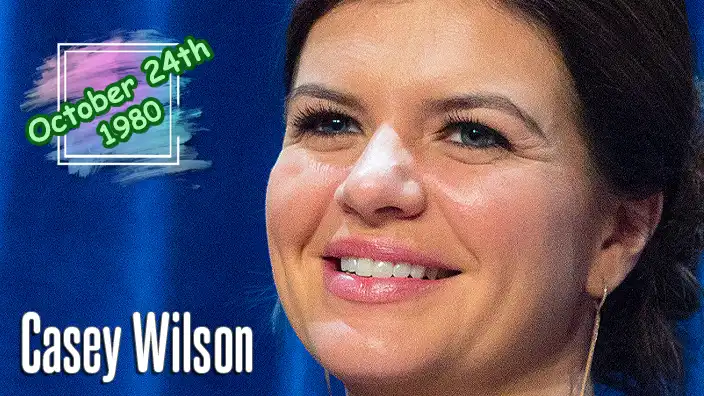
October 24, 1980, in Alexandria, Virginia

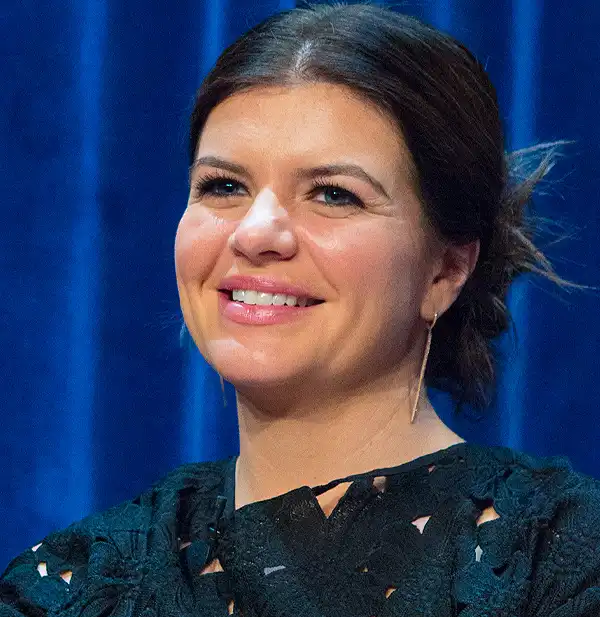
Born Cathryn Rose Wilson on October 24, 1980, in Alexandria, Virginia, Casey Wilson is an American actress, comedian, screenwriter, author, and podcast host whose career has encompassed television sitcoms, sketch comedy, motion pictures, theater, and digital entertainment. She grew up in a family where politics, public service, and lively discussion were familiar parts of everyday life. Her father, Paul O. Wilson, worked as a political consultant and strategist, while her mother, Kathleen Anne Wilson, was involved in community activities and women's rights advocacy. Her parents held differing political views, creating a household in which disagreement was not necessarily considered a social emergency. Wilson later credited this environment with helping develop her sense of humor, particularly her appreciation for the absurdities of human behavior. Growing up around political arguments may not be the most conventional preparation for a comedy career, but it certainly provides plenty of material and teaches a child that sometimes the only sensible response is to laugh.
Wilson's interest in performing developed during childhood after she attended a production of the musical Cats. The elaborate costumes, theatrical spectacle, and enthusiastic performances made a lasting impression, inspiring her to begin creating her own shows. Her father built a small stage in the family's backyard, where she organized performances for friends and relatives, enthusiastically assuming the responsibilities of writer, director, producer, and occasional star. These childhood productions provided an early introduction to storytelling and the pleasures of entertaining an audience, although her family probably had little choice about purchasing tickets. By approximately nine years old, Wilson had already developed a strong interest in acting and comedy, discovering that making people laugh could be considerably more satisfying than simply behaving herself.
Her education continued in Alexandria, where she attended T. C. Williams High School, now known as Alexandria City High School. During her school years, Wilson participated in theatrical activities and developed her interest in dramatic performance. She subsequently enrolled at New York University's prestigious Tisch School of the Arts, graduating in 2002. Her studies included training at the Stella Adler Studio of Acting, where she learned techniques emphasizing character development, imagination, emotional authenticity, and disciplined performance. The experience provided a strong theatrical foundation, but Wilson was increasingly attracted to comedy, particularly the unpredictable energy of improvisation and sketch performance. New York offered numerous opportunities for aspiring comedians, although the competition was fierce and the financial rewards were not always sufficient to purchase a decent sandwich.
One of the most important developments in Wilson's professional life occurred when she met fellow actress and comedian June Diane Raphael while studying improvisational comedy at the Upright Citizens Brigade Theatre in New York City. The two performers developed a close friendship and creative partnership that would become central to their careers. Both shared an enthusiasm for character-driven comedy, absurd situations, and the complicated social behavior of people who were entirely convinced they were making sensible decisions. Together, they developed a two-woman sketch comedy act, performing regularly at the Upright Citizens Brigade and other venues. Their work attracted attention for its energetic performances, sharp observations, and willingness to embrace characters whose confidence frequently exceeded their competence. It was a partnership built upon the useful discovery that two comedians with sufficiently active imaginations could create considerably more trouble together than either could manage alone.
Wilson and Raphael's stage collaboration included the successful comedy show Rode Hard and Put Away Wet, which became a notable production within the New York alternative comedy scene. The show featured an assortment of eccentric characters and situations, demonstrating the performers' ability to combine physical comedy, improvisational instincts, and carefully constructed dialogue. Their work received positive attention and helped establish their reputations among comedians, writers, and entertainment industry professionals. The Upright Citizens Brigade Theatre had become an important training ground for emerging comedy talent, providing opportunities to develop original material before live audiences. For Wilson, the experience reinforced the importance of commitment to a character, particularly when that character was behaving in a manner that would ordinarily justify immediate intervention by responsible adults.
Her early television career included an appearance in the NBC drama series Ed in 2002, marking one of her first screen acting credits. She also pursued writing and production opportunities, contributing to comedy projects and developing material with Raphael. Their partnership gradually expanded beyond live sketch performance into screenwriting, allowing them to translate their distinctive comedic sensibilities into longer narratives. Wilson's early professional years involved the familiar combination of auditions, small roles, writing assignments, and performances that characterizes the careers of many aspiring actors. These experiences provided practical knowledge of the entertainment industry while strengthening her ability to create characters who could sustain an audience's interest beyond a brief comedy sketch. Although overnight success is a popular Hollywood expression, it generally overlooks the years spent working for modest pay while wondering whether the next audition will finally lead somewhere useful.
A major professional breakthrough arrived in 2008 when Wilson joined the cast of NBC's legendary sketch comedy program Saturday Night Live. She became a featured player during the show's thirty-third season, entering a demanding environment where performers were expected to develop characters, rehearse sketches, and prepare material under considerable time pressure. The program's weekly production schedule required exceptional adaptability, with scripts frequently revised shortly before broadcast and performers expected to remain composed regardless of unexpected developments. Wilson's work included celebrity impersonations, original characters, and appearances in ensemble sketches. Among her impersonations were television personality Rachael Ray and singer Katy Perry, allowing her to demonstrate her ability to exaggerate recognizable mannerisms for comic effect. The opportunity placed her alongside established comedy performers and introduced her work to a national television audience.
Wilson remained with Saturday Night Live through the 2008–2009 season, participating in two seasons before leaving the program in 2009. Her departure attracted media attention, as changes to the show's cast frequently do, but the experience provided valuable exposure and professional connections. Although her tenure was relatively brief compared with some of the program's most celebrated performers, it became an important stage in her development as a television comedian. The demanding schedule strengthened her understanding of sketch writing, ensemble performance, and the importance of delivering a joke with precision. Wilson subsequently spoke about the difficulties of working in such a competitive environment and the challenges of maintaining confidence when professional circumstances change unexpectedly. Fortunately, being released from one of television's most famous comedy programs did not prevent her from continuing to make people laugh, which was rather inconvenient for anyone hoping she would quietly disappear.
Her growing involvement in screenwriting produced another important opportunity when she and June Diane Raphael contributed to the screenplay for the 2009 romantic comedy Bride Wars. Directed by Gary Winick, the film starred Kate Hudson and Anne Hathaway as longtime friends whose relationship deteriorates when their weddings are accidentally scheduled for the same day at the same venue. The story provided an ideal setting for Wilson and Raphael's interest in competitive friendships, social expectations, and people behaving irrationally while remaining absolutely convinced of their own righteousness. Wilson also appeared in the film as Stacy, expanding her involvement beyond writing. Although Bride Wars received mixed critical reviews, it achieved substantial commercial success and introduced the writing partnership to a wider Hollywood audience. The film's central premise also offered a useful reminder that weddings are supposed to celebrate love, even when the participants appear determined to declare war on everyone within a five-mile radius.
Wilson continued developing her film career with supporting appearances in productions including Julie & Julia in 2009 and Killers in 2010. Julie & Julia, directed by Nora Ephron, starred Meryl Streep and Amy Adams in a story connecting the culinary career of Julia Child with a contemporary writer's attempt to prepare recipes from Child's famous cookbook. Wilson's appearance provided an opportunity to participate in a critically acclaimed production featuring some of Hollywood's most respected performers. Her role in Killers, an action comedy starring Katherine Heigl and Ashton Kutcher, further expanded her experience in mainstream cinema. These supporting appearances helped establish her as a versatile comic performer who could contribute memorable moments without necessarily occupying the center of the story. In Hollywood, this is a valuable ability, particularly when the leading characters are already generating enough chaos to occupy the entire screenplay.
The role that would become most closely associated with Wilson's television career arrived in 2011 when she was cast as Penny Hartz in the ABC sitcom Happy Endings. Created by David Caspe, the series followed six friends living in Chicago as they navigated relationships, professional frustrations, personal insecurities, and the extraordinary complications of ordinary social life. The ensemble cast included Eliza Coupe, Elisha Cuthbert, Zachary Knighton, Adam Pally, Damon Wayans Jr., and Wilson. The show's rapid-fire dialogue, elaborate running jokes, and willingness to embrace absurd situations distinguished it from more conventional relationship comedies. Wilson's character, Penny, was an enthusiastic, outspoken, and frequently unlucky romantic whose determination to find happiness regularly produced circumstances that were anything but happy. Her optimism remained remarkably resilient despite an impressive collection of disastrous dates and questionable romantic decisions.
Penny Hartz quickly became one of Happy Endings' most popular characters, largely because of Wilson's energetic performance and willingness to embrace physical comedy. Penny was a successful public relations professional whose personal life frequently resembled a poorly organized emergency exercise. She approached romance with tremendous enthusiasm, often developing elaborate expectations that reality had absolutely no intention of satisfying. Her friendships with the other characters provided opportunities for sharp dialogue, exaggerated reactions, and increasingly ridiculous misunderstandings. Wilson's performance combined vulnerability with comic exaggeration, allowing audiences to sympathize with Penny even when her decisions were spectacularly misguided. The character's enthusiasm for describing things as "amahzing" became one of the show's recognizable verbal trademarks, demonstrating how a single deliberately exaggerated word could develop into a recurring joke.
Happy Endings premiered on April 13, 2011, and developed a devoted following during its three-season run. Critics frequently praised its ensemble chemistry, fast-paced writing, and ability to combine familiar sitcom situations with unexpected humor. Wilson received nominations for the Critics' Choice Television Award for Best Supporting Actress in a Comedy Series in both 2012 and 2013, recognizing her contribution to the show's distinctive comic style. Although the series was canceled in 2013 after 57 episodes, its reputation continued to grow through streaming and repeated viewing. Many fans regarded its cancellation as premature, particularly because the ensemble had developed a strong comic rhythm and a recognizable identity. The title Happy Endings therefore acquired an unfortunate irony when the network decided that the happiest ending would apparently involve everybody going home.
The series also produced an important development in Wilson's personal life. She met Happy Endings creator David Caspe during the show's casting process in 2010, and the two subsequently began a romantic relationship. Their professional connection developed into a personal partnership, and they married on May 25, 2014, in Ojai, California. The couple went on to have three children, balancing family responsibilities with their respective careers in television and comedy. Their relationship also provided opportunities for creative collaboration, as Caspe's work as a television writer and producer complemented Wilson's experience as an actress and comedian. Meeting one's future spouse during an audition is certainly an efficient approach to romance, although it presumably makes discussions about rejected scenes and questionable casting decisions rather more complicated around the dinner table.
Following Happy Endings, Wilson continued working with June Diane Raphael on the independent comedy film Ass Backwards, which premiered at the Sundance Film Festival in 2013. The two actresses co-wrote and starred in the film, portraying childhood friends who return to their hometown to participate in a beauty pageant they had unsuccessfully entered years earlier. Their characters, Kate and Chloe, possess an extraordinary capacity for self-delusion, approaching adult responsibilities with the emotional maturity and practical judgment of children who have somehow obtained driver's licenses. The film's absurd humor reflected Wilson and Raphael's established comedic partnership, emphasizing exaggerated personalities, physical comedy, and the peculiar determination of people unwilling to recognize their own limitations. Although Ass Backwards was not a major commercial success, it provided an opportunity for the performers to develop and present material that reflected their distinctive creative interests.
Wilson's television career continued in 2014 when she starred in the NBC romantic sitcom Marry Me, created by David Caspe. The series featured Wilson as Annie Fletcher opposite Ken Marino as Jake Schuffman, a couple whose long-term relationship becomes increasingly complicated when attempts at marriage proposals repeatedly go wrong. The show's premise allowed Wilson to explore familiar romantic-comedy territory while emphasizing the awkward misunderstandings and exaggerated emotional reactions that had become central to her comic style. Annie was an enthusiastic, demanding, and frequently impulsive character whose desire for a perfect romantic moment regularly collided with the practical realities of adult relationships. Although Marry Me lasted only one season, it provided Wilson with another leading television role and demonstrated her ability to anchor a sitcom built around relationship comedy. It also offered further evidence that proposing marriage should probably involve fewer elaborate plans and considerably less opportunity for public humiliation.
During the same period, Wilson appeared in Hulu's comedy series The Hotwives, a parody of reality television programs centered on wealthy women, social rivalries, and extravagantly manufactured personal drama. The series satirized the conventions of programs such as The Real Housewives, exaggerating their familiar arguments, luxurious lifestyles, and competitive social behavior. Wilson portrayed Tawny St. John in The Hotwives of Orlando and subsequently appeared as Jenfer Beudon in The Hotwives of Las Vegas. The productions featured an ensemble of comedians, including Danielle Schneider, Angela Kinsey, Andrea Savage, and others, who embraced the absurdities of reality television with considerable enthusiasm. Wilson's performances demonstrated her ability to create outrageous characters while maintaining the exaggerated sincerity necessary for effective parody. After all, the funniest reality television characters are often those who remain entirely convinced that their behavior is perfectly reasonable.
Her fascination with reality television eventually developed into another successful entertainment venture when she joined comedian and writer Danielle Schneider to create the podcast Bitch Sesh. Launched in 2015, the program focused primarily on Bravo's Real Housewives franchise and the complicated relationships, dramatic confrontations, and extraordinary personalities featured in reality television. Wilson and Schneider combined enthusiastic commentary with personal anecdotes, celebrity guests, and affectionate criticism of the programs they discussed. Their conversational chemistry attracted a loyal audience, transforming what might otherwise have been casual discussions between friends into a successful podcast. The show's appeal rested partly on the hosts' willingness to acknowledge the ridiculousness of reality television while remaining completely invested in every argument, dinner party, and suspiciously timed drink thrown across a restaurant table.
Bitch Sesh became particularly popular among reality television enthusiasts, attracting guest appearances from comedians, actors, and other entertainment personalities. Its success demonstrated Wilson's ability to connect with audiences outside conventional scripted performance, relying instead on spontaneity, observational humor, and her genuine enthusiasm for the subject matter. The podcast also allowed her to explore aspects of contemporary celebrity culture, social behavior, and the entertainment industry through informal conversation. In 2019, Bitch Sesh received a Critics' Choice Real TV Award nomination, reflecting its growing recognition within the expanding podcast industry. The program later evolved into a subscription-based format, maintaining its dedicated audience while providing Wilson and Schneider with greater independence over their content. Considering the endless supply of dramatic behavior generated by reality television, the hosts were unlikely to face a shortage of material.
Wilson continued appearing in major motion pictures, including David Fincher's 2014 psychological thriller Gone Girl, adapted from Gillian Flynn's bestselling novel. The film starred Ben Affleck and Rosamund Pike in a disturbing story about marriage, deception, and media manipulation. Wilson portrayed Noelle Hawthorne, a neighbor whose involvement in the unfolding mystery contributed to the film's atmosphere of suspicion and uncertainty. The role offered an opportunity to work within a darker dramatic production, demonstrating that her acting abilities extended beyond straightforward comedy. Although Wilson was best known for making audiences laugh, Gone Girl allowed her to participate in a story where practically everybody had something to hide and a pleasant conversation could become deeply uncomfortable within seconds.
Her additional film appearances included The Meddler in 2015, starring Susan Sarandon, Rose Byrne, and J.K. Simmons, and The Disaster Artist in 2017, directed by and starring James Franco. The latter film dramatized the making of Tommy Wiseau's famously unconventional movie The Room, exploring the strange friendship and extraordinary creative ambitions behind a production that became a cult phenomenon. Wilson's participation reflected her continuing interest in films that combined comedy with unusual characters and unconventional storytelling. She also appeared in the 2019 romantic comedy Always Be My Maybe, starring Ali Wong and Randall Park, portraying Chloe, a character whose involvement contributed to the film's humorous examination of friendship, romance, and adult relationships. These supporting performances demonstrated her ability to adapt to different comedic styles while maintaining the recognizable energy that had become a feature of her work.
Television remained an important part of Wilson's career, with recurring and guest roles in several acclaimed productions. She appeared as Brooke in the Amazon comedy-drama One Mississippi, created by Tig Notaro and Diablo Cody, and played Jane Rosen in HBO's Mrs. Fletcher, starring Kathryn Hahn. These productions explored relationships, personal identity, and the sometimes uncomfortable realities of contemporary life, providing Wilson with opportunities to perform material that combined humor with emotional complexity. Her appearances also demonstrated the growing demand for experienced comic actors capable of delivering nuanced performances in television programs that did not fit neatly into traditional sitcom categories. Wilson's willingness to explore such projects reflected her broader interest in character-driven storytelling rather than restricting herself to roles resembling Penny Hartz.
In 2019, Wilson joined the cast of Showtime's dark comedy series Black Monday, which starred Don Cheadle, Andrew Rannells, and Regina Hall. Set against the extravagant financial culture of Wall Street during the 1980s, the series explored the events surrounding the stock market crash of October 19, 1987, through a fictional collection of ambitious traders and financial opportunists. Wilson portrayed Tiffany "Tiff" Georgina, a wealthy and eccentric woman whose extravagant personality suited the show's deliberately excessive atmosphere. The production combined financial satire, period costumes, outrageous behavior, and dark humor, creating an environment in which Wilson's talent for exaggerated characters could flourish. Her performance contributed to a series where almost everyone appeared determined to become rich, powerful, or spectacularly disgraced, preferably before lunchtime.
Wilson also made her directorial debut with the short film Daddio, which premiered at the Toronto International Film Festival and South by Southwest in 2019. She co-wrote and starred in the project, expanding her professional activities beyond acting and screenwriting into directing. The experience allowed her to exercise greater creative control over the development and presentation of a story, drawing upon her years of experience working with directors, writers, and performers. Moving behind the camera represented a natural progression for an artist who had long participated in creating original material rather than simply interpreting scripts written by others. Her directorial work demonstrated an interest in exploring different aspects of filmmaking, from character development and performance to visual storytelling and production decisions.
In 2021, Wilson published her first book, The Wreckage of My Presence, a collection of personal essays examining family relationships, grief, friendship, motherhood, and the frequently ridiculous circumstances of everyday life. The book became a New York Times bestseller and received attention for its combination of humor, emotional honesty, and autobiographical storytelling. Wilson wrote openly about her upbringing, her relationship with her mother, the experience of losing a parent, and the challenges of balancing family life with professional ambition. The collection demonstrated that her abilities as a writer extended beyond scripted comedy, allowing her to explore personal experiences with greater depth and reflection. Its title also offered a wonderfully appropriate description of the aftermath of certain family gatherings, particularly those involving strong personalities and insufficient refreshments.
One of the most emotionally significant subjects in The Wreckage of My Presence was Wilson's relationship with her mother, Kathleen, who died in 2005. The loss had a profound influence on Wilson's personal life and creative work, shaping her understanding of family, memory, and the ways people respond to grief. Rather than treating painful experiences as subjects entirely separate from comedy, Wilson explored how humor could coexist with sadness and provide a means of expressing complicated emotions. Her essays combined affectionate memories with observations about the imperfect, sometimes chaotic nature of family relationships. The book's success reflected an audience interested not only in her comic performances but also in the personal experiences that informed her creative perspective. It further established her as a writer capable of moving between entertainment and thoughtful autobiographical reflection.
Wilson's television work expanded in 2021 with an appearance in the Apple TV+ miniseries The Shrink Next Door, starring Will Ferrell and Paul Rudd. Based on the true story explored in the popular podcast of the same name, the series examined the increasingly disturbing relationship between a psychiatrist and a patient whose personal and financial affairs gradually became entangled. Wilson portrayed Bonnie Herschkopf, the wife of psychiatrist Isaac Herschkopf, played by Rudd. The role offered a departure from some of her more exaggerated comic characters, requiring her to participate in a production balancing dark humor with serious psychological and ethical concerns. Her performance contributed to the unsettling atmosphere of a story about manipulation, dependency, and the dangers of misplaced trust. It was a considerable change from Happy Endings, where the greatest catastrophe was often an unsuccessful date or an argument over brunch.
Wilson also appeared in the Apple TV+ comedy-drama Physical, starring Rose Byrne, and made guest appearances in series including Home Economics, The Righteous Gemstones, and History of the World, Part II. These productions offered opportunities to work with different creative teams and explore a variety of comic styles, from satirical historical sketches to contemporary family relationships and the extravagant world of fictional televangelists. Her performance as Kristy Downes in The Righteous Gemstones placed her within a series known for combining outrageous comedy with pointed observations about wealth, religion, and family dysfunction. Wilson's ability to adapt to such varied material reflected the versatility developed through her early work in improvisation, sketch comedy, and theater.
Voice acting became another important element of her professional repertoire, with contributions to animated series including American Dad!, Family Guy, Harley Quinn, and Human Resources. Animated productions allowed Wilson to employ her expressive voice and comic instincts without the physical demands of live-action performance, although convincing audiences that an animated character possesses a believable personality requires its own specialized skills. Her vocal work frequently involved exaggerated personalities and unusual situations, providing opportunities to explore characters that would be difficult or impossible to portray in conventional television comedy. The experience also demonstrated how performers with strong improvisational backgrounds can adapt effectively to animation, where precise timing and vocal expression are essential to successful humor.
In 2023, Wilson expanded her television career into presenting when she became a host of The Great American Baking Show, the American adaptation of the popular British baking competition format. Working alongside fellow presenter Zach Cherry, she helped guide contestants through baking challenges judged by Paul Hollywood and Prue Leith. The series provided a considerably different environment from her scripted comedy work, requiring her to respond spontaneously to contestants, unexpected baking disasters, and the emotional consequences of an unsuccessful pastry. Her enthusiasm and conversational humor suited the show's mixture of friendly competition and culinary tension. Hosting a baking competition may sound relatively peaceful compared with the chaos of reality television, but anyone who has watched a contestant discover that their elaborate cake has collapsed five minutes before judging knows that flour can be a surprisingly dangerous substance.
Wilson's work on The Great American Baking Show continued through subsequent seasons and celebrity specials, including productions released during 2025 and 2026. The program introduced her to audiences who might have been unfamiliar with her sitcom roles or podcasting work, expanding her profile as a television personality. Her responsibilities included encouraging contestants, interacting with the judges, and maintaining the show's lighthearted atmosphere during moments of considerable competitive pressure. The role also demonstrated her ability to work within an established international television format while contributing her own personality and comic timing. Unlike her more chaotic fictional characters, Wilson's presenting role generally required her to help people remain calm, although the occasional collapsed sponge cake provided ample opportunities for sympathetic laughter.
Her more recent acting credits have included appearances in the comedy series Georgie & Mandy's First Marriage, in which she portrayed Beth, and the independent comedy film Adult Best Friends, released in 2024. She also continued contributing voices to animated productions and making guest appearances on entertainment and talk programs. In 2025, she appeared on Hollywood Squares and participated in additional television projects, while her hosting responsibilities and podcast work remained important parts of her professional activities. In 2026, she appeared as a guest judge on Is It Cake? Valentines and continued her involvement with The Great American Baking Show. These varied projects demonstrated her ability to maintain an active career across several entertainment formats without relying exclusively on conventional acting roles.
Throughout her career, Wilson's creative partnership with June Diane Raphael has remained particularly significant. Their shared work in sketch comedy, screenwriting, and film reflects a friendship that developed through mutual enthusiasm for performance and storytelling. Both have established independent careers while continuing to support and collaborate with one another, demonstrating the importance of creative relationships within an industry frequently characterized by competition. Their work has often explored female friendship, social expectations, romantic frustration, and the absurdity of people trying desperately to maintain appearances while everything around them falls apart. These themes have resonated with audiences partly because they exaggerate situations that remain recognizably human, even when the characters themselves behave in spectacularly unreasonable ways.
Wilson's approach to comedy combines several traditions, including improvisation, physical performance, character-based humor, and observational storytelling. Her training at the Upright Citizens Brigade helped develop the spontaneity and responsiveness that characterize many of her performances, while her formal acting education provided a foundation for creating emotionally believable characters. She has frequently portrayed women whose enthusiasm, ambition, and determination are accompanied by considerable insecurity or questionable judgment. Rather than treating these contradictions as weaknesses, Wilson uses them to create characters who are both ridiculous and sympathetic. Her comic performances often succeed because she commits completely to the character's perspective, even when the audience can clearly recognize that the character is heading directly toward disaster.
Her influence also extends to the growing relationship between traditional entertainment and digital media. Through Bitch Sesh, Wilson helped demonstrate how established television performers could develop independent audiences through podcasting, creating communities built around shared interests and informal conversation. Her success as an author further expanded her creative identity, allowing her to communicate with readers through personal essays rather than scripted characters. These activities reflect broader changes in the entertainment industry, where performers increasingly combine acting, writing, presenting, and digital content creation. Wilson's career illustrates how a strong comedic voice can remain recognizable across different formats, whether delivered through a television sitcom, a movie screenplay, a podcast microphone, or a book.
From her childhood performances on a backyard stage in Virginia to Saturday Night Live, Happy Endings, Hollywood films, bestselling books, and television presenting, Casey Wilson has built a remarkably varied career in American comedy. Her performances have demonstrated an ability to transform everyday embarrassment into entertainment, while her writing has explored the emotional complexities hidden beneath apparently ordinary experiences. She has navigated the uncertainties of television cancellations, professional reinvention, and the demands of family life while continuing to find new ways to connect with audiences. Perhaps her greatest comic achievement has been her ability to make spectacularly flawed characters feel familiar, reminding viewers that nobody has life entirely figured out, regardless of how confidently they pretend otherwise. And if there is one lesson to be learned from Casey Wilson's career, it is that even when life refuses to provide a happy ending, there is usually enough material left over for a very entertaining sequel.