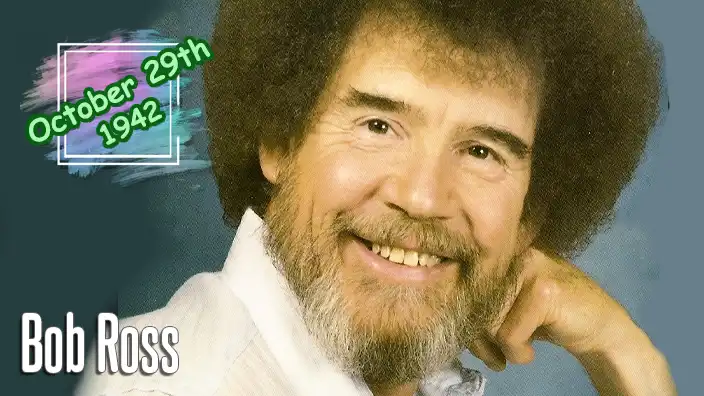
- Details
- Category: Celebrity Birthdays - October
Bob Ross could turn a blank canvas into a peaceful mountain landscape in thirty minutes, armed with little more than a paintbrush, a palette knife, and the world's most reassuring voice. Famous for his happy little trees, fluffy clouds, and cheerful accidents, he convinced millions that anyone could paint. He also proved that beating a paintbrush senseless was perfectly acceptable, provided you smiled while doing it.
 October 29, 1942, in Daytona Beach, Florida
 July 4, 1995, in Orlando, Florida

Trivia
- He served 20 years in the U.S. Air Force.
- He retired with the rank of master sergeant.
- He lost part of his left index finger in childhood.
- His famous curly hairstyle was originally a money-saving decision.
- The Joy of Painting ran for 31 seasons.
- He often featured rescued squirrels on his show.
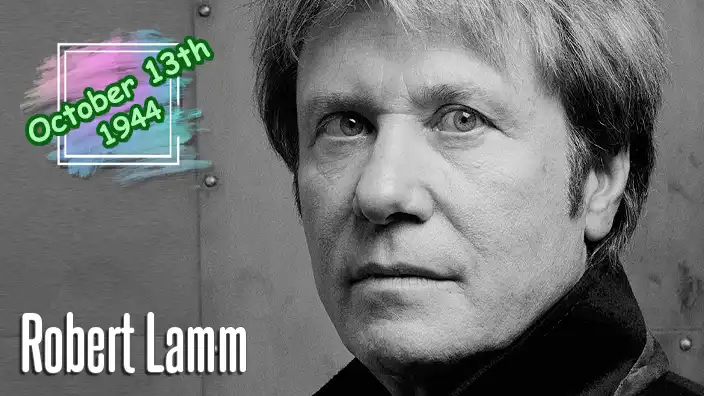
- Details
- Category: Celebrity Birthdays - October
Robert Lamm helped give Chicago its name, its distinctive sound, and enough unforgettable songs to keep radio stations busy for generations. As a founding member, keyboardist, vocalist, and prolific songwriter, he brought jazz sophistication, rock energy, and a remarkable talent for asking musical questions nobody could quite answer. After all, anyone who can write "Does Anybody Really Know What Time It Is?" and "25 or 6 to 4" clearly has a complicated relationship with clocks. Fortunately, his timing at the keyboard has always been considerably more reliable!
October 13, 1944, in Brooklyn, New York
Trivia
- Sang in a church choir as a youngster.
- Studied music at Roosevelt University.
- Wrote seven songs on Chicago's debut album.
- "25 or 6 to 4" describes an early-morning songwriting session.
- Released his first solo album, Skinny Boy, in 1974.
- Entered the Songwriters Hall of Fame in 2017.
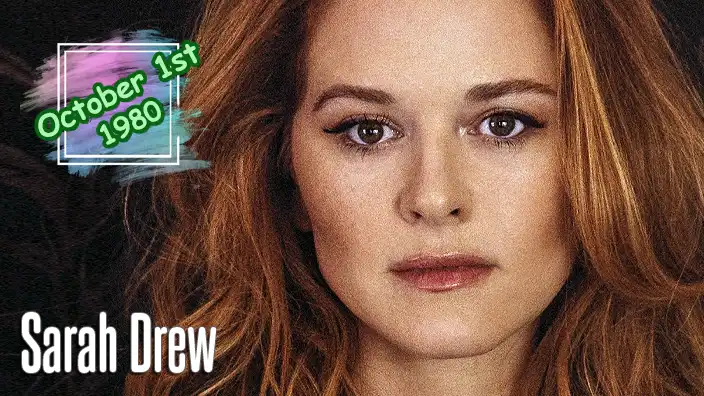
- Details
- Category: Celebrity Birthdays - October
Sarah Drew spent years playing Dr. April Kepner on Grey's Anatomy, where she dealt with romance, trauma, surgery and the general occupational hazard of working at television's most catastrophically unlucky hospital. Remarkably, she kept coming back—which may be the clearest evidence that April was tougher than she looked.
 October 1, 1980, in Stony Brook, New York
Trivia
- Studied drama at the University of Virginia.
- Voiced Stacy Rowe in MTV's Daria.
- Played Hannah Rogers on Everwood.
- Appeared as Kitty Romano on Mad Men.
- Joined Grey's Anatomy as April Kepner in 2009.
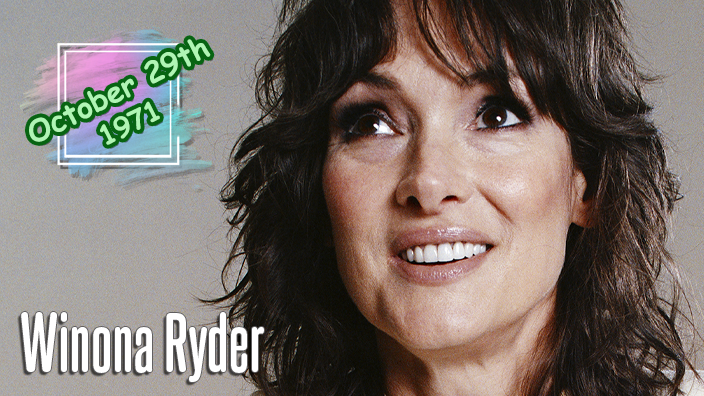
- Details
- Category: Celebrity Birthdays - October
Winona Ryder has spent decades making the strange seem perfectly normal, whether she's befriending ghosts, surviving supernatural adventures, or communicating with another dimension using Christmas lights. From Beetlejuice to Stranger Things, she's demonstrated that when life gets weird, the best response is usually to get weirder.
October 29, 1971, in Winona, Minnesota
Trivia
- She was named after Winona, Minnesota.
- Her godfather was psychologist Timothy Leary.
- Her stage surname was inspired by musician Mitch Ryder.
- She grew up in a commune without electricity.
- She has received two Academy Award nominations.
- She received a Grammy nomination for narrating Anne Frank's Diary.
- Details
- Category: Celebrity Birthdays - October
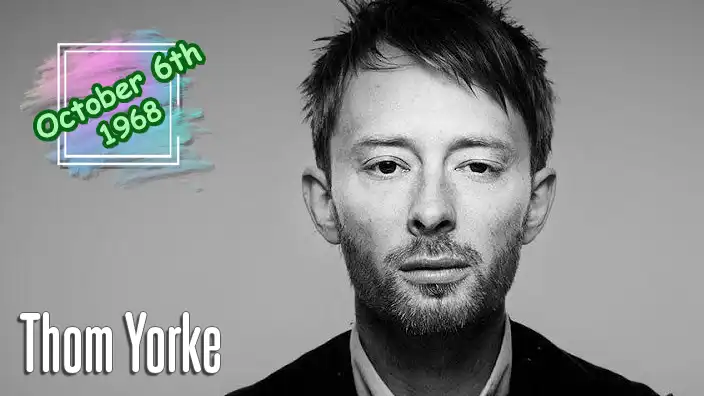
Thom Yorke is the unmistakable voice of Radiohead, a singer, songwriter and composer who helped turn alternative rock into something atmospheric, experimental and occasionally capable of making a perfectly contented person stare thoughtfully out of a rainy window.
October 7, 1968, in Wellingborough, England
Trivia
- He received his first guitar as a child.
- Radiohead was originally called On a Friday.
- The name Radiohead came from a Talking Heads song.
- "Creep" became Radiohead's breakthrough international hit.
- Yorke studied fine art and English at university.
- He formed Atoms for Peace with musicians including Flea.
- He composed the score for the 2018 film Suspiria.
- Details
- Category: Celebrity Birthdays - October
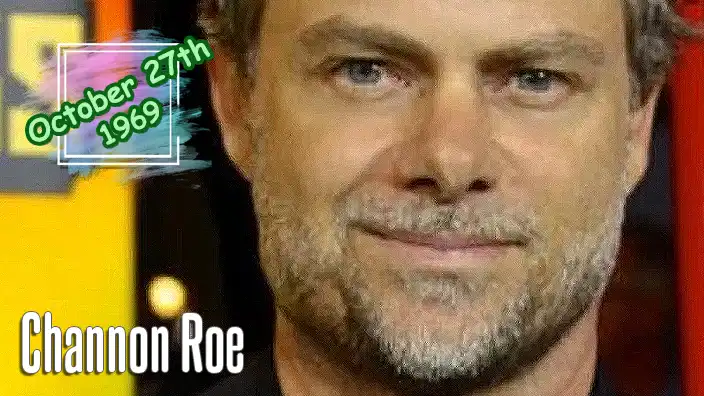
Channon Roe is the American character actor who has appeared in so many television crime dramas that detectives from CSI, NCIS, and Justified could probably organize a reunion in his honor. From vampires and troubled teenagers to criminals, suspects, and occasionally perfectly respectable citizens, Roe built a remarkably varied screen career. He might not always have been the fellow whose name appeared above the title, but he certainly knew how to make an appearance memorable.
October 27, 1969, in Pasadena, California
Trivia
- He played vampire Cash in Kindred: The Embraced.
- He appeared in the acclaimed film Boogie Nights.
- He played Jack O'Toole in Buffy the Vampire Slayer.
- He portrayed Cutter in Justified.
- Surfing and ocean conservation are among his interests.
- Details
- Category: Celebrity Birthdays - October
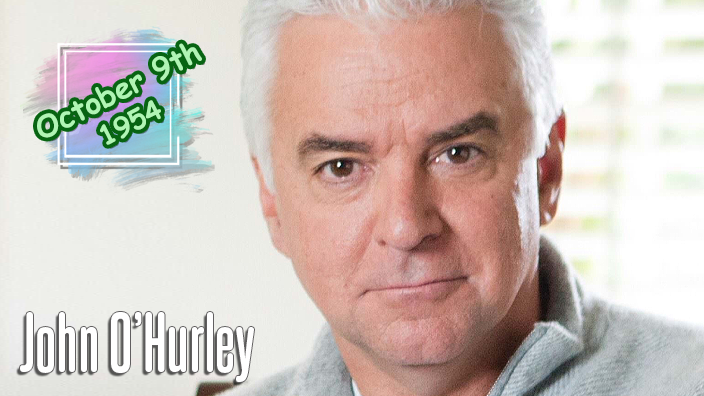
John O'Hurley has made a career out of sounding as though he personally approved the English language before anyone else was permitted to use it. Best remembered as the gloriously theatrical J. Peterman on Seinfeld, he went on to host Family Feud, charm audiences on Dancing with the Stars, and become a familiar voice at the National Dog Show. With impeccable comic timing, a commanding baritone, and a talent for making the ridiculous sound positively majestic, O'Hurley has proved that sometimes the most entertaining person in the room is the fellow taking himself just a little too seriously.
October 9, 1954, in Kittery, Maine
Trivia
- Graduated from Providence College with a theater degree.
- Played J. Peterman on Seinfeld from 1995 to 1998.
- Hosted Family Feud from 2006 to 2010.
- Won the Dancing with the Stars rematch in 2005.
- Has hosted the National Dog Show since 2002.
- Details
- Category: Celebrity Birthdays - October
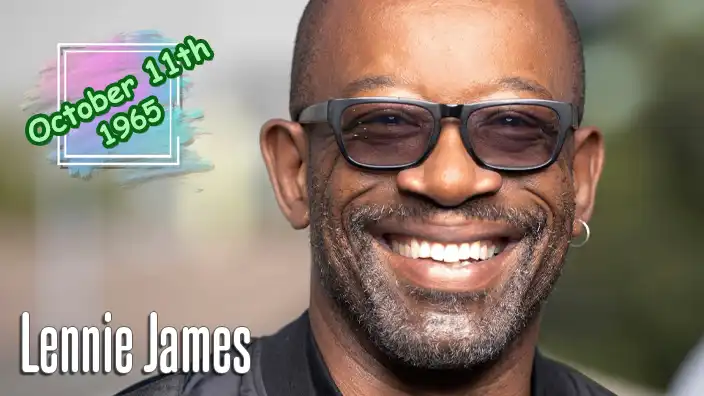
Lennie James, the acclaimed English actor, screenwriter, and playwright best known for portraying Morgan Jones in The Walking Dead and Fear the Walking Dead, has spent decades bringing complicated characters to life. Whether battling zombies with a wooden staff, investigating corruption in Line of Duty, or delivering award-winning performances in Save Me and Mr Loverman, James has mastered the art of making audiences care about people whose lives are spectacularly difficult. His characters rarely enjoy a peaceful afternoon, and when they do, there's usually something unpleasant waiting around the corner. Fortunately, James himself has enjoyed a much more rewarding career than most of the unfortunate individuals he portrays!
October 11, 1965, in Nottingham, England
Trivia
- He graduated from Guildhall in 1988.
- He originally wanted to play professional rugby.
- He played Morgan Jones in two Walking Dead series.
- He voices Lord Shaxx in the Destiny video games.
- He won the 2025 BAFTA for Mr Loverman.
- Details
- Category: Celebrity Birthdays - October
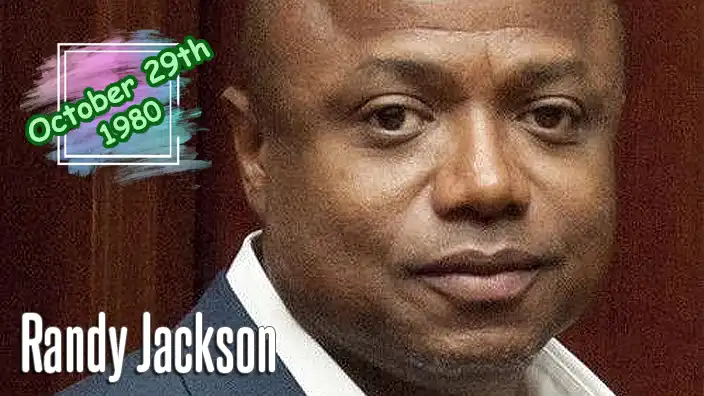
Randy Jackson grew up in a family where musical talent was practically a household requirement. As the youngest Jackson brother to perform with the legendary group, he helped keep the family's famous sound alive with keyboards, percussion, songwriting, and plenty of energy. In the Jackson household, asking someone to play a little music could apparently turn into an international concert tour.
October 29, 1961, in Gary, Indiana
Trivia
- He is the youngest Jackson brother.
- His childhood nickname was "Little Randy."
- He officially joined The Jacksons in 1975.
- He co-wrote "Shake Your Body" with Michael.
- He survived a serious automobile accident in 1979.
- He released Randy & the Gypsys in 1989.
- Details
- Category: Celebrity Birthdays - October
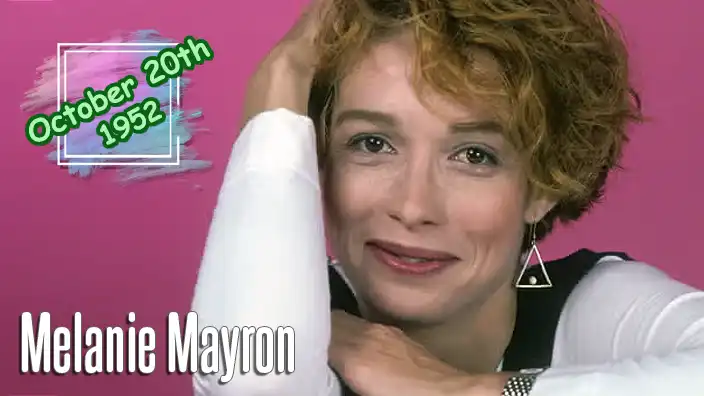
Melanie Mayron has spent much of her career proving that Hollywood talent doesn't have to remain on one side of the camera. Best remembered as the wonderfully complicated Melissa Steadman in the groundbreaking television drama thirtysomething, Mayron became an Emmy-winning actress before developing an equally impressive career as a director. From independent films and emotionally charged television dramas to popular comedies and contemporary streaming productions, she has demonstrated a remarkable ability to understand characters, tell compelling stories, and occasionally make audiences reconsider their own questionable life decisions. And unlike the characters in thirtysomething, she managed to build a successful career without spending every waking moment discussing her feelings over a cup of coffee.
October 20, 1952, in Philadelphia, Pennsylvania
Trivia
- She toured with Godspell early in her career.
- She played photographer Melissa Steadman in thirtysomething.
- She won a Primetime Emmy in 1989.
- She directed the 1995 film The Baby-Sitters Club.
- She co-created a skincare line with her chemist father.
- She has twins named Olivia and Miles.
- Details
- Category: Celebrity Birthdays - October
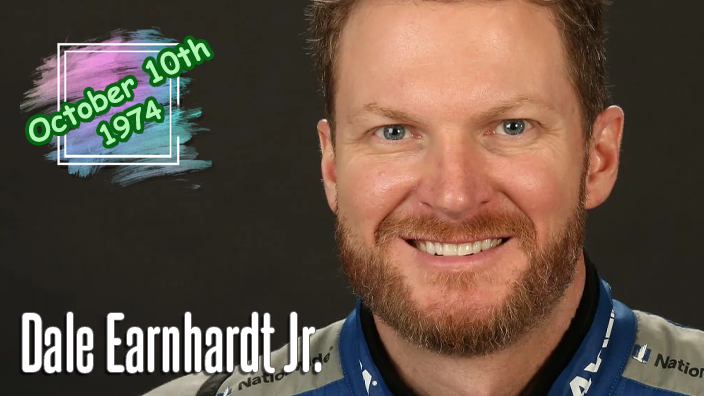
Dale Earnhardt Jr. has spent much of his life going around in circles, and somehow that made him one of the most successful and beloved personalities in American motorsports. From winning the Daytona 500 to becoming a NASCAR team owner and television analyst, Junior has proved that retirement from racing doesn't necessarily mean slowing down. It just means somebody else gets to wear out the tires.
October 10, 1974, in Concord, North Carolina
Trivia
- He won the Daytona 500 twice, in 2004 and 2014.
- He was NASCAR's Most Popular Driver 15 consecutive times.
- His first Cup Series victory came at Texas in 2000.
- He won four consecutive Cup races at Talladega.
- He voiced a race car in Pixar's Cars.
- He collects and preserves pieces of NASCAR history.
- Details
- Category: Celebrity Birthdays - October
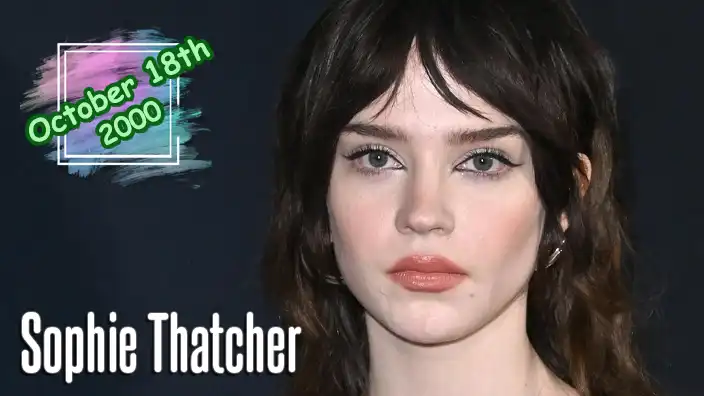
Sophie Thatcher has made a remarkable career out of surviving situations that would send most sensible people running for the nearest exit. From the wilderness nightmares of Yellowjackets to the supernatural terror of The Boogeyman and the psychological twists of Companion, this Chicago-born actress has become one of Hollywood's most exciting young performers. With her distinctive screen presence, musical talents, and apparent willingness to accept roles involving absolutely dreadful vacations, Thatcher is proving that being frightened can be excellent for your career.
October 18, 2000, in Chicago, Illinois
Trivia
- She began performing in musical theater as a child.
- Her feature-film debut was Prospect (2018).
- She played Drash in The Book of Boba Fett.
- She appeared in Pavement's Harness Your Hopes music video.
- She released her debut EP, Pivot & Scrape, in 2024.
- Details
- Category: Celebrity Birthdays - October
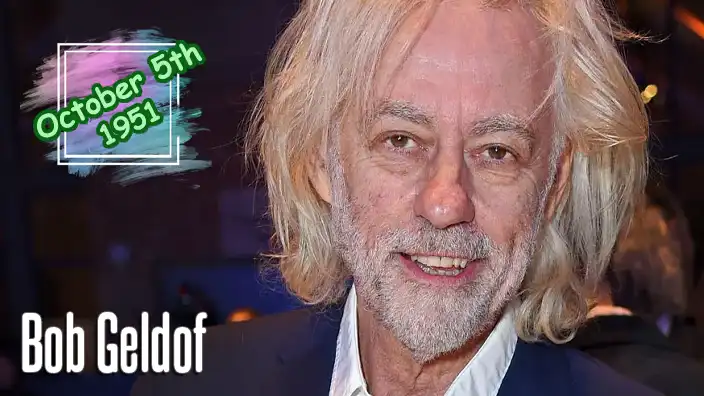
Bob Geldof began by fronting a band called The Boomtown Rats, became famous singing about Mondays, and then somehow found himself telephoning some of the biggest musicians on Earth and telling them where to be. Music made him famous, but Band Aid and Live Aid transformed the outspoken Irish singer into one of rock's most recognizable campaigners—and proved that occasionally being extremely difficult to ignore is precisely the qualification a job requires.
October 5, 1951, in Dún Laoghaire, Ireland
Trivia
- Geldof played Pink in Pink Floyd – The Wall.
- He co-wrote “Do They Know It's Christmas?”
- He helped organize Live Aid in 1985.
- Geldof received an honorary knighthood in 1986.
- The Boomtown Rats reunited in 2013.
- Details
- Category: Celebrity Birthdays - October
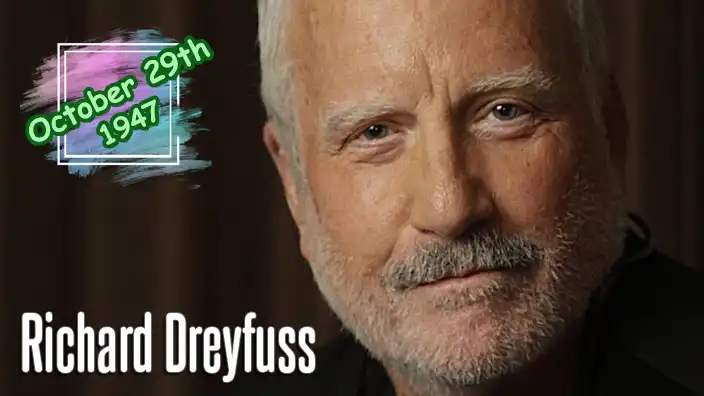
Richard Dreyfuss has spent his Hollywood career dealing with some remarkably difficult situations, including a hungry shark in Jaws, mysterious visitors in Close Encounters of the Third Kind, and Bill Murray in What About Bob?. Throw in an Academy Award and a classroom full of aspiring musicians in Mr. Holland's Opus, and it's clear that this is a man who has never been particularly interested in a quiet working life.
October 29, 1947, in Brooklyn, New York
Trivia
- He played marine biologist Matt Hooper in Jaws.
- He won an Oscar for The Goodbye Girl.
- He narrated the classic film Stand by Me.
- He voiced Centipede in James and the Giant Peach.
- He received a Hollywood Walk of Fame star in 1996.
- He founded the Dreyfuss Civics Initiative.
- Details
- Category: Celebrity Birthdays - October
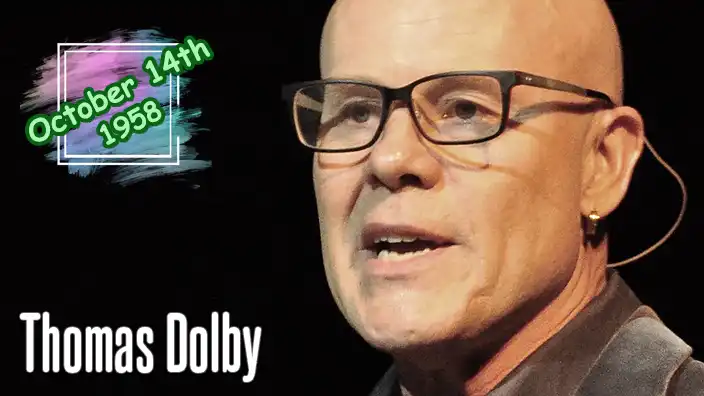
Thomas Dolby didn't just embrace electronic music; he practically invited the synthesizer over for dinner and gave it a permanent bedroom. Best known for his infectious 1980s hit "She Blinded Me with Science," the English musician, producer, composer, inventor, and professor has spent decades combining musical creativity with technological innovation. From MTV to mobile phone ringtones and university classrooms, Dolby has proved that a fascination with buttons, circuits, and unusual noises can lead to a remarkably successful career.
October 14, 1958, in London, England
Trivia
- He performed with David Bowie at Live Aid.
- He worked on Def Leppard's Pyromania.
- His software helped popularize polyphonic ringtones.
- He composed music for Howard the Duck.
- He received the Moog Innovation Award in 2012.
- He became a professor at Johns Hopkins University.
- Details
- Category: Celebrity Birthdays - October
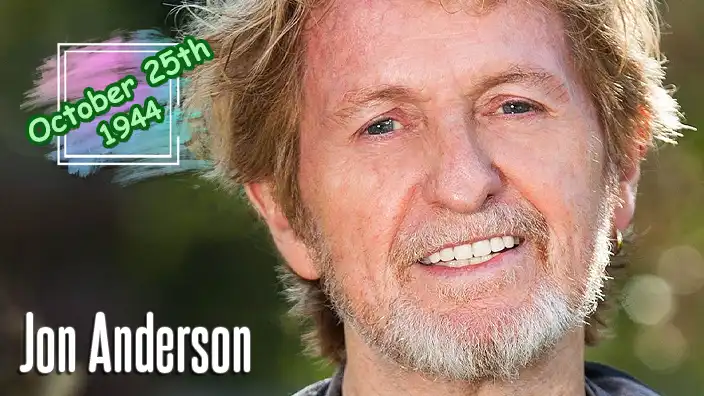
Jon Anderson helped make progressive rock an adventure in which a song could last twenty minutes, change direction six times, and still leave listeners wondering whether they'd reached the chorus. As the unmistakable voice of Yes, he combined soaring vocals, mystical lyrics, and musical imagination to create some of rock's most ambitious recordings. And if you've ever needed a road map to get through a guitar solo, there's a reasonable chance Anderson was involved.
October 25, 1944, in Accrington, England
Trivia
- He performed with his brother Tony in the Warriors.
- He once recorded as Hans Christian Anderson.
- He co-founded Yes with Chris Squire in 1968.
- His first solo album was Olias of Sunhillow (1976).
- He recorded several albums with Vangelis.
- Details
- Category: Celebrity Birthdays - October
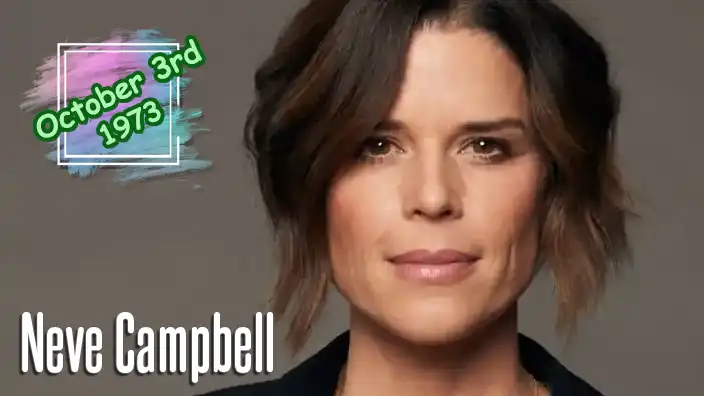
Neve Campbell became a 1990s television favorite before Scream turned her into horror royalty. As Sidney Prescott, she has survived Ghostface repeatedly, proving once and for all that caller ID was a magnificent invention.
October 3, 1973, in Guelph, Canada
Trivia
- She trained at Canada's National Ballet School.
- Campbell played Julia Salinger in Party of Five.
- She appeared as Bonnie in The Craft.
- Sidney Prescott debuted in 1996's Scream.
- Campbell co-wrote the story for The Company.
- She later joined The Lincoln Lawyer as Maggie McPherson.
- Details
- Category: Celebrity Birthdays - October
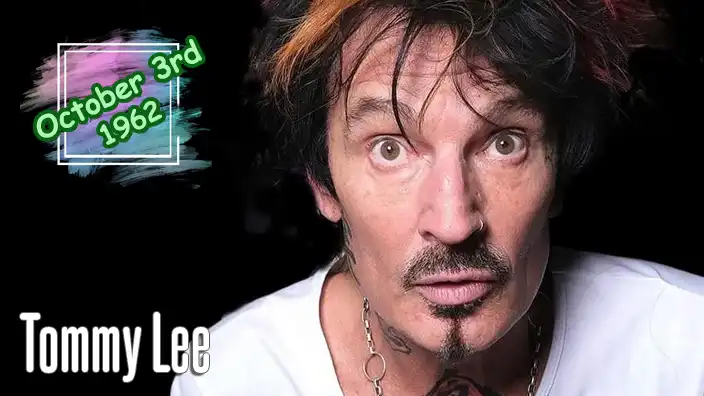
Tommy Lee helped build Mötley Crüe from the Sunset Strip upward, usually at considerable volume. A drummer, songwriter and enthusiastic enemy of stationary drum kits, he has spent decades making rock percussion considerably less safe for everyone involved.
October 3, 1962, in Athens, Greece
Trivia
- Lee co-founded Mötley Crüe in 1981.
- His younger sister Athena is also a drummer.
- Dr. Feelgood reached No. 1 on the Billboard 200.
- He formed Methods of Mayhem after leaving Mötley Crüe.
- Lee became famous for spectacular rotating and airborne drum kits.
- Details
- Category: Celebrity Birthdays - October
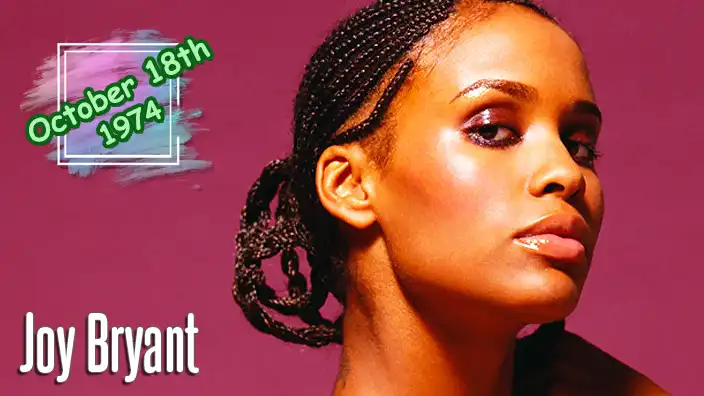
Joy Bryant has traveled from the Bronx to the fashion runways of Paris and the television living rooms of millions, proving that brains, beauty, and acting talent make a formidable combination. Best known as Jasmine Trussell on Parenthood, she has portrayed everything from a supportive Navy sailor's girlfriend to a determined mother navigating the chaos of family life. And having survived six seasons of the Braverman family's emotional emergencies, she could probably handle Thanksgiving dinner with just about anybody.
October 18, 1974, in the Bronx, New York City
Trivia
- She earned an academic scholarship to Yale University.
- A modeling scout discovered her while she attended Yale.
- She modeled for Tommy Hilfiger and Victoria's Secret.
- Her acting debut was alongside Beyoncé in Carmen: A Hip Hopera.
- She portrayed Jasmine Trussell throughout all six seasons of Parenthood.
- She enjoys skateboarding and hosted Across the Board with Joy Bryant.

- Details
- Category: Celebrity Birthdays - October
Kim Ji-won has commanded soldiers' attention in Descendants of the Sun, fought for her dreams in Fight for My Way, and brought audiences to tears in Queen of Tears. The South Korean actress has become one of Korean television's most recognizable stars, effortlessly moving between romance, comedy, and emotional drama. If her characters ever enjoyed a perfectly ordinary week without romantic complications, family interference, or a life-changing revelation, the scriptwriters would probably demand an investigation.
October 19, 1992, in Seoul, South Korea
Trivia
- Spent part of her school years in Chicago.
- Originally trained as a singer and dancer.
- Her proposed stage name was JessicaK.
- Nicknamed "Lollipop Girl" after a 2010 commercial.
- Studied theater at Dongguk University.
- Played piano and sang with singer Younha.
- Details
- Category: Celebrity Birthdays - October
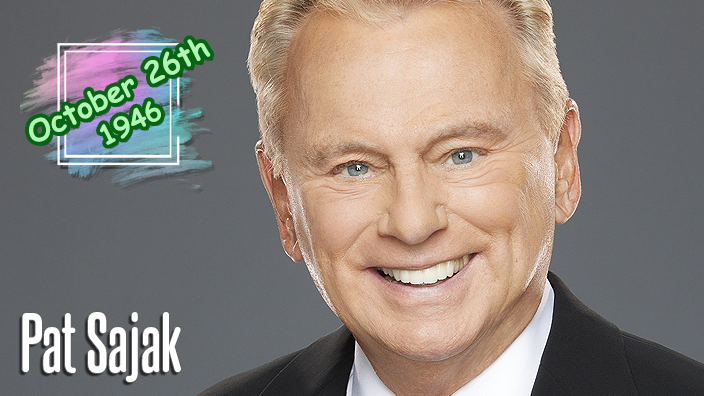
Pat Sajak turned spinning a giant wheel, buying vowels, and watching contestants lose everything to Bankrupt into one of television's most beloved traditions. For more than four decades, the legendary Wheel of Fortune host kept America entertained with quick wit, impeccable timing, and the remarkable ability to smile politely when someone guessed a puzzle that made absolutely no sense.
October 26, 1946, in Chicago, Illinois
Trivia
- He worked as a military radio DJ in Vietnam.
- He was a Los Angeles television weatherman.
- Merv Griffin personally selected him for Wheel of Fortune.
- He received a Hollywood Walk of Fame star in 1994.
- He hosted a CBS late-night talk show from 1989 to 1990.
- His daughter Maggie became a Wheel of Fortune correspondent.
From Our Marks Catelog
-

American Football Day is that magical time when perfectly reasonable adults suddenly start yelling at...
-

There’s something about that golden cloud of meringue that makes you forget all your worries, at...
-

Posttraumatic growth isn’t about silver linings or pretending that pain was somehow “worth it.” It’s...
-

On a hot day, when the sun is cooking the sidewalk and even the lawn chairs are sweating, there’s one...
-
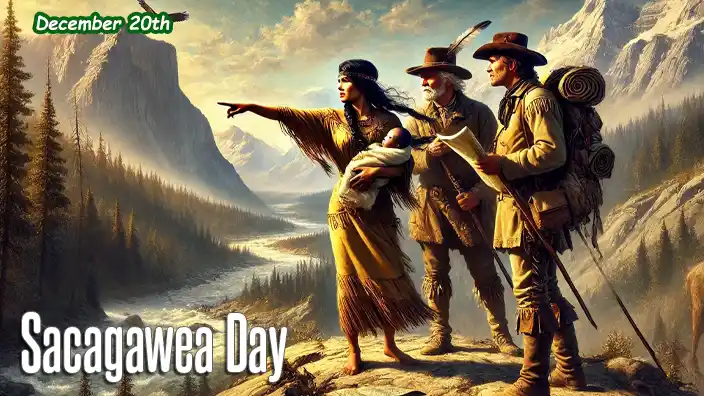
Sacagawea wasn’t just a guide—she was the ultimate multitasker. Imagine a teenager navigating the...
-
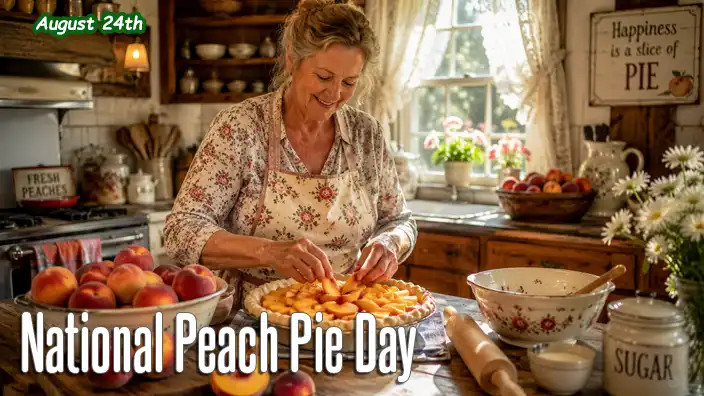
If peaches could talk, they would probably spend most of the year bragging about becoming...


