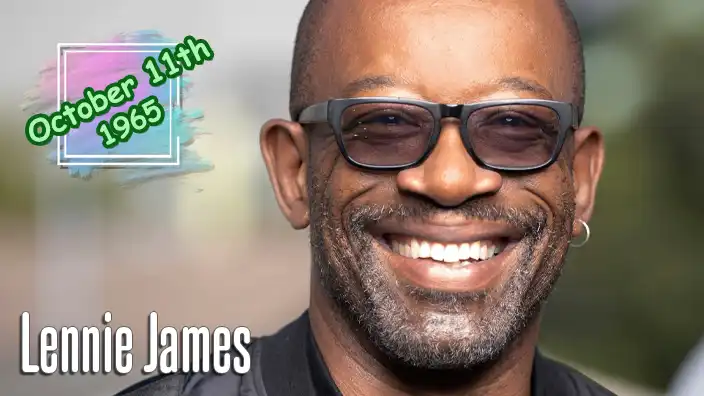
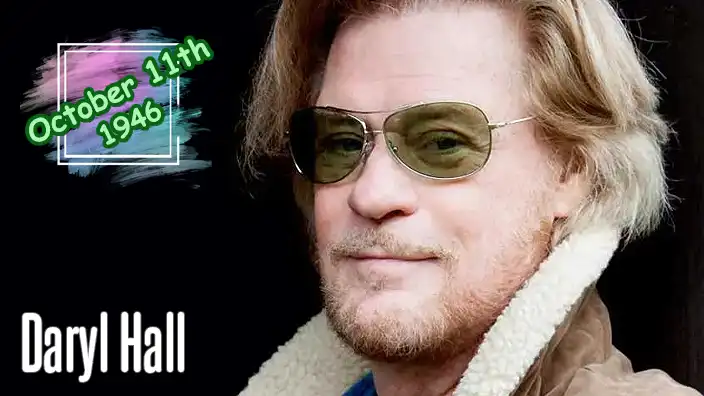
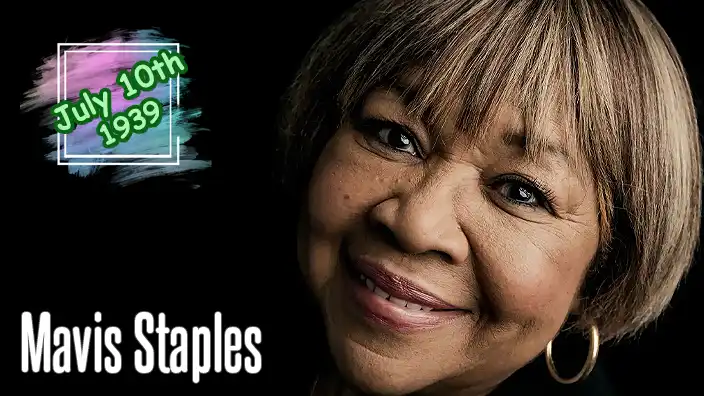
October 11, 1965, in Nottingham, England
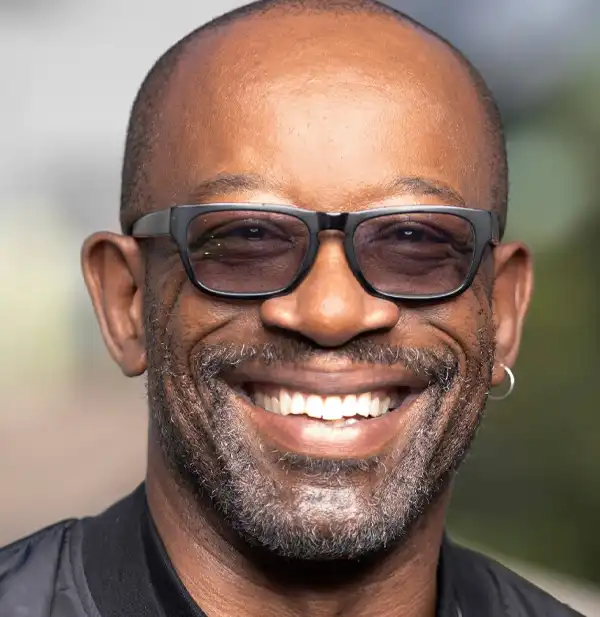
Born Lennie Michael James on October 11, 1965, in Nottingham, England, Lennie James is a British actor, screenwriter, playwright, and director whose powerful performances have made him one of the most respected figures in contemporary television drama. International audiences know him particularly well as Morgan Jones, the troubled survivor who appeared in The Walking Dead and subsequently became a leading character in Fear the Walking Dead. However, his extensive career reaches far beyond the world of zombies, encompassing acclaimed British crime dramas, Hollywood films, original television productions, and award-winning performances. His achievements include a BAFTA Television Award for Best Leading Actor, recognition from the Royal Television Society, and widespread critical praise for his ability to portray complicated individuals facing extraordinary circumstances. Whether carrying a wooden staff through a zombie apocalypse or confronting corruption in a police interrogation room, James has demonstrated an exceptional ability to make audiences believe every moment of his performance.
James was born to parents of Trinidadian heritage and spent much of his childhood in South London. His early years were marked by considerable personal hardship following the death of his mother, Phyllis Mary James, during his childhood. He and his older brother, Kester, subsequently entered the British care system, spending several years in a children's home rather than moving overseas to live with relatives. The experience became an important part of James's personal history, shaping his understanding of family, responsibility, and the challenges faced by young people growing up without conventional parental support. Although he has discussed those difficult years in interviews, he has also emphasized the importance of the people who helped him during his childhood and adolescence.
As a teenager, James developed interests in sports and performance, initially considering the possibility of becoming a professional rugby player. His introduction to acting reportedly occurred after he followed a girl he liked to an audition, a decision that unexpectedly changed the direction of his life. What began as an attempt to impress someone developed into a serious interest in theatrical performance. He discovered that acting offered opportunities to explore different personalities, experiences, and emotional situations, providing an outlet for creativity and self-expression. Considering the career that followed, the unsuccessful pursuit of a teenage romance turned out to be a remarkably productive professional decision.
James eventually entered foster care with a family that provided encouragement and stability during an important period of his development. He began writing plays and developing his theatrical interests, gradually recognizing that acting and storytelling could become a realistic career. His experiences growing up in care later influenced his writing, particularly his interest in characters dealing with difficult family circumstances and questions of belonging. Rather than concentrating exclusively on performance, he became interested in the process of creating stories and exploring how ordinary people respond to extraordinary pressures. This combination of acting and writing would eventually distinguish his professional career.
He received formal theatrical training at the Guildhall School of Music and Drama in London, graduating in 1988. The institution has trained numerous prominent performers and emphasizes the development of technical skills, dramatic interpretation, movement, and vocal performance. James's education provided a strong foundation for his subsequent work in theater, television, and film. He developed an appreciation for character-driven storytelling and the importance of understanding a role's emotional motivations. His theatrical training also prepared him for the demanding schedules and varied performance styles required in professional entertainment, from intimate stage productions to large-scale television dramas.
Following graduation, James began establishing himself through British theater and television productions. His stage career included appearances in works such as August Wilson's Ma Rainey's Black Bottom, Lorraine Hansberry's A Raisin in the Sun, and Shakespeare's Macbeth. These productions required him to explore characters shaped by social pressures, family relationships, ambition, and personal conflict. His experience performing classical and contemporary drama helped develop the intensity and emotional precision that would later characterize many of his television roles. Theater also provided an opportunity to work directly with audiences, where every performance required concentration, adaptability, and the ability to maintain a convincing character without the assistance of repeated camera takes.
During the early 1990s, James began attracting attention through appearances in British television dramas. His credits included Civvies, Comics, and Undercover Heart, productions that explored contemporary social issues, crime, and complicated personal relationships. He also appeared in the police drama ** Out of the Blue,** portraying Detective Constable Bruce Hannaford. The series followed officers working in a fictional Yorkshire police station and examined the personal and professional difficulties associated with law enforcement. James's performance contributed to his growing reputation as an actor capable of portraying realistic characters within serious dramatic settings.
His early screen work demonstrated a particular strength in portraying individuals whose outward confidence concealed personal uncertainty or emotional conflict. Rather than relying upon exaggerated gestures, James frequently used restrained expressions, deliberate speech, and carefully controlled physical movement to communicate a character's inner life. This approach became particularly effective in crime dramas, where characters often conceal information, question one another's motives, or struggle with difficult moral decisions. His performances suggested that the most interesting part of a character was frequently what remained unspoken.
James expanded his film career during the late 1990s, appearing in the 1998 science-fiction adventure ** Lost in Space,** directed by Stephen Hopkins. Based on the popular 1960s television series, the film starred William Hurt, Mimi Rogers, Gary Oldman, and Matt LeBlanc. James portrayed Jeb Walker, a pilot involved in the film's futuristic space-travel storyline. The production introduced him to the technical demands of a major Hollywood science-fiction film, including elaborate sets, visual effects, and large-scale action sequences. It also demonstrated his ability to move between British television productions and internationally distributed feature films.
Another important film appearance came in 2000 with ** Snatch,** the energetic crime comedy directed by Guy Ritchie. The film featured an ensemble cast including Jason Statham, Brad Pitt, Benicio del Toro, Dennis Farina, and Vinnie Jones. James portrayed Sol, a criminal whose involvement in a complicated diamond robbery leads to a series of increasingly disastrous encounters. The film became known for its rapid dialogue, eccentric characters, overlapping storylines, and dark humor. James's performance fitted naturally into Ritchie's chaotic fictional world, where nearly everyone was attempting to deceive someone else and remarkably few people appeared to have considered the consequences.
Snatch became a cult favorite and introduced James to a wider international film audience. His character's increasingly unfortunate experiences provided opportunities for deadpan humor and comic frustration, contrasting with the serious dramatic roles he had previously performed. The production also demonstrated his versatility, allowing him to participate in a stylized crime comedy without losing the naturalistic qualities of his acting. It was an early indication that James could be equally convincing as a hardened criminal, a troubled family man, or an unfortunate individual who had simply chosen the wrong people with whom to conduct business.
James also appeared in ** Lucky Break,** the 2001 prison comedy directed by Peter Cattaneo, and 24 Hour Party People, Michael Winterbottom's 2002 film exploring the Manchester music scene. The latter production featured Steve Coogan as music promoter Tony Wilson and examined the development of Factory Records, the Haçienda nightclub, and influential bands such as Joy Division and New Order. James portrayed Alan Erasmus, one of the founders of Factory Records, contributing to a film that combined historical events with unconventional storytelling and humor. His participation demonstrated an interest in productions exploring British cultural history as well as conventional dramatic entertainment.
Alongside his acting career, James developed his work as a screenwriter. One of his most significant early achievements was ** Storm Damage,** a television drama broadcast by the BBC in 2000. Drawing upon his understanding of the British care system, the story explored the experiences of young people growing up in residential care and the difficult relationships between individuals who had experienced abandonment and instability. James wrote the screenplay and portrayed the central character, Bonaface, a man returning to the children's home where he had spent part of his childhood. The production received critical recognition and earned a Royal Television Society award, establishing James as a writer capable of transforming personal understanding into compelling television drama.
Storm Damage represented an important development in James's career because it demonstrated his commitment to telling stories about people whose experiences were frequently overlooked in mainstream entertainment. Rather than presenting children in care as simple victims or stereotypes, the drama explored the complexity of their relationships, ambitions, frustrations, and emotional needs. James's involvement as both writer and performer allowed him to shape the material from its earliest stages, providing greater creative control than a conventional acting assignment. The project also established a pattern that would continue with later productions, particularly his acclaimed television series Save Me.
His growing international reputation led to additional American television opportunities, including a prominent role in ** Jericho,** the CBS post-apocalyptic drama that premiered in 2006. Set in the fictional town of Jericho, Kansas, the series followed residents attempting to survive after nuclear attacks devastated several major American cities. James portrayed Robert Hawkins, a mysterious newcomer whose secretive behavior and unusual knowledge suggested that he knew considerably more about the disaster than he initially admitted. The character gradually emerged as a central figure in the unfolding conspiracy, combining intelligence, resourcefulness, and a complicated personal history.
Robert Hawkins became one of the show's most intriguing characters because James portrayed him with controlled intensity and an air of mystery. Hawkins frequently appeared to be several steps ahead of the people around him, yet his actions were shaped by personal loyalties and difficult moral choices. His relationship with his family provided an emotional foundation for the character, while his involvement in the larger conspiracy contributed to the show's suspense. Jericho developed a passionate following, and its cancellation after the first season prompted an unusually determined fan campaign involving the delivery of enormous quantities of peanuts to CBS executives. The campaign helped secure a shortened second season, demonstrating that television viewers can become remarkably resourceful when sufficiently annoyed.
Although Jericho concluded in 2008, the series strengthened James's reputation among American audiences and established his credentials in post-apocalyptic storytelling. His portrayal of Hawkins demonstrated many of the qualities that would later become essential to Morgan Jones in The Walking Dead: intelligence, resilience, emotional vulnerability, and the ability to remain convincing in situations where ordinary society has collapsed. It also provided valuable experience working within an American television production, preparing him for increasingly prominent roles on both sides of the Atlantic.
James continued appearing in television dramas, including HBO's ** Hung,** the 2009 miniseries adaptation of The Prisoner, and the AMC crime drama Low Winter Sun. His performances frequently explored characters whose professional responsibilities conflicted with their personal loyalties. In Low Winter Sun, which premiered in 2013, he portrayed Detective Joe Geddes, a corrupt Detroit police officer involved in a complicated murder investigation. The series explored police corruption, organized crime, and the consequences of moral compromise, providing another opportunity for James to portray a character whose actions were frequently difficult to defend.
A particularly important British television role arrived in 2012 when James starred in the first season of ** Line of Duty,** the police corruption thriller created by Jed Mercurio. He portrayed Detective Chief Inspector Tony Gates, a highly successful police officer whose professional reputation begins to unravel as an anti-corruption unit investigates his conduct. The series starred Martin Compston as Detective Sergeant Steve Arnott and Vicky McClure as Detective Constable Kate Fleming, establishing the characters and investigative structure that would become central to one of Britain's most successful modern police dramas.
Tony Gates was a complex character whose ambition, personal relationships, and questionable decisions gradually placed him in increasingly dangerous circumstances. James portrayed the detective with a combination of authority, frustration, and emotional desperation, making him both compelling and morally ambiguous. The role required lengthy interrogation scenes in which small changes in expression and tone carried enormous dramatic significance. His performance helped establish the distinctive atmosphere of Line of Duty, where professional reputations could collapse during a single interview and even apparently straightforward questions might conceal a trap.
James's work in Line of Duty received critical praise and contributed significantly to the series' early success. His portrayal of Gates established the standard for the show's later investigations into corruption within the police service. The character's complicated motivations prevented the story from becoming a simple contest between honest investigators and obvious villains. Instead, the drama explored how ambition, fear, personal loyalty, and poor judgment could lead an apparently successful officer toward disastrous decisions. James's performance demonstrated that an audience could remain fascinated by a character even while recognizing the seriousness of his mistakes.
However, the role that would bring James his greatest international recognition had already begun in 2010, when he appeared in the pilot episode of AMC's ** The Walking Dead.** Based on the comic book series created by Robert Kirkman, Tony Moore, and Charlie Adlard, the television drama followed survivors attempting to remain alive after a mysterious epidemic transformed much of humanity into flesh-eating walkers. James portrayed Morgan Jones, one of the first people encountered by Sheriff Rick Grimes, played by Andrew Lincoln, after Rick awakened from a coma and discovered that civilization had collapsed.
Morgan Jones played a crucial role in introducing both Rick Grimes and the audience to the terrifying new world of The Walking Dead. Living with his young son Duane, Morgan had already experienced the devastating loss of his wife, Jenny, who had become a walker. Despite the danger surrounding him, Morgan offered Rick shelter, information, and assistance, helping the bewildered sheriff understand the basic rules of survival. Their encounter established important themes that would continue throughout the series, including compassion, moral responsibility, and the difficulty of maintaining humanity when ordinary social structures have disappeared.
Although Morgan appeared only briefly during the show's earliest episodes, James's performance left a lasting impression. The character's grief, fear, and determination provided an emotional foundation for the series, reminding viewers that the zombie apocalypse was not simply an opportunity for elaborate action sequences. Morgan represented the devastating personal consequences of a world in which families could be destroyed and familiar relationships transformed into sources of danger. His inability to kill the reanimated body of his wife became one of the pilot episode's most heartbreaking moments, illustrating the conflict between emotional attachment and the brutal demands of survival.
James returned to The Walking Dead in the third-season episode "Clear," which aired in 2013. The episode revealed that Morgan had experienced further tragedy and was living in isolation, surrounded by elaborate defenses and struggling with profound psychological distress. His reunion with Rick provided one of the series' most emotionally powerful encounters, contrasting the compassionate man introduced in the pilot with someone devastated by loss and guilt. James delivered an intense performance that demonstrated Morgan's vulnerability and the destructive consequences of prolonged isolation.
The episode became particularly memorable because it allowed James to explore the character's emotional condition in considerable depth. Morgan's erratic behavior, defensive preparations, and inability to trust others reflected the terrible experiences he had endured. His interactions with Rick and Carl Grimes revealed a man struggling to distinguish between survival and meaningful existence. James's portrayal avoided reducing Morgan to a simple action character, instead emphasizing the emotional damage caused by repeated loss. It was a reminder that surviving the end of civilization does not necessarily mean emerging from the experience in particularly good shape.
Morgan eventually returned as a recurring character before becoming a regular member of the cast during the show's sixth season. His storyline developed around an increasingly complicated personal philosophy, particularly his commitment to avoiding unnecessary killing. After encountering a survivor named Eastman, Morgan learned the martial art of aikido and adopted a wooden staff as his principal weapon. Eastman's teachings encouraged him to value human life, even when confronted by individuals who posed serious threats. This philosophy placed Morgan in frequent conflict with other survivors, including Rick, whose experiences had led him toward a more ruthless approach to protecting his community.
The contrast between Morgan's pacifist beliefs and the brutal realities of The Walking Dead became one of the character's defining conflicts. He repeatedly struggled to reconcile his desire to preserve life with the need to defend himself and others. His refusal to kill sometimes created dangerous situations, while his occasional abandonment of those principles produced further guilt and emotional turmoil. James portrayed these contradictions with considerable intensity, presenting Morgan as a man whose moral convictions were constantly tested by circumstances that offered few satisfactory choices. In a world populated by flesh-eating corpses and heavily armed survivors, maintaining a consistent ethical philosophy was never going to be straightforward.
Morgan's involvement in the communities of Alexandria and the Kingdom introduced him to additional characters and storylines. His relationships with Carol Peletier, Ezekiel, and other survivors revealed different aspects of his personality, while his experiences during the conflict with the Saviors challenged his commitment to nonviolence. James frequently portrayed Morgan as someone torn between compassion and anger, capable of extraordinary kindness but also vulnerable to destructive impulses. These contradictions helped establish him as one of the franchise's most psychologically complicated characters.
In 2018, James made television history within the franchise when Morgan Jones crossed over from ** The Walking Dead to Fear the Walking Dead.** The companion series had originally followed a different group of survivors during the early stages of the apocalypse, but Morgan's arrival connected the two programs more directly. James became a leading cast member beginning with the fourth season, joining performers including Kim Dickens, Alycia Debnam-Carey, Colman Domingo, and Garret Dillahunt. His character traveled away from the communities he had previously known, attempting to escape the emotional consequences of his experiences while searching for a new purpose.
Morgan's transition to Fear the Walking Dead provided opportunities to develop the character beyond his original supporting role. He became involved in efforts to help strangers, establish communities, and preserve hope in an increasingly hostile world. His leadership was frequently challenged by disagreements among survivors, dangerous adversaries, and his own uncertainty about whether he deserved the trust placed in him. James's performance continued emphasizing Morgan's internal conflicts, particularly his struggle to balance compassion with the responsibilities of protecting others.
During his years on Fear the Walking Dead, James also expanded his professional responsibilities by directing episodes of the series. Moving behind the camera allowed him to apply his extensive experience as an actor and storyteller to the practical challenges of television production. Directing required him to consider the entire dramatic structure of an episode, including visual composition, pacing, performances, and the coordination of complex action sequences. His involvement demonstrated a continuing interest in creative control and the development of skills beyond acting.
Morgan remained a central character in Fear the Walking Dead until his departure during the eighth and final season in 2023. His concluding storyline returned to important elements of his earliest appearances, including his relationship with his family, his experiences in Georgia, and his enduring connection with Rick Grimes. The character's journey across both series represented one of the longest-running personal narratives in the franchise, beginning with a grieving father attempting to protect his son and developing into the story of a survivor searching for redemption and purpose. James's performance helped maintain emotional continuity across years of changing casts, locations, and storylines.
Although Morgan Jones became his most internationally recognizable character, James continued pursuing important projects outside the zombie franchise. In 2018, he created, wrote, and starred in the British television drama ** Save Me,** broadcast by Sky Atlantic. The series followed Nelson "Nelly" Rowe, a charismatic but deeply flawed man living in South London whose life changes dramatically when his estranged teenage daughter disappears. Despite having had little involvement in her upbringing, Nelly becomes determined to find her, launching an increasingly desperate search that exposes complicated relationships, criminal activity, and uncomfortable truths about his own past.
Save Me was particularly significant because James developed the story himself, combining his interests in family relationships, personal responsibility, and characters living outside conventional expectations of respectability. Nelly Rowe was neither a straightforward hero nor an entirely unsympathetic individual. He was unreliable, impulsive, frequently selfish, and capable of making spectacularly poor decisions, yet his determination to find his daughter revealed genuine love and emotional vulnerability. James's performance captured these contradictions, allowing audiences to understand the character's flaws without losing interest in his efforts to become a better father.
The series featured a strong ensemble cast, including Suranne Jones, Stephen Graham, Jason Flemyng, and Olive Gray. Its setting in a close-knit South London community provided an important element of the storytelling, with local relationships, neighborhood loyalties, and personal histories influencing the investigation. James drew upon his understanding of London communities and working-class experiences to create a world that felt authentic and emotionally grounded. The drama received critical acclaim for its writing, performances, and willingness to explore difficult subjects without relying upon conventional crime-thriller formulas.
A second season, titled ** Save Me Too,** premiered in 2020 and continued Nelly's search while examining the consequences of earlier events. The production maintained the original series' combination of mystery, emotional drama, and complicated character relationships. Its success culminated in the 2021 BAFTA Television Award for Best Drama Series, an important achievement for James as the program's creator, writer, and leading performer. He also received recognition from the Royal Television Society for his writing, confirming that his abilities extended well beyond delivering compelling performances in material created by others.
James's work on Save Me demonstrated the importance of giving experienced actors opportunities to develop their own stories. By writing the series, he was able to explore subjects and characters that interested him personally, rather than waiting for conventional casting opportunities. The result was a drama that combined the suspense of a missing-person investigation with a detailed examination of family responsibility, guilt, and the possibility of personal change. It also showed that James could create a compelling central character without relying upon zombies, elaborate weapons, or the complete collapse of civilization. South London, as it turned out, provided quite enough complications on its own.
His film career continued alongside these television commitments. In 2017, James appeared in ** Blade Runner 2049,** the science-fiction sequel directed by Denis Villeneuve and starring Ryan Gosling, Harrison Ford, and Ana de Armas. He portrayed Mister Cotton, a character encountered during the film's exploration of a technologically advanced but deeply unequal future society. The production was praised for its striking visual design, atmospheric storytelling, and philosophical questions about identity and humanity. James's participation added another major science-fiction production to a filmography that already included Lost in Space and numerous television dramas involving unconventional worlds.
James has also worked extensively as a voice performer, contributing to animated productions and video games. One of his most recognizable gaming roles is Lord Shaxx in the Destiny franchise, the imposing announcer and supervisor of competitive Crucible matches. His commanding voice, dramatic enthusiasm, and memorable delivery have made the character popular among players. Shaxx frequently celebrates successful combat with such extraordinary excitement that even an ordinary victory can sound like the conclusion of a major historical battle. The role demonstrates how James's vocal abilities can create a memorable personality without requiring his physical appearance.
In 2024, James appeared in the television anthology ** Genius: MLK/X,** portraying Martin Luther King Sr., the father of civil rights leader Martin Luther King Jr. The series examined the lives and historical influence of Martin Luther King Jr. and Malcolm X, exploring their family backgrounds, personal experiences, and contributions to the American civil rights movement. James's portrayal of the elder King contributed to the program's examination of family influence and the religious and social environment that helped shape the younger man's development. The role provided another opportunity to participate in historically grounded drama and portray a figure whose personal relationships carried significant emotional weight.
That same year, James delivered one of the most celebrated performances of his career in the BBC television adaptation of ** Mr Loverman,** based on the acclaimed novel by Bernardine Evaristo. The eight-part series followed Barrington Jedidiah Walker, known as Barry, an Antiguan-born man living in London whose outwardly conventional family life concealed a decades-long romantic relationship with his closest male friend, Morris. The drama explored love, secrecy, marriage, family expectations, cultural identity, and the consequences of spending much of a lifetime concealing an essential part of oneself.
James portrayed Barry as a charismatic, sharply dressed, humorous, and sometimes exasperating individual whose confidence concealed considerable emotional uncertainty. Although Barry enjoyed presenting himself as a sophisticated gentleman with excellent taste and strong opinions, his private life was complicated by the tension between his marriage and his longstanding relationship with Morris. The character's decisions affected his wife, Carmel, played by Sharon D. Clarke, and other members of his family, creating a story in which personal liberation could not be separated from responsibility toward others.
The relationship between Barry and Morris, portrayed by Ariyon Bakare, formed the emotional center of Mr Loverman. Their affection, shared history, disagreements, and fear of social consequences created a complicated portrait of love shaped by cultural expectations and generational experiences. James approached the role with sensitivity and humor, allowing Barry to be charming, selfish, vulnerable, and deeply human. The performance was particularly effective because it avoided presenting the character as either entirely admirable or entirely blameworthy. Instead, Barry emerged as an individual whose choices reflected the difficult circumstances of his life and the personal compromises he had made.
Mr Loverman received widespread critical acclaim, with particular praise for its performances, writing, and exploration of relationships rarely represented in mainstream television drama. James's portrayal earned him the 2025 BAFTA Television Award for Best Leading Actor, one of the most prestigious individual honors of his career. He also received the Royal Television Society Award for Leading Actor, while Ariyon Bakare won the BAFTA for Best Supporting Actor. The awards recognized the emotional depth and sophistication of a production that combined humor with serious examinations of identity, family, and personal honesty.
The BAFTA victory represented an especially significant achievement for an actor whose career had developed across decades of British and American television. Although international audiences frequently associated James with Morgan Jones and the zombie apocalypse, Mr Loverman demonstrated his ability to command an intimate, character-driven drama without elaborate action or special effects. His performance depended upon subtle expressions, carefully delivered dialogue, and the ability to communicate emotions that the character often struggled to acknowledge openly. The recognition reinforced his reputation as an exceptionally versatile dramatic actor.
James continued expanding his American television career with a role in ** Mayor of Kingstown,** the crime drama starring Jeremy Renner. Joining the fourth season in 2025, he portrayed Frank Moses, a powerful and dangerous figure whose involvement complicated the struggle for influence among criminal organizations and institutions in the fictional Michigan town. The series explores incarceration, organized crime, corruption, and the difficult relationships between law enforcement and prison communities. James's performance contributed to the show's atmosphere of tension and moral uncertainty, providing another opportunity to portray an individual whose motives and methods were far from straightforward.
His later professional work has also included voice and performance-capture projects, demonstrating his continuing willingness to explore different entertainment formats. Across television, film, theater, and interactive media, James has shown an ability to adapt his performance techniques to the requirements of each production. Whether acting before a camera, performing on stage, directing an episode, or recording dialogue for a video game, he approaches character development with the same emphasis on motivation and emotional credibility.
Away from his professional career, James has generally maintained a relatively private family life. He is married to actress Giselle Glasman, and the couple have three daughters. Despite the international success of The Walking Dead and his demanding filming schedules, he has spoken about the importance of family and the support provided by those closest to him. His experiences growing up in care have also informed his public discussions about childhood, belonging, and the responsibilities of adults toward young people facing difficult circumstances.
James has been particularly outspoken about opportunities for working-class performers and the challenges faced by young people who lack financial resources or professional connections. Drawing upon his own experiences, he has discussed the importance of making acting and theatrical training accessible to individuals from different social backgrounds. His career provides a compelling example of how talent and determination can develop when young people receive encouragement and opportunities to pursue their interests. He has also emphasized the value of telling stories about communities and experiences that are not always prominently represented in mainstream entertainment.
One of the defining characteristics of James's acting is his ability to portray moral complexity without simplifying his characters into conventional heroes or villains. Morgan Jones struggled between compassion and violence, Tony Gates attempted to protect his reputation while making increasingly destructive decisions, and Nelly Rowe searched for redemption despite a history of irresponsibility. Barry Walker concealed an important part of his identity while maintaining relationships shaped by affection and deception. Although these characters inhabit very different fictional worlds, they share an essential humanity that James communicates through carefully observed performances.
His success also reflects the advantages of maintaining a career across British and American entertainment industries. British television has provided opportunities for intimate, socially grounded dramas, while American productions have introduced him to international audiences through large-scale genre storytelling. James has moved between these environments without becoming restricted to a single type of character or production. His career includes crime thrillers, historical dramas, science fiction, horror, comedy, theatrical productions, and original screenwriting, demonstrating a professional range that few performers achieve.
The cultural influence of Morgan Jones remains an important part of his legacy. As one of the earliest characters introduced in The Walking Dead, Morgan helped establish the series' central questions about morality, survival, and human connection. His journey through two major television productions allowed audiences to follow a character who experienced profound personal changes while remaining recognizable through his underlying emotional struggles. James's portrayal helped demonstrate that the most compelling stories in a zombie apocalypse often concern the living rather than the dead.
Yet his achievements in Save Me and Mr Loverman have ensured that his reputation extends well beyond a single television franchise. His success as a screenwriter and creator established him as an important voice in British drama, while his BAFTA-winning performance demonstrated his continuing development as an actor. These projects allowed him to explore stories about family, identity, responsibility, and personal transformation with an intimacy that contrasted sharply with the violent landscapes of his most famous American roles.
Lennie James's career is a remarkable story of determination, artistic versatility, and sustained professional achievement. From his childhood in South London and training at the Guildhall School of Music and Drama to international recognition in The Walking Dead, acclaimed performances in Line of Duty, and award-winning work on Save Me and Mr Loverman, he has repeatedly demonstrated an ability to bring difficult characters to life with honesty and emotional depth. His contributions as an actor, writer, director, and producer have helped shape memorable television stories on both sides of the Atlantic. And while Morgan Jones spent years attempting to survive a world overrun by zombies, Lennie James has accomplished something considerably more pleasant: building an extraordinary career without having to spend every working day checking whether the person approaching him intends to eat his lunch—or him.