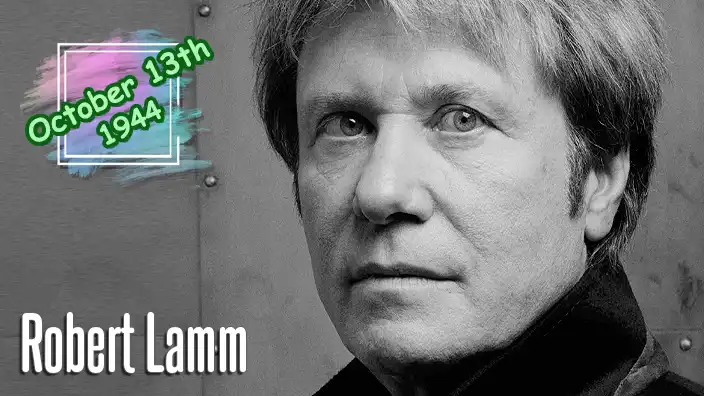
October 13, 1944, in Brooklyn, New York
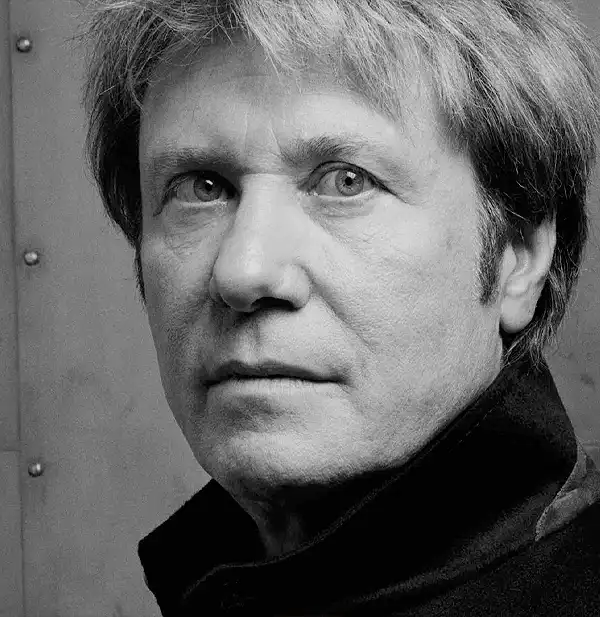
Robert William Lamm was born on October 13, 1944, in Brooklyn, New York, where music became an important part of his childhood long before he helped establish one of America's most successful rock bands. His parents were enthusiastic collectors of jazz recordings and enjoyed Broadway musicals, surrounding their son with a diverse collection of musical influences. As a youngster, Lamm sang in the choir at Grace Episcopal Church in Brooklyn Heights, where he encountered sacred compositions ranging from medieval music to the works of Johann Sebastian Bach. This early musical education provided an appreciation for melody, harmony, and composition that would later become essential to his distinctive songwriting style. While other youngsters were discovering the pleasures of making noise, Lamm was already learning how to organize it into something worth listening to.
Following his mother's remarriage, Lamm moved to Chicago during his teenage years, an experience that introduced him to a thriving musical environment filled with jazz, blues, rhythm and blues, and emerging rock and roll. He attended high school in Chicago, where he initially concentrated on visual arts, particularly drawing and painting, while also performing with local bands. His musical interests eventually took precedence, leading him to study music theory and composition at Roosevelt University. Among his most important influences were Ray Charles, Miles Davis, Antonio Carlos Jobim, and the Beatles, artists whose willingness to experiment with musical arrangements appealed to his developing creative instincts. Lamm was particularly impressed by musicians who composed their own material, recognizing that writing original songs offered greater opportunities for artistic expression than simply performing someone else's compositions.
In 1967, Lamm joined a group of talented Chicago musicians who were developing an ambitious concept: combining the power of a rock band with the sophistication and instrumental possibilities of a jazz-influenced horn section. The original lineup included guitarist Terry Kath, bassist Peter Cetera, drummer Danny Seraphine, trombonist James Pankow, trumpeter Lee Loughnane, saxophonist Walter Parazaider, and Lamm on keyboards and vocals. Initially known as The Big Thing, the group later adopted the name Chicago Transit Authority before shortening it to Chicago. Their unusual instrumentation distinguished them from conventional rock bands, providing a rich musical foundation that incorporated electric guitars, keyboards, brass arrangements, and multiple lead vocalists. It was an ambitious arrangement, particularly considering that most rock groups were perfectly satisfied with three guitars, a drum kit, and someone who could remember the lyrics.
Chicago's debut album, Chicago Transit Authority, appeared in 1969 and immediately demonstrated the band's musical ambition. Released as a double album, it featured extended compositions, intricate arrangements, improvisation, and a willingness to explore musical territory beyond the standard three-minute pop single. Lamm contributed seven of its twelve tracks, including "Beginnings," "Questions 67 and 68," and "Does Anybody Really Know What Time It Is?" These compositions helped establish the band's identity, combining thoughtful lyrics with infectious melodies and elaborate instrumental arrangements. "Beginnings," in particular, demonstrated Lamm's ability to construct a memorable song around an appealing rhythmic foundation, while "Does Anybody Really Know What Time It Is?" offered a playful but thoughtful examination of modern life's obsession with schedules and deadlines.
The band's commercial breakthrough accelerated with Chicago, commonly known as Chicago II, released in 1970. The album contained several compositions that became permanent fixtures of classic rock radio, including Lamm's "25 or 6 to 4." Featuring one of rock music's most recognizable guitar riffs and an extraordinary solo by Terry Kath, the song became a major international hit. Its unusual title inspired considerable speculation, with listeners proposing elaborate interpretations involving everything from mysterious numerical codes to recreational substances. The actual explanation was considerably less scandalous: Lamm was describing the time during an early-morning songwriting session, approximately twenty-five or twenty-six minutes before four o'clock. Apparently, writing a rock classic while trying to work out the time is considerably more productive than simply going to bed.
Lamm's contributions continued throughout Chicago's remarkable early success. His composition "Saturday in the Park," released on the 1972 album Chicago V, became one of the group's most beloved recordings. Inspired by scenes he observed during a Fourth of July celebration in New York City's Central Park, the song captured the atmosphere of a joyful summer gathering, complete with musicians, dancers, families, and people enjoying an ordinary afternoon. Its uplifting melody and conversational lyrics helped make it a lasting summertime favorite. The recording also demonstrated Lamm's remarkable ability to transform everyday experiences into songs with universal appeal. While some songwriters required dramatic heartbreak or extraordinary circumstances for inspiration, Lamm could apparently visit a park, watch people enjoying themselves, and return with a hit single.
The early 1970s established Chicago as one of the most commercially successful and musically distinctive groups in American popular music. Albums including Chicago III, Chicago V, Chicago VI, and Chicago VII expanded the band's reputation for combining rock, jazz, and sophisticated pop arrangements. Lamm continued contributing original compositions, including "Dialogue (Part I & II)," a socially conscious song examining differing attitudes toward contemporary political and cultural concerns. His writing frequently addressed subjects beyond conventional romantic relationships, exploring personal responsibility, social awareness, and the uncertainties of modern society. Although the band's accessible melodies attracted mainstream audiences, its members remained interested in challenging musical arrangements and substantial lyrical themes. This combination helped distinguish Chicago from many of its contemporaries.
In 1974, Lamm released his first solo album, Skinny Boy, demonstrating his desire to explore musical ideas outside Chicago's established collaborative environment. The album allowed him greater control over arrangements and songwriting, although it did not achieve the commercial success enjoyed by his work with the band. Nevertheless, the project revealed another dimension of his musical personality and established a pattern of independent creative activity that would continue throughout his career. For Lamm, songwriting was never simply a means of producing another successful single; it was an ongoing process of exploration, experimentation, and personal expression. His solo recordings often featured more intimate arrangements and reflected influences that did not always fit comfortably within Chicago's powerful horn-driven sound.
Chicago's musical direction evolved during the late 1970s and 1980s, particularly as changing popular tastes encouraged a greater emphasis on polished pop production and romantic ballads. The tragic accidental death of guitarist Terry Kath in January 1978 profoundly affected the group, removing one of its most distinctive instrumentalists and vocalists. Nevertheless, Chicago continued recording and performing, eventually enjoying renewed commercial success with recordings including "Hard to Say I'm Sorry," "You're the Inspiration," and "Hard Habit to Break." Peter Cetera's distinctive vocals became increasingly prominent during this period, while the band's sound shifted toward adult contemporary pop. Although Lamm remained an important member, his own songwriting and vocal contributions received less attention as the group's commercial priorities changed.
For a musician whose compositions had played such an important role in establishing Chicago's identity, these changes presented understandable artistic challenges. Lamm later discussed his frustration with the reduced opportunities for his songs and lead vocals, explaining that he increasingly turned toward independent projects to maintain his creative satisfaction. He relocated to New York City in 1991, where returning to familiar surroundings helped renew his songwriting enthusiasm. His solo work included Life Is Good in My Neighborhood, In My Head, Subtlety & Passion, and The Bossa Project, recordings that explored jazz, pop, Brazilian rhythms, and other musical influences. These albums demonstrated his continued interest in sophisticated arrangements and thoughtful lyrics, even when mainstream commercial expectations favored simpler formulas.
Lamm also collaborated with musicians outside Chicago, including Gerry Beckley of America and Carl Wilson of the Beach Boys. Their collaborative project, Beckley-Lamm-Wilson, resulted in the album Like a Brother, released in 2000 following Wilson's death in 1998. The recording brought together three accomplished musicians whose careers had helped shape American popular music, combining their distinctive voices and songwriting approaches. For Lamm, working with musicians from other celebrated groups offered opportunities to explore different creative relationships while maintaining his commitment to Chicago. It also demonstrated the enduring appeal of collaborative songwriting among artists who had spent decades navigating the recording industry. Getting three experienced songwriters together can be challenging, particularly when each has enough successful songs to fill an entire evening's conversation.
Throughout the changing musical landscape, Lamm remained closely associated with Chicago, participating in the band's recordings, concerts, and continuing development. The group's extraordinary longevity reflected its ability to adapt to changing musical fashions while preserving the distinctive combination of keyboards, guitars, vocals, and brass instrumentation that established its identity. Chicago's extensive catalog includes numerous gold and platinum albums, internationally successful singles, and recordings that remain familiar to listeners across several generations. Lamm's compositions have been particularly important to that legacy, with "Beginnings," "Saturday in the Park," "25 or 6 to 4," and "Does Anybody Really Know What Time It Is?" continuing to feature prominently in classic rock programming and live performances.
His musical influence extends beyond songwriting and performing. Lamm has shared his knowledge of music production and composition through guest lectures at educational institutions including Stanford University and New York University. His experience offers valuable insight into the relationship between musical creativity and the commercial recording industry, particularly the challenges involved in maintaining artistic individuality within a successful group. His work also demonstrates the importance of musical education, curiosity, and a willingness to explore unfamiliar styles. Having studied classical composition while absorbing jazz, blues, rock, and Brazilian music, Lamm developed an approach that treated musical boundaries as opportunities rather than restrictions.
Chicago received a major recognition of its historical importance when the band was inducted into the Rock & Roll Hall of Fame in 2016. The honor acknowledged the group's influence on American popular music and its distinctive approach to combining rock instrumentation with brass arrangements. For Lamm, the recognition celebrated decades of songwriting, recording, and performing alongside musicians whose collective efforts helped establish an unmistakable musical identity. The following year, he received another significant distinction when he and fellow Chicago founding member James Pankow were inducted into the Songwriters Hall of Fame. This honor recognized their contributions as composers whose songs had become an enduring part of American musical culture.
Lamm's work has also been documented through films and television productions examining Chicago's history and continuing popularity. He appeared in the documentary Now More Than Ever: The History of Chicago, which explored the band's formation, commercial achievements, internal tensions, and musical evolution. He was also featured in The Last Band on Stage, a 2022 documentary examining Chicago's experiences during the COVID-19 pandemic and its return to live performance. These productions offered audiences an opportunity to appreciate the personalities, creative relationships, and considerable determination required to sustain a successful musical group across decades of industry changes. IMDb also credits Lamm as a composer, producer, and performer, reflecting a professional career that extends beyond his familiar position behind the keyboards.
His personal life has included several marriages, including relationships with Karen Sullivan, Julie Nini, and actress Alex Donnelley. In 1991, he married Joy Kopko, an art director, and the couple established a life together while Lamm continued his musical activities. He is a father and has generally preferred to keep his family life separate from the publicity surrounding his career. This relative privacy contrasts with the extraordinary public familiarity of his music, which has accompanied countless celebrations, road trips, concerts, and everyday moments. For many listeners, his songs have become part of their personal histories, even if they know relatively little about the man who wrote them.
In addition to his recordings, Lamm has explored the written presentation of his music through Robert Lamm Selected Lyrics, a collection featuring lyrics from his work with Chicago and his independent projects. The publication provided another perspective on his creative process, allowing readers to examine words that are often overshadowed by the powerful instrumental arrangements surrounding them. His lyrics frequently combine accessible language with thoughtful observations about relationships, society, and personal experience. Whether examining the passage of time, celebrating a summer afternoon, or questioning the assumptions of contemporary life, Lamm has consistently demonstrated an ability to make familiar subjects interesting through musical storytelling.
Chicago continued releasing new material into the 2020s, including the 2022 album Born for This Moment, also known as Chicago XXXVIII. Lamm remained involved in the band's creative activities, reflecting the enduring enthusiasm that had first brought him into the group in 1967. His continued participation also provided a direct connection to Chicago's earliest recordings, preserving an important element of the band's musical identity as its lineup evolved. Although the recording industry has changed dramatically since the days of vinyl double albums and elaborate gatefold sleeves, the fundamental appeal of a memorable melody and an intelligently written song remains remarkably consistent.
Robert Lamm's career illustrates the remarkable possibilities that emerge when musical education, natural talent, curiosity, and persistence come together. As a founding member of Chicago, he helped create a distinctive sound that expanded the boundaries of mainstream rock music, while his songwriting produced recordings that continue to entertain audiences around the world. His achievements as a keyboardist, vocalist, composer, and independent recording artist reflect a lifelong commitment to musical creativity rather than dependence on a single successful formula. And although listeners may never entirely stop asking what time it really is, one thing remains perfectly clear: Robert Lamm has spent his career making excellent use of it.