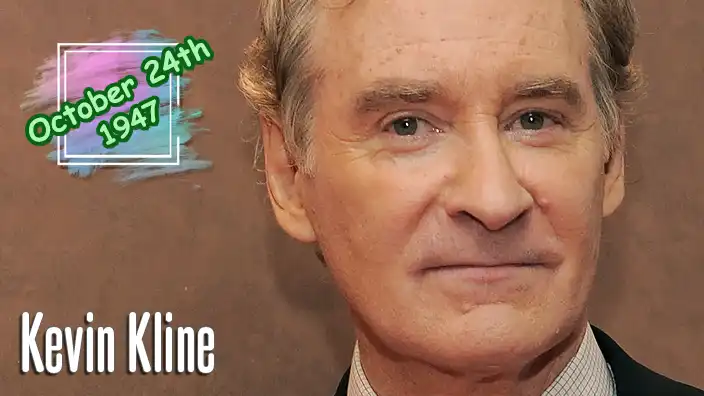
October 24, 1947, in St. Louis, Missouri

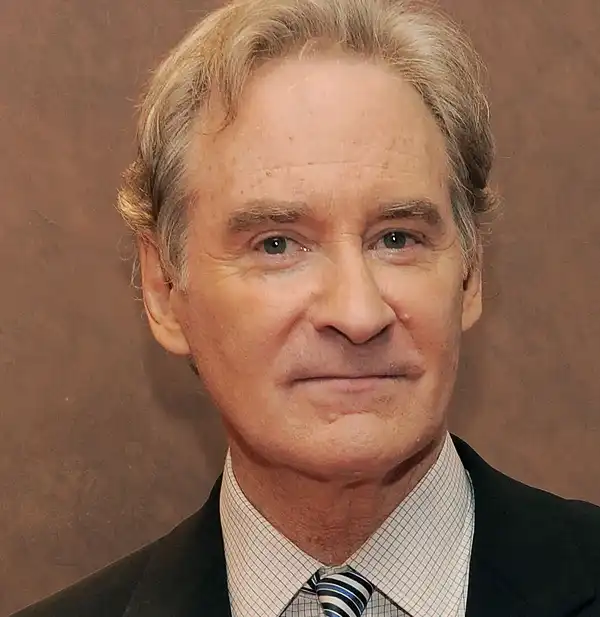
Born Kevin Delaney Kline on October 24, 1947, in St. Louis, Missouri, Kevin Kline is an American stage and film actor whose distinguished career has encompassed Shakespearean theater, Broadway musicals, Hollywood comedies, dramatic motion pictures, television, and animation. His father, Robert Joseph Kline, was a businessman who operated record and toy stores and had an enthusiastic interest in classical music and opera. His mother, Margaret Agnes Kirk Kline, came from a family of Irish ancestry, while his father's family had German Jewish roots. Growing up in a household where music, performance, and artistic expression were encouraged helped establish Kline's appreciation for the performing arts. His early exposure to classical music was particularly influential, although few people could have predicted that a boy surrounded by opera recordings would eventually become famous for portraying a criminal whose grasp of foreign languages was considerably less impressive than his confidence.
Kline's childhood in St. Louis provided a foundation for his developing artistic interests. His father had once pursued singing and maintained a strong appreciation for opera, while the family's record business exposed Kevin to a wide range of musical styles. He initially considered music a possible profession, developing an interest in piano and classical composition. His education included attendance at Saint Louis Priory School, where he participated in theatrical activities and began discovering the pleasures of performing before an audience. Although he demonstrated musical ability, his growing enthusiasm for drama suggested that his future might involve more than sitting at a piano and practicing scales. The opportunity to portray different characters appealed to his imagination, particularly when those characters possessed the dramatic personalities that ordinary everyday life rarely provides without considerable inconvenience.
After completing his secondary education, Kline enrolled at Indiana University in Bloomington, initially intending to pursue a career in music. He spent his first two years studying music before discovering that acting offered a more compelling creative direction. His participation in student theatrical productions and the university's Vest Pocket Players helped strengthen his interest in performance, encouraging him to change his academic concentration to speech and theater. He graduated in 1970 with a Bachelor of Arts degree, having developed a strong appreciation for dramatic literature and stage performance. The change of direction proved extraordinarily fortunate, although his piano teachers might reasonably have wondered why somebody with promising musical ability had decided that pretending to be other people offered better career prospects.
Kline's theatrical ambitions received an important boost in 1970 when he earned a scholarship to the newly established Drama Division of the Juilliard School in New York City. The prestigious performing arts institution provided rigorous professional training under the leadership of renowned actor and producer John Houseman. At Juilliard, Kline studied acting techniques, voice, movement, dramatic interpretation, and the demanding discipline required for classical theater. His training emphasized the importance of understanding a character's motivations and communicating emotional truth through carefully controlled performance. The experience also placed him among talented young actors who shared his enthusiasm for serious theatrical work. For Kline, Juilliard provided the technical foundation that would eventually allow him to move confidently between Shakespearean tragedy, musical comedy, and Hollywood farce without appearing particularly concerned about the distance between them.
Following his graduation from Juilliard in 1972, Kline became a founding member of The Acting Company, a professional touring repertory theater established by John Houseman and Margot Harley. The company was created to provide young actors with opportunities to perform classical and contemporary plays before audiences throughout the United States. Kline spent several years touring with the organization, appearing in productions of works by William Shakespeare and other major playwrights. The demanding schedule required performers to master multiple roles, adapt to different theaters, and maintain consistent performance standards while traveling extensively. This experience became central to Kline's professional development, teaching him the discipline and versatility that would distinguish his later career. It also provided a practical education in the less glamorous aspects of theatrical life, including endless rehearsals, unfamiliar dressing rooms, and the discovery that Shakespeare sounds considerably less romantic when performed after a long journey in an uncomfortable vehicle.
His early professional career also included television work, notably an appearance on the long-running daytime soap opera Search for Tomorrow during the 1970s. Although his ambitions remained firmly rooted in theater, television provided additional experience and exposure to the demands of screen acting. The transition from stage to camera required adjustments in performance technique, particularly because subtle expressions and small gestures could communicate emotions that might require broader physical movements in a large theater. Kline's ability to adapt between these environments would become an important professional advantage. His theatrical training encouraged precision, while television taught him how to convey character and emotion within the more intimate visual language of the screen.
Kline achieved his first major Broadway success in 1978 when he appeared in the musical comedy On the Twentieth Century, with music by Cy Coleman and lyrics by Betty Comden and Adolph Green. The production starred John Cullum and Madeline Kahn and followed the increasingly outrageous efforts of a theatrical producer attempting to persuade a famous actress to return to the stage. Kline portrayed Bruce Granit, a character whose involvement in the story provided opportunities for energetic comedy and musical performance. His work earned the Tony Award for Best Featured Actor in a Musical, establishing him as an important emerging talent on Broadway. The victory was particularly significant because it recognized both his acting abilities and his musical training, confirming that the piano lessons and classical music studies of his youth had not been entirely wasted.
His Broadway reputation grew further through his performances with the New York Shakespeare Festival, where he became known for his interpretations of classical characters. His stage work included productions of Hamlet, Richard III, Henry V, and other Shakespearean plays, demonstrating an impressive command of language, dramatic structure, and physical performance. Critics frequently praised his ability to combine technical precision with emotional spontaneity, bringing recognizable human qualities to characters whose dialogue had been written centuries earlier. His performances helped establish him as one of the leading American interpreters of Shakespeare, particularly among actors capable of balancing tragedy with comedy. This distinction would later become an important feature of his film career, where he repeatedly demonstrated that a man trained to deliver some of the greatest speeches in English literature could also be extraordinarily funny while falling over furniture.
Another defining theatrical achievement arrived in 1981 when Kline starred as the Pirate King in a Broadway revival of Gilbert and Sullivan's comic operetta The Pirates of Penzance. The production combined elaborate musical arrangements, witty dialogue, and playful theatrical absurdity, providing an ideal showcase for Kline's musical abilities and comic instincts. His portrayal of the flamboyant Pirate King was energetic, charismatic, and deliberately theatrical, capturing the operetta's affectionate mockery of Victorian conventions. The performance earned him the Tony Award for Best Actor in a Musical, making him a two-time Tony winner before he had established a substantial Hollywood career. The role also demonstrated that Kline could command a stage while wearing elaborate pirate clothing and behaving with extraordinary confidence, a combination that would prove useful whenever Hollywood required him to portray someone whose opinion of himself exceeded the available evidence.
Kline recreated his role as the Pirate King in the 1983 film adaptation of The Pirates of Penzance, directed by Wilford Leach. The movie also featured Angela Lansbury, Linda Ronstadt, and Rex Smith, bringing the Broadway production's musical comedy to cinema audiences. Kline's performance retained the exaggerated theatrical style that had made his stage portrayal successful, demonstrating his ability to translate musical comedy into a film setting. Although the movie was not a major commercial success, it preserved one of his most celebrated early performances and introduced his singing abilities to a broader audience. His involvement also highlighted the unusual versatility of an actor who could perform demanding classical theater while enthusiastically portraying a pirate whose understanding of criminal enterprise appeared suspiciously influenced by theatrical etiquette.
His major Hollywood breakthrough came with the 1982 drama Sophie's Choice, directed by Alan J. Pakula and adapted from William Styron's acclaimed novel. The film starred Meryl Streep as Sophie Zawistowski, a Polish survivor of the Holocaust, and Peter MacNicol as Stingo, a young writer who becomes involved in the lives of Sophie and her volatile companion Nathan Landau, portrayed by Kline. The story explored trauma, memory, love, and the devastating psychological consequences of historical atrocities. Kline's character was intelligent, charming, unpredictable, and deeply troubled, requiring a performance that balanced romantic intensity with increasingly disturbing behavior. His work attracted significant critical attention and earned him a Golden Globe nomination for New Star of the Year in a Motion Picture. For an actor making his major film debut opposite Meryl Streep in one of her most celebrated performances, it was a formidable introduction to Hollywood.
The success of Sophie's Choice established Kline as a serious dramatic actor capable of handling psychologically complex material. His portrayal of Nathan required considerable emotional range, moving between intellectual charm, affection, anger, and instability. The performance demonstrated that his theatrical background could translate effectively to the screen, particularly when the material demanded careful attention to character development. Although Streep received the Academy Award for Best Actress, Kline's contribution was widely recognized as an important element of the film's dramatic power. His Hollywood career had begun with a role that offered little opportunity for lighthearted comedy, but his subsequent work would reveal that audiences had only encountered one side of his considerable abilities.
In 1983, Kline appeared in Lawrence Kasdan's ensemble drama The Big Chill, portraying Harold Cooper, a successful businessman who reunites with former college friends following the death of a mutual acquaintance. The film featured an impressive cast including Glenn Close, William Hurt, Tom Berenger, Jeff Goldblum, Mary Kay Place, and JoBeth Williams. Its story examined friendship, nostalgia, disappointment, and the changing ideals of a generation confronting adulthood. Kline's performance contributed to the film's combination of humor and emotional reflection, establishing him as a valuable ensemble actor who could communicate character through subtle interactions rather than dramatic speeches. The Big Chill became a major cultural success, particularly remembered for its soundtrack of classic popular music and its examination of the uncomfortable discovery that growing older does not automatically mean becoming wiser.
Kline continued collaborating with Lawrence Kasdan in the 1985 Western Silverado, portraying Paden, a skilled gunfighter whose relaxed manner concealed considerable courage and determination. The film also starred Scott Glenn, Kevin Costner, Danny Glover, and Brian Dennehy, offering a lively tribute to traditional American Westerns. Kline's character combined humor, intelligence, and quiet confidence, demonstrating his ability to inhabit the familiar conventions of the genre while giving his performance a distinctive personality. The production featured horseback riding, gunfights, frontier towns, and the moral conflicts associated with classic Western storytelling. For Kline, whose previous work had included Shakespearean princes and Gilbert and Sullivan pirates, playing a gunfighter represented another opportunity to wear an elaborate costume while attempting to maintain order among people who appeared determined to settle every disagreement with firearms.
His film career expanded further with the 1987 historical drama Cry Freedom, directed by Richard Attenborough. The movie explored the relationship between South African anti-apartheid activist Steve Biko, portrayed by Denzel Washington, and journalist Donald Woods, played by Kline. Based on real events, the film examined the brutality of apartheid and the efforts of individuals who challenged South Africa's system of racial segregation. Kline's portrayal of Woods required a serious and restrained performance, emphasizing the journalist's growing awareness of injustice and the personal consequences of speaking publicly against an oppressive government. The production attracted international attention and earned recognition for its performances and political significance. Kline's involvement demonstrated his willingness to participate in films addressing difficult historical subjects rather than concentrating exclusively on commercial entertainment.
The defining comic achievement of Kline's film career arrived in 1988 with A Fish Called Wanda, directed by Charles Crichton and written by John Cleese. The British-American crime comedy starred Cleese, Jamie Lee Curtis, Michael Palin, and Kline in a story involving a stolen collection of diamonds, romantic manipulation, betrayal, and an extraordinary assortment of incompetent criminals. Kline portrayed Otto West, an arrogant, intellectually insecure American criminal who considered himself exceptionally clever despite repeatedly demonstrating the opposite. Otto's explosive temper, absurd confidence, and inability to recognize his own stupidity created some of the film's most memorable moments. His performance combined physical comedy, precise timing, and exaggerated emotional reactions, producing a character who was simultaneously dangerous, ridiculous, and almost impossible to ignore.
A Fish Called Wanda became a major critical and commercial success, with Kline's performance attracting particular acclaim. Otto's attempts to intimidate others while insisting upon his intellectual superiority provided numerous comic highlights, particularly his interactions with Michael Palin's character, Ken Pile. Kline embraced the character's absurdity without hesitation, delivering a performance that combined the physical energy of stage farce with the psychological precision of a trained dramatic actor. At the 61st Academy Awards in March 1989, he won the Oscar for Best Supporting Actor, an unusual achievement for a broadly comic performance. The victory confirmed his exceptional versatility and established him as one of the few actors to receive Hollywood's highest acting recognition for portraying a character whose principal accomplishments included criminal incompetence and an impressive misunderstanding of Friedrich Nietzsche.
His Oscar victory helped strengthen Kline's reputation as an actor capable of moving between serious drama and sophisticated comedy. While many performers become closely associated with a particular genre, Kline resisted such limitations, continuing to pursue projects that offered interesting characters and opportunities for creative experimentation. His theatrical background remained an important influence, particularly his understanding of physical movement, vocal expression, and comic rhythm. The success of A Fish Called Wanda also demonstrated that carefully constructed comedy could receive the same critical recognition traditionally reserved for dramatic performances. For Kline, the award represented an extraordinary professional milestone, although it presumably did little to improve Otto West's reputation among fictional criminal organizations.
In 1990, Kline returned to one of his greatest theatrical interests when he directed and starred in a television adaptation of Shakespeare's Hamlet, originally staged for the New York Shakespeare Festival. His portrayal of the troubled Danish prince demonstrated his commitment to classical drama even as his Hollywood career continued expanding. The production emphasized the psychological conflicts and emotional uncertainties central to Shakespeare's tragedy, allowing Kline to explore a character whose intelligence and introspection frequently complicated his ability to act decisively. His performance reinforced his reputation as a distinguished Shakespearean actor and demonstrated that film success had not diminished his enthusiasm for demanding theatrical material. The contrast between Hamlet and Otto West also illustrated the remarkable range of his abilities, although both characters occasionally had difficulty controlling their emotions.
Kline returned to comedy in the 1991 film Soapdish, a satire of the extravagant personalities and backstage rivalries associated with daytime television. The movie featured Sally Field, Whoopi Goldberg, Robert Downey Jr., Elisabeth Shue, and Cathy Moriarty, with Kline portraying Jeffrey Anderson, a self-important actor whose career had taken an unfortunate turn. The film's exaggerated romantic complications, professional jealousies, and outrageous plot developments provided an ideal setting for his comic talents. Kline's performance combined theatrical vanity with physical humor, creating a character whose dramatic self-importance frequently exceeded the significance of his actual circumstances. The production also allowed him to affectionately mock the entertainment industry, a subject with which he had become increasingly familiar.
He reunited with Lawrence Kasdan for the 1991 drama Grand Canyon, portraying Mack, an immigration lawyer whose encounter with a tow-truck driver leads him to reconsider his understanding of society, friendship, and personal responsibility. The film explored racial tensions, social inequality, urban violence, and the unexpected connections between people from different backgrounds. Kline's performance was thoughtful and understated, emphasizing the character's gradual reassessment of his assumptions about the world. The role demonstrated his ability to anchor an ensemble drama without relying upon theatrical exaggeration, allowing quieter moments of emotional recognition to carry considerable weight. His continued collaboration with Kasdan reflected a professional relationship built upon mutual appreciation for character-driven storytelling.
Kline portrayed legendary silent-film star Douglas Fairbanks in Richard Attenborough's 1992 biographical drama Chaplin, starring Robert Downey Jr. as Charlie Chaplin. The film examined Chaplin's remarkable career and complicated personal life, recreating the early Hollywood environment in which performers such as Fairbanks helped establish the motion-picture industry's growing international influence. Kline's performance captured the athleticism, charm, and theatrical confidence associated with Fairbanks, whose swashbuckling adventures made him one of cinema's earliest major stars. The role offered an opportunity to portray a real entertainment figure while drawing upon his own experience in physical comedy and theatrical performance. It was also a fitting assignment for an actor who had already demonstrated a remarkable willingness to climb, leap, fight, and generally behave in ways that might alarm a cautious insurance company.
In 1993, Kline delivered another celebrated comic performance in Ivan Reitman's political comedy Dave. He portrayed both President Bill Mitchell, a dishonest and self-serving political leader, and Dave Kovic, an ordinary employment agency owner whose resemblance to the president leads to an extraordinary impersonation scheme. When the real president becomes incapacitated, Dave is recruited to take his place, gradually discovering the opportunities and responsibilities associated with public office. The film also starred Sigourney Weaver, Frank Langella, and Ben Kingsley, combining political satire with romantic comedy and an optimistic examination of public service. Kline's dual performance required him to distinguish two physically identical characters through personality, mannerisms, and emotional expression. His portrayal of the warmhearted Dave contrasted sharply with the cynical president, demonstrating how effectively an actor could create different personalities without relying upon elaborate makeup or costumes.
Dave became a popular critical and commercial success, earning Kline a Golden Globe nomination for Best Actor in a Motion Picture Musical or Comedy. His performance was praised for its warmth, humor, and ability to make an improbable premise emotionally convincing. The film's appeal rested partly upon the contrast between the complicated machinery of national politics and the straightforward decency of an ordinary citizen suddenly placed in extraordinary circumstances. Kline's portrayal suggested that a little common sense and personal integrity might improve political leadership, although the film wisely avoided examining the practical difficulties of finding somebody willing to impersonate a president indefinitely. His performance remains one of the most recognizable examples of his talent for combining comedy with genuine emotional sincerity.
Kline continued exploring romantic comedy with the 1995 film French Kiss, directed by Lawrence Kasdan and starring Meg Ryan. He portrayed Luc Teyssier, a charming but unreliable Frenchman who becomes involved with an American woman attempting to recover her unfaithful fiancé. The film's romantic complications, picturesque French locations, and playful cultural misunderstandings provided an entertaining setting for Kline's comic abilities. His performance required a convincing French accent, considerable charm, and the ability to portray a character whose questionable behavior gradually revealed more sympathetic qualities. Kline's linguistic abilities and theatrical training contributed to the performance, while his chemistry with Ryan helped establish the film as a popular romantic comedy. It also demonstrated that a handsome stranger with a French accent can apparently get away with behavior that would ordinarily inspire a strongly worded complaint.
In 1996, Kline entered the world of Disney animation when he provided the voice of Captain Phoebus in The Hunchback of Notre Dame. Based on Victor Hugo's novel, the animated film explored prejudice, compassion, courage, and the struggle for acceptance in medieval Paris. Kline's character was a military officer whose growing sympathy for Esmeralda and Quasimodo placed him in conflict with the ruthless Judge Claude Frollo. His vocal performance combined humor, authority, and emotional warmth, creating a heroic character whose confidence was balanced by genuine concern for others. The production allowed Kline to reach younger audiences while drawing upon his theatrical experience and distinctive speaking voice. It also added another uniformed character to his professional collection, although Phoebus was considerably more respectable than several of the pirates, criminals, and political opportunists he had previously portrayed.
His dramatic work continued in Ang Lee's acclaimed 1997 film The Ice Storm, adapted from Rick Moody's novel. Set in suburban Connecticut during the 1970s, the film examined emotional alienation, marital dissatisfaction, and the complicated relationships within two neighboring families. Kline portrayed Ben Hood, a husband and father whose extramarital affair contributed to the breakdown of his family's already fragile relationships. The ensemble cast included Joan Allen, Sigourney Weaver, Christina Ricci, Tobey Maguire, and Elijah Wood. Kline's performance emphasized emotional repression and moral uncertainty, creating a character whose attempts to maintain appearances concealed considerable personal confusion. The film received widespread critical acclaim for its performances and atmospheric examination of American suburban life, demonstrating Kline's continued strength in serious dramatic roles.
Also in 1997, Kline starred in Frank Oz's comedy In & Out, portraying Howard Brackett, a small-town high school teacher whose life is thrown into confusion when a former student unexpectedly suggests during an Academy Awards acceptance speech that Howard is gay. The film followed Howard's attempts to understand his identity while dealing with public attention, community expectations, and an approaching wedding. The cast included Joan Cusack, Tom Selleck, Matt Dillon, and Debbie Reynolds. Kline's performance combined physical comedy with vulnerability, allowing the film to explore questions of identity and acceptance through an accessible comic narrative. His energetic portrayal earned a Golden Globe nomination, while the film became an important mainstream Hollywood comedy addressing LGBTQ+ themes. It also offered another example of the unexpected consequences of award ceremonies, proving that sometimes the most dramatic moment occurs when somebody who isn't even attending suddenly becomes the subject of the acceptance speech.
Kline continued working in comedy and adventure films with appearances in Wild Wild West in 1999 and A Midsummer Night's Dream the same year. In Wild Wild West, he portrayed inventor and government agent Artemus Gordon opposite Will Smith's James West, combining elaborate disguises, unusual inventions, and comic exchanges within a steampunk-inspired Western adventure. Although the film received unfavorable critical reviews, Kline's performance demonstrated his willingness to embrace extravagant material. His appearance in Michael Hoffman's adaptation of Shakespeare's A Midsummer Night's Dream provided a return to classical comedy, with Kline portraying Nick Bottom, the enthusiastic amateur actor whose head is transformed into that of a donkey. Considering his previous success portraying theatrical egotists and foolish criminals, Bottom was practically a character written with Kline in mind, even if Shakespeare had neglected to consult him personally.
His voice-acting career expanded in 2000 when he portrayed Tulio in DreamWorks Animation's The Road to El Dorado, opposite Kenneth Branagh as Miguel. The animated adventure followed two Spanish con artists who discover a legendary city of gold and become entangled in a series of increasingly elaborate misunderstandings. Kline's performance combined charm, sarcasm, and quick comic timing, creating a character whose enthusiasm for wealth frequently collided with the inconvenient realities of friendship and responsibility. The pairing of Kline and Branagh, both accomplished classical actors, gave the film a distinctive verbal energy, demonstrating that Shakespearean training could prove surprisingly useful when portraying animated swindlers. The production also allowed Kline to contribute to a family-oriented adventure without abandoning the mischievous humor that had become associated with his comic performances.
Kline returned to serious drama in the 2001 film Life as a House, directed by Irwin Winkler. He portrayed George Monroe, an architect diagnosed with terminal cancer who attempts to rebuild his relationship with his estranged teenage son while constructing a house. The film also starred Kristin Scott Thomas, Hayden Christensen, and Jena Malone, exploring themes of regret, reconciliation, family relationships, and personal transformation. Kline's performance emphasized emotional vulnerability and determination, creating a character confronting the consequences of years spent neglecting important relationships. His work earned a Screen Actors Guild Award nomination for Outstanding Performance by a Male Actor in a Leading Role, reinforcing his reputation as a performer capable of delivering powerful dramatic performances alongside his celebrated comedy work.
In 2002, Kline starred in The Emperor's Club, portraying William Hundert, a dedicated classics teacher at an elite boys' preparatory school. The film explored education, integrity, ambition, and the long-term influence of teachers upon their students. Kline's character believed deeply in the importance of moral principles and intellectual discipline, but his convictions were challenged by a gifted student whose ambitions were not accompanied by equivalent ethical standards. The performance was restrained and thoughtful, drawing upon Kline's understanding of classical literature and his ability to communicate authority without theatrical exaggeration. The film offered an appealing contrast to his earlier portrayals of foolish or dishonest characters, demonstrating that he could be equally convincing as a man whose greatest ambition was to encourage young people to behave responsibly.
His commitment to theater continued throughout the early 2000s, particularly through his portrayal of Sir John Falstaff in a Broadway production combining Shakespeare's Henry IV, Part 1 and Henry IV, Part 2. Falstaff, one of Shakespeare's most celebrated comic characters, is a boastful, cowardly, witty, and frequently dishonest companion to the young Prince Hal. Kline's performance captured the character's extraordinary appetite for life, combining physical comedy with emotional complexity. His work earned a Tony Award nomination for Best Actor in a Play and a Drama Desk Award for Outstanding Actor in a Play. The role was particularly appropriate for an actor whose career had repeatedly demonstrated an ability to make morally questionable characters irresistibly entertaining. Falstaff may not have been the most trustworthy companion, but in Kline's hands he was certainly one of the most enjoyable.
Kline explored the life of celebrated American composer Cole Porter in the 2004 musical biographical film De-Lovely, directed by Irwin Winkler. The movie examined Porter's professional achievements and complicated personal relationships, particularly his marriage to Linda Lee Porter, portrayed by Ashley Judd. Kline's performance required him to combine dramatic acting with musical interpretation, drawing upon the classical training that had originally inspired his artistic ambitions. The film featured performances of Porter's songs by contemporary musicians and singers, creating a musical celebration of one of America's most influential songwriters. Kline's portrayal emphasized Porter's wit, sophistication, and emotional contradictions, demonstrating his ability to communicate the complexity of a creative figure whose public charm frequently concealed private difficulties.
His later film work included Robert Altman's A Prairie Home Companion in 2006, the comedy The Pink Panther the same year, and the 2008 animated adventure The Tale of Despereaux. In A Prairie Home Companion, Kline portrayed Guy Noir, a fictional private detective associated with Garrison Keillor's long-running radio program. The film featured an ensemble cast including Meryl Streep, Lily Tomlin, Woody Harrelson, and Tommy Lee Jones, blending musical performances with nostalgic reflections upon the passing of an entertainment tradition. Kline's portrayal of Guy Noir embraced the conventions of hard-boiled detective fiction while gently mocking their exaggerated seriousness. His performance demonstrated an affectionate understanding of radio comedy, where a carefully delivered line and an appropriately dramatic pause can create an entire imaginary world.
Kline returned to Broadway in 2007 as the title character in Edmond Rostand's Cyrano de Bergerac, appearing opposite Jennifer Garner and Daniel Sunjata. The production allowed him to explore one of theater's most celebrated romantic heroes, a brilliant swordsman and poet whose extraordinary verbal abilities are accompanied by insecurity about his appearance. His performance combined theatrical flamboyance, humor, and emotional vulnerability, drawing upon the classical training that had shaped his career. A filmed presentation of the production aired on PBS's Great Performances, earning Kline a Primetime Emmy Award nomination for Outstanding Lead Actor in a Miniseries or Movie in 2009. The role also demonstrated that a distinguished actor could remain entirely convincing while delivering elaborate romantic poetry from beneath an exceptionally prominent artificial nose.
His motion-picture career continued through the 2010s with appearances in The Conspirator in 2010, Darling Companion in 2012, and Last Vegas in 2013. In Last Vegas, Kline joined Michael Douglas, Robert De Niro, and Morgan Freeman in a comedy about four longtime friends gathering in Las Vegas for a bachelor party. The film's humor emerged from the contrast between the characters' youthful ambitions and the realities of their later lives, providing opportunities for affectionate comedy about friendship, relationships, and the refusal to surrender one's enthusiasm for adventure. Kline's performance contributed to the ensemble's chemistry, demonstrating that actors with extensive dramatic experience could enjoy themselves thoroughly in a film devoted largely to the consequences of questionable vacation planning.
In 2014, Kline starred in My Old Lady, a comedy-drama written and directed by Israel Horovitz. He portrayed Mathias Gold, an American who inherits a Paris apartment only to discover that its elderly occupant, played by Maggie Smith, possesses legal rights that complicate his plans to sell the property. The film also starred Kristin Scott Thomas and explored family secrets, inheritance, emotional disappointment, and the unexpected consequences of unresolved relationships. Kline's performance combined irritation, vulnerability, and gradual emotional understanding, creating a character whose initial concern with financial circumstances eventually gives way to more complicated personal discoveries. The production offered another opportunity to work with distinguished performers while exploring the combination of comedy and emotional reflection that had become a recurring feature of his career.
Kline appeared opposite Meryl Streep again in the 2015 musical comedy-drama Ricki and the Flash, directed by Jonathan Demme. He portrayed Pete Brummel, the former husband of Streep's character, a rock musician attempting to reconnect with the family she left behind. The film examined parenthood, personal ambition, forgiveness, and the difficult compromises associated with pursuing artistic dreams. Kline's character provided a grounded contrast to the flamboyant personality of the central performer, demonstrating his ability to communicate emotional complexity through relatively restrained dialogue. The reunion with Streep also provided an interesting connection to Sophie's Choice, the film that had introduced Kline to major Hollywood audiences more than three decades earlier. Fortunately, their fictional relationship in Ricki and the Flash involved considerably fewer psychological complications, although family reunions still proved challenging.
In 2017, Kline appeared in Disney's live-action adaptation of Beauty and the Beast, portraying Maurice, the eccentric inventor and devoted father of Belle, played by Emma Watson. Directed by Bill Condon, the musical fantasy featured an ensemble cast including Dan Stevens, Luke Evans, Josh Gad, and Ian McKellen. Kline's performance brought warmth and humor to Maurice, emphasizing the character's affection for his daughter and his willingness to protect her despite extraordinary circumstances. The film became a major international commercial success, introducing Kline to another generation of family audiences. His involvement also demonstrated his continuing appeal in musical productions, particularly those requiring performers capable of combining emotional sincerity with the theatrical conventions of fantasy storytelling.
The year 2017 also brought Kline his third Tony Award when he starred in a Broadway revival of Noël Coward's comedy Present Laughter. He portrayed Garry Essendine, a celebrated actor whose professional success and extravagant personal life create an endless procession of romantic complications and theatrical misunderstandings. The role required sophisticated comic timing, rapid dialogue, and a willingness to portray a character whose vanity and self-importance frequently threatened to overwhelm everyone around him. Kline's performance received widespread critical acclaim and earned the Tony Award for Best Actor in a Play. The victory confirmed his continuing importance to American theater, nearly four decades after his first Broadway Tony. It also provided the satisfying spectacle of a distinguished actor winning a major award for portraying another distinguished actor who behaved as though the entire world existed primarily to appreciate his talents.
His achievements on Broadway have established Kline as one of the relatively small group of performers to receive three Tony Awards while also winning an Academy Award. His theatrical honors include recognition for musical comedy, classical drama, and sophisticated contemporary performance, demonstrating a range rarely achieved by actors whose careers concentrate primarily on one medium. In 2003, he was inducted into the American Theatre Hall of Fame, acknowledging his substantial contributions to professional theater. His continued involvement in Shakespearean productions has also reinforced his reputation as an important interpreter of classical drama. Although Hollywood provided international fame, the stage remained central to his artistic identity, offering opportunities to explore demanding roles and maintain the discipline developed during his early years with The Acting Company.
Television audiences have also become familiar with Kline's distinctive voice through his recurring role as Calvin Fischoeder in the animated Fox comedy Bob's Burgers. Beginning in 2011, he portrayed the eccentric, wealthy landlord whose elaborate schemes, peculiar personal habits, and occasionally questionable business decisions regularly complicate the lives of the Belcher family. Fischoeder's aristocratic manner, eye patch, and unpredictable behavior provide an ideal setting for Kline's vocal comedy, allowing him to create a memorable character through exaggerated pronunciation and carefully controlled comic timing. His performance earned a Primetime Emmy Award nomination for Outstanding Character Voice-Over Performance in 2017. He also reprised the role in The Bob's Burgers Movie in 2022, further establishing the character as an important part of the animated franchise.
Kline's voice work in Bob's Burgers has demonstrated his remarkable ability to create comedy without appearing physically on screen. Calvin Fischoeder combines the self-importance of a Shakespearean monarch with the financial instincts of an eccentric businessman and the personal judgment of someone who has never been required to explain himself to responsible adults. Kline's theatrical experience allows him to communicate these contradictions through vocal rhythm, unusual emphasis, and an exaggerated sense of authority. The character has become popular among viewers partly because of the contrast between his wealthy confidence and the increasingly absurd situations he creates. After decades of portraying kings, criminals, politicians, and pirates, Kline had apparently discovered that being a cartoon landlord offered the opportunity to combine all four professions into one thoroughly unreasonable individual.
His later film appearances included The Good House, released in 2022, in which he reunited with Sigourney Weaver. Based on Ann Leary's novel, the comedy-drama followed Hildy Good, a New England real estate agent confronting personal difficulties while attempting to maintain control over her professional and family life. Kline portrayed Frank Getchell, a local contractor whose relationship with Hildy develops as the story unfolds. The film combined romance, humor, and serious reflections upon addiction and personal responsibility, providing opportunities for nuanced performances from its experienced leading actors. Kline's character brought warmth and understated humor to the production, demonstrating that his comic abilities could remain effective without elaborate physical comedy or exaggerated dialogue.
In 2024, Kline starred opposite Cate Blanchett in the Apple TV+ psychological thriller miniseries Disclaimer, written and directed by Alfonso Cuarón. Adapted from Renée Knight's novel, the series explored the consequences of a mysterious book that appears to expose a woman's carefully concealed past. Kline portrayed Stephen Brigstocke, a grieving former teacher whose actions become central to the unfolding psychological drama. The production also featured Sacha Baron Cohen, Kodi Smit-McPhee, and Lesley Manville, combining complex storytelling with questions about memory, guilt, revenge, and the reliability of personal narratives. Kline's performance represented a substantial departure from his more familiar comic roles, emphasizing bitterness, emotional repression, and psychological manipulation. His work demonstrated that he remained capable of creating unsettling dramatic characters long after establishing himself as one of Hollywood's most accomplished comic performers.
Kline's film work continued in 2025 with A Big Bold Beautiful Journey, a romantic fantasy directed by Kogonada and starring Margot Robbie and Colin Farrell. He portrayed the Mechanic, a mysterious figure associated with the unusual journey undertaken by the film's central characters. The production explored memory, relationships, and the emotional significance of past experiences through an imaginative narrative combining romance and fantasy. Kline's participation added another distinctive project to a career characterized by unusual variety, demonstrating his willingness to explore unconventional storytelling alongside younger performers. The film also provided an opportunity to portray a character whose significance extended beyond his apparent occupation, a familiar situation for an actor who had previously played everything from a presidential impersonator to a wealthy cartoon landlord.
In 2026, Kline returned to television comedy with American Classic, a series in which he starred as Richard Bean, a Broadway actor who returns to his hometown and becomes involved in efforts to revive a struggling family theater. The production drew upon Kline's extensive experience in professional theater, exploring the complicated relationships between performers, family members, artistic ambition, and the practical difficulties of maintaining a cultural institution. Kline also served as an executive producer, extending his involvement beyond acting. The series offered an especially appropriate role for a performer whose professional life had been shaped by the theater, allowing him to explore the sometimes absurd contrast between artistic ideals and the everyday realities of producing a successful show. For a veteran Broadway performer, portraying an actor attempting to rescue a theater must have felt rather like returning to familiar territory, complete with difficult personalities, impossible expectations, and the constant suspicion that somebody had forgotten to pay the lighting bill.
Away from his professional achievements, Kline has maintained a relatively private family life. He married actress Phoebe Cates on March 5, 1989, after the couple had met several years earlier. Cates became widely known for her appearances in films including Fast Times at Ridgemont High and Gremlins, while Kline continued building his reputation in theater and cinema. The couple have two children, Owen and Greta, both of whom developed creative interests of their own. Owen pursued filmmaking, while Greta established herself as a musician and songwriter performing under the name Frankie Cosmos. The family's involvement in the arts reflects a creative environment in which acting, music, and storytelling have remained important across generations. Kline and Cates have generally avoided the relentless publicity associated with many Hollywood relationships, demonstrating that a successful entertainment career does not necessarily require turning every family breakfast into a media event.
Kline has also participated in charitable activities and supported organizations involved in children's welfare, health, and the performing arts. His work has included support for efforts addressing juvenile diabetes, and he has participated in events encouraging greater awareness of the challenges faced by children living with serious medical conditions. He has also supported theatrical institutions and arts education, reflecting his belief in the importance of providing opportunities for young performers. His association with Indiana University has continued through honorary recognition and public appearances, while his contributions to theater have been celebrated in his hometown of St. Louis. The Kevin Kline Awards, established to recognize excellence in professional theater in the St. Louis region, further reflected the respect he earned within the performing arts community.
One of the defining characteristics of Kline's career has been his ability to approach comedy with the same seriousness and technical discipline required for classical tragedy. His performances frequently feature characters whose confidence, vanity, or ambition create circumstances that become increasingly ridiculous, yet he rarely treats those characters as though they are aware of the joke. Instead, he commits fully to their perspectives, allowing humor to emerge naturally from the contradictions between their intentions and behavior. This approach has made him particularly effective in sophisticated comedy, where a carefully timed pause or subtle expression can be more entertaining than an elaborate physical stunt. His dramatic performances demonstrate the same attention to psychological detail, creating characters whose emotions remain convincing even when their circumstances are extraordinary.
His long association with Shakespeare has also influenced his screen performances, particularly his command of language and understanding of dramatic rhythm. Classical theater requires actors to communicate complex ideas through carefully structured dialogue, and Kline has consistently demonstrated an ability to make demanding material accessible to audiences. His theatrical training has helped him move comfortably between historical drama, contemporary comedy, musicals, animation, and psychological thrillers. Few performers have demonstrated such sustained versatility while maintaining recognition across both Broadway and Hollywood. His career illustrates the advantages of an artistic foundation built upon rigorous training, extensive stage experience, and a willingness to explore unfamiliar material rather than concentrating exclusively on commercial success.
From his early musical studies in Missouri to Juilliard, Broadway, Hollywood, and contemporary television, Kevin Kline has built one of the most distinguished careers in American acting. His achievements include an Academy Award, three Tony Awards, numerous other honors, and memorable performances in films ranging from Sophie's Choice and The Big Chill to A Fish Called Wanda, Dave, and Beauty and the Beast. His continued success in theater and television demonstrates a rare combination of artistic longevity, technical skill, and creative curiosity. Whether portraying a troubled intellectual, an arrogant criminal, a compassionate teacher, a Shakespearean hero, or an eccentric cartoon millionaire, Kline has consistently brought intelligence, precision, and personality to his work. And after decades of making audiences laugh, cry, and occasionally question the wisdom of trusting his characters, he has established one enduring truth: a genuinely great actor can make almost anything believable, even a criminal who thinks he's a genius while repeatedly proving otherwise.