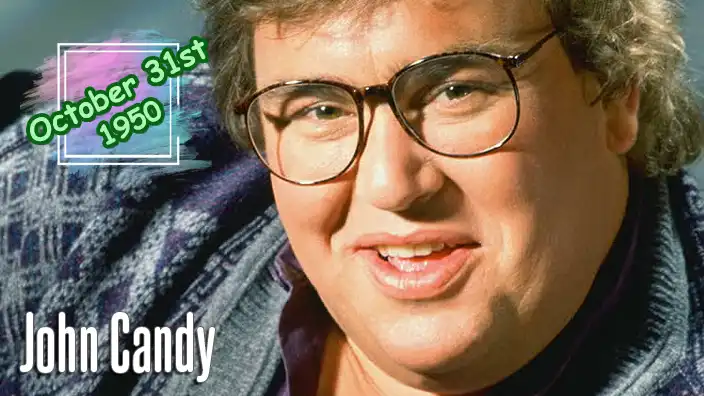
October 31, 1950, in Newmarket, Canada
 March 4, 1994, in Durango, Mexico

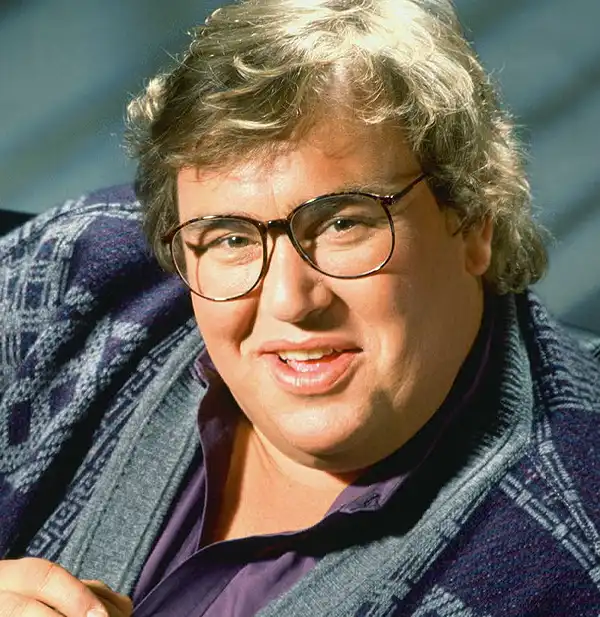
John Candy, born John Franklin Candy on October 31, 1950, in Newmarket, Ontario, Canada, was one of the most beloved comedic actors in Hollywood history. Known for his remarkable comic timing, expressive face, larger-than-life personality, and extraordinary ability to portray lovable characters, Candy became an international star through films such as Planes, Trains and Automobiles, Uncle Buck, Spaceballs, The Great Outdoors, and Cool Runnings. His career combined outrageous comedy with genuine emotional warmth, creating characters who could be ridiculous, frustrating, vulnerable, and deeply endearing, sometimes within the same scene. Although his life was tragically cut short in 1994, his performances continue entertaining audiences around the world. Few comedians have possessed the ability to make viewers laugh uncontrollably one moment and reach for a tissue the next, but John Candy accomplished both without appearing to break a sweat.
Candy was raised in the Toronto area in a working-class Roman Catholic family. His parents, Sidney James Candy and Evangeline Aker Candy, provided a modest upbringing, although tragedy struck when his father died while John was still a young child. His mother subsequently raised John and his older brother, Jim, under challenging circumstances. Candy attended Neil McNeil Catholic High School in Toronto, where he developed an interest in sports, particularly football, and demonstrated a natural talent for entertaining classmates. His enthusiasm for athletics was eventually overshadowed by his growing fascination with acting and comedy. Even during his school years, Candy possessed the physical presence and expressive personality that would later make him such a recognizable performer, although Hollywood was still some distance away.
After finishing school, Candy briefly attended Centennial College and later studied at McMaster University in Hamilton, Ontario, where he explored his interest in drama. Rather than pursue a conventional profession, he began seeking opportunities in Canada's developing entertainment industry. His earliest acting experiences included small roles in Canadian television productions and low-budget films during the early 1970s. Among his early screen appearances was the Canadian film Class of '44 (1973), followed by other modest productions that allowed him to gain practical experience. These early assignments rarely attracted widespread attention, but they provided valuable opportunities to develop his acting skills and establish professional relationships within the Canadian entertainment community.
Candy's career changed dramatically when he became involved with Toronto's Second City comedy organization, an influential improvisational theater company that had already helped launch the careers of numerous performers. Second City emphasized spontaneous comedy, character development, and the ability to respond immediately to unexpected situations. Candy flourished in this environment, developing the quick thinking and instinctive timing that would later become essential elements of his performances. Working alongside other talented comedians, he learned how to create memorable characters from ordinary situations and how to turn seemingly insignificant observations into elaborate comic routines. Improvisational theater also taught him the importance of listening to fellow performers, a skill that contributed to his remarkable chemistry with other actors throughout his career.
In 1976, Candy joined the cast of Second City Television, better known as SCTV, a Canadian sketch comedy program that would become one of the most influential comedy series of its generation. The show featured an extraordinary collection of performers, including Eugene Levy, Catherine O'Hara, Andrea Martin, Dave Thomas, Rick Moranis, Joe Flaherty, and Harold Ramis. Rather than presenting unrelated comedy sketches, SCTV frequently parodied the programming of a fictional television station, creating a wonderfully chaotic world of incompetent broadcasters, eccentric personalities, and absurd entertainment productions. Candy quickly became one of the program's most popular performers, demonstrating an extraordinary ability to transform himself into a wide variety of characters.
Among Candy's most memorable SCTV creations were Johnny LaRue, an ambitious but frequently unsuccessful television personality, and Mayor Tommy Shanks, a thoroughly peculiar local politician. He also portrayed William B. Williams, the enthusiastic host of Melonville's Sunrise Semester, and performed numerous celebrity impressions. His portrayal of Johnny LaRue became particularly popular, with the character's exaggerated self-importance and spectacularly misguided ambitions providing countless opportunities for comedy. Candy's performances helped establish SCTV as a major force in North American television comedy, earning critical recognition and a devoted audience. The program also demonstrated that Canadian comedians were perfectly capable of producing world-class entertainment, even if much of the world initially needed reminding where Canada was located.
Candy's work on SCTV earned him two Primetime Emmy Awards for Outstanding Writing in a Variety or Music Program, shared with the show's writing team. The awards recognized the creative achievements of a production that combined sophisticated satire, outrageous characters, and remarkable ensemble performances. As SCTV expanded its audience through American television broadcasts, Candy became increasingly familiar to viewers outside Canada. His success on the program provided a foundation for his transition into feature films, where his distinctive personality and improvisational skills would prove enormously valuable.
One of Candy's early major Hollywood appearances came in The Blues Brothers (1980), directed by John Landis and starring John Belushi and Dan Aykroyd. Candy portrayed Burton Mercer, a parole officer who becomes involved in the chaotic pursuit of the film's musical protagonists. Although his role was relatively small, he made a memorable impression amid an extraordinary collection of comedians, musicians, and character actors. He subsequently appeared in Stripes (1981), starring Bill Murray and Harold Ramis, portraying Dewey "Ox" Oxberger, an enthusiastic military recruit whose cheerful personality contrasted wonderfully with the film's more cynical characters. His performance helped introduce him to a broader movie audience and established him as an actor capable of making supporting characters just as entertaining as the leading performers.
Candy continued building his film career throughout the early 1980s, appearing in productions such as National Lampoon's Vacation (1983), in which he played a security guard at the fictional Walley World amusement park. His brief appearance opposite Chevy Chase became one of the film's memorable comic moments, demonstrating his ability to make an impression without dominating an entire production. He also appeared in Splash (1984), directed by Ron Howard and starring Tom Hanks and Daryl Hannah. Candy portrayed Freddie Bauer, the irresponsible but ultimately loyal brother of Hanks's character, delivering a performance that combined mischievous humor with genuine affection. The film's commercial success helped establish Candy as a major Hollywood comedy personality.
Another significant role arrived with Brewster's Millions (1985), in which Candy starred alongside Richard Pryor. The comedy followed a minor-league baseball player who must spend an enormous fortune under unusual conditions to inherit an even larger sum. Candy portrayed Spike Nolan, the protagonist's loyal friend and teammate, contributing his characteristic combination of enthusiasm, confusion, and good intentions. The film provided another opportunity for Candy to demonstrate his chemistry with established comedians, reinforcing his reputation as a generous performer who could support another actor's comedy while creating memorable moments of his own.
Candy also appeared in Armed and Dangerous (1986), alongside Eugene Levy and Meg Ryan, portraying a former police officer who becomes a security guard after being dismissed from the force. The film reunited him with Levy, his longtime SCTV colleague, allowing the two performers to draw upon their extensive improvisational experience. Their contrasting personalities and comedic timing created an entertaining partnership, even when the screenplay ventured into familiar action-comedy territory. Candy's ability to portray fundamentally decent but frequently overwhelmed characters became increasingly important to his screen persona, making him particularly effective in stories where ordinary people encountered extraordinary problems.
In 1987, Candy delivered one of his most celebrated performances in Planes, Trains and Automobiles, written and directed by John Hughes. Starring opposite Steve Martin, Candy portrayed Del Griffith, a cheerful, talkative shower curtain ring salesman who becomes an unwilling traveling companion to Martin's increasingly frustrated advertising executive, Neal Page. The film follows their disastrous efforts to reach Chicago in time for Thanksgiving, encountering delayed flights, uncomfortable accommodations, transportation failures, and a seemingly endless collection of misfortunes. Candy's performance was a masterclass in balancing broad comedy with emotional sensitivity, transforming a potentially irritating character into someone audiences genuinely cared about.
The emotional depth of Planes, Trains and Automobiles becomes particularly evident during its later scenes, when the audience discovers that Del's cheerful personality conceals profound loneliness and personal loss. Candy's ability to shift from outrageous humor to quiet vulnerability gave the film an emotional impact that distinguished it from conventional road-trip comedies. His famous motel-room confrontation with Steve Martin remains one of the most memorable moments in American comedy cinema, while the film's conclusion demonstrates the importance of compassion and friendship. Candy's performance showed that great comedy does not always require elaborate jokes or physical slapstick; sometimes the most powerful moment comes when a funny character stops trying to be funny.
That same year, Candy appeared in Mel Brooks's science-fiction parody Spaceballs (1987), portraying Barf, a half-man, half-dog companion to Bill Pullman's heroic Lone Starr. The character was a parody of Chewbacca from Star Wars, complete with fur, floppy ears, and a personality considerably more interested in food and comfort than intergalactic heroism. Candy embraced the absurd costume and elaborate makeup, delivering a performance that became one of the film's most recognizable features. His enthusiastic portrayal helped make Spaceballs a cult favorite among science-fiction comedy enthusiasts. Considering the character's unusual appearance, Candy deserves considerable credit for making a furry space traveler seem like the most sensible person aboard the spacecraft.
Candy reunited with Dan Aykroyd in The Great Outdoors (1988), a comedy written by John Hughes and directed by Howard Deutch. Candy portrayed Chet Ripley, a family man attempting to enjoy a peaceful lakeside vacation before the arrival of his wealthy and obnoxious brother-in-law, played by Aykroyd. Their contrasting personalities generated a series of comic disasters involving wildlife, water sports, family disagreements, and an unforgettable encounter with an enormous steak. The film became a popular summer comedy and further established Candy's appeal as an ordinary, good-hearted character struggling against increasingly ridiculous circumstances. His performance captured the frustration of anyone who has ever planned a relaxing family vacation only to discover that relatives have entirely different ideas about relaxation.
One of Candy's most enduring starring roles came in Uncle Buck (1989), another collaboration with writer-director John Hughes. Candy portrayed Buck Russell, an irresponsible but lovable bachelor unexpectedly asked to care for his brother's three children during a family emergency. Initially regarded as an unsuitable guardian, Buck gradually wins over the children through his unconventional methods, surprising resourcefulness, and genuine affection. The film featured memorable scenes involving enormous pancakes, awkward school encounters, and Buck's hilariously intimidating treatment of his teenage niece's boyfriend. Beneath the comedy, however, the story explored family responsibilities, personal growth, and the unexpected ways people can demonstrate love.
Uncle Buck became one of Candy's most recognizable films, largely because his performance combined outrageous behavior with an unmistakably generous spirit. Buck might have been unreliable, poorly organized, and occasionally alarming to respectable suburban parents, but he understood the importance of protecting and supporting the children entrusted to his care. Candy portrayed the character with warmth and sincerity, allowing audiences to recognize the good intentions beneath his chaotic appearance. The film also featured a young Macaulay Culkin, whose performance helped establish him as a promising child actor before his enormous success in Home Alone. For many viewers, Uncle Buck remains the sort of relative everyone would love to have around, provided someone else was responsible for supervising him.
Candy continued working with John Hughes on Home Alone (1990), appearing as Gus Polinski, the self-proclaimed "Polka King of the Midwest." His character offers a desperate mother, played by Catherine O'Hara, a ride toward Chicago with his traveling polka band. Although Candy's appearance was relatively brief, his improvised dialogue and cheerful eccentricity became a memorable part of the holiday comedy. The scenes reunited him with O'Hara, his former SCTV colleague, and demonstrated the natural chemistry between performers who had developed their skills together. Candy reportedly filmed his scenes in a single extended session, contributing one of the film's most entertaining supporting performances.
In 1991, Candy starred in Only the Lonely, a romantic comedy-drama written and directed by Chris Columbus and produced by John Hughes. He portrayed Danny Muldoon, a Chicago police officer whose romantic relationship with a funeral home employee, played by Ally Sheedy, is complicated by his demanding mother, portrayed by Maureen O'Hara. The film provided Candy with an opportunity to explore a more restrained and emotionally complex character, emphasizing his abilities as a dramatic performer. His performance demonstrated that he could portray vulnerability and romantic uncertainty without relying on exaggerated physical comedy. Although the film did not achieve the commercial success of his biggest comedies, it remains an important example of his versatility.
Candy also appeared in JFK (1991), Oliver Stone's controversial political drama about the assassination of President John F. Kennedy. In a departure from his familiar comedic roles, Candy portrayed Dean Andrews Jr., a flamboyant New Orleans attorney associated with aspects of the assassination investigation. His performance demonstrated a willingness to explore darker material and work within serious dramatic productions. The film's ensemble cast included Kevin Costner, Tommy Lee Jones, Gary Oldman, and numerous other established actors. Candy's participation reinforced the fact that his abilities extended beyond comedy, even if audiences remained most accustomed to seeing him make people laugh.
In 1993, Candy appeared in Cool Runnings, the inspirational sports comedy loosely based on the Jamaican national bobsleigh team's participation in the 1988 Winter Olympics. Candy portrayed Irving "Irv" Blitzer, a fictional disgraced former American bobsleigh champion who reluctantly agrees to coach a group of inexperienced Jamaican athletes. The film combined humor, determination, friendship, and the challenges of competing in an unfamiliar sport. Candy delivered a performance that balanced comic frustration with emotional depth, portraying a flawed mentor who gradually rediscovers his own sense of purpose through the determination of his athletes.
Cool Runnings became an international favorite, celebrated for its uplifting message and memorable characters. Although the film fictionalized many details of the real Jamaican bobsleigh team's experiences, it helped introduce their remarkable Olympic story to a worldwide audience. Candy's portrayal of Irv Blitzer provided the emotional foundation for much of the film, particularly as the character confronted his past mistakes and learned to appreciate the athletes' courage. His performance demonstrated once again that he could make audiences laugh while delivering a genuinely moving story about perseverance and redemption. It also proved that a Canadian comedian could become an unlikely authority on Jamaican winter sports, at least for the duration of a Hollywood movie.
Candy's final years included appearances in films such as Rookie of the Year (1993), in which he made a cameo appearance as a sports announcer, and Canadian Bacon, a political satire directed by Michael Moore. He also starred in Wagons East!, a Western comedy about a group of settlers who decide to abandon frontier life and return to civilization. The film was still in production when tragedy struck, making it one of his final screen appearances. Candy continued working despite a demanding schedule and longstanding concerns about his health, demonstrating the professional commitment that had characterized much of his career.
On March 4, 1994, John Candy died of a heart attack while working on Wagons East! in Durango, Mexico. His sudden death shocked colleagues, friends, and fans around the world. He was survived by his wife, Rosemary Margaret Hobor, whom he had married in 1979, and their two children, Jennifer and Christopher. Both children later pursued careers in entertainment, maintaining connections to the industry that had played such an important role in their father's life. Candy's passing represented an enormous loss to comedy, particularly because his performances had demonstrated considerable potential for further dramatic and character-driven roles.
Following his death, Wagons East! was completed and released in 1994, while Canadian Bacon reached theaters in 1995. Neither film achieved the widespread acclaim associated with his greatest performances, but both provided audiences with additional opportunities to see the actor whose presence had become so familiar. His colleagues frequently remembered him as a generous, kindhearted performer who cared deeply about his family and treated fellow cast members with warmth and respect. These recollections reinforced the impression audiences had developed through his screen characters, many of whom possessed an underlying decency that made even their most ridiculous behavior endearing.
Beyond acting, Candy was also an enthusiastic sports fan and became involved in professional football ownership. In 1991, he joined Wayne Gretzky and Bruce McNall in purchasing the Toronto Argonauts of the Canadian Football League. The ownership group brought considerable publicity to the team, which won the Grey Cup championship that same year. Candy's involvement reflected his affection for Canadian sports and his continuing connection to his homeland despite his Hollywood success. His enthusiasm for the Argonauts was genuine, and his presence at games helped generate excitement among supporters. For a performer who had spent much of his career making audiences cheer, becoming part of a championship football organization must have been particularly satisfying.
Candy received numerous honors during his career and after his death, including recognition for his contributions to Canadian entertainment. He was inducted into Canada's Walk of Fame in 1998, acknowledging his lasting influence on comedy, film, and television. His work with SCTV remains an important part of Canadian broadcasting history, while his Hollywood films continue attracting new generations of viewers. His ability to combine improvisational comedy with emotional storytelling influenced numerous performers who followed him, particularly actors seeking to balance outrageous humor with believable, sympathetic characters.
The enduring popularity of John Candy's films reflects something more significant than nostalgia for the comedies of the 1980s and early 1990s. His characters frequently represented ordinary people struggling with disappointment, family responsibilities, personal insecurity, and unexpected challenges. Whether portraying a lonely traveling salesman, an unconventional uncle, an overwhelmed vacationer, or a disgraced sports coach, Candy gave his performances a humanity that allowed audiences to recognize something familiar beneath the laughter. His greatest characters were rarely perfect, but they possessed warmth, generosity, and the capacity to change. Those qualities helped distinguish him from comedians whose performances depended entirely on jokes or exaggerated behavior.
John Candy's legacy remains firmly established in the history of North American comedy. From his groundbreaking work on SCTV to his unforgettable collaborations with John Hughes, Steve Martin, Dan Aykroyd, and other celebrated entertainers, he created performances that continue bringing laughter and comfort to audiences decades after their original release. His extraordinary comic instincts, improvisational skills, and emotional sincerity made him a performer whose appeal extended far beyond any single film or character. Although his career ended far too soon, the warmth of his performances has ensured that he remains one of Hollywood's most cherished comedians. And somewhere, whenever someone watches Planes, Trains and Automobiles or Uncle Buck for the hundredth time, John Candy is still doing what he did best: making people laugh, making them care, and reminding them that sometimes the biggest personalities have the biggest hearts.
IMDb – John Candy – Filmography, television appearances, awards, and professional credits. IMDb – John Candy Biography – Personal background, early life, family, and career history. Encyclopaedia Britannica – John Candy – Biographical overview, comedy career, major films, and cultural influence. The Canadian Encyclopedia – John Candy – Canadian upbringing, SCTV achievements, film career, and national recognition. Television Academy – John Candy – Emmy Awards, nominations, and television contributions. Canada's Walk of Fame – John Candy – Career achievements, Canadian entertainment legacy, and induction recognition. American Film Institute – John Candy – Film credits and contributions to American cinema. Turner Classic Movies – John Candy – Filmography, performances, and classic movie career. The Hollywood Reporter – John Candy – Retrospective coverage, professional legacy, and influence on comedy.References & Sources