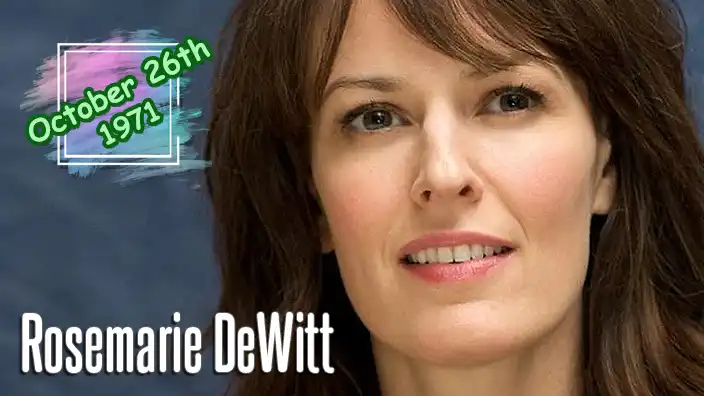
October 26, 1971, in Flushing, Queens, New York

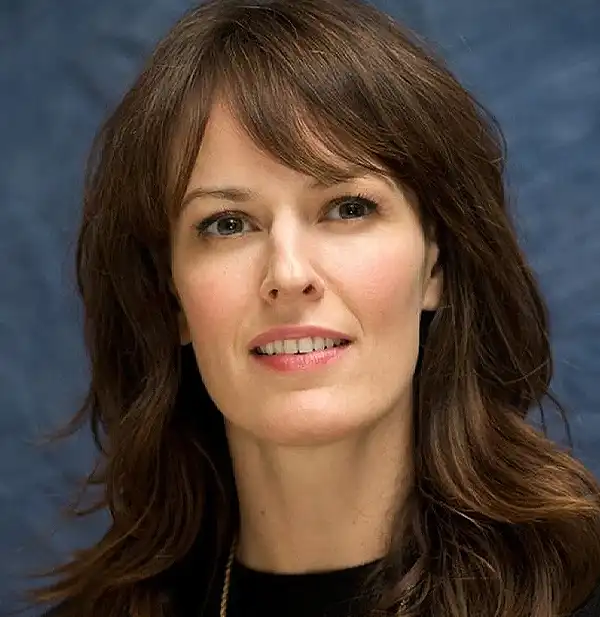
Rosemarie Braddock DeWitt, born on October 26, 1971, in Flushing, Queens, New York City, is an acclaimed American actress whose performances in film, television, and theater have established her as one of Hollywood's most versatile character performers. Best known for her award-winning portrayal of Rachel in Rachel Getting Married, her role as Charmaine Craine in the Showtime series The United States of Tara, and her appearance as Laura in the Academy Award-winning musical La La Land, DeWitt has developed a reputation for bringing emotional authenticity, intelligence, and understated humor to complicated characters. Her extensive filmography includes independent dramas, major Hollywood productions, television comedies, psychological thrillers, and acclaimed limited series. Although she has frequently appeared alongside some of the entertainment industry's biggest stars, her performances have demonstrated that commanding an audience's attention does not necessarily require occupying the center of every scene.
DeWitt grew up in New York, where her family background included an unusual connection to American sporting history. Her maternal grandfather was James J. Braddock, the professional heavyweight boxer whose extraordinary comeback during the Great Depression earned him the nickname the Cinderella Man. Braddock became heavyweight champion of the world in 1935 after defeating Max Baer, providing struggling Americans with an inspirational story during one of the nation's most difficult economic periods. DeWitt's connection to this remarkable figure would eventually play a particularly interesting role in her acting career. Most performers must search through family history for something entertaining to mention during interviews; DeWitt could point to a grandfather who had once been the heavyweight boxing champion of the world.
Her interest in performing developed during her education, eventually leading her to study creative subjects at Hofstra University on Long Island. She earned a degree in creative studies before pursuing professional acting training at the Actors Center in New York City. The city's theatrical environment provided opportunities to develop her skills through stage productions and collaboration with other performers. Unlike actors whose careers begin with immediate Hollywood recognition, DeWitt spent considerable time developing her craft in theater, where performances depend upon preparation, emotional precision, and the ability to maintain a believable character without the assistance of multiple camera takes. This foundation became particularly important to her later screen work, which frequently emphasized natural dialogue and complex personal relationships.
During her early theatrical career, DeWitt appeared in productions that included works by acclaimed playwrights and contemporary dramatists. She performed in the off-Broadway production of Small Tragedy, written by Craig Lucas, and received recognition for her stage work. The play examined the complicated relationships between individuals preparing a theatrical production, allowing DeWitt to explore the tensions and emotional contradictions that often emerge when professional responsibilities become entangled with personal ambitions. Her stage experience helped develop the subtle acting style that would later distinguish her film and television performances. She became particularly skilled at communicating emotions through small gestures, facial expressions, and changes in tone, an approach that can be far more convincing than delivering a dramatic speech every time someone forgets an anniversary.
DeWitt began appearing on television during the early 2000s, accepting smaller roles while building her professional experience. Her early credits included an appearance on Sex and the City, the influential HBO comedy-drama starring Sarah Jessica Parker, Kim Cattrall, Kristin Davis, and Cynthia Nixon. Although such appearances were relatively brief, they provided opportunities to work on established productions and become familiar with the demands of television filming. She continued pursuing theatrical opportunities while gradually developing a screen career, demonstrating the persistence required in an industry where talented performers frequently spend years waiting for substantial recognition. Her early professional development reflected a steady progression rather than an overnight transformation into celebrity.
An especially meaningful film opportunity arrived with Cinderella Man in 2005, the biographical sports drama directed by Ron Howard and starring Russell Crowe as James J. Braddock. Because Braddock was DeWitt's maternal grandfather, the production represented an unusual connection between her family history and professional ambitions. She portrayed Sara Wilson, a neighbor of the Braddock family, allowing her to participate in a film dramatizing her grandfather's remarkable boxing career. The movie examined the economic hardship of the Great Depression, the pressures experienced by struggling families, and Braddock's unexpected return to championship boxing. For DeWitt, appearing in the production provided an opportunity to contribute to the telling of a family story that had become part of American sporting folklore. It also meant that, unlike most actors researching a historical film, she could consult a rather personal family connection.
Her television breakthrough came in 2006 when she was cast as Emily Lehman in the Fox drama Standoff. The series followed professional hostage negotiators working for the FBI, combining criminal investigations with the complicated personal relationship between its central characters. DeWitt starred opposite Ron Livingston, who portrayed negotiator Matt Flannery. Their characters' professional partnership was complicated by a romantic relationship, creating opportunities for both dramatic tension and humorous exchanges. Although Standoff lasted only one season, DeWitt's performance attracted attention and demonstrated her ability to portray a capable professional navigating dangerous situations while dealing with personal uncertainty. The production also proved significant to her personal life because Livingston would later become her husband.
DeWitt subsequently appeared in the acclaimed AMC drama Mad Men, portraying Midge Daniels, an independent artist involved in a relationship with advertising executive Don Draper, played by Jon Hamm. Set during the 1960s, the series explored the American advertising industry, changing social expectations, professional ambition, and the contradictions of an era often remembered through its polished public image. Midge represented a more unconventional and artistically independent world than the corporate environment inhabited by Draper. Her relationship with him highlighted differences between bohemian culture and the carefully controlled appearances of Madison Avenue. DeWitt's portrayal brought intelligence, confidence, and vulnerability to a character whose lifestyle challenged many of the assumptions held by the show's principal characters.
Her most widely celebrated early film performance arrived in 2008 with Rachel Getting Married, directed by Jonathan Demme and written by Jenny Lumet. DeWitt portrayed Rachel, a woman preparing for her wedding while confronting the emotional turmoil created by the return of her younger sister, Kym, played by Anne Hathaway. Kym's history of addiction, personal tragedy, and strained family relationships threatens to overshadow what should be a joyful celebration. The film explores grief, resentment, forgiveness, and the difficulties of maintaining family connections when painful experiences remain unresolved. DeWitt's character must balance her desire for a meaningful wedding with the emotional demands of relatives whose unresolved conflicts repeatedly intrude upon the festivities. It is the sort of wedding where the seating arrangements are probably the least complicated problem facing the bride.
The film received widespread critical acclaim for its naturalistic performances, emotionally complicated characters, and intimate filmmaking style. DeWitt's portrayal of Rachel was particularly praised for avoiding simplistic characterizations of the responsible older sister. Her performance revealed a woman capable of compassion and resentment, affection and frustration, generosity and understandable selfishness. Rather than presenting Rachel as either a saint or an unreasonable sibling, DeWitt emphasized the contradictions that make family relationships believable. Her work earned a Satellite Award for Best Supporting Actress, along with recognition from several film critics' organizations and a nomination for the Independent Spirit Award for Best Supporting Female. The film became an important turning point in her career, establishing her as a performer capable of delivering a memorable dramatic performance within an exceptionally talented ensemble.
Following that success, DeWitt joined the Showtime comedy-drama The United States of Tara, which premiered in 2009. Created by Diablo Cody, the series starred Toni Collette as Tara Gregson, a suburban wife and mother living with dissociative identity disorder. DeWitt portrayed Charmaine Craine, Tara's younger sister, whose personal ambitions, romantic relationships, and complicated family loyalties provided important storylines throughout the series. Charmaine frequently struggled with her sister's unpredictable circumstances while attempting to establish a stable and satisfying life of her own. The character could be impatient, self-centered, affectionate, and deeply vulnerable, sometimes within the same conversation. DeWitt's performance captured these contradictions with a combination of humor and emotional honesty.
The United States of Tara ran for three seasons from 2009 to 2011 and received critical recognition for its performances and unconventional subject matter. The series explored family responsibilities, personal identity, relationships, and the difficulties experienced by individuals living with mental health conditions. Although the show's portrayal of dissociative identity disorder was dramatized for entertainment, its central family relationships provided opportunities for thoughtful and emotionally engaging storytelling. DeWitt's character frequently served as both a source of comic tension and a reminder that the experiences of one family member can profoundly affect everyone around them. Her ability to move between sharp humor and genuine emotional vulnerability made Charmaine an important part of the show's ensemble.
During this period, DeWitt continued building her film career with performances in productions including The Company Men in 2010, directed by John Wells. The drama examined the personal and economic consequences of corporate layoffs during a period of financial uncertainty, featuring Ben Affleck, Tommy Lee Jones, Chris Cooper, and Kevin Costner. DeWitt portrayed Maggie Walker, the wife of Affleck's character, Bobby, whose comfortable professional life is disrupted when he loses his job. Her performance emphasized the emotional strain that unemployment and financial insecurity can place upon a marriage and family. Rather than treating the character as merely a supporting presence, DeWitt portrayed a woman confronting practical challenges while attempting to preserve her family's stability. The role demonstrated her ability to bring credibility to stories about ordinary people experiencing extraordinary difficulties.
Another important independent film performance came in Your Sister's Sister, directed by Lynn Shelton and released in 2012. DeWitt starred alongside Emily Blunt and Mark Duplass in a story involving grief, unexpected romantic complications, and difficult personal revelations. She portrayed Hannah, the sister of Blunt's character Iris, whose encounter with Jack, played by Duplass, creates an increasingly complicated emotional situation. The film relied heavily upon intimate conversations, natural performances, and the uncomfortable consequences of impulsive decisions. DeWitt's ability to convey uncertainty, humor, affection, and emotional confusion proved particularly effective in a production emphasizing believable human behavior. The film earned her another Independent Spirit Award nomination for Best Supporting Female and contributed to her reputation as a respected performer in independent cinema.
DeWitt's growing filmography included appearances in The Odd Life of Timothy Green in 2012 and Promised Land, the environmental drama directed by Gus Van Sant and starring Matt Damon. In Promised Land, she portrayed Alice, a local schoolteacher whose relationship with a representative of a natural gas company develops against the backdrop of a community debate over hydraulic fracturing. The film explored questions involving economic opportunity, environmental protection, and the pressures experienced by rural communities facing major industrial decisions. DeWitt's character provided an important human dimension to the story, illustrating how complicated public controversies can affect individual relationships. Her performance reflected the understated realism that had become a recognizable feature of her work.
In 2014, DeWitt appeared in several notable productions, including Jason Reitman's Men, Women & Children and Michael Cuesta's Kill the Messenger. The latter film starred Jeremy Renner as journalist Gary Webb, whose investigations into drug trafficking and intelligence-related allegations generated substantial controversy. DeWitt portrayed Webb's wife, Susan, emphasizing the personal pressures experienced by a family confronting public scrutiny and professional uncertainty. She also appeared in the acclaimed HBO miniseries Olive Kitteridge, based on Elizabeth Strout's Pulitzer Prize-winning novel and starring Frances McDormand and Richard Jenkins. The production received extensive critical praise for its exploration of marriage, aging, depression, and the complicated relationships within a small Maine community. Her participation further demonstrated her ability to contribute meaningfully to sophisticated ensemble productions.
DeWitt entered the horror genre with the 2015 remake of Poltergeist, directed by Gil Kenan. She portrayed Amy Bowen, a mother whose family moves into a suburban home and discovers that its seemingly ordinary surroundings conceal supernatural dangers. Starring alongside Sam Rockwell, DeWitt helped ground the film's paranormal events in recognizable family concerns. Her character must confront increasingly frightening circumstances as mysterious forces threaten her children. Although the film received mixed reviews, the production introduced her to a different audience and demonstrated her willingness to explore genres beyond independent drama and television comedy. After years of portraying complicated family relationships, confronting an actual haunted house probably seemed like a particularly unfair addition to the domestic workload.
In 2016, DeWitt appeared in La La Land, the acclaimed musical romance written and directed by Damien Chazelle. The film starred Ryan Gosling as Sebastian Wilder, a jazz pianist pursuing his musical ambitions, and Emma Stone as Mia Dolan, an aspiring actress navigating the challenges of Hollywood. DeWitt portrayed Laura, Sebastian's sister, whose practical concerns and family loyalty provided a contrast to her brother's idealistic artistic ambitions. Although her role was relatively brief, she contributed to the film's portrayal of the personal relationships surrounding its central characters. La La Land became an international critical and commercial success, receiving fourteen Academy Award nominations and winning six Oscars. Its celebration of music, cinema, ambition, and romantic possibility introduced DeWitt's work to another enormous audience.
Her television career continued with appearances in The Last Tycoon, an Amazon drama inspired by F. Scott Fitzgerald's unfinished novel about Hollywood during the 1930s. DeWitt portrayed Rose Brady, the wife of powerful studio executive Pat Brady, played by Kelsey Grammer. The series examined the ambitions, rivalries, and personal relationships surrounding the motion picture industry during its classical studio era. Her character navigated a world in which wealth, influence, and professional opportunity were frequently intertwined with personal sacrifice. Although the series lasted only one season, it provided another opportunity for DeWitt to explore a period drama involving complicated relationships and social expectations.
DeWitt also appeared in the Netflix anthology series Black Mirror, portraying Marie in the episode "Arkangel," directed by Jodie Foster and released in 2017. The story examined a mother's decision to use advanced surveillance technology to monitor her daughter's experiences, raising questions about privacy, parental responsibility, and the unintended consequences of technological control. DeWitt's performance was central to the episode's emotional impact, portraying a parent whose protective instincts gradually become increasingly intrusive. The story reflected one of Black Mirror's recurring concerns: the possibility that technology intended to improve human life may instead create entirely new problems. It also offered a useful reminder that children generally do not appreciate their parents having unlimited access to everything they see and do.
Her subsequent work included the HBO Max limited series The Staircase in 2022, which dramatized the investigation and legal proceedings surrounding the death of Kathleen Peterson. DeWitt portrayed Candace Hunt Zamperini, Kathleen's sister, in an ensemble cast that included Colin Firth and Toni Collette. The production explored family conflict, grief, competing interpretations of evidence, and the consequences of a highly publicized criminal case. DeWitt's portrayal contributed to the series' examination of the emotional experiences of relatives caught within a prolonged and controversial investigation. Her participation continued a career pattern of selecting roles that required emotional complexity rather than relying entirely upon conventional leading-character formulas.
DeWitt also provided voice acting for the adult animated science-fiction drama Pantheon, which premiered in 2022. The series explored the possibility of uploading human consciousness into digital systems, examining the ethical and emotional consequences of technological developments that challenge conventional ideas about life and identity. She voiced Ellen Kim, a central character whose family experiences become intertwined with the program's ambitious science-fiction premise. The role demonstrated another dimension of her versatility, requiring her to communicate emotion and personality entirely through vocal performance. For an actress whose screen work frequently relies upon subtle facial expressions and physical gestures, animation presented a different creative challenge.
Her later film work included Smile 2 in 2024, the psychological supernatural horror sequel starring Naomi Scott. DeWitt portrayed Elizabeth Riley, the mother and manager of a successful pop singer whose life becomes increasingly disturbed by terrifying experiences. The role combined family tension, professional pressure, and supernatural horror, giving DeWitt another opportunity to portray a complicated maternal relationship under extraordinary circumstances. She also appeared in Out of My Mind, a 2024 drama adapted from Sharon M. Draper's novel, portraying Diane Brooks, the mother of a young girl with cerebral palsy who seeks greater recognition of her abilities and independence. The film addressed disability, communication, education, and family support, demonstrating DeWitt's continuing interest in emotionally meaningful storytelling.
In 2025, DeWitt appeared in the Netflix mystery thriller Untamed, starring Eric Bana as a federal investigator examining a death in Yosemite National Park. She portrayed Jill Bodwin, a character whose involvement added further complications to the investigation. The series combined crime drama with the dramatic natural surroundings of one of America's most famous national parks. Her recent television appearances also included the Disney+ fantasy adventure series Percy Jackson and the Olympians, in which she portrayed Circe, the enchantress from Greek mythology. The role introduced her to audiences familiar with Rick Riordan's popular novels and their imaginative world of ancient gods, monsters, and modern young heroes. Having portrayed troubled relatives, haunted mothers, and emotionally complicated professionals, stepping into Greek mythology offered a particularly entertaining change of scenery.
Away from her professional career, DeWitt has maintained a comparatively private personal life. She married actor Ron Livingston in 2009 after the two had worked together on Standoff. Livingston is widely recognized for his performances in Office Space, Band of Brothers, and Sex and the City. The couple have two adopted daughters, Gracie James and Esperanza Mae. DeWitt was previously married to actor Chris Messina, whose credits include The Mindy Project, Argo, and Sharp Objects. Although her family connections include several recognizable entertainment personalities, DeWitt has generally emphasized her work rather than making her private life a central feature of her public identity.
Throughout her career, DeWitt has demonstrated a particular talent for portraying women whose outward composure conceals complicated emotional experiences. Her characters frequently confront difficult relationships, professional uncertainty, grief, or conflicting responsibilities, yet she rarely relies upon exaggerated gestures or theatrical displays to communicate their feelings. Instead, she often emphasizes small changes in expression, pauses in conversation, and the subtle tensions that emerge between people who know one another extremely well. This naturalistic approach has made her particularly effective in independent films and character-driven television dramas, where believable performances are essential to the audience's emotional involvement.
Her achievements have also demonstrated the value of a career built upon varied roles rather than dependence upon a single television franchise or blockbuster film series. From Rachel Getting Married and Your Sister's Sister to The United States of Tara, Mad Men, La La Land, and The Staircase, DeWitt has repeatedly contributed memorable performances to productions with very different styles and ambitions. Her work has earned awards, critical recognition, and the respect of audiences who appreciate emotionally intelligent storytelling. She has also shown that supporting characters can be every bit as important as leading roles, particularly when their experiences reveal something essential about the people and relationships at the center of a story.
Rosemarie DeWitt's career reflects the enduring importance of thoughtful character acting in American film and television. Her theatrical training, natural performance style, and willingness to explore challenging material have allowed her to move comfortably between independent cinema, major Hollywood productions, television dramas, comedies, animation, and horror. Whether portraying a bride confronting painful family history, a sister navigating complicated relationships, a mother protecting her children, or a supporting character in an award-winning musical, she consistently brings authenticity and emotional depth to her performances. Her professional journey demonstrates that an accomplished actress does not need to dominate every scene to make a lasting impression. Sometimes the most memorable performance comes from the person who says relatively little but somehow makes the entire audience understand exactly what everyone else is feeling. And considering the extraordinary number of difficult family gatherings her characters have endured, Rosemarie DeWitt has certainly earned the right to attend a peaceful wedding for a change.