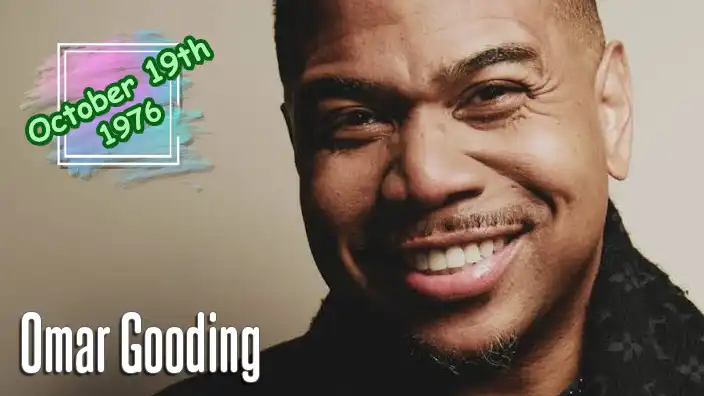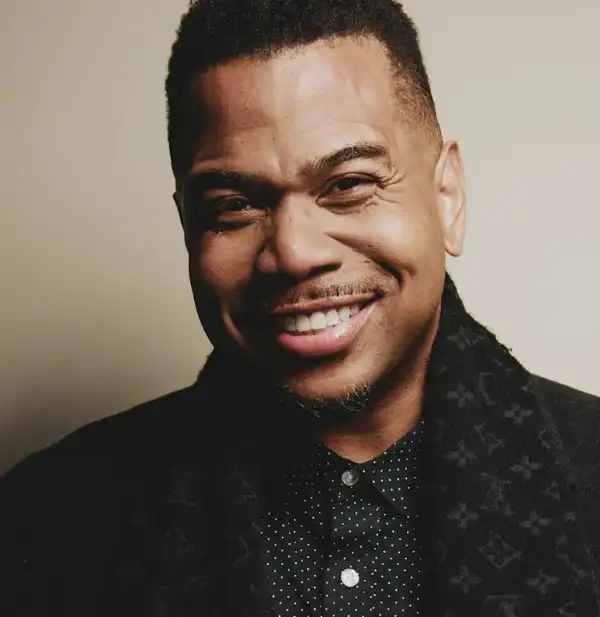
Omar Gooding is an American actor, comedian, producer, and hip-hop performer whose career has taken him from children's television to popular sitcoms, Hollywood films, and dramatic television productions. Born Omar Miles Gooding on October 19, 1976, in Los Angeles, California, he is widely recognized for playing Earvin Rodman in the ABC sitcom Hangin' with Mr. Cooper, Morris "Mo" Tibbs in Smart Guy, and Anthony Stallworth in Family Time. He also earned considerable attention for his performance as Sweetpea in director John Singleton's acclaimed drama Baby Boy. With a career encompassing comedy, drama, music, and production, Gooding has established an identity that extends well beyond his famous family connections. And considering the entertainment business was already crowded with Goodings, that was no small accomplishment.
Entertainment was a natural part of Omar Gooding's childhood. His father, Cuba Gooding Sr., was the lead singer of the successful soul and R&B group The Main Ingredient, best remembered for its 1972 hit "Everybody Plays the Fool." His mother, Shirley Sullivan, also had a musical background, while his older brother, Cuba Gooding Jr., would eventually become an Academy Award-winning actor for his performance in Jerry Maguire (1996). Growing up surrounded by music, performance, and the entertainment industry gave Omar an early appreciation for show business. Although he was born in Los Angeles, his family background and professional experiences connected him to several important centers of American entertainment. With so much musical and theatrical talent in the household, family gatherings must occasionally have resembled an audition, although presumably nobody had to pay admission.
Omar Gooding began his acting career as a child, initially appearing in educational films and commercials before securing television opportunities. His early television credits included an appearance in the popular sitcom Webster in 1988, followed by guest roles in programs such as Just the Ten of Us, Blossom, and Empty Nest. These early assignments helped him become familiar with professional television production while developing the comic timing and screen presence that would later distinguish his work. Unlike performers who enter the industry after years of formal theatrical training, Gooding gained much of his practical experience while working directly in front of cameras. Learning to deliver dialogue, respond to fellow performers, and adapt to the demands of television schedules became part of his education long before he had established himself as a recognizable star.
His feature film debut came with the supernatural comedy Ghost Dad (1990), starring Bill Cosby as a widowed father who finds himself in an unusual predicament after an accident leaves him appearing to be a ghost. Gooding played Stuart in the film, adding an early Hollywood credit to his growing résumé. Although Ghost Dad received an unfavorable critical reception, the experience provided another important opportunity for the young performer. The film also demonstrated an early willingness to work in productions combining ordinary family relationships with extraordinary circumstances, a formula that would appear repeatedly throughout his career. After all, when your first feature film involves a father who becomes a ghost, conventional family comedy can seem rather tame by comparison.
One of Omar Gooding's most memorable early television assignments arrived when he became a host of Nickelodeon's Wild & Crazy Kids, which premiered in 1990. The children's game show featured teams competing in unusual outdoor contests, messy challenges, and energetic activities designed to entertain young audiences. Gooding was among the show's original hosts, helping guide contestants through competitions that frequently involved water, mud, food, and the occasional complete abandonment of dignity. The program became a recognizable part of Nickelodeon's early 1990s programming, combining youthful enthusiasm with the sort of organized chaos that children generally appreciate far more than their parents. Gooding's natural energy and approachable personality made him well suited to the format, and his work earned recognition from the Young Artist Awards.
The popularity of Wild & Crazy Kids helped establish Omar Gooding as a familiar television personality, but his next major opportunity would introduce him to a broader family audience. In 1992, he joined the cast of ABC's Hangin' with Mr. Cooper, a sitcom starring comedian Mark Curry as Mark Cooper, a former professional basketball player who becomes a substitute teacher and high school basketball coach. The series followed Cooper's efforts to navigate the demands of teaching, coaching, friendship, and everyday life, often with results that suggested classroom management was considerably more difficult than professional basketball. Gooding portrayed Earvin Rodman, one of Cooper's students, whose youthful enthusiasm and comic interactions contributed to the show's school-based storylines.
Hangin' with Mr. Cooper aired from 1992 to 1997 and became a recognizable part of ABC's family comedy programming during the decade. Its cast included Holly Robinson Peete, Dawnn Lewis, Sandra Quarterman, and Raven-Symoné at various points during the series. The show combined humor with stories about friendship, education, relationships, and the challenges of growing up. Gooding's character, Earvin Rodman, helped provide a younger perspective, particularly in scenes involving Cooper's responsibilities as a teacher and mentor. His performances demonstrated a comfortable understanding of sitcom comedy, including the importance of timing, reactions, and the ability to make ordinary school situations entertaining. For viewers who remember the show, Earvin remains one of the characters associated with its lively classroom atmosphere. And considering Mr. Cooper's difficulties maintaining order, it is probably fortunate that television teachers do not have to submit weekly disciplinary reports to the audience.
While working on Hangin' with Mr. Cooper, Gooding continued developing his career and appeared in other television productions, including The Royal Family and Thea. His work during this period helped establish him as a dependable young performer capable of contributing to ensemble comedies. The transition from child actor to adult performer can be particularly difficult in Hollywood, where audiences often associate young actors with the characters they played during their earliest successes. Gooding approached this transition by accepting varied assignments and gradually expanding the types of roles he portrayed. His ability to move between youthful comedy and more mature material would become increasingly important as his career developed.
Following Hangin' with Mr. Cooper, Omar Gooding joined another successful family sitcom, Smart Guy, which aired on The WB from 1997 to 1999. The series starred Tahj Mowry as T.J. Henderson, an exceptionally intelligent child who advances through school and attends high school alongside students considerably older than himself. Jason Weaver portrayed T.J.'s older brother Marcus, while Gooding played Morris "Mo" Tibbs, Marcus's outgoing and frequently mischievous best friend. The comedy explored the difficulties of fitting in, family relationships, friendship, and the awkward social situations created when a young genius attempts to navigate teenage life.
Gooding's portrayal of Mo Tibbs became one of the most entertaining elements of Smart Guy. Mo was confident, friendly, and enthusiastic, although his judgment did not always match his confidence. His friendship with Marcus produced numerous comic situations, particularly when the pair became involved in schemes that seemed perfectly sensible until reality intervened. Gooding and Jason Weaver developed an effective comic partnership, using contrasting personalities and natural chemistry to create believable teenage friendships. While T.J. Henderson supplied much of the show's intellectual brilliance, Mo frequently demonstrated that common sense and academic intelligence were not necessarily distributed equally among the students. The series developed a loyal following, and Gooding's performance remains one of his best-known television roles.
As the 1990s drew to a close, Omar Gooding continued expanding his professional experience with appearances in Zoe, Duncan, Jack & Jane and voice acting assignments in animated productions such as Batman Beyond and Static Shock. Voice acting presented a different challenge from live-action performance, requiring actors to communicate personality, emotion, and dramatic tension without relying on facial expressions or physical movement. These assignments demonstrated another aspect of Gooding's versatility and allowed him to participate in the growing popularity of animated superhero television. His willingness to explore different forms of entertainment reflected a career that was becoming increasingly varied rather than remaining confined to conventional sitcom roles.
A significant turning point arrived in 2001 when Gooding appeared in John Singleton's drama Baby Boy, starring Tyrese Gibson, Taraji P. Henson, Ving Rhames, and Snoop Dogg. The film examined the experiences of Jody Summers, a young man struggling with responsibility, relationships, fatherhood, and the difficult transition into adulthood. Gooding portrayed Sweetpea, Jody's close friend, whose loyalty, impulsiveness, and increasingly serious circumstances contribute to the film's exploration of friendship and personal choices. Unlike the cheerful sitcom characters associated with Gooding's earlier television career, Sweetpea existed in a world where decisions could carry dangerous and irreversible consequences.
Gooding's performance in Baby Boy received favorable attention for its emotional credibility and intensity. Sweetpea was not simply a comic companion or background character; he represented an important part of the social environment surrounding Jody and contributed to the film's examination of masculinity, friendship, and personal responsibility. Gooding brought a combination of humor, vulnerability, and dramatic conviction to the role, helping audiences understand a character whose behavior could be both entertaining and deeply troubling. The film demonstrated that Gooding could move successfully beyond family comedy into serious dramatic storytelling. It also placed him in a production directed by John Singleton, whose earlier film Boyz n the Hood had helped establish Cuba Gooding Jr. as a major Hollywood talent. Evidently, Singleton had an eye for recognizing acting ability within the Gooding family.
Following Baby Boy, Gooding continued accepting television roles that allowed him to explore more mature characters. He appeared in the UPN sitcom One on One, portraying Malik, and in the ESPN drama Playmakers (2003), playing professional football player Demetrius "D.H." Harris. Playmakers examined the pressures, conflicts, and personal struggles of athletes competing in professional football, presenting a dramatic perspective on a sport often associated with wealth, fame, and public admiration. Gooding's character was a talented but troubled player whose behavior reflected the difficulties of managing professional expectations and personal ambition. The role required a more physically demanding performance and demonstrated his ability to portray characters whose problems could not be solved with a clever sitcom punchline.
In 2005, Gooding took on another recognizable role when he starred as Calvin Palmer Jr. in Showtime's Barbershop: The Series, based on the popular film franchise. The character had originally been portrayed by Ice Cube in the theatrical films, placing Gooding in the challenging position of taking over a role already strongly associated with another performer. Set in a Chicago barbershop, the series explored relationships, neighborhood life, business difficulties, and the lively conversations that develop when people gather in a familiar community establishment. Gooding brought his own interpretation to Calvin, balancing the responsibilities of running a business with the personalities and disagreements of customers and employees. The setting offered plenty of opportunities for humor, because few places encourage more confident opinions about absolutely everything than a busy neighborhood barbershop.
Gooding's performance in Barbershop: The Series earned him an NAACP Image Award nomination for Outstanding Actor in a Comedy Series. The recognition reflected his continuing development as a leading television performer and his ability to carry a production built around an established entertainment franchise. The series also reinforced his connection to stories emphasizing community, family relationships, and everyday American life. Although the program had a relatively brief run, it added another notable role to a career already encompassing several successful television comedies.
His dramatic television work also included an appearance in HBO's acclaimed Western series Deadwood, where he portrayed Odell during the show's third season. Set in the lawless mining settlement of Deadwood, South Dakota, during the 1870s, the series was known for its complex characters, historical atmosphere, and unusually colorful dialogue. Gooding's participation placed him within a critically acclaimed ensemble drama that differed considerably from his earlier family television work. The role further demonstrated his willingness to explore demanding dramatic material and historical settings, adding another dimension to his professional résumé.
In 2010, Gooding joined the CBS medical drama Miami Medical, portraying Tuck Brody, a member of a team of medical professionals working in a trauma center. The series followed doctors and medical personnel treating patients with serious and life-threatening injuries, emphasizing the pressures of emergency medicine and the personal relationships among hospital staff. Gooding's character contributed to the show's ensemble dynamic, providing opportunities for both dramatic intensity and lighter interpersonal moments. Although Miami Medical lasted only one season, it represented another example of Gooding's ability to adapt to different television genres, moving from classrooms and barbershops to an environment where a bad day could involve considerably more than an unhappy customer.
One of Omar Gooding's most substantial later television successes came with the family sitcom Family Time, which premiered in 2012. Created by Bentley Kyle Evans, the series centered on the Stallworth family, whose circumstances change dramatically after winning a lottery jackpot. Gooding starred as Anthony "Tony" Stallworth, a husband and father attempting to adjust to sudden financial prosperity while maintaining a relatively normal family life. Angell Conwell portrayed his wife, Lisa, reuniting the two performers after their earlier appearance together in Baby Boy. The series combined traditional family comedy with stories about marriage, parenting, money, friendship, and the everyday complications of raising children.
Family Time provided Gooding with an opportunity to play a central character in a long-running television comedy, drawing upon the experience he had accumulated since his early appearances on Nickelodeon and ABC. Anthony Stallworth was a devoted family man whose good intentions did not always prevent him from making questionable decisions. The show's humor frequently developed from misunderstandings, household disagreements, and the realization that sudden wealth does not automatically produce wisdom. Gooding's performance balanced his established comic abilities with a more mature portrayal of marriage and fatherhood, helping the series develop a recognizable identity. The program ran through 2020, becoming an important part of his later television career.
Beyond Family Time, Gooding continued appearing in television productions, independent films, and projects exploring contemporary American life. His credits include the historical crime drama Unsolved: The Murders of Tupac and the Notorious B.I.G., which examined investigations into the deaths of two influential hip-hop artists. He has also worked on numerous independent productions, often accepting roles that allow him to explore relationships, crime, family conflicts, and personal redemption. His extensive screen credits reflect a willingness to remain active across different parts of the entertainment industry rather than concentrating exclusively on major studio productions.
In 2023, Gooding appeared in the Disney Channel comedy series Saturdays, which followed a young roller-skating enthusiast and her friends as they pursued their ambitions at a local skating rink. The series introduced him to another generation of family television viewers, continuing a connection with youth-oriented entertainment that began during his Nickelodeon years. His participation also demonstrated the longevity of his career, linking the energetic children's programming of the early 1990s with contemporary family comedy. For audiences who remembered watching him on Wild & Crazy Kids, seeing him return to entertainment aimed at younger viewers provided an enjoyable reminder of how much television had changed while Gooding continued working within it.
Acting is only one part of Omar Gooding's creative career. He has also pursued music as a hip-hop performer under the stage name Big O, recording and releasing material that reflects his interest in rap and contemporary urban music. His musical background connects naturally to his family heritage, particularly the success of his father in the soul music industry. However, Gooding's approach has been distinctly his own, favoring hip-hop rather than attempting to reproduce the musical style of The Main Ingredient. His album The Excuse, released in 2019, represented an important step in developing his recording career. He has also worked on music projects and performances alongside other entertainers, demonstrating that his creative interests extend beyond television scripts and film sets.
Gooding has additionally appeared in theatrical productions, including Redemption of a Dogg, a stage musical associated with rapper Snoop Dogg. The production combined music, storytelling, and theatrical performance, allowing Gooding to draw upon his experience in both acting and hip-hop. His participation illustrated how performers with varied backgrounds can move between entertainment formats, combining dramatic storytelling with musical performance. For someone raised in a family where singing and acting were everyday occupations, the opportunity to bring both disciplines together was a natural extension of his professional interests.
His work behind the camera has included producing and writing, adding further responsibilities to an already extensive entertainment career. These activities provide creative opportunities beyond interpreting characters written by others, allowing him to participate in the development and production of projects. Independent film and television production can be particularly demanding, requiring performers to balance artistic ambitions with practical considerations such as financing, scheduling, and distribution. Gooding's involvement in different aspects of production reflects an understanding of the entertainment business developed through decades of professional experience.
Omar Gooding's personal life has also included marriage and fatherhood. He and his wife, Mia Vogel, have two sons, Omar Dari Gooding Jr. and Miles Christian Gooding. His family relationships provide an interesting connection to the fatherhood and domestic responsibilities portrayed in several of his television roles, particularly Family Time. Although public attention frequently focuses on his professional achievements and famous relatives, Gooding has spoken about the importance of pursuing his own creative interests and establishing an individual identity within the entertainment industry.
Throughout his career, Omar Gooding has received recognition for his work, including Young Artist Award honors associated with his early television appearances and an NAACP Image Award nomination for Barbershop: The Series. His professional accomplishments reflect a career built through steady employment, adaptability, and the willingness to explore different genres. While his brother Cuba Gooding Jr. achieved international recognition through major Hollywood films, Omar developed a particularly strong presence in television, establishing memorable characters across multiple generations of American programming. Their careers illustrate two different paths through the same demanding industry, each shaped by individual opportunities and creative choices.
Omar Gooding's birthday on October 19 offers an opportunity to celebrate an entertainer whose career began with children's television and developed into an extensive collection of comedic, dramatic, and musical accomplishments. From the lively classrooms of Hangin' with Mr. Cooper to the friendship and family comedy of Smart Guy, the emotional intensity of Baby Boy, and the domestic adventures of Family Time, Gooding has repeatedly demonstrated his ability to connect with audiences through recognizable and engaging characters. His work as a hip-hop performer, producer, and stage entertainer further illustrates a creative life that refuses to remain confined to one occupation. And while the Gooding family has certainly contributed its share of talent to American entertainment, Omar has shown that there is always room for another performer willing to work hard, try something different, and occasionally make a television audience laugh until the neighbors complain.