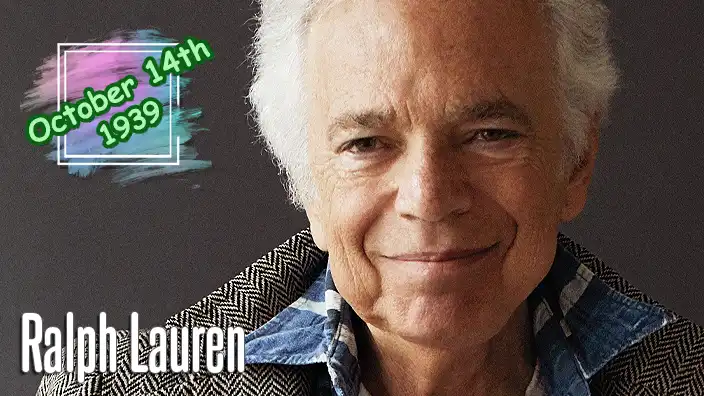
October 14, 1939, in the Bronx, New York City
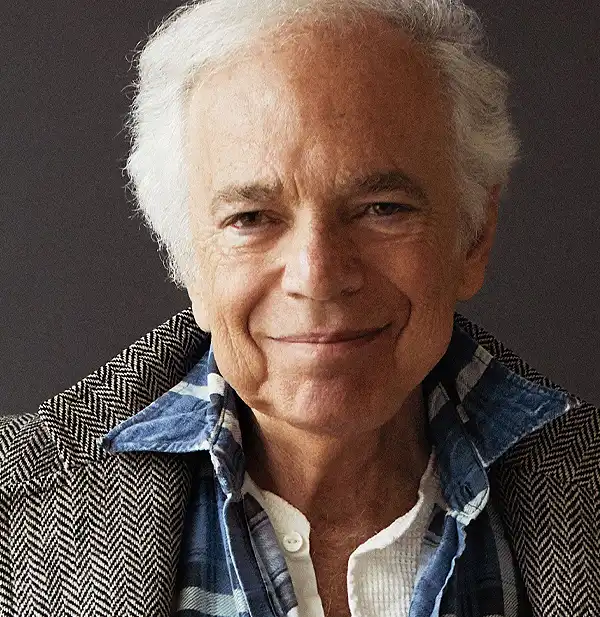
Born Ralph Lifshitz on October 14, 1939, in the Bronx, New York City, Ralph Lauren became one of the most influential American fashion designers and entrepreneurs of the modern era. As the founder of the Ralph Lauren Corporation and creator of the internationally recognized Polo Ralph Lauren brand, he transformed an interest in classic clothing into a business encompassing men's and women's fashion, fragrances, accessories, home furnishings, and luxury lifestyle products. His distinctive designs have helped define American preppy fashion, combining elements of traditional tailoring, sporting culture, Hollywood glamour, and the romantic imagery of the American West.
Lauren's remarkable journey began far from the elegant department stores and fashionable country estates that would eventually inspire his collections. He grew up in a working-class family in the Bronx, the son of Frank and Fraydl Lifshitz, Jewish immigrants from Eastern Europe. His father worked as a house painter, and the family lived modestly in a neighborhood where practicality generally mattered more than fashionable appearances. Nevertheless, young Ralph developed a fascination with clothing, movies, and the glamorous lifestyles portrayed on the silver screen. While other youngsters dreamed of becoming baseball players or movie stars, he was increasingly interested in how those stars dressed when they arrived at the ballpark or stepped out of a limousine.
The Hollywood films of the 1930s and 1940s provided some of Lauren's earliest fashion inspiration. He admired the sophisticated clothing worn by actors such as Cary Grant and Fred Astaire, whose carefully tailored suits and effortless elegance represented a world far removed from his Bronx surroundings. These images helped shape his understanding of clothing as something more than a practical necessity. To Lauren, fashion could communicate personality, confidence, ambition, and an imagined way of life. The ability of a well-cut jacket or carefully chosen tie to suggest an entire story fascinated him, and that interest eventually became central to his approach to design.
As a teenager, Lauren developed a reputation for taking an unusual interest in his appearance. He attended DeWitt Clinton High School and experimented with clothing that reflected his admiration for classic American and European styles. During his adolescence, he and his brother Jerry adopted the surname Lauren, replacing Lifshitz. The change occurred years before his fashion business began and became part of the personal identity he carried into his professional career. Although he would later become associated with extraordinary wealth and luxury, his early experiences gave him an understanding of how clothing could allow people to express aspirations beyond their immediate circumstances.
After high school, Lauren attended Baruch College, where he studied business but did not complete a degree. He subsequently served in the United States Army from 1962 to 1964, gaining experience in an institution where uniforms, presentation, and attention to detail were important parts of daily life. Following his military service, he worked in clothing retail, including a position at Brooks Brothers, before entering the neckwear business. These early jobs provided practical experience in merchandising, customer preferences, and the commercial realities of selling clothing. Lauren did not attend a formal fashion design school, but he developed his understanding of style through observation, experimentation, and direct involvement in the industry.
The turning point came in 1967 when Lauren began designing men's neckties while working with the manufacturer Beau Brummell. At a time when narrow ties were fashionable, he introduced wider designs inspired by the elegance of earlier decades. His ties featured distinctive fabrics, rich colors, and patterns that departed from prevailing trends. He launched the collection under the name Polo, choosing a word associated with sporting tradition, refinement, and an aspirational lifestyle. Working from a small space in the Empire State Building, he personally promoted his designs and delivered merchandise to retailers. The operation was modest, but Lauren had already begun developing the visual identity that would eventually become one of the most recognizable in international fashion.
The early success of his neckties encouraged Lauren to expand into a complete men's clothing collection in 1968. His designs emphasized classic tailoring, natural fabrics, relaxed elegance, and clothing inspired by traditional American and British styles. Rather than following every new fashion trend, Lauren preferred garments that suggested continuity and timeless appeal. His collections drew inspiration from country estates, university campuses, equestrian sports, and the sophisticated wardrobes of classic Hollywood. The resulting aesthetic helped popularize a distinctive interpretation of American preppy style, combining casual clothing with elements of traditional luxury.
A major breakthrough came when Bloomingdale's began carrying his designs and subsequently established a dedicated Polo by Ralph Lauren boutique within its New York department store. This arrangement allowed Lauren to present his clothing as a coordinated collection rather than a series of unrelated garments. He took an active interest in the store's appearance, ensuring that displays, furnishings, and merchandise communicated the atmosphere he wanted customers to associate with the brand. The concept was significant because it demonstrated that fashion retail could sell an entire lifestyle rather than simply individual products. Customers were not merely purchasing a jacket; they were being invited into a carefully constructed world where every room apparently contained polished wood, leather furniture, and someone who knew how to play polo.
In 1971, Lauren introduced his first women's designs, beginning with tailored shirts inspired by men's clothing. The collection also marked the appearance of the embroidered polo player emblem, which initially appeared on the cuffs of women's shirts. The following year, the company introduced the now-famous Polo shirt, a cotton mesh garment featuring the small embroidered polo player on the chest. Available in a variety of colors, the shirt became an enduring symbol of casual American fashion. Its popularity helped establish the Polo Ralph Lauren identity across generations, transforming a relatively simple garment into an internationally recognized fashion product.
Lauren's approach to women's fashion reflected his belief that classic menswear could provide inspiration for elegant, practical clothing. His collections included tailored jackets, trousers, shirts, knitwear, and dresses that combined traditional craftsmanship with relaxed American styling. The influence of riding clothes, country-house fashion, and collegiate wardrobes became particularly visible in his designs. By presenting women's clothing with the same attention to quality and detail associated with his menswear, Lauren helped expand the company's appeal while maintaining a consistent visual identity.
Hollywood soon provided another important opportunity for Lauren's designs to reach international audiences. In 1974, his clothing was used extensively in the film adaptation of The Great Gatsby, starring Robert Redford and Mia Farrow. The production required costumes that reflected the elegance and extravagance of the 1920s, making Lauren's interpretation of classic American style particularly appropriate. He also designed a pink suit specifically for Redford's portrayal of Jay Gatsby. The film strengthened Lauren's association with sophisticated period-inspired fashion and demonstrated how cinema could influence public perceptions of clothing and luxury.
His connection with Hollywood continued through the 1977 romantic comedy Annie Hall, directed by Woody Allen and starring Diane Keaton. Keaton's character became famous for her unconventional combination of masculine-inspired clothing, including ties, waistcoats, oversized jackets, and relaxed trousers. Ralph Lauren garments contributed to the film's distinctive wardrobe, although Keaton's personal style and the film's costume design were also essential influences. The resulting look became widely associated with the changing direction of women's fashion during the late 1970s. Lauren's clothing had once again reached audiences through a memorable cinematic character, proving that a carefully chosen tie could occasionally attract almost as much attention as the dialogue.
During the late 1970s and early 1980s, the Ralph Lauren brand expanded into additional clothing categories and international markets. The company introduced fragrances, including the women's fragrance Lauren and the men's fragrance Polo in 1978. These products extended the brand's identity beyond clothing and allowed customers to participate in the Ralph Lauren lifestyle through a different form of luxury merchandise. The company also developed children's clothing, accessories, and additional fashion collections, creating a broad commercial presence while maintaining the distinctive imagery associated with its founder.
In 1981, Ralph Lauren opened a store on London's New Bond Street, marking an important stage in the company's international expansion. The location introduced British customers to an American interpretation of traditional elegance that had itself been influenced partly by British country-house culture. The relationship was rather amusing: an American designer inspired by British aristocratic fashion was now selling his interpretation of that style back to the British. Nevertheless, the combination proved commercially appealing, and the company's international presence continued to grow.
Lauren expanded his lifestyle concept further in 1983 with the introduction of Ralph Lauren Home. The collection included bedding, furniture, fabrics, decorative accessories, and other products intended to bring the brand's distinctive atmosphere into residential interiors. This development reflected Lauren's belief that fashion and interior design were closely connected expressions of personal taste. A customer who admired his clothing might also appreciate a bedroom decorated with traditional fabrics, polished wood, and carefully coordinated furnishings. The company was no longer simply offering something to wear; it was offering a complete environment in which to live.
One of Lauren's most ambitious retail achievements came in 1986 with the opening of his flagship store in the historic Rhinelander Mansion on Madison Avenue in New York City. The building's grand architecture provided an ideal setting for the brand's carefully developed atmosphere of heritage and luxury. Rather than creating a conventional department store environment, Lauren transformed the mansion into an immersive retail experience featuring elegant rooms, traditional furnishings, and coordinated merchandise. The project influenced luxury retail design by demonstrating how a store could function as a physical expression of a designer's identity and philosophy.
The company's growth continued throughout the 1990s with the introduction and expansion of additional collections, including Polo Sport, Purple Label, and other lines aimed at different customers and markets. Polo Sport reflected the growing popularity of athletic-inspired casual clothing, while Purple Label emphasized luxury tailoring, premium materials, and traditional craftsmanship. The company's range allowed it to serve customers seeking everything from relatively accessible casual garments to expensive formal clothing. Through these collections, Lauren developed a business model that combined broad commercial recognition with the prestige associated with high-end fashion.
In 1997, the Ralph Lauren Corporation became a publicly traded company on the New York Stock Exchange. The public offering marked another significant stage in the transformation of Lauren's original necktie business into a major international fashion enterprise. Although the company now operated on a far larger scale than its founder could have managed personally, Lauren remained closely involved in its creative direction and public identity. His understanding of branding, visual presentation, and consumer aspirations continued to influence the company's advertising, product development, and retail strategy.
Lauren's influence extended into restaurants and hospitality, where the company developed dining establishments that reflected its distinctive design philosophy. The RL Restaurant in Chicago opened in 1999, followed by additional dining ventures, including Ralph's in Paris and The Polo Bar in New York City. These establishments incorporated traditional furnishings, carefully designed interiors, and menus intended to complement the brand's lifestyle identity. For customers who had already purchased Ralph Lauren clothing, fragrances, and home furnishings, the restaurants provided an opportunity to experience the atmosphere in another setting. Apparently, the only remaining challenge was deciding whether the waiter should arrive on horseback.
Sports have played an important role in Ralph Lauren's designs and promotional partnerships. The company has developed relationships with major sporting events, including Wimbledon, and has supplied uniforms for the United States Olympic and Paralympic teams. Beginning with the 2008 Beijing Olympics, Ralph Lauren became an official outfitter of Team USA, producing clothing for athletes participating in international ceremonies and related activities. These collections frequently incorporate traditional American colors, tailored silhouettes, and references to sporting heritage. The partnership has continued through subsequent Olympic Games, including the 2024 Summer Olympics in Paris.
Lauren's personal interests have also influenced his designs, particularly his enthusiasm for classic automobiles. He has assembled an internationally recognized collection of rare and historically important cars, including vehicles produced by Ferrari, Bugatti, Mercedes-Benz, and other manufacturers. His collection has been exhibited publicly, including at the Musée des Arts Décoratifs in Paris in 2011. Lauren has often approached automobile design with the same appreciation for craftsmanship, proportion, materials, and visual character that informs his clothing collections. To him, an elegant automobile and a beautifully tailored suit can represent similar principles of design, although one generally requires rather more garage space.
His personal life has remained closely associated with his family. Lauren married Ricky Ann Loew-Beer on December 20, 1964, and the couple have three children: Andrew, David, and Dylan. Andrew Lauren has worked in film production, David Lauren has held senior leadership positions within the Ralph Lauren Corporation, and Dylan Lauren founded Dylan's Candy Bar, a confectionery business known for its colorful retail environments. The family's involvement in creative and entrepreneurial ventures reflects the broad interests that have characterized Ralph Lauren's own career.
Beyond his business achievements, Lauren has supported charitable initiatives involving cancer research, treatment, and healthcare access. In 1989, he helped establish the Nina Hyde Center for Breast Cancer Research at Georgetown University Medical Center in memory of The Washington Post fashion editor Nina Hyde. He subsequently supported additional cancer-related programs, including the Ralph Lauren Center for Cancer Care in Harlem, New York. The company's Pink Pony initiative, introduced in 2000, has raised awareness and supported efforts to improve access to cancer care. These activities have become an important part of the company's philanthropic work.
Lauren's contributions to fashion have been recognized through numerous professional honors. He has received awards from the Council of Fashion Designers of America, including recognition for his lifetime achievements and influence on American design. In 2019, he became the first American fashion designer to receive an honorary knighthood from the United Kingdom, acknowledging his contributions to fashion and transatlantic cultural relationships. The honor was particularly appropriate for a designer whose work had drawn so much inspiration from British tailoring and traditional country-house style.
In January 2025, Lauren received the Presidential Medal of Freedom, the highest civilian honor awarded by the United States government. The recognition acknowledged his contributions to American fashion, entrepreneurship, and philanthropy. His career has demonstrated how a distinctive creative vision can influence not only clothing but also international perceptions of American culture. From classic polo shirts to luxury eveningwear, his designs have become familiar symbols of a particular interpretation of American elegance and aspiration.
Although Lauren stepped down as chief executive officer of the Ralph Lauren Corporation in 2015, he continued serving as executive chairman and chief creative officer, retaining an important role in the company's design philosophy and long-term identity. His influence remains visible in collections that draw inspiration from traditional American clothing, Western landscapes, sporting culture, and the enduring appeal of carefully made garments. While the fashion industry continually introduces new trends, Lauren's approach has generally emphasized recognizable styles that can be adapted rather than completely reinvented each season.
The Ralph Lauren brand has also faced the challenges common to major international fashion companies, including changing consumer preferences, competition, questions surrounding manufacturing practices, and growing concerns about environmental sustainability. The company has introduced programs addressing responsible sourcing, environmental impact, and product longevity, while continuing to operate within an industry frequently criticized for its resource consumption. These issues illustrate the complexity of maintaining a global fashion business while responding to evolving expectations about corporate responsibility.
Ralph Lauren's influence on American fashion extends beyond individual garments or seasonal collections. He helped popularize a style that combined traditional tailoring, sportswear, casual elegance, and carefully constructed lifestyle imagery. His designs contributed to the international recognition of American preppy fashion while also incorporating influences from Western clothing, maritime traditions, equestrian sports, and classic Hollywood. The brand's ability to move between casual clothing and luxury fashion has been central to its enduring commercial identity.
His career also offers an unusual example of entrepreneurial development. Lauren began with a relatively narrow product category, recognized the commercial possibilities of a consistent design identity, and gradually expanded that identity across numerous markets. His success depended not only on designing attractive clothing but also on understanding how customers responded to images, stories, and ideas about personal style. By maintaining recognizable visual themes, he created a brand that could encompass clothing, home furnishings, fragrances, restaurants, and sporting partnerships without completely losing its original character.
From a modest childhood in the Bronx to international fashion runways and prestigious awards, Ralph Lauren's life reflects decades of creative ambition, business development, and an enduring fascination with classic style. His designs have influenced the way Americans dress, how luxury clothing is marketed, and how fashion companies communicate an entire lifestyle through their products. His work has also helped make the embroidered polo player one of the most familiar symbols in modern clothing.
Ralph Lauren's story began with a young man who admired elegant clothes and believed he could offer something different from the prevailing fashions of his day. That belief eventually developed into an international business recognized across generations and continents. The original neckties may have been wider than fashionable convention suggested, but they helped establish a creative direction that would shape an extraordinary career. And if there is one particularly amusing lesson in his success, it is that a young fellow from the Bronx managed to persuade much of the world that a tiny embroidered horse was an excellent reason to buy a shirt.