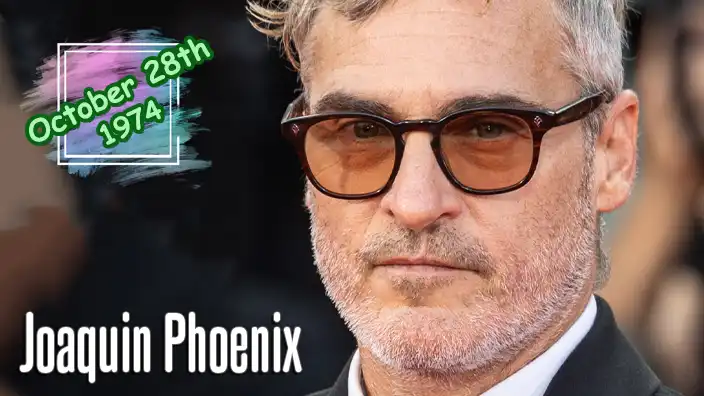
October 28, 1974, in San Juan, Puerto Rico

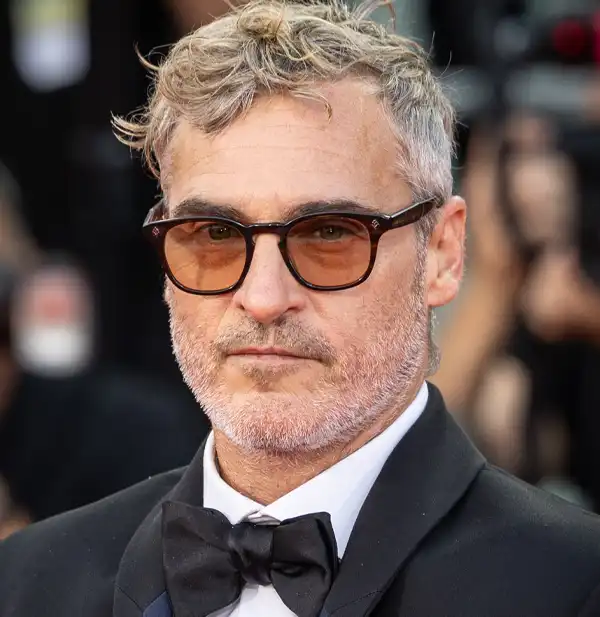
Joaquin Rafael Phoenix was born on October 28, 1974, in San Juan, Puerto Rico, into a family whose extraordinary journey would eventually lead several of its children into the entertainment industry. Born Joaquin Rafael Bottom, he was the son of John Lee Bottom and Arlyn Dunetz, American parents who were involved with the religious movement known as the Children of God. His early childhood was far removed from the comfortable Hollywood upbringing sometimes associated with successful actors. Instead, his family traveled through parts of Central and South America while his parents worked as missionaries. These experiences exposed Phoenix to different cultures and an unconventional lifestyle long before he understood that his future would involve international movie premieres, Academy Awards, and portraying some of cinema's most psychologically complicated characters.
During the late 1970s, Joaquin's parents became disillusioned with the Children of God movement and left the organization. The family eventually returned to the United States and adopted the surname Phoenix, symbolizing a new beginning inspired by the mythical bird rising from its ashes. Joaquin briefly changed his first name to Leaf, reportedly because he wanted a nature-inspired name like those of his siblings. His older brother River and sisters Rain, Liberty, and Summer were all part of a close-knit family that encouraged creativity and artistic expression. The children frequently performed music and entertained one another, developing skills that would later help several of them establish careers in acting. Joaquin eventually returned to his birth name, perhaps realizing that Hollywood already had enough unusual names without adding another Leaf to the collection.
The Phoenix family settled in the Los Angeles area, where the children began pursuing entertainment opportunities. Joaquin and his siblings performed on television and appeared in commercials, gradually gaining experience in front of cameras. His earliest acting appearances included television programs such as Seven Brides for Seven Brothers and The Fall Guy, while his first feature film role came in the 1986 science-fiction adventure SpaceCamp. In that movie, he played Max Graham, a young boy who becomes involved in an unexpected space adventure when a group of students accidentally launches aboard a space shuttle. Although the film did not establish him as a major star, it provided valuable experience and introduced audiences to a young performer with an expressive personality and natural screen presence.
Phoenix continued developing his acting abilities during the late 1980s, appearing in the adventure film Russkies (1987) and Ron Howard's family comedy-drama Parenthood (1989). In Parenthood, he portrayed Garry Buckman-Lampkin, a withdrawn teenager struggling with emotional difficulties and complicated family relationships. The film featured an impressive ensemble cast, including Steve Martin, Dianne Wiest, Jason Robards, and Keanu Reeves. Phoenix's sensitive performance attracted attention and demonstrated his ability to communicate difficult emotions without relying on exaggerated dialogue or theatrical gestures. Even at this early stage, he appeared particularly comfortable portraying troubled individuals, a professional specialty that would eventually make him one of Hollywood's most distinctive leading actors.
During his teenage years, Phoenix temporarily stepped away from acting, seeking a life outside the constant demands of the entertainment industry. However, his family experienced a devastating tragedy on October 31, 1993, when his older brother River Phoenix died following a drug overdose outside the Viper Room nightclub in West Hollywood. River had already established himself as one of the most promising young actors of his generation, earning critical recognition for films including Stand by Me, Running on Empty, and My Own Private Idaho. Joaquin was present during the emergency and made the call to emergency services. The tragedy deeply affected the family and attracted intense media attention, particularly after the emergency recording became public. Phoenix has generally preferred to discuss his brother's life and artistic influence rather than allow the circumstances of his death to define River's memory.
Joaquin Phoenix returned to feature films with Gus Van Sant's dark comedy To Die For (1995), starring Nicole Kidman as an ambitious television personality whose obsession with fame leads to increasingly dangerous behavior. Phoenix portrayed Jimmy Emmett, a troubled teenager manipulated into participating in a murder plot. His unsettling performance revealed a remarkable ability to portray vulnerability, confusion, and moral uncertainty within the same character. The film earned critical praise and helped reestablish Phoenix as a serious young actor capable of handling challenging material. Rather than pursuing conventional leading-man roles, he increasingly gravitated toward unconventional characters whose emotional conflicts and questionable decisions offered opportunities for more demanding performances.
Throughout the late 1990s, Phoenix appeared in several films that expanded his professional range. He starred in Inventing the Abbotts (1997), a romantic drama exploring class differences and family relationships, and appeared in Oliver Stone's crime thriller U Turn (1997). He also delivered notable performances in Return to Paradise (1998), Clay Pigeons (1998), and 8MM (1999), the latter starring Nicolas Cage. These projects allowed him to explore characters living on the margins of society, frequently confronting difficult moral choices or emotionally destructive situations. Although the films achieved varying degrees of commercial success, Phoenix developed a reputation among filmmakers as an actor willing to take creative risks and approach uncomfortable subject matter without hesitation.
His international breakthrough arrived in 2000 with Ridley Scott's historical epic Gladiator, in which Phoenix portrayed the Roman emperor Commodus opposite Russell Crowe's heroic general Maximus Decimus Meridius. The film followed Maximus as he sought revenge against the corrupt emperor responsible for the murder of his family and the destruction of his military career. Phoenix's Commodus was insecure, jealous, manipulative, and increasingly dangerous, a ruler whose enormous political power was matched only by his desperate need for approval. Rather than portraying the emperor as a simple villain, Phoenix emphasized his emotional instability and craving for affection, creating a disturbing character who could appear pathetic one moment and terrifying the next. His performance earned an Academy Award nomination for Best Supporting Actor and helped establish him as an internationally recognized star. It also demonstrated that a Roman emperor could possess unlimited authority while still behaving like a thoroughly spoiled child.
The enormous success of Gladiator opened new opportunities for Phoenix, who continued choosing projects that challenged conventional expectations. In 2000, he appeared in The Yards, a crime drama directed by James Gray, and Quills, a historical drama inspired by the Marquis de Sade. He later starred in M. Night Shyamalan's science-fiction thriller Signs (2002), portraying Merrill Hess, a former minor-league baseball player whose family encounters mysterious crop circles and an apparent extraterrestrial invasion. Acting alongside Mel Gibson, Phoenix brought humor and emotional warmth to a story filled with suspense and uncertainty. His character's memorable confrontation with an alien also demonstrated that a baseball bat could occasionally be useful for something other than baseball, although Major League Baseball has yet to introduce an official extraterrestrial division.
Phoenix worked with Shyamalan again in The Village (2004), portraying Lucius Hunt, a quiet and courageous young man living in an isolated community surrounded by a mysterious forest. The film explored fear, secrecy, and the lengths people will go to protect themselves from perceived danger. Phoenix's restrained performance suited the character's thoughtful personality and demonstrated his ability to create emotional intensity without dominating every scene. During this period, he also appeared in Ladder 49 (2004), playing firefighter Jack Morrison in a drama about the dangers and sacrifices associated with firefighting. The film allowed Phoenix to portray a more conventional heroic character, proving that he could occasionally play someone whose problems did not require an entire team of psychiatrists.
One of the most important achievements of Joaquin Phoenix's career came with Walk the Line (2005), the biographical musical drama about legendary country singer Johnny Cash. Directed by James Mangold, the film followed Cash's early career, his rise to fame, struggles with addiction, and complicated relationship with singer June Carter, portrayed by Reese Witherspoon. Phoenix undertook extensive preparation for the role, learning to sing and play guitar while studying Cash's distinctive voice, mannerisms, and stage presence. Rather than relying on recordings of the real singer, Phoenix performed the musical numbers himself, delivering convincing interpretations of Cash classics. His performance earned the Golden Globe Award for Best Actor in a Motion Picture – Musical or Comedy and an Academy Award nomination for Best Actor. The film also won him a Grammy Award as a principal performer on its soundtrack. For someone whose professional career began with acting, becoming an award-winning country music performer was quite an impressive sideline.
Following Walk the Line, Phoenix continued exploring dramatic roles in films such as We Own the Night (2007), Reservation Road (2007), and Two Lovers (2008). In We Own the Night, he portrayed Bobby Green, a nightclub manager caught between his criminal connections and his family's involvement in law enforcement. The film reunited him with director James Gray and demonstrated his ability to portray characters divided by conflicting loyalties. In Two Lovers, he played Leonard Kraditor, a troubled young man torn between two romantic relationships while struggling with his mental health. His performance received critical praise for its emotional authenticity and understated vulnerability, reinforcing his reputation as an actor particularly skilled at portraying people whose internal struggles are often more dramatic than the events surrounding them.
In 2008, Phoenix surprised the entertainment industry by announcing that he intended to retire from acting and pursue a career in hip-hop music. He subsequently appeared in public with an enormous beard, sunglasses, and increasingly eccentric behavior, creating widespread speculation about his personal circumstances. His notoriously uncomfortable appearance on Late Show with David Letterman in 2009 became a memorable television moment, with Letterman responding to Phoenix's peculiar manner with increasingly bewildered humor. The entire episode was eventually revealed to be part of I'm Still Here (2010), a mockumentary directed by Casey Affleck that explored celebrity culture, public perception, and the media's appetite for sensational stories. Although the project received mixed reactions, it demonstrated Phoenix's willingness to blur the boundaries between performance and reality. It also proved that growing a beard and refusing to answer straightforward questions could generate an astonishing amount of publicity.
Phoenix returned to conventional dramatic filmmaking with Paul Thomas Anderson's The Master (2012), portraying Freddie Quell, a troubled World War II veteran who becomes involved with a charismatic leader named Lancaster Dodd, played by Philip Seymour Hoffman. The film explored psychological trauma, manipulation, identity, and the attraction of belief systems promising certainty and belonging. Phoenix delivered an extraordinarily physical performance, using unusual posture, facial expressions, and speech patterns to convey his character's emotional instability. His work earned widespread critical acclaim, the Volpi Cup for Best Actor at the Venice International Film Festival, and another Academy Award nomination for Best Actor. The film reinforced his reputation as one of the most fearless performers working in contemporary cinema, capable of transforming himself into characters who seemed to exist far beyond the boundaries of ordinary Hollywood storytelling.
In 2013, Phoenix starred in Spike Jonze's romantic science-fiction drama Her, portraying Theodore Twombly, a lonely writer who develops an emotional relationship with an artificial intelligence operating system voiced by Scarlett Johansson. Set in a near-future Los Angeles, the film examined loneliness, intimacy, technology, and the changing nature of human relationships. Phoenix's sensitive performance gave emotional credibility to an unusual love story in which one of the central characters had no physical body. His portrayal captured the awkwardness, hope, and vulnerability of a man searching for meaningful connection in an increasingly digital world. The film received critical acclaim and became particularly memorable for its thoughtful examination of artificial intelligence. It also raised the uncomfortable possibility that future romantic relationships might involve arguments about software updates.
Phoenix continued working with respected filmmakers in The Immigrant (2013), directed by James Gray, and Inherent Vice (2014), directed by Paul Thomas Anderson. In Inherent Vice, he portrayed Larry "Doc" Sportello, a perpetually bewildered private investigator navigating a complicated mystery in 1970s California. Based on Thomas Pynchon's novel, the film combined detective fiction, dark comedy, and an intentionally confusing narrative that suited Phoenix's ability to portray eccentric characters. He later appeared in Woody Allen's Irrational Man (2015), playing a philosophy professor whose personal dissatisfaction leads him toward a dangerous moral decision. These films demonstrated Phoenix's continuing interest in unconventional stories and filmmakers willing to challenge audiences rather than provide comfortable, predictable entertainment.
In 2017, Phoenix delivered another critically acclaimed performance in Lynne Ramsay's psychological thriller You Were Never Really Here, portraying Joe, a traumatized military veteran who rescues victims of human trafficking while struggling with his own psychological wounds. The role required considerable physical and emotional commitment, with Phoenix presenting a character whose violence concealed profound personal suffering. His performance earned the Best Actor award at the Cannes Film Festival, further strengthening his international reputation. He subsequently portrayed cartoonist John Callahan in Don't Worry, He Won't Get Far on Foot (2018), directed by Gus Van Sant, exploring the artist's experiences with disability, addiction, and recovery. That same year, Phoenix appeared as Jesus in Mary Magdalene and starred alongside John C. Reilly in the Western The Sisters Brothers, demonstrating once again his willingness to move between dramatically different subjects.
The defining performance of Phoenix's later career arrived with Joker (2019), directed by Todd Phillips. Set in a fictionalized Gotham City, the film explored the transformation of Arthur Fleck, an isolated and psychologically troubled aspiring comedian, into the notorious Batman villain known as the Joker. Phoenix approached the character as a deeply damaged individual struggling with poverty, rejection, and mental illness, creating a disturbing portrait of alienation and escalating violence. His preparation included substantial weight loss and the development of a distinctive physical style, including the character's unsettling laughter and unpredictable movements. Rather than imitating previous portrayals of the Joker, Phoenix created an interpretation that emphasized psychological realism and social isolation. The film became a major commercial success, earning more than $1 billion worldwide and attracting extensive discussion about its themes and portrayal of violence.
Phoenix's performance in Joker earned him the Academy Award for Best Actor in 2020, along with a Golden Globe, BAFTA Award, and Screen Actors Guild Award. His acceptance speech at the Academy Awards reflected his longstanding interest in social justice, environmental concerns, and animal welfare. The victory represented a major milestone in a career already filled with acclaimed performances, confirming his status among Hollywood's most respected dramatic actors. His portrayal also joined a distinguished history of actors interpreting the Joker, including Jack Nicholson, Heath Ledger, and Mark Hamill, although Phoenix's version was notably darker and more psychologically unsettling. The character's sinister laughter became instantly recognizable, demonstrating that a comedian who rarely tells a successful joke can nevertheless become one of cinema's most unforgettable figures.
Following his Academy Award victory, Phoenix starred in Mike Mills' black-and-white drama C'mon C'mon (2021), portraying Johnny, a radio journalist who unexpectedly becomes responsible for caring for his young nephew. The film offered a gentler and more emotionally intimate performance than his work in Joker, exploring family relationships, childhood, responsibility, and the difficulties of communicating across generations. Phoenix received praise for his natural interactions with young actor Woody Norman, creating a believable relationship filled with affection, frustration, and gradual understanding. The film demonstrated that his greatest strength was not simply portraying extreme or psychologically disturbed characters, but finding emotional truth in ordinary human experiences.
In 2023, Phoenix starred in Ari Aster's surreal psychological comedy-drama Beau Is Afraid, portraying Beau Wassermann, an anxious man whose journey to visit his mother becomes an increasingly bizarre series of frightening and absurd encounters. The film combined dark humor, fantasy, psychological horror, and an unconventional narrative structure, making it one of the most unusual projects of his career. Phoenix's performance captured the character's overwhelming fear and emotional vulnerability while navigating situations that frequently defied logic. The film divided audiences and critics, but it further demonstrated his commitment to challenging material. Anyone expecting a relaxing family road-trip comedy quickly discovered that Beau's travel arrangements made even the worst airline delay seem like a pleasant afternoon.
That same year, Phoenix reunited with director Ridley Scott for Napoleon (2023), portraying French military leader and emperor Napoleon Bonaparte. The historical epic examined Napoleon's rise to power, military campaigns, political ambitions, and turbulent relationship with his wife Joséphine, portrayed by Vanessa Kirby. Phoenix brought his characteristic intensity and unpredictability to the role, emphasizing the contradictions between Napoleon's extraordinary military achievements and his complicated personal behavior. The film featured elaborate battle sequences, impressive production design, and a sometimes unconventional interpretation of historical events. His reunion with Scott also provided an interesting connection to Gladiator, bringing Phoenix back into the world of powerful historical rulers whose ambitions frequently caused considerable inconvenience to everyone around them.
Phoenix returned to the role of Arthur Fleck in Joker: Folie à Deux (2024), again working with director Todd Phillips. The sequel introduced Lady Gaga as Lee Quinzel and incorporated musical sequences into its exploration of Arthur's psychological state and relationship with his growing public image. The film departed significantly from the tone and structure of its predecessor, generating divided reactions from critics and audiences. Although it did not repeat the extraordinary commercial success of the original Joker, Phoenix remained committed to exploring the character's emotional contradictions and disturbing circumstances. The sequel demonstrated that even an Academy Award-winning performance cannot guarantee that audiences will embrace every creative direction, particularly when a notorious comic-book villain suddenly finds himself involved in musical numbers.
In 2025, Phoenix appeared in Eddington, a contemporary Western and dark satirical thriller directed by Ari Aster. Set in a fictional New Mexico town during the COVID-19 pandemic, the film featured Phoenix as Sheriff Joe Cross, whose conflict with the town's mayor, played by Pedro Pascal, escalates amid political tensions, conspiracy theories, and social unrest. The ensemble also included Emma Stone and Austin Butler. The project reunited Phoenix with Aster following Beau Is Afraid and continued his exploration of troubled individuals caught in increasingly chaotic circumstances. Its blend of contemporary political satire, psychological tension, and dark humor reflected Phoenix's continuing preference for projects that challenge conventional storytelling and provoke discussion.
Outside his professional career, Phoenix has maintained a relatively private personal life despite decades of international fame. He developed a relationship with actress Rooney Mara after working with her on Her and later reconnecting during the production of Mary Magdalene. The couple became engaged and have two children, including a son named River in honor of Phoenix's late brother. Their relationship has attracted public interest, although both performers generally avoid discussing intimate family matters in interviews. Phoenix's preference for privacy contrasts with the emotionally exposed characters he frequently portrays on screen, suggesting that after spending his working hours inhabiting troubled fictional personalities, a peaceful home life may be particularly appealing.
Animal welfare and environmental activism have remained important parts of Phoenix's public identity. Raised in a family that adopted veganism during his childhood, he has maintained a longstanding commitment to avoiding animal products and supporting animal rights organizations. He has worked with People for the Ethical Treatment of Animals (PETA) and participated in documentaries examining animal agriculture and the treatment of animals, including Earthlings (2005) and Dominion (2018). His advocacy has also extended to environmental protection and sustainable living. During his 2020 Academy Award acceptance speech, he discussed humanity's relationship with the natural world and encouraged greater compassion toward animals and other people. His activism has occasionally attracted controversy, but it remains a consistent feature of his life outside filmmaking.
Joaquin Phoenix's approach to acting is frequently described as intense, immersive, and deeply committed to character development. He has repeatedly demonstrated a willingness to alter his physical appearance, learn specialized skills, and explore difficult emotional experiences to create convincing performances. His preparation for Walk the Line required musical training, while Joker involved a dramatic physical transformation and extensive work developing Arthur Fleck's distinctive mannerisms. However, Phoenix's performances are not simply exercises in physical transformation. His greatest achievements often emerge from his ability to communicate vulnerability, insecurity, and emotional conflict beneath the outward behavior of characters who might otherwise appear frightening, unpleasant, or impossible to understand.
Throughout his career, Phoenix has resisted becoming associated with a single genre or familiar screen persona. His filmography includes historical epics, romantic dramas, psychological thrillers, musical biographies, science-fiction stories, dark comedies, and independent productions. He has worked with directors including Ridley Scott, Paul Thomas Anderson, James Gray, Spike Jonze, Gus Van Sant, Lynne Ramsay, and Ari Aster, demonstrating a particular attraction to filmmakers with distinctive artistic visions. His performances have earned major industry honors, including an Academy Award, Golden Globe Awards, a BAFTA Award, a Grammy Award, and recognition at international film festivals. These achievements reflect both his individual talent and his willingness to pursue projects that other actors might consider too unusual or commercially uncertain.
The enduring appeal of Joaquin Phoenix lies partly in his unpredictability. Audiences rarely know exactly what to expect when his name appears in a film's credits, except that the performance is likely to involve considerable emotional intensity and an unusually complicated character. Whether portraying a jealous Roman emperor, a legendary country singer, a lonely writer in love with artificial intelligence, or a troubled comedian descending into madness, Phoenix consistently brings depth and individuality to his work. His ability to make difficult characters compelling has established him as one of the most distinctive actors of his generation.
From his unconventional childhood and early television appearances to his Academy Award-winning performance in Joker, Joaquin Phoenix has followed a remarkable path through the entertainment industry. His career has been shaped by artistic ambition, personal tragedy, professional reinvention, and an enduring commitment to challenging roles. Rather than pursuing fame through predictable blockbuster formulas, he has built a reputation for performances that provoke thought, inspire debate, and occasionally leave audiences wondering what on earth they have just witnessed. Hollywood has produced many accomplished leading men, but relatively few have made being gloriously unpredictable into such a successful profession. Joaquin Phoenix has managed precisely that, and cinema is considerably more interesting because of it.