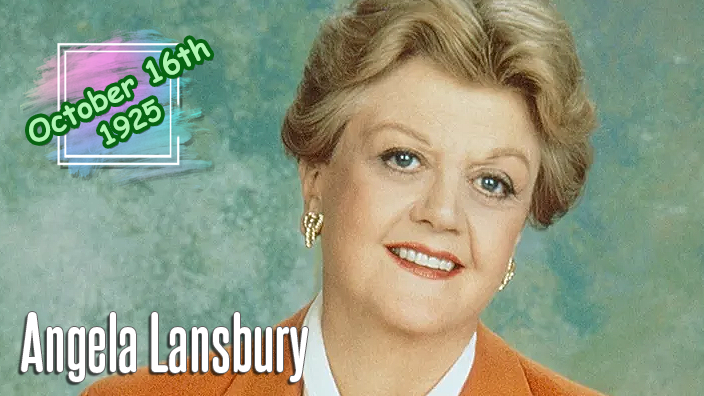
October 16, 1925, in Regent's Park, England
 October 11, 2022, in Los Angeles, California
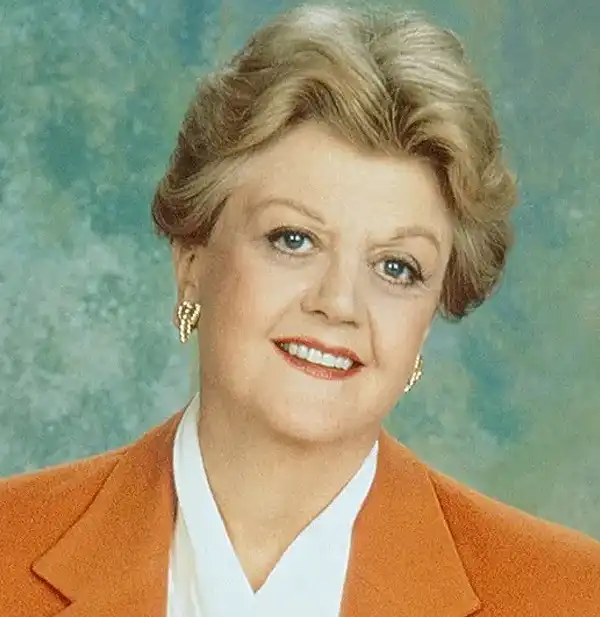
Born Angela Brigid Lansbury on October 16, 1925, in Regent's Park, London, England, Dame Angela Lansbury became one of the most recognizable and respected performers in entertainment history. Her career encompassed motion pictures, television, musical theater, and voice acting, earning her international acclaim and a devoted following across generations. Although audiences often remember her as Jessica Fletcher, the sharp-minded mystery writer from Murder, She Wrote, Lansbury's achievements extended far beyond the fictional crime-ridden streets of Cabot Cove, Maine. She was an accomplished dramatic actress, a commanding Broadway performer, and a singer whose unmistakable voice brought warmth and personality to some of entertainment's most beloved characters.
Angela Lansbury was born into a family with strong connections to politics, theater, and public life. Her mother, Moyna Macgill, was an Irish actress, while her father, Edgar Lansbury, was a British politician and businessman. Her paternal grandfather was George Lansbury, a prominent Labour Party politician who served as the party's leader during the 1930s. Angela's childhood was shaped by the creative influence of her mother and the political interests of her extended family. Following her father's death in 1935, she developed an increasingly strong interest in acting. She studied at the Webber Douglas School of Singing and Dramatic Art in London before the Second World War disrupted everyday life and encouraged her family to seek greater security overseas.
In 1940, Lansbury, her mother, and her younger brothers traveled to North America, eventually settling in the United States. Angela continued her dramatic training in New York before moving to Los Angeles, where her mother hoped to establish herself in the film industry. Hollywood proved remarkably receptive to the young actress, although her first major opportunity came through a role that demanded considerably more menace than audiences might have expected from a newcomer. In 1944, she appeared in the psychological thriller Gaslight, starring Ingrid Bergman and Charles Boyer. Lansbury portrayed Nancy Oliver, a calculating young maid whose behavior added another layer of tension to the unsettling story. Her performance earned an Academy Award nomination for Best Supporting Actress, establishing her as a formidable screen talent almost immediately.
Her second film, National Velvet (1944), featured Elizabeth Taylor and further strengthened Lansbury's standing in Hollywood. She followed this success with The Picture of Dorian Gray (1945), portraying Sibyl Vane, a tragic young actress whose life becomes entangled with the film's mysterious central character. This performance brought Lansbury another Academy Award nomination for Best Supporting Actress and a Golden Globe Award. Two Oscar nominations so early in a career would have been enough to satisfy many performers, but Lansbury was only beginning a professional journey that would eventually encompass an extraordinary variety of roles.
During the late 1940s and throughout the 1950s, Angela Lansbury appeared in numerous Hollywood productions, often portraying characters considerably more mature than herself. Studios recognized her ability to convey authority, sophistication, and emotional complexity, frequently casting her as mothers, older women, or formidable supporting characters. Her credits included The Harvey Girls (1946), alongside Judy Garland, The Three Musketeers (1948), Samson and Delilah (1949), and The Long, Hot Summer (1958). Although this typecasting occasionally limited her opportunities as a conventional leading lady, it also encouraged her to develop an unusually broad acting range. She became a performer capable of making even relatively small supporting roles memorable.
One of Lansbury's most celebrated film performances came in the political thriller The Manchurian Candidate (1962), directed by John Frankenheimer. Playing Eleanor Iselin, the manipulative mother of a Korean War veteran portrayed by Laurence Harvey, she delivered a chilling portrayal of ambition, psychological control, and political ruthlessness. Her character remains one of cinema's most disturbing maternal figures, a woman whose idea of family loyalty came with some particularly alarming conditions. The performance earned Lansbury her third Academy Award nomination for Best Supporting Actress and another Golden Globe Award. It also demonstrated her ability to transform an apparently respectable character into someone genuinely terrifying without relying on theatrical exaggeration.
While her Hollywood career flourished, Angela Lansbury increasingly found opportunities on the stage. She made her Broadway debut in Hotel Paradiso in 1957, but her transformation into a major musical theater star arrived with Mame in 1966. Playing the flamboyant, unconventional Mame Dennis, Lansbury captivated audiences with her comic timing, dramatic confidence, and powerful musical performances. The production became a Broadway sensation, and Lansbury won her first Tony Award for Best Actress in a Musical. The role allowed her to display an exuberance that Hollywood had rarely permitted, and she embraced it enthusiastically. Suddenly, the actress who had spent years portraying stern mothers and dangerous women was commanding Broadway with songs, laughter, and an infectious appetite for life.
Broadway continued to provide Lansbury with some of her greatest professional achievements. She won additional Tony Awards for Dear World (1969), Gypsy (1975), and Sweeney Todd: The Demon Barber of Fleet Street (1979). Her portrayal of Mrs. Lovett in Stephen Sondheim's darkly comic musical Sweeney Todd became particularly celebrated. As the resourceful pie-shop owner who assists a murderous barber in disposing of his victims, Lansbury balanced macabre humor with extraordinary musical precision. The role required a performer capable of making the grotesque entertaining, and Lansbury approached it with the confidence of someone who understood that even the most questionable business practices could benefit from a cheerful sales pitch. Her interpretation remains an important part of Broadway history.
In 1984, Angela Lansbury began the television role that would introduce her to an entirely new international audience. Murder, She Wrote premiered on CBS with Lansbury starring as Jessica Fletcher, a widowed former English teacher who becomes a successful mystery novelist and amateur detective. Living in the fictional coastal community of Cabot Cove, Maine, Fletcher possessed an extraordinary talent for finding herself near suspicious deaths and an even greater talent for identifying the perpetrators. The series combined traditional mystery storytelling with Lansbury's warmth, intelligence, and understated humor. Jessica Fletcher was neither a conventional police investigator nor an action hero. She relied instead on observation, common sense, careful questioning, and an almost supernatural ability to notice when someone was telling a particularly unconvincing story.
Murder, She Wrote ran for 12 seasons, from 1984 until 1996, becoming one of American television's most successful mystery dramas. Lansbury appeared in all 264 episodes and received 12 consecutive Primetime Emmy Award nominations for Outstanding Lead Actress in a Drama Series for her performance. Remarkably, she never won an Emmy for the role, despite the show's popularity and her consistently acclaimed work. She did, however, receive four Golden Globe Awards for her portrayal of Jessica Fletcher. The series also attracted an impressive collection of guest stars, including established Hollywood performers and emerging television actors. Its enduring appeal rested largely on Lansbury's ability to make Fletcher believable, likable, and reassuringly intelligent, even when the murder rate around her seemed capable of alarming an entire metropolitan police department.
Although Murder, She Wrote occupied much of her professional life during the 1980s and 1990s, Lansbury continued to appear in films and other television productions. She played Miss Marple in The Mirror Crack'd (1980), another mystery involving an exceptionally observant woman with a talent for investigating suspicious deaths. Her film appearances also included Disney's Bedknobs and Broomsticks (1971), in which she portrayed Eglantine Price, an apprentice witch who uses magic to assist children during the Second World War. The musical fantasy became a favorite among families, combining live action, animation, memorable songs, and Lansbury's delightfully determined performance. As Miss Price, she demonstrated that fighting the Nazis with an enchanted flying bed was an entirely reasonable wartime strategy, provided one had mastered the necessary incantations.
Another defining role arrived with Disney's animated musical Beauty and the Beast (1991). Lansbury provided the voice of Mrs. Potts, the kindly housekeeper transformed into a teapot by a magical curse. Her performance of the title song, composed by Alan Menken with lyrics by Howard Ashman, became one of the film's most memorable moments. Lansbury's gentle delivery gave the song an intimate, comforting quality that contrasted beautifully with the film's elaborate animation and sweeping orchestration. Beauty and the Beast won the Academy Award for Best Original Song, and Mrs. Potts became one of Disney's most recognizable supporting characters. The performance introduced Lansbury's voice to children who had never encountered her Broadway productions or television mysteries, ensuring that another generation would recognize her unmistakable vocal warmth.
Her later film work included Anastasia (1997), in which she voiced the Dowager Empress Marie, and Nanny McPhee (2005), where she portrayed the formidable Great-Aunt Adelaide. She also appeared in Mr. Popper's Penguins (2011), Mary Poppins Returns (2018), and Glass Onion: A Knives Out Mystery (2022), in which she made a brief cameo appearance as herself. These appearances illustrated her continued connection with audiences and filmmakers across different eras of entertainment. Whether playing a stern relative, an animated royal figure, or a beloved veteran performer, Lansbury retained the distinctive screen presence that had helped establish her reputation decades earlier.
Angela Lansbury also returned triumphantly to Broadway later in her career. In 2007, she appeared in Terrence McNally's play Deuce, earning a Tony Award nomination. Two years later, she won her fifth competitive Tony Award for her performance as Madame Arcati in a revival of Noël Coward's Blithe Spirit. Her portrayal of the eccentric spiritual medium brought fresh energy to a classic theatrical comedy and reminded audiences that Lansbury's command of the stage remained undiminished. She later appeared in a revival of A Little Night Music and continued performing in theatrical productions in Britain, Australia, and North America. In 2022, the Tony Awards presented her with a Special Tony Award for Lifetime Achievement in the Theatre, recognizing her exceptional contribution to the performing arts.
Throughout her career, Lansbury received numerous honors reflecting her achievements in film, television, and theater. In 2013, the Academy of Motion Picture Arts and Sciences presented her with an Honorary Academy Award in recognition of her distinguished career. In 2014, she was appointed Dame Commander of the Order of the British Empire (DBE) for services to drama and charitable work. The honor formally recognized the remarkable accomplishments of an actress whose professional identity bridged Britain and the United States. Her other distinctions included Kennedy Center Honors, a BAFTA Fellowship, and a place among the entertainment industry's most respected performers.
Away from the spotlight, Angela Lansbury maintained a strong commitment to her family. She married actor Richard Cromwell in 1945, although the marriage ended in divorce the following year. In 1949, she married British actor and producer Peter Shaw, with whom she shared a long marriage until his death in 2003. Together they raised their children, Anthony and Deirdre, along with Shaw's son David from an earlier relationship. Family responsibilities remained important to Lansbury even during the busiest periods of her career. She spoke openly about the challenges of balancing professional ambition with parenting, particularly during the difficult years when her children faced personal struggles. Her willingness to prioritize family stability reflected a practical determination that audiences often recognized in the characters she portrayed.
Lansbury was also known for her professionalism, discipline, and remarkable work ethic. Colleagues frequently praised her preparation and her ability to approach demanding roles with enthusiasm and precision. She maintained a strong appreciation for theatrical tradition while remaining willing to embrace new audiences, new formats, and changing entertainment tastes. Her success was not built on a single recognizable character or a brief period of popularity. Instead, she repeatedly reinvented herself, moving from Hollywood supporting actress to Broadway musical star, television icon, and beloved voice performer. Few entertainers have managed such transitions with comparable consistency.
Dame Angela Lansbury died on October 11, 2022, in Los Angeles, California, just days before her birthday. Her death brought tributes from performers, theater organizations, filmmakers, and admirers around the world. Her legacy includes unforgettable performances, major theatrical achievements, and characters that continue to entertain audiences through film screenings, television reruns, streaming services, and stage revivals. From the sinister Eleanor Iselin to the exuberant Mame Dennis, the delightfully wicked Mrs. Lovett, the gentle Mrs. Potts, and the endlessly resourceful Jessica Fletcher, Lansbury demonstrated the extraordinary possibilities available to a performer who refused to be confined to one genre or generation. For millions of viewers, she will always be the woman who could enter a quiet Maine village, discover a murder, identify the culprit, and still find time to finish another bestselling novel.