October 25, 1989, in Canberra, Australia

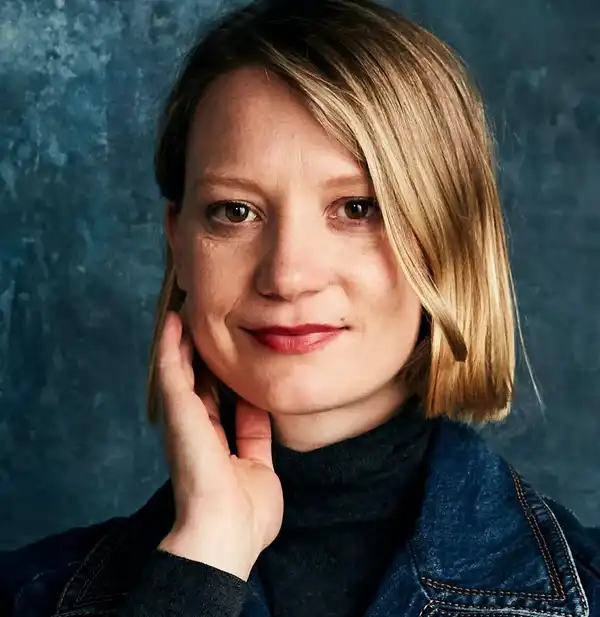
Mia Wasikowska was born on October 25, 1989, in Canberra, Australia, where she grew up in a creative household that encouraged artistic exploration and independent thinking. Her mother, Marzena Wasikowska, is a photographer of Polish heritage, while her father, John Reid, is an Australian photographer and artist. Both parents worked in the visual arts, creating an environment in which photography, artistic expression, and imaginative observation were everyday parts of family life. Mia grew up alongside her siblings, Jess and Dan, and developed an early appreciation for the relationship between creativity and personal expression. Her family background also provided a connection to Poland, where she spent time during childhood while her mother pursued photographic projects. These experiences exposed her to different cultures and encouraged the curiosity that would later influence her approach to acting. Although she would eventually become internationally recognized for portraying one of literature's most adventurous heroines, her early childhood was relatively ordinary, involving school, family activities, and the occasional artistic experiment. The talking rabbits and disappearing cats would arrive considerably later.
During her childhood, Wasikowska developed a strong interest in classical ballet, beginning formal training at an early age and eventually pursuing the discipline with considerable seriousness. She attended dance classes and participated in demanding training programs that required extensive practice, physical endurance, and precise control of movement. By her early teens, she was spending many hours each week studying ballet, hoping to pursue a professional career as a dancer. Her training included work at the Canberra Dance Development Centre and participation in programs associated with professional dance education. Ballet provided an important foundation for her later acting career, developing her understanding of physical expression, emotional communication, and the importance of disciplined preparation. However, the demands of professional dance training also exposed her to the intense pressures associated with performance, particularly the emphasis on technical perfection and physical appearance. Over time, Wasikowska began questioning whether ballet offered the creative freedom she wanted. Her growing interest in storytelling and character development eventually encouraged her to explore acting, a profession in which emotional complexity could be more important than achieving the perfect pirouette.
Wasikowska's transition from ballet to acting began during her teenage years, when she became fascinated with European cinema and the performances of actors who communicated emotion through subtle gestures and naturalistic behavior. She developed a particular appreciation for films featuring emotionally complex characters and understated performances, discovering that acting offered opportunities to explore human behavior in ways that differed from the structured discipline of classical dance. At approximately fifteen, she began contacting Australian talent agencies and pursuing professional auditions, demonstrating considerable determination despite having limited formal acting experience. Her unusual name, pronounced approximately "Mee-ah Vah-shee-KOV-ska," reflected her Polish family heritage and initially presented a challenge for some casting professionals. Nevertheless, her distinctive appearance, quiet confidence, and natural screen presence quickly attracted attention. Unlike performers who approach acting primarily as a route to celebrity, Wasikowska appeared particularly interested in the creative possibilities of the profession. Her early ambition was not necessarily to become famous, but to participate in films that explored interesting characters and meaningful stories. That attitude would remain an important characteristic of her career, even after Hollywood began offering opportunities involving considerably larger budgets and more elaborate costumes.
Her first professional television role came in 2004 when she appeared in the Australian medical drama All Saints, marking the beginning of her screen career. The following year, she joined the cast of the Australian television series Suburban Mayhem—though her first major film work would actually come in the 2006 feature of that name—while continuing to develop her acting abilities through auditions and smaller projects. Her early screen performances attracted attention because of their naturalism and emotional restraint, qualities that distinguished her from more theatrical young performers. Wasikowska demonstrated an ability to communicate complicated feelings without relying on exaggerated dialogue or dramatic gestures, a style that would become increasingly important in her later work. Her ballet training contributed to her physical awareness and controlled movements, while her interest in photography helped her understand how small changes in expression could communicate meaning on camera. These qualities made her particularly suitable for characters whose emotions were not always openly expressed. In an industry where performers are frequently encouraged to make everything bigger, louder, and more dramatic, Wasikowska was discovering the considerable power of doing precisely the opposite.
Her first feature film appearance came in Suburban Mayhem, directed by Paul Goldman and released in 2006. The dark Australian comedy-drama explored crime, family dysfunction, and the destructive behavior of a young woman living in suburban New South Wales. Wasikowska played Lilya, a supporting character whose presence contributed to the film's unsettling portrait of contemporary suburban life. Although her role was relatively small, the production provided valuable experience working with professional filmmakers and introduced her to the demands of feature-length storytelling. She subsequently appeared in September (2007), an Australian drama directed by Peter Carstairs, and Rogue (2007), a horror thriller involving a group of tourists threatened by a giant crocodile in the Australian wilderness. These early projects allowed her to explore different genres and develop her professional confidence. They also provided an appropriately Australian introduction to international cinema: before Wasikowska encountered Wonderland's imaginary creatures, she had already participated in a film featuring an animal that was considerably less interested in conversation.
Wasikowska's international breakthrough began with her casting in the first season of In Treatment, the acclaimed HBO psychological drama starring Gabriel Byrne as psychotherapist Paul Weston. Premiering in 2008, the series followed the therapist's sessions with different patients, exploring their emotional struggles through intimate conversations and carefully observed performances. Wasikowska portrayed Sophie, a young gymnast dealing with serious psychological difficulties and complicated family relationships. The role demanded exceptional emotional sensitivity, requiring her to communicate vulnerability, defensiveness, anger, and confusion within scenes that often consisted almost entirely of dialogue. Her performance attracted considerable critical attention, establishing her as a promising young actress capable of handling sophisticated dramatic material. Working opposite Byrne also provided valuable experience in a production where subtle changes in expression and tone carried much of the narrative. The series introduced Wasikowska to American audiences and demonstrated that she could deliver a compelling performance without elaborate costumes, special effects, or dramatic action sequences. For an actress who would soon find herself surrounded by digitally animated Wonderland creatures, the experience of sitting in a therapist's office and discussing human emotions proved an invaluable foundation.
Her growing reputation led to additional film opportunities, including Defiance (2008), directed by Edward Zwick and starring Daniel Craig and Liev Schreiber. The historical drama told the story of Jewish resistance fighters who helped protect refugees in the forests of Eastern Europe during the Second World War. Wasikowska portrayed Chaya Dziencielsky, a young woman whose experiences reflected the extraordinary hardships faced by civilians during the conflict. The production allowed her to participate in a large international film and work alongside established actors in a demanding historical setting. She also appeared in Amelia (2009), the biographical drama starring Hilary Swank as pioneering aviator Amelia Earhart, portraying Elinor Smith, another important figure in early aviation history. These roles demonstrated her ability to adapt to different historical periods and dramatic styles while maintaining the understated approach that had attracted attention during her early career. Her growing international experience also required extensive travel and adjustment to unfamiliar working environments, although she continued maintaining strong connections with Australia and her family. The young performer from Canberra was rapidly discovering that a successful acting career could involve almost as much time in airports as on film sets.
In 2009, Wasikowska appeared in That Evening Sun, an independent drama starring Hal Holbrook as an elderly Tennessee farmer struggling to reclaim his home and independence. She portrayed Pamela Choat, a young woman caught between conflicting family loyalties and the increasingly difficult circumstances surrounding the central character. The film received positive critical attention and provided another opportunity for Wasikowska to demonstrate her ability to portray emotionally complicated characters. Her performance contributed to an ensemble that emphasized naturalistic acting and the subtle tensions within family relationships. During this period, she also appeared in several short films and independent projects, continuing to build a résumé that combined challenging dramatic material with larger commercial productions. Her career choices suggested a preference for interesting characters and distinctive filmmakers rather than simply pursuing the most commercially prominent opportunities. This approach would become increasingly evident as her international reputation grew, allowing her to move between Hollywood blockbusters and smaller films that offered greater artistic experimentation.
The defining breakthrough of Wasikowska's career arrived when director Tim Burton selected her to portray Alice Kingsleigh in Alice in Wonderland, released in 2010. Inspired by Lewis Carroll's classic novels, the fantasy adventure presented Alice as a young woman returning to the extraordinary world she had visited during childhood. The film combined live-action performances with extensive computer-generated imagery, creating an elaborate fantasy environment populated by eccentric characters and unusual creatures. Wasikowska starred alongside Johnny Depp as the Mad Hatter, Helena Bonham Carter as the Red Queen, Anne Hathaway as the White Queen, and several prominent performers providing voices for animated characters. Her portrayal emphasized Alice's independence, curiosity, and determination to make her own decisions despite the expectations imposed by society. The character's journey through Wonderland became a story about personal identity and the courage required to challenge conventional assumptions. Wasikowska's restrained performance provided an emotional center for the film's extravagant visual effects, allowing audiences to follow Alice's experiences without becoming overwhelmed by the surrounding spectacle.
The production of Alice in Wonderland presented unusual challenges because much of the film was created using green-screen technology and computer-generated environments. Wasikowska frequently performed scenes while surrounded by minimal physical scenery, relying on her imagination and the director's guidance to respond convincingly to characters and objects that would be added during post-production. Her ballet background proved useful in the film's physically demanding sequences, particularly those involving elaborate costumes, unusual movements, and interactions with imaginary creatures. The production also required her to portray a character whose size repeatedly changed, creating additional technical complications for camera positioning and visual effects. Despite these challenges, Wasikowska delivered a performance that balanced vulnerability with growing confidence, allowing Alice to develop from an uncertain young woman into a determined heroine. The film became an enormous international commercial success, earning more than one billion dollars worldwide and receiving Academy Awards for Art Direction and Costume Design. Its popularity transformed Wasikowska into an internationally recognizable actress and established her as a leading performer capable of carrying a major Hollywood production. For someone whose previous work had frequently involved intimate dramatic conversations, becoming the central figure in a billion-dollar fantasy adventure represented a rather dramatic change of scenery.
Following the success of Alice in Wonderland, Wasikowska appeared in The Kids Are All Right, directed by Lisa Cholodenko and released in 2010. The acclaimed comedy-drama starred Annette Bening and Julianne Moore as a married couple raising two teenage children, portrayed by Wasikowska and Josh Hutcherson. Wasikowska played Joni, a thoughtful young woman preparing for college who becomes curious about the identity of the sperm donor who helped make her family's existence possible. The film explored relationships, identity, family expectations, and the complications that arise when personal curiosity disrupts established domestic arrangements. Wasikowska's performance emphasized Joni's intelligence, emotional maturity, and occasional frustration with the adults around her, creating a believable character whose decisions helped drive the story. The film received widespread critical acclaim and earned four Academy Award nominations, including Best Picture. Its success demonstrated Wasikowska's ability to move comfortably between extravagant fantasy and intimate contemporary drama, reinforcing her reputation as a versatile actress. It also provided an amusing contrast with Wonderland: instead of dealing with a queen who demanded everyone's head, Joni faced the equally complicated challenge of navigating family relationships.
In 2011, Wasikowska took on one of literature's most celebrated heroines when she starred in Jane Eyre, directed by Cary Joji Fukunaga and based on Charlotte Brontë's classic novel. She portrayed Jane, an orphaned young woman whose difficult childhood, independent spirit, and moral determination shape her experiences as a governess at Thornfield Hall. Michael Fassbender co-starred as Edward Rochester, the mysterious and emotionally troubled owner of the estate, while Judi Dench appeared as Mrs. Fairfax. The film emphasized the novel's Gothic atmosphere, psychological complexity, and themes of independence, class, and personal integrity. Wasikowska's performance captured Jane's quiet strength and emotional restraint, presenting a heroine whose determination emerged through subtle expressions rather than dramatic declarations. Her portrayal received considerable critical praise, particularly for its ability to communicate the character's inner life while remaining faithful to the novel's historical setting. The role also demonstrated her suitability for literary adaptations, where complex characters often require performers to express emotions that the original authors described through extensive internal narration. For Wasikowska, who had already survived the eccentricities of Wonderland, the dark corridors and mysterious secrets of Thornfield Hall offered another opportunity to explore the less predictable side of English literature.
That same year, she appeared in Restless, directed by Gus Van Sant, portraying Annabel Cotton, a young woman with a terminal illness who develops a relationship with a socially isolated young man played by Henry Hopper. The film explored mortality, friendship, grief, and the emotional complexities of young love through a restrained and unconventional narrative. Wasikowska approached the role with sensitivity, portraying Annabel as an imaginative, intellectually curious person determined to experience life despite her circumstances. Her performance demonstrated an ability to explore emotionally difficult material without relying on exaggerated sentimentality, reinforcing the naturalistic acting style that had become one of her professional strengths. Although Restless received mixed critical responses, it offered another example of Wasikowska's willingness to participate in smaller, character-driven films alongside more commercially prominent productions. Her career was developing along a distinctive path, balancing international recognition with a continued interest in independent cinema and unusual storytelling.
Wasikowska returned to historical drama with Lawless, directed by John Hillcoat and released in 2012. Set during the American Prohibition era, the film followed a family of bootlegging brothers operating in rural Virginia while confronting corrupt authorities and violent criminal rivals. The ensemble cast included Tom Hardy, Shia LaBeouf, Jessica Chastain, Gary Oldman, and Guy Pearce. Wasikowska portrayed Bertha Minnix, a young woman from a religious family who develops a relationship with Jack Bondurant, played by LaBeouf. Her character provided a quieter emotional dimension within a story dominated by violence, criminal ambition, and conflicts over personal loyalty. The role required her to portray innocence and determination within a historically specific social environment, drawing upon the skills she had demonstrated in earlier period dramas. The film's atmospheric setting and morally complicated characters reinforced her growing association with filmmakers interested in exploring the darker aspects of human behavior. Apparently, after visiting Wonderland and Thornfield Hall, the criminal underworld of Prohibition-era Virginia seemed like a perfectly reasonable next destination.
In 2013, Wasikowska starred in Stoker, the English-language debut of South Korean director Park Chan-wook. The psychological thriller followed India Stoker, a withdrawn young woman whose life becomes increasingly unsettling after the death of her father and the unexpected arrival of her mysterious uncle, played by Matthew Goode. Nicole Kidman portrayed India's emotionally distant mother, creating a tense family dynamic filled with secrets, suspicion, and disturbing discoveries. Wasikowska's performance emphasized the character's emotional isolation and growing fascination with the darker aspects of her personality. The film's highly stylized visual approach, unusual editing, and carefully constructed atmosphere required a performance that could communicate meaning through silence, movement, and subtle facial expressions. Wasikowska's ballet training and naturalistic acting style proved particularly effective, allowing her to portray India's transformation without excessive dialogue. Stoker received considerable attention for its distinctive direction and psychological intensity, further establishing Wasikowska as an actress willing to explore challenging and unconventional material. It also demonstrated that she had an extraordinary talent for selecting fictional families whose gatherings were unlikely to be described as relaxing.
Another significant project was Tracks, directed by John Curran and based on Robyn Davidson's memoir about her extraordinary journey across the Australian desert. Wasikowska portrayed Davidson, who traveled approximately 1,700 miles from Alice Springs to the Indian Ocean in 1977, accompanied by four camels and her dog. The film required extensive location shooting in the Australian outback, exposing the cast and crew to demanding environmental conditions while emphasizing the isolation and physical challenges of the journey. Wasikowska's performance captured Davidson's determination, independence, and complicated relationship with solitude, offering a restrained portrayal of a woman seeking personal freedom through an unconventional adventure. The production also allowed Wasikowska to reconnect with Australian landscapes and storytelling, providing a contrast with the elaborate studio environments of her Hollywood fantasy films. Her ability to communicate emotion through physical movement and quiet observation proved especially important in a film where the central character frequently traveled without human companionship. Having previously acted opposite computer-generated creatures in Wonderland, Wasikowska now found herself working with actual camels, which were presumably less interested in following the director's instructions.
In 2013, she also appeared in The Double, directed by Richard Ayoade and inspired by Fyodor Dostoevsky's novella of the same name. The darkly comic psychological drama starred Jesse Eisenberg as a timid office worker whose life is disrupted by the arrival of an identical double possessing the confidence and social abilities he lacks. Wasikowska portrayed Hannah, a coworker whose relationship with the central character becomes increasingly complicated by the strange circumstances surrounding his duplicate. The film combined surreal humor, psychological tension, and stylized visual design, creating a distinctive atmosphere that differed considerably from conventional romantic or dramatic storytelling. Wasikowska's understated performance helped ground the film's unusual premise, providing an emotional reference point within its increasingly absurd narrative. Her participation reflected her growing interest in filmmakers whose work challenged conventional storytelling techniques, particularly those willing to explore identity, alienation, and the contradictions of human behavior through unconventional cinematic approaches.
Wasikowska reunited with director David Cronenberg for Maps to the Stars, a satirical drama released in 2014 that explored the darker aspects of Hollywood celebrity culture. She portrayed Agatha Weiss, a young woman whose arrival in Los Angeles gradually exposes disturbing secrets within a wealthy entertainment-industry family. The film also starred Julianne Moore, John Cusack, Robert Pattinson, and Olivia Williams, presenting a sharply critical portrait of ambition, vanity, and emotional dysfunction. Wasikowska's character was physically and psychologically scarred by earlier experiences, requiring a performance that balanced vulnerability with increasingly unsettling behavior. The film's mixture of dark comedy, psychological drama, and social satire offered another opportunity for her to explore a morally complicated character. Her work contributed to a story that challenged the glamorous public image of Hollywood by examining the personal damage hidden beneath professional success. For an actress who had become internationally famous through a Disney blockbuster, participating in such an uncompromising examination of the entertainment industry demonstrated considerable artistic independence.
In 2015, Wasikowska starred in Crimson Peak, a Gothic romance and horror film directed by Guillermo del Toro. She portrayed Edith Cushing, an aspiring American writer who marries a mysterious English aristocrat, played by Tom Hiddleston, and moves into his decaying family mansion. Jessica Chastain appeared as his unsettling sister, while Charlie Hunnam played a childhood friend concerned about Edith's safety. The film combined elaborate production design, supernatural imagery, and psychological suspense, creating a visually striking story inspired by classic Gothic literature. Wasikowska's performance emphasized Edith's intelligence, independence, and determination to uncover the secrets surrounding her new home. Her character's journey involved ghostly encounters, hidden family histories, and increasingly disturbing discoveries, allowing the actress to explore another variation on the resourceful literary heroine. The production's elaborate costumes and atmospheric sets contrasted with the minimalist approach of many of her independent films, demonstrating her ability to adapt to different filmmaking styles. Having already portrayed Alice and Jane Eyre, Wasikowska appeared to be developing a professional specialty in young women who enter magnificent houses and discover that the occupants have been keeping rather important information to themselves.
In 2016, Wasikowska returned to the role that had brought her international recognition in Alice Through the Looking Glass, directed by James Bobin and produced by Tim Burton. The sequel reunited several members of the original cast, including Johnny Depp, Anne Hathaway, Helena Bonham Carter, and the voice performers associated with Wonderland's extraordinary inhabitants. This time, Alice embarked on a journey involving time travel, personal responsibility, and an attempt to help the Mad Hatter resolve difficulties connected with his family's past. The film expanded the fantasy world established in the original production, introducing new characters and elaborate visual effects while continuing Alice's development as an independent young woman. Wasikowska again provided the emotional center of the story, portraying a heroine who had become increasingly confident in her ability to make decisions and challenge expectations. Although the sequel did not achieve the same commercial success as its predecessor, it reinforced her association with one of literature's most recognizable characters and introduced another generation of audiences to the imaginative world inspired by Lewis Carroll. It also provided the unusual opportunity for Alice to confront the personification of Time itself, an experience that might have been considerably easier if she had simply purchased a reliable wristwatch.
Wasikowska continued balancing major productions with independent films, appearing in The Man with the Iron Heart, a historical drama about the assassination of Nazi official Reinhard Heydrich, and Damsel, an unconventional Western comedy co-starring Robert Pattinson. In Damsel, she portrayed Penelope, a woman whose circumstances challenge the traditional expectations of Western adventure stories. The film used absurd humor and unexpected narrative developments to question familiar ideas about romance, heroism, and the roles assigned to women in popular entertainment. Wasikowska's performance combined determination, skepticism, and comic timing, demonstrating that her understated acting style could be equally effective in an unconventional comedy. Her willingness to participate in projects that challenged genre expectations became increasingly characteristic of her career. Rather than concentrating exclusively on roles designed to reinforce her international celebrity status, she continued seeking characters whose experiences offered opportunities for artistic experimentation and personal interpretation.
Her work in Piercing, directed by Nicolas Pesce, provided another example of her interest in psychologically challenging material. The dark thriller, based on a novel by Ryū Murakami, starred Christopher Abbott as a man whose disturbing intentions lead him into an increasingly unpredictable encounter with a woman played by Wasikowska. The film combined horror, psychological suspense, and dark humor, creating a tense atmosphere in which the apparent balance of power between the characters repeatedly shifted. Wasikowska's performance required a combination of emotional unpredictability and carefully controlled physical expression, qualities she had developed through years of challenging roles. Although the film was not designed for mainstream family audiences, it attracted attention from viewers interested in unconventional horror and experimental storytelling. Her participation reinforced her reputation as an actress willing to explore difficult material without being constrained by the expectations associated with her earlier Disney success.
In 2019, Wasikowska appeared in Judy & Punch, an Australian dark comedy directed by Mirrah Foulkes. The film reimagined the traditional Punch and Judy puppet-show characters through a feminist fantasy set in a fictional medieval community. Wasikowska portrayed Judy, a talented puppeteer whose life is transformed by violence and betrayal, prompting her to challenge the social structures that have allowed her suffering. Damon Herriman co-starred as Punch, creating a disturbing relationship that allowed the film to explore themes of power, justice, and gender inequality through an unusual combination of humor and darkness. Wasikowska's performance balanced vulnerability with determination, reinforcing her interest in characters who resist restrictive social expectations. The film's imaginative setting and unconventional narrative also reflected her continued support for Australian cinema, providing opportunities to work with emerging filmmakers and distinctive creative voices. For an actress whose career had included Wonderland, Gothic mansions, and the Australian desert, a fictional medieval village populated by murderous puppeteers was perhaps not as surprising a destination as it might initially appear.
She subsequently starred in Bergman Island, directed by Mia Hansen-Løve and released in 2021. The film explored the relationship between artistic creativity, personal identity, and romantic experience through a story set on the Swedish island of Fårö, closely associated with legendary filmmaker Ingmar Bergman. Wasikowska appeared as Amy, a young woman featured in a story-within-the-story created by one of the film's central characters. Her performance contributed to the movie's exploration of memory, relationships, and the complicated relationship between fiction and personal experience. The film received considerable critical attention for its thoughtful examination of artistic life and the emotional consequences of creative work. Wasikowska's participation reflected her longstanding interest in European cinema and filmmakers whose work emphasized psychological realism and personal expression. The project also offered an opportunity to explore themes that had influenced her decision to pursue acting during adolescence, bringing her career into contact with the cinematic traditions that originally inspired her ambitions.
In 2022, Wasikowska appeared in Blueback, directed by Robert Connolly and based on Tim Winton's novel. The film explored environmental conservation, family relationships, and the importance of protecting marine ecosystems along Australia's western coastline. Wasikowska portrayed the adult Abby Jackson, a woman whose childhood experiences and relationship with her mother influence her commitment to protecting the natural environment. The production featured extensive underwater photography and beautiful Australian coastal scenery, providing a visually striking setting for its environmental message. Her performance emphasized the character's emotional connection with nature and the personal responsibilities associated with conservation. The film's themes reflected Wasikowska's interest in meaningful storytelling and her continuing connection with Australian cinema. Unlike many of her previous productions, Blueback offered a relatively hopeful narrative centered on environmental awareness and family relationships, although the underwater filming undoubtedly introduced its own collection of practical challenges.
Wasikowska also appeared in Club Zero, directed by Jessica Hausner and premiered at the Cannes Film Festival in 2023. The psychological satire followed an unconventional teacher at an elite boarding school whose lessons about conscious eating gradually develop into an increasingly disturbing ideology. Wasikowska portrayed Miss Novak, the teacher whose influence over her students becomes the central focus of the story. The role required a carefully controlled performance that balanced apparent sincerity with unsettling psychological manipulation, allowing the film to explore themes of authority, group behavior, personal identity, and the dangers of unquestioning belief. Wasikowska's restrained acting style proved particularly effective, creating a character whose calm manner concealed increasingly troubling motivations. The film attracted attention for its provocative subject matter and distinctive visual approach, reinforcing her reputation as an actress willing to participate in challenging independent productions. Her performance demonstrated that a character need not raise her voice or engage in elaborate physical action to become deeply unsettling. Sometimes the most disturbing person in the room is the one speaking quietly while everyone else gradually realizes that something has gone terribly wrong.
Throughout her career, Wasikowska has maintained a distinctive approach to professional success, frequently emphasizing her preference for interesting projects and personal independence over the demands of Hollywood celebrity culture. Despite the enormous commercial success of Alice in Wonderland, she has continued living primarily in Australia and has expressed reservations about the pressures associated with constant international travel, publicity, and the expectations placed upon performers in the American entertainment industry. She has spoken about the importance of maintaining a balanced personal life and pursuing creative interests beyond acting, particularly photography. Her upbringing in a family of professional photographers contributed to a lasting fascination with visual composition, and she has developed her own photographic work while traveling and participating in film productions. These interests provide opportunities for artistic expression outside the collaborative demands of filmmaking, allowing her to explore subjects and environments through her own perspective. Her preference for a relatively private lifestyle distinguishes her from performers whose careers depend heavily on public visibility and social media engagement. Wasikowska has generally allowed her work to attract attention while maintaining considerable distance from the machinery of celebrity promotion.
Her interest in photography has also influenced her approach to acting, particularly her awareness of how visual composition and physical movement contribute to cinematic storytelling. Growing up surrounded by cameras and artistic discussions encouraged her to observe people carefully and consider how apparently ordinary moments can communicate emotional meaning. This sensitivity is evident in many of her performances, which frequently rely on subtle facial expressions, carefully controlled gestures, and the emotional significance of silence. Directors working with Wasikowska have often emphasized her ability to communicate complicated feelings without excessive dialogue, a quality that has made her particularly effective in psychological dramas and literary adaptations. Her classical ballet background contributes to this physical awareness, providing an understanding of posture, movement, and the expressive possibilities of the human body. Together, these influences have helped create a distinctive acting style that combines restraint with emotional intensity. While some performers approach dramatic scenes as opportunities to demonstrate how loudly they can express a feeling, Wasikowska frequently achieves a stronger effect by allowing the audience to discover the emotion for itself.
Wasikowska's career has also been shaped by her willingness to work with directors whose artistic approaches differ considerably from mainstream Hollywood filmmaking. Her collaborations have included Tim Burton, Park Chan-wook, Guillermo del Toro, David Cronenberg, Gus Van Sant, Cary Joji Fukunaga, Mia Hansen-Løve, and Jessica Hausner, filmmakers whose work spans fantasy, psychological horror, literary drama, independent cinema, and experimental storytelling. This remarkable collection of creative partnerships reflects her interest in exploring different cinematic traditions rather than establishing a single recognizable screen persona. Her characters frequently challenge expectations, confront restrictive social environments, or experience psychological transformations that complicate conventional ideas about heroism and identity. Although these roles often involve emotionally difficult material, they provide opportunities for nuanced performances that draw upon her considerable technical abilities. Her filmography also demonstrates an unusual balance between commercial success and artistic independence, allowing her to participate in major international productions while continuing to support smaller projects that might otherwise struggle to attract prominent performers.
Unlike many internationally successful actors, Wasikowska has generally avoided turning her private life into a public spectacle. She has spoken about her preference for ordinary routines, friendships, and time spent away from film sets, emphasizing the importance of maintaining personal interests that are not directly connected with professional success. Her experiences traveling internationally for film productions helped her appreciate the stability of her Australian home life, and she has expressed a desire to pursue acting on terms that allow sufficient time for other creative activities. This approach reflects a broader philosophy about the relationship between artistic achievement and personal fulfillment, particularly the belief that professional recognition does not necessarily require constant public exposure. Wasikowska's relatively understated public personality contrasts with the extraordinary characters she has portrayed, many of whom inhabit dangerous, mysterious, or emotionally turbulent fictional worlds. After spending months confronting supernatural creatures, psychological manipulation, and complicated family secrets on screen, the appeal of a quiet afternoon at home is perhaps not difficult to understand.
Mia Wasikowska's contribution to contemporary cinema reflects an unusual combination of international commercial success, artistic independence, and exceptional dramatic versatility. Her portrayal of Alice Kingsleigh introduced her to audiences around the world, but her subsequent performances in Jane Eyre, Stoker, Tracks, Crimson Peak, Bergman Island, and Club Zero demonstrated that her abilities extend far beyond fantasy adventure. Her willingness to portray complicated, unconventional, and sometimes deeply unsettling characters has made her a distinctive presence in independent cinema, while her collaborations with internationally respected filmmakers have contributed to an unusually varied body of work. From her early ballet training in Canberra to major Hollywood productions and critically acclaimed international films, Wasikowska has followed a creative path guided by curiosity, discipline, and personal independence. Her performances frequently explore the tension between individual identity and social expectations, reflecting an interest in characters determined to understand themselves and the worlds they inhabit. Whether confronting the Queen of Hearts, uncovering the secrets of a Gothic mansion, crossing the Australian desert, or challenging the psychological boundaries of an unfamiliar character, Wasikowska brings intelligence, restraint, and emotional depth to her work. Alice may have needed a rabbit hole to discover a world of extraordinary possibilities, but Mia Wasikowska has spent her career demonstrating that imagination can take an actress almost anywhere without requiring a white rabbit to lead the way.