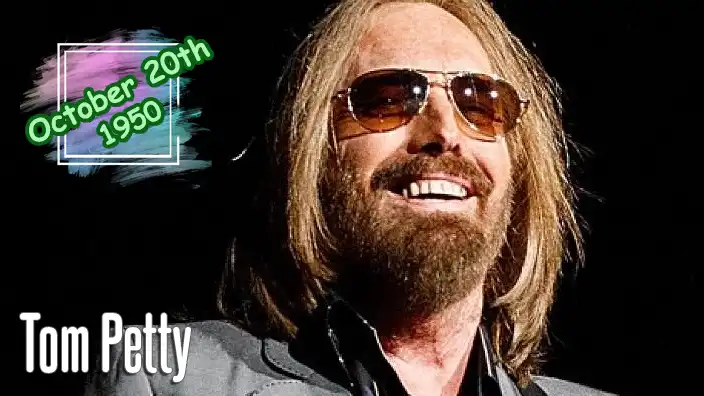
October 20, 1950, in Gainesville, Florida
 October 2, 2017, in Santa Monica, California

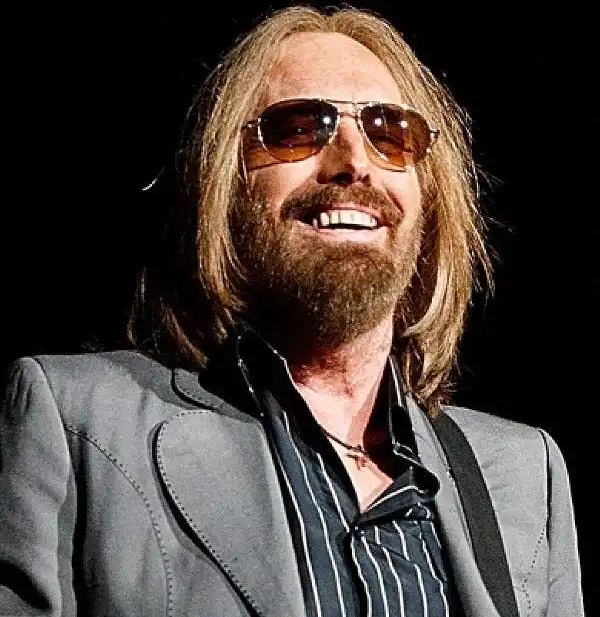
Born Thomas Earl Petty on October 20, 1950, in Gainesville, Florida, Tom Petty grew up in a working-class household where music eventually became both an escape and a lifelong obsession. His father, Earl Petty, worked in sales, while his mother, Katherine, provided a more encouraging presence during his childhood. Petty later spoke openly about the difficulties of growing up with an abusive father, experiences that influenced his independent spirit and determination to pursue a different future. Gainesville was hardly the center of the international music industry, but the young Petty would eventually demonstrate that a Florida hometown could produce a musician whose songs would be heard around the world.
One of the defining moments of Tom Petty's childhood came in 1961 when he encountered Elvis Presley during the filming of the movie Follow That Dream in Florida. The experience made an enormous impression on him, introducing the exciting possibility that music could become something more than entertainment on the family radio. His fascination deepened when he watched the Beatles perform on The Ed Sullivan Show in 1964. Like countless young Americans, Petty was captivated by the energy, confidence, and extraordinary popularity of the British group. He later recalled how the Beatles inspired him to believe that ordinary young people could form a band and create something remarkable. The discovery was especially convenient because becoming a rock musician seemed considerably more appealing than most conventional career opportunities.
During his teenage years, Petty devoted himself increasingly to music, learning guitar and performing with local bands. One of his earliest important groups was the Epics, which eventually evolved into Mudcrutch. The band developed a following around Gainesville and included musicians who would later play significant roles in Petty's professional career, including guitarist Mike Campbell and keyboardist Benmont Tench. Mudcrutch performed throughout Florida before moving to Los Angeles in search of a recording contract. Although the original group eventually dissolved, the experience provided Petty with valuable knowledge about songwriting, recording, touring, and the complicated business of trying to convince record companies that your music deserved to be heard.
In 1976, Tom Petty and the Heartbreakers emerged as a new band featuring Petty on vocals and guitar, Mike Campbell on lead guitar, Benmont Tench on keyboards, Ron Blair on bass, and Stan Lynch on drums. The group's sound combined the melodic influence of the Beatles and the Byrds with the energy of American garage rock, blues, and traditional rock and roll. Their self-titled debut album, released in 1976, introduced songs including "Breakdown" and "American Girl," both of which would become enduring favorites. Although the album initially attracted more attention in Britain than in the United States, its reputation grew steadily as audiences discovered the band's straightforward sound and Petty's distinctive songwriting.
"American Girl" became one of the defining songs of Tom Petty's career, with its ringing guitars, energetic rhythm, and memorable lyrics capturing the restless optimism and uncertainty of youth. Despite persistent rumors that the song was inspired by a tragic incident involving a University of Florida student, Petty repeatedly rejected that interpretation. The song instead reflected the broader emotions of longing, ambition, and the desire to escape ordinary circumstances. Its popularity continued long after its original release, appearing in films, television programs, and countless radio playlists. For many listeners, the opening guitar chords remain sufficient reason to abandon whatever they happen to be doing and turn up the volume.
The Heartbreakers followed their debut with You're Gonna Get It! in 1978, an album that continued building their reputation through songs such as "I Need to Know" and "Listen to Her Heart." Their major commercial breakthrough arrived with Damn the Torpedoes in 1979, featuring "Refugee," "Don't Do Me Like That," and "Here Comes My Girl." The album became a tremendous success and established Tom Petty and the Heartbreakers as one of America's leading rock bands. Produced by Jimmy Iovine, it combined powerful guitar arrangements with carefully crafted songwriting, demonstrating the band's ability to deliver radio-friendly hits without abandoning its musical identity. The title itself suggested a certain stubborn determination, which was particularly appropriate for a musician who would repeatedly challenge the recording industry over artistic control and business practices.
Tom Petty became widely respected for his willingness to confront record companies when he believed musicians or their audiences were being treated unfairly. During a contractual dispute involving the transfer of his recording agreement, he filed for bankruptcy protection in 1979 as part of his effort to gain greater control over his career. He later resisted an attempt to increase the retail price of the Heartbreakers' 1981 album Hard Promises above the prevailing standard album price. Petty believed that fans should not be charged more simply because a record company expected strong sales. The album was ultimately released at the lower price, reinforcing his reputation as an artist prepared to defend both his principles and his audience. In an industry where executives often had the final word, Petty demonstrated that a determined musician could occasionally make the suits reconsider their arithmetic.
Throughout the 1980s, Tom Petty and the Heartbreakers continued producing successful albums and memorable songs. Hard Promises included "The Waiting," while Long After Dark featured "You Got Lucky." The band's 1985 album Southern Accents explored themes associated with the American South and included the popular single "Don't Come Around Here No More." The song's unusual music video, inspired by Alice's Adventures in Wonderland, became one of the most recognizable productions of the early MTV era. Featuring Petty as the Mad Hatter, the video demonstrated his willingness to embrace theatrical storytelling and surreal imagery. It also suggested that anyone accepting an invitation to a tea party hosted by Tom Petty should probably examine the menu carefully.
In 1987, Tom Petty and the Heartbreakers released Let Me Up (I've Had Enough), featuring "Jammin' Me," a song co-written with Bob Dylan. Petty's relationship with Dylan became particularly important during this period, as the Heartbreakers served as Dylan's backing band on an international tour. The collaboration exposed Petty to new audiences and strengthened his connections with musicians he had admired for years. His respect for classic songwriting traditions helped distinguish him from performers who relied heavily on changing musical fashions. Petty understood that a well-written song could remain meaningful long after hairstyles, clothing trends, and record company marketing campaigns had disappeared.
One of the most extraordinary chapters in Tom Petty's career began in 1988 when he joined George Harrison, Bob Dylan, Roy Orbison, and Jeff Lynne to form the Traveling Wilburys. The supergroup emerged from a spontaneous recording session and quickly developed into one of rock music's most celebrated collaborations. Their debut album, Traveling Wilburys Vol. 1, included the successful songs "Handle with Care" and "End of the Line." Each musician adopted a fictional Wilbury identity, with Petty appearing as Charlie T. Wilbury Jr. The group's relaxed approach, humor, and musical chemistry made the project especially appealing, while its lineup represented an extraordinary collection of songwriting talent. Considering the combined musical achievements around the recording studio, finding someone willing to make the coffee may have been the group's greatest organizational challenge.
The Traveling Wilburys released their second album, Traveling Wilburys Vol. 3, in 1990, following Roy Orbison's death in December 1988. Despite the loss, the surviving members continued the group's playful musical approach, producing songs including "She's My Baby" and "Wilbury Twist." The collaboration became an important part of Petty's musical legacy, demonstrating his ability to work comfortably alongside internationally celebrated performers without sacrificing his own distinctive identity. His friendships with George Harrison and Jeff Lynne also influenced his subsequent recordings, particularly his enormously successful solo work.
In 1989, Tom Petty released his first solo album, Full Moon Fever, produced with Jeff Lynne and Mike Campbell. Although several Heartbreakers contributed to the recordings, the project was issued under Petty's own name and became one of the most commercially successful albums of his career. It included "Free Fallin'," "I Won't Back Down," "Runnin' Down a Dream," and "A Face in the Crowd," songs that remain among his most recognizable recordings. "Free Fallin'" became especially popular, combining an accessible melody with vivid images of Southern California life. The album's success demonstrated Petty's ability to thrive both as a bandleader and as an individual recording artist, while confirming that his songwriting instincts remained remarkably sharp.
"I Won't Back Down" became one of Tom Petty's signature songs, expressing determination, resilience, and the refusal to surrender in the face of adversity. Its straightforward lyrics and memorable chorus made it a popular anthem for listeners confronting personal or professional challenges. The song also reflected Petty's own reputation for independence, particularly his battles over recording contracts and artistic control. Its enduring appeal extended well beyond rock radio, becoming familiar at sporting events, public gatherings, and personal celebrations. Few musicians have managed to turn a simple declaration of stubbornness into something quite so uplifting, although Petty certainly had plenty of practice.
The 1990s brought further achievements for Tom Petty and the Heartbreakers. The band released Into the Great Wide Open in 1991, featuring the title track and "Learning to Fly." Produced by Jeff Lynne, the album continued the polished, melodic approach that had helped make Full Moon Fever so successful. Petty's songwriting increasingly explored themes of freedom, disappointment, ambition, and the complicated realities of growing older, while maintaining the accessible musical style that had attracted audiences throughout his career. His songs often told stories about ordinary people searching for opportunity or struggling against circumstances beyond their control, giving his music an emotional honesty that resonated across generations.
In 1994, Petty released Wildflowers, his second solo studio album and one of his most critically admired recordings. Produced by Rick Rubin, the album featured songs including "You Don't Know How It Feels," "You Wreck Me," "It's Good to Be King," and the title track. Its quieter arrangements, reflective lyrics, and emphasis on acoustic instrumentation revealed a more intimate side of Petty's songwriting. Although the album was released under his name, members of the Heartbreakers participated in the recording sessions. Wildflowers became an enduring favorite among fans and critics, with its themes of personal change, emotional vulnerability, and independence continuing to attract new listeners.
Tom Petty and the Heartbreakers also contributed extensively to film and television soundtracks. Their 1996 album Songs and Music from "She's the One" accompanied the film directed by Edward Burns, while Petty's songs appeared in numerous other productions. He occasionally appeared on screen as himself and became known to television audiences through his recurring voice role as Lucky, the laid-back husband of Luanne Platter, in the animated series King of the Hill. Petty's understated delivery made Lucky a memorable character whose relaxed philosophy and questionable life decisions provided considerable comic entertainment. For a musician who had spent decades performing before enormous audiences, portraying a fictional character obsessed with a settlement from a slippery supermarket floor was certainly an interesting addition to the résumé.
Petty also made a memorable appearance in the 1997 film The Postman, starring Kevin Costner, playing a character who was strongly implied to be a fictionalized version of himself. His appearance reflected his status as a familiar figure in American popular culture, recognizable even outside the musical environment where he had achieved his greatest success. Although acting was never his principal profession, his film and television credits demonstrated the broad appeal of his personality and the affection audiences felt toward him. His relaxed manner, dry humor, and distinctive speaking voice made him particularly well suited to appearances that did not require him to abandon his familiar public identity.
In 1999, Tom Petty and the Heartbreakers released Echo, an album shaped partly by difficult experiences in Petty's personal life. His marriage to Jane Benyo, whom he had married in 1974, ended in divorce in 1996 after years of personal difficulties. The couple had two daughters, Adria and Annakim. Petty subsequently struggled with heroin addiction, a period he later discussed candidly in interviews and biographical accounts. He eventually overcame the addiction and continued his musical career. In 2001, he married Dana York, who remained his wife until his death. These experiences contributed to a more complicated understanding of Petty's life, revealing the personal challenges that existed behind his considerable professional success.
In 2002, Tom Petty and the Heartbreakers were inducted into the Rock and Roll Hall of Fame, recognizing their extraordinary contribution to American popular music. The honor acknowledged decades of successful recordings, influential songwriting, and memorable live performances. That same year, the band released The Last DJ, an album that criticized commercial pressures within the music industry and the increasing influence of corporate interests over radio programming. Petty's willingness to challenge industry practices remained a defining feature of his career, and the album reflected his concern that commercial priorities could undermine the creativity and independence of musicians.
Another memorable achievement came in February 2008 when Tom Petty and the Heartbreakers performed during the halftime show of Super Bowl XLII in Glendale, Arizona. Their performance included "American Girl," "I Won't Back Down," "Free Fallin'," and "Runnin' Down a Dream," introducing their music to an enormous international television audience. The show emphasized the band's musicianship and collection of familiar songs rather than relying on elaborate theatrical effects. It was a reminder that a group of experienced rock musicians with excellent material could command the attention of millions without requiring a small army of dancers or a mechanical dragon.
Petty never completely abandoned the musical roots that had shaped his early career. In 2007, he reunited with former Mudcrutch members, including Mike Campbell and Benmont Tench, to revive the band that had helped launch his professional journey. Mudcrutch released a self-titled album in 2008 and followed it with 2 in 2016. The reunion allowed Petty to revisit the collaborative spirit of his Gainesville years while demonstrating that his enthusiasm for making music remained strong. The project also provided an opportunity to explore a looser musical style influenced by country rock, blues, and the traditions that had inspired him as a young musician.
Tom Petty and the Heartbreakers continued recording and touring well into the twenty-first century. Their later albums included Mojo in 2010 and Hypnotic Eye in 2014, the latter becoming the band's first studio album to reach number one on the Billboard 200 chart. The achievement was particularly remarkable because it arrived decades after the group's debut, demonstrating the enduring loyalty of their audience and the continuing relevance of their music. Rather than attempting to imitate younger performers or chase temporary trends, Petty and the Heartbreakers remained committed to the guitar-driven sound that had defined their identity.
Live performances remained central to Tom Petty's career, and his concerts became celebrated for their energetic musicianship, generous selections of familiar songs, and strong connection with audiences. The Heartbreakers developed a reputation as one of rock music's most accomplished touring bands, capable of delivering polished performances without losing the spontaneity associated with traditional rock and roll. Their concerts frequently brought together several generations of fans, illustrating how effectively Petty's music crossed age groups and changing musical fashions. Whether performing in intimate venues or enormous arenas, he maintained the unpretentious stage presence that had become one of his trademarks.
In 2017, Tom Petty and the Heartbreakers embarked on a major tour celebrating the band's fortieth anniversary. The tour included performances throughout North America and concluded with three concerts at the Hollywood Bowl in Los Angeles. Petty's final live performance took place on September 25, 2017, bringing an extraordinary touring career to an unexpected conclusion. Despite significant physical difficulties, he had remained committed to performing for his audiences, demonstrating the determination that had characterized his professional life for decades.
Tom Petty died on October 2, 2017, in Santa Monica, California. The Los Angeles County medical examiner subsequently determined that his death resulted from an accidental overdose involving several medications. His family explained that he had been suffering from serious pain associated with a fractured hip and other medical conditions. News of his death prompted an extraordinary outpouring of grief from fellow musicians, fans, and cultural figures around the world. Tributes emphasized not only his remarkable catalog of songs but also his generosity, humor, integrity, and dedication to the musicians who had accompanied him throughout his career.
Following his death, Petty's musical legacy continued through archival recordings, documentaries, tribute performances, and expanded releases of his work. The 2018 collection An American Treasure presented previously unreleased recordings and alternate versions from throughout his career, while Wildflowers & All the Rest, released in 2020, explored the broader creative vision behind his celebrated 1994 album. These projects introduced additional material to longtime admirers and helped younger listeners discover the depth of his songwriting. His influence remains evident among contemporary rock, country, Americana, and singer-songwriter performers who value strong melodies, direct lyrics, and musical authenticity.
Tom Petty's contribution to popular music extended beyond the commercial success of individual albums or singles. He helped preserve the traditions of American guitar rock while demonstrating that thoughtful songwriting could remain relevant across changing musical eras. His songs addressed universal experiences such as love, loss, independence, ambition, frustration, and the determination to keep moving forward. They were accessible without being simplistic, emotionally direct without becoming sentimental, and memorable without relying on fashionable production techniques. This combination made his music especially durable, allowing recordings from different decades to sit comfortably beside one another on radio playlists and personal collections.
The enduring appeal of Tom Petty and the Heartbreakers reflects a rare combination of musical consistency, artistic independence, and genuine affection from audiences. Petty never seemed particularly interested in presenting himself as an untouchable superstar. Instead, he cultivated the image of a working musician who happened to write extraordinary songs, surround himself with talented collaborators, and occasionally remind record executives that musicians had opinions of their own. His unmistakable voice and distinctive songwriting style helped create a body of work that continues to entertain, inspire, and accompany listeners through the ordinary triumphs and disappointments of everyday life.
Tom Petty's place in rock and roll history is secure, not simply because he sold millions of records or performed before enormous crowds, but because he created songs that people continue to make part of their lives. From the rebellious determination of "I Won't Back Down" to the soaring optimism of "Learning to Fly" and the unforgettable melody of "Free Fallin'," his music remains an essential part of the American rock tradition. The Gainesville youngster who once dreamed of following Elvis Presley and the Beatles ultimately became an inspiration to generations of musicians himself. And somewhere, whenever a radio plays those familiar opening chords, another listener reaches for the volume control and discovers that Tom Petty still knows exactly how to get a party started.