Celebrity Birthdays - September
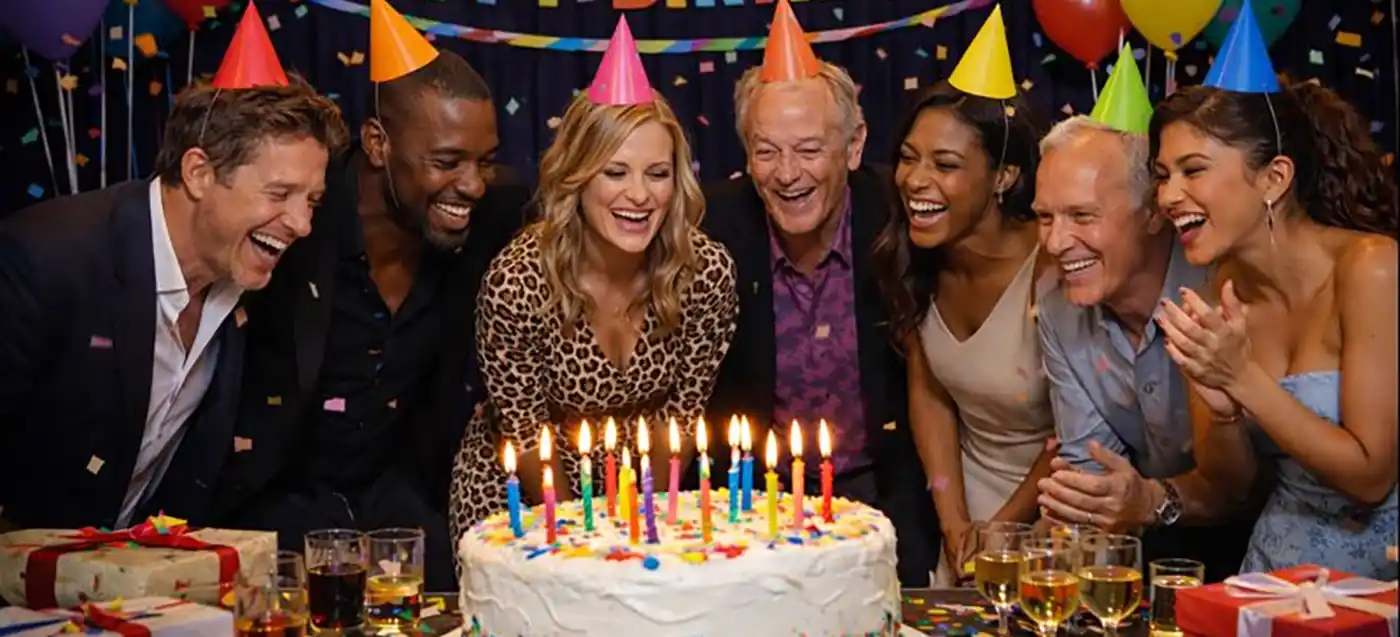
September birthday people are the overachievers of the zodiac — they show up just as the world is getting serious again. New pencils, fresh notebooks, and a whole month to remind us they were born ready.
Let’s honor the folks who make fall feel exciting. They’re the first crisp breeze after a long summer — refreshing and full of possibility.
- Details
- Category: Celebrity Birthdays - September
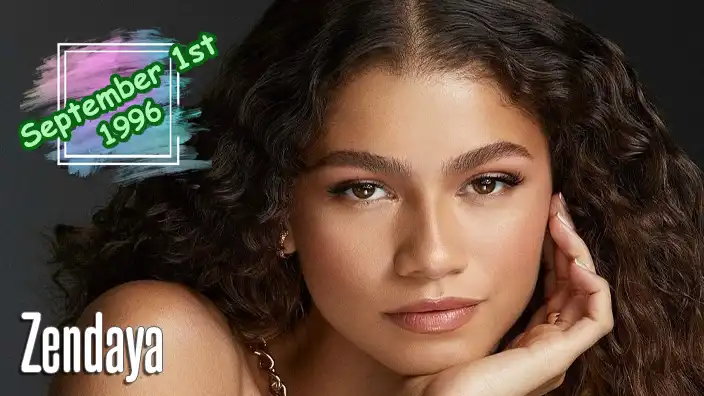
By the time Zendaya reached 30 she had already conquered Disney Channel, pop music, the Emmys, Spider-Man, Dune and enough red carpets to qualify as her own fashion industry. Most people spend their twenties figuring out what they want to do with their lives. Zendaya apparently decided the sensible answer was "everything."
 September 1, 1996, in Oakland, California

Trivia
- She grew up in Oakland, California.
- She began as a model and dancer.
- Shake It Up launched her Disney career.
- She finished second on Dancing with the Stars.
- She won her first acting Emmy at 24.
- Details
- Category: Celebrity Birthdays - September
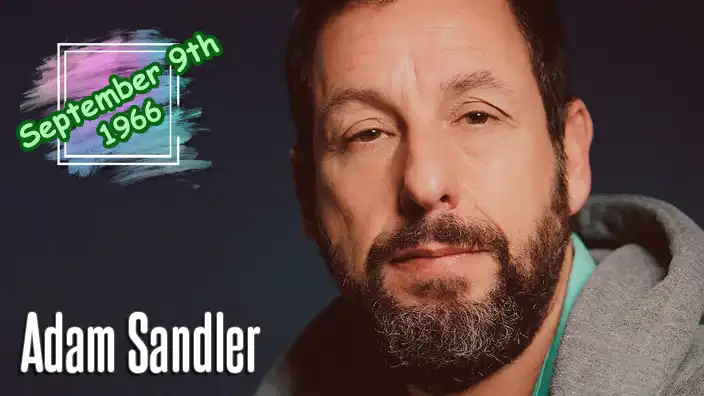
Adam Sandler is the American comedian and actor who turned silly voices, questionable fashion choices, and a remarkable talent for shouting into a Hollywood empire. From Saturday Night Live and Happy Gilmore to The Wedding Singer and Uncut Gems, he has made audiences laugh, occasionally made them cry, and proved that a man wearing basketball shorts can still be one of the most successful performers in the business. His career is a reminder that comedy does not have to wear a suit—although, in Sandler’s case, it probably wouldn’t want to.
 September 9, 1966, in Brooklyn, New York
Trivia
- His brother encouraged his first stand-up performance.
- Graduated from NYU’s Tisch School of the Arts.
- Joined Saturday Night Live as a writer in 1990.
- Happy Madison is named after two of his films.
- Received the Mark Twain Prize in 2023.
- Voiced Dracula in Hotel Transylvania.
- His daughters Sadie and Sunny are also actresses.
- Details
- Category: Celebrity Birthdays - September
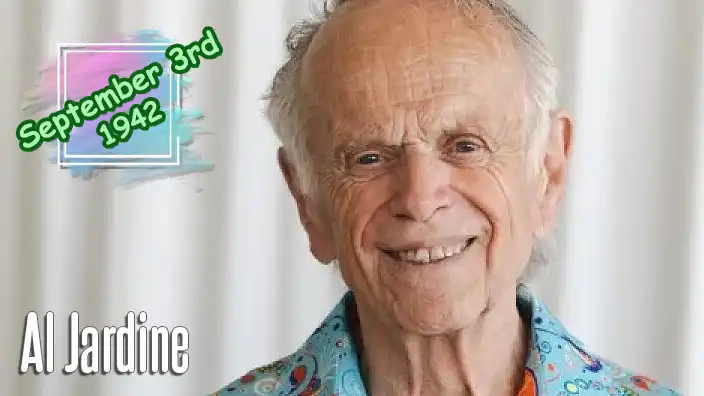
Al Jardine helped turn harmonies, surfboards and California sunshine into the sound of The Beach Boys, despite being the member sensible enough to study dentistry before deciding that guitars probably involved fewer people saying, “Open wider.”
September 3, 1942, in Lima, Ohio
Trivia
- He met Brian Wilson in high school.
- He co-founded The Beach Boys.
- He briefly studied dentistry.
- He sang lead on “Help Me, Rhonda.”
- He suggested recording “Sloop John B.”
- He entered the Rock Hall in 1988.
- Details
- Category: Celebrity Birthdays - September
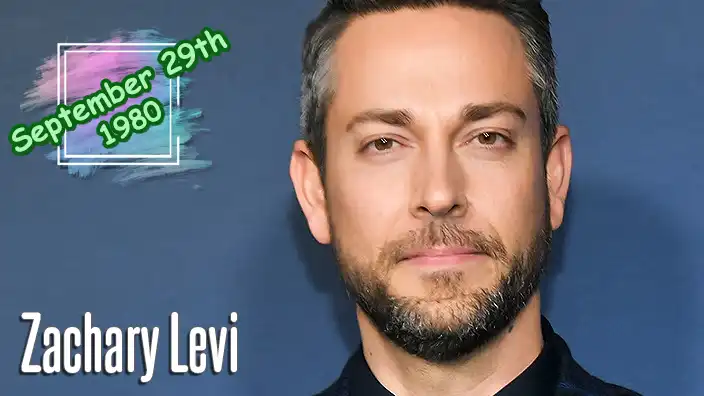
Zachary Levi has made a career out of playing men who discover that their lives are considerably more complicated than they thought. Chuck Bartowski accidentally downloaded government secrets into his brain, Flynn Rider discovered that stealing a crown could lead to singing with a princess, and Billy Batson discovered that shouting one word could turn him into a full-sized superhero. Levi, meanwhile, somehow turned all of this into a perfectly respectable acting career.
September 29, 1980, in Lake Charles, Louisiana
Trivia
- He began performing when he was six.
- He played Chuck Bartowski in 91 episodes of Chuck.
- He voiced Flynn Rider in Disney's Tangled.
- Levi sang Flynn's songs himself.
- He made his Broadway debut in First Date.
- He has appeared in both Marvel and DC films.
- Details
- Category: Celebrity Birthdays - September
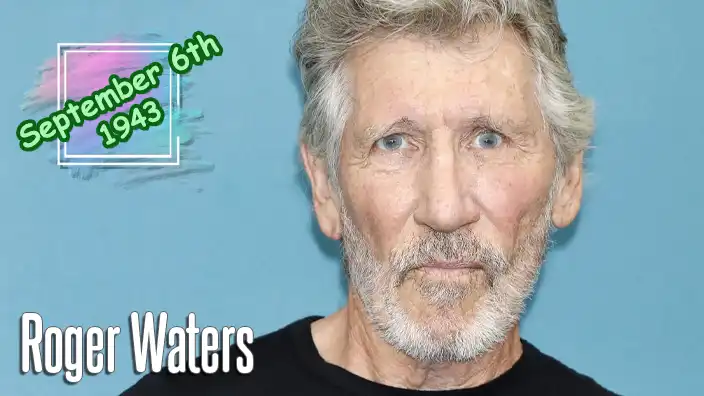
Roger Waters is the co-founder, bassist, vocalist and principal lyricist who helped transform Pink Floyd from a psychedelic London band into one of the biggest names in rock history. Behind The Dark Side of the Moon, Wish You Were Here, Animals and The Wall was a musician fascinated by war, isolation, madness and society's shortcomings. Cheerful little subjects, admittedly, but they sold an extraordinary number of records.
September 6, 1943, in Great Bookham, England
Trivia
- Waters originally studied architecture in London.
- He co-founded Pink Floyd in the 1960s.
- He wrote all the lyrics for The Dark Side of the Moon.
- His father was killed at Anzio in 1944.
- Waters conceived the original idea for The Wall.
- He left Pink Floyd in 1985.
- Details
- Category: Celebrity Birthdays - September
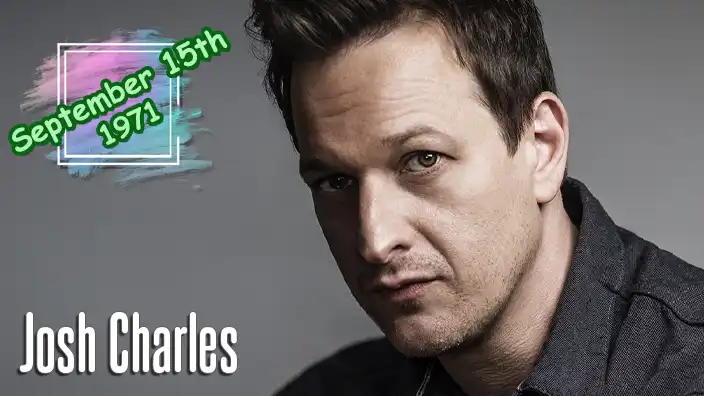
Josh Charles has spent decades being the sort of actor audiences recognize immediately, even when they need a moment to remember where they first saw him. Perhaps it was Dead Poets Society, Sports Night or The Good Wife. Wherever it happened, Charles has built a remarkably durable career playing intelligent, complicated men who generally seem perfectly composed until somebody introduces romance, ambition, ethics or Aaron Sorkin dialogue into the room.
September 15, 1971, in Baltimore, Maryland
Trivia
- Charles began performing comedy at nine.
- He attended the Baltimore School for the Arts.
- His early films included Hairspray and Dead Poets Society.
- He played Dan Rydell on Sports Night.
- Will Gardner earned him two Emmy nominations.
- Details
- Category: Celebrity Birthdays - September
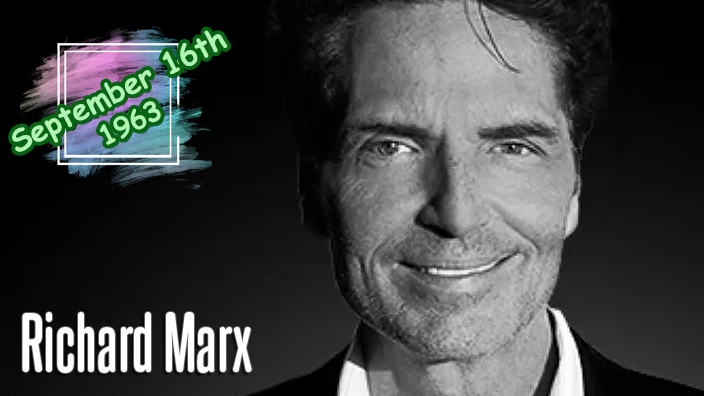
Richard Marx helped provide the late 1980s and early 1990s with enough soaring ballads to keep radio dedications busy for years. The singer-songwriter behind “Right Here Waiting,” “Hold On to the Nights” and “Now and Forever” also built an extraordinary career writing for other performers, proving that if Richard Marx wasn't singing your favorite song, there was always a reasonable chance he had written it.
September 16, 1963, in Chicago, Illinois
Trivia
- His first seven singles reached the Billboard Top Five.
- He scored three consecutive No. 1 singles.
- “Right Here Waiting” topped the Billboard Hot 100.
- He co-wrote *NSYNC's “This I Promise You.”
- “Dance with My Father” won a songwriting Grammy.
- Details
- Category: Celebrity Birthdays - September
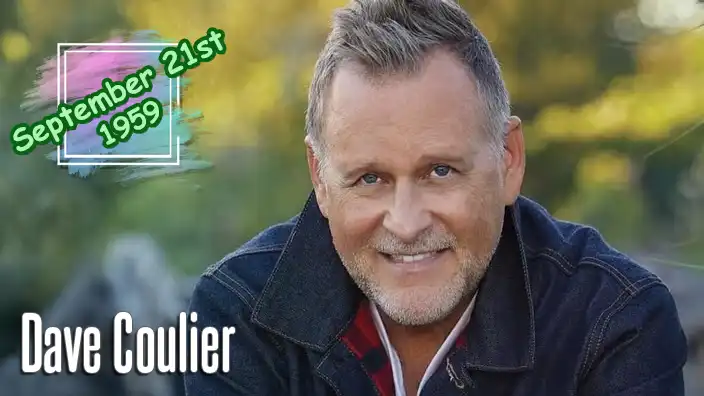
Dave Coulier became everyone's honorary Uncle Joey on Full House, armed with impressions, cartoon voices and the immortal instruction to "Cut. It. Out." A stand-up comedian before the Tanner family came calling, Coulier turned his talent for voices and physical comedy into decades of television work — while somehow making living in your friend's basement look like a perfectly respectable career move.
September 21, 1959, in St. Clair Shores, Michigan
Trivia
- Coulier briefly attended the University of Michigan.
- He voiced characters on Muppet Babies.
- "Cut. It. Out." originated before Full House.
- He is a lifelong ice hockey enthusiast.
- He reprised Joey Gladstone in Fuller House.
- Details
- Category: Celebrity Birthdays - September
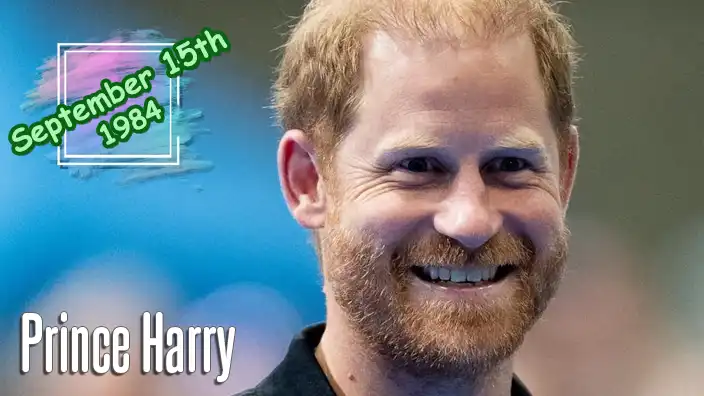
Prince Harry was born into a family where even choosing not to wear a tie can potentially generate three days of newspaper coverage. The younger son of King Charles III and Diana, Princess of Wales, Harry has been a prince, soldier, helicopter pilot, husband, father, charity founder, author and occasional royal headache, while creating a public life increasingly separate from the institution into which he was born.
September 15, 1984, in London, England
Trivia
- He trained at the Royal Military Academy Sandhurst.
- Harry served two tours in Afghanistan.
- He qualified as an Apache helicopter pilot.
- He served approximately ten years in the British Army.
- Harry founded the Invictus Games in 2014.
- He married Meghan Markle in 2018.
- Details
- Category: Celebrity Birthdays - September
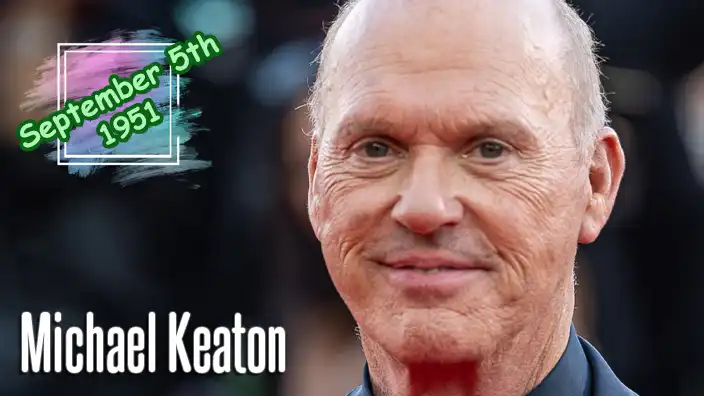
Michael Keaton has been Batman, Beetlejuice, Birdman and a bewildered stay-at-home father, which suggests either extraordinary versatility or a lifelong inability to say no to unusual job offers. From broad comedy to superhero films and Oscar-nominated drama, Keaton has spent decades refusing to remain conveniently inside any Hollywood category.
September 5, 1951, in Coraopolis, Pennsylvania
Trivia
- He once worked on Mister Rogers' Neighborhood.
- Night Shift provided his movie breakthrough.
- Fans initially protested his Batman casting.
- He played Batman twice for Tim Burton.
- Birdman earned him an Oscar nomination.
- He returned as Beetlejuice after 36 years.
- Details
- Category: Celebrity Birthdays - September
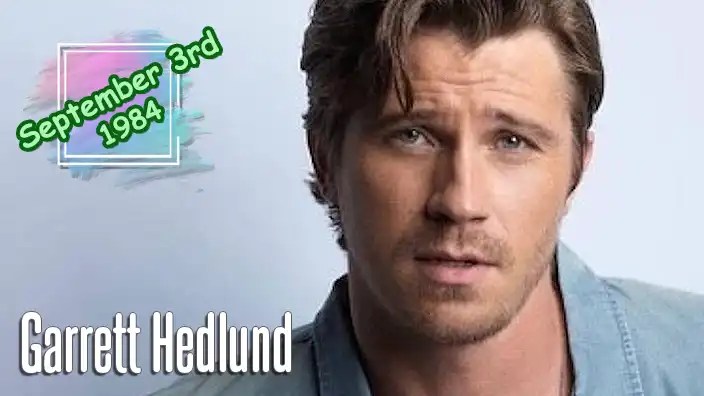
Garrett Hedlund went from a Minnesota cattle farm to Troy, Friday Night Lights and the digital world of Tron: Legacy, proving that Hollywood career planning occasionally works even when your résumé begins with feeding cows.
September 3, 1984, in Roseau, Minnesota
Trivia
- He grew up on a Minnesota cattle farm.
- Troy was his first feature film.
- He played Sam Flynn in Tron: Legacy.
- He performed songs in Country Strong.
- He auditioned for Captain America and Star-Lord.
- He has a son named Rhodes.
- Details
- Category: Celebrity Birthdays - September
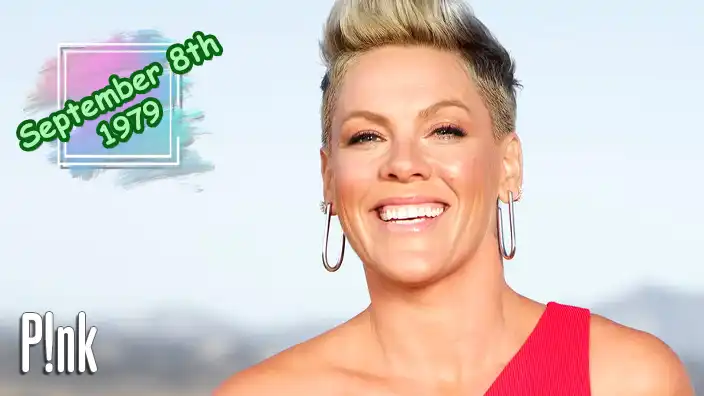
Pink, born Alecia Beth Moore, is a Grammy-winning singer who has spent her career proving that pop music can have powerful vocals, sharp humor, and the occasional performer flying over the audience on a harness. From her rebellious early hits to her spectacular arena tours, she has become one of music’s most distinctive stars. She also makes the rest of us feel rather lazy for considering a flight of stairs a reasonable workout.
September 8, 1979, in Doylestown, Pennsylvania
Trivia
- She began performing in Philadelphia clubs as a teenager.
- Her first group was called Choice.
- She won her first Grammy for “Lady Marmalade.”
- She proposed to Carey Hart during a motocross race.
- Her daughter Willow recorded a duet with her.
- She has won three Grammy Awards.
- Details
- Category: Celebrity Birthdays - September
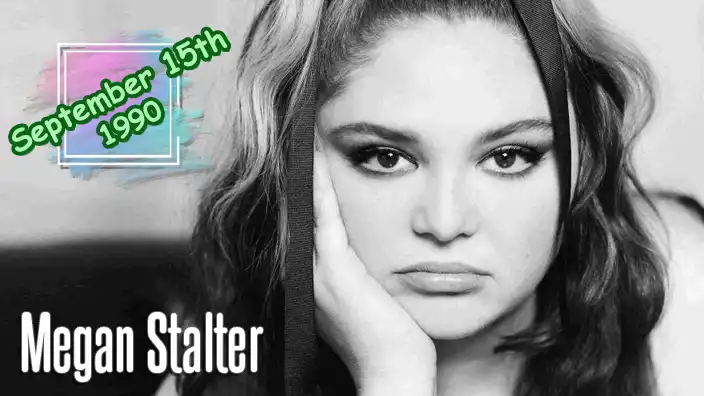
Megan Stalter has built a career playing women who possess approximately 300 percent of the confidence required for whatever they are doing and perhaps 14 percent of the necessary competence. From deliberately awkward homemade comedy videos to her scene-stealing role as Kayla on Hacks, Stalter turned cringe, chaos and magnificent self-belief into a distinctive comedy style—and then proved she could carry dramatic and romantic roles without leaving the funny woman behind.
September 15, 1990, in Cleveland, Ohio
Trivia
- She spent several years in Chicago's comedy scene.
- Her pandemic character videos helped launch her career.
- Her "Hi, gay!" Pride parody became a viral hit.
- She plays Kayla Schaeffer in Hacks.
- Cora Bora gave Stalter her first feature-film lead.
- She earned an Emmy nomination for Hacks.
- Details
- Category: Celebrity Birthdays - September
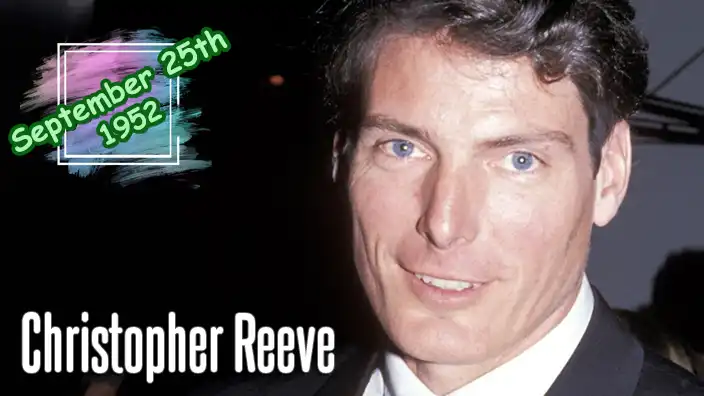
Christopher Reeve convinced millions of moviegoers that a man could fly, largely because he played Superman without behaving as though wearing red boots and a cape was remotely unusual. Tall, handsome and classically trained, he could turn Clark Kent into a spectacularly awkward fellow merely by changing his posture and putting on a pair of glasses. Then life handed him a challenge no screenplay writer would have dared suggest, and Reeve spent the remainder of his life showing that there was considerably more to the man than the cape.
September 25, 1952, in New York City
 October 10, 2004, in Mount Kisco, New York
Trivia
- He played Superman in four feature films.
- He performed many of his own flying movements for Superman.
- Reeve was an experienced pilot and sailor.
- Still Me earned him a spoken-word Grammy.
- He directed films after becoming paralyzed.

- Details
- Category: Celebrity Birthdays - September
Tyler Hoechlin has enjoyed one of Hollywood's more unusual career paths: promising baseball player, Tom Hanks' screen son, brooding werewolf, college baseball captain, romantic lead, and eventually Superman. Apparently, once you've spent several seasons turning into a werewolf, putting on a cape and flying around Metropolis seems like a perfectly reasonable career move.
September 11, 1987, in Corona, California
Trivia
- Beat more than 2,000 actors for Road to Perdition.
- Played college baseball at Arizona State and UC Irvine.
- Turned down Twilight to continue playing baseball.
- Won a Saturn Award for Road to Perdition.
- Won a Teen Choice Award for Teen Wolf.
- Was reportedly offered Superman without auditioning.
- Voices Sephiroth in the modern Final Fantasy VII games.
- Details
- Category: Celebrity Birthdays - September
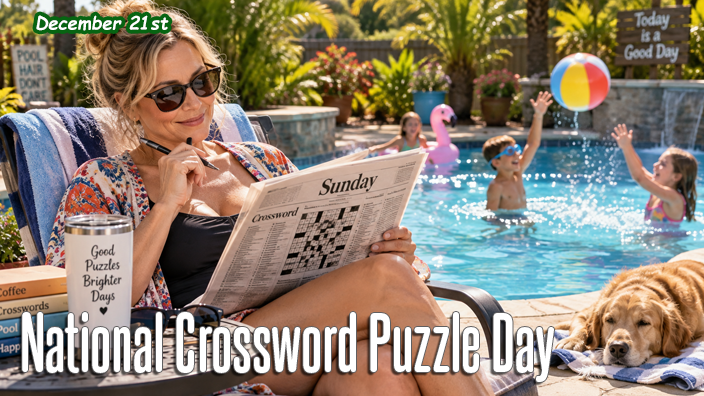
National Crossword Puzzle Day celebrates the wonderfully addictive little grid that can make you feel like a genius at 9:00 a.m. and question your entire education by 9:15. Every December 21, crossword lovers sharpen their pencils, summon their vocabulary, and prepare to battle Across, Down, and that infuriating three-letter answer everybody except them apparently knows.
Celebrated: Annually, on December 21st
Grab a pencil and test your vocabulary as we celebrate crossword puzzles, clever clues, stubborn squares, and more than a century of puzzling fun

- Details
- Category: Celebrity Birthdays - September
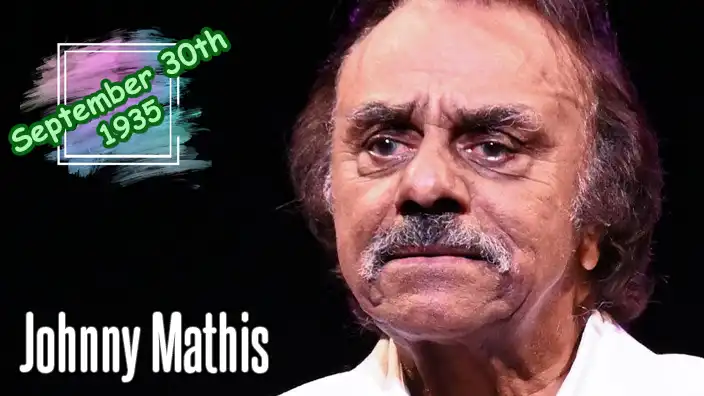
Johnny Mathis has spent decades singing about romance in a voice so smooth that merely playing one of his records has probably resulted in engagements, marriages and at least a few people wondering why somebody suddenly dimmed the lights.
September 30, 1935, in Gilmer, Texas
Trivia
- He was an outstanding collegiate high jumper.
- He signed with Columbia Records in the 1950s.
- “Chances Are” reached No. 1 in 1957.
- Johnny's Greatest Hits charted for 490 consecutive weeks.
- “Misty” became one of his signature recordings.
- He received a Grammy Lifetime Achievement Award.
- Details
- Category: Celebrity Birthdays - September
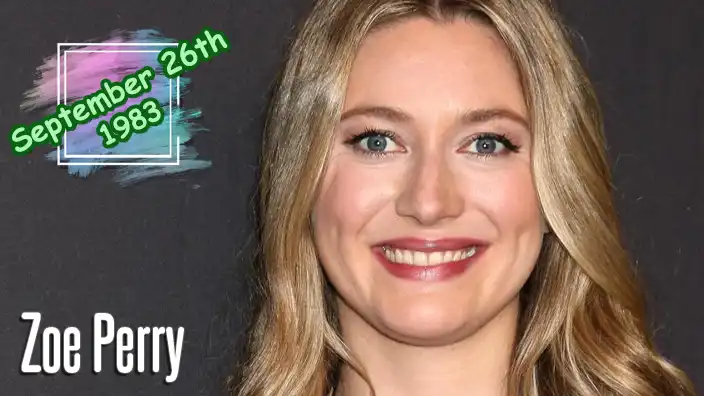
Zoe Perry has managed the unusual feat of following both of her parents into acting, occasionally working alongside them, and twice playing younger versions of characters first played by her mother. Most families simply pass down recipes, furniture and arguments about who gets the good china. The Perry-Metcalf family apparently passes down television characters.
September 26, 1983, in Chicago, Illinois
Trivia
- She graduated from Northwestern University.
- She played young Jackie on Roseanne.
- Metcalf played the adult Jackie.
- Perry auditioned for Mary Cooper.
- She worked with her father on Scandal.
- She received a Critics Choice nomination for Young Sheldon.
- Details
- Category: Celebrity Birthdays - September
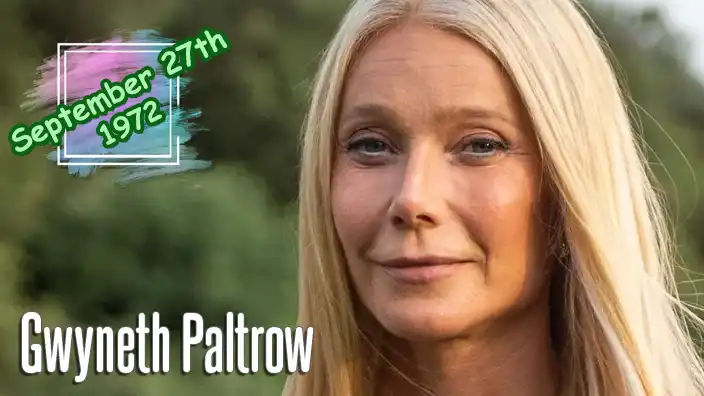
Gwyneth Paltrow has managed the unusual career trick of winning an Academy Award, keeping Tony Stark organized, writing bestselling cookbooks and building a lifestyle company that can generate headlines simply by announcing a new candle. Actress, entrepreneur and occasional lightning rod, she has rarely been in danger of becoming boring.
September 27, 1972, in Los Angeles, California
Trivia
- Her father was producer and director Bruce Paltrow.
- She studied art history at UC Santa Barbara.
- She won her Oscar for Shakespeare in Love.
- Pepper Potts first joined the MCU in Iron Man.
- She won an Emmy for her guest role on Glee.
- She founded Goop in 2008.
- Details
- Category: Celebrity Birthdays - September
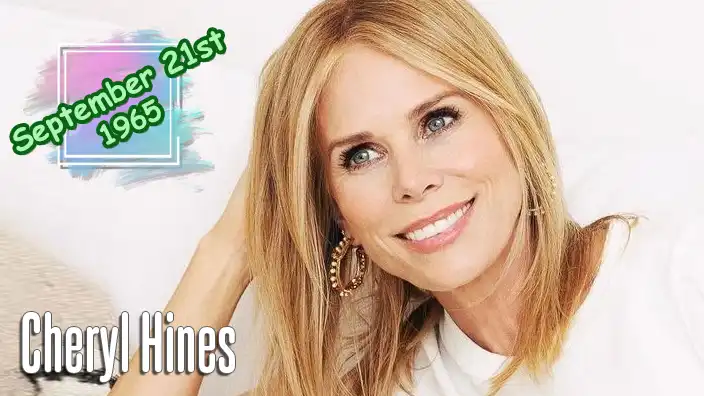
Cheryl Hines became famous for playing the remarkably patient wife of Larry David on Curb Your Enthusiasm, which meant regularly watching a perfectly ordinary situation turn into a social catastrophe while maintaining the expression of a woman wondering why she ever left the house. With sharp improvisational instincts and wonderfully understated reactions, Hines became the calm center of one of television's most gloriously uncomfortable comedies.
September 21, 1965, in Miami Beach, Florida
Trivia
- Hines trained with Los Angeles improv company The Groundlings.
- She received two Emmy nominations for Curb Your Enthusiasm.
- Those nominations came in 2003 and 2006.
- She played Robin Williams' wife in RV.
- She appeared as Becky in Waitress.
- She made her feature directing debut with Serious Moonlight.
- Details
- Category: Celebrity Birthdays - September
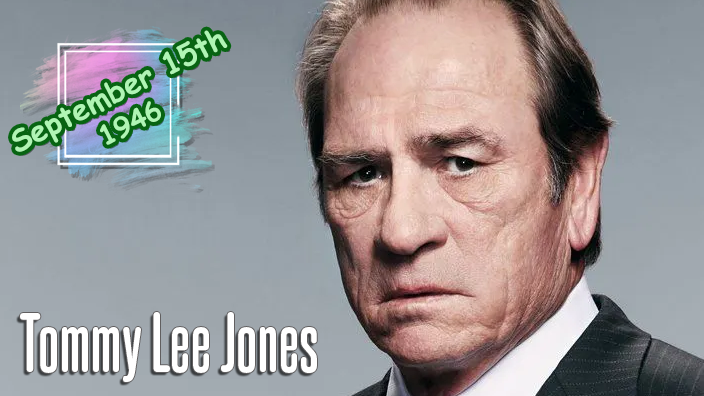
Tommy Lee Jones has spent more than half a century perfecting the art of looking at another human being as though they have personally disappointed the entire state of Texas. The Academy Award-winning actor brought dry authority to The Fugitive, deadpan brilliance to Men in Black, menace to Under Siege and quiet gravity to No Country for Old Men, building a career in which one raised eyebrow can frequently accomplish what lesser actors require three pages of dialogue to achieve.
September 15, 1946, in San Saba, Texas
Trivia
- Jones played football for Harvard.
- His film debut was Love Story.
- He won an Emmy for The Executioner's Song.
- The Fugitive earned him an Academy Award.
- Jones is an accomplished polo player.
- He directed The Three Burials of Melquiades Estrada.
From Our Marks Catelog
-

On the morning of September 11, 2001, the world stood still as unimaginable terror unfolded in the...
-

If common sense were sold in stores, it would probably be right next to the batteries—something everyone...
-
Sugar—the tiny, sweet granules that can turn the most disciplined of us into dessert-hunting...
-
In celebration of National Camp Day, a group of enthusiastic campers decides to hold a "Wilderness...
-

Firefighters are the rare breed of heroes who willingly charge into blazing chaos while the rest of us...
-
There are few moments in life as full of promise as standing at the edge of a buffet line with an...

