Celebrity Birthdays - September
September birthday people are the overachievers of the zodiac — they show up just as the world is getting serious again. New pencils, fresh notebooks, and a whole month to remind us they were born ready.
Let’s honor the folks who make fall feel exciting. They’re the first crisp breeze after a long summer — refreshing and full of possibility.
- Details
- Category: Celebrity Birthdays - September
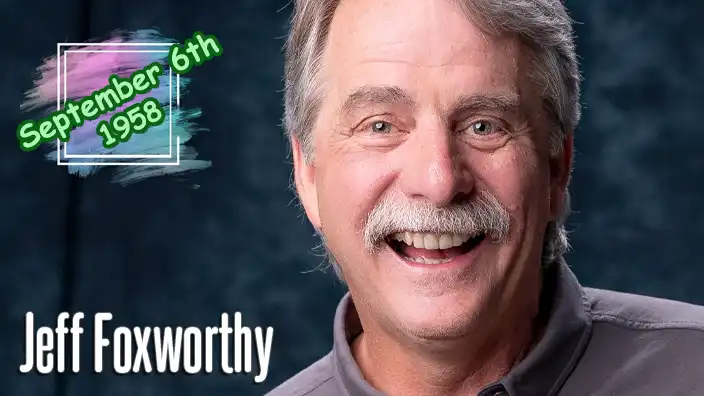
Jeff Foxworthy is the comedian who turned “You might be a redneck” into one of America's most recognizable comedy routines and made millions of people laugh while quietly wondering whether he was talking specifically about their family. With Southern storytelling, clean humor and an impressive collection of observations involving pickup trucks, duct tape and questionable household decisions, Foxworthy built one of the most successful careers in American stand-up comedy.
 September 6, 1958, in Atlanta, Georgia

Trivia
- Jeff once worked repairing IBM mainframe computers.
- He began his professional comedy career in 1984.
- “You might be a redneck” became his signature routine.
- He helped launch the Blue Collar Comedy Tour.
- Foxworthy hosted Are You Smarter than a 5th Grader?
- He has written several children's books.
- He voiced Handy Smurf in two Smurfs movies.
- Details
- Category: Celebrity Birthdays - September
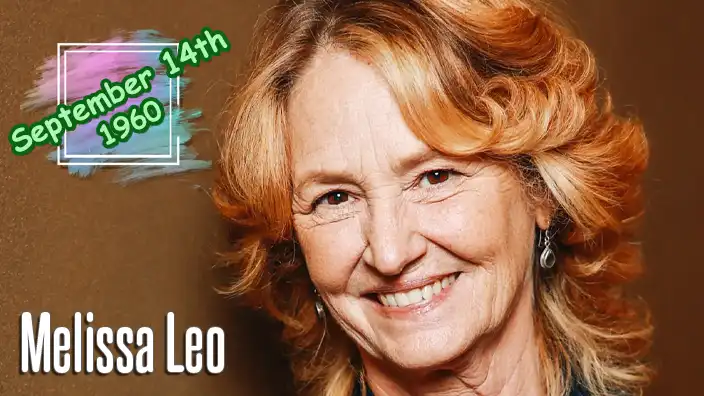
Melissa Leo is the American actress who spent decades becoming one of Hollywood's most dependable character performers before winning an Academy Award as the ferocious Alice Ward in The Fighter. It was the sort of performance that demonstrated an important cinematic rule: never get between a determined mother and her boxing family unless you have a very good health plan.
 September 14, 1960, in Manhattan, New York City
Trivia
- She studied at SUNY Purchase.
- All My Children brought an early Daytime Emmy nomination.
- She played Detective Kay Howard on Homicide.
- Frozen River earned her a Best Actress Oscar nomination.
- She won the Oscar for The Fighter.
- She also won a Primetime Emmy for Louie.
- Details
- Category: Celebrity Birthdays - September
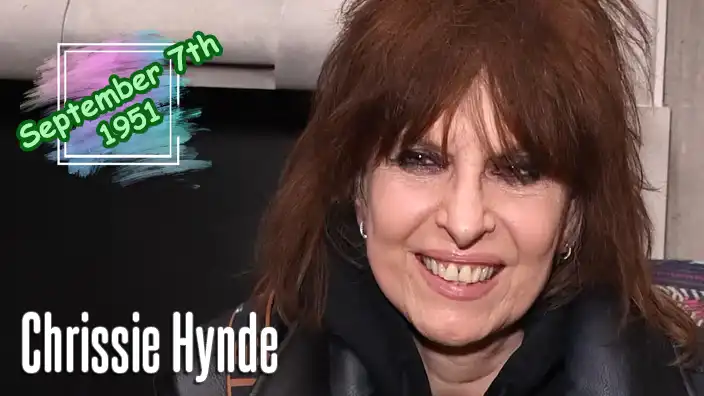
Chrissie Hynde celebrates her birthday on September 7, and after decades of fronting The Pretenders, she remains one of rock's most unmistakable voices. Armed with a guitar, trademark eyeliner and an attitude suggesting that she has absolutely no interest in whether you approve, Hynde helped turn punk-era rebellion into some of rock's most enduring music.
September 7, 1951, in Akron, Ohio
Trivia
- She studied art at Kent State University.
- She once wrote for Britain's NME.
- She formed The Pretenders in 1978.
- Neil Young inducted The Pretenders into the Rock Hall.
- She became vegetarian in 1969.
- She published her memoir Reckless in 2015.
- Details
- Category: Celebrity Birthdays - September
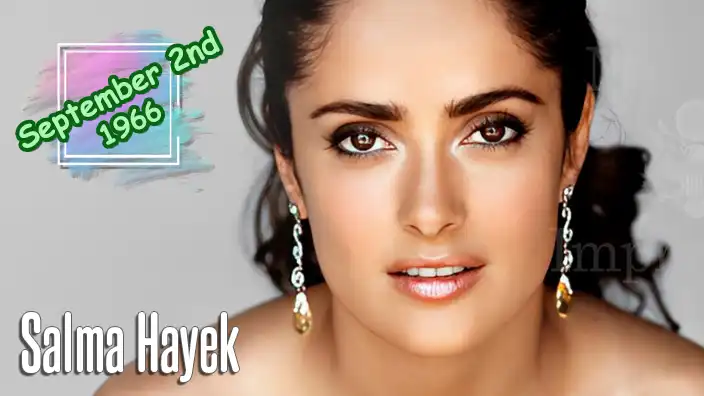
Salma Hayek has never shown much interest in waiting for Hollywood to decide what she ought to be. She arrived from Mexico with limited English, battled typecasting, became an action-film favorite, fought for years to bring Frida to the screen and eventually earned an Academy Award nomination for playing Frida Kahlo. Apparently nobody told her that breaking into Hollywood was supposed to be the difficult part.
September 2, 1966, in Coatzacoalcos, Mexico
Trivia
- Salma became famous in Mexico through Teresa.
- She moved to Los Angeles in 1991.
- Robert Rodriguez cast her in Desperado.
- Hayek produced and starred in Frida.
- Frida earned her a Best Actress Oscar nomination.
- She voiced Kitty Softpaws in Puss in Boots.
- Details
- Category: Celebrity Birthdays - September
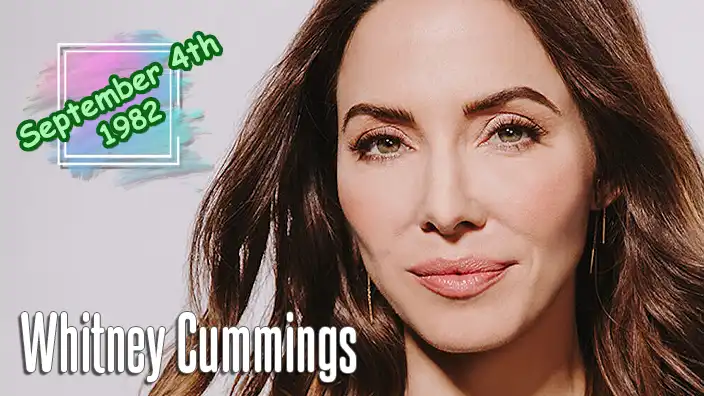
Whitney Cummings is the comedian, actress, writer and producer who discovered that saying the uncomfortable part out loud can become a perfectly respectable career. From creating Whitney and co-creating 2 Broke Girls to years of fearless stand-up comedy, Cummings has built her reputation by examining relationships, modern life and human behavior with the subtlety of somebody opening the curtains when everyone else would rather remain in the dark.
September 4, 1982, in Washington, D.C.
Trivia
- Whitney graduated from the University of Pennsylvania.
- Variety named her a Comic to Watch in 2007.
- She co-created 2 Broke Girls.
- She created and starred in Whitney.
- Cummings directed The Female Brain.
- She hosts the Good for You podcast.
- Details
- Category: Celebrity Birthdays - September
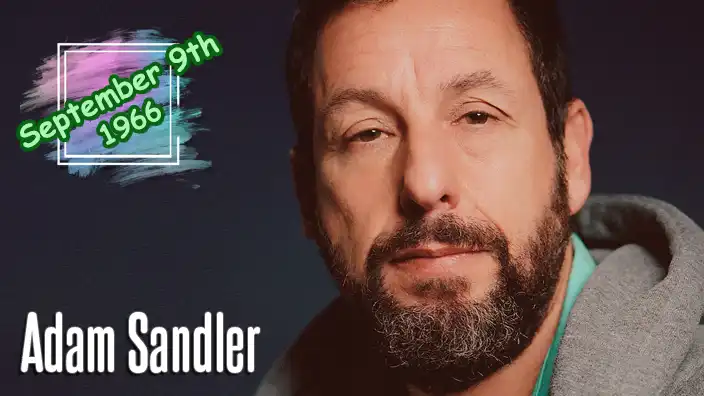
Adam Sandler is the American comedian and actor who turned silly voices, questionable fashion choices, and a remarkable talent for shouting into a Hollywood empire. From Saturday Night Live and Happy Gilmore to The Wedding Singer and Uncut Gems, he has made audiences laugh, occasionally made them cry, and proved that a man wearing basketball shorts can still be one of the most successful performers in the business. His career is a reminder that comedy does not have to wear a suit—although, in Sandler’s case, it probably wouldn’t want to.
September 9, 1966, in Brooklyn, New York
Trivia
- His brother encouraged his first stand-up performance.
- Graduated from NYU’s Tisch School of the Arts.
- Joined Saturday Night Live as a writer in 1990.
- Happy Madison is named after two of his films.
- Received the Mark Twain Prize in 2023.
- Voiced Dracula in Hotel Transylvania.
- His daughters Sadie and Sunny are also actresses.
- Details
- Category: Celebrity Birthdays - September
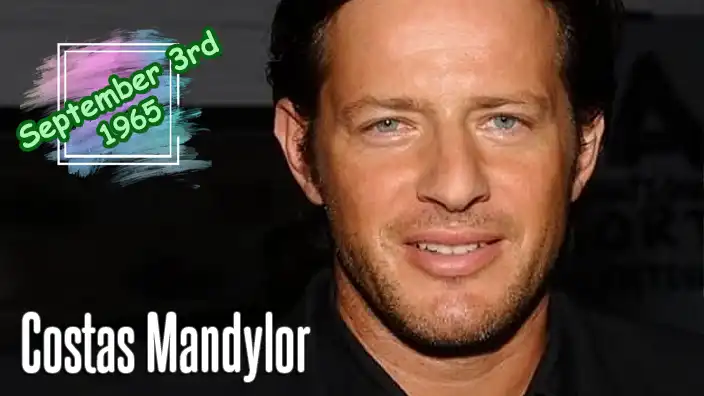
Costas Mandylor went from chasing a professional soccer career in Australia to becoming Detective Mark Hoffman in Saw, where losing a match suddenly seemed considerably less troublesome than losing a key to one of Jigsaw's contraptions.
September 3, 1965, in Melbourne, Australia
Trivia
- His parents were Greek immigrants.
- He pursued professional soccer before acting.
- Louis Mandylor is his younger brother.
- He played Kenny Lacos on Picket Fences.
- Mark Hoffman debuted in Saw III.
- Details
- Category: Celebrity Birthdays - September
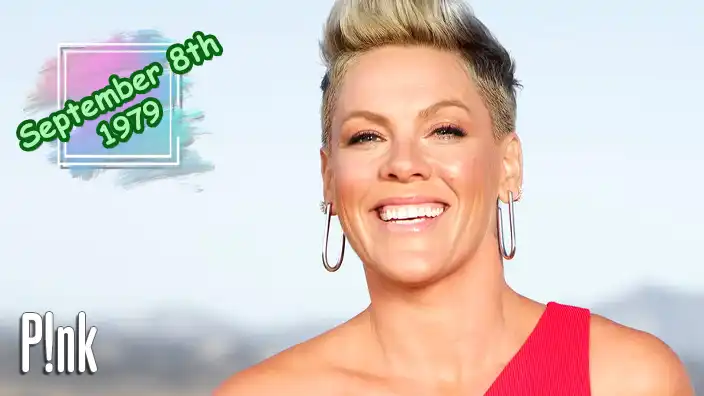
Pink, born Alecia Beth Moore, is a Grammy-winning singer who has spent her career proving that pop music can have powerful vocals, sharp humor, and the occasional performer flying over the audience on a harness. From her rebellious early hits to her spectacular arena tours, she has become one of music’s most distinctive stars. She also makes the rest of us feel rather lazy for considering a flight of stairs a reasonable workout.
September 8, 1979, in Doylestown, Pennsylvania
Trivia
- She began performing in Philadelphia clubs as a teenager.
- Her first group was called Choice.
- She won her first Grammy for “Lady Marmalade.”
- She proposed to Carey Hart during a motocross race.
- Her daughter Willow recorded a duet with her.
- She has won three Grammy Awards.
- Details
- Category: Celebrity Birthdays - September
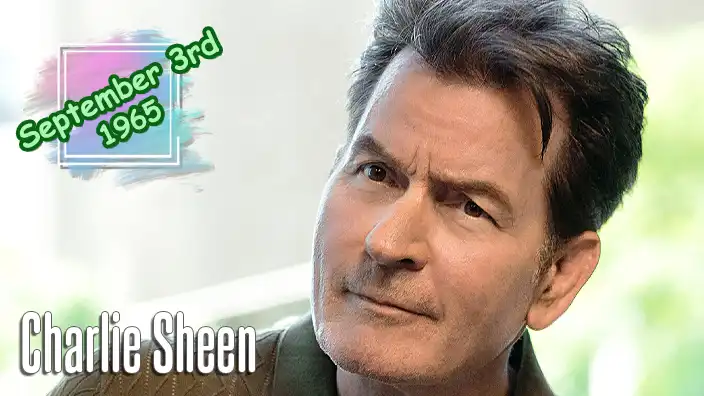
Charlie Sheen has played soldiers, stockbrokers, baseball pitchers and television’s most unapologetic bachelor, while conducting a real-life career that occasionally made his fictional characters look remarkably sensible.
September 3, 1965, in New York City
Trivia
- Martin Sheen is his father.
- Emilio Estevez is his brother.
- Platoon was his major breakthrough.
- He played Ricky "Wild Thing" Vaughn in Major League.
- He won a Golden Globe for Spin City.
- He earned four Emmy nominations for Two and a Half Men.

- Details
- Category: Celebrity Birthdays - September
Tyler Hoechlin has enjoyed one of Hollywood's more unusual career paths: promising baseball player, Tom Hanks' screen son, brooding werewolf, college baseball captain, romantic lead, and eventually Superman. Apparently, once you've spent several seasons turning into a werewolf, putting on a cape and flying around Metropolis seems like a perfectly reasonable career move.
September 11, 1987, in Corona, California
Trivia
- Beat more than 2,000 actors for Road to Perdition.
- Played college baseball at Arizona State and UC Irvine.
- Turned down Twilight to continue playing baseball.
- Won a Saturn Award for Road to Perdition.
- Won a Teen Choice Award for Teen Wolf.
- Was reportedly offered Superman without auditioning.
- Voices Sephiroth in the modern Final Fantasy VII games.
- Details
- Category: Celebrity Birthdays - September
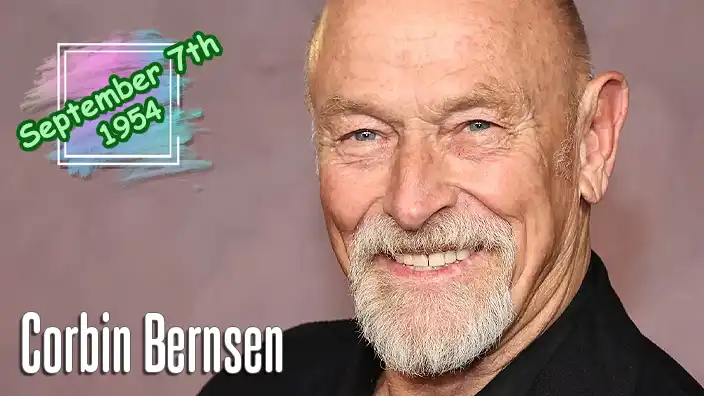
Corbin Bernsen celebrates his birthday on September 7, and the L.A. Law and Psych actor has spent decades proving that a good television career can survive courtroom battles, dysfunctional detectives and even the Cleveland Indians. From Arnie Becker to Henry Spencer, Bernsen has become one of those familiar faces who seems to have been visiting our televisions forever.
September 7, 1954, in North Hollywood, California
Trivia
- He earned two degrees from UCLA.
- Arnie Becker made him an L.A. Law star.
- He played Roger Dorn in Major League.
- He played Henry Spencer on Psych.
- He has written and directed several films.
- He has collected thousands of snow globes.

- Details
- Category: Celebrity Birthdays - September
Virginia Madsen has that rare ability to make you believe she’s just as comfortable battling a horror-movie villain as she is delivering a heartfelt monologue about Pinot Noir. From Candyman chills to Sideways sophistication, she’s the actress who can scare you, charm you, and then convince you to order a better bottle of wine — all in the same scene.
September 11, 1961, in Chicago, Illinois
Trivia
- Her mother, Elaine Madsen, became an Emmy-winning filmmaker.
- She played Princess Irulan in 1984's Dune.
- She was hypnotized during filming of Candyman.
- Her eyes display different coloring, a form of heterochromia.
- Sideways earned her an Academy Award nomination.
- Details
- Category: Celebrity Birthdays - September
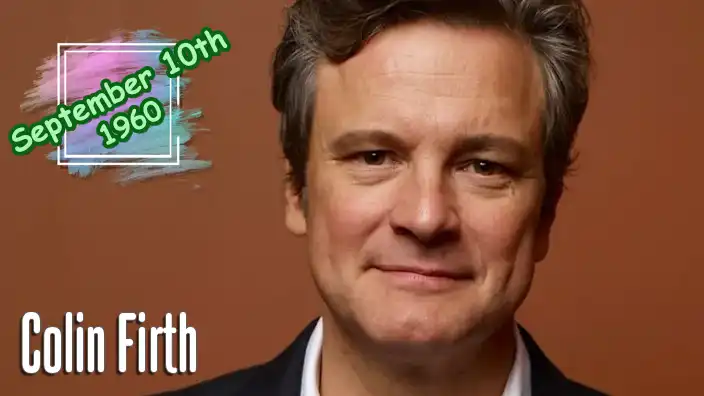
Colin Firth has spent decades making audiences believe that a raised eyebrow, a carefully chosen word, or an awkward silence can be more dramatic than an entire car chase. The Oscar-winning English actor is celebrated for The King’s Speech, Pride and Prejudice, and the Kingsman franchise, while his portrayal of Mr. Darcy helped establish a standard of romantic reserve that has caused considerable difficulty for ordinary gentlemen ever since. Born on September 10, he has built a remarkable career playing kings, spies, lovers, and men who are desperately trying to maintain their dignity while everything around them goes wrong.
September 10, 1960, in Grayshott, England
Trivia
- He trained at the Drama Centre London.
- His first feature film was Another Country.
- His Mr. Darcy lake scene became a television icon.
- He won the Best Actor Oscar for The King’s Speech.
- He trained extensively for the action scenes in Kingsman.
- Details
- Category: Celebrity Birthdays - September
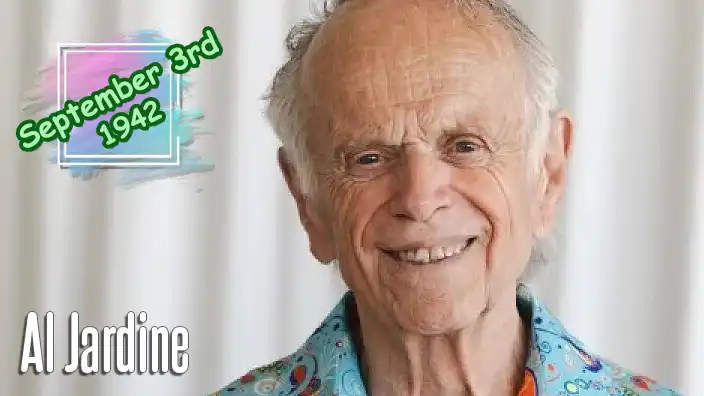
Al Jardine helped turn harmonies, surfboards and California sunshine into the sound of The Beach Boys, despite being the member sensible enough to study dentistry before deciding that guitars probably involved fewer people saying, “Open wider.”
September 3, 1942, in Lima, Ohio
Trivia
- He met Brian Wilson in high school.
- He co-founded The Beach Boys.
- He briefly studied dentistry.
- He sang lead on “Help Me, Rhonda.”
- He suggested recording “Sloop John B.”
- He entered the Rock Hall in 1988.
- Details
- Category: Celebrity Birthdays - September
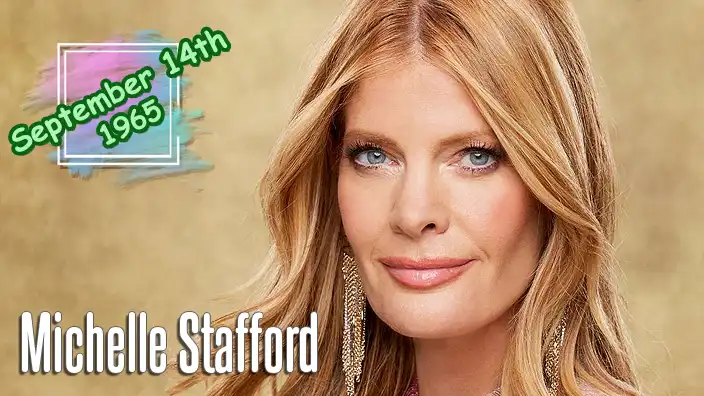
Michelle Stafford is the American actress who turned Phyllis Summers into one of daytime television's most enduring troublemakers on The Young and the Restless. Phyllis was originally supposed to be temporary. More than three decades later, Stafford is still causing havoc in Genoa City, which suggests the character may have slightly overstayed her welcome—in the best possible way.
September 14, 1965, in Chicago, Illinois
Trivia
- She modeled in Japan, France and Italy.
- Her first soap role was on Tribes in 1990.
- Phyllis Summers was originally intended as a short-term character.
- She originated Nina Reeves on General Hospital.
- She has won three Daytime Emmy Awards.
- She created and starred in The Stafford Project.
- Details
- Category: Celebrity Birthdays - September
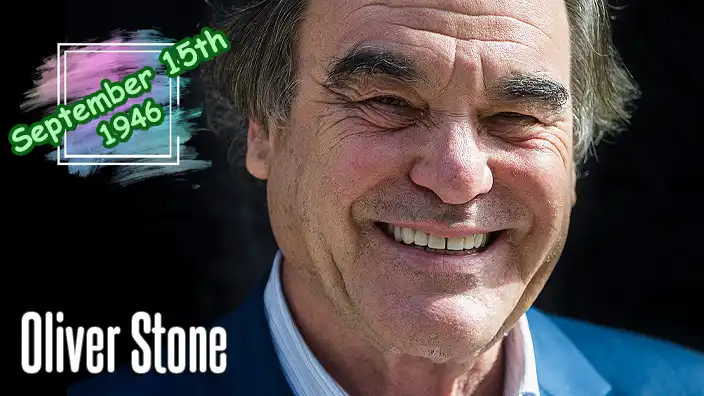
Oliver Stone has spent much of his filmmaking career poking America with a very large cinematic stick and asking whether everybody is quite certain about the official version of events. The Oscar-winning writer and director behind Platoon, Wall Street, Born on the Fourth of July and JFK transformed his own Vietnam experience into powerful filmmaking, tackled politics and power with considerable enthusiasm, and rarely seemed interested in making a movie that would allow audiences to leave the theater without arguing about something.
September 15, 1946, in New York City
Trivia
- He served in combat during the Vietnam War.
- Stone received a Bronze Star and Purple Hearts.
- Martin Scorsese taught him at New York University.
- He wrote the screenplay for Scarface.
- Platoon drew upon his Vietnam experiences.
- Stone has won three Academy Awards.

- Details
- Category: Celebrity Birthdays - September
2 Chainz is the guy who can drop a bar that makes you laugh, nod your head, and question your life choices all in the same verse. He’s tall enough to block your shot on the court, stylish enough to outshine everyone at the party, and clever enough to make even his most outrageous lyrics sound like gospel truth. Whether he’s rapping about luxury cars, expensive champagne, or his love of Atlanta, 2 Chainz somehow makes you want to join him — even if you can’t afford the entry fee.
September 12, 1977 in College Park, Georgia
Trivia
- He formerly performed as Tity Boi.
- He played college basketball at Alabama State.
- He was one half of Playaz Circle.
- “Duffle Bag Boy” featured Lil Wayne.
- His debut solo album reached No. 1.
- He hosts Most Expensivest.
- His TRU Foundation supports community causes.
- Details
- Category: Celebrity Birthdays - September
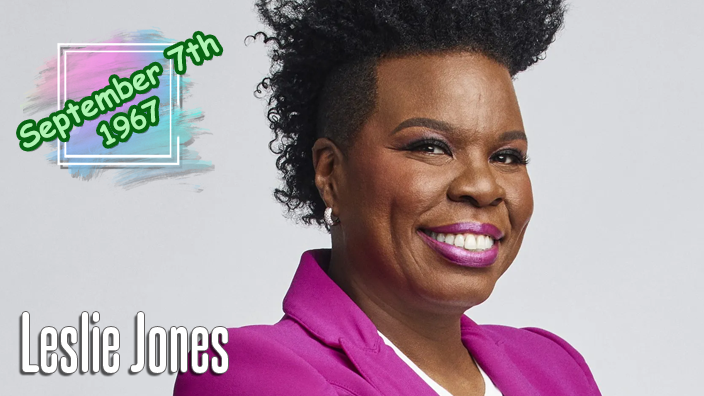
Leslie Jones celebrates her birthday on September 7, and the Emmy-nominated Saturday Night Live comedian has never had much use for being quiet. From college basketball and years on the stand-up circuit to SNL, Ghostbusters and hosting television game shows, Jones built her career the old-fashioned way: working for years until everybody suddenly called her an overnight success.
September 7, 1967, in Memphis, Tennessee
Trivia
- Jones played college basketball.
- She won a campus comedy contest.
- Chris Rock encouraged her comedy career.
- She joined SNL in her forties.
- She earned multiple Emmy nominations.
- She hosted Supermarket Sweep.
- Details
- Category: Celebrity Birthdays - September
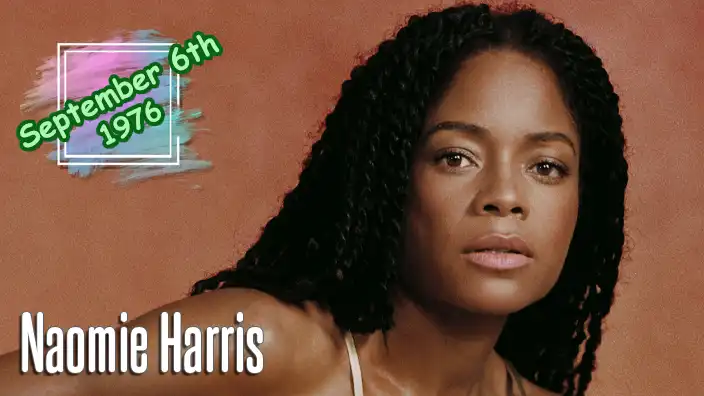
Naomie Harris is the Oscar-nominated British actress who has survived a zombie apocalypse, tangled with Caribbean pirates, worked alongside James Bond and delivered a heartbreaking performance in Moonlight. Apparently deciding that ordinary office work lacked sufficient danger, Harris built a remarkable career by taking on characters who are frequently having a considerably worse day than she is.
September 6, 1976, in London, England
Trivia
- She studied at the University of Cambridge.
- She trained at Bristol Old Vic Theatre School.
- Her breakthrough film was 28 Days Later.
- She played Tia Dalma in two Pirates films.
- Harris became Eve Moneypenny in Skyfall.
- She filmed her Moonlight role in only a few days.
- Harris was appointed an OBE for services to drama.

- Details
- Category: Celebrity Birthdays - September
Emmy Rossum isn’t just talented — she’s the kind of talented that makes the rest of us feel like we’ve been wasting our lives. By the time most kids are figuring out how to color inside the lines, Emmy was already performing with the Metropolitan Opera and probably knew more about Puccini than your average music professor. She’s gone from surviving global ice storms in The Day After Tomorrow to belting out love songs as Christine in The Phantom of the Opera, to wrangling a dysfunctional family on Shameless with enough sass to power an entire Chicago neighborhood. Emmy somehow manages to be glamorous, gritty, and hilarious all at once — the kind of person who could sing a heartbreaking aria, fix the plumbing, and still look good in the process.
September 12, 1986, in New York City, New York
Trivia
- She joined the Metropolitan Opera Children's Chorus at seven.
- Rossum sang in several languages as a child.
- She performed her own vocals in The Phantom of the Opera.
- She received a Golden Globe nomination for Christine Daaé.
- Rossum played Fiona Gallagher for nine seasons.
- She has directed episodes of Shameless.
- Details
- Category: Celebrity Birthdays - September
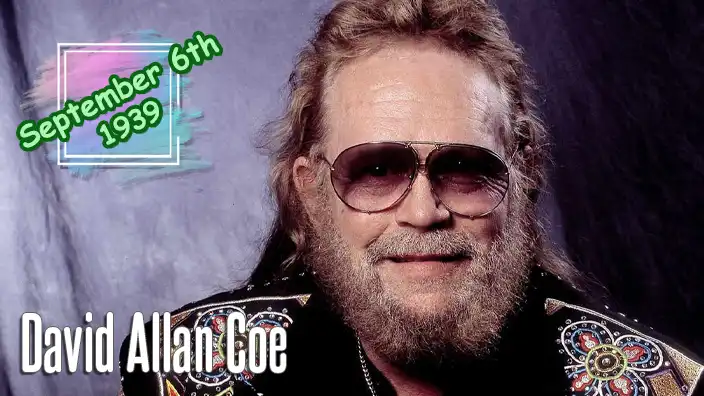
David Allan Coe was an outlaw country singer who didn't merely cultivate a rebellious reputation—he spent decades making sure nobody could possibly mistake him for the fellow who came to Nashville to play nicely. Prison, rhinestones, motorcycles, controversy, country classics and enough outrageous stories to keep several biographers employed all became part of the Coe legend. Somewhere beneath all that noise, however, was a remarkably gifted songwriter whose words helped define outlaw country music.
September 6, 1939, in Akron, Ohio
 April 29, 2026, in Akron, Ohio
Trivia
- His debut album was Penitentiary Blues.
- Tanya Tucker had a major hit with a song Coe wrote.
- He wrote Johnny Paycheck's “Take This Job and Shove It.”
- “Mona Lisa Lost Her Smile” reached No. 2 on the country chart.
- He recorded “Tennessee Whiskey” years before Chris Stapleton.
- Coe collaborated with members of Pantera on Rebel Meets Rebel.
From Our Marks Catelog
-
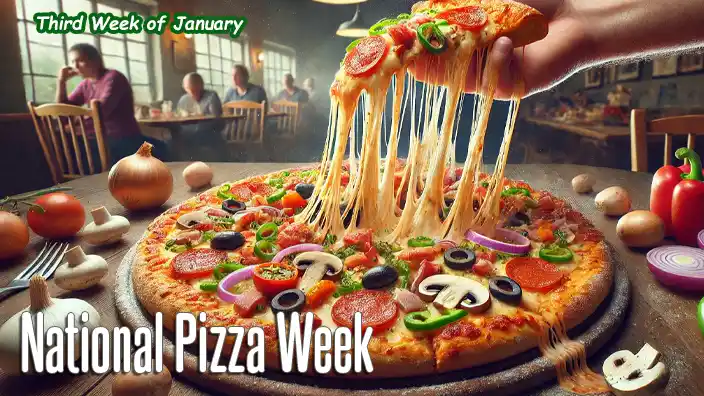
Pizza is the ultimate customizable dish. It caters to all, from the staunch meat-lover who wants...
-

Your toes don't ask for much. They spend their days squeezed into shoes, dodging coffee tables,...
-

You’re trying to relax after a long day, but your dog has decided that now is the perfect time to...
-
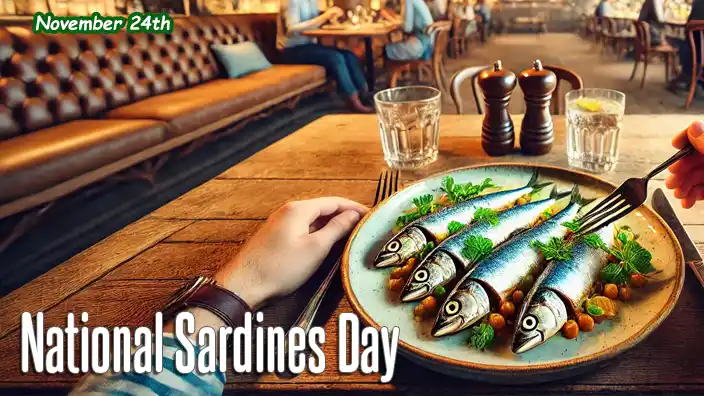
Tiny, shiny, and unapologetically bold, these little fish have a knack for stealing the show at...
-
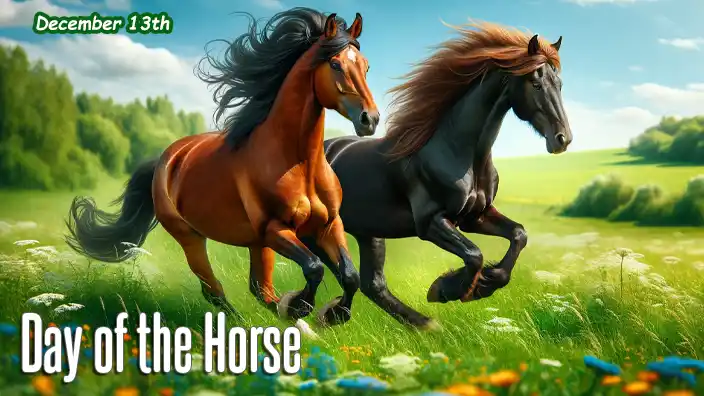
Horses are the comedians of the animal world, even if they don’t realize it. From sneaky maneuvers...
-
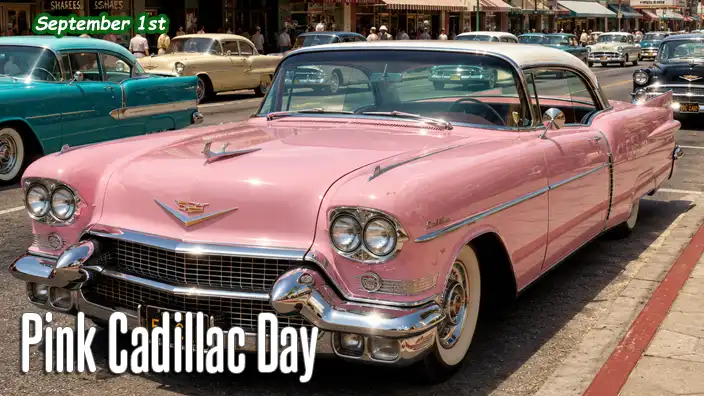
Some cars are built to get you from point A to point B. The Pink Cadillac was built to make sure...

