September 3, 1942, in Lima, Ohio
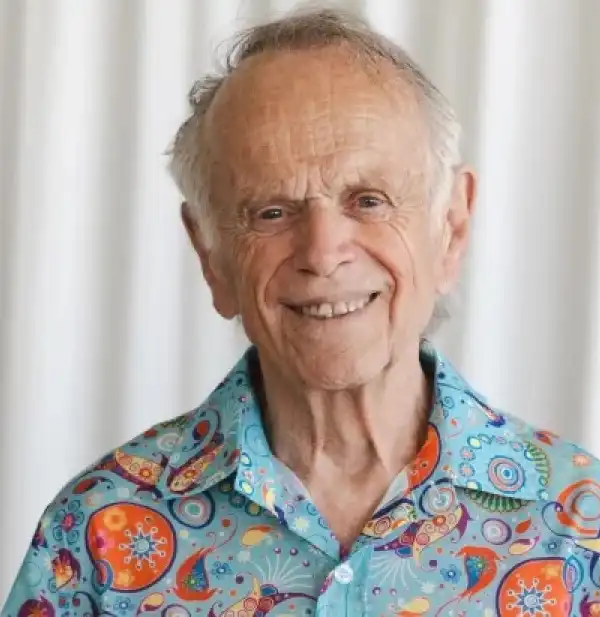
Alan Charles Jardine was born on September 3, 1942, in Lima, Ohio, but his story would become permanently associated with California. His family moved west when he was young, eventually settling in Hawthorne, California, where Jardine attended Hawthorne High School and met a fellow student named Brian Wilson.
That friendship would change popular music.
Jardine and Wilson shared an interest in music, although their tastes were not identical. Jardine had a particular affection for folk music, while Brian was fascinated by vocal harmony, rock and roll and the sophisticated arrangements he heard in groups such as the Four Freshmen. Jardine played guitar and brought his folk influences into the collection of sounds that would eventually become The Beach Boys.
The original group grew largely from the Wilson family. Brian Wilson joined with his brothers Dennis and Carl Wilson, their cousin Mike Love, and Jardine. Together they formed the group that initially performed under names including the Pendletones.
Their first important recording was “Surfin’,” released in 1961. The song established the subject that would help define the band's early public identity, even though Brian Wilson and Al Jardine were not enthusiastic surfers themselves. Dennis Wilson was the brother who actually surfed and recognized that Southern California's growing surf culture might provide useful material for songs.
He was correct.
When the group's record was released, however, the musicians discovered that their name had been changed from the Pendletones to The Beach Boys. The decision had been made without consulting them.
There are worse ways to discover the name of the band you have just co-founded.
Jardine's first period with The Beach Boys was brief. He left the group in 1961 to continue his education, studying at El Camino College and later attending Ferris State College in Michigan, where he pursued dentistry.
It was a respectable and sensible career choice.
Rock and roll eventually won.
Jardine returned to California and rejoined The Beach Boys in 1963. By then the group was becoming enormously successful, with songs celebrating surfing, cars, teenagers, beaches and an idealized version of California life that listeners around the world found irresistible.
His return was particularly valuable because Brian Wilson was becoming increasingly interested in composition, arranging and studio production. Jardine's musicianship and vocal ability helped strengthen the group's live performances while also adding another voice to its increasingly elaborate harmonies.
Those harmonies became one of The Beach Boys' defining characteristics. The individual voices were distinctive, but when combined they created a sound immediately recognizable within seconds. Jardine's tenor was an important component of that blend.
He also became a memorable lead vocalist.
Perhaps the song most closely associated with Jardine's voice is “Help Me, Rhonda.” An earlier version appeared on the 1965 album The Beach Boys Today! under the title “Help Me, Ronda,” but the song was re-recorded and released as a single with the familiar spelling “Help Me, Rhonda.”
With Jardine singing lead, the single reached No. 1 on the Billboard Hot 100 in 1965.
It remains one of The Beach Boys' most recognizable recordings and gave Jardine a permanent place at the front of the group's enormous catalog. Brian Wilson may have written the song with Mike Love, but Jardine's vocal performance helped make Rhonda one of the most frequently summoned women in 1960s popular music.
Jardine also sang lead or prominent vocals on numerous other Beach Boys recordings. His folk background proved particularly valuable when the group began exploring material beyond its familiar surfing and automobile themes.
One of the clearest examples was “Sloop John B.”
Jardine knew the traditional Bahamian folk song through the Kingston Trio's recording and encouraged Brian Wilson to arrange it for The Beach Boys. Brian initially resisted the idea, but Jardine persisted and worked out an arrangement that demonstrated how the song might fit the group.
Wilson then transformed it further with the increasingly sophisticated production techniques he was developing.
The Beach Boys recorded “Sloop John B,” and it became part of the landmark 1966 album Pet Sounds. Released as a single, it became an international hit.
Jardine's suggestion therefore helped place a traditional folk song inside one of the most celebrated albums in popular-music history.
Pet Sounds represented an extraordinary creative leap for The Beach Boys. Brian Wilson increasingly treated the recording studio as an instrument, constructing elaborate arrangements with unconventional combinations of instruments and layers of vocals.
Jardine and the other Beach Boys provided the intricate vocal parts that helped turn those arrangements into something unmistakably theirs.
The album included classics such as “Wouldn’t It Be Nice,” “God Only Knows,” “Caroline, No” and “Sloop John B.” Although its commercial reception in the United States was initially less spectacular than some of the band's earlier albums, its reputation grew enormously. It is now routinely included among the most influential albums ever recorded.
The Beach Boys continued evolving after Pet Sounds, although the band's history became increasingly complicated. Brian Wilson withdrew from regular touring and struggled with mental-health and substance-abuse problems, while other members assumed larger roles in the group's live performances and recordings.
Jardine became one of the dependable figures holding the touring band together.
That contribution is easy to underestimate. The Beach Boys' recordings depended upon extraordinarily precise vocal harmonies, and audiences expected those harmonies to appear onstage night after night. Jardine's voice and musicianship helped maintain the group's recognizable sound as its personnel and internal relationships changed.
He also contributed songs and arrangements.
Among Jardine's notable Beach Boys work was “California Saga: California,” part of the ambitious “California Saga” suite on the 1973 album Holland. Jardine wrote the song and shared writing responsibilities elsewhere within the suite.
The Holland period found The Beach Boys experimenting far beyond the simple surf music with which they remained publicly associated. Jardine's interest in environmental themes, California and American folk traditions increasingly appeared in his contributions.
He also helped adapt “Cotton Fields,” the Lead Belly song, for The Beach Boys. Jardine produced a later version that became a substantial international success, particularly outside the United States.
His affection for folk music had followed him all the way from those early days with Brian Wilson.
The Beach Boys experienced numerous personnel changes, family tensions and business disputes across the decades. Dennis Wilson died in 1983, and Carl Wilson died in 1998. Brian Wilson's participation varied considerably, while disagreements developed among surviving members over touring, management and use of the Beach Boys name.
Through much of that complicated history, Jardine remained closely identified with the band's original musical legacy.
In 1988, The Beach Boys were inducted into the Rock and Roll Hall of Fame. Jardine entered alongside Brian Wilson, Carl Wilson, Dennis Wilson and Mike Love, formally recognizing the extraordinary influence of the group they had created as young men in Hawthorne.
That same year produced one of the strangest chapters in Beach Boys history.
The group released “Kokomo,” recorded for the film Cocktail. Brian Wilson was not involved with the recording, but the song became an enormous hit and reached No. 1 on the Billboard Hot 100.
More than two decades after “Help Me, Rhonda,” The Beach Boys were once again at the top of the American singles chart.
Jardine continued performing with the group until the late 1990s. Following Carl Wilson's death, the surviving members increasingly pursued separate touring arrangements.
Jardine formed Beach Boys Family & Friends, a touring group that included musicians and members of the extended Beach Boys family. Legal disputes concerning the group's name followed, reflecting the increasingly complicated business relationships surrounding one of America's most famous bands.
Despite those disagreements, Jardine continued performing the music.
He also developed solo projects. His album A Postcard from California, eventually released in 2010, drew heavily upon the themes that had followed him throughout his career: California, environmental concerns, folk traditions and the musical relationships created during his years with The Beach Boys.
The album featured an impressive collection of guests, including fellow Beach Boys and other prominent musicians. It demonstrated that Jardine's musical identity extended beyond simply reproducing the band's old hits.
One particularly important reunion arrived in 2012, when surviving Beach Boys Brian Wilson, Mike Love, Al Jardine, Bruce Johnston and David Marks came together for the group's 50th anniversary.
The reunion produced the album That’s Why God Made the Radio and an extensive international tour.
For longtime fans, seeing Wilson, Love and Jardine sharing a stage again carried enormous historical significance. The relationships inside The Beach Boys had rarely been simple, but the sound they created together remained powerful enough to fill venues half a century after “Surfin’.”
The reunion album also performed strongly, reaching the upper reaches of the Billboard album chart and demonstrating that The Beach Boys remained commercially relevant decades after their first recordings.
After the anniversary tour, Jardine increasingly performed alongside Brian Wilson, joining Wilson's touring band for concerts celebrating Pet Sounds and other parts of the Beach Boys catalog.
The arrangement seemed particularly appropriate. The friendship between Jardine and Wilson stretched back to Hawthorne High School, long before either could have imagined that people would still be paying to hear their songs more than sixty years later.
Jardine has also performed with his son Matt Jardine, himself a gifted singer whose high vocal range became particularly valuable during Brian Wilson's later concerts. Seeing father and son performing Beach Boys material added another generation to music already deeply rooted in family relationships.
In 2001, The Beach Boys received the Grammy Lifetime Achievement Award, further recognizing their lasting importance to American music.
The band's influence is difficult to overstate. The Beach Boys began with songs that appeared deceptively simple — surfing, cars, school, girls and summer — but Brian Wilson's increasingly ambitious compositions and arrangements transformed them into one of the most innovative groups of the 1960s.
Jardine's contribution was different from Brian Wilson's, but essential nonetheless.
He was a strong guitarist, a reliable touring musician, an important harmony singer and an occasional lead vocalist whose voice became attached to some of the band's best-known recordings. His folk-music interests also introduced material and influences that expanded the group's repertoire.
And then there is “Help Me, Rhonda.”
For many musicians, singing lead on a single No. 1 record would constitute an entire career highlight. For Jardine, it sits inside a catalog containing “Good Vibrations,” “California Girls,” “I Get Around,” “Wouldn’t It Be Nice,” “God Only Knows,” “Surfin’ U.S.A.,” “Fun, Fun, Fun” and dozens of other songs embedded in American popular culture.
He also occupies a special place in the group's history as one of its founding members who was neither a Wilson brother nor their cousin Mike Love. He was Brian's school friend — the folk-loving guitarist who joined the family group and became part of something far larger than any of them initially imagined.
Born on September 3, Al Jardine helped create music that permanently connected The Beach Boys with an idealized California of blue skies, fast cars, beaches and endless summers. More importantly, he helped create the harmonies that allowed the band to grow far beyond that original image.
Had Jardine remained committed to dentistry, Hawthorne might have gained a perfectly respectable dentist.
Popular music, however, would have lost a Beach Boy.
And somewhere along the line, poor Rhonda would have had to find somebody else to help.