Mark The Days - January

January kicks down the door shouting, “New year, new you!” while most of us are still digesting cheese logs and trying to remember what day it is. It’s a month built on resolutions, optimism, and the subtle judgment of kale. The parties are over, the decorations are down, and suddenly everyone’s into self-improvement and budgeting—until about the 12th. But January has its perks: fresh starts, fresh calendars, and the joy of celebrating completely random things like National Bubble Bath Day (because self-care still counts if it’s slippery). It’s cold, it’s hopeful, and it’s mostly held together with caffeine.

- Details
The croissant: the ultimate culinary plot twist in the world of baked goods. It's as if a loaf of bread and a stick of butter had a delicious rendezvous in Paris. This flaky, buttery crescent is not just a pastry, it's an experience. Eating a croissant is like a mini adventure for your taste buds – you never know when you'll encounter a buttery landslide or a flaky avalanche. Perfect for breakfast, lunch, or whenever you want to pretend you're sipping coffee on the Seine, the croissant is the ultimate "I'm fancy but also like to crumble everywhere" statement. It's the James Bond of pastries: sophisticated, a bit messy, and always leaves you wanting more.
Celebrated: Annually, on January 30th
Join the delicious celebration of National Croissant Day! Learn the croissant's intriguing history, fun ways to celebrate, and amusing facts about Croissants.


- Details
Dr. Martin Luther King, Jr. was the rare kind of leader who could command a crowd with the power of his voice and leave everyone thinking, "I need to step up my game." Known for his unwavering commitment to justice and equality, he managed to march miles in dress shoes—an accomplishment in itself—while delivering speeches so moving they could turn cynics into dreamers. Dr. King had a way of blending moral gravity with an unshakeable hope that made you feel like he was inviting you to join history’s greatest group project. And let’s be honest, if you had him in your corner during a debate, you might as well sit back and let him do the talking.
Celebrated: Annually, on the Third Monday in January
Martin Luther King, Jr. Day is a federal holiday for remembrance and action, honoring Dr. King's legacy in the fight for racial equality and justice.

- Details
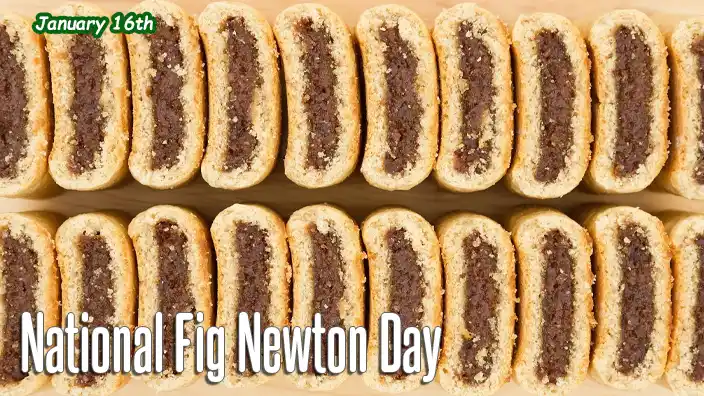
When it comes to fruits, figs are the mysterious, eyebrow-raising cousins in the fruit family. They're not flashy like strawberries, nor do they have the universal appeal of apples. Instead, figs are the understated, enigmatic characters you might find in a spy novel, quietly hiding their sweet secrets under a modest, bulbous exterior. They've been around since ancient times, probably gossiping in the background about historical events. Rumor has it that they were Cleopatra's favorite snack – talk about having a taste for drama! And if that wasn't enough, figs play hard to get, ripening only when they're good and ready, ensuring every bite is an adventure in timing and patience. In short, figs are the fruit equivalent of a wise, old sage with a mischievous twinkle in their eye, always ready to surprise you with their depth of flavor and ancient anecdotes.
Celebrated: Annually, on January 16th
Discover the joys of National Fig Newton Day! Dive into the history, fun facts, and unique ways to celebrate this beloved fig-filled treat every January 16th.

- Details
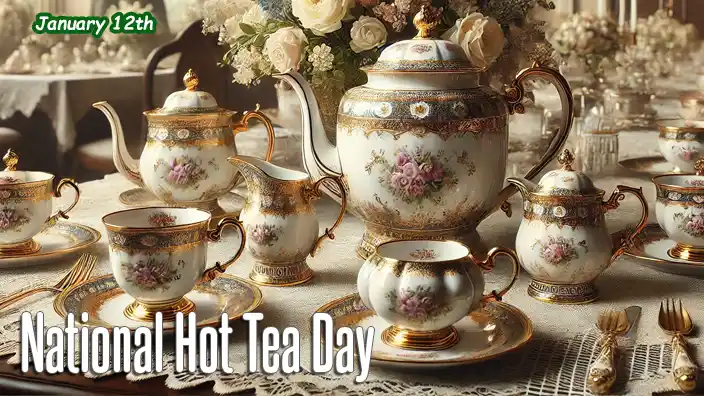
On a chilly day, there’s nothing quite like wrapping your hands around something warm and inviting, as if it’s been waiting its whole life just to comfort you. The aroma dances up, tickling your nose, and suddenly you’re transported to a moment of peace, no matter how chaotic the world around you might be. Then, with the first sip, it whispers, “Relax, I’ve got you.” It’s not flashy or demanding—just quietly excellent at making everything feel a little better, one steamy moment at a time.
Celebrated: Annually, on January 12th
Celebrate National Hot Tea Day on January 12th with rich traditions, delightful rituals, and the comforting warmth of tea that connects cultures worldwide.

- Details
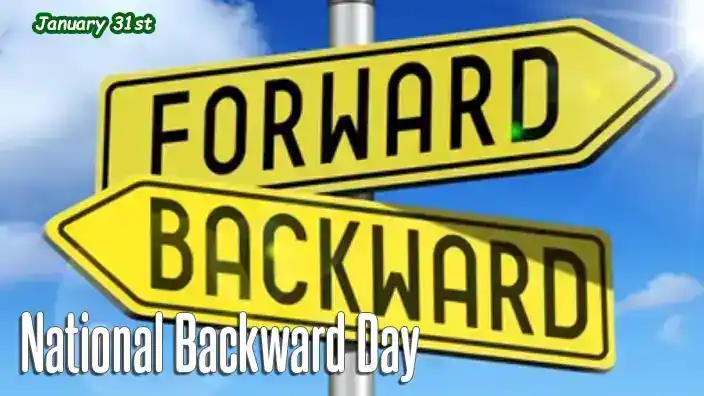
Imagine a world where doing everything backward is the norm. You start your day by tucking yourself into bed, only to alarmingly wake up and eat dessert for breakfast. In this topsy-turvy reality, you walk backward to work, somehow always arriving before you leave, and your coffee drinks you to wake up itself. Emails are written in reverse, starting with the signature, making 'Regards' the new 'Hello.' Books read like spoilers, movies end at the beginning, and your dog takes you for walks, often leading to the vet for a treat. In this backward world, the only thing moving forward is time, stubbornly refusing to join the backward bandwagon. But hey, at least your socks finally match, because, well, you put them on last!
Celebrated: Annually, on January 31st
Join the whimsical world of National Backward Day! Uncover the quirky origins, fun traditions, and hilarious ways to celebrate this topsy-turvy day.

- Details
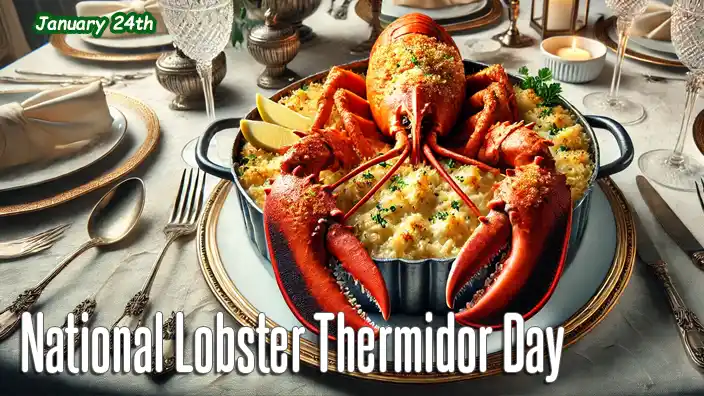
Walking into a fancy restaurant and spotting the menu's most expensive item always feels like a dare. You could play it safe with the salmon, but where’s the drama in that? Instead, you find yourself nodding confidently, knowing full well that ordering Lobster Thermidor will simultaneously empty your wallet and elevate your status to "person who knows what Thermidor even means." It’s not just a meal; it’s a statement—a cheesy, brandy-soaked, breadcrumb-topped statement that says, "Tonight, I dine like royalty, and tomorrow, I survive on instant noodles."
Celebrated: Annually, on January 24th
Discover the rich history and decadent recipe of Lobster Thermidor, a gourmet delight that transforms any meal into a lavish dining experience.

- Details
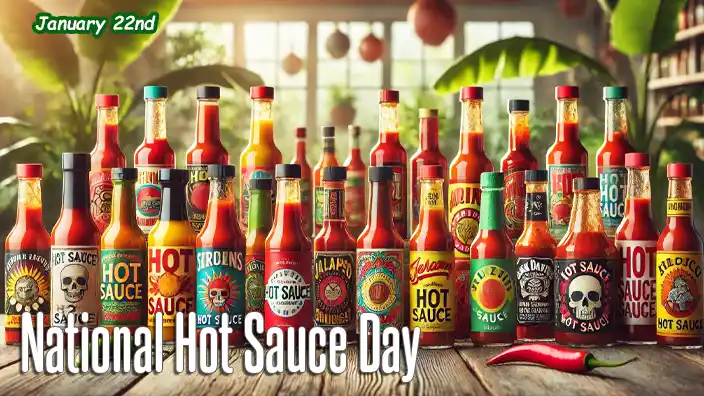
Some like to live on the edge, while others wonder why their tongues are suddenly auditioning for a fire-breathing dragon role. That’s the magic of hot sauce—it’s a personality test in liquid form. For the spice warriors, it’s a thrilling adventure, a badge of honor to endure the heat. Meanwhile, the milder crowd can often be seen flailing for water, tears streaming, questioning why they ever trusted a condiment with a skull on the label. It’s not just a sauce; it’s a rite of passage, a gamble, and for some, a comedic disaster waiting to happen.
Celebrated: Annually, on January 22nd
Discover the fascinating world of hot sauce, from its ancient origins to modern culinary uses, and learn how to celebrate National Hot Sauce Day with flair.

- Details
Your cat may never forgive you for this, and your dog will wag its tail in confused joy. Imagine your furry friend dressed as a tiny astronaut, a miniature superhero, or a small, disgruntled dragon. It’s the perfect chance to prove that fashion isn’t just for humans, and the only day of the year your pet might accidentally become an Instagram sensation—or plot their stylish revenge.
Celebrated: Annually, on January 14th
National Dress Up Your Pet Day is a fashion fiesta where pets become fashion icons, turning sidewalks into runways and dog parks into paparazzi hotspots.

- Details
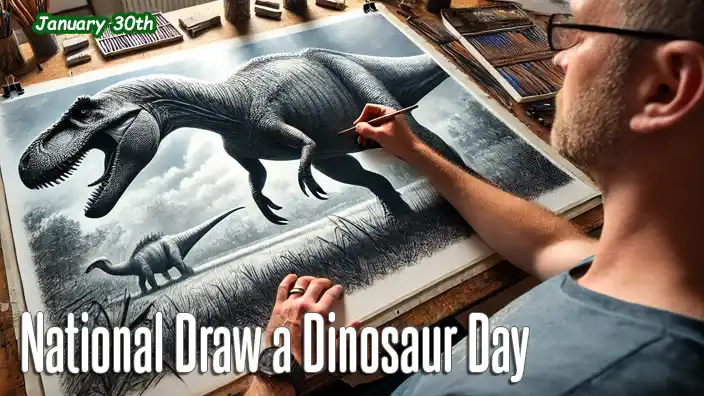
Who knew that creating a prehistoric masterpiece could lead to such existential questions? Like, did Stegosauruses have fabulous, rainbow-colored plates, or were they rocking a more subdued, earthy vibe? And let’s not even talk about the pressure of getting those T-Rex arms just right—one wrong move and you’ve turned a fearsome predator into the world’s angriest toddler. Drawing dinosaurs is less about accuracy and more about embracing the chaos—because if science hasn’t figured it all out yet, your polka-dotted Triceratops is as valid as anyone else’s!
Celebrated: Annually, on January 30th
Join artists and dinosaur enthusiasts on January 30th for National Draw a Dinosaur Day. Learn tips, techniques, and have fun creating your dinosaur masterpieces.


- Details
Peering up with wide eyes and a tail swishing like a metronome, it’s clear they’re plotting their next interrogation. Why does the food bowl have a bottom? What sorcery makes the red dot vanish into thin air? And most importantly, how dare you sit in their chair when they’ve clearly marked it with fur? Cats don’t just ask questions—they demand answers, preferably while knocking something off the table to ensure you’re paying attention.
Celebrated: Annually, on January 22nd
Uncover the humorous thoughts of cats on National Answer Your Cat's Questions Day. Join the laughter as you attempt to answer their quirky queries.

- Details
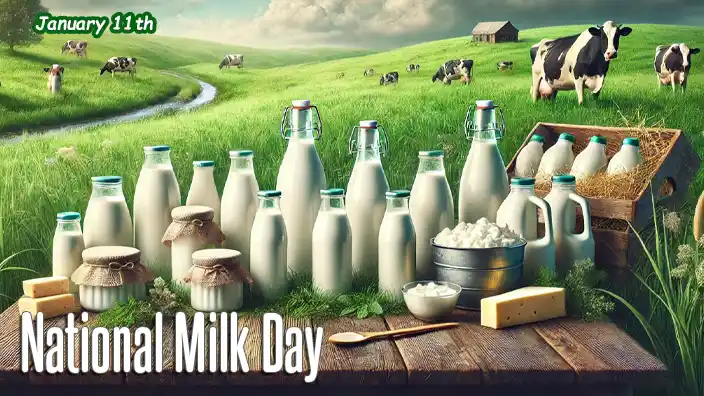
In the grand hierarchy of beverages, there’s one that manages to be both the breakfast champion and the unsung hero of dessert. Whether it's swirling into coffee, cushioning a spoonful of cereal, or transforming into rich, creamy cheese, it quietly makes life better with every pour. It doesn’t demand attention or come with flashy flavors—its charm lies in its simplicity. But let’s be honest, the real magic is its universal appeal. From toddlers with mustaches to cats sneaking sips, it has a way of winning everyone over without breaking a sweat.
Celebrated: Annually, on January 11th
Explore the rich history and cultural significance of milk, from its ancient origins to modern alternatives, and celebrate National Milk Day.


- Details
Human trafficking, a sinister shadow cast across the globe, stands as a stark reminder of the profound depths of human exploitation. It's a world where innocence is stolen and freedom traded for profit, ensnaring millions in invisible chains of coercion and despair. This modern-day slavery, transcending borders and touching lives in every corner of the earth, thrives in the silence of ignorance and apathy. It is a relentless assault on human dignity, a chilling echo of how the most fundamental rights can be so brutally snatched away. Yet, in the heart of this darkness lies the resilient spirit of survivors and the unwavering resolve of those who fight to extinguish this scourge, offering a beacon of hope that one day, this blight on humanity will be eradicated.
Celebrated: Annually, on January 11th
Human Trafficking Awareness Day sheds light on the insidious crime of human trafficking, urging action to combat this global challenge and support survivors.

- Details
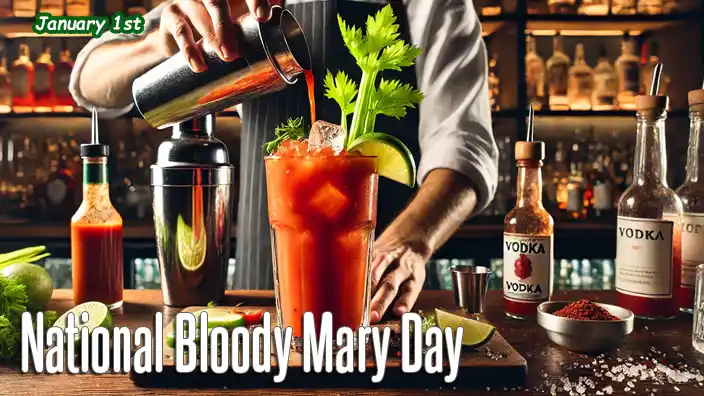
When it comes to versatile cocktails, few are as creative as the Bloody Mary. It’s the only drink that lets you combine vodka with vegetables and somehow call it classy. People consume it for all sorts of reasons: to battle a hangover with a side of spice, to feel like they’re getting their daily serving of greens, or because sipping vodka with a celery garnish feels like multitasking. Whether it’s the allure of hot sauce or the promise of hair-of-the-dog magic, the Bloody Mary has earned its place as the ultimate brunch companion.
Celebrated: Annually, on January 1st
Explore the rich history, creative variations, and cultural significance of the Bloody Mary, the ultimate morning-after cocktail celebrated on National Bloody Mary Day.


- Details
Stephen Foster’s legacy might seem like a serious matter, but let’s not forget the lighter side of his genius. After all, this is the man who managed to turn the simple act of going to a race into the unforgettable refrain of “doo-dah, doo-dah.” One can only imagine Foster, quill in hand, chuckling as he wrote the lyrics. Perhaps he mused, “If this doesn’t get folks singing with a smile, nothing will!” His knack for blending heartfelt themes with catchy, whimsical tunes proves that even in the 19th century, life’s soundtrack needed a bit of fun.
Celebrated: Annually, on January 13th
Celebrate Stephen Foster Memorial Day, honoring the 'Father of American Music' with singalongs, Southern comfort food, and reflections on his timeless melodies.


- Details
This is the only drink that makes you wonder if you’re a health guru or a mad scientist. Each sip is a fizzy gamble – will it be delightfully tangy or a face-scrunching brew? Brewing it is like hosting a tiny alien in a jar: "Here's my pet SCOBY, Bob. We feed him sweet tea, and in return, he gifts us this mystical, effervescent potion." Kombucha's like the hipster of beverages – it was fermenting before fermenting was cool, floating around in its jar, judging your store-bought drinks. So, here's to kombucha, the drink that's as unpredictable and lively as a spontaneous dance party in your mouth!
Celebrated: Annually, on January 15th
National Booch Day! Our humorous take on kombucha's quirky world, from SCOBY tales to home-brewing adventures. Celebrate the effervescence.

- Details
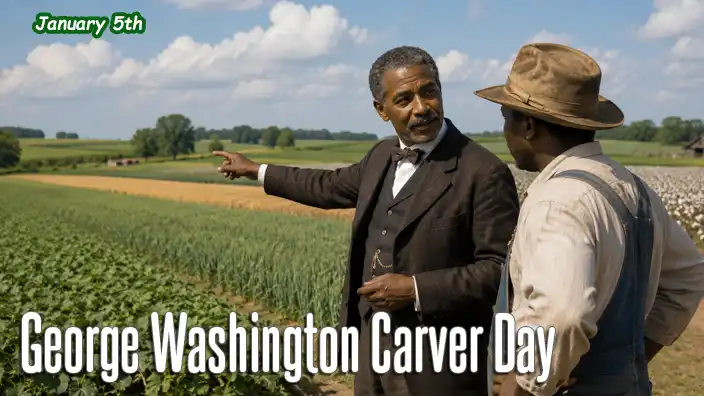
George Washington Carver Day is one of those observances that quietly reminds us that some of history's greatest achievements did not come from politics, military victories, or enormous fortunes. Instead, they came from a man who looked at a handful of soil, a peanut, and a sweet potato and asked, "What else can these become?" It turns out the answer was "quite a lot." While many of us struggle to decide what to do with leftovers in the refrigerator, George Washington Carver found hundreds of practical uses for everyday crops and forever changed American agriculture.
Celebrated: Annually, on January 5th
Discover how George Washington Carver's curiosity and compassion helped farmers, protected the land, and proved that even a simple peanut can have an extraordinary story

- Details
Personal trainers are the only people who can make you question your life choices with a smile. They somehow convince you that holding a plank for 60 seconds is more fun than binge-watching your favorite show, all while reminding you to “engage your core” like it’s the magic phrase that will unlock the secrets of the universe. And just when you think you’ve survived, they hit you with the dreaded words: “Let’s finish strong!” which is trainer-speak for “I’m about to ruin your day—but in a good way.”
Celebrated: Annually, on January 2nd
Explore the rich history and vital role of personal trainers in our fitness journeys, from ancient Greece to modern-day wellness coaching.


- Details
Humiliation Day symbolizes a commitment to understanding and compassion rather than causing embarrassment. It encourages a reflection on historical events and personal behaviors, underscoring the importance of treating everyone with respect and empathy. This day is a reminder of the adverse effects of humiliation and serves as an opportunity to foster a more inclusive and kinder society. Its unique history across different cultures and its modern significance in the digital age both emphasize the value of dignity and the power of empathy in our interactions. Humiliation Day is thus a call to action for positive change, advocating for awareness and sensitivity in how we treat others.
Celebrated: Annually, on January 3rd
Explore the significance of Humiliation Day, a day of historical reflection, empathy, and healing. Learn about its observance in the US, Canada, and the modern digital era.

From Our Marks Catelog
-

Peace for one hour? That’s like baking a cake and only eating the crumbs! If we can manage to...
-

There was a time when wearing pink to school might earn you a raised eyebrow, a snicker, or a...
-

Picture this: you're rummaging through a drawer, looking for a pen, but instead, you find a flip...
-

There’s nothing light about Good Friday—after all, it commemorates the darkest day in Christian...
-

Mental health is not just a personal matter—it's a global issue that affects millions of lives...
-

Having a hole in your bucket is nature’s way of saying, “You tried.” It’s the DIY version of a practical...

