September 9, 1966, in Brooklyn, New York
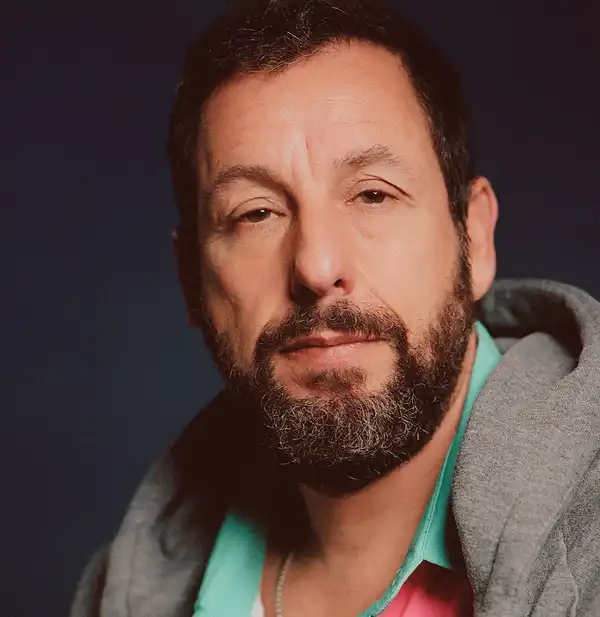
Adam Richard Sandler was born on September 9, 1966, in Brooklyn, New York, to Stanley Sandler, an electrical engineer, and Judith Sandler, a nursery school teacher. His family moved to Manchester, New Hampshire, when he was a child, and it was there that he developed much of the humor that would eventually become his professional calling card. Sandler was the class clown, the sort of student who could probably turn a routine attendance check into a performance. His family encouraged his interest in comedy, and his older brother Scott played an important role in persuading him to try stand-up.
At seventeen, Sandler made his first appearance at a comedy club in Boston after his brother encouraged him to get onstage. The experience revealed that making strangers laugh was something he wanted to pursue seriously. He later attended New York University’s Tisch School of the Arts, graduating in 1988 with a Bachelor of Fine Arts degree. While studying, he performed regularly at comedy clubs and college venues, developing the mixture of character voices, musical humor, and absurd observations that would become central to his work. His education gave him a foundation in performance, although his future career would suggest that the most valuable lesson was learning how to make an audience laugh at something nobody else would have thought to say.
Sandler’s early television work included a recurring role as Smitty, a friend of the Huxtable family, on The Cosby Show. He also appeared on MTV’s game show Remote Control, where his comic characters and improvisational energy helped bring him to the attention of a wider audience. His first feature film was Going Overboard in 1989, a low-budget comedy in which he played a struggling comedian working aboard a cruise ship. The film was hardly a major Hollywood breakthrough, but it gave him experience as a leading performer and provided an early example of his willingness to throw himself into an outrageous premise.
A major turning point came when comedian Dennis Miller saw Sandler performing in Los Angeles and recommended him to Saturday Night Live producer Lorne Michaels. Sandler joined the program as a writer in 1990 and became a featured performer the following year. His time on the show introduced audiences to a distinctive comic style built around exaggerated characters, unexpected voices, and songs that could move from childish nonsense to surprisingly clever satire. Among his memorable creations were Opera Man, Canteen Boy, and the Gap Girls, while his musical performances became an important part of his popularity.
Sandler’s songs on Saturday Night Live helped establish him as a comedian who could make music an integral part of the joke. “The Chanukah Song,” first performed on the show in 1994, became one of his best-known pieces, celebrating Jewish identity through a humorous list of famous people. His comedy albums also found a substantial audience. They’re All Gonna Laugh at You! was released in 1993, followed by What the Hell Happened to Me? in 1996 and Stan and Judy’s Kid in 1999. These recordings combined sketches, songs, and the kind of humor that made parents wonder whether they had accidentally purchased the wrong album. Sandler received Grammy nominations for his comedy recordings, demonstrating that his musical work had become a significant part of his career rather than merely an occasional television novelty.
After leaving Saturday Night Live in 1995, Sandler moved decisively into feature films. Billy Madison, released that year, starred him as the immature son of a wealthy hotel owner who must repeat his school education to prove himself capable of taking over the family business. The film was not a critical favorite, but it became a cult comedy and established Sandler’s screen persona: an emotionally immature man whose ridiculous behavior conceals a capacity for loyalty and growth. It also proved that audiences were willing to follow him through a story in which a grown man returning to elementary school was treated as a reasonable business succession plan.
The following year brought Happy Gilmore, in which Sandler played a failed hockey player who discovers that his powerful slap shot can be adapted to golf. His unconventional approach to the sport, complete with a running start and a temperament that would alarm most country club committees, made the film a major comedy success. The supporting cast included Christopher McDonald as the arrogant Shooter McGavin, Carl Weathers as Chubbs Peterson, and Julie Bowen as Virginia Venit. The film became one of Sandler’s most enduring favorites, with its mixture of sports comedy, memorable characters, and a hero who approached golf etiquette as though it were a personal insult.
Sandler followed these successes with The Wedding Singer in 1998, opposite Drew Barrymore. Set in the 1980s, the film featured him as Robbie Hart, a wedding singer whose own romantic life collapses just as he meets Julia, played by Barrymore. The movie offered a warmer and more romantic version of Sandler’s comedy, allowing him to demonstrate genuine chemistry with his co-star while still indulging in musical humor and period nostalgia. Their partnership became one of his most popular screen collaborations, and they later reunited for 50 First Dates in 2004 and Blended in 2014. Together, they developed a comfortable comic rapport that made their films feel less like two stars meeting on a set and more like old friends trying to solve a romantic problem before the credits rolled.
Also in 1998, Sandler starred in The Waterboy, playing Bobby Boucher, a socially awkward water boy who becomes a formidable college football player. The film was another major commercial success and introduced one of his most recognizable characters, complete with a distinctive voice and an extraordinary ability to tackle opponents. Kathy Bates played Bobby’s protective mother, while Henry Winkler portrayed the coach who recognizes his athletic potential. The movie’s broad humor divided critics, but audiences embraced it, and it helped cement Sandler’s position as one of Hollywood’s leading comedy stars.
In 1999, Big Daddy gave Sandler a slightly more sentimental role as Sonny Koufax, an irresponsible man who unexpectedly finds himself caring for a young boy. The film combined his familiar comic immaturity with a story about responsibility and affection, and it became another box-office hit. Around this period, Sandler also established Happy Madison Productions, named after Happy Gilmore and Billy Madison. The company became the production home for many of his films and projects featuring his friends and collaborators, including Rob Schneider, David Spade, Kevin James, Steve Buscemi, and others. It allowed Sandler to maintain creative control and build a recognizable comedy brand, while also ensuring that his friends could continue finding themselves in increasingly improbable situations.
The early 2000s brought a succession of films, including Little Nicky, Mr. Deeds, Anger Management, 50 First Dates, and The Longest Yard. Sandler’s comedies frequently relied on familiar themes: an outsider struggling with expectations, a man-child forced to grow up, or an ordinary person pushed into extraordinary circumstances. His films were often criticized for crude humor, predictable plots, or uneven quality, but they consistently attracted audiences. Sandler’s appeal rested partly on his willingness to appear ridiculous without seeming embarrassed by it. He was not trying to be the most sophisticated person in the room; he was usually trying to find out what would happen if the least sophisticated person in the room was suddenly given responsibility.
A major departure came in 2002 with Punch-Drunk Love, directed by Paul Thomas Anderson. Sandler played Barry Egan, a lonely and emotionally troubled businessman whose life changes when he begins a relationship with a woman played by Emily Watson. The film used elements of Sandler’s familiar persona—anger, awkwardness, and social discomfort—but placed them within a serious, unconventional romantic drama. His performance received widespread critical acclaim and earned him a Golden Globe nomination. It demonstrated that the qualities that made him effective in broad comedy could also be used to create a deeply sympathetic dramatic character.
Sandler continued to explore more serious material in Reign Over Me in 2007, playing a man struggling with grief after losing his family in the September 11 attacks. Opposite Don Cheadle, he delivered a restrained performance that contrasted sharply with his more outrageous comedy roles. He later appeared in Judd Apatow’s Funny People in 2009, portraying a successful comedian confronting a serious illness and the emptiness of his personal life. The film drew upon Sandler’s experience in stand-up and Hollywood, offering a darker examination of fame, friendship, and the emotional cost of a life devoted to making people laugh.
At the same time, Sandler remained committed to mainstream comedy. Films such as Grown Ups, Just Go with It, Jack and Jill, That’s My Boy, and Grown Ups 2 continued to attract audiences, even when critics were less enthusiastic. His work during this period illustrated the divide that has often existed between critical reception and popular success. Some of his films received harsh reviews, while others became substantial commercial hits or developed loyal followings. Sandler has generally appeared more interested in entertaining his audience and working with people he enjoys than in tailoring every project to critical expectations.
In 2012, Sandler introduced another successful character when he voiced Count Dracula in Hotel Transylvania. The animated film, directed by Genndy Tartakovsky, imagined a hotel where monsters could relax away from humans, only for Dracula’s plans to be disrupted by his daughter’s growing independence. Sandler’s voice performance brought his familiar comic energy to a family audience, and he returned for the sequels Hotel Transylvania 2 and Hotel Transylvania 3: Summer Vacation. The franchise demonstrated that his humor could work effectively in animation, where his exaggerated voices and expressive delivery were particularly well suited to the medium.
Sandler’s career entered another important phase with The Meyerowitz Stories (New and Selected) in 2017, directed by Noah Baumbach. He played Danny Meyerowitz, one of the adult children of a difficult artist and father portrayed by Dustin Hoffman. The ensemble also included Ben Stiller and Emma Thompson. Sandler’s performance was praised for its emotional depth and naturalism, showing a man whose frustrations and disappointments were expressed through small gestures rather than broad comic explosions. The film reinforced the idea that his dramatic abilities had been present throughout his career, even if they were not always the qualities his most commercially successful movies required.
In 2019, Sandler delivered one of his most acclaimed performances in Uncut Gems, directed by Josh and Benny Safdie. He played Howard Ratner, a New York jewelry dealer and compulsive gambler whose increasingly desperate decisions create a relentless chain of financial and personal crises. The film’s intense pace and Sandler’s committed performance earned widespread critical praise. He won the Independent Spirit Award for Best Male Lead, along with numerous critics’ honors. Howard was a character whose ability to make a bad situation worse seemed almost supernatural, and Sandler portrayed him with an energy that made the audience feel every disastrous decision.
The success of Uncut Gems helped reshape perceptions of Sandler as a dramatic actor. His performance was widely discussed during awards season, and many critics considered his omission from the Academy Award nominations a significant surprise. Sandler responded to the attention with characteristic humor, but the film had already achieved something important: it made it impossible to dismiss his dramatic work as an occasional curiosity. He had demonstrated that he could carry a demanding, high-stakes film without relying on the familiar structure of his comedies.
In 2022, Sandler starred in Hustle, a basketball drama in which he played Stanley Sugerman, a Philadelphia 76ers scout who discovers a talented young player in Spain. The film combined Sandler’s genuine enthusiasm for basketball with a story about mentorship, perseverance, and the pursuit of opportunity. His performance received strong reviews and earned a Screen Actors Guild Award nomination. Unlike many of his earlier sports comedies, Hustle treated the game seriously, allowing Sandler to portray a character whose knowledge and passion were central to the story. It was a reminder that his love of basketball is not merely a convenient excuse to wear shorts to work.
Sandler also continued producing and starring in projects for Netflix, including Murder Mystery and its sequel with Jennifer Aniston, Hubie Halloween, and the animated film Leo. In 2023, he appeared in You Are So Not Invited to My Bat Mitzvah, alongside his daughters Sadie and Sunny and his wife Jackie. The film brought his family into a coming-of-age comedy centered on friendship, adolescence, and the social complications of a major family celebration. His family members have appeared in a number of his productions, reflecting the close connection between his personal and professional worlds.
In 2024, Sandler starred in the science-fiction drama Spaceman, playing a Czech astronaut whose isolation in space leads to an unusual encounter with a mysterious creature. He also released the Netflix stand-up special Adam Sandler: Love You, directed by Josh Safdie. The special returned him to the mixture of songs, jokes, and unpredictable comic moments that had helped launch his career. It demonstrated that, despite decades of film success, Sandler remained interested in the direct connection between a comedian and an audience.
The year 2025 brought the long-awaited return of one of his most famous characters in Happy Gilmore 2. Sandler reprised the role of Happy Gilmore, with familiar cast members and new appearances from professional golfers and entertainment figures. The sequel revisited the world of the original film while acknowledging the passage of time and the changes in Happy’s life. Sandler also appeared in Noah Baumbach’s Jay Kelly, starring George Clooney, playing Ron Sukenick, the longtime manager and friend of a famous actor. His performance earned a Golden Globe nomination for Best Supporting Actor, adding another notable dramatic role to his career.
Sandler’s contributions to American comedy were formally recognized in 2023 when he received the Mark Twain Prize for American Humor from the Kennedy Center. The honor celebrated his influence on stand-up, television, film, and popular culture, with fellow comedians and collaborators paying tribute to his work. He also received a star on the Hollywood Walk of Fame in 2011 and has earned numerous awards and nominations throughout his career. His success has extended beyond acting to writing, producing, music, and the development of projects through Happy Madison Productions.
Away from the screen, Sandler is known for his close friendships with longtime collaborators and his devotion to his family. He married actress Jackie Titone in 2003, and they have two daughters, Sadie and Sunny. He has frequently included family members and friends in his films, creating a working environment that resembles an extended reunion with cameras, catering, and considerably more expensive practical jokes. His casual clothing and unpretentious public manner have also become part of his image, making him one of the few Hollywood stars whose everyday wardrobe is more likely to inspire a trip to the sporting goods store than a fashion magazine.
Adam Sandler’s career is unusual because it has succeeded on several different levels. He is a major comedy star whose films have entertained generations of viewers, a musician whose humorous songs have become cultural favorites, a producer who has built a lasting entertainment company, and a dramatic actor capable of delivering performances of considerable depth. His work has not always pleased critics, and his comedy has never been designed to suit every taste, but his influence and popularity are undeniable.
His birthday is an opportunity to celebrate the full range of that career, from the absurdity of Billy Madison and the golf-course chaos of Happy Gilmore to the emotional intensity of Uncut Gems and the quiet determination of Hustle. Sandler has built a career by trusting his instincts, working with people he values, and refusing to abandon the humor that made him famous. Whether he is playing a man-child, a desperate gambler, a basketball scout, or a singing lizard, he remains unmistakably Adam Sandler—and there is a good chance he is still wearing the shorts.