September 16, 1963, in Chicago, Illinois
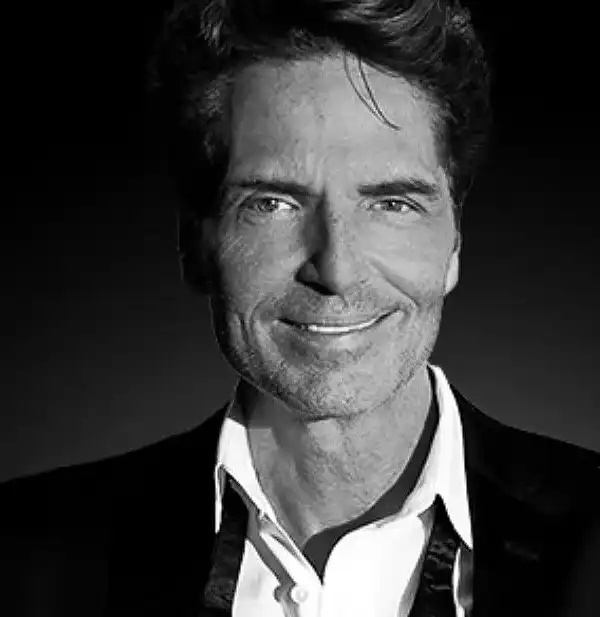
Richard Noel Marx was born on September 16, 1963, in Chicago, Illinois, into a family where music was not merely entertainment but the family business. His father, Dick Marx, was a successful jazz pianist, arranger and composer who became particularly well known for creating music for commercials, while his mother, Ruth, was a singer. Richard therefore grew up surrounded by recording sessions, melodies, arrangements and the practical realities of making a living from music. He began singing professionally while still a child, performing on commercial jingles written or produced by his father. Long before millions of listeners knew his voice from the radio, people had already heard it selling them things.
Those early jingle sessions gave Marx an unusual education. Recording studios were familiar territory rather than mysterious temples he first encountered after becoming famous, and he learned how musicians, singers, producers and engineers assembled finished recordings. His father also taught him about songwriting and arrangement, while the younger Marx developed ambitions that extended beyond commercial work. He wanted to write and perform his own music, although convincing the recording industry that it shared this ambition would take considerably longer.
A major opportunity arrived while Marx was still a teenager. He sent some of his songs to Lionel Richie, who was then enjoying enormous success with the Commodores and preparing to establish himself as a solo artist. Richie heard enough potential to encourage Marx to come to Los Angeles. Marx made the move and began working as a background vocalist, entering the professional recording world from the side door rather than marching directly to center stage.
Marx sang backing vocals on Richie's recordings and also found session work with other prominent artists. His voice can be heard on projects involving performers including Whitney Houston and Madonna, and he gradually became part of the Los Angeles studio community. These jobs paid the bills and placed him around successful musicians, but Marx remained determined to become a songwriter and recording artist in his own right. Record companies were considerably less convinced.
He encountered repeated rejection while shopping his material. Labels heard his demos and declined to sign him, sometimes suggesting that his music did not fit comfortably into whatever category executives believed they could sell at that particular moment. It is one of the recurring pleasures of popular music history that songs eventually heard by millions of people were frequently preceded by somebody in an office confidently deciding that nobody wanted them.
Marx also began establishing himself as a songwriter for other performers. One of his important early successes came through Kenny Rogers. Marx co-wrote “Crazy,” which Rogers recorded for his 1984 album What About Me? and which became a major country hit. He later contributed additional material to Rogers, including “What About Me?” and “The Heart of the Matter.” The success demonstrated that even if record companies were reluctant to sell Richard Marx as Richard Marx, established artists were perfectly happy to sing Richard Marx songs.
Eventually EMI Manhattan Records gave him the opportunity he had been pursuing. His self-titled debut album, Richard Marx, was released in 1987, and the years of rejection suddenly began looking rather foolish.
The album produced four major hit singles. “Don't Mean Nothing,” a muscular rock song about the darker side of the entertainment industry, introduced Marx to mainstream audiences and reached the Billboard Top Five. It was followed by “Should've Known Better,” “Endless Summer Nights” and “Hold On to the Nights.” All four became Top Five hits, with “Hold On to the Nights” reaching No. 1 on the Billboard Hot 100.
That first album immediately established an important characteristic of Marx's career: he was not exclusively a ballad singer. “Don't Mean Nothing” leaned heavily into rock, while the other singles ranged from polished pop-rock to romantic ballads. His voice could handle both, but radio audiences showed a particular enthusiasm for the emotional songs, and Marx would soon provide them with one of the biggest of his career.
His second album, Repeat Offender, arrived in 1989 and transformed an already successful singer into an international star. The album included “Satisfied,” which reached No. 1 on the Billboard Hot 100, followed by “Right Here Waiting,” which also reached the top of the chart. With “Hold On to the Nights” from the previous album, Marx had scored three consecutive No. 1 singles.
“Right Here Waiting” became the song most permanently associated with him. Marx wrote it while separated from actress Cynthia Rhodes, whom he later married, during a period when she was away filming. The song began as a deeply personal expression of longing rather than something deliberately manufactured for the charts. Its simple piano introduction, restrained arrangement and direct lyrics gave it an intimacy that distinguished it from many of the enormous power ballads dominating late-1980s radio.
The record became a worldwide hit. “Right Here Waiting” topped the Billboard Hot 100 and reached major chart positions internationally, while becoming one of those songs almost impossible to separate from its era. It has subsequently been covered by numerous performers and remained a fixture of romantic playlists, wedding selections and radio dedications. If two people were separated by several hundred miles in 1989, there was a fair chance Richard Marx was somehow involved in the soundtrack.
Repeat Offender also produced “Angelia,” “Too Late to Say Goodbye” and “Children of the Night,” confirming that Marx's success was not dependent upon one gigantic ballad. The album reached No. 1 on the Billboard 200 and sold millions of copies around the world. His first seven singles had all reached the Top Five of the Billboard Hot 100, an extraordinary opening run for a new artist.
Marx released Rush Street in 1991, continuing his move between pop, rock and balladry. The album produced “Keep Coming Back,” “Hazard” and “Take This Heart.” Of these, “Hazard” became one of his most unusual and memorable recordings. Rather than a conventional love song, it told the story of a man suspected in the disappearance of a woman named Mary in the small town of Hazard, Nebraska.
The accompanying music video expanded the song into a murder mystery, presenting clues without providing an entirely definitive answer about what happened to Mary. The narrative quality made “Hazard” stand apart from much of Marx's catalog and demonstrated his interest in songwriting that could function as storytelling rather than simply expressing emotion. Decades later, listeners still debate whether the narrator was innocent, guilty or simply spectacularly unfortunate in his choice of hometown acquaintances.
In 1994, Marx released Paid Vacation, containing another of his signature ballads, “Now and Forever.” Written for Cynthia Rhodes, the song became a major adult contemporary hit and crossed into the upper reaches of the Billboard Hot 100. Its acoustic arrangement presented a softer side of Marx's songwriting and ensured that anyone who had somehow made it through “Right Here Waiting” without becoming emotional was given another opportunity.
By the middle of the 1990s, however, popular music was changing rapidly. Grunge, alternative rock, hip-hop and a new generation of pop performers had altered radio programming, while the polished adult pop-rock that had dominated much of the previous decade no longer occupied the same cultural position. Marx continued recording and touring, but his career increasingly evolved away from dependence upon his own singles reaching the Top 40.
That transition revealed something important: Richard Marx was never merely a performer who happened to write his hits. He was a songwriter who also happened to have become a very successful performer.
His songwriting career for other artists expanded dramatically. Marx wrote or co-wrote songs recorded by artists from remarkably different corners of popular music, including Barbra Streisand, Luther Vandross, Keith Urban, Kenny Loggins, Natalie Cole, Josh Groban, Michael Bolton, *NSYNC and numerous others. Moving between pop, rock, R&B and country demonstrated a versatility that was sometimes obscured during the years when his own ballads dominated radio.
One of his greatest successes as a songwriter came through Luther Vandross. Marx and Vandross co-wrote “Dance with My Father,” the title track from Vandross' 2003 album. The deeply personal song reflected Vandross' memories of his late father and became one of the most celebrated recordings of his career. At the 2004 Grammy Awards, “Dance with My Father” won Song of the Year, giving Marx a Grammy as a songwriter.
The victory was particularly significant because Song of the Year honors the writers rather than merely the recording itself. For Marx, whose public identity had long been dominated by his own performances, the Grammy provided prestigious recognition for the craft that had underpinned his entire career.
His work in country music has been equally substantial. Marx co-wrote Keith Urban's “Better Life,” which became a No. 1 country hit, and worked with other Nashville artists including Kenny Rogers and Vince Gill. His ability to write within the storytelling traditions of country music was not entirely surprising; songs such as “Hazard” had already demonstrated his interest in narrative, while his strongest ballads depended upon emotional directness rather than elaborate verbal decoration.
Marx also co-wrote “This I Promise You,” recorded by *NSYNC for the group's enormously successful No Strings Attached album. The song became a major hit in 2000, introducing Marx's songwriting to a generation of listeners who may not initially have realized that the man responsible for “Right Here Waiting” was now supplying a ballad to one of the world's biggest boy bands.
That ability to remain useful when musical fashions changed became one of the keys to Marx's longevity. Many artists who dominate a particular era find themselves professionally stranded when radio moves elsewhere. Marx had another skill to fall back upon—although “fall back” hardly seems appropriate when that skill involves writing hit songs for some of the most successful performers in the business.
He continued releasing his own albums as well, including Flesh and Bone, Days in Avalon, My Own Best Enemy, Emotional Remains, Sundown and Songwriter. The latter project, released in 2022, was particularly appropriate for a musician whose career had become increasingly difficult to confine within a single genre. Songwriter was organized into pop, rock, country and ballad sections, effectively acknowledging that Marx had spent decades moving among all four.
Live performance has remained an important part of his career. Marx has continued touring internationally, and his concerts naturally include the songs audiences expect to hear alongside material demonstrating the breadth of his catalog. There is an unavoidable bargain between any veteran performer and an audience: the artist may understandably want to play something written last Tuesday, but at some point somebody in the third row is going to demand “Right Here Waiting.”
Marx has generally embraced rather than rejected the songs that made him famous. That may sound obvious, but popular music contains a long history of performers developing complicated relationships with their biggest hits. Marx appears to understand that a song can belong emotionally to listeners long after the writer has moved on to other projects. “Right Here Waiting” may have originated from a specific moment in his own life, but millions of people subsequently attached their own memories to it.
He has also developed a reputation for a dry, sometimes sharp sense of humor, particularly on social media and during interviews. The earnestness of his most famous romantic songs can create the impression that their author spends his entire life gazing thoughtfully through rain-covered windows. Marx himself is considerably more likely to crack a joke about that image.
In 2021, he published the memoir Stories to Tell, named after his 1991 song. The book looked back at his childhood in the music business, early struggles, recording career, collaborations and personal experiences. Like his concerts, it provided an opportunity to place familiar songs within the circumstances that produced them and to tell the stories behind a career that had lasted far longer than the chart era with which he is most strongly associated.
His achievements are unusually broad. Marx has sold millions of records as a performer, written No. 1 songs for himself and other artists, earned a Grammy for Song of the Year and placed successful compositions across pop, rock, R&B and country. His official biography notes that he is the only male artist whose first seven singles reached the Top Five on the Billboard charts, a remarkable opening streak that began with “Don't Mean Nothing” and continued through “Angelia.”
Yet statistics only partly explain why his music has endured. Marx arrived during an era overflowing with polished pop-rock and enormous ballads, but his best songs possessed strong enough melodies to survive after the production fashions changed. Strip away the synthesizers, electric guitars and 1980s studio sheen and songs such as “Right Here Waiting” still work with little more than a voice and piano.
That is generally the difficult part.
Production can make a recording sound contemporary for a few years. A good melody can keep it alive for decades.
Richard Marx discovered that distinction early and built an unusually durable career around it. He became a star singing his own songs, survived the inevitable changes in musical fashion by writing for other people, moved comfortably between genres and eventually received one of songwriting's highest honors for helping Luther Vandross create “Dance with My Father.”
And somewhere, right now, “Right Here Waiting” is probably playing while somebody stares meaningfully out of a window.
Some traditions deserve to survive.