Mark The Months - January

January shows up like a clean slate... that someone left out in the snow. It’s the month of fresh starts, gym memberships, and pretending we’re not still eating leftover fudge in our pajamas. With the holidays in the rearview and your credit card gently weeping, January is here to help you reset, recharge, and maybe celebrate National Soup Month while you try to remember how to spell “kale.” Whether you're vowing to read more, eat less, or finally organize that drawer of mystery cables, January’s long list of month-long observances is here to keep your spirits high—even if the thermostat says otherwise.

- Details
Dry January is the month when our wine glasses feel abandoned and our liver gets a spa vacation. It’s not just about turning your back on the booze; it's like hitting the reset button on your health. You'll be swapping out your beer goggles for kale goggles as you munch on something green that isn't a lime wedge in your gin and tonic. Suddenly, you're saying "Namaste" in yoga, not "Another round, please!" You're getting Z's instead of catching buzzes, and your body is thanking you with a standing ovation. It's 31 days of pure self-control and waking up without wondering what happened on Snapchat. Dry January isn't just a month-long challenge; it's the marathon's start line to Marvelousville. So, strap on your water wings, friends – we're swimming to the shores of Better Choices Beach!
Celebrated: Annually, throughout January
Discover the history, impact, and significance of Dry January, a decade of sobriety, and a lifetime of well-being. The global movement for health.


- Details
January is the month when resolutions hang in the air thicker than the scent of freshly baked bread. But forget the gym, this is Veganuary! It's when you swear off anything that moos, clucks, or swims in favor of plants and suddenly wonder if a potato can substitute for everything (spoiler: it can). You'll navigate tofu like a pro, speak fluent quinoa, and start seeing chickpeas in your dreams. By the end of the month, you'll have a PhD in plant-based puns, and your blender will be your new best friend. Who knew you could have so many feelings about almond milk?
Celebrated: Annually, throughout January
Discover the global phenomenon of Veganuary, a transformative journey into veganism, saving lives, and combating climate change. Join the movement!


- Details
This is the time of year when your sneakers finally come out of hibernation and your yoga mat stops doubling as an under-the-door draft stopper! It’s thirty days dedicated to treating our bodies like the temples they are, albeit temples that occasionally worship at the altar of chocolate and late-night binge-watching. This month, we laugh in the face of salads, jog past the temptation of lazy Sundays, and lift our spirits (and maybe a dumbbell or two) higher than ever before. Here’s to finding the fun in fitness and the chuckles in chakras!
Celebrated: Annually, throughout January
Embrace a healthier, happier you during World Health Esteem Month in January. Discover the balance of physical health and mental well-being, self-compassion, and the journey to wellness.


- Details
Taking your dog for a walk is like signing up for an unpredictable adventure—one moment you’re strolling peacefully, and the next, your dog has decided that every single blade of grass needs a thorough investigation. It’s less of a walk and more of a stop-and-sniff marathon. And let’s not forget the impromptu sprints when a squirrel crosses your path—because nothing says "I’m in control" like being dragged down the street by a creature half your size but twice as determined.
Celebrated: Annually, throughout January
Discover the joys of Walk Your Dog Month in January, a time to bond with your furry friend through daily walks and outdoor adventures. Embrace the tradition and celebrate the special connection with your canine companion.


- Details
Imagine soup, the culinary equivalent of a warm blanket on a chilly evening, or in some cases, a stealthy vegetable delivery system for the veggie-averse. It’s the only dish that manages to be both an appetizer and a main course without anyone questioning its identity crisis. Soup can range from the sophistication of a French onion, complete with a cheesy hat, to the humble chicken noodle, the go-to remedy for anything from a cold to a broken heart. It's like a liquid whisper of comfort, saying, "Everything will be okay, but first, let’s tackle that splash on your shirt." So, here’s to soup: the only food that’s socially acceptable to slurp, spill, and occasionally wear.
Celebrated: Annually, throughout January
Discover the heartwarming tradition of National Soup Month in January, celebrating the diverse and comforting world of soups. Join the culinary adventure!


- Details
International Creativity Month: where Earth becomes an ideas workshop and everyone's on the VIP list! It's a high-five to creative souls blending horizons from New York's graffiti alleys to Tokyo's robot dance-offs. It's not just for the Da Vincis and Mozarts, but for anyone who's turned a shower thought into a masterpiece or whipped up a gourmet dish from leftovers. Imagine a global jam session where every note is an idea, and creativity's the tune we all dance to. Here's to a world connected not by land, but by the wild, wonderful web of imagination.
Celebrated: Annually, throughout January
International Creativity Month is a time to celebrate the boundless potential of human imagination.


- Details
Human trafficking and modern-day slavery represent a stark, harrowing reality that shadows our global society, ensnaring millions in a web of exploitation and despair. Invisible chains of coercion and deception bind individuals across every continent, compelling them into labor and commercial exploitation against their will. This egregious violation of human rights thrives in the shadows of our communities, stripping victims of their freedom, dignity, and voices.
Celebrated: Annually, throughout January
Human trafficking is a global pandemic with victims in every continent, including the United States. Understanding the scope and complexity of trafficking is crucial.


- Details
Hobbies are a strange and wonderful thing. One minute you’re idly browsing online, and the next you’ve convinced yourself you’re destined to become a world-class pottery artist or a champion bird-watcher. And let’s be honest, nothing says "I have my life together" quite like a closet full of half-finished knitting projects or a macrame masterpiece that's really just a tangled mess. But hey, at least hobbies give you something to do with your free time… and an excuse to avoid folding laundry for the umpteenth time!
Celebrated: Annually, throughout January
Celebrate National Hobby Month by indulging in the activities you love or exploring new ones. Discover the joy and benefits of hobbies this January.


- Details
National Slow Cooking Month is the culinary equivalent of telling time to take a hike while we turn tough cuts of meat into buttery bliss. It's when kitchens everywhere honor the slow cooker, the unsung hero that cooks dinner while you're busy forgetting you even started it. Imagine a world where you toss ingredients into a pot, set a dial, and bam—eight hours later, it's like a fairy godchef has visited, leaving behind a feast. It’s the only month where “set it and forget it” becomes a lifestyle mantra, and finding dinner ready when you come home feels like winning the lottery—except the prize is a pot roast instead of a pot of gold.
Celebrated: Annually, throughout January
Discover the art of slow cooking during National Slow Cooking Month in January. Learn about the history and magic of the humble slow cooker.

- Details
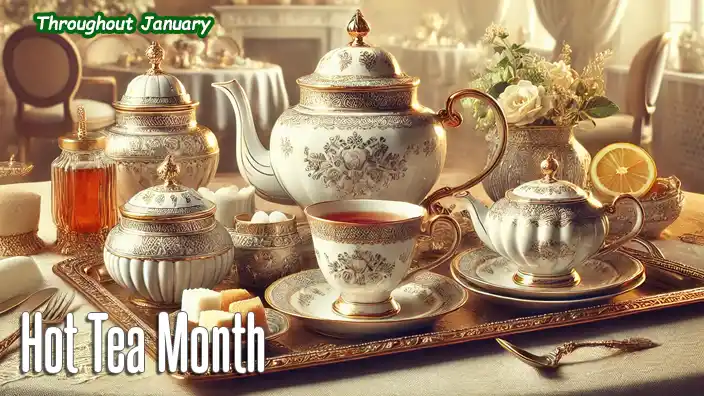
National Hot Tea Month is the perfect time to celebrate the beverage that politely tells coffee, “Relax, I’ve got this.” It’s 31 days of sipping sophistication, where your mug becomes a chalice of wisdom and your tea bag transforms into a tiny oracle of calm. Whether you’re debating the right steeping time or trying to decipher the difference between oolong and “oh no, it’s too strong,” Hot Tea Month is your chance to embrace the fine art of doing absolutely nothing—except sipping, of course, because tea knows how to make procrastination look classy.
Celebrated: Annually, throughout January
Celebrate National Hot Tea Month this January by exploring the rich traditions, health benefits, and global connections of tea. Sip, savor, and share!


- Details
Mentoring is a profound and multifaceted experience that has the power to change individuals, communities, and the world for the better. Mentoring demonstrates the incredible potential of human connection and guidance.
Celebrated: Annually, throughout January
Discover the transformative power of mentorship during National Mentoring Month. Explore the history, significance, and ways to get involved in mentorship.


- Details
Dipping your toes into the world of CBD is like deciding to finally clean your closet; it's a bit overwhelming at first, but once you start, you find all sorts of treasures you forgot you had. Imagine you're sipping on CBD tea, expecting to levitate to a state of enlightenment, only to realize you're just really relaxed and still can't touch your toes. Or when you try CBD lotion and wait for your wrinkles to disappear, but instead, you just slide off your leather couch. CBD might not turn your life into a sitcom, but it sure adds a touch of calm to the chaos – and hey, if nothing else, it makes for a great conversation starter at parties. "Is that a new perfume?" "No, it's my CBD cream, Karen, and no, you can't eat it."
Celebrated: Annually, throughout January
Discover the wonders of National CBD Month, a serene path to tranquility and health with cannabidiol (CBD) – the non-psychoactive cousin in the cannabis family.

- Details
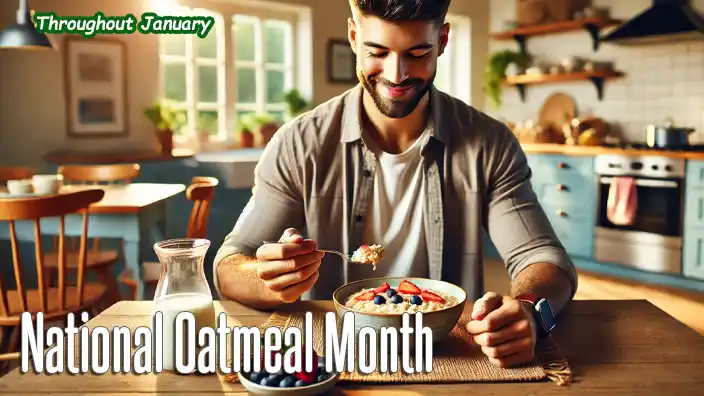
In the grand pantheon of breakfast options, there's one that doesn’t need to boast or flaunt its versatility. It's there for you on those chilly mornings when you crave warmth, or when you’ve decided that today’s the day to stick to your healthy eating plan (again) finally. This breakfast staple is the culinary equivalent of a comforting hug—reliable, filling, and capable of wearing just about any topping you can imagine, from the classic to the slightly bizarre. It’s the kind of food that doesn’t judge you if you pour a little too much syrup or if your fruit-to-grain ratio leans heavily towards the sweet side.
Celebrated: Annually, throughout January
Discover the rich history and versatility of oatmeal, from its humble beginnings in ancient times to its modern-day role as a nutritious and adaptable staple.


- Details
Donating blood is like hosting a party where you’re the guest of honor, except instead of bringing a bottle of wine, you’re leaving a pint behind. You get to lounge in a comfy chair, have a friendly chat with some lovely folks, and afterward, you're rewarded with snacks—because nothing says “I’m a hero” like free cookies and juice. Plus, it’s one of the few times in life where losing something actually makes you feel like a winner. So roll up your sleeves, flash that charming smile, and enjoy the ultimate act of generosity that lets you save lives while still sitting down.
Celebrated: Annually, throughout January
Celebrate National Blood Donor Month by giving a pint and saving lives. Learn why blood donation is crucial and how you can make a difference this January.

From Our Marks Catelog
-

Fashion is like a never-ending talent show where everyone’s invited, but no one quite knows the rules....
-

Diving into a new book is like going on a blind date arranged by your most eccentric friend....
-

Ah, Festivus, the holiday for the rest of us! It's that special time of year when you can gather...
-

Imagine being a member of the Wide Awakes—dressing up in a shiny oilcloth cape, grabbing your...
-

Adopting a cat is a beautiful act of love… and also a legally binding agreement to be judged in...
-

Emergency services are like real-life superheroes, swooping in when things go wrong. One minute, they’re...

