The Ocean’s Most Misunderstood Residents With Terrible Public Relations
Every year, Shark Awareness Day gives these misunderstood ocean predators a much-needed public relations boost. Sharks have spent decades starring in movies as ruthless eating machines, yet the reality is far less dramatic. In truth, sharks are vital to ocean ecosystems, surprisingly fascinating, and generally far more interested in fish than in turning beachgoers into lunch specials.
Of course, that does not stop humans from behaving strangely whenever the word “shark” is mentioned. Someone spots a fin 200 yards offshore, and suddenly half the beach begins running like the ocean itself has declared war. Meanwhile, the shark is often just cruising along, wondering why everyone is screaming over what amounts to a very normal Tuesday.
Shark Awareness Day encourages people to learn the facts about sharks, understand their role in marine life, and support conservation efforts designed to protect these incredible creatures.
What Is Shark Awareness Day?
Shark Awareness Day is observed annually on July 14. The day promotes education about sharks, conservation efforts, and the protection of marine ecosystems. It also works to challenge many of the myths that have surrounded sharks for generations.
There are more than 500 known species of sharks living in oceans around the world. Some are massive, such as the whale shark, while others are tiny enough to fit comfortably in a human hand. Contrary to popular belief, only a small number of shark species have ever been involved in attacks on humans.
The day reminds people that sharks are not mindless predators lurking beneath every wave. They are ancient animals that have existed for over 400 million years, surviving long before dinosaurs walked the Earth.
A Brief History of Shark Awareness Day
The exact origins of Shark Awareness Day are somewhat unclear, which feels oddly appropriate for a creature that silently appears from the deep without warning. Over time, however, the observance has grown in popularity through conservation groups, aquariums, marine researchers, and educational organizations.
Public concern over declining shark populations has increased significantly in recent decades. Many shark species are threatened by overfishing, habitat destruction, accidental bycatch, and the controversial practice of shark finning.
Movies, television, and sensational headlines have not always helped sharks win popularity contests either. For decades, sharks were portrayed almost exclusively as terrifying monsters. While films such as Jaws became cultural phenomena, they also fueled widespread fear of sharks that conservationists still work to overcome today.

Why Sharks Matter
Sharks play a critical role in maintaining healthy marine ecosystems. As apex predators, many shark species help regulate fish populations and keep ocean food chains balanced. Without sharks, marine ecosystems can become unstable, creating ripple effects throughout the environment that affect everything from coral reefs to commercial fishing industries.
Think of sharks as the ocean’s management team. They remove weak, sick, and injured animals from prey populations, helping maintain healthier marine species overall. They also prevent certain fish populations from exploding out of control and stripping underwater habitats bare. When shark populations decline, the effects can spread through the food chain like falling dominoes, creating serious ecological problems that scientists continue to study today.
Sharks also contribute economically through tourism. Around the world, people spend millions of dollars each year on shark-diving experiences, marine tours, documentaries, and aquarium visits. Coastal communities in places such as Florida, Australia, South Africa, and the Bahamas benefit from healthy shark populations that attract visitors eager to safely experience these incredible animals in their natural habitats.
Unfortunately, sharks face major threats from overfishing and the controversial shark fin trade. One of the most criticized examples is shark fin soup, a dish long associated with status and luxury in some cultures. Despite its reputation and often staggering price, shark fin soup itself has very little nutritional value and is prized mainly for texture rather than flavor. In many cases, sharks are caught solely for their fins, with the rest of the animal discarded. Conservation groups around the world have spent years raising awareness about the environmental damage caused by shark finning and the pressure it places on already declining shark populations.
Ironically, while movies often portray sharks as terrifying predators, humans pose a far greater threat to sharks than sharks do to humans. Millions of sharks are killed every year through commercial fishing, accidental bycatch, and illegal finning practices. Shark Awareness Day serves as a reminder that protecting sharks is not simply about saving one species. It is about protecting the health and balance of the world’s oceans themselves.
Common Shark Myths
Sharks have been surrounded by myths, exaggerations, and dramatic storytelling for generations. Thanks to movies, television, and the occasional panic-inducing news headline, many people imagine every shark as a giant underwater villain with ominous music following close behind. In reality, most sharks are far less interested in humans than humans are in them. Shark Awareness Day is the perfect opportunity to separate fact from fiction and take a closer look at some of the most common misconceptions about these remarkable creatures.
Sharks Are Constantly Hunting Humans
This is perhaps the biggest myth of all. Humans are not natural prey for sharks. Most shark encounters are cases of mistaken identity, curiosity, or defensive behavior. Statistically, people are far more likely to be injured doing everyday activities than by sharks. In fact, sharks probably have a stronger case for fearing humans than humans do for fearing sharks.
Every Shark Is Huge
Hollywood loves giant sharks, but many shark species are relatively small. Some are only a few feet long and feed mainly on fish or small marine animals. The dwarf lanternshark, for example, is so small it could fit in your hand. Not exactly the terrifying beast usually featured on movie posters.
Sharks Are Mindless Killers
Sharks are intelligent animals with highly developed senses. Some species demonstrate social behavior, migration patterns, and complex hunting techniques. Researchers continue to discover new information about shark behavior every year.
Famous Sharks Around the World
Several shark species have become particularly famous due to their size, appearance, or reputation.
Great White Shark
The Great white shark is probably the world’s most recognized shark species. Large, powerful, and highly intelligent, great whites are often portrayed as terrifying predators, though attacks on humans remain rare.
Whale Shark
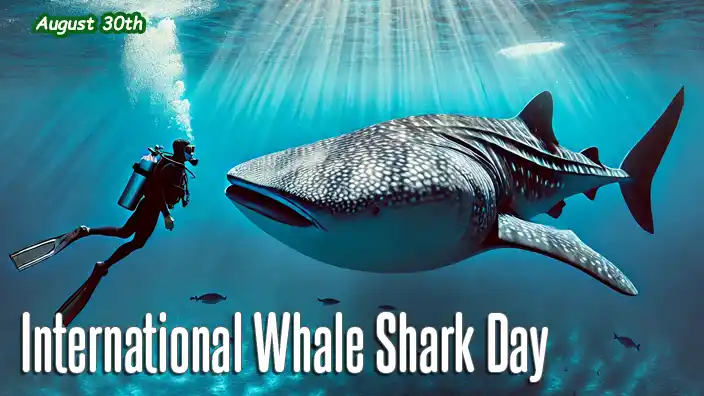
The Whale shark is the largest fish in the ocean and can grow over 40 feet long. Despite its enormous size, it feeds primarily on plankton and poses little danger to humans.
Hammerhead Shark
The Hammerhead shark is known for its unusual head shape, which helps improve its ability to detect prey in the water.

How to Celebrate Shark Awareness Day
One of the best ways to celebrate Shark Awareness Day is by learning more about sharks and sharing accurate information with others. Watching documentaries, visiting aquariums, or reading about marine conservation are all excellent ways to participate.
Supporting ocean conservation organizations can also make a real difference. Many groups work to protect shark habitats, reduce overfishing, and improve public understanding of marine life.
For the adventurous, shark diving experiences have become popular in many parts of the world. Of course, this tends to separate people into two categories:
“What an incredible experience!”
“Absolutely not.”
Both reactions are understandable.
Fun Facts About Sharks
Sharks are packed with fascinating features and surprising abilities.
- Some sharks can detect tiny electrical signals produced by other animals.
- Certain species must keep swimming constantly to move water across their gills.
- Shark skeletons are made of cartilage rather than bone.
- The Greenland shark may live for several centuries.
- Sharks lose and replace thousands of teeth during their lifetimes.
Why Shark Awareness Day Still Matters
Shark Awareness Day continues to grow in importance as shark populations around the world face increasing threats from human activity. Overfishing, habitat destruction, accidental capture in commercial fishing nets, pollution, and climate change have all placed enormous pressure on many shark species. Scientists warn that several populations have declined dramatically over the past few decades, and some species are now considered endangered or vulnerable.
The loss of sharks does not simply affect one group of animals. Because sharks sit near the top of the ocean food chain, their decline can disrupt entire marine ecosystems. When shark populations drop, prey species can multiply too quickly, upsetting the balance of reefs, seagrass beds, and fishing grounds. In some regions, the disappearance of sharks has already triggered noticeable ecological changes that impact both wildlife and local economies.
Shark Awareness Day also matters because public perception still lags far behind scientific reality. Many people continue to fear sharks largely because of movies and sensational media coverage. Shark attacks receive enormous attention despite being extremely rare, while the destruction of shark populations often receives far less coverage. The result is one of the strangest public relations disasters in the animal kingdom. A creature that has survived for hundreds of millions of years is still widely viewed as the ocean’s villain simply because it happens to have sharp teeth and an unfortunate talent for looking dramatic while swimming.
Education plays a major role in conservation efforts. The more people understand sharks, the more likely they are to support marine protections, sustainable fishing practices, and habitat conservation. Aquariums, marine researchers, wildlife organizations, and educators all use Shark Awareness Day to encourage respect for sharks instead of fear.
There is also something genuinely awe-inspiring about sharks themselves. These ancient animals existed long before dinosaurs, survived multiple mass extinctions, and evolved into one of the ocean’s most efficient predators. Some species glow in the dark, others migrate thousands of miles across oceans, and a few can even live for centuries. Sharks are not mindless killing machines. They are complex, highly adapted creatures that remain essential to the health of the oceans.
And perhaps that is why Shark Awareness Day still matters most of all. It reminds people that the ocean is not simply a giant swimming pool built for human vacations. It is a living ecosystem filled with creatures that deserve understanding and protection — even the ones with rows of teeth that look like they were designed by a Hollywood special effects department.