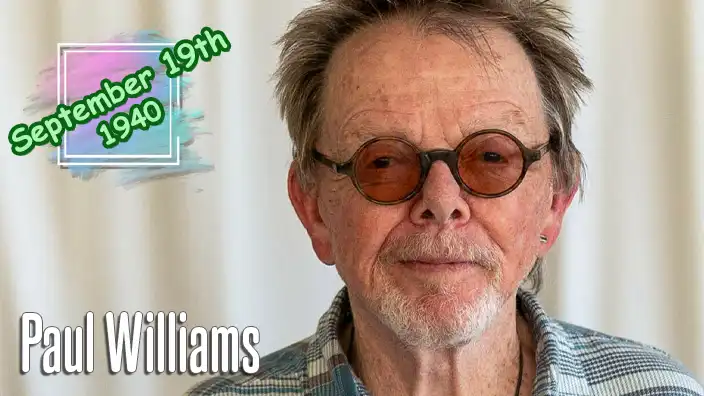
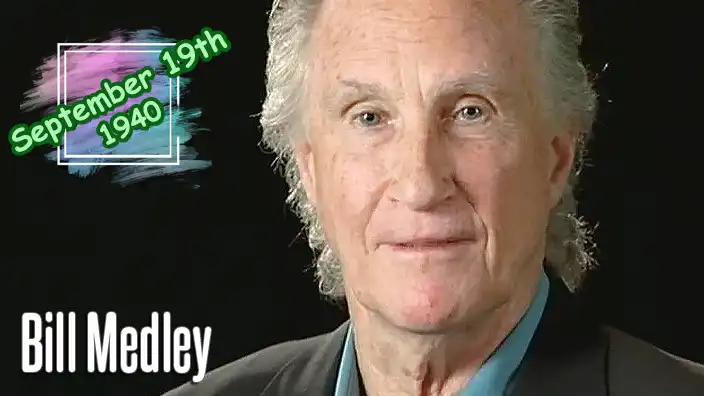
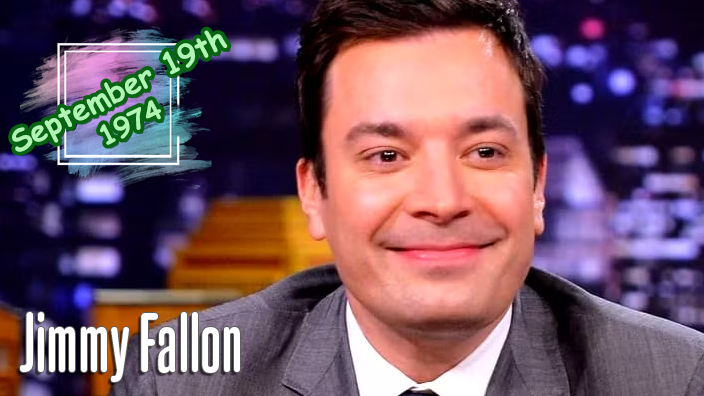
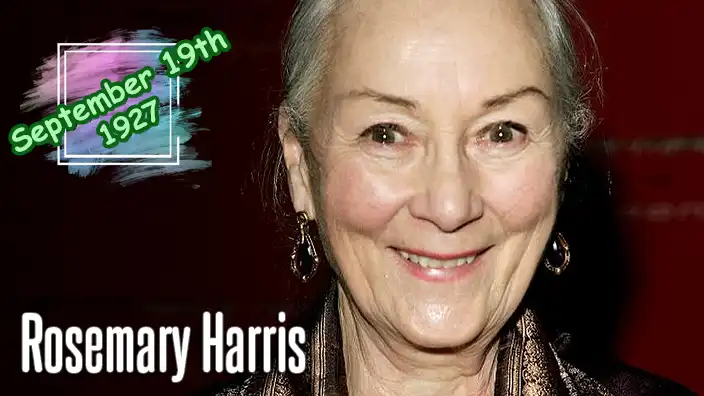
September 19, 1948, on the Isle of Wight, England
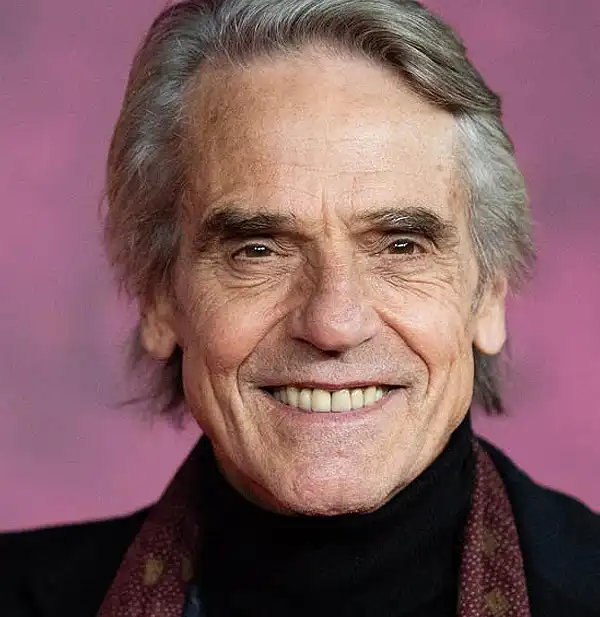
Jeremy John Irons was born on September 19, 1948, in Cowes on the Isle of Wight, England, and grew up in the nearby village of St. Helens. His father, Paul Dugan Irons, was an accountant, while his mother, Barbara Anne, raised Jeremy along with his older brother and sister.
Acting was not originally the grand plan.
Irons attended Sherborne School in Dorset, where he performed in school productions and also played drums and harmonica in a band called the Four Pillars of Wisdom. At one stage he considered becoming a veterinarian, but that particular career path did not work out. Animals therefore lost a potential vet, while theater gained a man who would eventually become one of the most recognizable actors — and voices — of his generation.
Before establishing himself professionally, Irons experienced some of the less glamorous occupations available to an aspiring performer. He worked as a house cleaner and social worker and spent time busking, singing and playing guitar outside cinemas. It was a long way from collecting an Oscar, but considerably closer to the traditional acting career than arriving in Hollywood on Tuesday and buying a swimming pool on Friday.
His serious theatrical training came at the Bristol Old Vic Theatre School. He subsequently joined the Bristol Old Vic company, gaining the sort of classical stage experience that would become the foundation of his career.
Irons's early theatrical work included Shakespeare as well as contemporary productions, but one of his first major West End successes came in the musical Godspell. He played John the Baptist and Judas, demonstrating early on that he was unlikely to spend his career confined to pleasant fellows sitting quietly in drawing rooms.
Classical theater remained an important part of his development. Irons worked with the Royal Shakespeare Company and appeared in productions including The Winter's Tale, The Taming of the Shrew, Much Ado About Nothing and Richard II. His stage career established the vocal control, physical presence and precision that would later make him such a distinctive screen performer.
Television brought Irons to a much wider audience.
In 1981, he played Charles Ryder in the lavish television adaptation of Evelyn Waugh's Brideshead Revisited. The series followed Ryder's relationship with the aristocratic Flyte family and became one of the defining British television dramas of its era.
Irons's restrained, reflective performance was central to its success. Charles Ryder spends a considerable amount of time observing a world of privilege, religion, love, friendship and decline, and Irons proved remarkably good at suggesting enormous quantities of thought while apparently doing very little.
It is a skill British actors have spent centuries perfecting.
Brideshead Revisited brought him international recognition and major award nominations. More importantly, it demonstrated that Irons possessed the sort of screen presence capable of holding an audience without theatrical exaggeration.
The same year brought one of his major early film roles in The French Lieutenant's Woman, opposite Meryl Streep. Based on John Fowles's novel and adapted for the screen by Harold Pinter, the film used a story-within-a-story structure in which Irons and Streep effectively played two sets of lovers. The performance earned Irons a BAFTA nomination and further established him as a major film actor.
During the 1980s he appeared in Moonlighting, Betrayal, Swann in Love and Roland Joffé's The Mission. In the latter, Irons played Father Gabriel, a Jesuit missionary working among Indigenous people in 18th-century South America, opposite Robert De Niro.
One of the film's most memorable images has Father Gabriel playing an oboe in the jungle in an attempt to establish peaceful contact. It is difficult to imagine many action heroes trying that approach.
Irons also continued his theatrical career. His Broadway debut came in Tom Stoppard's The Real Thing, opposite Glenn Close. His performance as playwright Henry earned him the Tony Award for Best Actor in a Play.
That victory gave Irons one of the three major components of what would eventually become his Triple Crown of Acting.
Then came the twins.
David Cronenberg's 1988 psychological drama Dead Ringers cast Irons in the dual roles of Beverly and Elliot Mantle, identical twin gynecologists whose personalities and lives become increasingly entangled and disturbed. Playing twins is difficult enough when one of them conveniently remains off camera. Irons created two recognizably different men despite giving them the same face, voice and wardrobe.
The performance became one of the most acclaimed of his career and demonstrated his willingness to tackle psychologically difficult material. Irons was not interested in protecting an elegant leading-man image. If a character was complicated, uncomfortable or deeply unpleasant, he appeared perfectly willing to investigate.
That willingness reached its greatest awards success with Reversal of Fortune.
The 1990 film dramatized the notorious case involving Claus von Bülow, the wealthy socialite convicted and later acquitted of attempting to murder his wife, Sunny. Glenn Close played Sunny, while Irons portrayed von Bülow with an icy ambiguity that refused to provide the audience with comfortable answers.
His performance won the Academy Award for Best Actor.
It also brought Irons the Golden Globe Award for Best Actor in a Motion Picture – Drama. When he accepted his Oscar, Irons had firmly established himself among the leading screen actors of his generation.
The following years brought an extraordinary variety of roles. He played the title character in Steven Soderbergh's Kafka, starred in Louis Malle's Damage, reunited with David Cronenberg for M. Butterfly, and appeared in The House of the Spirits.
Then Disney called.
In 1994, Irons supplied the voice of Scar in The Lion King.
It was inspired casting.
Scar is intelligent, sarcastic, vain, manipulative and spectacularly untrustworthy, and Irons's voice supplied all of that before the animated lion had done much more than raise an eyebrow. Scar's dry contempt for almost everyone around him made him one of Disney's most memorable villains.
Irons also performed much of “Be Prepared,” Scar's grand musical declaration of his plans to seize power. Suddenly, an actor associated with Shakespeare, Evelyn Waugh and serious European cinema was plotting regicide surrounded by singing hyenas.
The transition seemed completely natural.
Scar introduced Jeremy Irons to millions of children who had never heard of Brideshead Revisited, Tom Stoppard or Claus von Bülow. Many of them probably learned an important childhood lesson as well: never trust a lion who sounds extraordinarily well educated.
Irons followed The Lion King with another memorable villain in Die Hard with a Vengeance in 1995. He played Simon Gruber, the calculating brother of Alan Rickman's Hans Gruber from the original Die Hard. Opposite Bruce Willis and Samuel L. Jackson, Irons spent much of the film sending his adversaries racing around New York while calmly remaining several intellectual moves ahead.
If Hollywood needed a villain who sounded as though he could explain precisely why your doom was inevitable and correct your grammar while doing so, Jeremy Irons was an obvious choice.
His later film work included Stealing Beauty, Lolita, The Man in the Iron Mask, The Merchant of Venice, Kingdom of Heaven, Appaloosa, Margin Call and The Man Who Knew Infinity.
Margin Call provided another particularly memorable Irons performance. As investment-bank chief executive John Tuld, he arrives during a financial crisis and immediately dominates the room. The character's calm authority demonstrates one of Irons's great screen strengths: he does not need to shout to become the most intimidating person present.
Television continued providing substantial roles.
Irons portrayed Robert Dudley, Earl of Leicester, opposite Helen Mirren's Elizabeth I in the 2005 miniseries Elizabeth I. His performance earned both a Primetime Emmy Award and a Golden Globe.
He later starred as Pope Alexander VI in The Borgias, playing the head of one of Renaissance Italy's most notorious families. The role provided Irons with politics, religion, ambition, corruption and magnificent costumes — essentially a Jeremy Irons starter kit.
His television work also brought another unusual Emmy victory. In 2014, Irons won Outstanding Narrator for the wildlife documentary Game of Lions. Apparently, after playing Scar, he remained professionally involved with the lion community.
He subsequently appeared as Adrian Veidt, also known as Ozymandias, in HBO's Watchmen. The role allowed Irons to combine intelligence, eccentricity, menace and very dry humor — qualities that by then could practically have been printed on his business card.
Irons also entered the world of superheroes as Alfred Pennyworth, Bruce Wayne's loyal butler and confidant, opposite Ben Affleck's Batman. He first appeared in Batman v Superman: Dawn of Justice and continued the role in subsequent DC films.
His Alfred was rather less inclined than some earlier versions to remain downstairs polishing the silver. Irons played him as a technically capable, sarcastic partner who was perfectly prepared to remind Bruce Wayne when his behavior was becoming ridiculous — which, given Bruce Wayne's hobbies, presumably constituted a full-time occupation.
Away from acting, Irons has lent his distinctive voice to numerous documentaries and narration projects. It is not difficult to understand why. Some actors narrate documentaries. Jeremy Irons sounds as though he was issued at birth with documentary narration already activated.
He has also been involved with environmental and humanitarian causes. His documentary Trashed examined the global problem of waste and pollution, and in 2011 he was appointed a Goodwill Ambassador for the United Nations Food and Agriculture Organization.
Irons has been married to Irish actress Sinéad Cusack since 1978. Their sons include actor Max Irons, meaning another generation of the family entered the profession despite having ample opportunity to observe what it involved.
Across his career, Jeremy Irons has achieved something relatively rare: major success in theater, television and film without any one medium completely defining him.
For theater audiences, he is the Tony-winning actor from The Real Thing and a veteran of Shakespeare.
For television audiences, he is Charles Ryder, Robert Dudley, Pope Alexander VI or Ozymandias.
For film audiences, he might be Claus von Bülow, Father Gabriel, Simon Gruber, Alfred Pennyworth or one of the Mantle twins.
And for generations of children, he will probably always be Scar.
That range also explains his unusual collection of awards. Winning an Academy Award for film, a Tony for theater and Primetime Emmys for television places Irons among the relatively small group of performers to have achieved the Triple Crown of Acting.
Yet awards only tell part of the story. The more distinctive achievement is that Jeremy Irons has remained unmistakably Jeremy Irons while disappearing into an astonishing variety of characters.
Sometimes heroic, frequently complicated and occasionally spectacularly evil, they have one thing in common.
When that voice starts speaking, you listen.