Mark The Days - July

July is the month that shows up with fireworks, sunshine, and enough humidity to steam broccoli on your front porch. It’s when grills go full throttle, flags wave like they’ve had three espressos, and someone’s always trying to convince you that hot dogs count as a food group. From independence to ice cream, and cow appreciation to hugging your mail carrier (check the holiday—don’t just go rogue), July is packed with celebrations that sizzle louder than a Fourth of July sparkler. Slather on the sunscreen and let’s dive into the month that smells like barbecue and sounds like “Oops, I forgot the potato salad.”

- Details
Fashion is like a never-ending talent show where everyone’s invited, but no one quite knows the rules. One day you’re strutting in high heels that feel like a medieval torture device, and the next you’re rocking socks with sandals because "comfort is the new black." It’s a whimsical world where mismatched patterns are a statement, and the latest trend might just be the contents of your grandmother’s attic. Fashion: where yesterday’s faux pas is today’s runway hit, and you never really know if you’re ahead of the curve or just hilariously out of touch.
Celebrated: Annually, on July 9th
Step into the glitzy world of Fashion Day, celebrating style, innovation, and boldness in the vibrant fashion industry. Embrace creativity and join the festivities on July 9th!

- Details
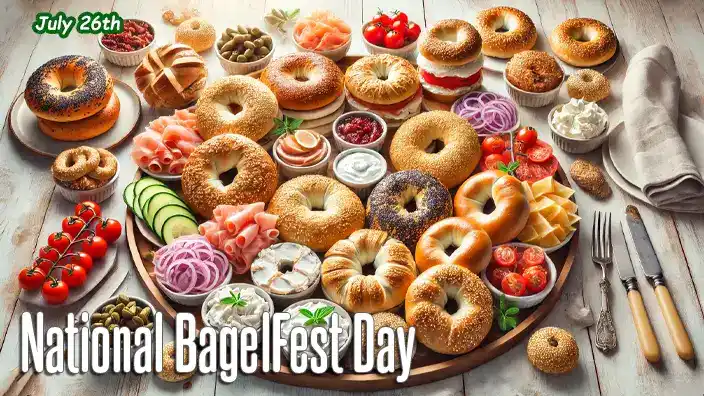
Round, chewy, and with a hole in the middle that makes them look like edible life preservers, these doughy delights have a unique way of making mornings better. Whether slathered with cream cheese or stacked with lox and capers, they somehow manage to be both a breakfast staple and a culinary blank canvas. And let's not forget the joy of trying to fit one into a toaster without getting it stuck—it's like a delicious puzzle with a carb-loaded prize!
Celebrated: Annually, on July 26th
Delve into the history, varieties, and quirky traditions that make BagelFest a hole-in-one event celebrating the beloved doughy delight known as the bagel. Explore how this humble bread product became worthy of its own festival.

- Details
Learning new skills is like assembling IKEA furniture: you start with enthusiasm and confidence, but soon find yourself wrestling with confusion, missing pieces, and wondering if the instructions were written in hieroglyphics. Yet, just like that triumphant moment when your wobbly bookshelf finally stands tall, mastering a new skill brings a sense of accomplishment that's worth every perplexing step. Plus, it's always more fun with a few laughs along the way!
Celebrated: Annually, on July 15th
World Youth Skills Day celebrates equipping young people with skills for employment, decent work, and entrepreneurship. Join the global movement empowering the next generation.


- Details
Navigating the legal drinking age can feel a bit like a rite of passage with a dash of comedy. You can vote, get married, and even sign up for a mortgage at 18, but ordering a beer? That's apparently too wild a responsibility until you're 21. It's like being handed the keys to a sports car and being told you can only drive it in the driveway. So, while you wait for that magical 21st birthday, just remember: patience is a virtue, and your first legal sip will taste all the sweeter for it—unless, of course, it's that infamous first shot of tequila, which no one ever forgets for all the wrong reasons!
Celebrated: Annually, on July 21st
Explore the history and evolution of the legal drinking age in the U.S., from the post-Prohibition era to the National Minimum Drinking Age Act of 1984. Discover the cultural significance and impact of turning 21 on Legal Drinking Age Day.


- Details
Canada is the land where even the moose have manners and the geese apologize for flying south. It's a country where "sorry" is the most commonly used word, and where you can experience all four seasons in a single day. Whether you're braving a hockey puck to the face or figuring out how to properly layer your clothing for -40 degrees, Canada proves that politeness and resilience go hand in hand. So, grab your toque, pour some maple syrup, and join the most courteous country on the planet—where the jokes are as plentiful as the poutine!
Celebrated: Annually, on July 15th
Discover Canada’s history and why Canadians deserve admiration. Learn about National Respect Canada Day and ways to celebrate respect, diversity, and inclusivity.


- Details
On Rat Catcher's Day, we tip our hats to those brave souls who tackle the rodent realm, transforming our squeaky nightmares into distant memories. Imagine a modern Pied Piper with a toolkit instead of a flute, battling not just rats but also the occasional suspicious neighbor who thinks he's secretly raising a rodent army. So, whether you're setting traps or just hoping your cheese stays on the plate, remember: today we honor the unsung heroes who keep the rats at bay, one cheese crumb at a time!
Celebrated: Annually, on July 22nd
Discover the whimsical tale of the Pied Piper of Hamelin, a legendary story of mystery, folklore, and rodent-related chaos.


- Details
When it comes to enjoying wine and cheese, think of it as matchmaking for your taste buds. Imagine a bold red wine meeting a strong blue cheese at a party—they might clash at first, but soon enough, their intense flavors start a passionate dance. Meanwhile, a delicate white wine and a creamy brie can be seen giggling in a corner, perfectly in sync and whispering sweet nothings. Just remember, even in the world of wine and cheese, opposites attract, and finding the perfect pair can be a delicious adventure!
Celebrated: Annually, on July 25th
Explore the art of wine and cheese pairing on National Wine and Cheese Day. Dive into its rich history, cultural significance, and ways to celebrate.


- Details
Winning the lottery is like finding a unicorn in your backyard – highly unlikely but utterly delightful to imagine. The odds might be laughably slim, but that doesn’t stop us from dreaming big. After all, someone has to win, right? Besides, even if you don't hit the jackpot, you can always enjoy the thrill of anticipation and the fleeting fantasies of quitting your job in a blaze of glory or buying that island you've always wanted. In the end, the lottery is less about the numbers and more about the hopeful daydreams it sparks.
Celebrated: Annually, on July 17th
Discover the allure of the lottery on National Lottery Day – a celebration of dreams, hopes, and the chance for a life-changing windfall. Explore the history, big wins, and cautionary tales of lottery players.


- Details
Ever had that moment when you walk into a room and immediately forget why you're there? It's like your brain suddenly decides to play hide-and-seek with your thoughts. You stand there, staring blankly, trying to retrace your steps as if the couch or coffee table might hold the secret to your lost memory. It's life's little way of reminding you that even your own brain can be a prankster.
Celebrated: Annually, on July 2nd
Learn about National I Forgot Day, a lighthearted holiday celebrating forgetfulness and the humor in our memory lapses. Created by Gaye Anderson, this day encourages embracing our imperfections with a smile.


- Details
Beer is proof that the best things in life come in frothy, golden pints. It’s the liquid courage for karaoke night, the social glue at awkward family gatherings, and the magical potion that transforms your dad’s dance moves into something truly spectacular. Whether it's a craft brew with a name you can't pronounce or a trusty old lager, beer is the universal symbol of good times and questionable decisions. Cheers!
Celebrated: Annually, on July 3rd
Celebrate National Independent Beer Run Day: support craft breweries, plan a beer run, sample unique brews, and enjoy local community events and tastings.

- Details
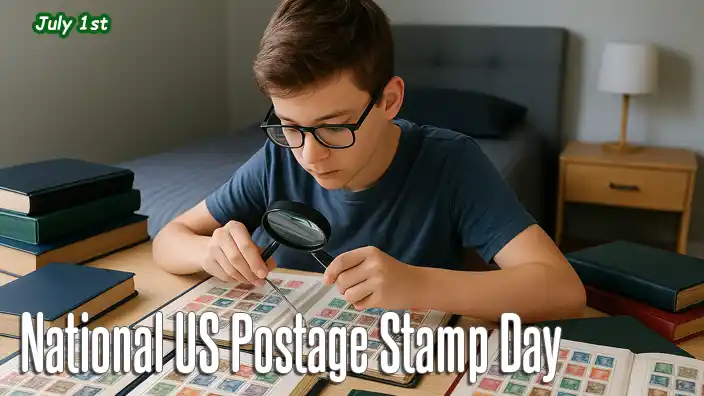
American stamps are like the country itself—bold, diverse, sometimes a little weird, but always interesting. Where else can you find Abraham Lincoln, Elvis Presley, Scooby-Doo, and a Tyrannosaurus rex all hanging out in the same book? These tiny paper ambassadors have commemorated everything from moon landings to hot dogs, proving that if it’s even remotely American, it’s probably been licked, stuck, and sent first-class at some point. They're the nation’s way of saying, “Yes, we really do take pride in absolutely everything.”
Celebrated: Annually, on July 1st
Celebrate National U.S. Postage Stamp Day, honoring the colorful stamps that have connected America. Discover their history and fun ways to celebrate.

- Details
Rednecks are the kind of folks who can turn a broken lawnmower into a barbecue grill and make it work better than anything you’d buy at the store. They’re the masterminds behind inventions like duct tape curtains, truck-bed swimming pools, and the art of frying just about anything edible—and some things that probably shouldn’t be. Redneck wisdom is unparalleled; they’ll fix your car, your plumbing, and your mood, all while telling you the wildest hunting story you’ve ever heard. And let’s be honest, if there’s a problem that can’t be solved with a cooler full of beer, a loyal hound, and a can-do attitude, it probably wasn’t worth solving in the first place!
Celebrated: Annually, on July 3rd
Celebrate American Redneck Day with a tribute to Southern charm and simplicity. Dive into the origins, traditions, and style of this unique slice of Americana. Happy American Redneck Day, y’all!


- Details
Saving the planet is like playing a global game of hide-and-seek with nature. It's akin to trying to stop your dog from digging up the backyard but on a much grander scale. You plant a tree, it grows; you save a bee, it stings you with gratitude. Every small act counts, even if it feels like you're just a squirrel hoarding acorns for the apocalypse. So, grab your reusable bags and embrace your inner eco-warrior – because nothing says "hero" like composting with a smile!
Celebrated: Annually, on July 28th
Explore the significance of World Nature Conservation Day and the crucial role of conservation in preserving our planet's biodiversity and ecosystems. Join the global effort to protect endangered species and promote sustainable practices.


- Details
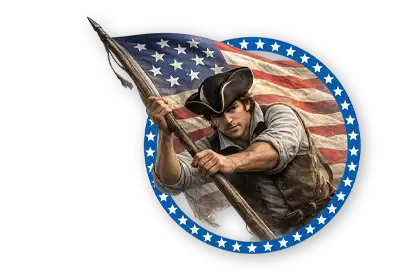
Two hundred and fifty years ago, a group of determined colonists looked at the most powerful empire on Earth and essentially said, "Thank you for your service, but we're going to try this on our own." Against all odds, the experiment worked. Since then, America has grown from thirteen colonies to fifty states, put people on the Moon, invented the internet, and somehow turned arguing about barbecue into a regional sport. As the nation celebrates its 250th Birthday—or the Semiquincentennial, if you're feeling unusually brave—we take a look at the history, people, and events that shaped the United States over the last two and a half centuries.
Discover the history of America's 250th anniversary, the Semiquincentennial, Independence Day facts, and ways to celebrate America 250

- Details
Spinach is like that overachieving kid in school who's good at everything and makes the rest of us look lazy. Packed with vitamins, minerals, and enough iron to make Popeye proud, this leafy green is the superhero of the vegetable world. It's the kind of vegetable that can turn a boring salad into a nutritional powerhouse and make you feel like you're doing something right with your life. And let's not forget, it's the only food that can make you believe you're growing muscles by the minute – ask Popeye!
Celebrated: Annually, on July 16th
Discover the rich history of spinach, from ancient Persia to modern-day cuisine, and its global popularity as a versatile and nutritious superfood.


- Details
When life gives you raspberries, don't just make a raspberry cake; make sure it's so irresistibly delicious that even the cake stand wobbles with excitement. Picture this: a cake so packed with juicy raspberries that it doubles as a fruit salad, and so fluffy that clouds are jealous. One slice and you'll be transported to a berry wonderland, where the only rule is to have another slice—because who needs moderation when there's raspberry cake?
Celebrated: Annually, on July 31st
Celebrate National Raspberry Cake Day on July 31st with the magical fusion of raspberries and cake, creating a sensory adventure like no other. Join the raspberry revelry and bake a delightful raspberry cake!


- Details
Canada: the land where maple syrup flows like water, the national animal is a beaver with a work ethic, and the geese are terrifying. It’s a country where strangers will help push your car out of a snowbank, then apologize for not doing it sooner. Home to stunning landscapes, bilingual cereal boxes, and a population so polite they’ll say sorry when you bump into them, Canada somehow manages to be both wildly majestic and charmingly modest—like if a lumberjack wore a tuxedo and still held the door open for everyone.
Celebrated: Annually, on July 1st
Discover the joy of Canada Day, celebrated every July 1st with fireworks, parades, and national pride. Explore the unique quirks and history of this beloved holiday.

- Details
Imagine you’re calmly sitting on your porch, sipping iced tea, when you notice a towering wall of dust creeping over the horizon like it’s on a mission. Before you know it, you’re in a mad dash to shut windows, seal doors, and rescue the dog’s favorite toy from the yard. Dust storms have this incredible ability to show up unannounced, like the world’s most obnoxious houseguests. They blow in with a dramatic entrance, coat everything you own in a fine layer of gritty beige, and then sweep out as if they hadn’t just redecorated your living room with half a desert. If dust storms had a personality, they’d be that relative who leaves crumbs everywhere, overstays their welcome, and then winks as they walk out the door, leaving you to clean up the mess.
Celebrated: Annually, on July 12th
Learn how to cope with sand and dust storms using innovative strategies, from greening lands to storm-proofing buildings, and uncover fascinating facts about these blustery events.

From Our Marks Catelog
-

Peace for one hour? That’s like baking a cake and only eating the crumbs! If we can manage to...
-

There was a time when wearing pink to school might earn you a raised eyebrow, a snicker, or a...
-
Picture this: you're rummaging through a drawer, looking for a pen, but instead, you find a flip...
-

There’s nothing light about Good Friday—after all, it commemorates the darkest day in Christian...
-

Mental health is not just a personal matter—it's a global issue that affects millions of lives...
-

Having a hole in your bucket is nature’s way of saying, “You tried.” It’s the DIY version of a practical...

