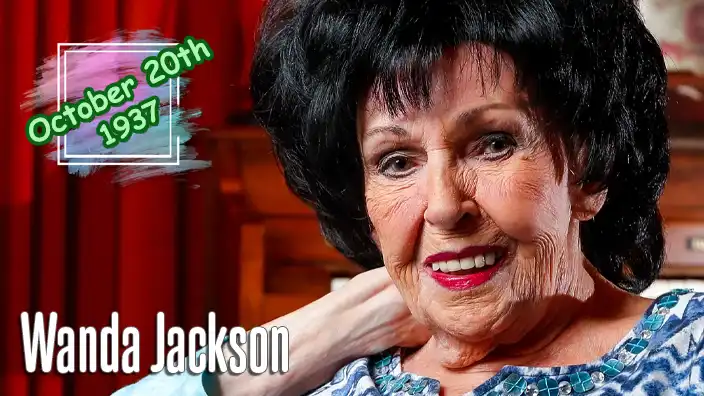
October 20, 1937, in Maud, Oklahoma

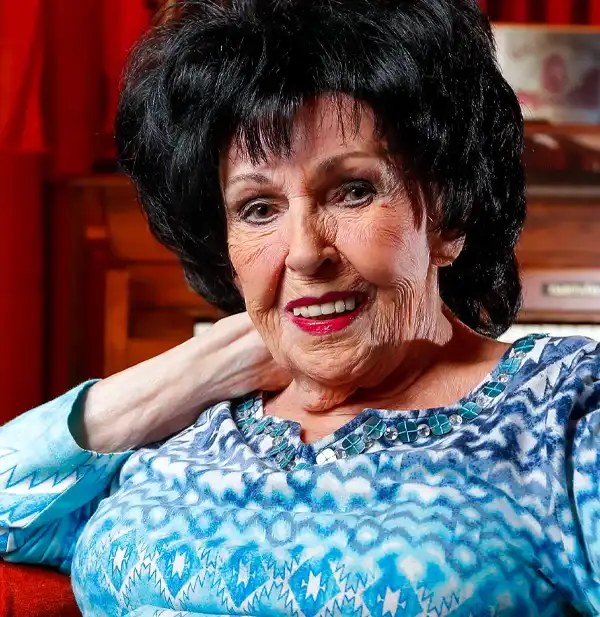
Born Wanda LaVonne Jackson on October 20, 1937, in Maud, Oklahoma, she grew up surrounded by the musical traditions of the American South and Southwest. Her parents, Tom and Nellie Jackson, encouraged her interest in music, particularly her father, who had performed as a musician before economic circumstances forced him to pursue other employment. During the Great Depression and its aftermath, opportunities for professional musicians were limited, but music remained an important part of family life. Wanda's early exposure to country music, Western swing, gospel, and traditional American popular songs helped establish the foundation for a career that would eventually cross several musical genres and challenge the expectations placed upon female entertainers.
The Jackson family moved to California during Wanda's childhood, providing her with opportunities to experience the lively Western swing music scene that flourished on the West Coast. Her parents frequently took her to dance halls where performers such as Bob Wills and the Texas Playboys entertained enthusiastic audiences. These experiences made a lasting impression on the young singer, particularly the energetic performances of Rose Maddox, whose confident stage presence demonstrated that women could command attention without sacrificing their individuality. Wanda received her first guitar from her father and began developing her musical abilities with remarkable enthusiasm. Her parents reportedly found that encouraging her to practice was unnecessary; persuading her to put the instrument down was considerably more difficult.
After the family returned to Oklahoma, Wanda attended Capitol Hill High School in Oklahoma City, where her musical ambitions began developing into professional opportunities. She entered a local talent competition sponsored by radio station KLPR and won a regular fifteen-minute radio program. What began as a short-term opportunity continued for approximately two years, allowing her to perform before a growing audience while gaining valuable broadcasting experience. Her distinctive voice and natural confidence attracted attention from listeners and professional musicians, including country star Hank Thompson, who recognized her potential and invited her to perform with his band, the Brazos Valley Boys.
Hank Thompson's encouragement proved instrumental in launching Wanda Jackson's recording career. While still attending high school, she signed with Decca Records and recorded her first commercial releases. In 1954, her duet with Billy Gray, "You Can't Have My Love," became a successful country single, reaching the upper positions of the Billboard country charts. The achievement was particularly impressive for a young performer still balancing school responsibilities with the demands of professional music. While classmates were worrying about homework and examinations, Wanda was discovering that her voice could reach audiences across the country. It was a promising beginning for someone whose career would eventually extend far beyond the traditional boundaries of country music.
Jackson's early success brought opportunities to appear on prominent country music programs, including the Ozark Jubilee, hosted by Red Foley. She also performed on the Grand Ole Opry, although her experiences highlighted the conservative expectations surrounding female country entertainers during the 1950s. Women were frequently encouraged to dress modestly, perform traditional material, and maintain carefully controlled public images. Jackson, however, preferred a more glamorous and energetic presentation. Her mother helped create distinctive stage dresses decorated with fringe, giving her an appearance that differed considerably from the conventional cowgirl outfits commonly associated with country performers. When Wanda moved, the fringe moved with her, creating a visual spectacle that complemented her increasingly adventurous musical style.
One of the most significant turning points in Wanda Jackson's career came when she toured with Elvis Presley during 1955 and 1956. Presley was rapidly becoming one of America's most exciting young performers, and his energetic combination of country, rhythm and blues, and rock and roll was transforming popular music. Jackson and Presley developed a friendship and briefly dated, while Elvis encouraged her to experiment with the emerging rockabilly sound. At the time, rock and roll was widely regarded as music for young male performers, and recording companies were often reluctant to promote women in the genre. Jackson nevertheless recognized the excitement and creative possibilities of the new musical movement and began incorporating its driving rhythms and rebellious energy into her performances.
Rockabilly combined elements of country music, rhythm and blues, boogie-woogie, and early rock and roll, producing a lively sound characterized by prominent guitars, energetic rhythms, and expressive vocals. Wanda Jackson approached the genre with remarkable confidence, developing a powerful vocal delivery that could shift from sweetness to a rough, growling intensity within a single performance. Her distinctive singing style became one of her greatest trademarks, distinguishing her from many contemporary female vocalists. Where traditional expectations favored polished restraint, Jackson embraced excitement, humor, and musical aggression. The result was a sound that helped establish her reputation as one of rockabilly's most important pioneering performers.
In 1956, Wanda Jackson signed with Capitol Records, beginning a lengthy association with the label that allowed her to explore both country music and rock and roll. Her recordings during the late 1950s included some of the most celebrated performances of the rockabilly era. Songs such as "Hot Dog! That Made Him Mad," "Mean, Mean Man," "Rock Your Baby," and "Fujiyama Mama" demonstrated her ability to combine energetic arrangements with an unmistakably assertive vocal personality. These recordings challenged the conventional image of female singers by presenting a performer who was confident, playful, and perfectly capable of delivering the musical equivalent of a sharp elbow to the ribs.
"Fujiyama Mama," recorded in 1957 and released during the following period, became one of Wanda Jackson's most internationally successful recordings. Although it did not achieve major commercial success in the United States, the song became enormously popular in Japan, where Jackson developed an enthusiastic following. Its success helped introduce her music to international audiences and eventually contributed to a successful Japanese tour. The recording also reflected the sometimes provocative nature of early rock and roll, combining explosive imagery with a forceful vocal performance. Some of its references, particularly those involving wartime destruction, are uncomfortable when viewed from a modern perspective, but the song remains historically significant as an example of the bold and occasionally controversial material associated with early rockabilly.
Another important recording was "Mean, Mean Man," a song Jackson wrote herself. Released during her early rockabilly period, it demonstrated her ability to create material that matched her distinctive vocal style and energetic personality. The recording featured the sharp guitar work, driving rhythm, and playful attitude that became defining characteristics of her music. Jackson's songwriting was particularly important because female performers in the 1950s were frequently expected to interpret material selected by producers or recording companies rather than contribute their own compositions. By writing and performing songs that reflected her personality, she strengthened her artistic identity and helped establish a model of independence for future generations of women in popular music.
Wanda Jackson achieved one of her greatest American rock and roll successes with "Let's Have a Party," a song previously recorded by Elvis Presley. Jackson recorded her version in 1958, but the recording did not become a major hit until 1960, when a radio disc jockey in Des Moines, Iowa, began using it as a theme song. The renewed attention encouraged Capitol Records to release the track as a single, and it climbed into the Billboard pop Top 40. Its irresistible rhythm, enthusiastic vocal performance, and invitation to celebrate made it an enduring rockabilly favorite. The song also helped establish Jackson's lasting nickname, the Queen of Rockabilly, although anyone hearing her performance might reasonably conclude that she had already appointed herself.
The success of "Let's Have a Party" expanded Jackson's audience and reinforced her reputation as one of the few female performers achieving recognition in the male-dominated world of early rock and roll. Her stage performances combined musical skill with an energetic visual presentation, and her fringe-covered dresses became almost as recognizable as her voice. She understood the importance of entertaining an audience rather than simply reproducing studio recordings, and her concerts frequently included lively interaction, humor, and powerful performances. Her confidence helped challenge the assumption that women could participate in rock and roll only as decorative figures or restrained vocalists.
Jackson also demonstrated a willingness to challenge racial barriers during a period when segregation remained widespread in American entertainment. Her touring band included African American pianist Al Downing, an accomplished musician whose contributions helped strengthen the group's sound. When a venue owner objected to Downing appearing onstage because of his race, Jackson refused to perform without him. Her decision reflected both her loyalty to her musicians and her unwillingness to accept discriminatory treatment. At a time when racial divisions affected touring arrangements, accommodations, and performance opportunities, her support for an integrated band was an important example of professional solidarity.
As musical fashions changed during the early 1960s, Wanda Jackson increasingly returned to country music, a genre in which she had already established considerable experience. Her ability to move between rockabilly and country reflected the close musical relationship between the styles, as well as her versatility as a singer. In 1961, she enjoyed major country success with "Right or Wrong," a recording that demonstrated her ability to deliver emotionally expressive performances without relying on the explosive energy associated with her rockabilly material. The song became one of her most successful country singles and helped introduce her to listeners who preferred traditional country arrangements.
Another important country hit was "In the Middle of a Heartache," which also appeared in 1961 and became a significant success on the Billboard country charts. The recording showcased Jackson's emotional range and demonstrated that the powerful voice behind her rockabilly hits could be equally effective when interpreting songs about romantic disappointment. Throughout the decade, she continued releasing country singles and albums, building a substantial catalog that included both lively performances and traditional ballads. Her ability to maintain credibility in different musical styles distinguished her from performers whose careers depended entirely upon a single popular trend.
In 1963, Jackson released Two Sides of Wanda, an album that reflected her musical versatility by combining country and rockabilly material. The project demonstrated her refusal to accept rigid distinctions between musical genres, presenting both sides of her artistic personality to listeners. The album received a Grammy nomination for Best Female Country Vocal Performance, adding further recognition to her achievements. Her ability to move comfortably between musical styles reflected the diverse influences of her upbringing and helped explain why she remained professionally active long after the original rockabilly boom had faded from mainstream popularity.
Wanda Jackson's career also included a successful period performing in Las Vegas, where she developed a reputation as a lively and accomplished entertainer. Her stage shows featured a mixture of country music, rockabilly favorites, and popular material, allowing her to appeal to audiences with different musical preferences. Her touring musicians included talented performers such as Roy Clark, who later became a nationally recognized country music entertainer and television personality. Jackson's ability to attract skilled musicians reflected her professional reputation and her commitment to delivering high-quality live performances. She was not simply a singer with a collection of popular records; she was an experienced bandleader who understood the importance of musicianship, preparation, and audience engagement.
During the 1960s, Jackson continued enjoying country chart success with recordings including "The Box It Came In," "Tears Will Be the Chaser for Your Wine," and "A Woman Lives for Love." These songs explored familiar country themes of heartbreak, relationships, disappointment, and emotional resilience. Although her musical style had shifted toward traditional country arrangements, her distinctive vocal personality remained unmistakable. Her performances retained the directness and emotional intensity that had characterized her earlier rockabilly recordings, demonstrating that the qualities making her an exciting rock and roll performer were equally effective in other musical settings.
In 1961, Wanda Jackson married Wendell Goodman, a businessman who became closely involved in managing her career. Their marriage continued until Goodman's death in 2017, and the couple raised two children. As her professional and family responsibilities developed, Jackson continued recording and touring while maintaining the close personal relationships that supported her long career. Her husband played an important role in coordinating business arrangements and touring activities, helping her navigate the changing demands of the entertainment industry. Their partnership became a significant part of her personal and professional life, particularly during periods when her musical interests moved in new directions.
During the early 1970s, Wanda Jackson experienced a renewed interest in Christianity that influenced her musical career. She began recording gospel and inspirational material, including the album Praise the Lord, released in 1972. Her subsequent recordings for Christian-oriented labels reflected her commitment to religious music and introduced her to audiences who might not have been familiar with her earlier rockabilly achievements. Although the transition surprised some longtime fans, it represented another example of Jackson following her personal convictions rather than remaining confined to a particular commercial identity. Her gospel performances retained the expressive vocal delivery that had characterized her work throughout her career, demonstrating that musical passion could find a home in considerably more than one genre.
The original rockabilly movement experienced a revival during the late 1970s and 1980s, particularly in Europe, where audiences developed renewed enthusiasm for the pioneers of early rock and roll. Wanda Jackson discovered that her recordings had maintained a devoted following among collectors, musicians, and fans who regarded her as an essential figure in the genre's history. Invitations to perform at European festivals introduced her to younger audiences and encouraged her to revisit the music that had first established her international reputation. The revival provided an unexpected new chapter in her career, proving that rockabilly had considerably more staying power than some record executives had anticipated.
Jackson's renewed popularity also reflected the growing recognition of women's contributions to the development of rock and roll. For many years, histories of early rock music had concentrated primarily on male performers such as Elvis Presley, Chuck Berry, Jerry Lee Lewis, and Carl Perkins. Although these musicians made extraordinary contributions, their prominence sometimes overshadowed pioneering women who helped shape the same musical movement. Jackson's rediscovery encouraged historians, journalists, and younger performers to examine the role of female musicians in rockabilly and early rock and roll more closely. Her recordings demonstrated that women had participated in the genre from its formative years, bringing distinctive voices, songwriting perspectives, and performance styles to its development.
During the 1990s, Wanda Jackson collaborated with younger musicians who admired her pioneering achievements. One particularly important partnership involved rockabilly and country performer Rosie Flores, who invited Jackson to participate in her 1995 album Rockabilly Filly. Their collaboration helped introduce Jackson to a new generation of American listeners and contributed to renewed touring opportunities. The project demonstrated the direct influence of Jackson's early recordings on contemporary female musicians who were exploring the relationship between country music, rockabilly, and alternative roots music. For Jackson, it was an opportunity to discover that the musical revolution she had helped launch was still inspiring performers decades later.
In 2003, Jackson released Heart Trouble, an album featuring collaborations with musicians including Elvis Costello, Dave Alvin, and members of the Cramps. The project brought together performers from different generations who shared an appreciation for her distinctive musical style. Rather than attempting to recreate the past as a historical curiosity, Jackson approached the recordings with the energy and enthusiasm that had defined her earliest performances. The album received positive attention and reinforced her reputation as a performer whose voice and personality remained compelling. It also demonstrated the enduring influence of early rockabilly on punk rock, alternative music, and other genres that valued raw energy and independent expression.
In 2005, Wanda Jackson received a National Heritage Fellowship from the National Endowment for the Arts, recognizing her important contributions to America's traditional musical heritage. The honor acknowledged not only her achievements as a performer but also her role in preserving and developing musical traditions that had influenced generations of artists. Her career represented a remarkable connection between country music, Western swing, gospel, rhythm and blues, and rock and roll. The fellowship was particularly appropriate for a musician whose work had helped bring several of these traditions together in a distinctive and influential style.
Jackson received one of the greatest honors of her career in 2009 when she was inducted into the Rock and Roll Hall of Fame in the Early Influence category, now known as Musical Influence. The induction recognized her pioneering role in the development of rockabilly and her importance as one of the first women to establish a significant career in rock and roll. Country singer Rosanne Cash delivered her induction tribute, emphasizing Jackson's musical influence and groundbreaking achievements. The recognition helped correct a longstanding imbalance in the historical appreciation of early rock music, acknowledging that women such as Jackson had contributed substantially to the genre's creation and development.
Another extraordinary chapter in Jackson's recording career began when musician and producer Jack White, best known for his work with the White Stripes, collaborated with her on the album The Party Ain't Over. Released in 2011, the project introduced Jackson's distinctive voice to contemporary rock audiences through energetic arrangements and an adventurous selection of material. The album included interpretations of songs associated with artists from different musical generations, demonstrating Jackson's ability to approach unfamiliar material with confidence and individuality. White's production emphasized her powerful vocal personality while incorporating musical elements that connected traditional rockabilly with contemporary garage rock.
The success of The Party Ain't Over demonstrated that Wanda Jackson remained a compelling recording artist long after the original rockabilly movement had emerged. Her collaboration with Jack White attracted widespread media attention and introduced her to listeners who might previously have known little about her career. The project also highlighted the importance of intergenerational musical partnerships, allowing a pioneering performer to collaborate with an artist whose own work had been influenced by the traditions she helped establish. It was a particularly satisfying development for someone who had once been encouraged to leave rock and roll to the boys.
In 2012, Jackson released Unfinished Business, produced by singer-songwriter Justin Townes Earle. The album explored a mixture of rockabilly, country, blues, and traditional American music, reflecting the diverse influences that had shaped her career. Its title suggested that Jackson still had musical ambitions to pursue, despite having already accumulated an extraordinary collection of recordings and professional achievements. The project received favorable attention and further reinforced her reputation as an artist whose musical curiosity remained strong. Rather than resting entirely upon her historic reputation, Jackson continued seeking opportunities to interpret songs and collaborate with musicians who appreciated her distinctive approach.
In 2014, Wanda Jackson was inducted into the Oklahoma Hall of Fame, providing additional recognition from her home state. Oklahoma had played a central role in her personal and musical development, and her achievements became an important part of the state's cultural heritage. Her hometown of Maud celebrated her contributions by establishing Wanda Jackson Day and naming a street in her honor. These tributes reflected the pride felt by communities associated with her early life and demonstrated how a performer from a small Oklahoma town could achieve international recognition through talent, determination, and a willingness to challenge established expectations.
Jackson's contribution to popular music also attracted attention from documentary filmmakers, music historians, and television producers. Her appearances in music documentaries and archival productions helped preserve firsthand accounts of the early rock and roll era, including her experiences performing with Elvis Presley and other influential musicians. She also appeared in televised performances and interview programs that explored her career and the changing position of women in popular music. These appearances provided valuable historical perspectives, particularly because Jackson had participated directly in the musical developments that later generations would study and celebrate.
In 2017, Jackson published her autobiography, Every Night Is Saturday Night: A Country Girl's Journey to the Rock & Roll Hall of Fame, written with music historian Scott B. Bomar and featuring a foreword by Elvis Costello. The book explored her childhood, early career, friendships with influential musicians, personal relationships, and experiences in the entertainment industry. It also offered reflections on the challenges faced by female performers during the formative years of rock and roll. The autobiography helped preserve her personal account of an extraordinary musical journey while introducing readers to the determination, humor, and independence that had characterized her career.
In 2019, Wanda Jackson announced her retirement from touring because of health concerns, bringing an end to an exceptionally long period of live performance. Although she stepped away from the demands of the road, her recording career received another notable chapter with the release of Encore in 2021. Produced by Joan Jett, another pioneering female rock musician, the album featured new recordings and collaborations that celebrated Jackson's enduring musical identity. The partnership was especially meaningful because Jett belonged to a generation of performers who had benefited from the barriers broken by women such as Jackson. The project provided a fitting conclusion to her recording career, connecting two influential figures from different eras of rock music.
Wanda Jackson's influence can be heard in the work of numerous female rock, country, punk, and Americana performers who have embraced strong vocal personalities and independent artistic identities. Her fearless approach to rockabilly helped establish a precedent for women who wished to perform energetic, guitar-driven music without conforming to traditional expectations. Musicians including Rosie Flores, Joan Jett, and many others have recognized the importance of her achievements, while historians increasingly acknowledge her contribution to the broader development of rock and roll. Her distinctive growling vocals and commanding stage presence remain among the most recognizable characteristics of the original rockabilly movement.
The significance of Jackson's career extends beyond individual recordings or awards. She helped demonstrate that rock and roll was not exclusively a male pursuit and that female musicians could contribute equally to its creativity, excitement, and rebellious spirit. Her willingness to experiment with musical styles, challenge industry expectations, support fellow performers, and remain artistically active across changing generations made her an influential figure in American popular music. Her career also illustrated the close historical relationship between country music and rock and roll, showing how performers could draw upon shared musical traditions while creating something exciting and new.
Wanda Jackson's legacy remains firmly established as one of the pioneering voices of rockabilly and early rock and roll. From her first radio performances in Oklahoma to international tours, celebrated recordings, and induction into the Rock and Roll Hall of Fame, she built a career defined by extraordinary determination and unmistakable individuality. Her music continues to entertain listeners who appreciate the raw energy and infectious excitement of early American rock music, while her achievements inspire performers determined to pursue their own artistic ambitions. The Queen of Rockabilly may have retired from touring, but her recordings still have enough fire to get the dance floor moving. And if anyone suggests that rock and roll was invented exclusively by men, Wanda Jackson's records provide a wonderfully loud correction.