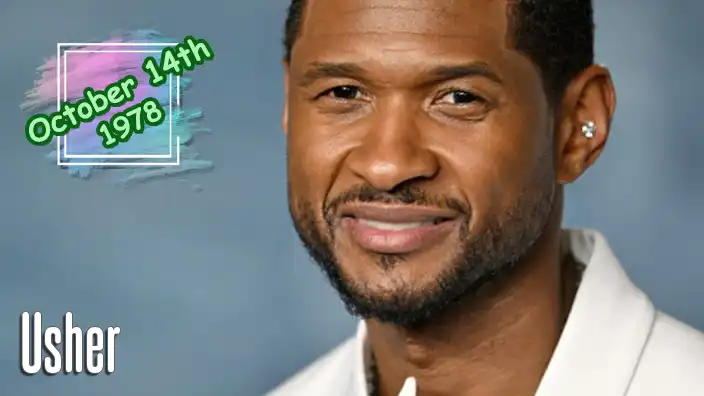
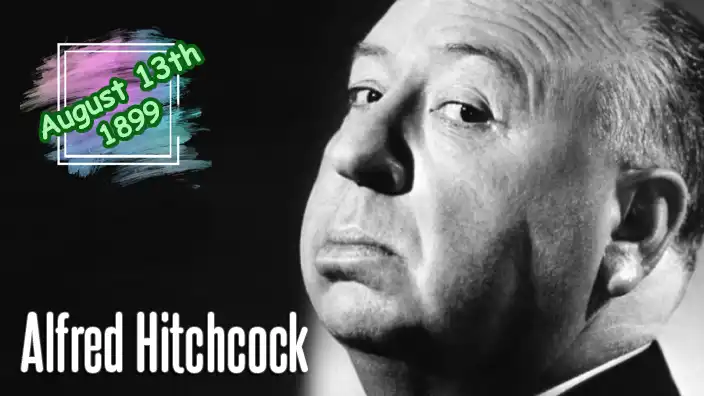
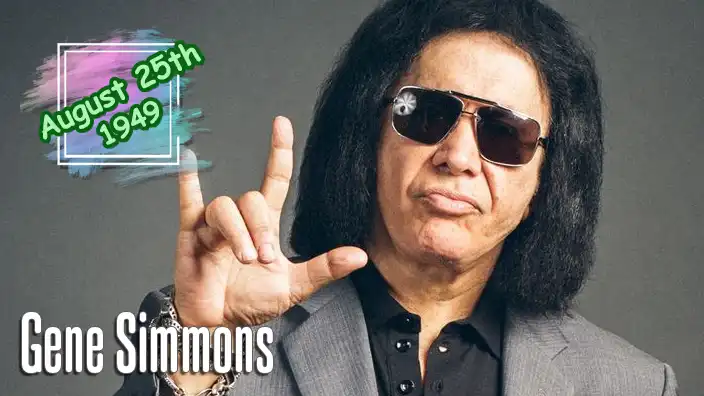
October 14, 1890, in Denison, Texas
 March 28, 1969, at Walter Reed Army Medical Center in Washington, D.C.
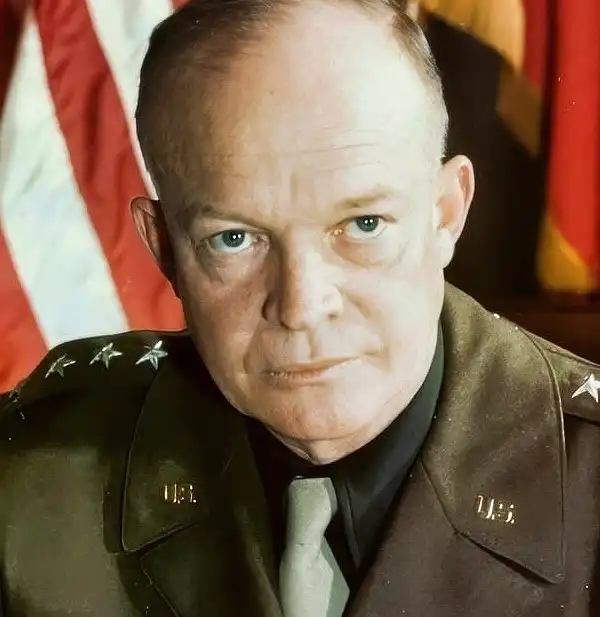
Born on October 14, 1890, in Denison, Texas, Dwight David Eisenhower became one of the most recognizable American military and political leaders of the twentieth century. As Supreme Commander of the Allied Expeditionary Force during World War II, he directed the Allied invasion of Normandy and helped coordinate the campaign that defeated Nazi Germany in Western Europe. Later, as the 34th President of the United States, serving from 1953 to 1961, Eisenhower confronted the Korean War, Cold War rivalries, civil rights disputes, and the challenges of an expanding American economy.
His journey from a modest Kansas upbringing to the highest military and civilian offices in the United States was remarkable. Yet Eisenhower was not known for flamboyant speeches or theatrical displays of authority. His leadership relied heavily on organization, diplomacy, patience, and the ability to persuade strong-minded individuals to work together. Considering that some of those individuals were generals with egos large enough to require their own headquarters, this was no small accomplishment.
Eisenhower was born David Dwight Eisenhower, the third of seven sons of David Jacob Eisenhower and Ida Elizabeth Stover Eisenhower. His family moved to Abilene, Kansas, while he was still a young child, and it was there that he developed the values of discipline, hard work, personal responsibility, and cooperation that shaped his later career. The family lived modestly, and young Dwight learned that achieving something worthwhile generally required considerable effort. There were few shortcuts in the Eisenhower household, although with seven boys under one roof, finding a quiet corner must have been something of a military operation.
Athletics played an important role in Eisenhower's youth. He enjoyed baseball and football and developed a competitive spirit that remained with him throughout his life. After graduating from Abilene High School in 1909, he worked at the Belle Springs Creamery to help support his family and allow his brother Edgar to pursue further education. His own opportunity arrived when he secured an appointment to the United States Military Academy at West Point in 1911. He graduated in 1915 as a member of the class later nicknamed "the class the stars fell on," because so many of its graduates eventually became generals.
Eisenhower's early military career was not a straightforward march toward glory. During World War I, he trained troops and helped develop the Army's emerging tank capabilities, but he never received the overseas combat assignment he wanted. He remained in the United States while other officers gained battlefield experience in Europe. Although disappointing, those assignments strengthened his abilities in training, logistics, administration, and military planning. These skills would eventually prove essential when he was responsible for coordinating millions of Allied personnel across several countries.
Between the world wars, Eisenhower served in a variety of demanding assignments, including positions under Generals John J. Pershing and Douglas MacArthur. He attended the Army Command and General Staff School at Fort Leavenworth, graduating first in his class in 1926, and later served in the Philippines as an assistant military adviser to MacArthur. His professional reputation grew through his attention to detail, ability to solve complex problems, and talent for maintaining cooperation among officers who did not always agree. He was learning that commanding an army involved considerably more than pointing at a map and telling everyone where to go.
The Japanese attack on Pearl Harbor in December 1941 dramatically changed Eisenhower's career. General George C. Marshall recognized his planning abilities and brought him into the War Department, where Eisenhower became increasingly involved in organizing American military operations. In 1942, he was appointed to command American forces in the European Theater and subsequently led the Allied invasion of North Africa, known as Operation Torch. His responsibilities expanded as Allied operations continued through North Africa, Sicily, and Italy, requiring him to coordinate military leaders, political objectives, supply systems, and international relationships.
Eisenhower's most famous military responsibility came with his appointment as Supreme Commander of the Allied Expeditionary Force for the invasion of Nazi-occupied Western Europe. The operation, known as Operation Overlord, required extensive preparation, extraordinary secrecy, and cooperation among American, British, Canadian, and other Allied forces. The Normandy landings on June 6, 1944, became known as D-Day and marked a decisive stage in the liberation of Western Europe. Thousands of ships, aircraft, and troops participated in an operation whose success depended on weather conditions, intelligence, deception, logistics, and the courage of those sent into battle.
One of the most revealing episodes of Eisenhower's leadership occurred before the Normandy invasion. Understanding the enormous risks, he prepared a handwritten statement accepting personal responsibility if the landings failed. He did not intend to blame the troops, the weather, or his fellow commanders. Fortunately, the statement was never needed. The Allied landings succeeded in establishing a foothold in France, although at a terrible human cost, and the campaign ultimately contributed to Germany's defeat in May 1945. Eisenhower's willingness to accept responsibility became one of the defining examples of his approach to command.
As the Allied campaign advanced into Germany, Eisenhower also witnessed evidence of Nazi atrocities. In April 1945, he visited the Ohrdruf concentration camp, a subcamp of Buchenwald, and was profoundly disturbed by what he saw. He encouraged extensive documentation of the crimes so that future generations could not easily deny what had happened. His insistence on preserving evidence reflected an understanding that the struggle against Nazi Germany involved not only military victory but also the historical record of the regime's crimes.
Following World War II, Eisenhower served as Chief of Staff of the United States Army from 1945 to 1948. He then became president of Columbia University, a position that brought him into the world of higher education and national public affairs. His retirement from military leadership proved temporary, however, when he returned to international service as the first Supreme Allied Commander Europe of NATO in 1951. The appointment placed him at the center of efforts to strengthen Western European defense during the early Cold War.
By 1952, Eisenhower's popularity and military reputation made him an attractive presidential candidate. Although he had spent much of his career avoiding partisan politics, he accepted the Republican nomination and selected Richard Nixon as his running mate. His campaign emphasized leadership, national security, government efficiency, and ending the Korean War. The famous campaign slogan "I Like Ike" captured his broad personal appeal and became one of the most memorable political slogans in American history. It was short, catchy, and easy to remember, proving that successful political advertising did not necessarily require a committee to produce a forty-page explanation.
Eisenhower defeated Democratic candidate Adlai Stevenson in the 1952 presidential election and took office on January 20, 1953. He inherited a country experiencing economic growth but also facing significant international tensions. The Korean War remained unresolved, the Soviet Union was expanding its nuclear capabilities, and Americans were increasingly concerned about communism and the possibility of another major conflict. Eisenhower approached the presidency with the organizational habits of a military commander, establishing structured decision-making procedures and relying on advisers while retaining final responsibility for major decisions.
One of the earliest achievements of his administration was the Korean Armistice Agreement, signed in July 1953. The agreement ended major organized combat in the Korean War, although it did not produce a permanent peace treaty. Eisenhower had visited Korea before taking office and supported diplomatic and military pressure aimed at securing an armistice. The eventual agreement reduced immediate hostilities but left the Korean Peninsula divided, an enduring reminder that stopping a war and resolving its underlying political disputes are not necessarily the same thing.
Eisenhower's foreign policy combined efforts to contain Soviet influence with a determination to avoid another world war. His administration relied on nuclear deterrence, international alliances, intelligence operations, and diplomatic initiatives. In 1953, he delivered his influential "Atoms for Peace" address to the United Nations, advocating international cooperation in the peaceful use of atomic energy. The initiative sought to encourage scientific and civilian applications of nuclear technology while addressing the dangers of the escalating arms race. Nevertheless, the Eisenhower administration also expanded America's nuclear arsenal and participated in covert operations abroad, including CIA-supported interventions in Iran in 1953 and Guatemala in 1954. These actions remain important subjects of historical debate because of their long-term political consequences.
Domestically, Eisenhower generally pursued a moderate Republican approach that emphasized fiscal responsibility while preserving major elements of the New Deal social welfare system. His administration expanded Social Security coverage, supported public infrastructure, and oversaw substantial economic development. One of his most enduring achievements was the Federal-Aid Highway Act of 1956, which authorized the construction of the Interstate Highway System. Influenced partly by his experiences with military transportation and Germany's autobahns, Eisenhower understood the importance of reliable roads for commerce, national defense, and civilian travel. The resulting highway network transformed American transportation, suburban development, and economic activity. It also reshaped cities and displaced communities, particularly in urban neighborhoods affected by highway construction.
Civil rights presented another major challenge during Eisenhower's presidency. In 1954, the Supreme Court ruled in Brown v. Board of Education that racial segregation in public schools was unconstitutional. Eisenhower was cautious in his public response to the decision, and civil rights advocates criticized his reluctance to provide stronger rhetorical leadership. However, when Arkansas Governor Orval Faubus resisted school desegregation in Little Rock in 1957, Eisenhower federalized the Arkansas National Guard and dispatched soldiers from the 101st Airborne Division to protect nine African American students entering Central High School. His administration also secured passage of the Civil Rights Act of 1957, the first federal civil rights legislation enacted since 1875, followed by another civil rights law in 1960.
Eisenhower also presided over significant developments in American science and technology. Following the Soviet Union's launch of Sputnik in 1957, his administration supported the creation of the National Aeronautics and Space Administration, or NASA, in 1958. The establishment of the civilian space agency helped organize America's growing space exploration efforts during a period of intense competition with the Soviet Union. Under Eisenhower, Alaska and Hawaii also joined the United States in 1959, bringing the total number of states to fifty. The American flag suddenly needed a redesign, although thankfully nobody suggested adding a new star every time Washington announced another federal program.
Beyond politics and military strategy, Eisenhower had a recognizable personal side. He married Mamie Geneva Doud on July 1, 1916, and the couple remained together throughout his life. They had two sons, Doud Dwight, who died in childhood, and John Sheldon Doud Eisenhower, who later pursued a military and diplomatic career. Mamie became a prominent First Lady, known for her public appearances, hospitality, and distinctive personal style. The Eisenhowers maintained a home and farm near Gettysburg, Pennsylvania, which became an important retreat during and after his presidency.
Eisenhower enjoyed golf, painting, fishing, and other recreational activities that provided relief from the pressures of public office. Golf became particularly associated with his presidency, and his enthusiasm for the sport attracted considerable public attention. He also developed an interest in painting landscapes and portraits, often approaching the activity as a relaxing personal hobby rather than a professional artistic ambition. After spending decades dealing with military operations and international crises, the opportunity to concentrate on a canvas or a golf ball must have offered a welcome change from negotiating with world leaders.
His presidency was not without difficulties. Eisenhower suffered a heart attack in 1955 but recovered sufficiently to seek reelection in 1956, again defeating Adlai Stevenson. His second term included growing Cold War tensions, civil rights confrontations, economic challenges, and diplomatic setbacks. In 1960, the Soviet Union shot down an American U-2 reconnaissance aircraft piloted by Francis Gary Powers, creating an international crisis that undermined a planned summit between Eisenhower and Soviet leader Nikita Khrushchev. The incident illustrated the continuing distrust between the superpowers despite efforts to reduce tensions.
Perhaps Eisenhower's most enduring presidential speech came shortly before he left office. In his farewell address on January 17, 1961, he warned Americans about the potential for excessive influence by what he called the "military-industrial complex." Coming from a former five-star general and wartime commander, the warning attracted particular attention. Eisenhower recognized the necessity of national defense but cautioned that military institutions, defense industries, and political authority required careful public oversight. His message reflected concerns about maintaining democratic accountability during an era of permanent military preparedness.
After leaving the White House in January 1961, Eisenhower retired with Mamie to their farm near Gettysburg, Pennsylvania. He continued writing, painting, maintaining friendships, and commenting occasionally on national affairs. His memoirs offered insights into his military experiences and presidential decision-making, while his public appearances preserved his connection with Americans who remembered both his wartime command and his years in the White House. Eisenhower died on March 28, 1969, at Walter Reed Army Medical Center in Washington, D.C., and was buried at the Eisenhower Presidential Library complex in Abilene, Kansas.
Dwight D. Eisenhower's historical legacy encompasses both extraordinary military achievements and a consequential presidency. His leadership during World War II helped bring about the defeat of Nazi Germany in Western Europe, while his administration influenced American transportation, civil rights enforcement, nuclear policy, scientific development, and Cold War diplomacy. Historians continue to examine the successes, limitations, and consequences of his decisions, including the contrast between his preference for avoiding major wars and his administration's willingness to use covert intervention overseas.
From a Kansas boyhood to the battlefields of Europe and the Oval Office, Eisenhower's life followed a path that few could have imagined. He became a familiar figure in American history not through one achievement alone, but through decades of military and civilian service during some of the twentieth century's most consequential events. And although he is remembered for commanding armies, confronting international crises, and helping reshape the United States, his nickname remains wonderfully simple: Ike. Sometimes two syllables are quite enough for a man with such a lengthy résumé.