October 17, 1974, in Great Yarmouth, England
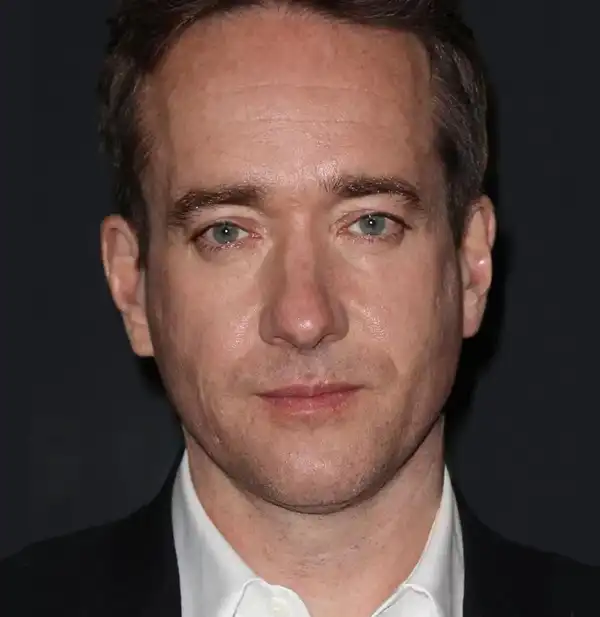
Matthew Macfadyen was born David Matthew Macfadyen on October 17, 1974, in Great Yarmouth, Norfolk, England. His father, Martin Macfadyen, worked in the oil industry, while his mother, Meinir, was a drama teacher and actress. His father's employment required the family to move frequently, giving Matthew an unusually international childhood that included periods living in Indonesia and other locations. These experiences exposed him to different cultures, schools, and social environments, helping develop the adaptability that would later become an important part of his acting career. Unlike children who spend their formative years surrounded by familiar streets and lifelong neighbors, Macfadyen learned early that adjusting to new circumstances was simply part of everyday life. It was useful preparation for an actor who would eventually move between Georgian drawing rooms, British intelligence headquarters, and the distinctly hazardous offices of a fictional American media empire.
Macfadyen's early interest in acting was encouraged by his mother's involvement in theater and education. Although his childhood included considerable travel, he eventually attended Oakham School in Rutland, England, where his enthusiasm for drama became increasingly apparent. His interest developed beyond casual participation in school productions, and he began considering acting as a serious professional ambition. The prospect required determination, particularly because the entertainment industry offers few guarantees of financial security or consistent employment. Nevertheless, Macfadyen pursued his interest with sufficient conviction to audition for one of Britain's most respected theatrical training institutions.
At seventeen, Macfadyen was accepted into the Royal Academy of Dramatic Art in London, commonly known as RADA. His training provided a foundation in classical acting, voice control, movement, character interpretation, and the technical demands of theatrical performance. The academy has trained generations of distinguished British performers, and its demanding curriculum emphasizes the importance of understanding both language and physical expression. For Macfadyen, studying at RADA offered the opportunity to develop his abilities within a professional environment while preparing for the challenges of stage and screen work. His education also helped establish the vocal precision and emotional restraint that would become recognizable characteristics of his performances. Few things are more useful to a British dramatic actor than the ability to communicate complete emotional devastation while appearing merely disappointed with the tea.
After graduating from RADA in 1995, Macfadyen began establishing himself in professional theater. He joined the prestigious Cheek by Jowl theater company, founded by director Declan Donnellan and designer Nick Ormerod, and appeared in productions that demanded considerable versatility and classical technique. His stage work included Shakespearean plays such as The Duchess of Malfi and A Midsummer Night's Dream, along with other challenging theatrical material. Working with Cheek by Jowl provided opportunities to perform before international audiences and develop his understanding of ensemble acting. These early experiences helped him establish a reputation as a serious performer capable of interpreting complicated characters rather than relying exclusively on physical appearance or conventional leading-man charm.
Macfadyen's early theatrical career also included work with the Royal Shakespeare Company, further strengthening his credentials as a classical actor. Shakespearean performance requires an understanding of complex language, emotional transitions, and characters whose motivations are frequently contradictory. The experience helped Macfadyen develop an ability to convey meaning through subtle changes in tone, posture, and expression. This approach would become particularly important in his later screen career, where he frequently portrayed characters attempting to conceal their true feelings beneath carefully maintained public appearances. His stage training also provided the confidence to move between comedy and tragedy, a combination that would prove essential when he eventually entered the unpredictable world of Succession.
His transition into television began with appearances in British productions during the late 1990s. One of his earliest significant roles came in the BBC drama Wuthering Heights, in which he portrayed Hareton Earnshaw. Based on Emily Brontë's celebrated novel, the production introduced him to audiences familiar with Britain's tradition of literary adaptations. The role required him to navigate the complicated emotional relationships and social tensions that define the original story. His performance demonstrated the potential for a substantial screen career, particularly in productions requiring intelligence, emotional depth, and an understanding of historical settings.
Macfadyen gained further attention through the BBC television drama Warriors, released in 1999. The production examined the experiences of British soldiers serving as United Nations peacekeepers during the Bosnian War. Macfadyen portrayed Private Alan James in an ensemble cast that included Damian Lewis and Ioan Gruffudd. The drama explored the emotional and moral challenges faced by soldiers attempting to maintain peace amid violence and political conflict. Its serious subject matter required restrained performances that emphasized the psychological consequences of military service. The production received critical recognition and helped establish Macfadyen as a promising young actor capable of handling demanding contemporary material.
His television career continued developing with The Way We Live Now, a 2001 BBC adaptation of Anthony Trollope's novel. Macfadyen portrayed Sir Felix Carbury, an irresponsible young aristocrat whose gambling, romantic entanglements, and financial difficulties contribute to the story's examination of Victorian society. The production featured an accomplished cast led by David Suchet and explored ambition, corruption, social climbing, and the consequences of financial speculation. Macfadyen's performance revealed his ability to portray morally questionable characters without sacrificing their entertainment value. It also provided an early example of his talent for playing men whose social confidence is considerably greater than their actual competence, a quality that would later become extremely useful in the boardrooms of Succession.
A major breakthrough arrived in 2002 when Macfadyen was cast as Tom Quinn in the BBC espionage drama Spooks, known as MI-5 in the United States. The series followed officers working for Britain's domestic intelligence service as they confronted terrorism, organized crime, espionage, and threats to national security. Macfadyen's character was a senior intelligence officer whose professional responsibilities frequently conflicted with his personal relationships and moral convictions. The role placed him at the center of a tense contemporary thriller, offering a substantial contrast to his earlier appearances in historical dramas.
Spooks became a major success for the BBC, attracting audiences with its fast-moving plots, realistic atmosphere, and willingness to place important characters in genuine danger. Macfadyen's performance helped establish the show's credibility, portraying Tom Quinn as an intelligent and capable professional who nevertheless struggled with the psychological pressures of intelligence work. His character's personal life became increasingly complicated by the secrecy and ethical dilemmas associated with his employment. The series demonstrated that Macfadyen could carry a major television drama, combining physical confidence with emotional vulnerability. It also established him as a familiar face to British audiences, although anyone watching the program might reasonably have concluded that employment with MI5 offered considerably fewer benefits than advertised.
Macfadyen appeared in the first two full seasons of Spooks before departing during the third season in 2004. His time on the program had a lasting effect on his professional and personal life because it introduced him to actress Keeley Hawes, who played intelligence officer Zoe Reynolds. Their relationship developed during the production, and the couple married in November 2004. Hawes was already an established British actress, and both continued pursuing successful careers in television and film. Their marriage became one of the more enduring partnerships within the British entertainment industry, demonstrating that workplace relationships can occasionally produce happier results than the fictional espionage operations that brought the participants together.
Macfadyen's growing reputation led to one of the most important roles of his career when he was cast as Fitzwilliam Darcy in Pride & Prejudice, the 2005 film adaptation of Jane Austen's novel. Directed by Joe Wright, the production starred Keira Knightley as Elizabeth Bennet and featured an accomplished supporting cast including Donald Sutherland, Brenda Blethyn, Rosamund Pike, Judi Dench, and Tom Hollander. Macfadyen faced the considerable challenge of portraying a character already firmly established in popular culture, particularly following Colin Firth's celebrated performance in the 1995 BBC television adaptation. For an actor, stepping into the role of Mr. Darcy was rather like accepting responsibility for a national monument: everyone had an opinion, and a surprising number of people were prepared to defend their preferred version with considerable enthusiasm.
Rather than imitate earlier interpretations, Macfadyen developed a distinctive portrayal of Darcy as a socially awkward, emotionally guarded man whose apparent arrogance conceals insecurity and genuine affection. His performance emphasized the character's discomfort in social situations and his difficulty expressing emotions that conflict with his upbringing and expectations. This approach allowed audiences to understand Darcy's behavior as something more complicated than simple pride. Macfadyen's restrained delivery, expressive eyes, and subtle physical mannerisms helped create a romantic hero whose emotional transformation unfolded gradually throughout the film. His chemistry with Knightley became one of the production's defining features, particularly in scenes where the characters struggled to communicate feelings that were obvious to almost everyone except themselves.
Pride & Prejudice achieved substantial international success, earning more than $120 million worldwide and receiving four Academy Award nominations, including Best Actress for Keira Knightley. Macfadyen's performance attracted considerable attention and established him as a romantic leading man for international audiences. The film's atmospheric cinematography, historical settings, and emotionally direct interpretation of Austen's story helped distinguish it from earlier adaptations. One particularly memorable moment involved Darcy flexing his hand after helping Elizabeth into a carriage, a small gesture that became a favorite among viewers. It was an impressive achievement in cinematic romance: an actor managed to communicate an entire emotional crisis through approximately two seconds of finger movement.
The success of Pride & Prejudice expanded Macfadyen's opportunities in international cinema. In 2006, he appeared in The Reckoning, which had been produced earlier, and continued developing a varied filmography that included historical drama, contemporary thrillers, and literary adaptations. His reputation for portraying intelligent but emotionally complicated characters made him particularly well suited to productions exploring moral uncertainty and social conflict. Rather than concentrate exclusively on romantic leading roles, he deliberately pursued characters whose personalities and circumstances offered different dramatic challenges.
In 2007, Macfadyen appeared in Death at a Funeral, directed by Frank Oz. The film followed a British family gathering for a funeral that descends into spectacular chaos through misunderstandings, concealed relationships, and increasingly improbable events. Macfadyen played Daniel, a man attempting to maintain dignity and order while the ceremony disintegrates around him. The ensemble included Alan Tudyk, Peter Dinklage, Ewen Bremner, and Rupert Graves. The comedy allowed Macfadyen to demonstrate his talent for deadpan reactions and carefully controlled frustration. His character's attempts to preserve respectability became increasingly hopeless, proving that even the most solemn family occasions can become disastrous when enough relatives arrive carrying secrets.
The film became a cult favorite and reinforced Macfadyen's ability to move between serious drama and broad comedy. His performance worked particularly well because he played Daniel's distress sincerely rather than exaggerating the character's reactions. The contrast between his determination to maintain order and the increasingly ridiculous circumstances surrounding him provided much of the film's humor. This ability to portray absurd situations with complete dramatic conviction would become one of Macfadyen's most valuable professional qualities. It also established a useful rule for anyone organizing a family funeral: if the proceedings begin resembling a farce, there is probably little point in pretending that everything is going according to plan.
Macfadyen returned to historical drama in Frost/Nixon, directed by Ron Howard and released in 2008. The film examined the famous 1977 television interviews between British broadcaster David Frost and former American President Richard Nixon. Macfadyen portrayed television producer John Birt, who helped organize and develop the interviews. The production starred Michael Sheen as Frost and Frank Langella as Nixon, with supporting performances from Sam Rockwell, Kevin Bacon, and Oliver Platt. The film received five Academy Award nominations, including Best Picture, and demonstrated Macfadyen's ability to contribute effectively to an ensemble of prominent international performers.
In 2008, Macfadyen also starred in the BBC television adaptation of Little Dorrit, based on Charles Dickens's novel. He portrayed Arthur Clennam, a thoughtful and morally conscientious man whose return to England brings him into contact with complicated family secrets and financial difficulties. The production featured Claire Foy as Amy Dorrit and explored the social inequalities, institutional failures, and personal relationships characteristic of Dickens's writing. Macfadyen's performance emphasized Clennam's compassion and emotional restraint, providing a central figure through whom audiences could understand the novel's intricate relationships.
Little Dorrit received widespread critical acclaim and earned numerous television awards, including several Primetime Emmy Awards. Macfadyen's performance contributed to the production's success and reinforced his standing as a leading interpreter of British literary drama. The series also demonstrated his ability to sustain a complicated character across an extended television narrative, allowing emotional developments to emerge gradually rather than relying on dramatic declarations. For an actor already associated with Mr. Darcy, the role provided another opportunity to inhabit a fictional world where money, marriage, class, and social expectations could make ordinary life considerably more complicated than necessary.
Macfadyen continued exploring historical characters in Robin Hood, directed by Ridley Scott and released in 2010. Starring Russell Crowe and Cate Blanchett, the film offered a large-scale reinterpretation of the familiar English legend. Macfadyen portrayed the Sheriff of Nottingham, a character traditionally associated with villainy and opposition to Robin Hood. His involvement placed him within an ambitious action production featuring elaborate battle sequences, historical settings, and international locations. The role offered a departure from his more restrained romantic characters, demonstrating his willingness to explore darker and more antagonistic personalities.
In 2011, he appeared in The Three Musketeers, directed by Paul W. S. Anderson, portraying Athos, one of the legendary swordsmen created by Alexandre Dumas. The film starred Logan Lerman, Milla Jovovich, Orlando Bloom, and Christoph Waltz, combining historical adventure with elaborate action sequences and modern visual effects. Macfadyen's character brought experience, loyalty, and a degree of world-weary seriousness to the flamboyant adventure. The production required physical preparation and sword-fighting sequences, allowing him to demonstrate abilities beyond the drawing-room conversations and emotionally complicated relationships that had characterized some of his earlier work.
Macfadyen's television career continued flourishing with the BBC crime drama Ripper Street, which premiered in 2012. Set in London's Whitechapel district following the notorious Jack the Ripper murders, the series followed Detective Inspector Edmund Reid as he investigated crimes in a rapidly changing Victorian city. Macfadyen portrayed Reid as an intelligent, determined police officer struggling with personal tragedy and the limitations of nineteenth-century investigative methods. The series combined historical detail with contemporary crime-drama storytelling, exploring poverty, corruption, technological change, and social inequality.
Ripper Street became a critically respected production, running for five seasons and developing a devoted audience. Macfadyen's performance provided the emotional center of the series, balancing professional determination with the psychological consequences of Reid's personal experiences. The show's atmospheric portrayal of Victorian London allowed him to explore another complex historical character, while its crime narratives offered opportunities for suspense, action, and moral conflict. The series also demonstrated his ability to maintain audience interest over several seasons, an increasingly important skill in an entertainment industry where television dramas frequently demand sustained character development.
In 2014, Macfadyen appeared in the BBC television adaptation of The Enfield Poltergeist, portraying investigator Guy Lyon Playfair in a dramatization of reported paranormal events in suburban London. The production examined the experiences of a family whose home allegedly became the center of unexplained disturbances during the late 1970s. Macfadyen's character approached the incidents through investigation and observation, providing a measured presence within an unsettling narrative. The role demonstrated his continuing interest in unusual historical subjects and characters whose professional responsibilities bring them into extraordinary circumstances. After years of playing detectives, spies, and literary gentlemen, investigating a supposedly haunted house must have seemed like a reasonably logical career progression.
Another notable performance came in the 2015 television adaptation of The Last Kingdom, in which Macfadyen portrayed Lord Uhtred, the father of the story's central character. Although his appearance was limited, the role contributed to the opening events of a historical drama exploring the formation of England during the Viking Age. His participation reflected the breadth of his television work, which ranged from contemporary espionage to medieval warfare and Victorian crime investigation. He also appeared in the 2017 miniseries Howards End, portraying Henry Wilcox opposite Hayley Atwell, returning once again to a literary adaptation concerned with class, relationships, and the complications of British society.
The most significant transformation of Macfadyen's international career arrived in 2018 when he joined the cast of HBO's Succession. Created by Jesse Armstrong, the series followed the wealthy and dysfunctional Roy family, owners of the fictional global media conglomerate Waystar Royco. Macfadyen portrayed Tom Wambsgans, an ambitious executive married to Shiv Roy, played by Sarah Snook. Tom occupied an awkward position within the family, possessing considerable professional ambition but lacking the inherited wealth and security enjoyed by his in-laws. His attempts to gain approval from family patriarch Logan Roy, portrayed by Brian Cox, frequently exposed him to humiliation, manipulation, and corporate danger.
Tom Wambsgans became one of the show's most memorable characters because of his extraordinary combination of insecurity, ambition, cruelty, and vulnerability. Macfadyen portrayed him as a man desperate to belong within an environment where affection and loyalty were frequently treated as negotiable commodities. His character could be obsequious toward powerful executives while behaving appallingly toward employees with less influence. This contradiction created opportunities for both dark comedy and genuine emotional drama, allowing Macfadyen to explore the psychological consequences of pursuing status at almost any cost. Tom's relationship with Shiv became particularly complicated, combining affection, resentment, betrayal, and professional competition in ways that made ordinary marital disagreements appear positively relaxing.
One of the defining relationships in Succession involved Tom and Greg Hirsch, played by Nicholas Braun. Greg, a distant relative of the Roy family, entered the corporate world with little understanding of its complicated politics, becoming both Tom's subordinate and an unlikely companion. Their interactions produced some of the series' most memorable comic moments, as Tom alternated between bullying Greg, confiding in him, and treating him as an indispensable ally. Macfadyen and Braun developed an effective comic partnership built around awkward conversations, shifting loyalties, and increasingly absurd corporate situations. The relationship illustrated the show's ability to expose the ridiculous behavior of powerful individuals without abandoning the serious consequences of their decisions.
Macfadyen's performance in Succession attracted widespread critical praise for its extraordinary range. He could move from nervous politeness to explosive anger, emotional vulnerability, or calculated cruelty within a single scene. His ability to communicate Tom's shifting intentions through subtle facial expressions and vocal changes became one of the production's distinguishing features. Although the series featured an ensemble of accomplished performers, Macfadyen's portrayal increasingly emerged as one of its most celebrated achievements. His work demonstrated that a supporting character could become central to a drama's emotional and thematic development without requiring conventional heroic qualities.
The success of Succession brought Macfadyen major international awards recognition. He won the Primetime Emmy Award for Outstanding Supporting Actor in a Drama Series in 2022 and again in 2024, recognizing his performance as Tom Wambsgans. He also received a Golden Globe Award in 2024 for Best Supporting Actor in a Television Series, along with BAFTA recognition and other honors. The awards represented a major milestone in his career, confirming his position among the most accomplished dramatic television performers of his generation. His success was particularly striking because Tom Wambsgans was hardly a conventional sympathetic character. Macfadyen had managed to make a frequently unpleasant corporate opportunist fascinating, occasionally heartbreaking, and unexpectedly hilarious.
Succession concluded in 2023 after four critically acclaimed seasons, with Tom Wambsgans occupying a pivotal position in the series' final developments. The conclusion provided a memorable resolution to the character's long struggle for professional security and influence within the Roy family's corporate empire. Macfadyen's performance throughout the series demonstrated his exceptional ability to portray ambition and vulnerability as interconnected forces rather than opposing characteristics. His character's journey became one of the show's defining narratives, illustrating how the pursuit of power can transform personal relationships and moral priorities. The ending also provided considerable satisfaction for viewers who had spent years watching Tom navigate a workplace where the annual performance review might reasonably have included emotional warfare and occasional public humiliation.
During his years on Succession, Macfadyen continued working in film and television. In 2021, he starred opposite Colin Firth in Operation Mincemeat, portraying British intelligence officer Charles Cholmondeley. Based on a remarkable real-life deception operation during the Second World War, the film followed British intelligence personnel attempting to mislead Nazi Germany about Allied invasion plans. The operation involved creating a fictional identity for a deceased man and using fabricated documents to influence enemy military decisions. Macfadyen's performance combined intelligence, emotional restraint, and dry humor, bringing humanity to an extraordinary historical episode. The film demonstrated his continued ability to portray complex real-life figures while contributing to ensemble productions.
In 2023, Macfadyen appeared in the British television miniseries Stonehouse, portraying John Stonehouse, the former British politician who famously faked his own death in 1974. The production explored Stonehouse's financial difficulties, personal relationships, political career, and extraordinary attempt to disappear by leaving his clothing on a beach in Miami. Macfadyen's performance emphasized the character's vanity, desperation, and increasingly absurd decision-making, creating a darkly comic portrayal of a man whose elaborate escape plan was considerably less clever than he imagined. Keeley Hawes appeared alongside him as Stonehouse's wife, Barbara, bringing the real-life couple together in a fictional marriage that was rather less successful than their own.
The role in Stonehouse provided another opportunity for Macfadyen to explore a character whose public confidence concealed serious personal failings. His performance combined the comic awkwardness associated with Tom Wambsgans with the historical detail and psychological complexity found in his earlier dramatic work. The production also demonstrated the continuing appeal of British television dramas based on extraordinary real-life events. Stonehouse's disappearance had been one of the more bizarre political scandals of the twentieth century, and Macfadyen's portrayal captured the mixture of arrogance and incompetence that made the story so remarkable. It was a useful reminder that attempting to escape one's problems by pretending to drown is rarely a practical long-term strategy.
In 2024, Macfadyen entered the Marvel Cinematic Universe with Deadpool & Wolverine, starring Ryan Reynolds and Hugh Jackman. He portrayed Mr. Paradox, an official working for the Time Variance Authority, an organization responsible for monitoring and managing different timelines within the Marvel multiverse. The character's bureaucratic confidence and questionable judgment provided an entertaining contrast to the chaotic behavior of Deadpool and Wolverine. Macfadyen's performance allowed him to explore exaggerated comedy within a large-scale superhero production, drawing on the dry humor and controlled absurdity that had become recognizable features of his acting style.
Deadpool & Wolverine became a major international box-office success, earning more than $1.3 billion worldwide. Macfadyen's involvement introduced him to another enormous audience while demonstrating his willingness to participate in unconventional commercial projects. His portrayal of Mr. Paradox offered a particularly amusing extension of his talent for playing officials whose professional authority exceeds their practical competence. Having previously navigated the treacherous boardrooms of Waystar Royco, Macfadyen appeared perfectly prepared to deal with a fictional government agency responsible for the stability of the multiverse. Unfortunately, the paperwork was probably even worse.
Macfadyen continued expanding his screen career with The Life of Chuck, an adaptation of Stephen King's novella directed by Mike Flanagan. The film featured an ensemble cast including Tom Hiddleston, Chiwetel Ejiofor, Karen Gillan, and Mark Hamill, exploring the interconnected experiences and memories that shape an individual's life. Macfadyen served as the film's narrator, providing a distinctive voice to a story combining drama, fantasy, and reflection on human existence. The production offered another opportunity to use his vocal abilities in a different creative context, demonstrating that his contributions to storytelling extend beyond conventional onscreen performance.
In 2025, Macfadyen appeared in the Netflix drama Death by Lightning, portraying Chester A. Arthur, the American politician who became president following the assassination of James A. Garfield. The series starred Michael Shannon as Garfield and Matthew Macfadyen as Arthur, alongside Nick Offerman, Betty Gilpin, and Shea Whigham. Based on Candice Millard's historical account Destiny of the Republic, the production examined American politics, ambition, and the events surrounding Garfield's presidency. Macfadyen's portrayal of Arthur added another historical figure to his extensive collection of screen characters, reinforcing his reputation for bringing depth and complexity to men whose public positions conceal complicated personal motivations.
His performance as Chester A. Arthur demonstrated the continuing breadth of his career following Succession. Rather than becoming permanently associated with Tom Wambsgans, Macfadyen continued accepting roles that challenged his established screen identity. Historical political drama, superhero comedy, literary adaptation, and contemporary satire all offered opportunities to explore different aspects of his abilities. His career choices reflected an interest in character and storytelling rather than strict adherence to any particular genre. From Victorian England to contemporary America and fictional timelines beyond ordinary human comprehension, he has demonstrated an impressive ability to make even the most unusual circumstances dramatically believable.
Macfadyen has also maintained a continuing interest in theater, despite the increasing demands of his film and television career. His classical training remains an important influence on his approach to performance, particularly in his attention to dialogue, characterization, and the emotional relationships between actors. The discipline developed through stage work has helped him adapt to different production environments, from intimate television dramas to elaborate international film sets. His professional development illustrates the value of a broad theatrical foundation, especially for performers whose careers require movement between historical material, contemporary dialogue, comedy, and emotionally demanding drama.
Away from his professional commitments, Macfadyen and Keeley Hawes have maintained a family life that remains comparatively private. The couple have two children together, and Macfadyen is also stepfather to Hawes's son from her previous marriage. Both actors have spoken about the practical challenges of balancing demanding filming schedules with family responsibilities. Their relationship has occasionally brought them together professionally, but they have generally maintained independent acting careers. In an industry where professional success can involve extensive travel and long periods away from home, the couple's enduring partnership has remained an important part of their personal lives.
One of Macfadyen's most distinctive qualities as an actor is his ability to portray characters who are simultaneously intelligent and foolish, sympathetic and unpleasant, confident and deeply insecure. His interpretation of Mr. Darcy emphasized emotional restraint and vulnerability, while Tom Wambsgans revealed the absurdities of ambition and the psychological consequences of corporate power. His historical characters frequently demonstrate similar contradictions, allowing audiences to recognize human weaknesses beneath formal manners, professional authority, or public reputation. This ability to find complexity within apparently straightforward personalities has become a defining characteristic of his performances.
His career also reflects the continuing international influence of British theatrical training and television drama. Like many performers who developed their skills through classical theater and literary adaptations, Macfadyen successfully transitioned into major American productions without abandoning the qualities that distinguished his earlier work. His performances demonstrate that subtlety, vocal precision, and emotional intelligence can remain effective even within entertainment dominated by elaborate special effects and large commercial franchises. Whether working alongside Shakespearean actors or Marvel superheroes, he approaches his characters with a seriousness that allows the humor and drama to emerge naturally.
Matthew Macfadyen's achievements include two Primetime Emmy Awards, a Golden Globe Award, internationally successful films, and acclaimed performances across British and American television. His work has brought memorable interpretations to literary characters, historical figures, intelligence officers, corporate executives, and fictional bureaucrats whose ambitions frequently exceed their abilities. From his early theatrical training at RADA to international recognition through Pride & Prejudice and Succession, he has established a career defined by versatility, intelligence, and a remarkable command of understated comedy. Few actors could convincingly portray one of literature's most beloved romantic heroes and television's most spectacularly uncomfortable corporate opportunists, but Macfadyen has managed both with considerable distinction. And somewhere, Mr. Darcy is probably looking at Tom Wambsgans with profound disapproval, while Tom desperately attempts to arrange a meeting with whoever owns Pemberley.