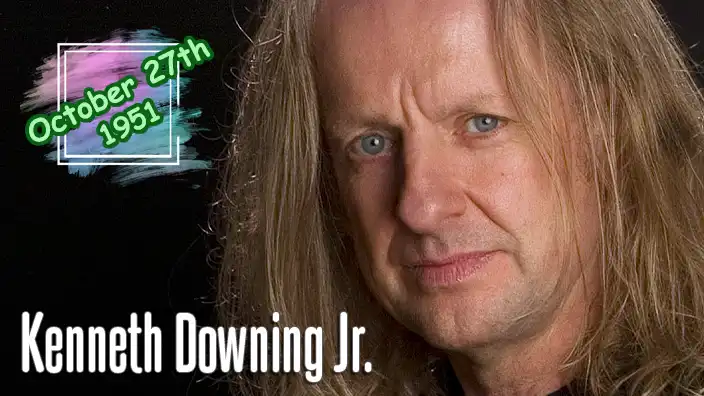
October 27, 1951, in West Bromwich, England

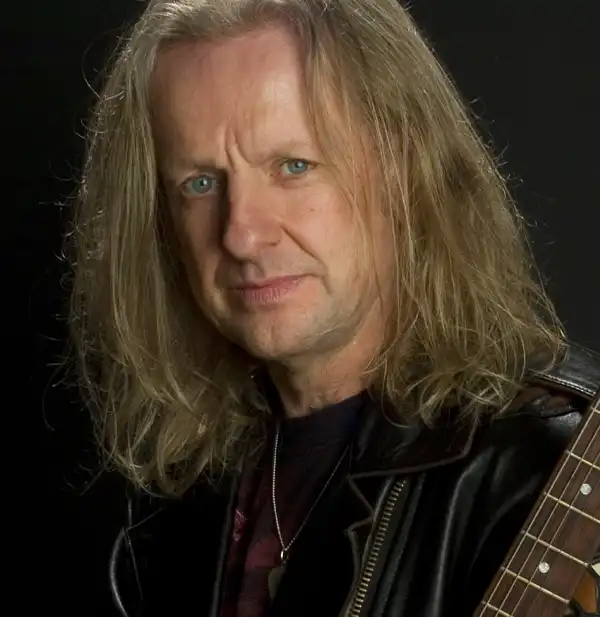
Kenneth Downing Jr., professionally known as K.K. Downing, was born on October 27, 1951, in West Bromwich, Staffordshire, England, and became one of the most influential guitarists in the history of heavy metal music. Best known as a founding member and longtime lead guitarist of the legendary British band Judas Priest, Downing helped establish the powerful twin-guitar sound that became a defining characteristic of traditional heavy metal. His aggressive playing style, lightning-fast solos, distinctive stage presence, and preference for dramatic V-shaped guitars made him an instantly recognizable figure among rock music fans. During four decades with Judas Priest, he contributed to some of the genre's most celebrated recordings, including Breaking the Law, Living After Midnight, You've Got Another Thing Comin', and Painkiller. After departing the band in 2011, he eventually returned to recording and performing with KK's Priest, demonstrating that retirement and heavy metal are not necessarily compatible concepts.
Downing grew up in England's industrial West Midlands, a region whose factories, steelworks, and working-class communities would eventually become closely associated with the emergence of British heavy metal. His childhood was not always easy, and he developed an independent personality while searching for an outlet for his growing interest in music. During the 1960s, British popular culture was undergoing a remarkable transformation as rock and blues musicians challenged established musical conventions. Downing became fascinated by the electric guitar, particularly the performances of Jimi Hendrix, Eric Clapton, and John Mayall. Hendrix's explosive combination of technical ability, theatrical presentation, and experimental sound made an especially strong impression on the young musician. While some teenagers were content to admire their favorite performers from a distance, Downing decided that the sensible thing to do was acquire a guitar and attempt to make an equally impressive amount of noise himself.
His first acoustic guitar cost approximately ten pounds, money he had saved from his early earnings. Armed with a chord book and considerable determination, Downing began teaching himself to play, frequently practicing with friends who shared his musical interests. The competition to master new chords helped accelerate his progress, although learning difficult barre chords initially proved a painful experience. As his enthusiasm increased, he became determined to acquire an electric guitar, but limited finances presented an obstacle. Rather than abandoning the idea, he experimented with assembling his own instrument from available parts before eventually obtaining more suitable equipment. He later purchased a Marshall amplifier and a Gibson SG, bringing him closer to the powerful sound he admired. His ambition to own a Gibson Flying V would eventually become particularly significant, as the instrument's dramatic shape became closely associated with his stage appearance.
Downing's commitment to music intensified during his teenage years, when family disagreements and his determination to pursue a musical career contributed to his leaving home and abandoning formal education. He concentrated on developing his guitar skills and began performing with local musicians in the West Midlands. Among the most important people he encountered was bassist Ian Hill, a fellow aspiring musician who would become his longtime bandmate and a central figure in Judas Priest. The two shared an enthusiasm for powerful rock music and began rehearsing together, developing a musical partnership that would continue for decades. Their early ambitions were relatively straightforward: create original music, perform for audiences, and establish themselves as professional musicians. International fame, platinum records, and enormous concert stages were still distant possibilities, although Downing was already working toward a sound that would eventually help define an entire musical genre.
The origins of Judas Priest date to the late 1960s, when a Birmingham-area band featuring vocalist Al Atkins performed under the name. After that original group dissolved, Atkins joined forces with Downing, Hill, and drummer John Ellis, bringing the Judas Priest name to their new lineup in 1970. Downing and Hill became the instrumental foundation of the developing band, while Atkins provided vocals and contributed to its early musical direction. Their first live performance took place at St. John's Hall in Essington in March 1971. The group's early sound drew heavily upon blues-based hard rock, with influences from bands such as Cream, Deep Purple, and Black Sabbath. However, Downing and his colleagues were determined to develop a more distinctive musical identity, experimenting with increasingly powerful guitar arrangements and original compositions rather than relying exclusively on familiar blues structures.
The early years of Judas Priest were characterized by financial difficulties, demanding travel schedules, and constant changes in personnel. The band performed extensively around the British Midlands, gradually building an audience while struggling to secure a recording contract. In 1973, vocalist Al Atkins departed, creating an urgent need for a replacement. Ian Hill's girlfriend, Sue Halford, suggested her brother Rob, a singer whose extraordinary vocal range would eventually become one of heavy metal's most recognizable sounds. Downing visited Rob Halford and was impressed by his ability to produce powerful high notes and dramatic vocal effects. Halford joined Judas Priest, bringing a commanding stage presence and vocal versatility that complemented the band's increasingly ambitious musical arrangements. The addition of Halford marked a decisive step toward the classic Judas Priest sound, although the musicians still faced years of hard work before achieving widespread commercial recognition.
Judas Priest released their debut studio album, Rocka Rolla, in 1974 through Gull Records. The recording reflected the band's early blues-rock and progressive influences, presenting a sound considerably different from the aggressive heavy metal style that would later make them famous. Although the album did not achieve major commercial success, it provided valuable recording experience and helped introduce the group to a wider audience. The following year, guitarist Glenn Tipton joined the band, establishing the celebrated partnership with Downing that would become central to Judas Priest's musical identity. The contrasting approaches of the two guitarists proved especially effective: Downing favored an energetic, blues-influenced style, while Tipton brought a more structured and melodic approach to lead guitar. Together, they developed harmonized passages, alternating solos, and intricate guitar arrangements that helped distinguish Judas Priest from many of their contemporaries.
The band's second album, Sad Wings of Destiny, released in 1976, represented a significant artistic breakthrough. Featuring songs such as Victim of Changes, The Ripper, and Tyrant, the recording introduced many of the musical characteristics that would define Judas Priest's later work. Downing's guitar performances combined aggressive riffs, expressive solos, and dramatic changes in tempo, while Tipton's complementary playing created a powerful layered sound. The album's darker atmosphere and ambitious compositions helped establish Judas Priest as an important emerging force in British heavy metal. Although commercial success remained limited, the recording attracted enthusiastic attention from dedicated rock fans and demonstrated the band's growing confidence as songwriters and performers. Downing and Tipton were developing a musical partnership that would eventually inspire countless aspiring guitarists, not to mention a considerable number of complaints from parents whose children had recently acquired amplifiers.
Judas Priest's international reputation continued to grow with the release of Sin After Sin in 1977, Stained Class in 1978, and Killing Machine, released in North America as Hell Bent for Leather, later that same year. These albums helped refine the band's increasingly aggressive sound while introducing faster rhythms, sharper guitar tones, and more memorable songwriting. Downing's performances became particularly associated with the energetic guitar attack that distinguished Judas Priest from traditional hard rock groups. The band also developed a striking visual identity built around leather clothing, metal studs, motorcycles, and dramatic stage lighting. Rob Halford played an important role in popularizing this appearance, while Downing's Flying V guitars complemented the group's increasingly theatrical presentation. The combination of powerful music and distinctive imagery helped establish the visual language of heavy metal, influencing musicians and audiences around the world.
The release of British Steel in 1980 transformed Judas Priest into a major international rock attraction. Recorded at Tittenhurst Park, the former English estate associated with John Lennon and Ringo Starr, the album featured some of the band's most recognizable songs, including Breaking the Law, Living After Midnight, and Metal Gods. The recording emphasized direct, memorable riffs and powerful choruses without sacrificing the musical precision that had become a hallmark of the group. Downing's guitar contributions were essential to the album's distinctive sound, particularly the driving rhythms and tightly coordinated passages that made the songs immediately recognizable. British Steel became a landmark recording in heavy metal history, helping bring the genre to a much broader audience. Its success demonstrated that heavy metal could achieve substantial commercial popularity without abandoning the intensity and rebellious spirit that had attracted its original followers.
During the early 1980s, Judas Priest continued their commercial ascent with Point of Entry in 1981, Screaming for Vengeance in 1982, and Defenders of the Faith in 1984. Screaming for Vengeance became particularly important in establishing the band's popularity in the United States, largely through the success of You've Got Another Thing Comin'. The song received extensive rock radio airplay and introduced Judas Priest to listeners who might previously have considered heavy metal an excessively noisy musical curiosity. Downing's guitar work contributed to the recording's powerful combination of accessibility and aggression, demonstrating his ability to deliver memorable riffs without sacrificing technical excitement. The band's increasingly elaborate concerts featured dramatic lighting, powerful sound systems, and Halford's famous motorcycle entrances, creating an experience that combined musical performance with theatrical spectacle.
The partnership between K.K. Downing and Glenn Tipton became one of heavy metal's most influential guitar combinations. Their contrasting styles allowed Judas Priest to incorporate harmonized melodies, intricate solos, and powerful rhythmic arrangements into songs that remained accessible to large audiences. Rather than competing for attention, the guitarists frequently developed complementary passages in which one instrument supported the other before both joined together in a coordinated musical assault. Their work helped establish the twin-lead guitar approach as an essential feature of traditional heavy metal, influencing later performers in bands such as Iron Maiden and numerous other groups. Downing's aggressive phrasing, rapid picking, expressive bends, and energetic stage movements became recognizable characteristics of his playing. His preference for Flying V-style guitars also reinforced his image as a musician who believed an instrument should look nearly as dramatic as it sounded.
Judas Priest experimented with new musical directions during the middle and later years of the 1980s. The album Turbo, released in 1986, incorporated guitar synthesizers and more polished production techniques, reflecting the changing sound of mainstream rock music. Songs such as Turbo Lover demonstrated the band's willingness to explore electronic textures while retaining their recognizable heavy metal identity. The album divided some longtime fans, particularly those who preferred the more aggressive sound of earlier recordings, but it also introduced Judas Priest to new audiences. Downing continued adapting his playing to the band's evolving arrangements, demonstrating that technological experimentation could coexist with traditional guitar-driven rock. The group subsequently released Ram It Down in 1988, returning to a more aggressive musical approach while preparing for another major creative transformation.
That transformation arrived with Painkiller in 1990, an album widely regarded as one of Judas Priest's most powerful and technically demanding recordings. Featuring drummer Scott Travis, whose rapid double-bass technique introduced an additional level of intensity, the album presented a faster and more aggressive sound than many of the band's previous releases. Its title track became a celebrated heavy metal anthem, combining extraordinary vocal performances with explosive drumming and intricate guitar solos. Downing and Tipton delivered some of their most demanding recorded performances, creating a dense musical arrangement that challenged both performers and listeners. Painkiller demonstrated that Judas Priest could remain relevant as heavier forms of metal gained popularity, reaffirming the band's reputation as an influential force in the genre.
Following the Painkiller tour, Rob Halford departed Judas Priest in the early 1990s to pursue other musical projects. His departure created considerable uncertainty about the band's future, particularly because his extraordinary vocal range had become so closely associated with its sound. Downing, Tipton, and Hill eventually continued with American vocalist Tim “Ripper” Owens, whose powerful singing abilities allowed the group to explore a darker and more aggressive musical direction. Judas Priest released Jugulator in 1997 and Demolition in 2001 with Owens as lead vocalist. Although these albums attracted mixed reactions from fans and critics, they demonstrated the remaining members' determination to continue recording and performing rather than allowing the departure of a prominent frontman to end the band's career.
Rob Halford reunited with Judas Priest in 2003, bringing the group's classic vocal and guitar combination back together. The reunited lineup released Angel of Retribution in 2005, an album that celebrated the band's traditional sound while introducing new material. Songs such as Judas Rising, Hellrider, and Deal with the Devil showcased the familiar interplay between Downing and Tipton, while Halford's powerful vocals restored a defining element of the group's musical identity. The album received an enthusiastic response from fans, and Judas Priest embarked upon extensive international touring. The band subsequently released Nostradamus in 2008, an ambitious concept album inspired by the life and predictions of the French astrologer. Its orchestral arrangements, dramatic compositions, and elaborate storytelling represented another example of Judas Priest's willingness to experiment beyond conventional heavy metal structures.
In April 2011, K.K. Downing announced his departure from Judas Priest, ending a remarkable association that had lasted approximately four decades. The announcement surprised fans, particularly because the band was preparing for its farewell-themed Epitaph World Tour. Downing initially described his decision in terms of retirement and a desire to pursue other interests, although he later discussed disagreements involving management, relationships within the group, and his dissatisfaction with aspects of the band's organization. His departure marked the end of one of heavy metal's most celebrated guitar partnerships, with Richie Faulkner joining Judas Priest as his replacement. Downing's decision did not diminish his contributions to the band's history, but it created a significant divide between his established musical legacy and the continuing activities of his former colleagues.
During his years away from Judas Priest, Downing explored business interests and remained involved in music through production work and occasional appearances. One of his most notable projects was the development of KK's Steel Mill, a live music venue in Wolverhampton, England. Established within a former industrial building, the venue provided a performance space for rock and heavy metal artists while reflecting Downing's longstanding connection with the industrial heritage of the West Midlands. He also worked with emerging musicians, including the British metal band Hostile, contributing production assistance and songwriting experience. His involvement in these projects demonstrated an interest in supporting the next generation of performers while maintaining connections with the musical community that had shaped his career.
In 2018, Downing published his autobiography, Heavy Duty: Days and Nights in Judas Priest, written with journalist Mark Eglinton. The book explored his childhood, musical influences, early struggles, international success, and experiences within Judas Priest. It also offered his personal perspective on the relationships, disagreements, and business decisions that influenced the band's history. The memoir attracted considerable attention from heavy metal fans because it provided a detailed account of events that had previously been discussed mainly through interviews and public statements. Downing's reflections presented the career of a pioneering guitarist as something considerably more complicated than a sequence of successful albums and sold-out concerts. Behind the thunderous music were financial pressures, creative disagreements, exhausting tours, and the ordinary human difficulties associated with working closely with the same people for decades.
Downing's return to live performance began gathering momentum in 2019, when he appeared at the Bloodstock Open Air festival alongside guitarist Ross the Boss. The performance marked an important step back into the spotlight and demonstrated that his enthusiasm for playing heavy metal had not disappeared during his years away from Judas Priest. Later that year, he performed a special concert in Wolverhampton with musicians including Tim “Ripper” Owens, former Judas Priest drummer Les Binks, bassist David Ellefson, and guitarist A.J. Mills. The enthusiastic audience response encouraged Downing to consider returning to recording and touring on a more permanent basis. Rather than simply revisiting old material, he began developing plans for a new band that would continue the traditional heavy metal sound he had helped establish.
The result was KK's Priest, a heavy metal group featuring Downing alongside former Judas Priest vocalist Tim “Ripper” Owens, guitarist A.J. Mills, bassist Tony Newton, and drummer Sean Elg. The band's debut studio album, Sermons of the Sinner, was released in October 2021 and immediately attracted attention from fans eager to hear Downing's distinctive guitar playing again. Songs such as Hellfire Thunderbolt, Raise Your Fists, and Wild and Free embraced the aggressive riffs, powerful vocals, and dramatic arrangements associated with traditional British heavy metal. The album represented both a continuation of Downing's musical heritage and a fresh creative beginning. Rather than attempting to reinvent his sound entirely, he concentrated on delivering the energetic guitar-driven music that had made him famous.
In November 2022, Downing reunited with members of Judas Priest for a special performance during the band's induction into the Rock and Roll Hall of Fame. Judas Priest received the Musical Excellence Award, recognizing the group's contributions to rock music and its influence on subsequent generations of performers. The ceremony brought Downing back onto the stage with former colleagues, including Rob Halford and Glenn Tipton, providing an emotional moment for fans who had followed the band's history for decades. Although the appearance did not lead to a permanent reunion, it offered an opportunity to acknowledge the extraordinary musical achievements of the musicians who helped establish Judas Priest as one of heavy metal's defining bands.
KK's Priest continued its development with the release of The Sinner Rides Again in September 2023. The album featured songs including One More Shot at Glory, Sons of the Sentinel, Strike of the Viper, and Reap the Whirlwind, combining familiar heavy metal elements with new compositions reflecting Downing's continuing enthusiasm for the genre. The recording emphasized powerful twin-guitar arrangements, dramatic vocals, and lyrics exploring determination, conflict, and resilience. The band's first live performance took place at KK's Steel Mill in Wolverhampton in July 2023, followed by festival appearances and international touring. The success of these activities demonstrated that Downing retained a dedicated audience interested in both his historic contributions to Judas Priest and his newer musical projects.
Downing's continuing activities have included further recording, production work, and international performances. In 2025, he revisited the early Judas Priest song Never Satisfied, recording a new version with Tim “Ripper” Owens to commemorate the legacy of the band's debut album. He also produced Midnight Blitz, an album by the British heavy metal band Tailgunner, demonstrating his continuing interest in developing younger musicians. That same year, he participated in the historic Back to the Beginning concert in Birmingham, celebrating the musical legacy of Black Sabbath and Ozzy Osbourne. His appearance connected two important chapters of British heavy metal history, bringing together musicians whose pioneering work helped transform the sound of popular music.
In 2026, Downing remained active with KK's Priest, joining American heavy metal band W.A.S.P. for an extensive North American tour. The concerts brought his music to audiences throughout the United States and Canada, combining material from KK's Priest with familiar Judas Priest classics. The performances demonstrated the continued popularity of traditional heavy metal and the enduring appeal of musicians who helped establish the genre. For Downing, the opportunity to perform for longtime followers and younger fans provided another chapter in a career that had already included decades of international touring. His return to the stage also reinforced a familiar truth about rock musicians: announcing retirement is considerably easier than staying retired when there is a guitar nearby and an audience waiting.
K.K. Downing's influence on heavy metal extends far beyond the recordings and concerts associated with his name. His partnership with Glenn Tipton helped establish a guitar sound that became a model for countless musicians, while his aggressive playing style and dramatic stage presentation contributed to the development of heavy metal's musical and visual identity. From the industrial communities of England's West Midlands to the world's largest concert venues, Downing's career reflects the evolution of a musical genre that grew from underground enthusiasm into an international cultural phenomenon. His contributions to Judas Priest remain essential to understanding the development of British heavy metal, while his continuing work with KK's Priest demonstrates his determination to remain creatively active.
Kenneth “K.K.” Downing Jr. has spent his professional life demonstrating that heavy metal is more than simply loud guitars and dramatic stage lighting. At its best, the genre combines musical discipline, technical ability, memorable songwriting, and a powerful connection between performers and audiences. Downing helped establish those qualities through decades of recordings and performances that influenced generations of musicians. His journey from a self-taught guitarist with a modest acoustic instrument to an internationally celebrated heavy metal pioneer represents an extraordinary achievement built upon persistence, creativity, and a refusal to abandon his musical ambitions. And while the years have brought changing bands, different musical trends, and occasional disagreements, one thing remains reassuringly consistent: give K.K. Downing a guitar, an amplifier, and a willing audience, and the neighborhood can forget about having a quiet evening.