Celebrity Birthdays - August

August birthdays are like the last cannonball into the summer pool — big, splashy, and a little bittersweet. School is looming, but August folks insist we squeeze every last drop of sunshine first.
Join us as we salute the stars who own the dog days of summer. They’re proof that even the hottest month can be cool when you know how to celebrate it.
- Details
- Category: Celebrity Birthdays - August
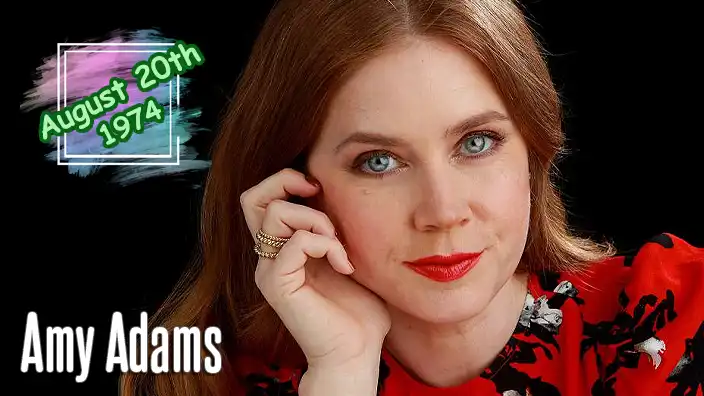
Amy Adams has built a career by making almost everything look effortless, whether she is playing a relentlessly optimistic fairy-tale princess, a tough Boston bartender, a linguist attempting to communicate with extraterrestrials, or Lois Lane trying to keep Superman pointed in roughly the right direction. With multiple Academy Award nominations and an impressive collection of dramatically different characters behind her, Adams has become one of the most respected actresses of her generation — without needing a cape of her own.
 August 20, 1974, in Vicenza, Italy

Trivia
- Before pursuing acting professionally, Adams trained as a ballet dancer.
- She worked in dinner theater before establishing her film career.
- Junebug earned Adams her first Academy Award nomination.
- Adams has received six Academy Award nominations for performances in Junebug, Doubt, The Fighter, The Master, American Hustle and Vice.
- She played Lois Lane opposite Henry Cavill's Superman in several DC films.
- Adams met her future husband, Darren Le Gallo, in an acting class.
- Details
- Category: Celebrity Birthdays - August
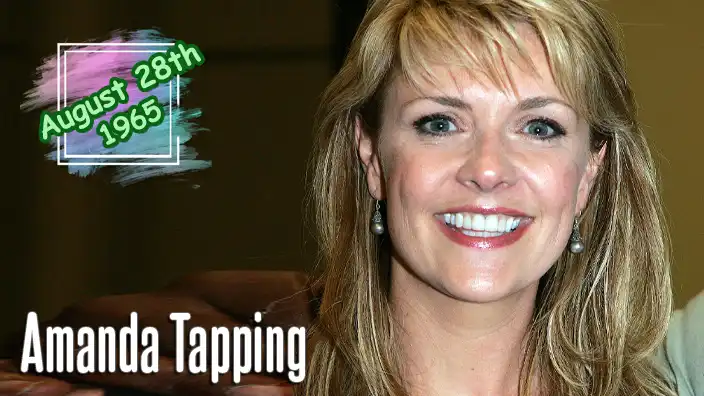
Amanda Tapping spent years protecting Earth from Goa'uld System Lords, Replicators and assorted intergalactic troublemakers in Stargate SG-1, which makes the average day at the office sound rather uneventful. As Samantha Carter, she brought brains, courage and considerable firepower to science fiction television—and then moved behind the camera and started telling everybody else what to do.
August 28, 1965, in Rochford, England
Trivia
- Amanda grew up in Ontario, Canada.
- She studied drama at the University of Windsor.
- She co-founded the comedy troupe Random Acts.
- She directed an episode of Stargate SG-1.
- She starred in and produced Sanctuary.
- She co-founded Sanctuary for Kids.
- Details
- Category: Celebrity Birthdays - August
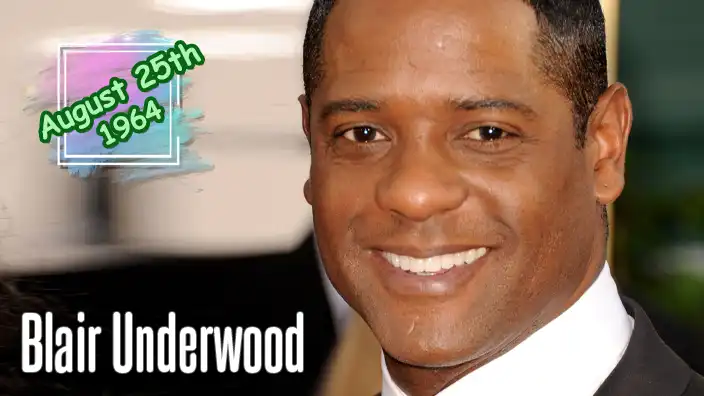
Blair Underwood has spent decades playing lawyers, doctors, detectives, executives and assorted men who clearly own better suits than the rest of us. From his breakthrough on L.A. Law to Broadway, film and prestige television, Underwood has built a career on intelligence, versatility and enough screen presence to make entering a conference room look like an event.
 August 25, 1964, in Tacoma, Washington
Trivia
- His father was a U.S. Army colonel.
- He studied drama at Carnegie Mellon.
- L.A. Law made him a television star.
- He appeared in Spielberg's Amistad.
- He played Dr. Robert Leeds on Sex and the City.
- He portrayed Lash on Agents of S.H.I.E.L.D.
- A Soldier's Play earned him a Tony nomination.

- Details
- Category: Celebrity Birthdays - August
Leslie Odom Jr. has the kind of voice that makes you question your own life decisions—like why you ever thought karaoke was a good idea. Whether he’s belting out show tunes, crooning a jazz ballad, or casually dropping an Oscar-nominated performance, he does it all with the effortless cool of someone who probably even brushes his teeth on beat. If charisma were a superpower, Leslie would already be running the Avengers and producing the soundtrack.
August 6, 1981, in Queens, New York, New York
Trivia
- Award Winner: Odom Jr. has taken home a Tony and a Grammy. The man’s got more hardware than a Home Depot aisle.
- Author: He penned a motivational book called Failing Up, proving that even his setbacks are inspiring.
- Family Man: He’s married to actress Nicolette Robinson, and the two frequently perform and record together—think power couple, but with perfect pitch.
- Voice of Gold: His Christmas albums are so smooth, even Santa puts down the eggnog and listens.
- Details
- Category: Celebrity Birthdays - August
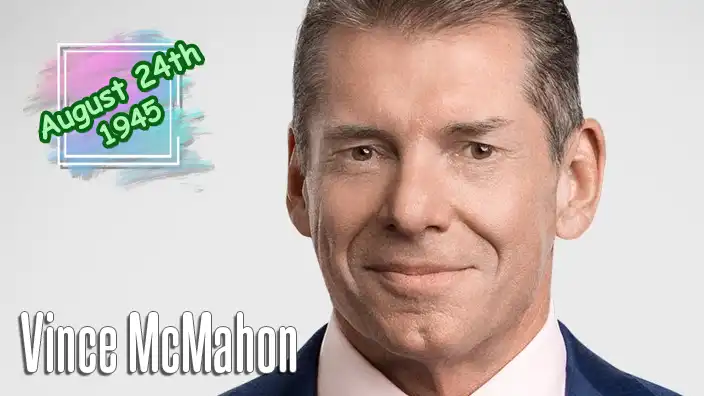
Vince McMahon took professional wrestling from regional arenas to worldwide television, created WrestleMania and eventually became one of WWE's greatest villains himself. Most company chairmen avoid being hit with folding chairs by their employees; McMahon occasionally seemed disappointed when nobody tried.
August 24, 1945, in Pinehurst, North Carolina
Trivia
- He graduated from East Carolina University.
- He purchased his father's wrestling business in 1982.
- The first WrestleMania was held in 1985.
- He created the villainous “Mr. McMahon” character.
- He became WWE Champion in 1999.
- He won the 1999 Royal Rumble.
- WWE purchased WCW's assets in 2001.
- Details
- Category: Celebrity Birthdays - August
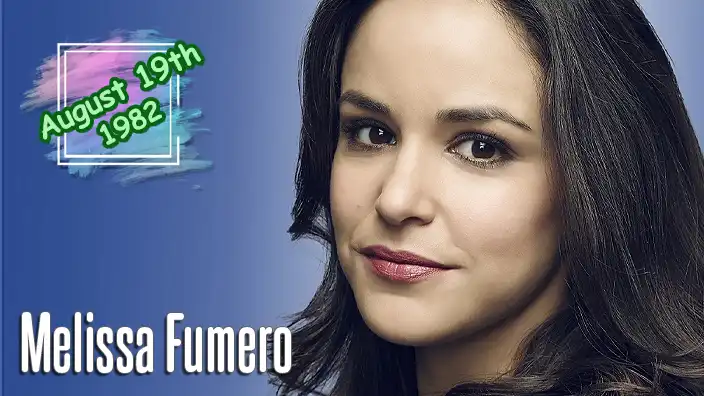
Melissa Fumero proved that obsessive organization, color-coded binders and an almost alarming enthusiasm for office supplies can indeed be the foundations of great television comedy. As Amy Santiago on Brooklyn Nine-Nine, Fumero transformed an ambitious, rule-following NYPD detective into one of the show's funniest and most lovable characters. Amy wanted promotions, respected authority, adored paperwork and regarded a properly organized binder with the enthusiasm most people reserve for winning the lottery.
August 19, 1982, in Lyndhurst, New Jersey
Trivia
- Fumero graduated from New York University with a Bachelor of Fine Arts in Drama before beginning her professional television career.
- Her first professional television role was Adriana Cramer on One Life to Live in 2004.
- She met her future husband, David Fumero, through One Life to Live, where he played Cristian Vega.
- Fumero played Amy Santiago in 153 episodes of Brooklyn Nine-Nine from 2013 through 2021.
- She was part of the Brooklyn Nine-Nine cast nominated for a Screen Actors Guild Award for Outstanding Ensemble in a Comedy Series.
- Fumero won the 2022 Imagen Award for Best Supporting Actress – Comedy for Brooklyn Nine-Nine.
- Details
- Category: Celebrity Birthdays - August
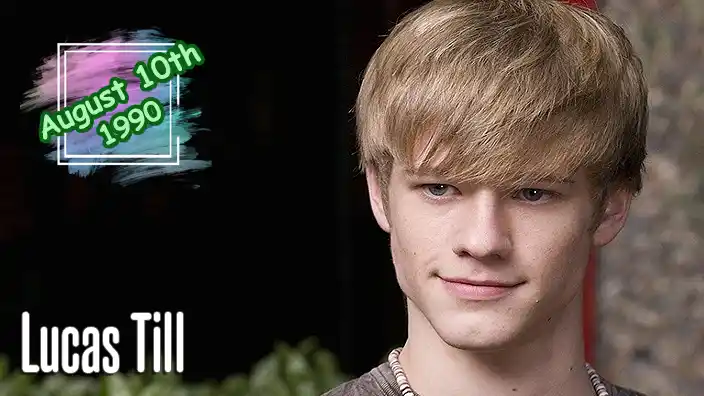
Lucas Till is the kind of guy who can walk into a disaster scene, grab a rubber band, and somehow save everyone in under 45 minutes—commercial breaks included. He’s like that friend who claims they can “totally fix it” but, unlike your friend, actually does. If MacGyver ever needed a stunt double for charming smirks alone, Lucas would still be the top choice.
August 10, 1990, in Fort Hood, Texas
Trivia
- Big Bang Debut: His first acting role was in The Adventures of Ociee Nash (2003) when he was just 13.
- Musical Link: Appeared in Taylor Swift’s You Belong With Me music video—back when music videos were still a big deal.
- Texas Roots: Born in Fort Hood, Texas, and raised in the South, he still carries a bit of that southern gentleman charm.
- MacGyver Mindset: In real life, admits he’s nowhere near as handy as his TV character. (Translation: don’t ask him to fix your sink.)
- Details
- Category: Celebrity Birthdays - August
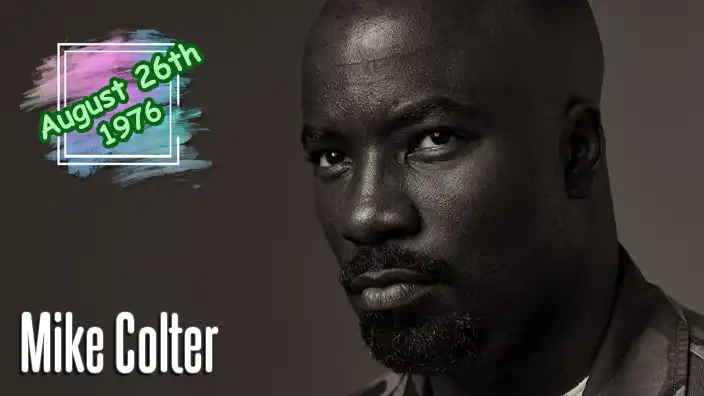
Mike Colter has played lawyers, criminals, soldiers, priests and one exceptionally durable superhero who can stop bullets with his skin. At 6-foot-3 and equipped with a voice that could probably convince a parking meter to waive the fine, Colter has built a career around commanding the screen without needing to make much noise about it.
August 26, 1976, in Columbia, South Carolina
Trivia
- Mike stands just over 6-foot-3.
- A Soldier's Story inspired him to act.
- He earned an MFA from Rutgers University.
- He played Big Willie Little in Million Dollar Baby.
- Luke Cage first appeared in Jessica Jones.
- He received two Critics Choice nominations for Evil.

- Details
- Category: Celebrity Birthdays - August
Andy Warhol made a career out of painting soup cans—and somehow made you feel uncultured for not getting the deeper meaning. He could take a Brillo box, stick it in a gallery, and convince everyone it was a philosophical statement about capitalism, irony, and dishwashing. If Andy were alive today, he’d probably be selling NFTs of Pop-Tarts and calling it “social commentary.” And you know what? We’d buy them.
August 6, 1928, in Pittsburg, Pennsylvania
 February 22, 1987, in New York, New York
Trivia
- Not Just Soup: Warhol painted everything from Coca-Cola bottles to electric chairs, proving he could find beauty—or commentary—in almost anything.
- Film Buff: He directed more than 60 films, including the eight-hour epic Empire, which is literally just a static shot of the Empire State Building. You were supposed to “feel” it.
- Survivor: In 1968, Warhol survived an assassination attempt by radical feminist Valerie Solanas. The event deeply affected him physically and emotionally for the rest of his life.
- Time Traveler? His work predicted the rise of reality TV, influencer culture, and the obsession with branding. Not bad for a guy who once said, “I am a deeply superficial person.”
- Details
- Category: Celebrity Birthdays - August
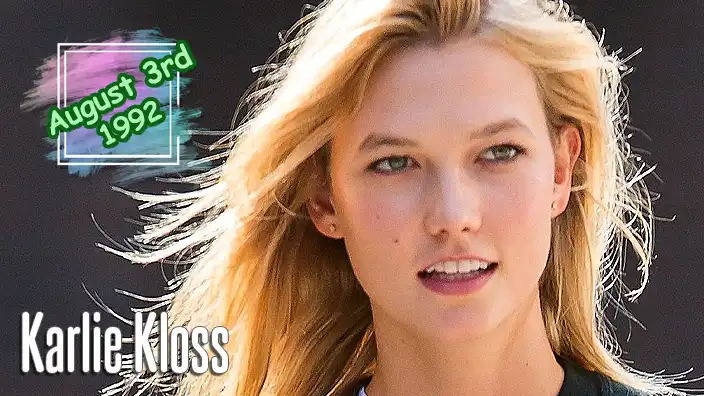
Karlie Kloss has spent so much time on international runways that frequent-flyer miles probably ought to be considered a fashion accessory. One day she's walking for the world's biggest designers, the next she's encouraging young women to learn computer programming. It turns out that while high heels and computer code don't usually appear in the same sentence, Karlie Kloss has made a career out of proving they belong together.
August 3, 1992, in Chicago, Illinois
Trivia
- Became a Victoria's Secret Angel in 2013.
- Walked for Chanel, Dior, Versace, Valentino, and many other luxury brands.
- Has appeared on dozens of international Vogue covers.
- Founded the nonprofit Kode with Klossy in 2015.
- Promotes coding education for girls and young women.
- Has studied computer programming herself.
- Hosted the television competition series Project Runway.
- Married businessman Joshua Kushner in 2018.
- Is also an entrepreneur and startup investor.
- Frequently supports STEM education initiatives.
- Details
- Category: Celebrity Birthdays - August
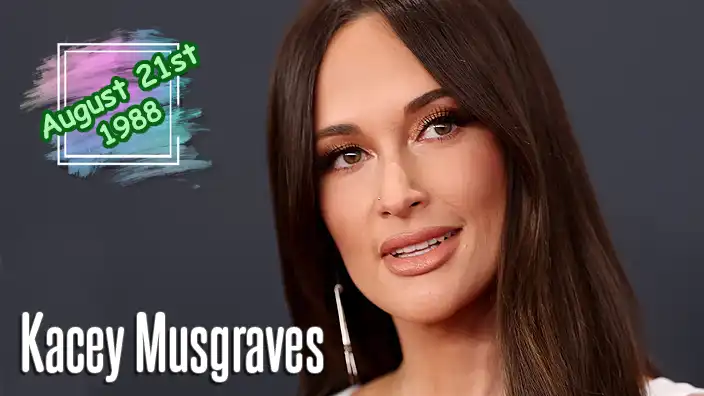
Kacey Musgraves grew up in a tiny Texas town, started writing songs when she was eight, survived a reality television competition without actually winning it, and eventually collected enough Grammy Awards to make seventh place look like an unusually clever career strategy. Along the way, she discovered that country music doesn't necessarily require staying inside the lines—particularly when the person holding the pencil has absolutely no intention of doing so.
August 21, 1988, in Golden, Texas
Trivia
- Musgraves co-wrote Miranda Lambert's hit “Mama's Broken Heart.”
- Her major-label debut, Same Trailer Different Park, won the Grammy for Best Country Album.
- Golden Hour won Album of the Year at the 2019 Grammy Awards and swept all four categories in which Musgraves was nominated that night.
- Her Zach Bryan collaboration “I Remember Everything” gave Musgraves her first number-one single on the Billboard Hot 100.
- Through the 2026 Grammy Awards, Musgraves has won eight Grammys from 17 nominations.
- Details
- Category: Celebrity Birthdays - August
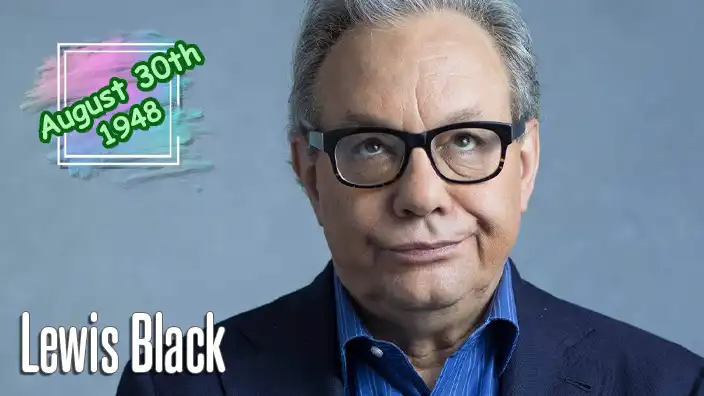
Lewis Black has built a career by saying what millions of people are thinking, except considerably louder, with more finger-pointing and the distinct possibility that a blood vessel may resign halfway through the sentence. Born August 30, 1948, the comedian, actor and playwright turned brilliantly controlled outrage into an art form—and somehow made yelling at politics, bureaucracy and human stupidity one of the funniest jobs in America.
August 30, 1948, in Washington, D.C.
Trivia
- Lewis earned an MFA from the Yale School of Drama.
- Began appearing on The Daily Show in 1996.
- His recurring segment is called Back in Black.
- He has written dozens of plays.
- He has won two Grammy Awards.
- Voiced Anger in Pixar's Inside Out.
- Returned as Anger in Inside Out 2.
- Details
- Category: Celebrity Birthdays - August
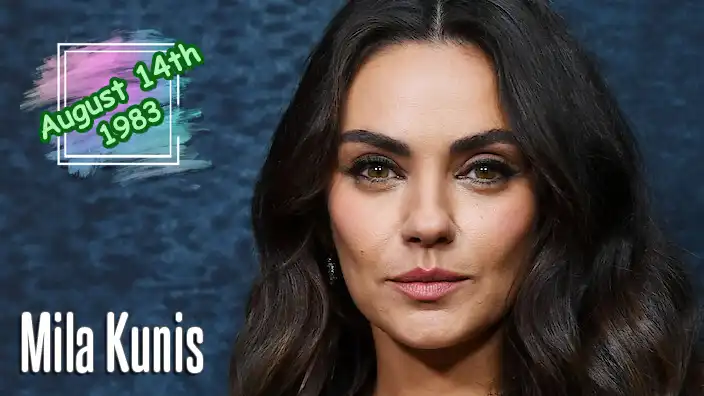
Mila Kunis has spent most of her career making versatility look suspiciously casual. She began as the tiny, terrifying Jackie Burkhart on That ’70s Show, became the long-suffering voice of Meg Griffin on Family Guy, proved she could carry romantic comedies, transformed herself into a professional-looking ballerina for Black Swan, battled witches in Oz, survived a foul-mouthed teddy bear and eventually became one of Hollywood’s most dependable comedic actresses. Somewhere in there she also married her former television boyfriend, which seems less like romance and more like an exceptionally patient sitcom callback.
August 14, 1983, in Chernivtsi, Ukraine
Trivia
- Her longtime manager Susan Curtis first encountered Kunis through childhood acting classes.
- Kunis attended Fairfax High School while continuing to work professionally.
- She briefly attended both UCLA and Loyola Marymount University.
- Seth MacFarlane initially asked her to slow down and enunciate more clearly while auditioning for Meg Griffin.
- Her voice has become so recognizable that she says strangers sometimes identify her only after she begins speaking.
- Natalie Portman recommended Kunis for Black Swan after unexpectedly learning that Kunis had taken ballet as a child.
- Director Darren Aronofsky attempted to encourage rivalry between Kunis and Portman during Black Swan, but the longtime friends quickly figured out what he was doing.
- During Black Swan, Kunis dislocated a shoulder and suffered repeated bruising to her ribs from dance lifts.
- Details
- Category: Celebrity Birthdays - August
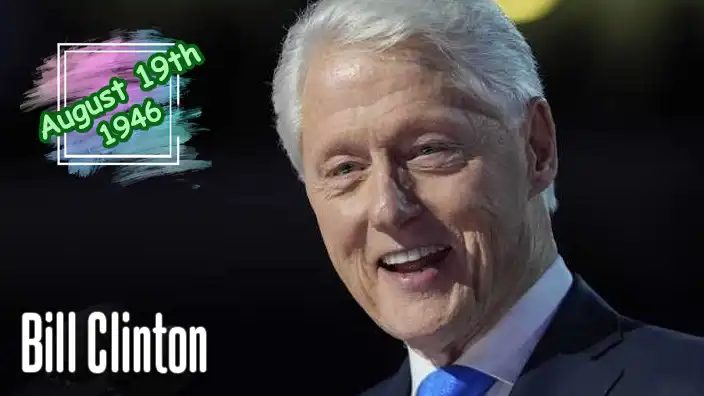
Bill Clinton went from a small town in Arkansas to the White House, served two terms as President of the United States and somehow made discussing federal budgets a regular feature of prime-time television. A gifted campaigner famous for remembering names, working a crowd and talking considerably longer than whoever prepared the schedule expected, Clinton presided over economic expansion, major domestic policy battles, international crises and one of the most politically turbulent presidencies of modern times. He also plays the saxophone, which remains considerably more entertaining than watching most former presidents attempt karaoke.
August 19, 1946, in Hope, Arkansas
Trivia
- As a teenager attending Boys Nation in 1963, Clinton met and shook hands with President John F. Kennedy at the White House.
- He attended Georgetown University, studied at Oxford as a Rhodes Scholar and earned his law degree from Yale.
- Clinton was first elected governor of Arkansas at age 32, lost reelection and then successfully returned to the governorship.
- He became known as “The Comeback Kid” during the 1992 Democratic presidential primaries.
- Clinton is an enthusiastic saxophone player and famously performed on The Arsenio Hall Show during his 1992 presidential campaign.
- In 1998, he became the second U.S. president to be impeached; the Senate acquitted him in 1999.
- President Barack Obama awarded Clinton the Presidential Medal of Freedom in 2013.
- Details
- Category: Celebrity Birthdays - August
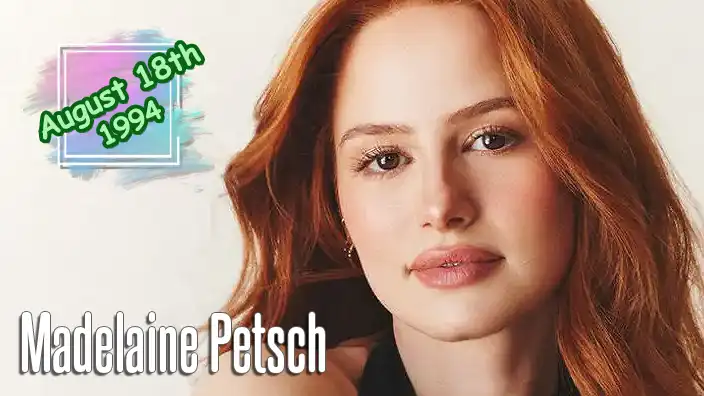
Madelaine Petsch was born with naturally red hair, learned to perform almost as soon as she learned to walk, and eventually landed the role of Cheryl Blossom, a character who could make entering a room look like a hostile corporate takeover. Best known for Riverdale, Petsch has since moved comfortably between television, thrillers, horror films, producing, fashion, and social media. Along the way, she has demonstrated that the girl wearing the most red in the room may also be the person with the best idea of where her career is going.
August 18, 1994, in Port Orchard, Washington
Trivia
- Her parents are South African, and she spent part of her childhood in South Africa.
- She speaks Afrikaans.
- Petsch has wanted to become an actress since she was about three years old.
- Before her acting career took off, she supported herself in Los Angeles by working as a barista.
- Her famous red hair is natural, despite the number of people who apparently remain suspicious of it.
- She was raised vegetarian and became vegan as a teenager.
- Details
- Category: Celebrity Birthdays - August
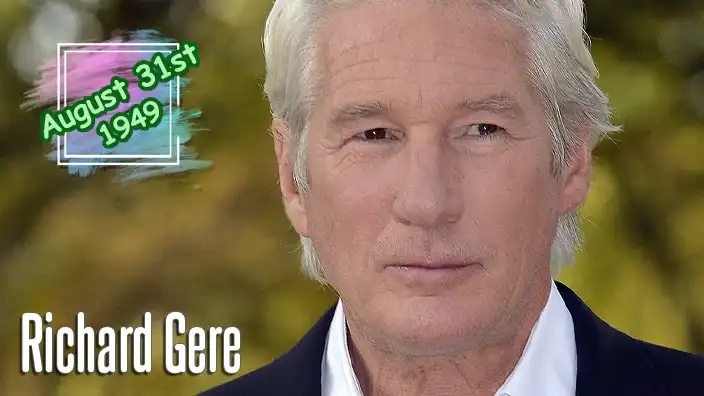
Richard Gere became a Hollywood leading man by wearing an impressive number of expensive suits, sweeping Julia Roberts off her feet in Pretty Woman and somehow making audiences believe that joining the Navy could end with Debra Winger waiting outside the factory. Beneath the movie-star image, however, is an actor whose career has ranged from musicals and romantic comedies to crime dramas, political thrillers and independent films for more than five decades.
August 31, 1949, in Philadelphia, Pennsylvania
Trivia
- Gere attended college on a gymnastics scholarship.
- He played Danny Zuko in Grease onstage.
- American Gigolo made him a major star.
- He reunited with Julia Roberts in Runaway Bride.
- Gere performed his own singing in Chicago.
- He won a Golden Globe for Chicago.
- Details
- Category: Celebrity Birthdays - August
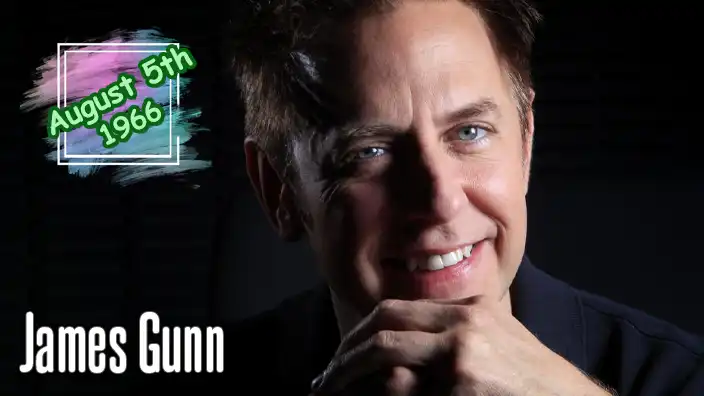
James Gunn has made a highly successful career out of gathering misfits, handing them dangerous weapons, giving one of them a deeply questionable personality, and somehow turning the resulting chaos into an emotional family drama. He transformed a talking raccoon and a walking tree into international movie stars, persuaded audiences to care about a giant alien starfish, and then accepted responsibility for the entire DC Universe. Most people would have asked for a quieter office job. Gunn apparently looked at decades of complicated superhero history and said, “Yes, I’ll sort that out.”
August 5, 1966, in St. Louis, Missouri
Trivia
- Began his filmmaking career with Troma Entertainment.
- Wrote the screenplay for Tromeo and Juliet.
- Wrote the live-action Scooby-Doo movie.
- Wrote Zack Snyder’s remake of Dawn of the Dead.
- Made his feature directing debut with Slither.
- Directed the dark superhero comedy Super.
- Wrote and directed all three Guardians of the Galaxy films.
- Selected many of the songs used in the Guardians soundtracks.
- Wrote and directed DC’s The Suicide Squad.
- Details
- Category: Celebrity Birthdays - August
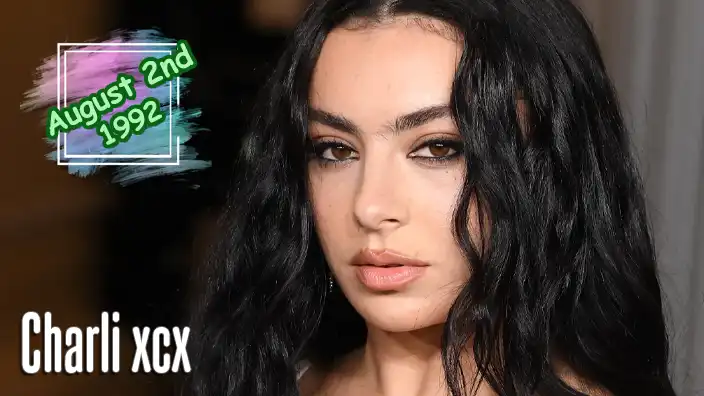
If pop music had a laboratory where the rules were optional and the volume knob had long since snapped off, there's a good chance Charli XCX would have the master key. She has an uncanny talent for taking sounds that make everyone raise an eyebrow on Monday and turning them into chart-toppers by Friday. While the rest of us are still trying to remember our passwords, she's busy reinventing modern pop music one fearless song at a time.
August 2, 1992, in Cambridge, England
Trivia
- Began writing songs while still a teenager.
- Co-wrote and featured on the worldwide hit I Love It.
- Boom Clap became an international breakthrough solo hit.
- Has written songs for numerous major recording artists.
- Frequently collaborates with innovative electronic producers.
- Helped popularize the hyperpop movement.
- Released the critically acclaimed album Crash in 2022.
- Brat became one of 2024's defining pop albums.
- Known for embracing new technology and fan interaction.
- Recognized for blending mainstream pop with experimental sounds.
- Has earned multiple Grammy Award nominations.
- Details
- Category: Celebrity Birthdays - August
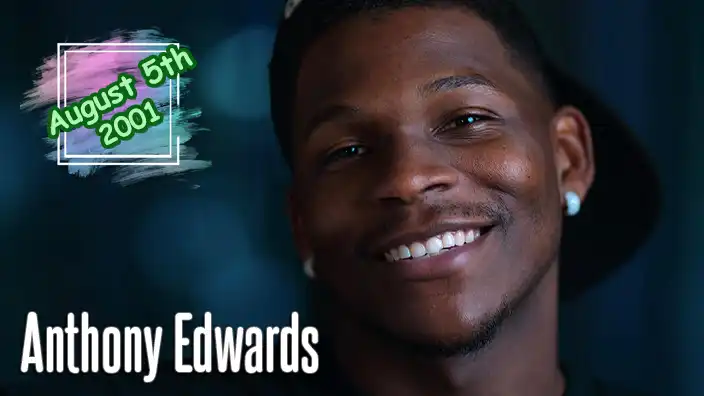
Some basketball players ease into the NBA. Anthony Edwards looked at that idea, shrugged, and decided that highlights were a better introduction. Whether he's throwing down a thunderous dunk, draining a deep three-pointer, or delivering one of his famously entertaining interviews, Edwards has a remarkable talent for making the extraordinary look routine. Opposing defenders have learned an important lesson: if Anthony Edwards starts smiling, someone is probably about to end up on a highlight reel.
August 5, 2001, in Atlanta, Georgia
Trivia
- Drafted by the Minnesota Timberwolves.
- Played one season at the University of Georgia.
- Won SEC Freshman of the Year.
- Named to the NBA All-Rookie First Team.
- Multiple-time NBA All-Star.
- Earned All-NBA honors.
- Nicknamed "Ant."
- Wears No. 5 in honor of his late mother and grandmother.
- Originally excelled in football before choosing basketball.
- Known for spectacular dunks and highlight-reel plays.
- Details
- Category: Celebrity Birthdays - August
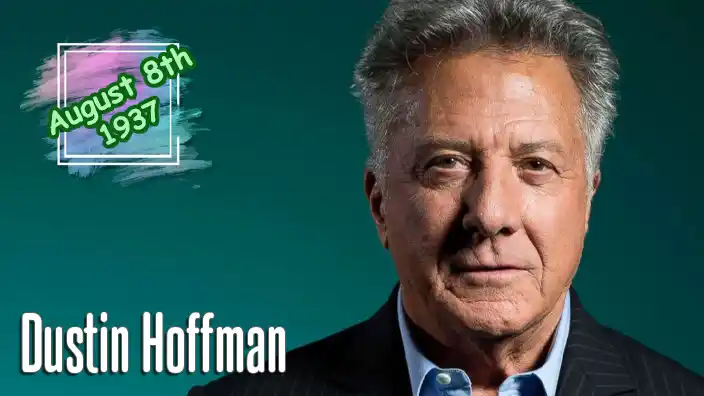
Dustin Hoffman is the only man who could turn nervous fidgeting into an Oscar-worthy skill. He made awkward pauses feel like Shakespeare and somehow convinced us all that Tootsie was both hilarious and profound. If you need someone to cry, yell, whisper, sweat, panic, and win awards—all in one take—Dustin’s your guy. Just don’t ask him to “tone it down.” That’s not in his tool kit.
August 8, 1937, Los Angeles, California
Trivia
- Oscar Gold: He won Best Actor twice—first for Kramer vs. Kramer (1979) and again for Rain Man (1988). Both performances are considered among the finest in film history.
- Method to the Madness: Famously method, he once stayed up for days to appear exhausted for a role—only to be told by co-star Laurence Olivier, “My dear boy, why don’t you just try acting?”
- Animation Fan Favorite: He voiced the villainous (and hilarious) Master Shifu in Kung Fu Panda. Because yes, even animated animals need gravitas.
- Late Start: Hoffman was 30 when he starred in The Graduate—proving it’s never too late to become an icon.

- Details
- Category: Celebrity Birthdays - August
Robin Quivers has spent over four decades sitting next to Howard Stern—and if that’s not worth a medal, at least give the woman a statue. She’s the only person who can sip tea, raise one eyebrow, and quietly destroy someone’s argument with surgical precision—all while managing to keep the show from veering completely into FCC disaster. Honestly, she deserves hazard pay, a trophy, and her own holiday.
August 8, 1952, in Baltimore, Maryland
Trivia
- Military Vet: She’s not just tough on the mic—she served as a nurse in the U.S. Air Force, rising to the rank of captain.
- Survivor & Advocate: Robin battled endometrial cancer in 2012, continuing to co-host the show from home during treatment. Her resilience became an inspiration to fans.
- Radio Hall of Famer: She was inducted into the National Radio Hall of Fame in 2017—long overdue, if you ask most fans.
- Plant-Powered: She’s a dedicated vegan and health enthusiast, proving you can dish out radio zingers and kale smoothies in the same breath.
From Our Marks Catelog
-
Sitting down at the dinner table, there's always that moment when you spot the mashed potatoes,...
-

Once upon a time, someone looked at tennis and thought, “This would be perfect if it involved less running,...
-

If you’re the kind of person who likes a little thrill with your meal, then one bite of that...
-

If you've ever scratched a dog's ears, rescued a turtle from the middle of the road, or apologized...
-
Who knew that creating a prehistoric masterpiece could lead to such existential questions? Like, did...
-

It's not uncommon to see a normally quiet neighborhood transform overnight into a glittering...

