Celebrity Birthdays - August

August birthdays are like the last cannonball into the summer pool — big, splashy, and a little bittersweet. School is looming, but August folks insist we squeeze every last drop of sunshine first.
Join us as we salute the stars who own the dog days of summer. They’re proof that even the hottest month can be cool when you know how to celebrate it.
- Details
- Category: Celebrity Birthdays - August
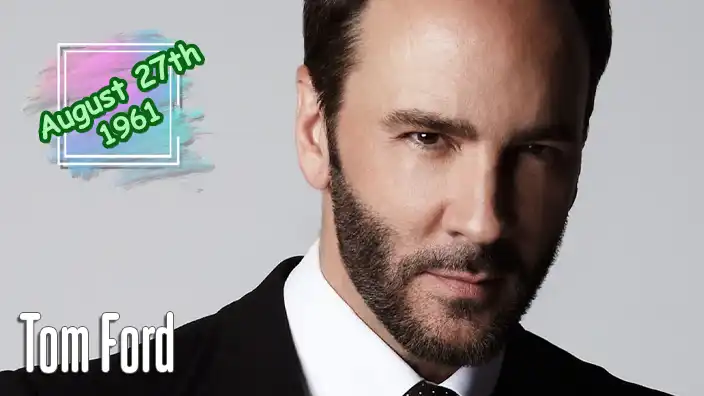
Tom Ford is the sort of man who can apparently look at a suit, a perfume bottle, a fashion house or an entire motion picture and decide that it simply isn't elegant enough yet. Born in Texas and armed with formidable ambition, an obsession with detail and an apparently lifelong disagreement with untidy things, Ford helped transform Gucci into a global powerhouse before putting his own name on a luxury empire and then casually wandering into Hollywood to become an acclaimed film director.
 August 27, 1961, in Austin, Texas

Trivia
- He originally studied architecture.
- He joined Gucci in 1990.
- Became Gucci Creative Director in 1994.
- He founded his own brand in 2005.
- A Single Man was his directorial debut.
- He chaired the CFDA beginning in 2019.
- Details
- Category: Celebrity Birthdays - August
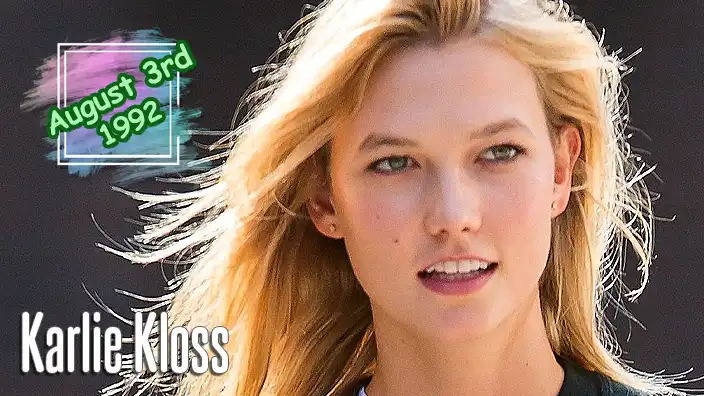
Karlie Kloss has spent so much time on international runways that frequent-flyer miles probably ought to be considered a fashion accessory. One day she's walking for the world's biggest designers, the next she's encouraging young women to learn computer programming. It turns out that while high heels and computer code don't usually appear in the same sentence, Karlie Kloss has made a career out of proving they belong together.
 August 3, 1992, in Chicago, Illinois
Trivia
- Became a Victoria's Secret Angel in 2013.
- Walked for Chanel, Dior, Versace, Valentino, and many other luxury brands.
- Has appeared on dozens of international Vogue covers.
- Founded the nonprofit Kode with Klossy in 2015.
- Promotes coding education for girls and young women.
- Has studied computer programming herself.
- Hosted the television competition series Project Runway.
- Married businessman Joshua Kushner in 2018.
- Is also an entrepreneur and startup investor.
- Frequently supports STEM education initiatives.
- Details
- Category: Celebrity Birthdays - August
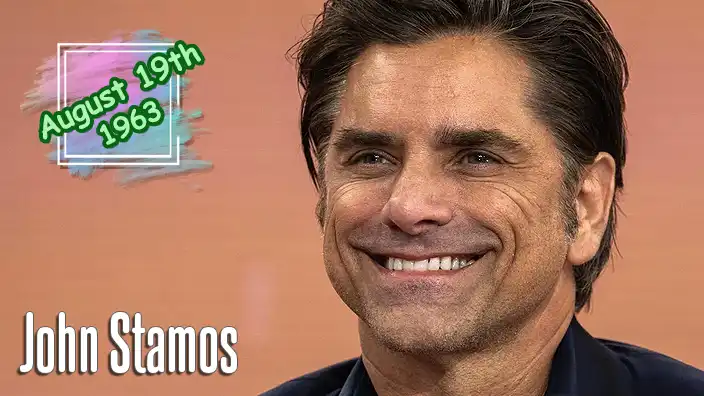
John Stamos has spent decades demonstrating that excellent hair, a leather jacket and an Elvis Presley impression can apparently constitute a remarkably sound retirement plan. Best remembered as the motorcycle-riding, guitar-playing Uncle Jesse on Full House, Stamos somehow made living in your brother-in-law's attic look glamorous. Yet there is considerably more to his career than “Have mercy!” He has been a soap-opera heartthrob, sitcom star, dramatic actor, Broadway performer, producer and musician—and he has actually played drums with The Beach Boys.
August 19, 1963, in Cypress, California
Trivia
- His breakthrough role was Blackie Parrish on General Hospital, beginning in 1982.
- Stamos asked that Uncle Jesse's surname on Full House be changed from Cochran to Katsopolis to acknowledge his Greek heritage.
- He is an accomplished drummer and has performed with The Beach Boys since the 1980s.
- Stamos played J. Pierrepont Finch on Broadway in How to Succeed in Business Without Really Trying in 1995.
- He appeared in 193 episodes of Full House between 1987 and 1995.
- Elvis Presley is one of Stamos's longtime musical favorites, something repeatedly incorporated into Uncle Jesse's personality on Full House.
- Stamos returned as Uncle Jesse for Fuller House and also worked as a producer on the revival.
- Details
- Category: Celebrity Birthdays - August
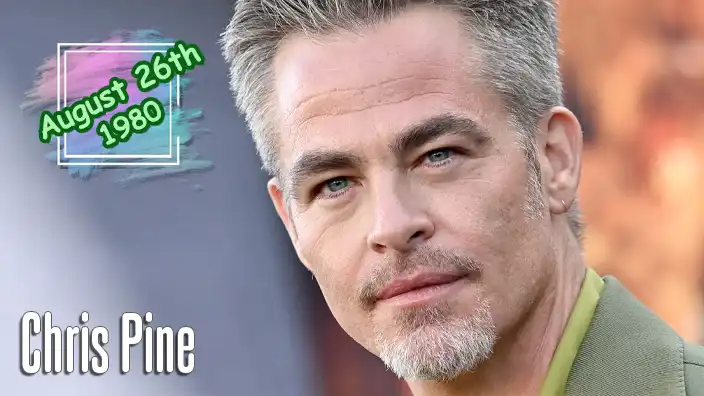
Chris Pine has commanded the Enterprise, fallen for Wonder Woman, dodged assassins, robbed banks and sung his way through a Disney kingdom. With those blue eyes doing a suspicious amount of the promotional work, Pine has spent two decades proving there is considerably more to him than looking exceptionally calm while something enormous explodes behind him.
August 26, 1980, in Los Angeles, California
Trivia
- Chris's father is actor Robert Pine.
- Actress Anne Gwynne was his grandmother.
- He studied English at UC Berkeley.
- He studied abroad in Leeds, England.
- Captain Kirk made him an international star.
- Poolman was his feature directing debut.
- Details
- Category: Celebrity Birthdays - August
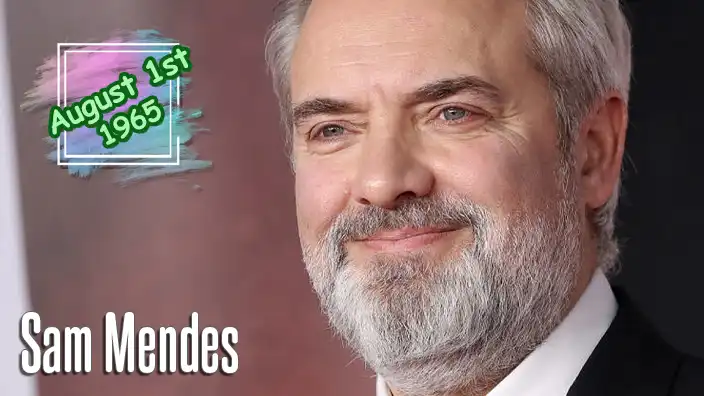
Some directors quietly sit behind a camera and whisper instructions. Sam Mendes somehow manages to orchestrate hundreds of people, moving vehicles, explosions, dramatic performances, and enough cables to wire a small city—all while making it look effortless. If filmmaking were an Olympic event, he'd probably win gold and then politely thank the lighting crew before accepting the medal.
August 1, 1965, in Reading, England
Trivia
- Directed the James Bond films Skyfall and Spectre.
- Skyfall became the first Bond film to surpass $1 billion at the worldwide box office.
- Directed the acclaimed First World War film 1917.
- Began his career as an award-winning theater director.
- Former Artistic Director of London's Donmar Warehouse.
- Has won BAFTA, Golden Globe, Tony, and Academy Award honors.
- Frequently collaborates with legendary cinematographer Roger Deakins.
- Drew inspiration for 1917 from stories told by his grandfather, who served in World War I.
- Is respected for combining emotional storytelling with technical innovation.
- Details
- Category: Celebrity Birthdays - August
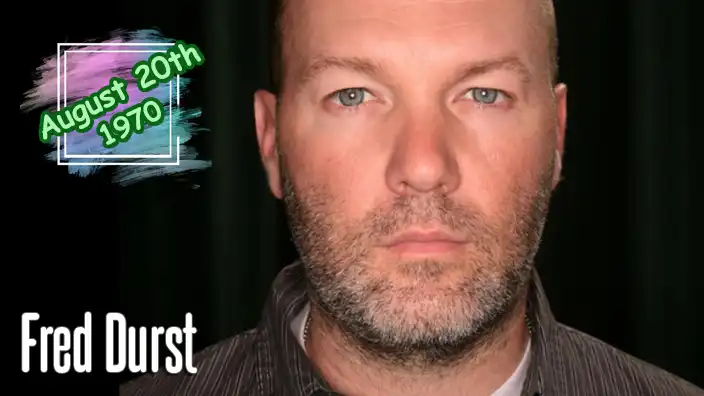
Fred Durst has spent decades proving that a backward baseball cap, a microphone, and absolutely no concern about upsetting the neighbors can constitute a perfectly viable career plan. As the unmistakable frontman of Limp Bizkit, Durst helped turn rap metal into one of the defining sounds of the late 1990s and early 2000s, collecting hit records, enormous crowds, plenty of controversy, and enough loud guitars to make earplugs seem like a sensible birthday present.
August 20, 1970, in Gastonia, North Carolina
Trivia
- Before Limp Bizkit became successful, Durst worked as a tattoo artist.
- He served in the United States Navy before pursuing his music career.
- His backward baseball cap — particularly the famous red Yankees cap — became one of his trademarks.
- Limp Bizkit earned three Grammy nominations, including one for Significant Other.
- Durst directed the feature films The Education of Charlie Banks, The Longshots, and The Fanatic.
- He appeared as Frank in I Saw the TV Glow in 2024.
- Details
- Category: Celebrity Birthdays - August
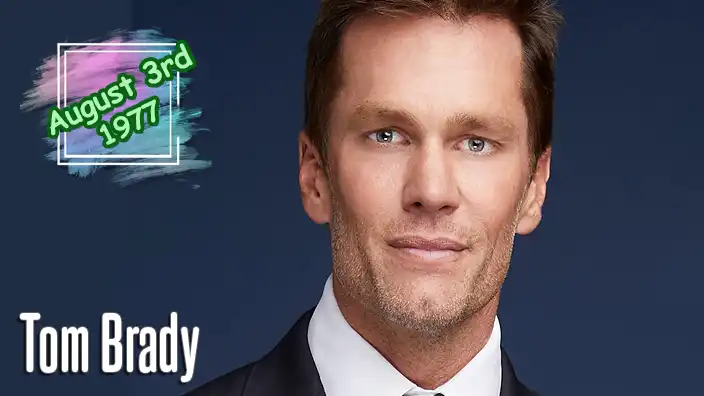
Most football players dream of winning one Super Bowl. Tom Brady apparently treated that as a warm-up exercise. By the time the confetti stopped falling for the seventh time, statisticians had run out of ways to explain what he was doing, opposing defenses had run out of aspirin, and fans had simply accepted that if Brady had the football in the fourth quarter, the game probably wasn't over yet.
August 3, 1977, in San Mateo, California
Trivia
- Played college football at the University of Michigan.
- selected 199th overall in the 2000 NFL Draft.
- Spent 20 seasons with the New England Patriots.
- Finished his career with the Tampa Bay Buccaneers.
- Won a record seven Super Bowl championships.
- Earned five Super Bowl MVP Awards.
- Won three NFL Most Valuable Player Awards.
- Was selected to 15 Pro Bowls.
- Holds numerous NFL career passing records.
- Defeated Patrick Mahomes and the Kansas City Chiefs in Super Bowl LV.
- Is widely considered the greatest quarterback in NFL history.
- Details
- Category: Celebrity Birthdays - August
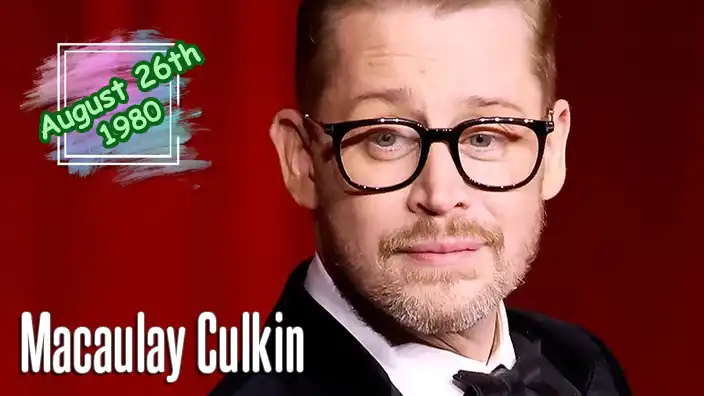
Macaulay Culkin became one of the world's biggest movie stars before he was old enough to drive, largely by defeating two burglars with paint cans, Micro Machines and a spectacular disregard for household safety. Home Alone made him an international phenomenon, but Culkin's story became far more interesting once Kevin McCallister finally stopped being left behind.
August 26, 1980, in New York City
Trivia
- Macaulay began acting at about four years old.
- Uncle Buck preceded his Home Alone breakthrough.
- He earned a Golden Globe nomination for Home Alone.
- He appeared in Michael Jackson's "Black or White" video.
- He fronted the comedy band The Pizza Underground.
- His brother Kieran is also an acclaimed actor.
- He received a Hollywood Walk of Fame star in 2023.

- Details
- Category: Celebrity Birthdays - August
Justin Theroux is basically the guy every man wants to be and every dog probably wants to be walked by. He can act, write, and rock a leather jacket without looking like he’s trying too hard. Honestly, if he weren’t so talented, it would almost be annoying—thankfully, he’s also the kind of guy who could probably fix your Wi-Fi and make you a decent cocktail while doing it.
August 10, 1971, in Washington, DC
Trivia
- Renaissance Man: Actor, screenwriter, director, and producer.
- Style Icon: Known for his love of leather jackets, slim jeans, and motorcycles.
- Comedy Roots: Has a long-running friendship with Ben Stiller and often collaborates on projects.
- Voice Work: Narrated documentaries and voiced characters in animated films.

- Details
- Category: Celebrity Birthdays - August
Emily Hampshire has turned deadpan sarcasm into something approaching an Olympic event, winning audiences over as Stevie Budd on Schitt’s Creek while building a career filled with comedy, drama, science fiction and characters who frequently look as though they have already heard your excuse and aren't buying a word of it.
August 29, 1981, in Montreal, Quebec
Trivia
- Emily played Stevie Budd for all six seasons of Schitt’s Creek.
- She played Jennifer Goines in 12 Monkeys.
- Hampshire voiced Misery in Ruby Gloom.
- She appeared in David Cronenberg's Cosmopolis.
- She won a Canadian Comedy Award for My Awkward Sexual Adventure.
- She shared a 2021 SAG Award with the Schitt’s Creek ensemble.

- Details
- Category: Celebrity Birthdays - August
Vera Farmiga is the kind of actress who could read a grocery list and still make you cry, question your life choices, and maybe check under the bed for demons. She’s played everything from a loving mom to a ghost-whispering paranormal investigator, and somehow always looks like she just walked out of a Vogue editorial—despite being surrounded by furniture that’s usually flying across the room. Seriously, if Farmiga shows up with a crucifix and a calm expression, you know things are not going to be calm for long.
August 6, 1973, Clifton, New Jersey
Trivia
- Bates Motel: Vera’s performance as Norma Bates in the TV series Bates Motel won her critical acclaim and an army of slightly uncomfortable fans.
- Family Talent: Her younger sister, Taissa Farmiga, is also a successful actress—clearly, dramatic flair runs in the family.
- Multilingual Marvel: Vera is fluent in Ukrainian and English, and has used both in interviews and films. She even once said she dreams in Ukrainian.
- Directorial Debut: In Higher Ground, she cast her real-life daughter as the younger version of her character. Now that’s a family affair.

- Details
- Category: Celebrity Birthdays - August
If Cecil B. DeMille directed your life, your morning coffee would involve a cast of thousands, a full orchestra, and at least three wardrobe changes before lunch. And yes — it would still come in over budget.
August 12, 1881, in Ashfield, Massachusetts
 January 21, 1959, in Hollywood, California,
Trivia
- Pioneer: Co-directed Hollywood’s first feature-length film, The Squaw Man.
- Double Feature: Directed two versions of The Ten Commandments.
- Oscar Winner: Best Picture for The Greatest Show on Earth (1952).
- Master of Spectacle: Known for lavish biblical and historical epics.
- Hollywood Royalty: One of the founding members of Paramount Pictures.
- Details
- Category: Celebrity Birthdays - August
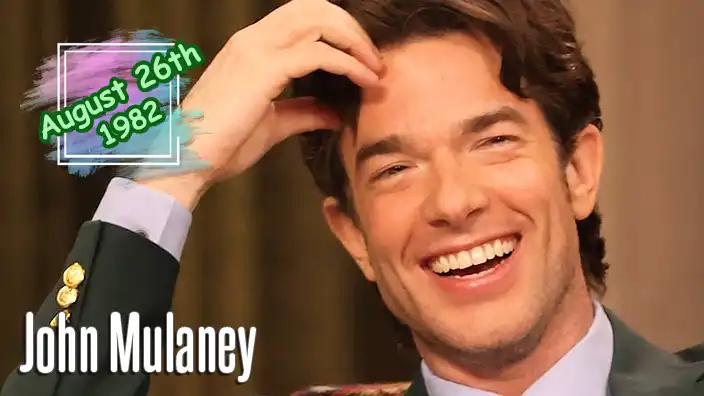
John Mulaney has turned nervous energy, immaculate suits, childhood embarrassment and the peculiar behavior of ordinary people into a remarkably successful career. He helped create one of Saturday Night Live's strangest recurring characters, became one of America's leading stand-up comedians and somehow made stories about doctors, horses and childhood detectives sound like matters of national importance.
August 26, 1982, in Chicago, Illinois
Trivia
- John graduated from Georgetown University.
- He joined SNL as a writer in 2008.
- He helped create Bill Hader's Stefon.
- He voices Andrew on Big Mouth.
- He voiced Spider-Ham in Spider-Verse.

- Details
- Category: Celebrity Birthdays - August
Kohl Sudduth has the kind of vibe that says, “I’ll help solve the mystery, but only after I finish this sandwich.” As Suitcase Simpson, he made being the rookie cop somehow look like the best gig in town—especially if your boss is Tom Selleck and your town has more unsolved murders than stoplights. Honestly, if Kohl ever showed up at your door with a badge, you'd probably invite him in for coffee before asking what you did wrong.
August 8, 1974, in Granada HIlls, LA, California
Trivia
- Brotherly Ties: Kohl’s older brother is actor Skipp Sudduth, best known for Third Watch and Ronin—clearly, talent runs in the family.
- Musician, Too: He’s also a musician and has played with several bands over the years—because of course the laid-back deputy is also in a band.
- Bowfinger Fan Favorite: His role as the cameraman-slash-skeptic in Bowfinger remains a cult favorite among fans of offbeat comedy.
- Nickname Legacy: The character name “Suitcase” comes from a miscommunication in the books—his nickname was supposed to be “Scooter,” but someone misheard it as “Suitcase.” The rest is TV movie history.
- Details
- Category: Celebrity Birthdays - August
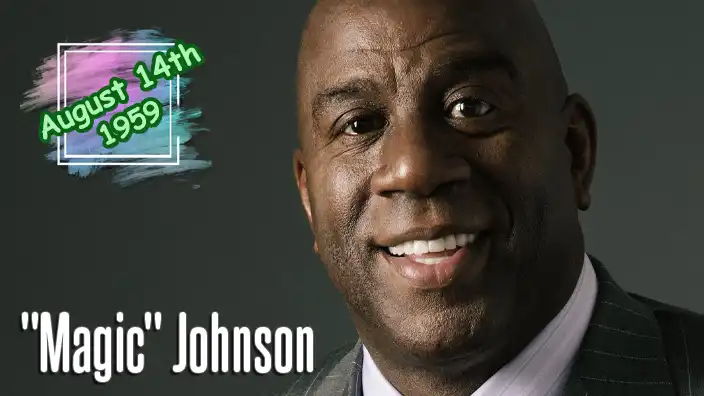
Earvin “Magic” Johnson earned his nickname before he was old enough to legally order a celebratory beer, and then spent the next several decades making sure nobody asked for it back. He won championships, turned passing a basketball into performance art, helped make the Lakers' Showtime era compulsory television, survived one of the most frightening announcements of his life, built a formidable business career and eventually started collecting pieces of professional sports teams. Most people would consider five NBA championships a satisfactory life's work. Magic apparently considered them something to do before going into business.
August 14, 1959, in Lansing, Michigan
Trivia
- Sportswriter Fred Stabley Jr. gave him the nickname “Magic” during high school.
- He led Everett High School to a Michigan state championship.
- Johnson played two seasons at Michigan State University.
- Michigan State won the 1979 NCAA championship.
- The championship game featured Magic Johnson against Larry Bird.
- Johnson was the first overall selection in the 1979 NBA Draft.
- He spent his entire NBA playing career with the Los Angeles Lakers.
- His Lakers jersey number was 32.
- Johnson won five NBA championships.
- He was NBA Finals MVP three times.
- He won three regular-season NBA MVP awards.
- He was selected to 12 NBA All-Star Games.
- Johnson averaged 11.2 assists per game during his NBA career.

- Details
- Category: Celebrity Birthdays - August
Halle Berry has enjoyed one of those Hollywood careers that refuses to stay in a sensible lane. She has been a beauty queen, a Bond woman, a mutant who controls the weather, an Oscar-winning grieving mother, an astronaut, an assassin's ally and, somewhat less triumphantly, Catwoman. She even attended the Razzie Awards personally to collect her prize for that last one while carrying her Oscar, which may be the finest possible demonstration of professional perspective. When you can hold Hollywood's highest honor in one hand and its most enthusiastic raspberry in the other, there really isn't much left for the critics to threaten you with.
August 14, 1966, in Cleveland, Ohio
Trivia
- Before acting became her career, Berry studied broadcast journalism.
- She initially imagined herself working as a television journalist rather than being interviewed by them.
- Berry placed sixth at the 1986 Miss World competition.
- During her Miss USA interview, she spoke about wanting a career in entertainment or the news media.
- Berry took acting classes at Second City in Chicago while working as a model.
- A Second City instructor encouraged her to consider professional acting.
- She briefly lived in a homeless shelter after running out of money in New York.
- Her mother refused to send her money when she struggled financially, forcing Berry to find a way forward herself.
- Berry's first major television role on Living Dolls involved playing a model, essentially mirroring her real occupation at the time.
- Details
- Category: Celebrity Birthdays - August
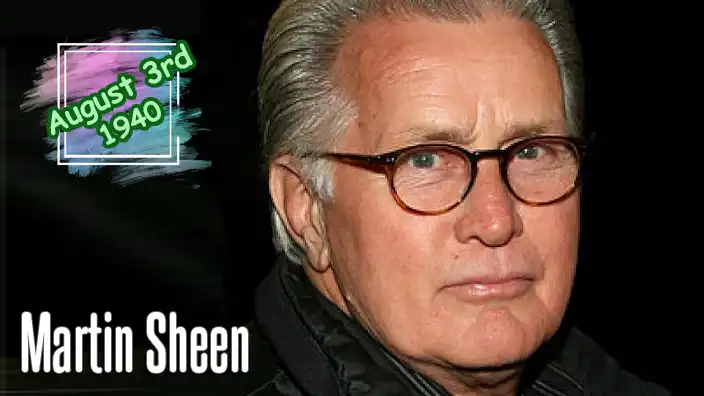
Playing the President of the United States is impressive. Playing him so convincingly that people still wish they could vote for you years later is something else entirely. Martin Sheen has spent a lifetime portraying soldiers, leaders, revolutionaries, and ordinary men facing extraordinary circumstances, all while proving that great acting doesn't require the loudest voice—just the most believable one.
August 3, 1940, in Dayton, Ohio
Trivia
- Starred as Captain Benjamin Willard in Apocalypse Now.
- Played President Josiah "Jed" Bartlet in The West Wing.
- Won a Golden Globe Award for The West Wing.
- Received numerous Primetime Emmy Award nominations throughout his career.
- Suffered a heart attack during the filming of Apocalypse Now but returned to finish the movie.
- Is the father of actors Emilio Estevez, Charlie Sheen, Renée Estevez, and Ramon Estevez.
- Has been married to Janet Sheen since 1961.
- Is well known for his humanitarian and social activism.
- Received a star on the Hollywood Walk of Fame.
- Details
- Category: Celebrity Birthdays - August
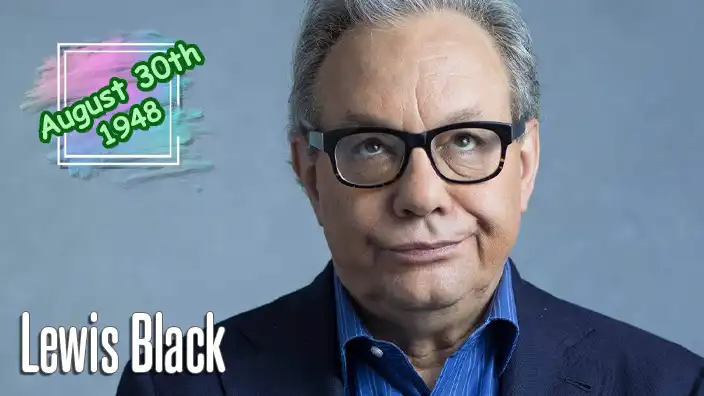
Lewis Black has built a career by saying what millions of people are thinking, except considerably louder, with more finger-pointing and the distinct possibility that a blood vessel may resign halfway through the sentence. Born August 30, 1948, the comedian, actor and playwright turned brilliantly controlled outrage into an art form—and somehow made yelling at politics, bureaucracy and human stupidity one of the funniest jobs in America.
August 30, 1948, in Washington, D.C.
Trivia
- Lewis earned an MFA from the Yale School of Drama.
- Began appearing on The Daily Show in 1996.
- His recurring segment is called Back in Black.
- He has written dozens of plays.
- He has won two Grammy Awards.
- Voiced Anger in Pixar's Inside Out.
- Returned as Anger in Inside Out 2.
- Details
- Category: Celebrity Birthdays - August
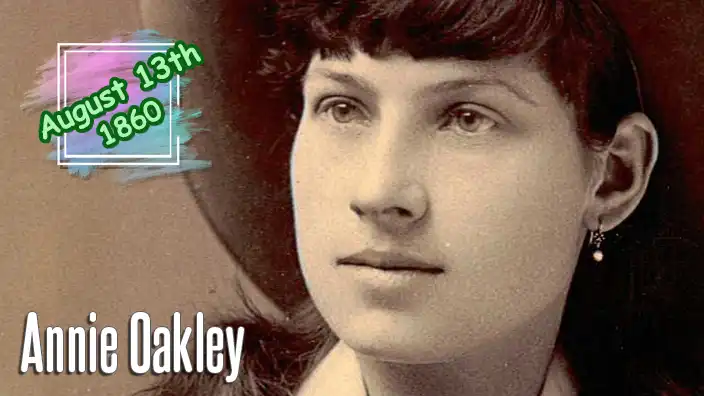
Annie Oakley became one of the most famous sharpshooters in American history without carrying herself like the swaggering gunslinger Hollywood would later associate with the Old West. She was small, modestly dressed, remarkably disciplined and capable of performing feats with a firearm that left audiences wondering whether somebody ought to check the laws of physics.
August 13, 1860, in Darke County, Ohio
Greenville, Ohio, on November 3, 1926
Trivia
- Oakley joined Buffalo Bill's Wild West in 1885.
- Sitting Bull called her "Little Sure Shot."
- She performed for audiences throughout the United States and Europe.
- She appeared during Queen Victoria's Golden Jubilee celebrations.
- Oakley could shoot targets while using a mirror.
- She famously shot playing cards.
- Shooting cigarettes from a person's mouth became one of her exhibition tricks.
- She encouraged women to learn marksmanship.
- Details
- Category: Celebrity Birthdays - August
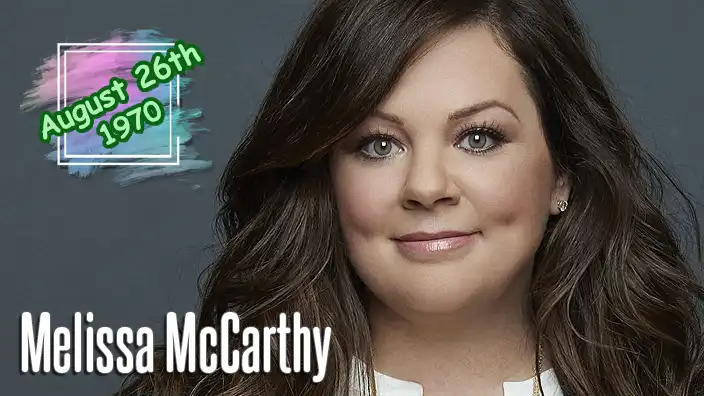
Melissa McCarthy can steal a movie with a look, destroy a room with a handbag and turn an ordinary argument into something requiring emergency services. From Gilmore Girls to Bridesmaids, Spy and beyond, she has built a career proving that great comedy requires impeccable timing, complete commitment and absolutely no concern whatsoever for maintaining one's dignity.
August 26, 1970, in Plainfield, Illinois
Trivia
- Melissa trained with The Groundlings.
- Gilmore Girls was her television breakthrough.
- Bridesmaids earned her first Oscar nomination.
- Husband Ben Falcone frequently works with her.
- She played Ursula in The Little Mermaid.

- Details
- Category: Celebrity Birthdays - August
Will Friedle is the kind of performer who can save the world in a cartoon at 10 a.m., make you laugh until you cry by noon, and still have time to teach you an important life lesson by dinner. And he’d probably do it all while forgetting where he left his keys.
August 11, 1976, in Hartford, Connecticut
Trivia
- Sitcom Fame: Eric Matthews on Boy Meets World (1993–2000).
- Animated Hero: Voiced Terry McGinnis in Batman Beyond.
- Disney Favorite: Ron Stoppable in Kim Possible.
- Cartoon Royalty: Lion-O in ThunderCats reboot.
- Advocate: Speaks openly about anxiety and mental health.
From Our Marks Catelog
-
Sitting down at the dinner table, there's always that moment when you spot the mashed potatoes,...
-

Once upon a time, someone looked at tennis and thought, “This would be perfect if it involved less running,...
-

If you’re the kind of person who likes a little thrill with your meal, then one bite of that...
-

If you've ever scratched a dog's ears, rescued a turtle from the middle of the road, or apologized...
-
Who knew that creating a prehistoric masterpiece could lead to such existential questions? Like, did...
-

It's not uncommon to see a normally quiet neighborhood transform overnight into a glittering...


