Celebrity Birthdays - August

August birthdays are like the last cannonball into the summer pool — big, splashy, and a little bittersweet. School is looming, but August folks insist we squeeze every last drop of sunshine first.
Join us as we salute the stars who own the dog days of summer. They’re proof that even the hottest month can be cool when you know how to celebrate it.

- Details
- Category: Celebrity Birthdays - August
Caligula became Roman emperor at 24, was dead before 29, and somehow packed enough scandal, extravagance, cruelty and thoroughly peculiar behavior into those few years to keep historians arguing for nearly two millennia. He supposedly threatened senators, humiliated Rome's elite and considered giving a government job to his horse—which, depending on your experience with politicians, may not have been his worst idea.
 August 31, AD 12, in Antium, Italy
 January 24, 41 AD, Rome, Italy

Trivia
- “Caligula” essentially meant “Little Boots.”
- He became emperor at only 24.
- His father was the popular general Germanicus.
- His favorite horse was named Incitatus.
- He never actually made Incitatus consul.
- Caligula was assassinated at age 28.
- Details
- Category: Celebrity Birthdays - August
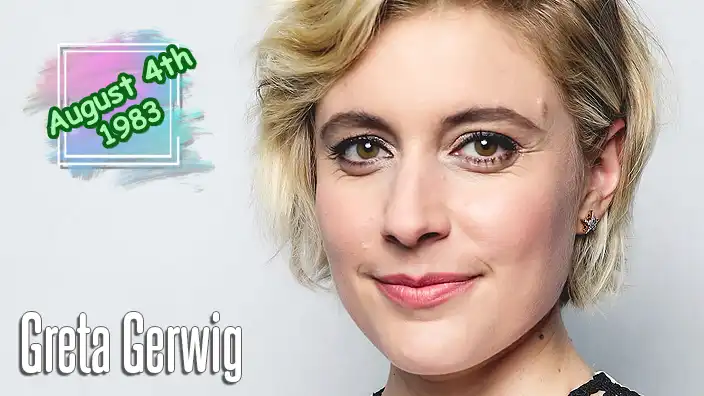
Most people struggle to decide what they want to do with their lives. Greta Gerwig apparently looked at the entertainment industry and replied, "Yes." Acting? Certainly. Writing? Absolutely. Directing? Why not? Before long, she was collecting Academy Award nominations while proving that heartfelt stories, sharp humor, and unforgettable characters can happily share the same screen.
 August 4, 1983, in Sacramento, California
Trivia
- Began her career in independent "mumblecore" films.
- Co-wrote and starred in Frances Ha.
- Directed Lady Bird (2017).
- Earned an Academy Award nomination for Best Director.
- Directed Little Women (2019).
- Directed the global blockbuster Barbie (2023).
- Co-writes frequently with Noah Baumbach.
- Has received multiple Academy Award nominations.
- Is known for character-driven storytelling.
- Combines humor with emotional depth in her films.
- Details
- Category: Celebrity Birthdays - August
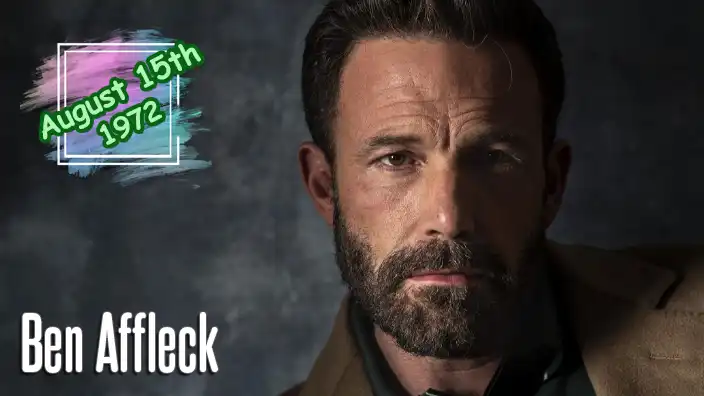
Ben Affleck has enjoyed the sort of Hollywood career that requires several different biographies depending on which decade you happen to be discussing. He has been the young screenwriter who won an Oscar, the blockbuster leading man, the fellow who made a few movies he probably wouldn't choose for family movie night, the acclaimed director who engineered a spectacular comeback, and Batman. Through all of it, Affleck has demonstrated a remarkable ability to survive Hollywood's favorite pastime: declaring someone's career finished approximately six months before that person makes another hit.
August 15, 1972, in Berkeley, California
Trivia
- Affleck and Damon maintained a shared bank account while they were struggling young actors.
- Affleck appeared as an extra with Damon in Field of Dreams.
- His father once worked as a janitor at Harvard, which IMDb notes helped inspire Will Hunting's janitorial job at MIT.
- Affleck won the 2004 California State Poker Championship.
- He learned to speak Spanish while living in Mexico as a teenager.
- He has played both Marvel's Daredevil and DC's Batman.
- Details
- Category: Celebrity Birthdays - August
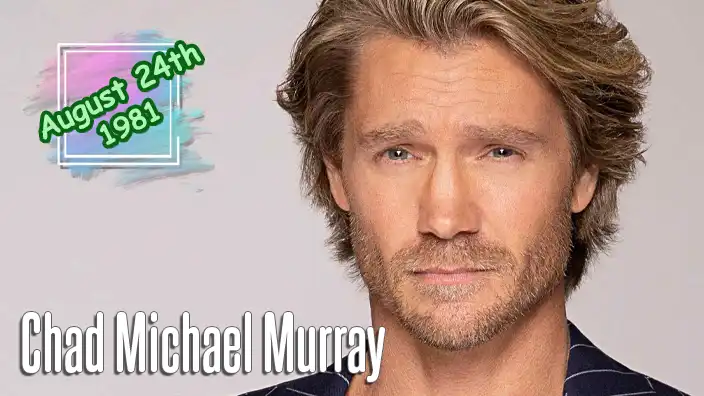
Chad Michael Murray went from modeling to becoming one of television's defining early-2000s heartthrobs, spending years making life complicated in One Tree Hill before becoming Prince Charming in A Cinderella Story. Fortunately, he survived the screaming fans, teenage love triangles and even House of Wax, which is a fairly respectable résumé by anyone's standards.
August 24, 1981, in Buffalo, New York
Trivia
- He began his career as a model.
- He modeled for Gucci and Tommy Hilfiger.
- A football injury required intestinal surgery.
- He nearly played Ryan Atwood on The O.C.
- He directed an episode of One Tree Hill.
- He has said he might have become a pediatrician.
- He returned as Jake in Freakier Friday.
- Details
- Category: Celebrity Birthdays - August
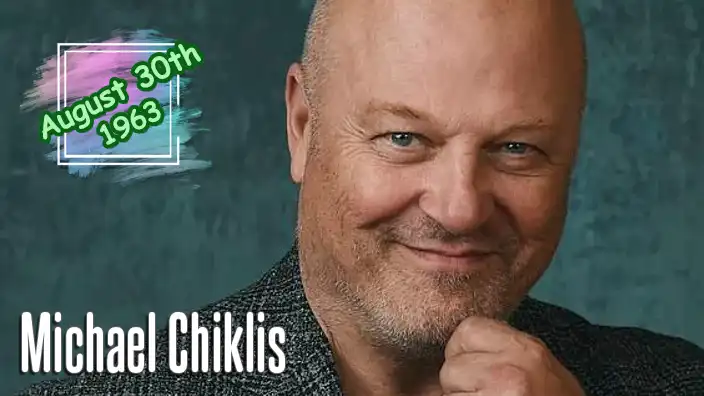
Michael Chiklis has made a career out of looking like the sort of man who has already heard your excuse and is not especially impressed by it. Born August 30, 1963, the Emmy-winning actor went from the likable detective of The Commish to the terrifying moral gray zone of The Shield, then somehow squeezed into orange rock and became The Thing in Fantastic Four. That is range, even if one role did require considerably more latex.
August 30, 1963, in Lowell, Massachusetts
Trivia
- Graduated from Boston University's acting program.
- Starred as Tony Scali in The Commish.
- Won an Emmy for The Shield.
- Also won a Golden Globe as Vic Mackey.
- Played The Thing in two Fantastic Four films.
- Appeared in both Marvel and DC productions.
- His daughter Autumn appeared with him on The Shield.
- Details
- Category: Celebrity Birthdays - August
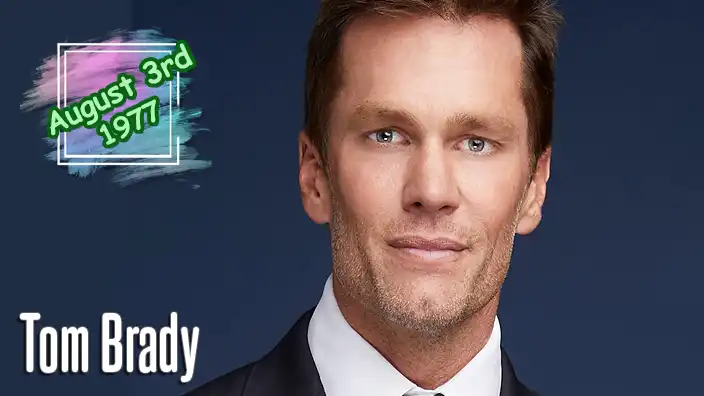
Most football players dream of winning one Super Bowl. Tom Brady apparently treated that as a warm-up exercise. By the time the confetti stopped falling for the seventh time, statisticians had run out of ways to explain what he was doing, opposing defenses had run out of aspirin, and fans had simply accepted that if Brady had the football in the fourth quarter, the game probably wasn't over yet.
August 3, 1977, in San Mateo, California
Trivia
- Played college football at the University of Michigan.
- selected 199th overall in the 2000 NFL Draft.
- Spent 20 seasons with the New England Patriots.
- Finished his career with the Tampa Bay Buccaneers.
- Won a record seven Super Bowl championships.
- Earned five Super Bowl MVP Awards.
- Won three NFL Most Valuable Player Awards.
- Was selected to 15 Pro Bowls.
- Holds numerous NFL career passing records.
- Defeated Patrick Mahomes and the Kansas City Chiefs in Super Bowl LV.
- Is widely considered the greatest quarterback in NFL history.
- Details
- Category: Celebrity Birthdays - August
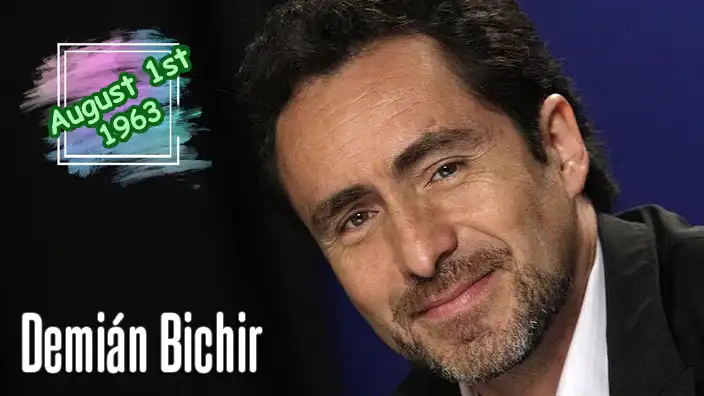
Some actors can command a scene with explosions, car chases, or dramatic speeches. Demián Bichir can do it with a quiet glance and a single sentence. He's the kind of performer who reminds audiences that sometimes the strongest acting isn't about making the most noise—it's about making you believe every word. Of course, if the script also calls for surviving Quentin Tarantino's snowstorm or facing down an alien, he's more than happy to do that too.
August 1, 1963, in Torreón, Mexico
Trivia
- Received an Academy Award nomination for Best Actor for A Better Life.
- Starred as Bob in Quentin Tarantino's The Hateful Eight.
- Played Detective Marco Ruiz in the television series The Bridge.
- Appeared in Alien: Covenant.
- Featured in Godzilla vs. Kong.
- Has worked extensively in both Spanish- and English-language productions.
- Is a passionate advocate for humanitarian and immigrant causes.
- Has enjoyed a professional acting career spanning more than four decades.
- Frequently balances independent dramas with major Hollywood productions.
- Details
- Category: Celebrity Birthdays - August
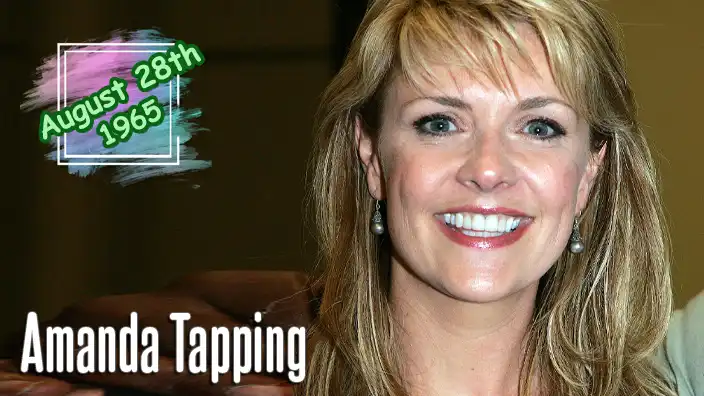
Amanda Tapping spent years protecting Earth from Goa'uld System Lords, Replicators and assorted intergalactic troublemakers in Stargate SG-1, which makes the average day at the office sound rather uneventful. As Samantha Carter, she brought brains, courage and considerable firepower to science fiction television—and then moved behind the camera and started telling everybody else what to do.
August 28, 1965, in Rochford, England
Trivia
- Amanda grew up in Ontario, Canada.
- She studied drama at the University of Windsor.
- She co-founded the comedy troupe Random Acts.
- She directed an episode of Stargate SG-1.
- She starred in and produced Sanctuary.
- She co-founded Sanctuary for Kids.

- Details
- Category: Celebrity Birthdays - August
Andy Warhol made a career out of painting soup cans—and somehow made you feel uncultured for not getting the deeper meaning. He could take a Brillo box, stick it in a gallery, and convince everyone it was a philosophical statement about capitalism, irony, and dishwashing. If Andy were alive today, he’d probably be selling NFTs of Pop-Tarts and calling it “social commentary.” And you know what? We’d buy them.
August 6, 1928, in Pittsburg, Pennsylvania
February 22, 1987, in New York, New York
Trivia
- Not Just Soup: Warhol painted everything from Coca-Cola bottles to electric chairs, proving he could find beauty—or commentary—in almost anything.
- Film Buff: He directed more than 60 films, including the eight-hour epic Empire, which is literally just a static shot of the Empire State Building. You were supposed to “feel” it.
- Survivor: In 1968, Warhol survived an assassination attempt by radical feminist Valerie Solanas. The event deeply affected him physically and emotionally for the rest of his life.
- Time Traveler? His work predicted the rise of reality TV, influencer culture, and the obsession with branding. Not bad for a guy who once said, “I am a deeply superficial person.”
- Details
- Category: Celebrity Birthdays - August
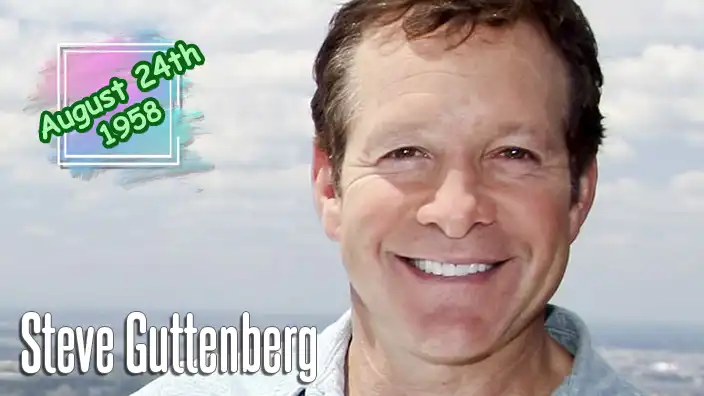
Steve Guttenberg became an '80s movie favorite by joining the Police Academy, discovering Cocoon aliens, befriending Number 5 and attempting to change diapers with Tom Selleck and Ted Danson. Considering that résumé, an ordinary day at the office must have seemed terribly dull.
August 24, 1958, in Brooklyn, New York
Trivia
- He headed to Hollywood soon after high school.
- Diner helped launch his movie career.
- He played Mahoney in four Police Academy films.
- He starred in Cocoon and its sequel.
- He helped teach Number 5 about life in Short Circuit.
- Three Men and a Baby topped the 1987 domestic box office.
- He competed on Dancing with the Stars.
- Details
- Category: Celebrity Birthdays - August
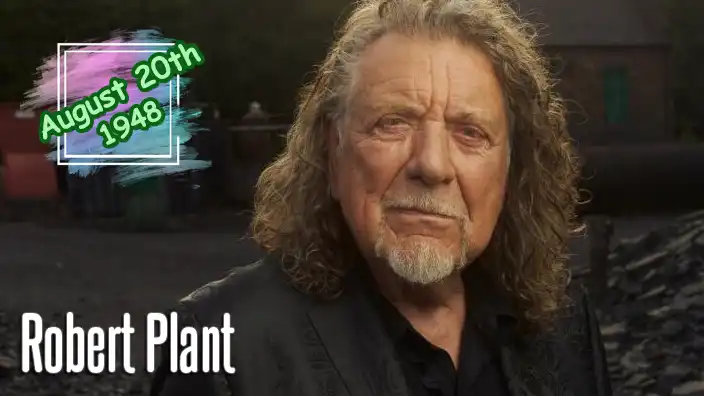
Robert Plant possesses one of those voices that requires very little introduction. A few seconds of “Whole Lotta Love,” “Black Dog,” or “Immigrant Song” and anyone within reasonable earshot knows exactly who has arrived. As the towering voice of Led Zeppelin, Plant helped redefine what a rock singer could sound like, while the years since Zeppelin have shown that he was never interested in spending the rest of his life simply polishing old trophies. More than half a century later, he remains musically curious, occasionally unpredictable, and quite capable of reminding younger singers who helped write the instruction manual.
August 20, 1948, in West Bromwich, England,
Trivia
- Before pursuing music professionally, he briefly trained to become a chartered accountant.
- Plant recommended his friend John Bonham when Jimmy Page was looking for a drummer for the band that became Led Zeppelin.
- His fascination with J.R.R. Tolkien influenced lyrics in several Led Zeppelin songs.
- Plant wrote the lyrics to “Stairway to Heaven,” while Jimmy Page composed the music.
- Led Zeppelin was inducted into the Rock & Roll Hall of Fame in 1995.
- Plant and Alison Krauss won Album of the Year at the 2009 Grammys for Raising Sand.
- He was appointed a CBE for services to music in 2009.
- Details
- Category: Celebrity Birthdays - August
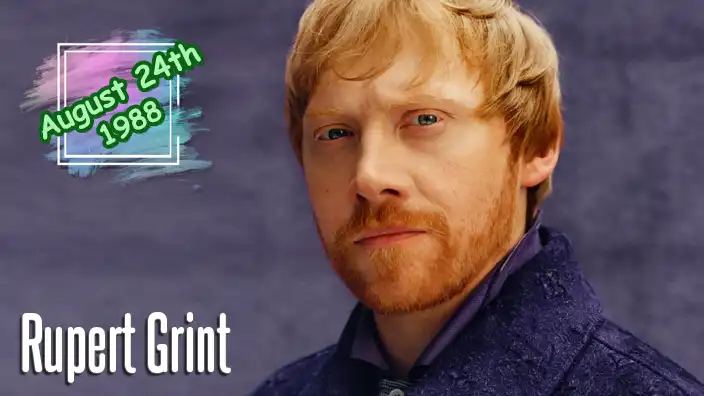
Rupert Grint went from school plays to Hogwarts before most people his age had figured out what they wanted for lunch. After a decade as Ron Weasley, he swapped wands and giant spiders for crime, comedy, horror and theater—although, sensibly, he kept the red hair.
August 24, 1988, in Harlow, England
Trivia
- He auditioned for Ron Weasley with a homemade rap.
- He appeared in all eight Harry Potter films.
- He owns an ice cream van.
- He has a genuine fear of spiders.
- He once skipped a Ron Weasley essay because Ron would have skipped it.
- He made his Broadway debut in It's Only a Play.
- Details
- Category: Celebrity Birthdays - August
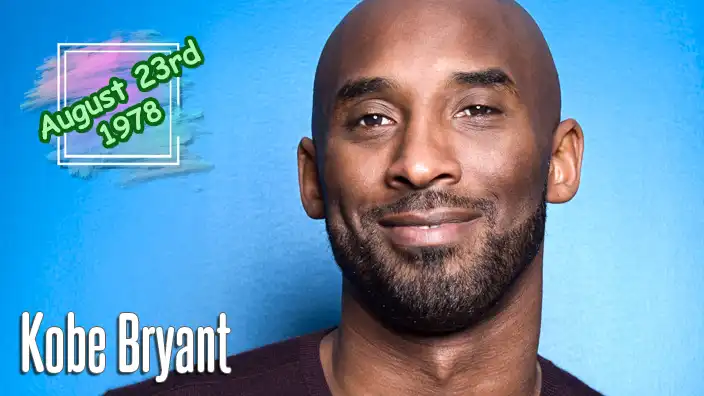
Kobe Bryant spent 20 seasons proving that basketball hoops apparently become considerably larger when the game is on the line. With five NBA championships, 18 All-Star selections, an 81-point game and one of the fiercest competitive reputations in sports, Bryant turned difficult shots into ordinary business and ordinary shots into something he occasionally considered too easy. His relentless approach became known as the “Mamba Mentality,” which sounds considerably more impressive than “refusing to quit until everybody else has gone home.”
August 23, 1978, in Philadelphia, Pennsylvania
January 26, 2020, in Calabasas, California
Trivia
- Kobe entered the NBA directly from high school at age 17.
- Charlotte drafted him 13th overall before trading him to the Lakers.
- He won the 1997 NBA Slam Dunk Contest as a rookie.
- Bryant scored 81 points against Toronto in 2006.
- The Lakers retired both his No. 8 and No. 24 jerseys.
- He won Olympic gold medals in 2008 and 2012.
- Dear Basketball won an Academy Award in 2018.
- Details
- Category: Celebrity Birthdays - August
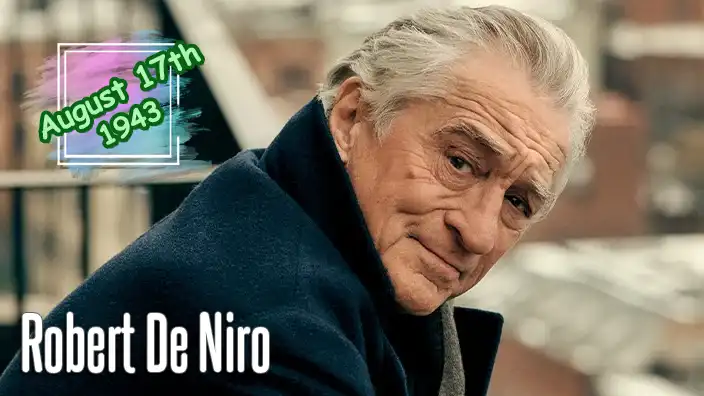
Robert De Niro has spent more than half a century playing gangsters, boxers, cab drivers, criminals, fathers, grandfathers and men you should absolutely not ask whether they are talking to you. One of cinema's most celebrated actors, he helped make intense preparation and complete immersion in a character practically part of the job description. Then, just when audiences had decided that nobody could glare more convincingly, De Niro wandered into comedy and started terrorizing Ben Stiller over the dinner table. Apparently, even legendary actors occasionally need to discuss whether someone can milk a cat.
August 17, 1943, in New York City
Trivia
- His first stage role was the Cowardly Lion in The Wizard of Oz when he was about 10 years old.
- He learned Sicilian dialogue to portray young Vito Corleone in The Godfather Part II.
- De Niro reportedly drove a New York taxi while preparing to play Travis Bickle in Taxi Driver.
- He trained seriously as a boxer for Raging Bull and then gained substantial weight to portray the older Jake LaMotta.
- De Niro and Marlon Brando both won Oscars for portraying Vito Corleone at different ages.
- He made his feature-film directing debut with A Bronx Tale in 1993.
- Details
- Category: Celebrity Birthdays - August
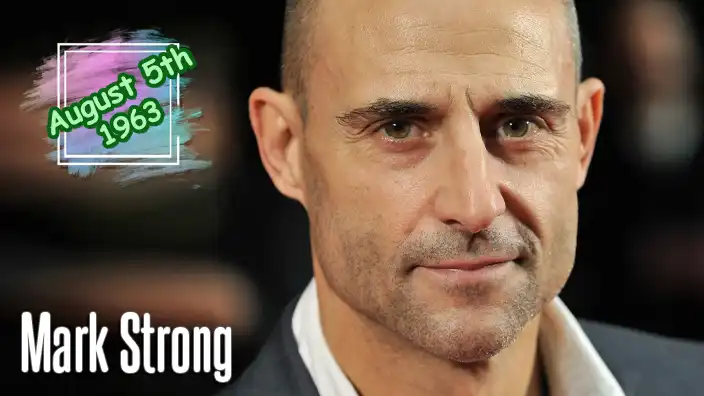
If Hollywood needs someone to look like he already knows exactly how the story ends, the phone usually rings for Mark Strong. He can walk into a scene wearing an expensive suit, a military uniform, or medieval armor, and within seconds everyone—including the audience—starts wondering who should be worried. Despite spending much of his career playing intimidating masterminds, ruthless villains, and stern authority figures, those who work with him regularly describe him as warm, witty, and thoroughly charming. It just goes to show that appearances can be wonderfully misleading.
August 5, 1963, in London, England
Trivia
- Studied at the Bristol Old Vic Theatre School.
- Winner of a Laurence Olivier Award.
- Played Merlin in the Kingsman films.
- Portrayed villain Lord Blackwood in Sherlock Holmes (2009).
- Played Dr. Thaddeus Sivana in Shazam!.
- Appeared in the Oscar-winning film The Imitation Game.
- Frequently performs both on stage and in major films.
- Widely recognized for his distinctive deep voice.
- Has portrayed numerous military officers and intelligence officials.
- Known for his calm, professional approach on film sets.
From Our Marks Catelog
-

Sitting down at the dinner table, there's always that moment when you spot the mashed potatoes,...
-

Once upon a time, someone looked at tennis and thought, “This would be perfect if it involved less running,...
-

If you’re the kind of person who likes a little thrill with your meal, then one bite of that...
-

If you've ever scratched a dog's ears, rescued a turtle from the middle of the road, or apologized...
-
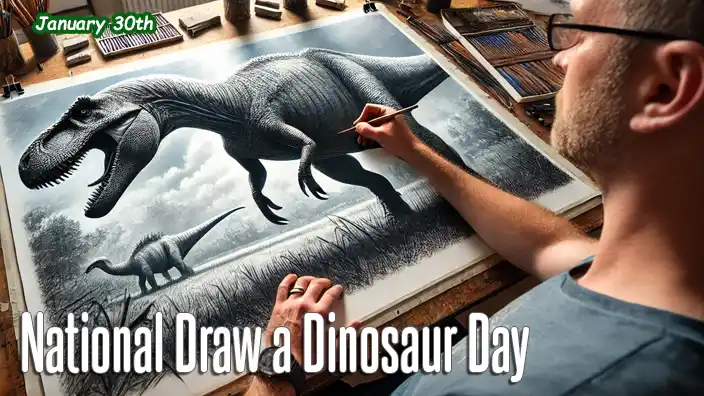
Who knew that creating a prehistoric masterpiece could lead to such existential questions? Like, did...
-

It's not uncommon to see a normally quiet neighborhood transform overnight into a glittering...


