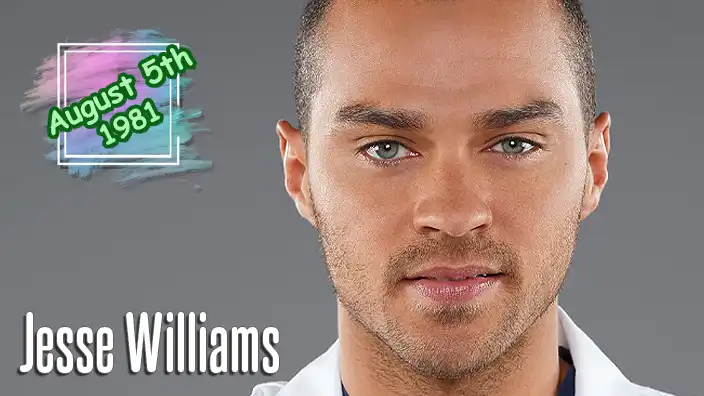
August 5, 1981, in Chicago, Illinois
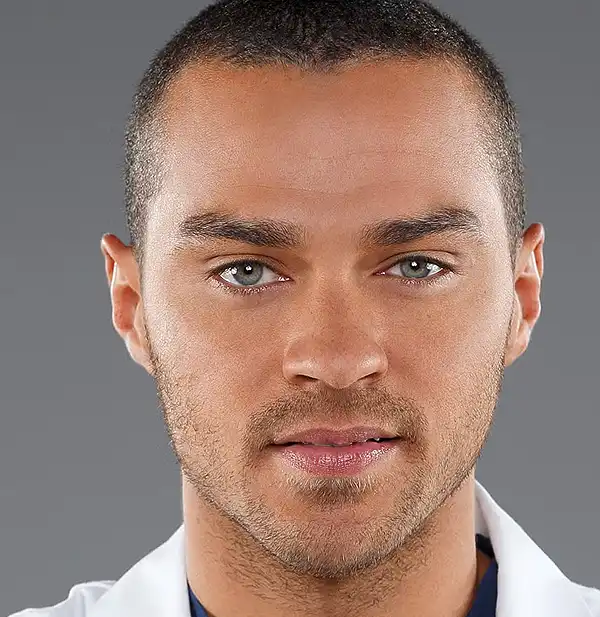
Jesse Williams has become one of the most recognizable faces in modern television, earning widespread acclaim for his portrayal of Dr. Jackson Avery on the long-running medical drama Grey's Anatomy. While many actors become closely associated with a single iconic role, Williams has steadily expanded his career into film, Broadway, directing, producing, activism, and entrepreneurship. His thoughtful performances, commanding screen presence, and commitment to social causes have made him one of the most respected figures in contemporary entertainment.
Born Jesse Wesley Williams on August 5, 1981, in Chicago, Illinois, he grew up in a family that valued education, curiosity, and hard work. His father is African American, while his mother, who is of Swedish descent, became a teacher after moving to the United States. Williams would eventually follow in her footsteps before ever stepping onto a television set.
He attended Temple University in Philadelphia, where he studied African American Studies and Film and Media Arts. After graduating, Williams worked as a high school teacher, instructing students in English, history, and American Studies. For several years, education—not acting—was his chosen profession. That classroom experience helped develop the confidence and communication skills that would later become hallmarks of his acting career.
Williams eventually decided to pursue acting professionally, studying the craft while auditioning in New York. His first television appearances included guest roles on Law & Order and Greek, along with Off-Broadway productions of Edward Albee's The American Dream and The Sandbox. These early performances demonstrated that he possessed both dramatic ability and stage presence long before becoming a household name.
His breakthrough arrived in 2009 when he joined ABC's enormously successful medical drama Grey's Anatomy as surgical resident Dr. Jackson Avery. Initially introduced as a recurring character, Williams quickly became a fan favorite thanks to Jackson's intelligence, compassion, confidence, and emotional complexity. Producers promoted him to series regular beginning with Season 7, and he remained one of the show's central characters for more than a decade.
Throughout his years on Grey's Anatomy, Williams explored some of the series' most memorable storylines. Jackson's complicated relationships, personal losses, professional achievements, and evolving family dynamics allowed Williams to demonstrate impressive emotional range. His on-screen chemistry with Sarah Drew, who portrayed April Kepner, became one of the show's most beloved relationships, affectionately known by fans as "Japril."
While Grey's Anatomy made him internationally famous, Williams carefully avoided limiting himself to television. Early in his career he appeared in The Sisterhood of the Traveling Pants 2 and Brooklyn's Finest, followed by the acclaimed horror satire The Cabin in the Woods. He later portrayed civil rights leader Reverend James Lawson in Lee Daniels' The Butler, demonstrating his ability to handle historically significant roles with sincerity and depth.
Williams has also explored directing and producing. He founded the production company farWord Inc., developing projects that focus on meaningful storytelling and underrepresented voices. His work behind the camera reflects the same thoughtful approach that audiences have come to expect from his performances.
Outside traditional acting, Williams has become widely respected as an activist and advocate for civil rights, education, and social justice. His passionate acceptance speech while receiving the 2016 BET Humanitarian Award attracted international attention and highlighted his commitment to addressing issues of racial equality, education, and community empowerment. Throughout his career, he has consistently used his public platform to encourage thoughtful discussion and civic engagement.
One of the most exciting chapters of Williams' career began after leaving Grey's Anatomy. Rather than simply seeking another television series, he challenged himself by making his Broadway debut in the revival of Richard Greenberg's Take Me Out. His powerful performance earned widespread critical acclaim and a Tony Award nomination for Best Featured Actor in a Play. For someone who had never before appeared on Broadway, the nomination represented an extraordinary achievement and demonstrated his versatility as a performer.
Williams has continued expanding his résumé with appearances in productions such as Only Murders in the Building, feature films, streaming series, and international projects. Each new role has reinforced his reputation as an actor willing to embrace challenges rather than rely on familiar territory.
Colleagues frequently praise Williams for his professionalism, intelligence, and collaborative nature. Directors appreciate his preparation, while fellow actors often note his willingness to support ensemble casts rather than seek the spotlight. Those qualities have helped him transition successfully between television, film, and theatre.
What makes Williams particularly compelling is that his career has never been defined solely by fame. Whether teaching students before acting, speaking passionately about education, producing documentaries, or taking on demanding theatrical roles, he consistently demonstrates a desire to contribute something meaningful. His work reflects both artistic ambition and genuine concern for the communities around him.
Today, Jesse Williams continues to build a career that reaches far beyond the walls of Grey Sloan Memorial Hospital. While Dr. Jackson Avery introduced him to millions of viewers around the world, his accomplishments on Broadway, in film, and through his advocacy have shown that he is much more than a television star. He remains an actor, producer, director, educator, and activist whose influence continues to grow with every new challenge he accepts.