Celebrity Birthdays - August

August birthdays are like the last cannonball into the summer pool — big, splashy, and a little bittersweet. School is looming, but August folks insist we squeeze every last drop of sunshine first.
Join us as we salute the stars who own the dog days of summer. They’re proof that even the hottest month can be cool when you know how to celebrate it.

- Details
- Category: Celebrity Birthdays - August
Joanna García is like that friend who shows up with a casserole when you’re sick, remembers everyone’s birthday, and still somehow manages to look like she’s on the set of a Hallmark movie. She’s the on-screen neighbor you’d trust with your spare house key—and, let’s be honest, she’d probably bring it back with cookies.
 August 10, 1979, in Tampa, Florida

Trivia
- Hometown Pride: Born and raised in Tampa, Florida.
- Disney Connection: Appeared in the 2001 Disney Channel movie Motocrossed.
- Fairy-Tale Turn: Played Ariel (yes, that Ariel) in Once Upon a Time.
- Magnolia Magic: Sweet Magnolias became one of Netflix’s comfort-watch hits during the pandemic.

- Details
- Category: Celebrity Birthdays - August
John Slattery is the kind of man who could walk into a room, order a drink you’ve never heard of, and make you want to order the same thing — even if you’re not sure it’s actually a drink. Give him a suit, a dry one-liner, and 30 seconds, and he’ll convince you it was your idea all along.
 August 13, 1962, in Boston, Massachusetts
Trivia
- Sterling Legacy: Roger Sterling on Mad Men (2007–2015).
- Marvel Dad: Played Howard Stark in multiple MCU films.
- Stage Roots: Extensive theater background before television fame.
- Director’s Chair: Directed the 2014 drama God’s Pocket.
- Silver Fox Status: Turned going gray early into a career asset.

- Details
- Category: Celebrity Birthdays - August
Alyson Stoner is the rare entertainer who could film a scene, sing the soundtrack, and then choreograph the end credits—probably all before lunch. If Hollywood ever runs short on talent, they could just clone her and call it a day.
August 11, 1993, in Toledo, Ohio
Trivia
- Triple Threat Plus: She’s an actor, dancer, singer, and voice artist.
- Early Fame: Stole the show in Missy Elliott’s “Work It” video at age 9.
- Animation Royalty: Voice of Isabella in Phineas and Ferb.
- Dance Cred: Starred in multiple Step Up films.
- Advocacy: Open about mental health and self-expression.
- Details
- Category: Celebrity Birthdays - August
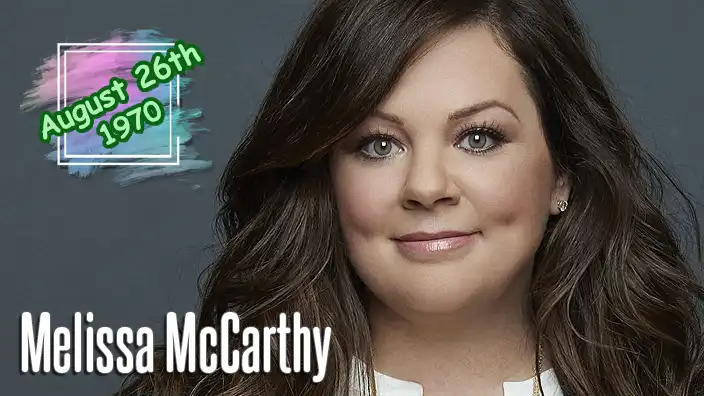
Melissa McCarthy can steal a movie with a look, destroy a room with a handbag and turn an ordinary argument into something requiring emergency services. From Gilmore Girls to Bridesmaids, Spy and beyond, she has built a career proving that great comedy requires impeccable timing, complete commitment and absolutely no concern whatsoever for maintaining one's dignity.
August 26, 1970, in Plainfield, Illinois
Trivia
- Melissa trained with The Groundlings.
- Gilmore Girls was her television breakthrough.
- Bridesmaids earned her first Oscar nomination.
- Husband Ben Falcone frequently works with her.
- She played Ursula in The Little Mermaid.
- Details
- Category: Celebrity Birthdays - August
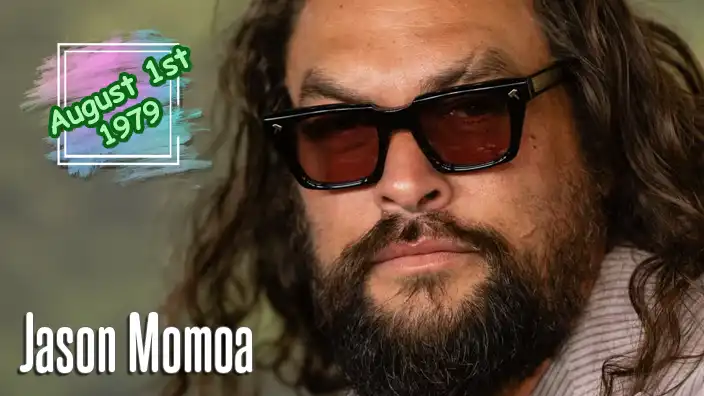
If you ever find yourself stranded on a deserted island and see Jason Momoa walking out of the ocean carrying a trident, don't panic. He's probably just between movie roles. Few actors have mastered the art of looking equally convincing as a fearless warrior, an underwater king, a motorcycle enthusiast, and the friendliest giant at a comic convention. Behind the impressive beard and action-hero physique is a remarkably down-to-earth performer whose sense of humor is almost as legendary as his screen presence.
August 1, 1979, in Honolulu, Hawaii
Trivia
- Won Hawaii's Model of the Year in 1999.
- Made his acting debut in Baywatch Hawaii.
- Played Ronon Dex in Stargate Atlantis.
- Became internationally famous as Khal Drogo in Game of Thrones.
- Starred as Aquaman (Arthur Curry) in the DC film universe
- Appeared as Duncan Idaho in Dune.
- Is an avid motorcycle collector and enthusiast.
- Passionately supports ocean conservation and environmental causes.
- Has directed and produced several independent projects.
- Is known for performing many of his own physical action scenes.
- Details
- Category: Celebrity Birthdays - August
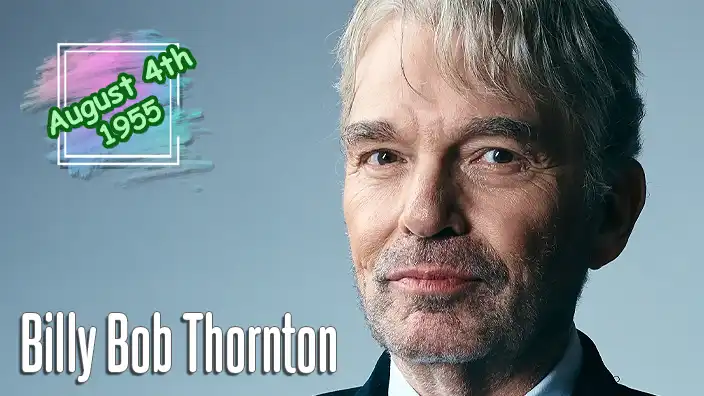
Some actors become famous for playing one unforgettable character. Billy Bob Thornton looked at that idea, shrugged, and decided to play just about everybody instead. From quiet small-town men to eccentric masterminds, grumpy antiheroes to unforgettable villains, he's built a career that keeps audiences guessing. Throw in an Academy Award, a successful music career, directing, writing, and enough dry wit to fill a dozen interviews, and you've got one of Hollywood's most distinctive talents.
August 4, 1955, in Hot Springs, Arkansas
Trivia
- Won the Academy Award for Best Adapted Screenplay for Sling Blade.
- Received an Oscar nomination for Best Actor for Sling Blade.
- Wrote, directed, and starred in Sling Blade.
- Starred in Bad Santa.
- Appeared in Armageddon.
- Starred in Monster's Ball.
- Played Billy McBride in Goliath.
- Won a Golden Globe Award for Goliath.
- Is also a successful musician.
- Performs with the band The Boxmasters.
- Has worked as an actor, writer, director, and producer.
- Details
- Category: Celebrity Birthdays - August
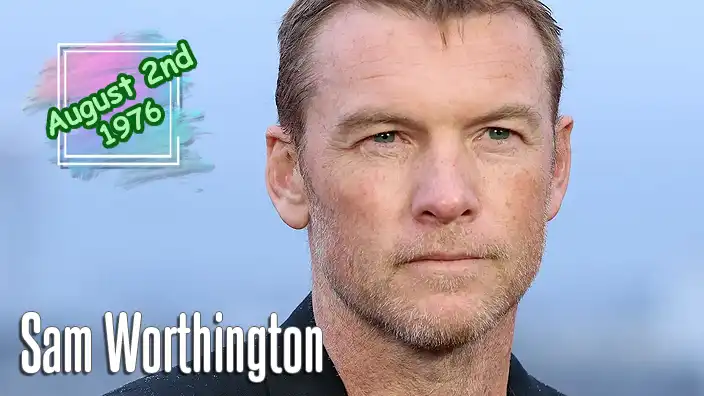
Some actors spend years searching for the role of a lifetime. Sam Worthington found one that required him to become a towering blue alien, ride flying creatures, and save an entire planet. It's safe to say that most workplace dress codes don't prepare you for that. Still, if someone offered you a trip to Pandora, you'd probably ask where to park rather than whether the job came with health insurance.
August 2, 1976, in Godalming, England
Trivia
- Graduated from Australia's National Institute of Dramatic Art (NIDA).
- Starred as Jake Sully in James Cameron's Avatar franchise.
- Avatar became one of the highest-grossing films in history.
- Returned as Jake Sully in Avatar: The Way of Water.
- Played Perseus in Clash of the Titans and Wrath of the Titans.
- Appeared in the acclaimed war film Hacksaw Ridge.
- Starred in Everest, based on the 1996 Mount Everest disaster.
- Played a major role in Under the Banner of Heaven.
- Known for performing physically demanding action roles.
- Details
- Category: Celebrity Birthdays - August
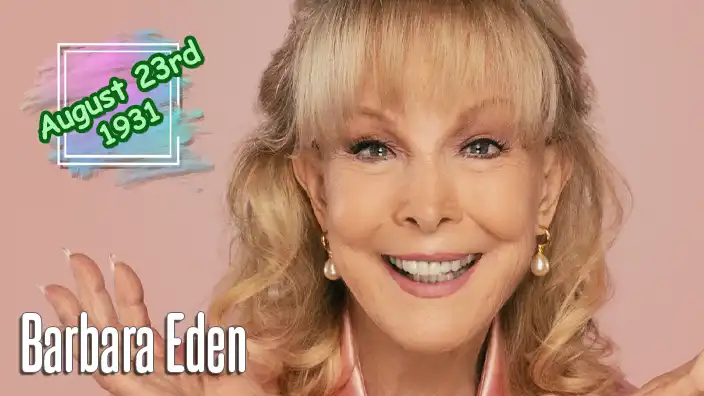
Barbara Eden spent five seasons living in a bottle, blinking her way through impossible situations and trying very hard not to get Major Nelson court-martialed. As Jeannie on I Dream of Jeannie, she became one of the most recognizable television stars of the 1960s, although after watching her turn living rooms into palaces and make troublesome people disappear, generations of viewers were left wondering why household appliances still required switches.
August 23, 1931, in Tucson, Arizona
Trivia
- Eden was crowned Miss San Francisco in 1951.
- She appeared with Elvis Presley in Flaming Star.
- I Dream of Jeannie ran for five seasons.
- Jeannie's bottle began as a liquor decanter.
- NBC famously worried about showing Jeannie's navel.
- Eden later starred in Harper Valley PTA.
- She received a Hollywood Walk of Fame star in 1988.
- Details
- Category: Celebrity Birthdays - August
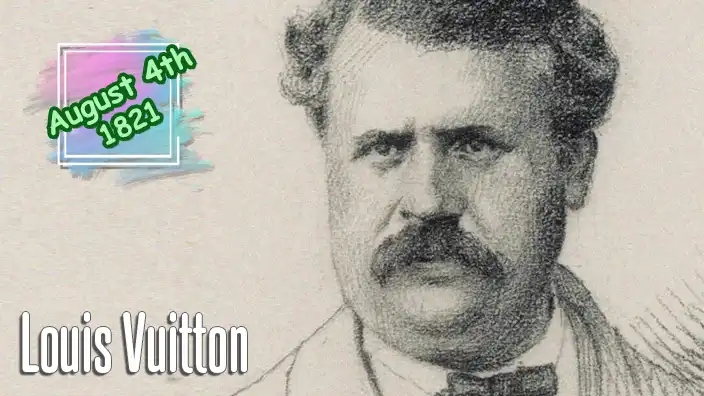
Imagine telling someone you're going on vacation and needing a suitcase sturdy enough to survive horse-drawn carriages, steamships, and cobblestone streets—all while looking impossibly elegant. Louis Vuitton looked at the luggage of his day and thought, "We can do much better than this." More than 170 years later, his name is still associated with luxury travel, timeless style, and handbags that often cost more than the car parked beside them.
August 4, 1821, in Anchay, France
 February 27, 1892, in Asnières-sur-Seine, France
Trivia
- Trained as a box-maker and professional packer.
- Served Empress Eugénie of France.
- Founded Louis Vuitton in 1854.
- Invented the practical flat-topped travel trunk.
- Helped revolutionize luxury travel luggage.
- His son Georges Vuitton created the famous LV Monogram.
- The LV Monogram debuted in 1896.
- Louis Vuitton originally made trunks, not handbags.
- The brand remains known for handcrafted leather goods.

- Details
- Category: Celebrity Birthdays - August
Chris O’Dowd is the kind of actor who can make you laugh at your own misery and thank him for the privilege. He’s got that friendly-Irish-bloke energy that convinces you he’s just popped over for tea, then somehow ropes you into a heartfelt conversation about life’s big questions. If Hollywood ever needs a leading man who can fix your printer and your love life, they’ve got O’Dowd on speed dial.
October 9, 1979, in Boyle, County Roscommon, Ireland
Trivia
- Boyle Pride: His hometown of Boyle, Ireland, is so proud of him that they’ve incorporated him into local tourism campaigns.
- Sports to Screen: Originally studied politics and sociology at University College Dublin, where he also played Gaelic football before focusing on acting.
- Literary Turn: Co-authored a best-selling children’s book series, Moone Boy, based on his semi-autobiographical TV series of the same name.
- Award-Winner: Has earned accolades on both sides of the Atlantic, from BAFTA recognition to Broadway honors.
- Details
- Category: Celebrity Birthdays - August
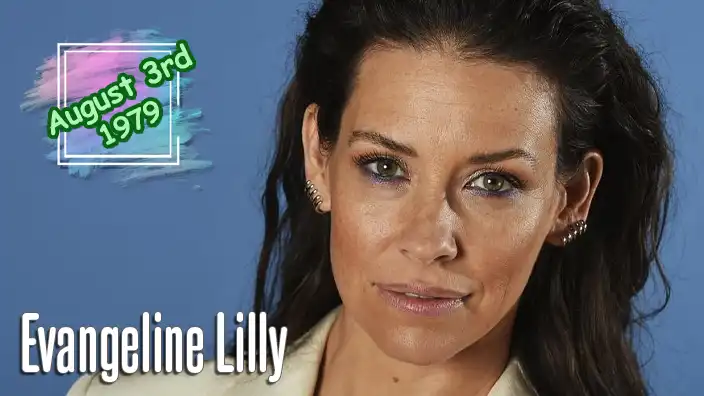
Imagine accepting a television role that was supposed to last a season or two, only to find yourself stranded on a mysterious island with smoke monsters, polar bears, and millions of devoted fans trying to solve every plot twist. Evangeline Lilly handled all of that with remarkable composure before trading deserted beaches for a superhero suit and proving that saving the universe is just another day at the office.
August 3, 1979, in Fort Saskatchewan, Canada
Trivia
- Studied International Relations at the University of British Columbia.
- Worked as a flight attendant before becoming an actress.
- Rose to international fame as Kate Austen in Lost.
- Appeared in all six seasons of Lost.
- Played Tauriel in The Hobbit film trilogy.
- Portrays Hope van Dyne/The Wasp in the Marvel Cinematic Universe.
- Co-starred with Paul Rudd in the Ant-Man films.
- Authored the children's book series The Squickerwonkers.
- Has participated in humanitarian and charitable work around the world.
- Details
- Category: Celebrity Birthdays - August
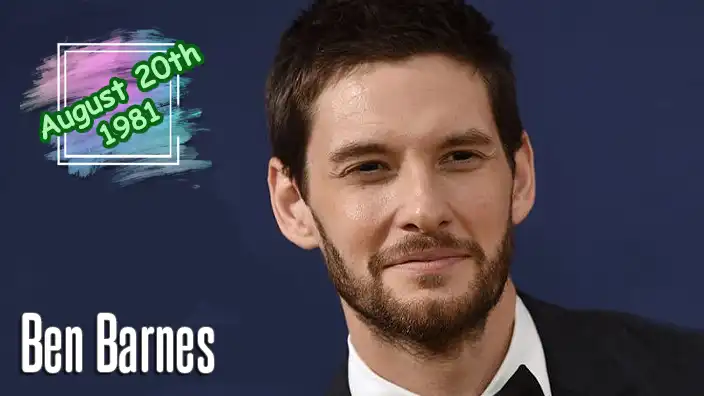
Ben Barnes has enjoyed the sort of acting career that suggests somebody handed him a checklist reading “prince, immortal aristocrat, murderous billionaire, Marvel villain, dark wizard” and he simply replied, “Yes.” Add accomplished singer and musician to the collection, and Barnes has apparently decided that having one respectable career at a time is unnecessarily restrictive.
August 20, 1981, in London, England
Trivia
- He studied drama and English literature at Kingston University and graduated with honors in 2004.
- Before becoming a major actor, Barnes performed with the National Youth Music Theatre and was a member of the boy band Hyrise.
- His breakthrough role was Prince Caspian, which he played in two Chronicles of Narnia films.
- Barnes tried to buy his Dorian Gray portrait as a gift for his mother, but the painting eventually went to a museum instead.
- He has played major characters in Westworld, The Punisher and Shadow and Bone.
- Barnes released his debut full-length album, Where the Light Gets In, in 2025.
- Details
- Category: Celebrity Birthdays - August
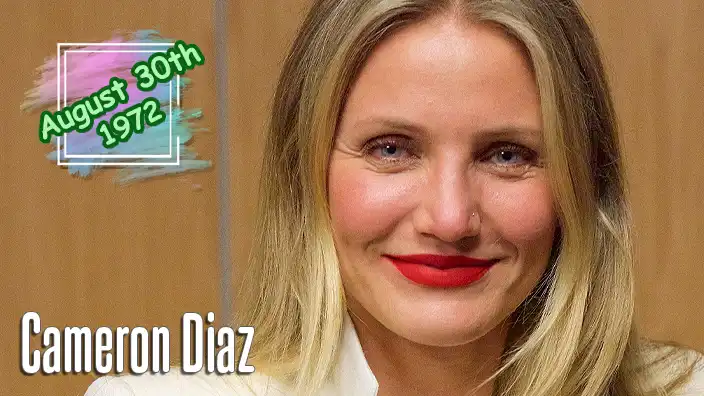
Cameron Diaz has spent her career proving that a former fashion model can battle Jim Carrey's green-faced chaos, survive romantic humiliation involving hair gel best left unexplained, voice an ogre princess and then simply walk away from Hollywood for several years because she felt like it. Born August 30, 1972, the Golden Globe-nominated actress became one of the biggest comedy stars of her generation—and eventually discovered that even movie stars are allowed to take a very long lunch break.
August 30, 1972, in San Diego, California
Trivia
- Cameron attended high school with Snoop Dogg.
- Began modeling at age 16.
- The Mask was her film debut.
- She received four Golden Globe nominations.
- Voiced Princess Fiona in the Shrek films.
- Married musician Benji Madden in 2015.
- Returned to movies with Back in Action.

- Details
- Category: Celebrity Birthdays - August
David Mann’s Mr. Brown walks into a room like he just fell out of a thrift store explosion—and somehow makes it work. Between the wild suits, the sideways logic, and the constant confusion about what’s going on (and who exactly has the gout), Mr. Brown is the uncle you didn’t ask for but can’t imagine life without. And let’s be honest—only David Mann could deliver a serious life lesson while falling out of a chair in orthopedic shoes.
August 7, 1966, in Fort Worth, Texas
Trivia
- Gospel Roots: Before becoming a comedy legend, David toured with Kirk Franklin as part of his gospel ensemble. The man’s got pipes and punchlines.
- Mr. Brown's Origins: The beloved character was first introduced in Tyler Perry’s stage play I Can Do Bad All by Myself. The name may be “Brown,” but the comedy? Golden.
- Real-Life Love Story: He’s been married to Tamela Mann since 1988, and the two are basically gospel entertainment royalty.
- Fashion Statement: Those wild Mr. Brown outfits? Yep, David rocks them with pride—plaid suits, mismatched socks, orthopedic shoes and all.
- Details
- Category: Celebrity Birthdays - August
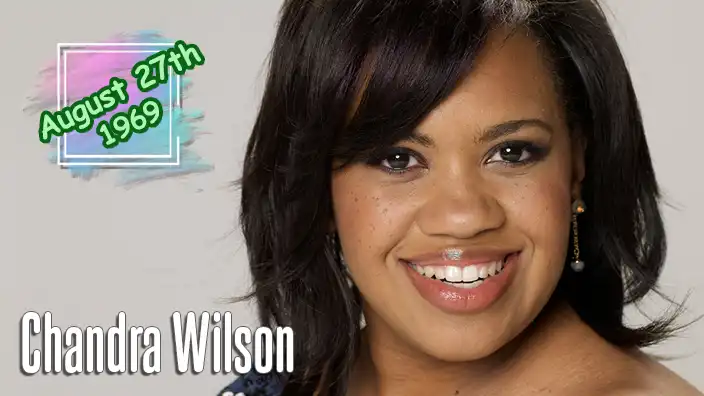
Chandra Wilson has spent decades playing Dr. Miranda Bailey on Grey's Anatomy, which means she has survived more hospital disasters, romantic complications, improbable medical emergencies and catastrophically unlucky doctors than anyone should reasonably encounter in several lifetimes. As the formidable physician affectionately known as "The Nazi" during the show's early years, Wilson turned Bailey into one of television's most enduring characters—and proved that you don't have to be the tallest person in the room when everybody already knows who's in charge.
August 27, 1969, in Houston, Texas
Trivia
- Wilson earned a BFA from NYU.
- She once worked for Deutsche Bank.
- Miranda Bailey debuted in 2005.
- Wilson has received five Emmy nominations.
- She has directed numerous Grey's Anatomy episodes.
- Wilson has also performed on Broadway.
- Details
- Category: Celebrity Birthdays - August
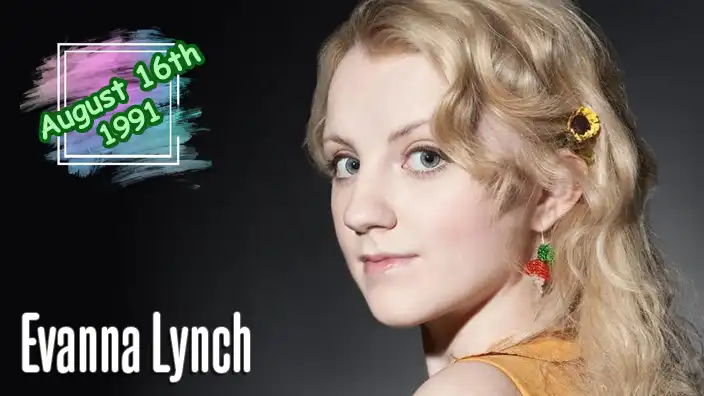
Evanna Lynch somehow managed to walk into the Harry Potter universe looking as though she had already been living there for years and had merely popped out to Ireland for a sandwich. With her soft-spoken delivery, wonderfully unconventional presence, and ability to make Luna Lovegood seem perfectly sensible while everyone else looked confused, Lynch created one of the franchise's most memorable characters. More impressively, she won the role after competing against thousands of hopeful actresses, proving that sometimes showing up to an enormous open audition really does work. Please don't tell every aspiring actor this or casting directors will never forgive us.
August 16, 1991, in Termonfeckin, Ireland
Trivia
- Harry Potter and the Order of the Phoenix was her professional film debut.
- Lynch personally made the radish earrings worn by Luna in Order of the Phoenix.
- J.K. Rowling gave Lynch a necklace featuring a hare and moon; Luna's Patronus is a hare.
- She played Luna Lovegood in four Harry Potter films and also voiced the character in tie-in video games.
- Lynch reached the final of Dancing with the Stars Season 27 and finished in third place.
- Her performance in My Name Is Emily earned her an Irish Film & Television Academy Best Actress nomination.
- Details
- Category: Celebrity Birthdays - August
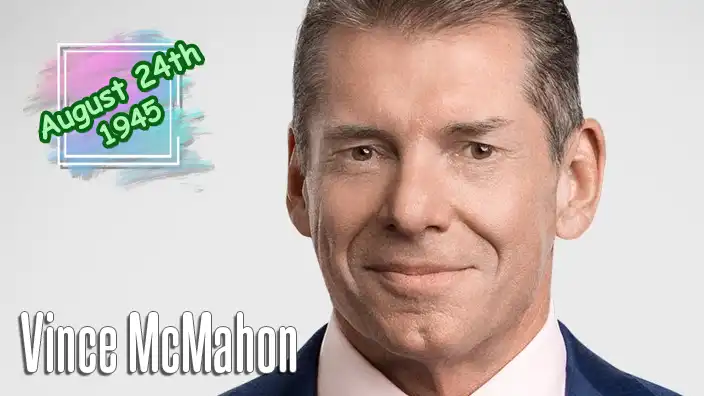
Vince McMahon took professional wrestling from regional arenas to worldwide television, created WrestleMania and eventually became one of WWE's greatest villains himself. Most company chairmen avoid being hit with folding chairs by their employees; McMahon occasionally seemed disappointed when nobody tried.
August 24, 1945, in Pinehurst, North Carolina
Trivia
- He graduated from East Carolina University.
- He purchased his father's wrestling business in 1982.
- The first WrestleMania was held in 1985.
- He created the villainous “Mr. McMahon” character.
- He became WWE Champion in 1999.
- He won the 1999 Royal Rumble.
- WWE purchased WCW's assets in 2001.
- Details
- Category: Celebrity Birthdays - August
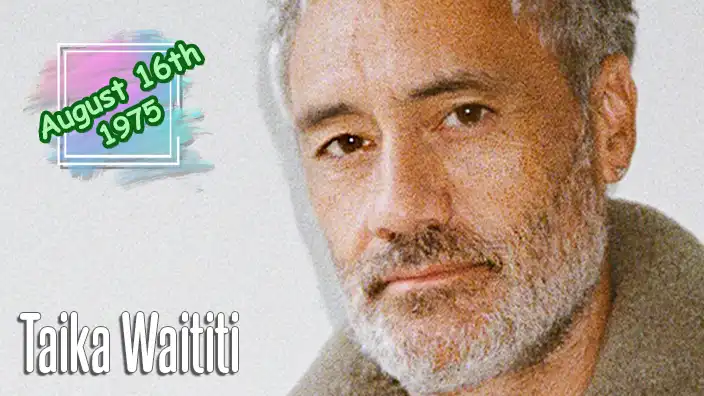
Taika Waititi has built a career by approaching filmmaking as though somebody accidentally left him alone with the studio keys. He has directed vampires sharing a flat, a troublesome boy roaming the New Zealand wilderness, the Norse god of thunder having an identity crisis, and himself as an imaginary Adolf Hitler. Somewhere along the way he won an Academy Award, proving that occasionally the person causing all the trouble really does know exactly what he is doing.
August 16, 1975, in Wellington, New Zealand
Trivia
- His short film Two Cars, One Night earned him his first Academy Award nomination.
- Much of the dialogue in What We Do in the Shadows was improvised rather than performed directly from a complete script.
- Waititi frequently acts in films he directs, including as Viago, Alamein, Korg and the imaginary Hitler in Jojo Rabbit.
- He won the Academy Award and BAFTA for the adapted screenplay of Jojo Rabbit.
- He also won a Grammy for the Jojo Rabbit compilation soundtrack.
- Waititi is also an experienced painter and photographer and has exhibited his visual artwork.
- Details
- Category: Celebrity Birthdays - August
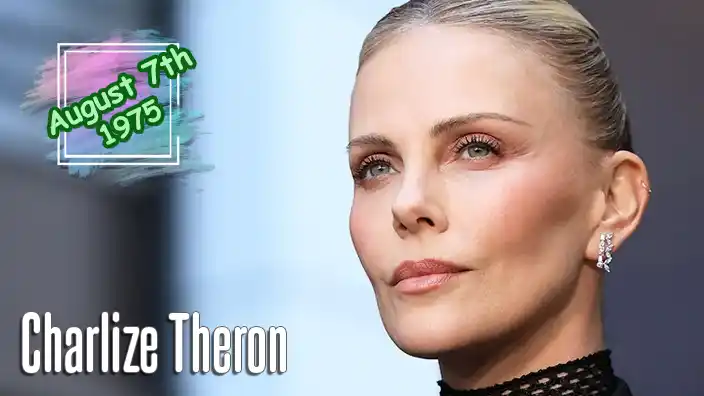
Charlize Theron is the kind of actress who can beat up ten guys in a stairwell, deliver a monologue about existential despair, and then walk into a Dior ad like nothing happened. If elegance and danger had a baby, it would be named Charlize and already have an Oscar. She’s so cool, even her scowls are frame-worthy.
August 7, 1975, in Benoni, South Africa
Trivia
- Multilingual Star: Theron speaks fluent Afrikaans and learned Zulu as a child—making her an action hero and a polyglot.
- Oscar History: She was the first South African to win an Academy Award in a major acting category.
- Stunt Cred: She does most of her own stunts, especially in films like Atomic Blonde, where she trained so hard she cracked teeth.
- Adoption Advocate: Charlize is a proud mother of two adopted children and an advocate for LGBTQ+ rights and women’s empowerment.

- Details
- Category: Celebrity Birthdays - August
Ashley Jensen is the TV friend you didn’t know you needed—the one who’ll help you through a crisis, make you laugh about it, and then accidentally start a whole new mess just to keep life interesting.
August 11, 1969, in Annan, Scotland
Trivia
- Breakout Role: Maggie in Extras (2005–2007).
- Stateside Success: Christina in Ugly Betty.
- Holiday Favorite: Voice of Bryony in Arthur Christmas.
- Mystery Maven: Star of Agatha Raisin.
- Scottish Roots: Born and raised in Annan, Dumfriesshire.
- Details
- Category: Celebrity Birthdays - August
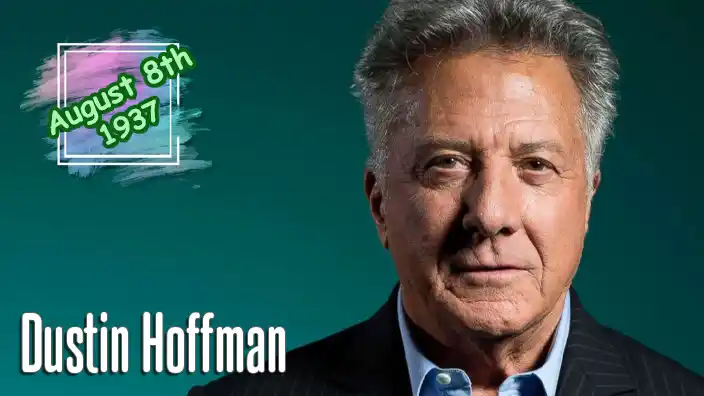
Dustin Hoffman is the only man who could turn nervous fidgeting into an Oscar-worthy skill. He made awkward pauses feel like Shakespeare and somehow convinced us all that Tootsie was both hilarious and profound. If you need someone to cry, yell, whisper, sweat, panic, and win awards—all in one take—Dustin’s your guy. Just don’t ask him to “tone it down.” That’s not in his tool kit.
August 8, 1937, Los Angeles, California
Trivia
- Oscar Gold: He won Best Actor twice—first for Kramer vs. Kramer (1979) and again for Rain Man (1988). Both performances are considered among the finest in film history.
- Method to the Madness: Famously method, he once stayed up for days to appear exhausted for a role—only to be told by co-star Laurence Olivier, “My dear boy, why don’t you just try acting?”
- Animation Fan Favorite: He voiced the villainous (and hilarious) Master Shifu in Kung Fu Panda. Because yes, even animated animals need gravitas.
- Late Start: Hoffman was 30 when he starred in The Graduate—proving it’s never too late to become an icon.
From Our Marks Catelog
-

Brussels sprouts: the tiny green orbs that have been sparking dinner table debates for...
-

Elegance, mystery, and just the right amount of arrogance—some things demand admiration without lifting...
-

National Cake Day is the one day of the year when it's socially acceptable to have your cake and eat...
-

Forget glow-in-the-dark snack cakes and cheese that comes in a spray can—there’s something wildly...
-

If there were an Olympic event for clumsiness, someone would be rolling down the hill, missing their...
-
Gazpacho Soup Day isn’t just a day to honor cold tomato soup; it’s a day to revel in the absurdity of...


