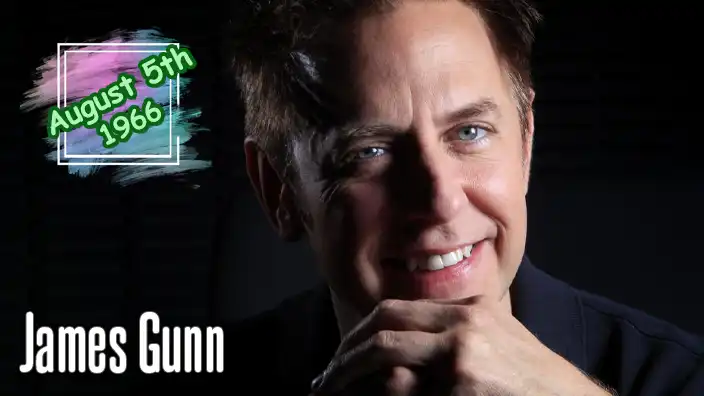
August 5, 1966, in St. Louis, Missouri
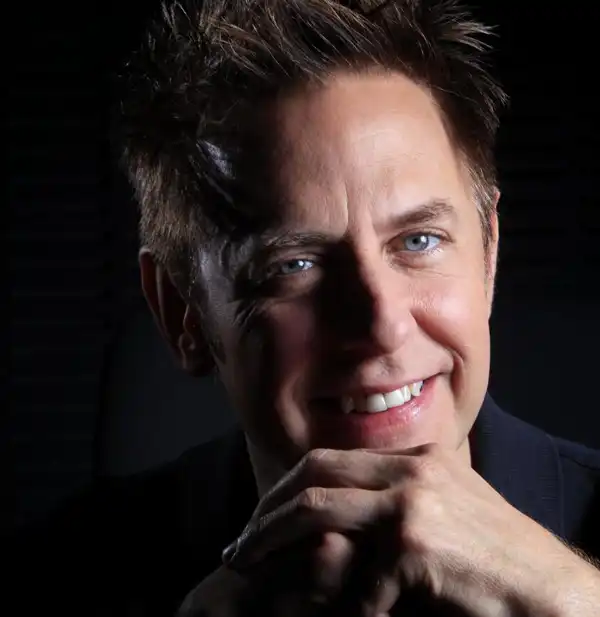
James Gunn is an American filmmaker, screenwriter, producer, and studio executive whose unusual path through independent cinema led him to the highest levels of the superhero entertainment business. After writing and directing Marvel Studios’ enormously successful Guardians of the Galaxy trilogy, Gunn crossed the traditional comic-book divide and became co-chairman and chief executive officer of DC Studios alongside producer Peter Safran.
Known for combining outrageous comedy, energetic action, carefully selected popular music, and unexpectedly sincere emotion, Gunn has developed a distinctive filmmaking style. His stories frequently center on damaged outsiders who argue, misbehave, and occasionally threaten one another before discovering that they have formed something resembling a family.
James Francis Gunn Jr. was born on August 5, 1966, in St. Louis, Missouri. He grew up in a large family and developed an early fascination with movies, comic books, monsters, and unconventional storytelling. Gunn and his brothers made amateur films while they were young, providing an early indication that the entertainment industry might eventually have to deal with several members of the family.
Before entering professional filmmaking, Gunn studied at Saint Louis University and later earned a Master of Fine Arts degree from Columbia University. His education provided a strong foundation in writing, but his first major professional opportunity came from a company considerably less formal than the Ivy League.
Gunn began working for Troma Entertainment, the independent studio famous for extremely low-budget films filled with exaggerated violence, broad comedy, and proudly questionable taste. He wrote the screenplay for Tromeo and Juliet, a deliberately outrageous adaptation of Shakespeare’s tragedy released in 1996.
Working at Troma taught Gunn how to perform numerous filmmaking duties with limited money and resources. He gained experience writing, directing, producing, editing, promoting, and solving the countless practical problems that arise when a production has more enthusiasm than cash.
Gunn gradually moved into more mainstream Hollywood projects. He wrote the screenplay for the live-action comedy Scooby-Doo, released in 2002, and contributed to its 2004 sequel, Scooby-Doo 2: Monsters Unleashed. Although aimed at family audiences, the films allowed Gunn to combine comedy, supernatural adventure, and a team of eccentric personalities—ingredients that would later become central to his biggest successes.
He also wrote the screenplay for Zack Snyder’s 2004 remake of Dawn of the Dead. The film’s fast-moving zombies, intense action, and grim humor demonstrated that Gunn could work effectively within a major studio production while retaining some of his unconventional creative instincts.
Gunn made his feature-film directing debut with Slither in 2006. The science-fiction horror comedy starred Nathan Fillion, Elizabeth Banks, and Michael Rooker and followed a small town invaded by an alien parasite. Although it was not a major box-office success, the movie attracted a devoted following and established many of the qualities that would define Gunn’s later work.
His second feature as a director, Super, arrived in 2010. Starring Rainn Wilson as an ordinary man who becomes a homemade vigilante, the dark comedy presented a rough and uncomfortable alternative to polished superhero entertainment. The film examined loneliness, obsession, violence, and the dangerous fantasy of becoming a costumed hero without possessing any actual superpowers.
Gunn’s career changed dramatically when Marvel Studios selected him to direct Guardians of the Galaxy. At the time, the Guardians were far less familiar to general audiences than Marvel characters such as Iron Man, Captain America, or Thor. The proposed movie featured a thief from Earth, an assassin, a vengeful warrior, a genetically modified raccoon, and a tree capable of saying only a few words. On paper, it looked less like a guaranteed blockbuster and more like a particularly strange evening at a science-fiction convention.
Released in 2014, Guardians of the Galaxy became an international hit. Gunn co-wrote and directed the film, blending cosmic adventure with irreverent humor, emotional storytelling, and a soundtrack filled with popular songs from the 1960s and 1970s.
The movie transformed obscure comic-book characters into major cultural figures. Chris Pratt’s Peter Quill became a leading Marvel hero, while Rocket and Groot emerged as two of the franchise’s most recognizable characters. The film also proved that audiences would support lesser-known comic properties when the characters and story were strong enough.
Music became one of the most important features of Gunn’s storytelling. Rather than using familiar songs merely as background decoration, he integrated them into the characters’ memories and emotions. Peter Quill’s collection of songs connected him to his late mother and to the Earthly childhood he had lost.
Gunn returned to write and direct Guardians of the Galaxy Vol. 2, released in 2017. The sequel expanded the group’s relationships and examined themes of parenthood, rejection, sacrifice, and chosen family. Beneath the colorful planets, elaborate jokes, and enormous battles was an emotional story about the difference between biological connection and genuine parental love.
His relationship with Marvel Studios suffered a major interruption in 2018 when old social-media posts containing offensive jokes resurfaced. Disney removed him as director of the third Guardians film. Gunn apologized for the posts, acknowledged that they had been deliberately provocative, and said they no longer represented the person he had become.
The principal Guardians of the Galaxy cast publicly supported Gunn and requested his reinstatement. Disney eventually rehired him to write and direct Guardians of the Galaxy Vol. 3. The episode became a significant and complicated chapter in his career, involving questions of accountability, personal growth, public judgment, and forgiveness.
During his temporary departure from Marvel, Gunn began working with Warner Bros. and DC. He wrote and directed The Suicide Squad, released in 2021. The film featured a large ensemble of criminals and antiheroes recruited for a dangerous government mission, allowing Gunn to return to the unruly team dynamics he handles particularly well.
The movie included established characters such as Harley Quinn alongside lesser-known figures including Bloodsport, Ratcatcher 2, Polka-Dot Man, and King Shark. Gunn balanced extreme violence and dark comedy with moments of genuine compassion, once again finding humanity within characters who would rarely be described as well-adjusted.
John Cena’s performance as Peacemaker led to a television spinoff created by Gunn. Premiering in 2022, Peacemaker explored the title character’s traumatic upbringing, distorted patriotism, and desperate need for acceptance. Gunn wrote the series and directed several episodes, helping establish the program as an important part of his expanding relationship with DC.
Gunn completed his Marvel journey with The Guardians of the Galaxy Holiday Special and Guardians of the Galaxy Vol. 3. Released in 2023, the third feature brought the team’s central story to an emotional conclusion while concentrating heavily on Rocket’s painful origins.
The trilogy allowed Gunn to develop the Guardians over nearly a decade. What began as a comic space adventure gradually became a story about trauma, friendship, healing, and learning to move forward without forgetting the past. Its conclusion confirmed Gunn’s ability to combine blockbuster spectacle with deeply personal character development.
In October 2022, Warner Bros. Discovery appointed Gunn and Peter Safran to lead the newly formed DC Studios. Gunn became co-chairman and CEO, concentrating primarily on creative direction, while Safran brought extensive production and business experience to the partnership.
Together, they were given responsibility for developing a more coordinated collection of DC movies, television programs, and animated projects. It was one of the most demanding positions in modern entertainment, requiring them to manage globally recognized characters while rebuilding audience confidence in a franchise that had experienced numerous changes of direction.
Gunn and Safran announced a connected DC Universe beginning with a group of projects described as “Gods and Monsters.” Their plans included films and television productions involving Superman, Batman, Supergirl, Green Lantern characters, and several less familiar figures from DC Comics.
The animated series Creature Commandos, written by Gunn, became the first released project in the new continuity. Gunn continued the approach that had served him well at Marvel and in The Suicide Squad: take characters unknown to much of the public, give them distinctive personalities, and make audiences care about them before they have time to ask why they are watching a military team containing monsters.
Gunn also wrote and directed Superman, released in 2025, with David Corenswet in the title role and Rachel Brosnahan as Lois Lane. The film became the first major theatrical release in the new DC Universe and placed Superman’s compassion, optimism, and belief in humanity at the center of the story.
Taking charge of Superman carried considerable pressure. The character is one of the oldest and most influential superheroes in popular culture, and numerous filmmakers and actors have offered their own interpretations. Gunn approached him not as a distant, flawless symbol but as a fundamentally decent person attempting to do the right thing in a complicated world.
Gunn’s creative work is often recognized for its humor, but his greatest strength may be his affection for imperfect characters. Rocket is angry and wounded. Peacemaker is arrogant and emotionally damaged. The Suicide Squad members are criminals. Even his Superman must navigate public suspicion and political uncertainty. Gunn rarely asks audiences to admire perfection; he asks them to recognize the possibility of improvement.
He is also known for maintaining long-running collaborations with actors and crew members. Michael Rooker, Nathan Fillion, Sean Gunn, and several other performers have appeared repeatedly in his projects. His brother Sean Gunn has worked with him in numerous productions, portraying Kraglin in the Guardians films and performing Rocket’s physical movements during filming.
Despite working with enormous budgets and famous comic-book properties, Gunn has retained much of the playful independence that shaped his early career. His projects regularly feature unusual supporting characters, unexpected music, strange creatures, sincere sentiment, and at least one individual who probably should not be trusted with explosives.
As a studio executive, Gunn faces responsibilities extending beyond his own movies. He must help select writers and directors, coordinate stories across different formats, protect the identities of established characters, introduce unfamiliar ones, and balance artistic ambition with the commercial realities of a global entertainment company.
His willingness to remain an active writer and director while running DC Studios makes his position especially unusual. Rather than acting solely as an administrator, Gunn continues creating projects while helping other filmmakers develop their own corners of the DC Universe.
James Gunn’s career has traveled from the rebellious edges of low-budget independent cinema to the executive offices of one of Hollywood’s largest superhero studios. Along the way, he helped turn the Guardians of the Galaxy into household names, revived the Suicide Squad with his own distinctive approach, created Peacemaker, and accepted the responsibility of guiding Superman and the wider DC Universe into a new era.
It is an extraordinary journey for a filmmaker who began with Tromeo and Juliet. Yet Gunn’s success has not come from abandoning the oddball sensibility of his early work. It has come from refining it, adding emotional depth, and proving that even the strangest collection of characters can become heroes when someone takes the time to understand them.