Celebrity Birthdays - August

August birthdays are like the last cannonball into the summer pool — big, splashy, and a little bittersweet. School is looming, but August folks insist we squeeze every last drop of sunshine first.
Join us as we salute the stars who own the dog days of summer. They’re proof that even the hottest month can be cool when you know how to celebrate it.

- Details
- Category: Celebrity Birthdays - August
If John Lennon were still with us, he’d probably be tweeting sarcastic takes about world politics while strumming an acoustic guitar in his kitchen. He had that rare knack for pairing profound truths with just the right amount of cheek—kind of like your smartest friend who also happens to be the most likely to start a singalong at 2 a.m. Lennon didn’t just imagine a better world; he made you believe it was possible… even if he’d still tell you to “shut up” if you were being annoying.
 October 9, 1940, in Liverpool, England
 December 8, 1980, in New York, New York

Trivia
- Art School Rebel: Before music fame, Lennon studied at the Liverpool College of Art, where his rebellious streak was already in full swing.
- Double Birthdays: Lennon shared his birthday with his son Sean Lennon, born exactly 35 years later in 1975.
- Peace Advocate: Known for his “Bed-In” protests with wife Yoko Ono, he used his celebrity as a platform for anti-war activism.
- Honors: Posthumously inducted into both the Songwriters Hall of Fame and the Rock and Roll Hall of Fame as a solo artist.
- Details
- Category: Celebrity Birthdays - August
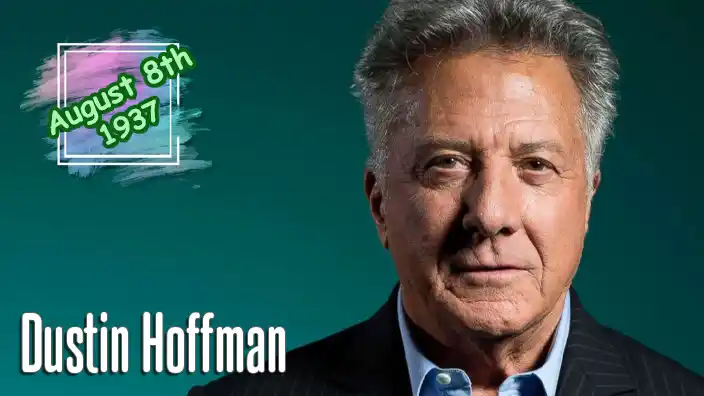
Dustin Hoffman is the only man who could turn nervous fidgeting into an Oscar-worthy skill. He made awkward pauses feel like Shakespeare and somehow convinced us all that Tootsie was both hilarious and profound. If you need someone to cry, yell, whisper, sweat, panic, and win awards—all in one take—Dustin’s your guy. Just don’t ask him to “tone it down.” That’s not in his tool kit.
August 8, 1937, Los Angeles, California
Trivia
- Oscar Gold: He won Best Actor twice—first for Kramer vs. Kramer (1979) and again for Rain Man (1988). Both performances are considered among the finest in film history.
- Method to the Madness: Famously method, he once stayed up for days to appear exhausted for a role—only to be told by co-star Laurence Olivier, “My dear boy, why don’t you just try acting?”
- Animation Fan Favorite: He voiced the villainous (and hilarious) Master Shifu in Kung Fu Panda. Because yes, even animated animals need gravitas.
- Late Start: Hoffman was 30 when he starred in The Graduate—proving it’s never too late to become an icon.
- Details
- Category: Celebrity Birthdays - August
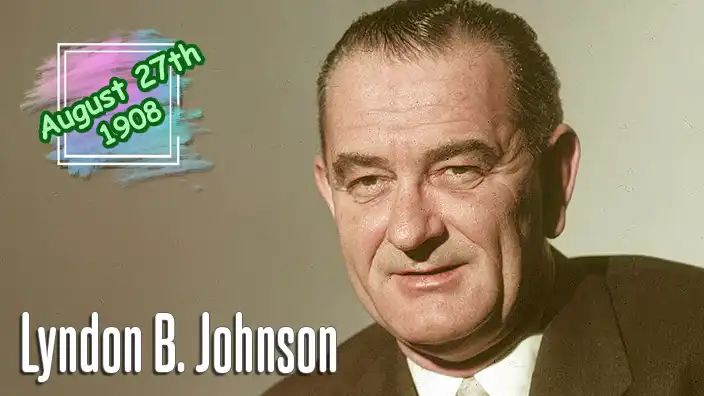
Lyndon B. Johnson was a towering Texan who approached American politics rather like a rancher confronted with a stubborn gate: if persuasion, pressure, persistence, and leaning his considerable frame against it would get the thing open, that gate was going to open. As the 36th President of the United States, LBJ signed some of the most consequential legislation of the 20th century, pursued his ambitious Great Society, and discovered that even a master of Washington politics could not strong-arm the Vietnam War into behaving itself.
August 27, 1908, in Stonewall, Texas
January 22, 1973, in Stonewall, Texas
Trivia
- He stood about 6 feet 3 inches tall.
- Won his 1948 Senate runoff by just 87 votes.
- That victory helped earn the nickname "Landslide Lyndon."
- His intimidating persuasion technique became the "Johnson Treatment."
- Before politics, Johnson worked as a teacher.
- He preferred spending time at his Texas ranch whenever possible.
- Details
- Category: Celebrity Birthdays - August
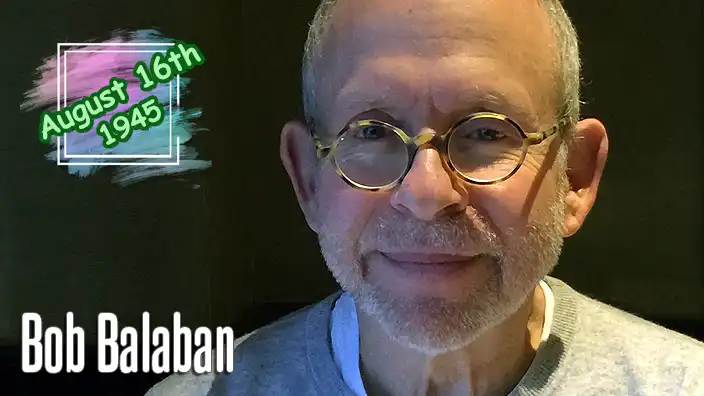
Bob Balaban has spent more than half a century perfecting the art of appearing completely reasonable while surrounded by people who have clearly lost control of the situation. Whether navigating Christopher Guest's wonderfully peculiar world in A Mighty Wind, joining the enormous ensemble of Gosford Park, or calmly investigating extraterrestrial musical communication in Close Encounters of the Third Kind, Balaban has become one of Hollywood's great "Oh, I know that guy!" actors — which, after hundreds of performances, is practically an honorary title.
August 16, 1945, in Chicago, Illinois
Trivia
- Balaban made his Broadway debut in the original 1968 production of Neil Simon's Plaza Suite.
- He appeared in the 1969 Academy Award-winning film Midnight Cowboy early in his screen career.
- In Close Encounters of the Third Kind, Balaban played interpreter and cartographer David Laughlin alongside real-life French director François Truffaut.
- Balaban played fictional NBC president Russell Dalrymple in several memorable episodes of Seinfeld.
- He received an Academy Award nomination as one of the producers of Gosford Park.
- In addition to acting and directing, Balaban wrote the McGrowl series of children's books about a bionic dog.

- Details
- Category: Celebrity Birthdays - August
Some movie stars become famous for delivering unforgettable lines. Kajol somehow manages to make an entire facial expression memorable before she even says a word. Whether she's making audiences laugh, cry, cheer, or desperately hope Raj catches that train, she has spent decades proving that great acting doesn't require grand speeches—it sometimes just takes perfect timing, expressive eyes, and enough charisma to light up an entire cinema.
 August 5, 1974, in Bombay, India
Trivia
- Frequently co-starred with Shah Rukh Khan.
- Married actor Ajay Devgn in 1999.
- Mother of two children.
- Received the Padma Shri in 2011.
- Won the Filmfare Award for Best Performance in a Negative Role for Gupt.
- Has won five Filmfare Best Actress Awards, tying the long-standing record set by Nutan.
- Comes from the famous Mukherjee-Samarth film family.
- Appeared in acclaimed streaming series including The Trial.
- Known for her expressive acting style and natural performances.
- Details
- Category: Celebrity Birthdays - August
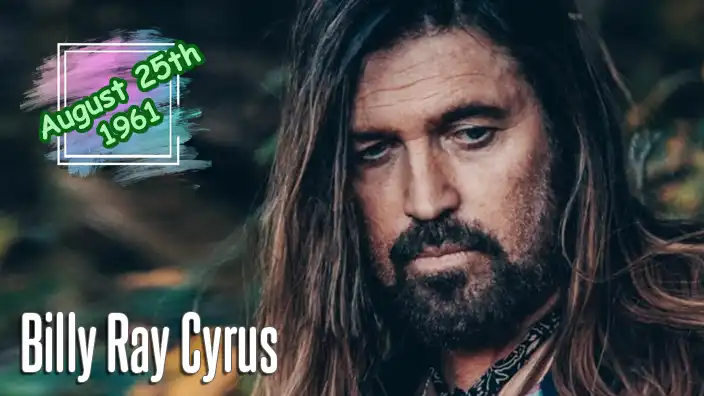
Billy Ray Cyrus arrived in country music with a voice, a guitar, a mullet that deserved its own road crew, and a warning not to tell his heart anything it couldn't handle. More than three decades later, the Kentucky singer has survived changing musical fashions, television stardom, line-dancing fever and an unexpected trip down the “Old Town Road”—proving that an achy breaky beginning can lead to one remarkably long career.
August 25, 1961, in Flatwoods, Kentucky
Trivia
- He attended college on a baseball scholarship.
- He plays guitar left-handed.
- Some Gave All debuted at No. 1.
- He played Miley's father in Hannah Montana.
- He entered the Kentucky Music Hall of Fame in 2018.
- “Old Town Road” earned him two Grammys.

- Details
- Category: Celebrity Birthdays - August
Evanna Lynch somehow managed to walk into the Harry Potter universe looking as though she had already been living there for years and had merely popped out to Ireland for a sandwich. With her soft-spoken delivery, wonderfully unconventional presence, and ability to make Luna Lovegood seem perfectly sensible while everyone else looked confused, Lynch created one of the franchise's most memorable characters. More impressively, she won the role after competing against thousands of hopeful actresses, proving that sometimes showing up to an enormous open audition really does work. Please don't tell every aspiring actor this or casting directors will never forgive us.
August 16, 1991, in Termonfeckin, Ireland
Trivia
- Harry Potter and the Order of the Phoenix was her professional film debut.
- Lynch personally made the radish earrings worn by Luna in Order of the Phoenix.
- J.K. Rowling gave Lynch a necklace featuring a hare and moon; Luna's Patronus is a hare.
- She played Luna Lovegood in four Harry Potter films and also voiced the character in tie-in video games.
- Lynch reached the final of Dancing with the Stars Season 27 and finished in third place.
- Her performance in My Name Is Emily earned her an Irish Film & Television Academy Best Actress nomination.

- Details
- Category: Celebrity Birthdays - August
Jennifer Coolidge has spent decades proving that you don't need to be the leading lady to walk away with the movie. Give her three minutes, an outrageous outfit and a few lines of dialogue, and there is an excellent chance nobody remembers what the leading lady was doing anyway.
August 28, 1961, in Boston, Massachusetts
Trivia
- Studied theater at Emerson College.
- Trained at the American Academy of Dramatic Arts.
- Was a member of The Groundlings.
- Made an early TV appearance on Seinfeld.
- Mike White wrote Tanya with Coolidge in mind.
- Her New Orleans home was used in The Beguiled.
- She has won two Primetime Emmy Awards.
- Details
- Category: Celebrity Birthdays - August
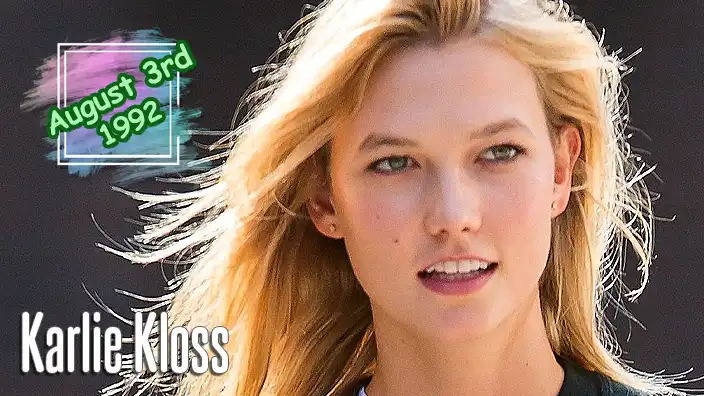
Karlie Kloss has spent so much time on international runways that frequent-flyer miles probably ought to be considered a fashion accessory. One day she's walking for the world's biggest designers, the next she's encouraging young women to learn computer programming. It turns out that while high heels and computer code don't usually appear in the same sentence, Karlie Kloss has made a career out of proving they belong together.
August 3, 1992, in Chicago, Illinois
Trivia
- Became a Victoria's Secret Angel in 2013.
- Walked for Chanel, Dior, Versace, Valentino, and many other luxury brands.
- Has appeared on dozens of international Vogue covers.
- Founded the nonprofit Kode with Klossy in 2015.
- Promotes coding education for girls and young women.
- Has studied computer programming herself.
- Hosted the television competition series Project Runway.
- Married businessman Joshua Kushner in 2018.
- Is also an entrepreneur and startup investor.
- Frequently supports STEM education initiatives.
- Details
- Category: Celebrity Birthdays - August
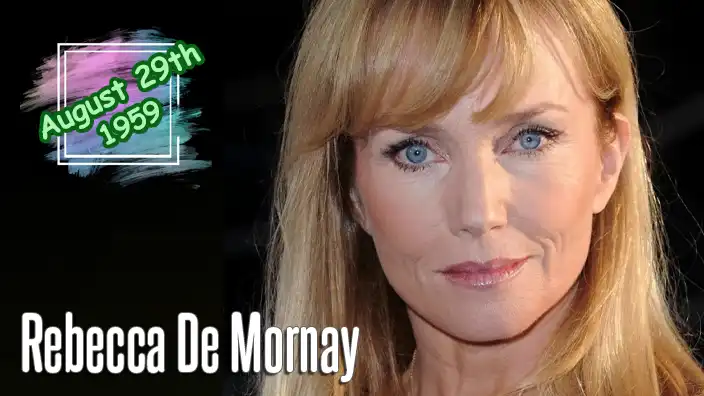
Rebecca De Mornay made an unforgettable entrance in Risky Business before demonstrating in The Hand That Rocks the Cradle that hiring the wrong nanny can make forgetting to check someone's references look like a remarkably serious household error.
August 29, 1959, in Santa Rosa, California
Trivia
- Studied at the Lee Strasberg Theatre and Film Institute.
- Broke through in 1983's Risky Business.
- Starred opposite Jon Voight in Runaway Train.
- Played Peyton in The Hand That Rocks the Cradle.
- Appeared in Ron Howard's Backdraft.
- Played Dorothy Walker in Jessica Jones.
- Played Chloe's mother in Lucifer.

- Details
- Category: Celebrity Birthdays - August
Maggie’s the kind of person who could talk you into solving a crime with her — and you’d agree — even though you have zero detective skills and a questionable sense of direction. You wouldn’t mind, though, because you know she’d somehow still make you look good while doing all the actual work.
August 12, 1980, in Louisville, Kentucky
Trivia
- Fan Favorite: Juliet O’Hara on Psych (2006–2014, plus movies).
- TV Regular: Appeared in Party of Five, Two and a Half Men, Smallville.
- Hallmark Darling: Starred in multiple Hallmark Channel films.
- Reunion Star: Returned for Psych: The Movie and sequels.
- Natural Charm: Known for her quick wit and down-to-earth personality.
- Details
- Category: Celebrity Birthdays - August
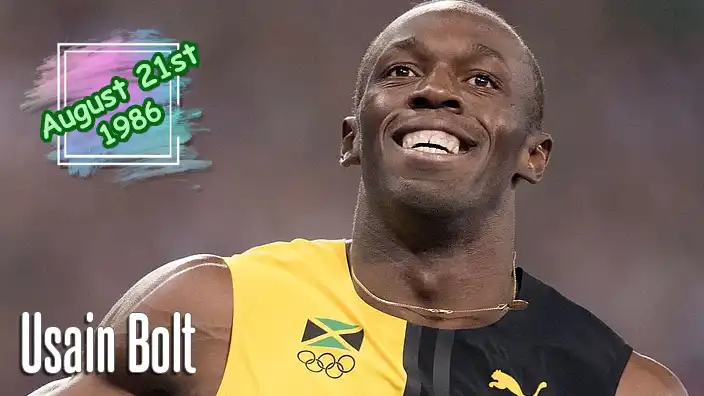
Usain Bolt holds the world records for both the 100 and 200 meters, won eight Olympic gold medals and occasionally started celebrating before crossing the finish line—which is normally considered showing off unless you happen to be several yards ahead of the fastest people on Earth. At 6 feet 5 inches and capable of approaching 28 miles per hour, “Lightning Bolt” made sprinting look suspiciously as though somebody had accidentally pressed fast-forward.
August 21, 1986, in Sherwood Content, Jamaica
Trivia
- At 15, he became the youngest world junior 200-meter champion at the time.
- His 9.58-second 100-meter world record, set in Berlin in 2009, still stands.
- Bolt also holds the 200-meter world record of 19.19 seconds.
- He won the Olympic 100 and 200 meters at three consecutive Games—Beijing 2008, London 2012 and Rio 2016.
- Bolt officially owns eight Olympic gold medals after Jamaica's 2008 relay title was later revoked.
- After retiring from athletics, he pursued his longtime interest in professional soccer and scored twice while playing for Australia's Central Coast Mariners.

- Details
- Category: Celebrity Birthdays - August
Viola Davis doesn’t just play a role — she takes it, owns it, and dares you to look away. If she ever played you in a movie, you’d probably learn something about yourself you didn’t want to know… but you’d thank her anyway.
August 11, 1965, in St. Matthews, South Carolina
Trivia
- Triple Crown Winner: Oscar, Emmy, and Tony Awards.
- Oscar Win: Fences (2016).
- Historic Emmy: First Black woman to win Lead Actress in a Drama (HTGAWM).
- Stage Roots: Two Tony Awards for King Hedley II and Fences.
- Author: Penned her memoir, "Finding Me."

- Details
- Category: Celebrity Birthdays - August
Ryan Eggold is the kind of TV doctor who makes you wish your next check-up came with dramatic lighting and background music. Whether he’s delivering a heartfelt speech to save the hospital or staring down danger with perfect stubble, he has that rare TV magic that makes you think, “Yep… I’d trust this guy with my life—and my Netflix queue.”
August 10, 1984, in Lakewood, California
Trivia
- Triple Threat: Actor, writer, and director.
- Music Man: Plays guitar and piano, and has been in bands.
- Blacklist Mystery: His Blacklist character had one of the show’s most unpredictable arcs.
- Indie Spirit: Wrote, directed, and starred in the indie film Literally, Right Before Aaron (2017).
- Details
- Category: Celebrity Birthdays - August
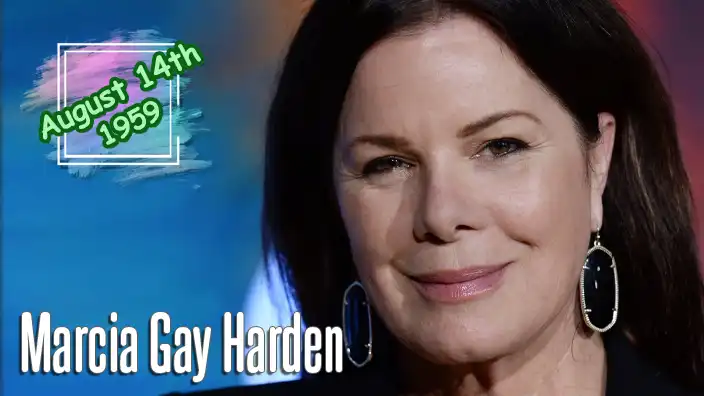
Marcia Gay Harden has spent decades being the woman filmmakers call when a character needs intelligence, backbone, emotional complexity and absolutely no patience for nonsense. She has survived Jackson Pollock, the residents of Mystic River, an apocalyptic supermarket in The Mist, a spectacularly dysfunctional evening in God of Carnage, and a television law practice containing her own troublesome son. Somewhere along the way she picked up an Oscar and a Tony, proving that if Hollywood insists on putting you through that much emotional turmoil, the least it can do is provide somewhere attractive to keep the trophies.
August 14, 1959, in La Jolla, California
Trivia
- She portrayed Mrs. Carmody in The Mist.
- Mrs. Carmody became one of Harden's best-known villainous roles.
- Harden won a Tony Award in 2009.
- Her Tony was for God of Carnage.
- She starred alongside James Gandolfini in the Broadway production.
- Harden played Dr. Leanne Rorish in Code Black.
- She appeared as Rebecca Halliday in The Newsroom.
- Harden has appeared in Law & Order: Special Victims Unit.
- She had a recurring role in How to Get Away with Murder.
- Harden played Margaret Wright in So Help Me Todd.
- Skylar Astin played her character's son.
- Details
- Category: Celebrity Birthdays - August
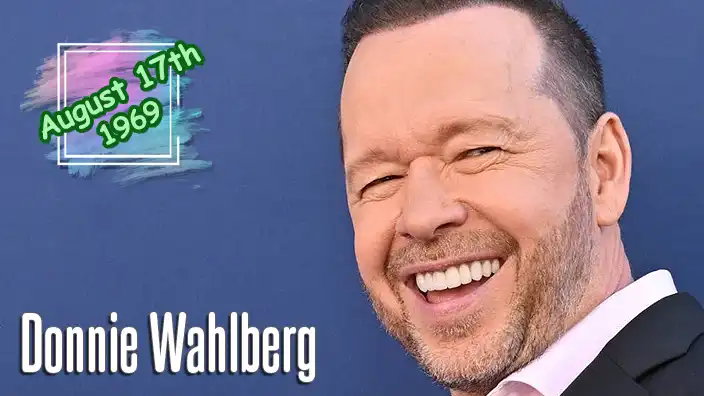
Donnie Wahlberg has spent decades demonstrating that choosing one career is apparently optional. He became a teenage pop sensation with New Kids on the Block, developed a successful acting career, chased criminals around New York on Blue Bloods, produced television shows and then returned to the concert stage with the same band that helped cause adolescent hysteria in the late 1980s. Somewhere along the way, he also found time to marry Jenny McCarthy. Apparently, Donnie received a considerably larger daily allotment of hours than the rest of us.
August 17, 1969, in Boston, Massachusetts
Trivia
- Wahlberg was one of the original members of New Kids on the Block and helped recruit several of the group's other members.
- He played the severely troubled Vincent Grey in The Sixth Sense and dramatically changed his appearance for the brief but memorable role.
- Wahlberg portrayed Carwood Lipton in HBO's Band of Brothers.
- He played Detective Eric Matthews in the Saw film series.
- Wahlberg starred as Danny Reagan throughout all 14 seasons of Blue Bloods.
- He married Jenny McCarthy in 2014.
- New Kids on the Block reunited in 2008, more than a decade after originally separating.
- He has attracted attention for leaving exceptionally generous tips for restaurant employees.
- Details
- Category: Celebrity Birthdays - August
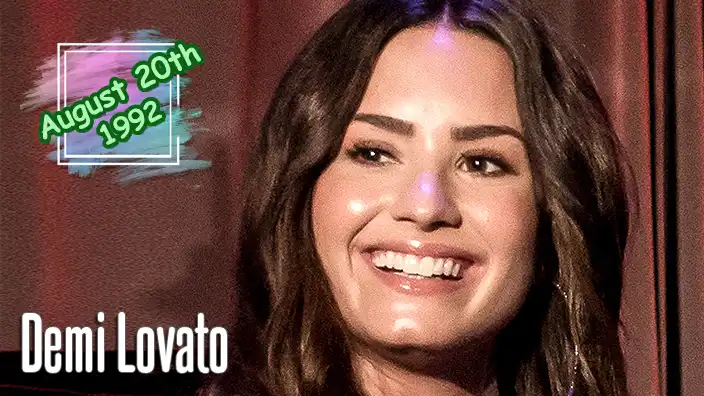
Demi Lovato has been performing professionally since childhood, which means most people were still figuring out homework while Lovato was already accumulating television credits. From Barney & Friends and Disney Channel stardom to Camp Rock, chart-topping albums, major pop hits and a career that has repeatedly reinvented itself, Lovato has spent more than two decades in the public eye. That is an impressive amount of show business before you even consider the microphones, movie sets, concert tours and enough hair-color changes to keep a salon permanently occupied.
August 20, 1992, in Albuquerque, New Mexico
Trivia
- One of Lovato's earliest professional roles was Angela on Barney & Friends.
- Lovato's breakthrough movie role was Mitchie Torres in Camp Rock.
- The 2009 album Here We Go Again became Lovato's first No. 1 album on the Billboard 200.
- Lovato served as a judge on The X Factor USA for two seasons.
- Lovato performed the U.S. national anthem at Super Bowl LIV in 2020.
- Details
- Category: Celebrity Birthdays - August
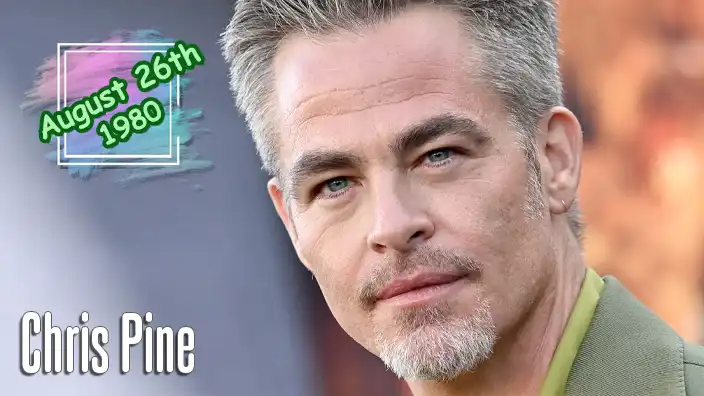
Chris Pine has commanded the Enterprise, fallen for Wonder Woman, dodged assassins, robbed banks and sung his way through a Disney kingdom. With those blue eyes doing a suspicious amount of the promotional work, Pine has spent two decades proving there is considerably more to him than looking exceptionally calm while something enormous explodes behind him.
August 26, 1980, in Los Angeles, California
Trivia
- Chris's father is actor Robert Pine.
- Actress Anne Gwynne was his grandmother.
- He studied English at UC Berkeley.
- He studied abroad in Leeds, England.
- Captain Kirk made him an international star.
- Poolman was his feature directing debut.
- Details
- Category: Celebrity Birthdays - August
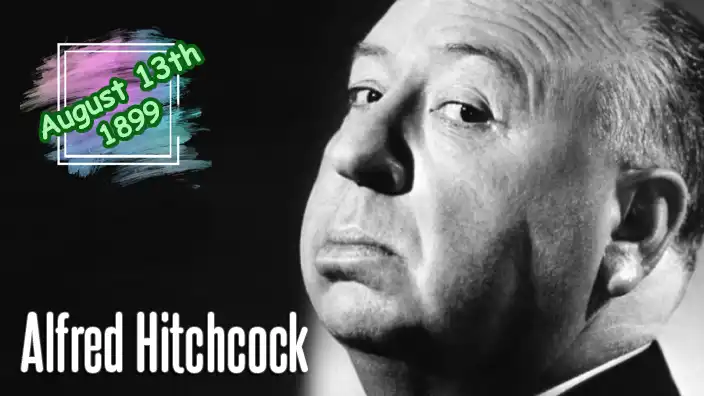
Few filmmakers have become as recognizable as the stars they directed, but Alfred Hitchcock managed it with little more than a dark suit, an unmistakable profile, a wonderfully dry voice and the occasional habit of wandering through his own movies. Over a career spanning six decades, Hitchcock helped reshape suspense cinema, directing more than 50 feature films and creating some of the most enduring images in movie history. Psycho, Rear Window, Vertigo, North by Northwest, The Birds and Rebecca remain landmarks of filmmaking, while Hitchcock himself became known around the world as the "Master of Suspense."
August 13, 1899, in London, England
April 29, 1980, in Bel Air, California
Trivia
- Hitchcock made cameo appearances in roughly 40 of his films.
- His cameos became a game for movie audiences.
- He sometimes placed his cameo early so viewers would stop looking for him.
- Rebecca won the Academy Award for Best Picture.
- Hitchcock was nominated five times for the Academy Award for Best Director.
- He never won a competitive Best Director Oscar.
- Shadow of a Doubt was one of his personal favorite films.

- Details
- Category: Celebrity Birthdays - August
Kim Petras has spent much of her career proving that subtle entrances are overrated. The German-born pop singer arrived with glossy hooks, unapologetic lyrics, dance-floor ambition and enough confidence to power a small European nation. Then came “Unholy,” the global smash with Sam Smith that took her to No. 1, won a Grammy and pushed Petras from cult-pop favorite to international headliner with the sort of efficiency usually associated with pressing a very large red button.
August 27, 1992, in Cologne, Germany
Trivia
- Her debut single arrived in 2017.
- Her fans are often called Bunheads.
- “Unholy” became her first Billboard Hot 100 No. 1.
- She won her first Grammy in 2023.
- She has collaborated with Sam Smith and Nicki Minaj.
- Horror inspired her Turn Off the Light project.

- Details
- Category: Celebrity Birthdays - August
LaKeith is the guy who could walk into your house unannounced, borrow your toaster, explain the meaning of life, and then leave you wondering if any of it actually happened — and you’d thank him for the experience.
August 12, 1991, in San Bernardino, California
Trivia
- Breakout Role: Short Term 12 (2013).
- TV Hit: Darius in Atlanta.
- Horror Landmark: Played Andre Logan King in Get Out.
- Award Recognition: Oscar-nominated for Judas and the Black Messiah.
- Genre Jumper: Moves effortlessly between comedy, drama, and surrealism.
From Our Marks Catelog
-

Sitting down at the dinner table, there's always that moment when you spot the mashed potatoes,...
-

Once upon a time, someone looked at tennis and thought, “This would be perfect if it involved less running,...
-

If you’re the kind of person who likes a little thrill with your meal, then one bite of that...
-

If you've ever scratched a dog's ears, rescued a turtle from the middle of the road, or apologized...
-
Who knew that creating a prehistoric masterpiece could lead to such existential questions? Like, did...
-

It's not uncommon to see a normally quiet neighborhood transform overnight into a glittering...

