Celebrity Birthdays - August

August birthdays are like the last cannonball into the summer pool — big, splashy, and a little bittersweet. School is looming, but August folks insist we squeeze every last drop of sunshine first.
Join us as we salute the stars who own the dog days of summer. They’re proof that even the hottest month can be cool when you know how to celebrate it.
- Details
- Category: Celebrity Birthdays - August
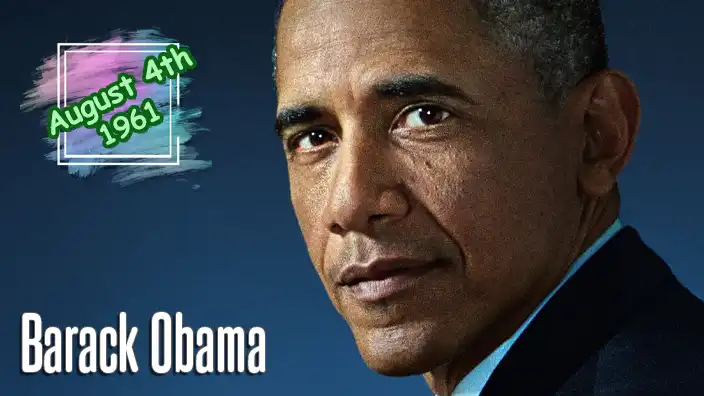
If you've ever wondered what it takes to become President of the United States, the answer apparently includes a law degree, extraordinary public speaking skills, remarkable composure under pressure, and the ability to smile politely while half the country insists you should have done something completely different. Barack Obama somehow managed to juggle world affairs, economic crises, and international diplomacy while still finding time to fill out a basketball bracket every March. That's either excellent time management or the world's most stressful hobby.
 August 4, 1961, in Honolulu, Hawaii

Trivia
- Graduated from Columbia University.
- his law degree from Harvard Law School.
- First African American president of the Harvard Law Review.
- Worked as a community organizer in Chicago.
- Served in the Illinois State Senate.
- Elected to the U.S. Senate in 2004.
- Awarded the Nobel Peace Prize in 2009.
- Signed the Affordable Care Act into law.
- Authorized the operation that killed Osama bin Laden.
- Enjoys playing basketball.
- Details
- Category: Celebrity Birthdays - August
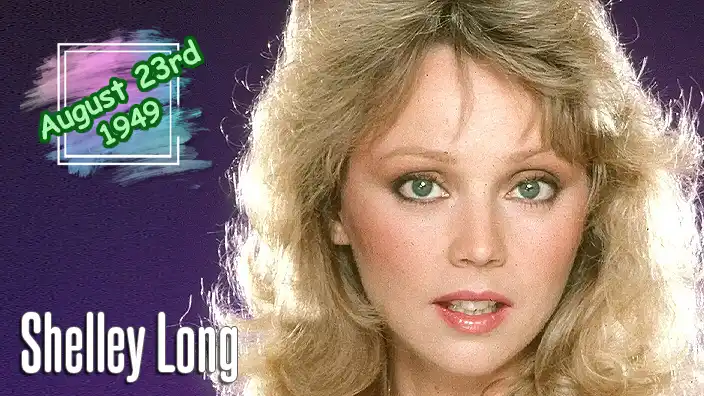
Shelley Long walked into a little Boston bar called Cheers as Diane Chambers and spent five seasons proving that ordering a drink can apparently require a working knowledge of literature, psychology and several French expressions. Sophisticated, stubborn and wonderfully capable of driving Sam Malone completely around the bend, Diane helped make Long one of television’s biggest comedy stars of the 1980s—and gave millions of viewers five years to argue over whether Sam and Diane should kiss, fight or simply stay at opposite ends of the bar.
 August 23, 1949, in Fort Wayne, Indiana
Trivia
- Long trained with Chicago's Second City.
- She played Diane Chambers for five seasons of Cheers.
- She won an Emmy for Cheers in 1983.
- She starred with Tom Hanks in The Money Pit.
- She played Phyllis Nefler in Troop Beverly Hills.
- Long portrayed Carol Brady in two Brady Bunch movies.
- She played DeDe Pritchett on Modern Family.
- Details
- Category: Celebrity Birthdays - August
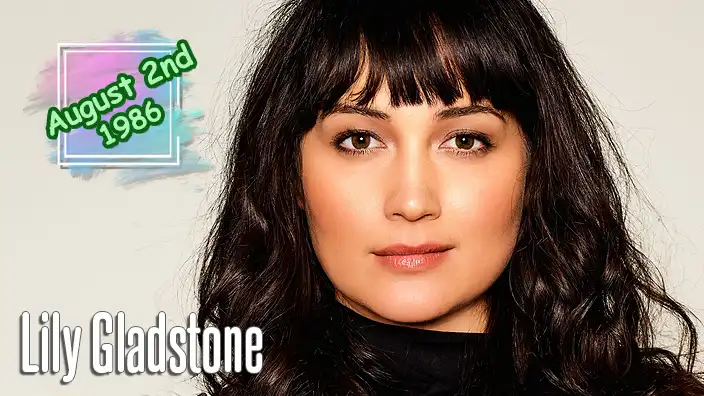
Every now and then Hollywood discovers an actor who seems to appear out of nowhere and quietly reminds everyone that subtle performances can be just as unforgettable as superhero capes and exploding buildings. Lily Gladstone has a remarkable ability to say more with a thoughtful glance than some actors manage with three pages of dialogue. It's the kind of talent that makes audiences lean in instead of reaching for the popcorn.
August 2, 1986, in Kalispell, Montana
Trivia
- Has Blackfeet and Nez Perce heritage.
- Graduated from the University of Montana with a BFA in Acting.
- Earned widespread acclaim for Certain Women (2016).
- Starred as Mollie Burkhart in Killers of the Flower Moon.
- Won the Golden Globe for Best Actress – Motion Picture Drama.
- Became the first Indigenous performer to win that Golden Globe category.
- Received an Academy Award nomination for Best Actress.
- Appeared alongside Leonardo DiCaprio and Robert De Niro.
- Starred in the acclaimed independent film First Cow.
- Appeared in the television series Billions.
- Details
- Category: Celebrity Birthdays - August
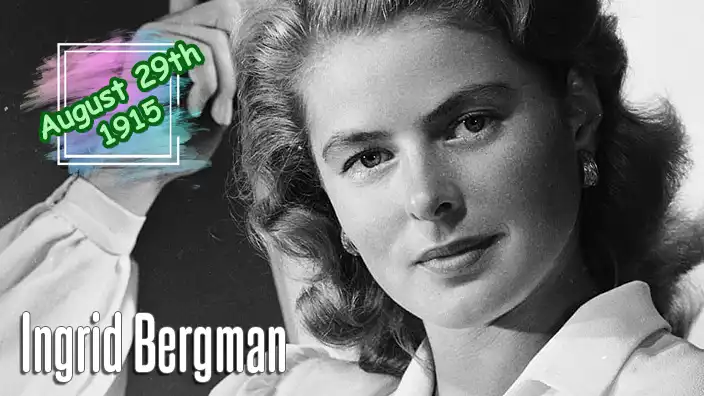
Ingrid Bergman brought intelligence, warmth and extraordinary natural presence to some of cinema's greatest films, won three Academy Awards and gave us Ilsa Lund in Casablanca—which means generations of viewers have been confidently misquoting a line she never actually said.
August 29, 1915, in Stockholm, Sweden
 August 29, 1982, in London, England
Trivia
- Ingrid won three Academy Awards.
- Played Ilsa Lund in Casablanca.
- Made three films with Alfred Hitchcock.
- Mother of actress Isabella Rossellini.
- Won Oscar, Emmy and Tony awards.
- Her final role was Golda Meir.
- Details
- Category: Celebrity Birthdays - August
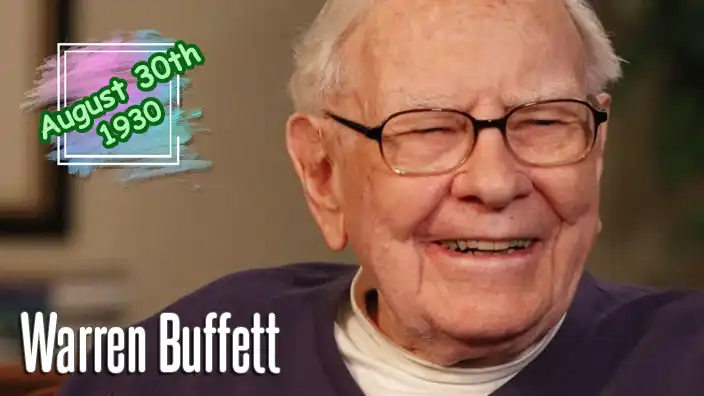
Warren Buffett has spent a lifetime proving that you can become one of history's most successful investors without shouting into three monitors, buying a yacht shaped like another yacht, or describing every financial decision as "disruptive." The Oracle of Omaha built his reputation with patience, common sense and an extraordinary ability to recognize a good business—and on August 30, the man who made compound interest look almost exciting celebrates another birthday.
August 30, 1930, in Omaha, Nebraska
Trivia
- Warren bought his first stock at age 11.
- Studied under Benjamin Graham at Columbia.
- Took control of Berkshire Hathaway in 1965.
- Has lived for decades in a house bought in 1958.
- Charlie Munger was his longtime business partner.
- Has pledged over 99% of his wealth to philanthropy.
- Stepped down as Berkshire CEO at the end of 2025.

- Details
- Category: Celebrity Birthdays - August
Bruce is the guy you’d trust to talk down a hostage-taker, pilot a spaceship through an asteroid field, and still remember your coffee order — all before lunch. And he’d do it with that calm, reassuring tone that makes you think, “Yeah, we’re gonna be fine,” even if there’s an alien invasion happening outside.
August 12, 1956, in Rouyn-Noranda, Quebec, Canada
Trivia
- Presidential Role: Played JFK in Thirteen Days (2000).
- Sci-Fi Captain: Christopher Pike in Star Trek (2009) and Star Trek Into Darkness (2013).
- Versatile Star: From courtroom dramas to psychological thrillers.
- Creepy Credit: Gerald Burlingame in Gerald’s Game.
- Voice Work: Provided Batman’s voice in multiple animated projects.
- Details
- Category: Celebrity Birthdays - August
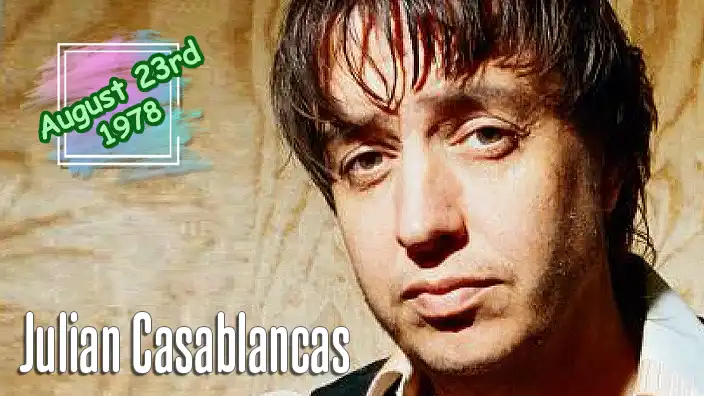
Julian Casablancas helped make rumpled hair, battered guitars and looking mildly unimpressed with absolutely everything fashionable again. As the unmistakable voice and principal early songwriter of The Strokes, he helped kick open the garage-rock revival of the early 2000s with Is This It. More than two decades later, he is still making music, experimenting with The Voidz and demonstrating that apparently there really are several hundred different ways to look cool while barely moving toward a microphone.
August 23, 1978, in New York City
Trivia
- Julian met Albert Hammond Jr. at school in Switzerland.
- He wrote most of The Strokes' early songs.
- His solo debut was Phrazes for the Young.
- He sang on Daft Punk's “Instant Crush.”
- He fronts the experimental band The Voidz.
- The Strokes won their first Grammy in 2021.
- Details
- Category: Celebrity Birthdays - August
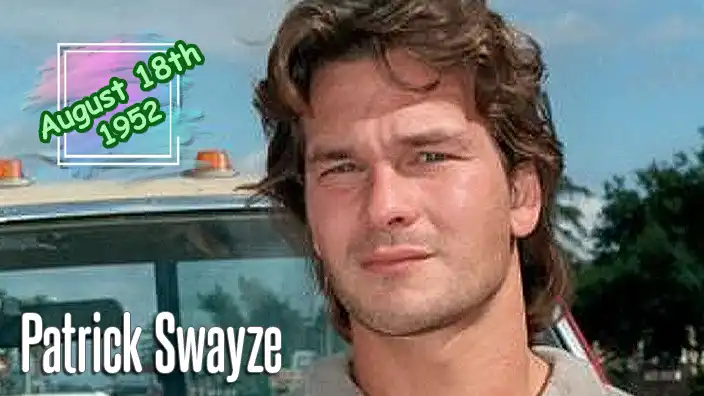
Patrick Swayze could dance ballet, ride horses, handle an action scene, sing a hit song and convince an entire generation that carrying a watermelon was a perfectly reasonable way to arrive at a party. From Dirty Dancing and Ghost to Road House and Point Break, Swayze combined the toughness of an action star with the grace of a professional dancer and an unusually convincing sensitive side. Hollywood has produced plenty of tough guys and plenty of romantic leading men, but very few could throw somebody through a window and then perform a perfectly respectable pirouette.
August 18, 1952, in Houston, Texas
September 14, 2009, in Los Angeles, California
Trivia
- His mother, Patsy Swayze, was a dancer, choreographer and dance instructor who taught him from an early age.
- Swayze trained at both the Harkness Ballet School and Joffrey Ballet School in New York.
- One of his earliest professional jobs was playing Prince Charming in Disney on Parade.
- He co-wrote and sang "She's Like the Wind," which reached No. 3 on the Billboard Hot 100.
- Swayze received three Golden Globe acting nominations, for Dirty Dancing, Ghost and To Wong Foo, Thanks for Everything! Julie Newmar.
- IMDb credits him with 51 acting credits as well as soundtrack, choreography and producing work.
- He and Lisa Niemi were married for more than 34 years, remaining together until his death in 2009.
- Details
- Category: Celebrity Birthdays - August
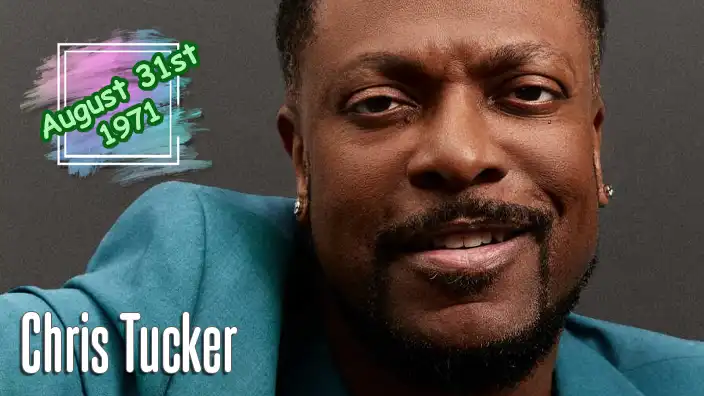
Chris Tucker turned a lightning-fast delivery, a remarkably elastic voice and enough nervous energy to power a small city into one of the most recognizable comedy careers of the 1990s. From the permanently unemployed Smokey in Friday to Detective James Carter in Rush Hour, Tucker mastered the art of entering a perfectly manageable situation and making it considerably louder within seconds.
August 31, 1971, in Atlanta, Georgia
Trivia
- Tucker grew up in Decatur, Georgia.
- He is the youngest of six children.
- Def Comedy Jam helped launch his career.
- He played Smokey in Friday.
- Ruby Rhod appeared in The Fifth Element.
- Jackie Chan became his Rush Hour partner.
- He appeared in Michael Jackson's “You Rock My World” video.
- Details
- Category: Celebrity Birthdays - August
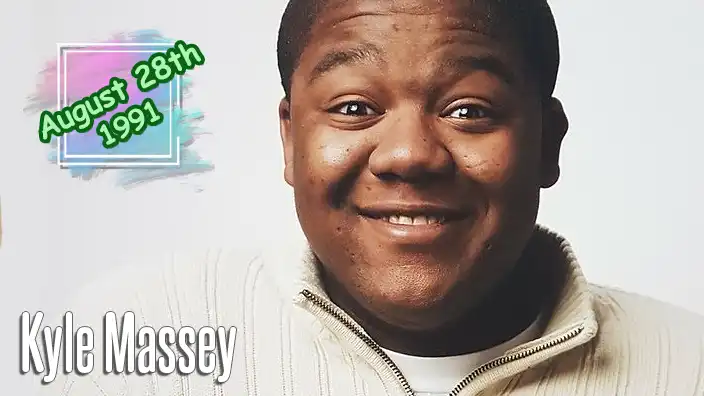
Kyle Massey became a Disney Channel favorite as Cory Baxter on That's So Raven, playing the younger brother who could usually be relied upon to spot a money-making opportunity—and considerably less reliably be expected to think it through. The character proved popular enough to earn his own series, sending Cory all the way to the White House, where absolutely nothing could possibly go wrong.
August 28, 1991, in Atlanta, Georgia
Trivia
- He played Cory Baxter twice.
- He voiced Milo in Fish Hooks.
- He competed on Dancing with the Stars.
- He finished the competition as runner-up.
- Details
- Category: Celebrity Birthdays - August
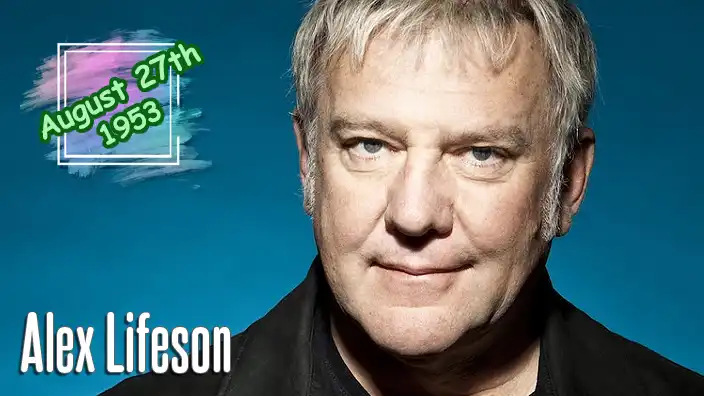
Alex Lifeson spent more than four decades playing guitar in Rush alongside a bassist who also played keyboards with his feet and a drummer whose kit occasionally appeared to require its own building permit. Somehow, Lifeson still found room in the music. As co-founder and guitarist of one of rock's most technically accomplished bands, he helped turn three Canadian musicians into arena-filling legends, Rock and Roll Hall of Fame inductees and the creators of enough complicated time signatures to keep generations of air drummers thoroughly confused.
August 27, 1953, in Fernie, Canada
Trivia
- Lifeson's parents were Serbian immigrants.
- He co-founded Rush in 1968.
- His first instrument was the viola.
- He released the solo album Victor in 1996.
- Rush entered the Rock Hall in 2013.
- His induction speech consisted almost entirely of "blah."

- Details
- Category: Celebrity Birthdays - August
Harold Perrineau is the only actor who can go from quoting Shakespeare to fighting smoke monsters without batting an eye. He’s played a prison philosopher, a desperate dad, a digital pilot in The Matrix, and now a small-town sheriff in a nightmare—basically, if reality’s falling apart, Harold’s already there with a flashlight and a monologue. And yes, he still deserves a vacation from that island.
August 7, 1963, in Brooklyn, New York
Trivia
- Musical Talent: Perrineau has a background in music and even released his own album, Seeker, showcasing yet another layer of his creative side.
- Trinity, Meet Link: He played Link in The Matrix Reloaded and Revolutions, joining the ranks of actors who've delivered lines while dodging CGI.
- Father Figure: In real life, he’s a proud dad to three daughters, including actress Aurora Perrineau (Prodigal Son, Jem and the Holograms).
- Shakespearean Roots: His take on Mercutio is still one of the most stylish and memorable to ever grace a modern adaptation.
- Details
- Category: Celebrity Birthdays - August
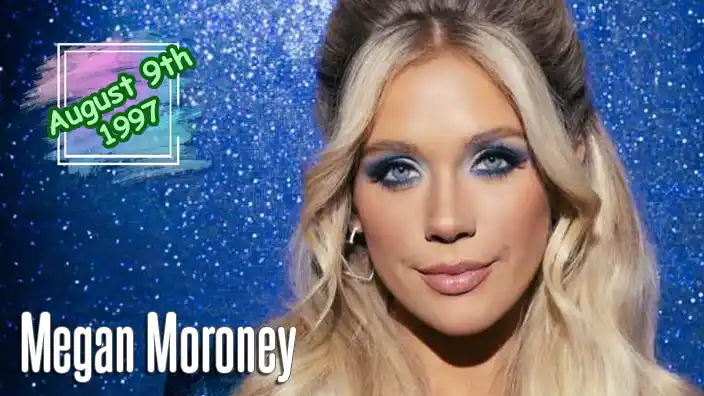
If heartbreak had a spokesperson in glitter boots, it’d be Megan Moroney. She sings like she’s been ghosted by every man in a 200-mile radius, then turned their poor choices into radio gold. Megan's music is like a therapy session—if your therapist wore rhinestones and handed you whiskey instead of tissues. She’s proof that you can be both emotionally wrecked and fabulously well-dressed while climbing the country charts.
October 9, 1997, in Savannah, Georgia
Trivia
- From Numbers to Notes: She has a degree in accounting. Which explains why her heartbreak songs are always so well-balanced.
- Accidental Icon: Her vintage-inspired fashion sense (especially those signature curls and boots) has sparked its own wave of copycats.
- Famous Co-Sign: She’s opened for big names like Brooks & Dunn and has been praised by critics for bringing emotional depth to modern country radio.
- No Rookie Moves: Her debut single hit platinum. Her second album? Already in the works. Megan came to play.

- Details
- Category: Celebrity Birthdays - August
George Hamilton is so tan he could walk into a Home Depot, stand in the paint aisle, and people would ask, “What shade is that?” He’s the human embodiment of “eternal summer,” and the only man who could make Count Dracula look like he vacations in the Bahamas.
August 12, 1939, in Memphis, Tennessee
Trivia
- Golden Glow: Famous for his perpetual tan.
- Award Winner: Golden Globe for Crime and Punishment U.S.A.
- Comedy King: Love at First Bite, Zorro, The Gay Blade.
- TV Regular: Frequent talk show guest and reality TV appearances.
- Style Icon: Known for impeccable suits and old-school Hollywood charm.
- Details
- Category: Celebrity Birthdays - August
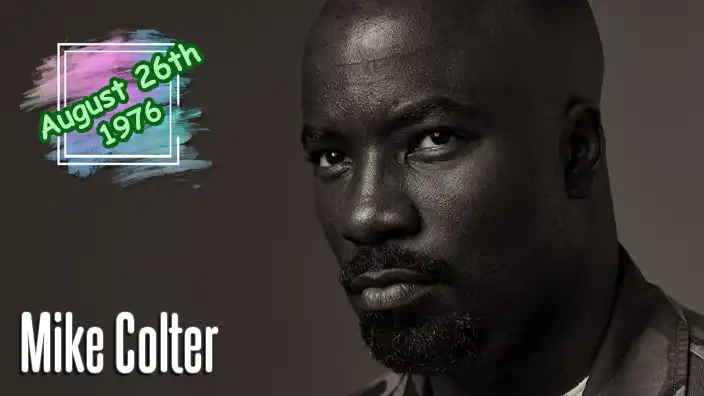
Mike Colter has played lawyers, criminals, soldiers, priests and one exceptionally durable superhero who can stop bullets with his skin. At 6-foot-3 and equipped with a voice that could probably convince a parking meter to waive the fine, Colter has built a career around commanding the screen without needing to make much noise about it.
August 26, 1976, in Columbia, South Carolina
Trivia
- Mike stands just over 6-foot-3.
- A Soldier's Story inspired him to act.
- He earned an MFA from Rutgers University.
- He played Big Willie Little in Million Dollar Baby.
- Luke Cage first appeared in Jessica Jones.
- He received two Critics Choice nominations for Evil.

- Details
- Category: Celebrity Birthdays - August
Eric Johnson is the guy who could win you over with a smile—or sell you out to the villain five minutes later. He’s got the face of a superhero, the intensity of a supervillain, and the acting range of someone who could convincingly play both in the same episode. Honestly, if he ever walks into a room holding a file folder and smirking... run. Or stay. It depends on the lighting.
August 7, 1979, in Edmonton, Canada
Trivia
- Started Young: Eric’s acting career began at age 9 with a role in the TV film Legends of the Fall, where he played a young Brad Pitt. Not a bad start.
- Voice Work: He’s done voice acting for video games and animation, proving that even when you don’t see him, you might still hear that unmistakable delivery.
- Canadian Pride: Johnson has remained close to his roots, filming many of his roles in Canada and supporting local productions.
- Family Man: He’s married to writer-producer Adria Budd and is a proud dad, balancing career with family life.
- Details
- Category: Celebrity Birthdays - August
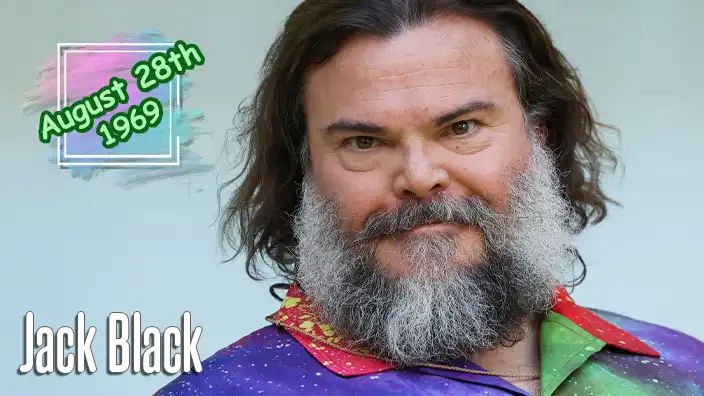
Jack Black has built a career by approaching acting, comedy and rock music with roughly the same amount of restraint normally associated with an unsupervised fireworks display. Whether he is teaching children to rock, wrestling in stretchy pants or voicing a noodle-loving panda, subtlety may occasionally take the day off, but entertainment most certainly does not.
August 28, 1969, in Santa Monica, California
Trivia
- Both of his parents were satellite engineers.
- He attended UCLA.
- He performed with The Actors' Gang.
- Tenacious D formed with Kyle Gass.
- He voices Po in Kung Fu Panda.
- Tenacious D won a Grammy in 2015.
- Details
- Category: Celebrity Birthdays - August
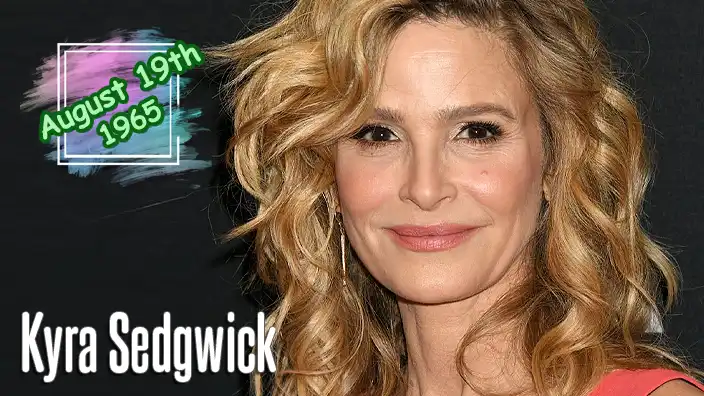
Kyra Sedgwick spent years building an impressive career in movies, television and theater before discovering that the quickest route to television immortality involved adopting a Southern accent, interrogating murder suspects and keeping an emergency supply of chocolate within reach. As Deputy Chief Brenda Leigh Johnson on The Closer, Sedgwick could politely thank a suspect for his cooperation and somehow make the poor fellow realize that prison was probably next.
August 19, 1965, in New York City
Trivia
- She met future husband Kevin Bacon while they were working on Lemon Sky; they married in 1988.
- Sedgwick and Bacon discovered through Finding Your Roots that they are ninth cousins once removed.
- She played Brenda Leigh Johnson in 109 episodes of The Closer between 2005 and 2012.
- Her performance in The Closer earned her both a Golden Globe and a Primetime Emmy Award.
- She received the 2,384th star on the Hollywood Walk of Fame in 2009.
- Her directorial debut Story of a Girl earned her a Directors Guild of America nomination.
- Sedgwick later showed her comic side as Madeline Wuntch, Captain Holt's gloriously antagonistic rival on Brooklyn Nine-Nine.
- Details
- Category: Celebrity Birthdays - August
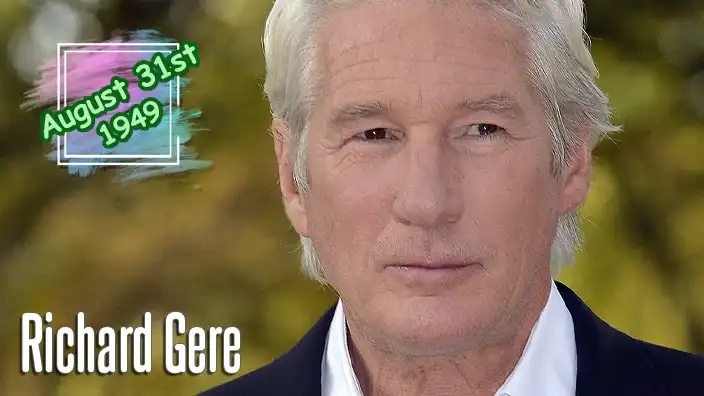
Richard Gere became a Hollywood leading man by wearing an impressive number of expensive suits, sweeping Julia Roberts off her feet in Pretty Woman and somehow making audiences believe that joining the Navy could end with Debra Winger waiting outside the factory. Beneath the movie-star image, however, is an actor whose career has ranged from musicals and romantic comedies to crime dramas, political thrillers and independent films for more than five decades.
August 31, 1949, in Philadelphia, Pennsylvania
Trivia
- Gere attended college on a gymnastics scholarship.
- He played Danny Zuko in Grease onstage.
- American Gigolo made him a major star.
- He reunited with Julia Roberts in Runaway Bride.
- Gere performed his own singing in Chicago.
- He won a Golden Globe for Chicago.
- Details
- Category: Celebrity Birthdays - August
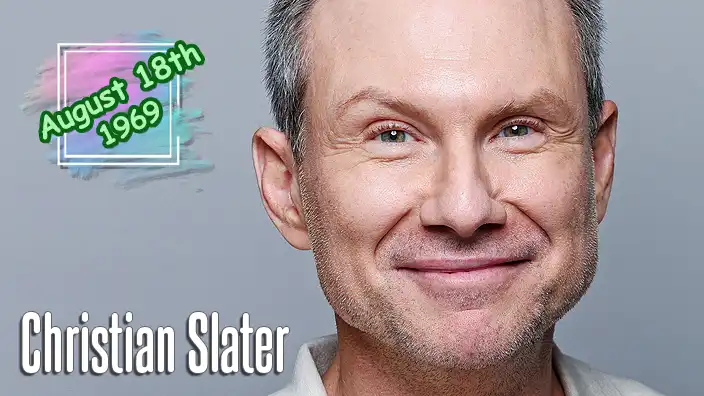
Christian Slater possesses one of those voices that could probably make reading the instructions for a dishwasher sound slightly dangerous. After breaking through as the rebellious Jason "J.D." Dean in Heathers, Slater became one of the most recognizable young actors of the late 1980s and 1990s, appearing in Pump Up the Volume, Robin Hood: Prince of Thieves, True Romance and Interview with the Vampire. Decades later, Mr. Robot introduced him to another generation and finally brought him a Golden Globe.
August 18, 1969, in New York City
Trivia
- He began acting professionally as a child and appeared on One Life to Live at about eight years old.
- His mother, Mary Jo Slater, became a prominent casting executive in film and television.
- Slater made his Broadway debut as a child in The Music Man.
- His performance as J.D. in Heathers helped turn the film into an enduring cult classic.
- He donated his salary from Interview with the Vampire to charities associated with River Phoenix after replacing the late actor.
- Slater won a Golden Globe in 2016 for his performance in Mr. Robot.
- Details
- Category: Celebrity Birthdays - August
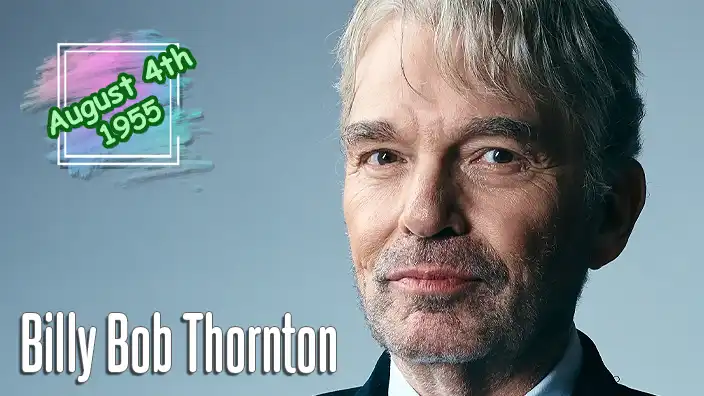
Some actors become famous for playing one unforgettable character. Billy Bob Thornton looked at that idea, shrugged, and decided to play just about everybody instead. From quiet small-town men to eccentric masterminds, grumpy antiheroes to unforgettable villains, he's built a career that keeps audiences guessing. Throw in an Academy Award, a successful music career, directing, writing, and enough dry wit to fill a dozen interviews, and you've got one of Hollywood's most distinctive talents.
August 4, 1955, in Hot Springs, Arkansas
Trivia
- Won the Academy Award for Best Adapted Screenplay for Sling Blade.
- Received an Oscar nomination for Best Actor for Sling Blade.
- Wrote, directed, and starred in Sling Blade.
- Starred in Bad Santa.
- Appeared in Armageddon.
- Starred in Monster's Ball.
- Played Billy McBride in Goliath.
- Won a Golden Globe Award for Goliath.
- Is also a successful musician.
- Performs with the band The Boxmasters.
- Has worked as an actor, writer, director, and producer.
From Our Marks Catelog
-

Sitting down at the dinner table, there's always that moment when you spot the mashed potatoes,...
-

Once upon a time, someone looked at tennis and thought, “This would be perfect if it involved less running,...
-

If you’re the kind of person who likes a little thrill with your meal, then one bite of that...
-

If you've ever scratched a dog's ears, rescued a turtle from the middle of the road, or apologized...
-
Who knew that creating a prehistoric masterpiece could lead to such existential questions? Like, did...
-

It's not uncommon to see a normally quiet neighborhood transform overnight into a glittering...

