Celebrity Birthdays - August

August birthdays are like the last cannonball into the summer pool — big, splashy, and a little bittersweet. School is looming, but August folks insist we squeeze every last drop of sunshine first.
Join us as we salute the stars who own the dog days of summer. They’re proof that even the hottest month can be cool when you know how to celebrate it.
- Details
- Category: Celebrity Birthdays - August
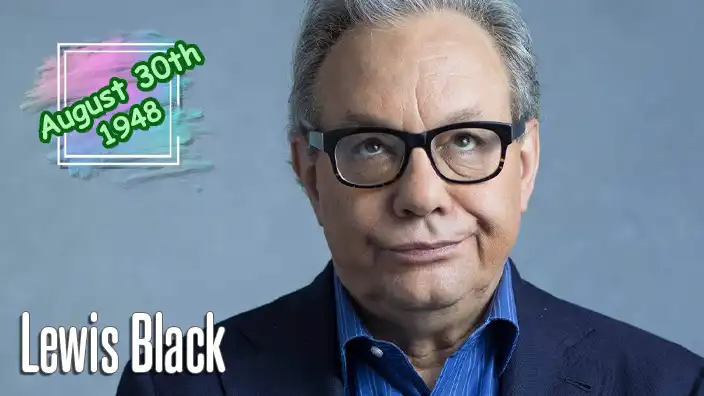
Lewis Black has built a career by saying what millions of people are thinking, except considerably louder, with more finger-pointing and the distinct possibility that a blood vessel may resign halfway through the sentence. Born August 30, 1948, the comedian, actor and playwright turned brilliantly controlled outrage into an art form—and somehow made yelling at politics, bureaucracy and human stupidity one of the funniest jobs in America.
 August 30, 1948, in Washington, D.C.

Trivia
- Lewis earned an MFA from the Yale School of Drama.
- Began appearing on The Daily Show in 1996.
- His recurring segment is called Back in Black.
- He has written dozens of plays.
- He has won two Grammy Awards.
- Voiced Anger in Pixar's Inside Out.
- Returned as Anger in Inside Out 2.
- Details
- Category: Celebrity Birthdays - August
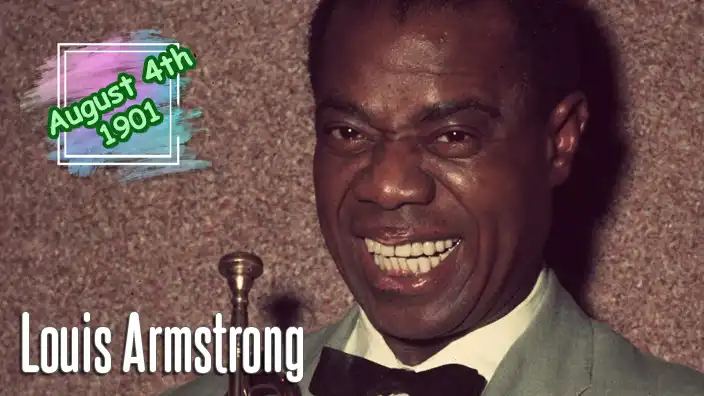
Some musicians quietly change the course of history. Louis Armstrong did it while smiling, swinging, and making a trumpet sound like it was having the time of its life. If music had a passport office, Armstrong would probably have stamped every genre that followed him. He didn't just play jazz—he gave it a bigger voice, a brighter personality, and enough energy to make audiences tap their feet before they even realized they were doing it.
August 4, 1901, in New Orleans, Louisiana
 July 6, 1971, in Queens, New York
Trivia
- Learned music while at the Colored Waif's Home.
- Began his professional career playing the cornet.
- Mentored by jazz great Joe "King" Oliver.
- Revolutionized jazz through solo improvisation.
- Helped popularize scat singing.
- Played both trumpet and cornet professionally.
- "Hello, Dolly!" reached No. 1 in 1964.
- Replaced The Beatles at the top of the Billboard chart.
- "What a Wonderful World" became one of the world's most beloved songs.
- Appeared in numerous Hollywood films.
- Performed around the world for decades.

- Details
- Category: Celebrity Birthdays - August
Eme Ikwuakor is the kind of guy who could deliver a motivational speech that makes you want to conquer your fears, climb a mountain, and finally clean out your garage — all before lunch. And if he’s in character while doing it, you’ll probably salute without realizing why.
August 13, 1984, in Wheat Ridge, Colorado
Trivia
- Marvel Muscle: Played Gorgon in Inhumans.
- Athlete to Actor: Former track-and-field standout at University of Colorado.
- Sci-Fi Cred: Appeared in Extant, Colony, and Moonfall.
- Theater Roots: Performed in multiple stage productions before hitting TV.
- Marketing Degree: Yes, he could still sell you something… if he wanted to.

- Details
- Category: Celebrity Birthdays - August
Meagan Good is the kind of actress who could walk into a scene with three lines and walk out with the whole movie. She’s got that “cool older cousin energy” that makes you want to borrow her clothes and her life advice. Honestly, if confidence had a face, it’d probably look like Meagan giving you side-eye and saying, “You’re really wearing that?”
 August 8, 1981, Panorama City, LA, California
Trivia
- Young Prodigy: Meagan began acting in commercials at age four and had appeared in over 60 by the time she was a teen.
- Directorial Debut: She directed the 2022 film If Not Now, When?, co-starring and co-producing alongside longtime friends.
- Author: She co-wrote The Wait with her then-husband, DeVon Franklin, a best-selling relationship book about love, faith, and timing.
- Fashion Icon: Meagan’s style has long been admired for its boldness, edge, and individuality. Whether on the red carpet or in character, she always turns heads.
- Details
- Category: Celebrity Birthdays - August
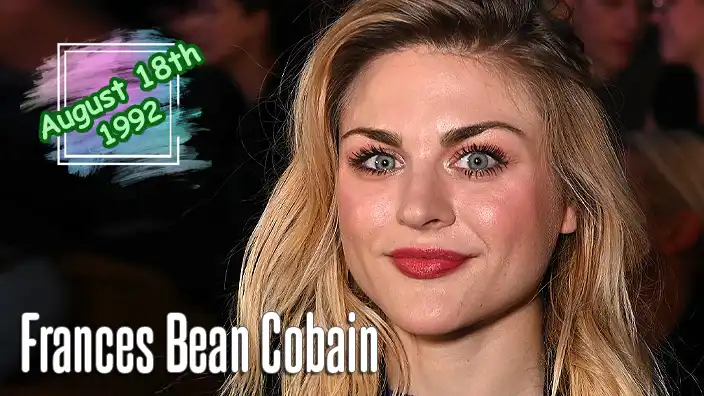
Frances Bean Cobain was born on August 18, 1992, into a family for which keeping a low profile was never going to be particularly easy. As the only child of Nirvana frontman Kurt Cobain and Hole singer Courtney Love, she arrived with rock-and-roll history already waiting outside the maternity ward. Yet rather than simply becoming a professional celebrity offspring, Cobain has built an identity around visual art, modeling and creative projects of her own, while carefully deciding how much of her famous family history belongs to the public.
August 18, 1992, in Los Angeles, California
Trivia
- R.E.M. singer Michael Stipe is her godfather.
- She first exhibited artwork under the pseudonym "Fiddle Tim" rather than using her famous surname.
- Cobain served as an executive producer of Kurt Cobain: Montage of Heck in 2015.
- She surprised many Nirvana fans in 2015 by admitting that she doesn't particularly like Nirvana's music.
- She married Riley Hawk, son of skateboarder Tony Hawk, in 2023.
- Frances and Riley welcomed their son, Ronin Walker Cobain Hawk, in September 2024.
- Details
- Category: Celebrity Birthdays - August
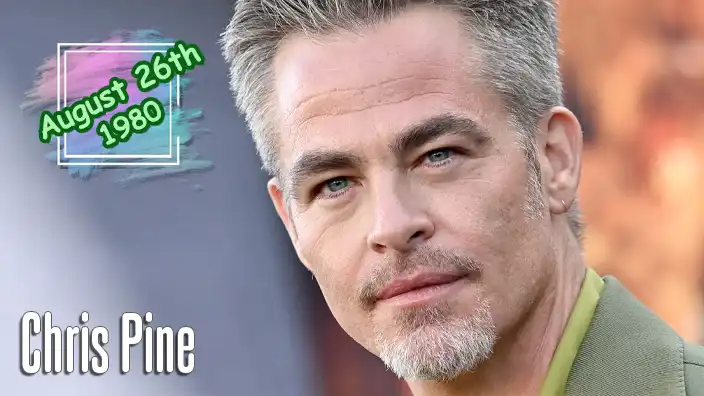
Chris Pine has commanded the Enterprise, fallen for Wonder Woman, dodged assassins, robbed banks and sung his way through a Disney kingdom. With those blue eyes doing a suspicious amount of the promotional work, Pine has spent two decades proving there is considerably more to him than looking exceptionally calm while something enormous explodes behind him.
August 26, 1980, in Los Angeles, California
Trivia
- Chris's father is actor Robert Pine.
- Actress Anne Gwynne was his grandmother.
- He studied English at UC Berkeley.
- He studied abroad in Leeds, England.
- Captain Kirk made him an international star.
- Poolman was his feature directing debut.
- Details
- Category: Celebrity Birthdays - August
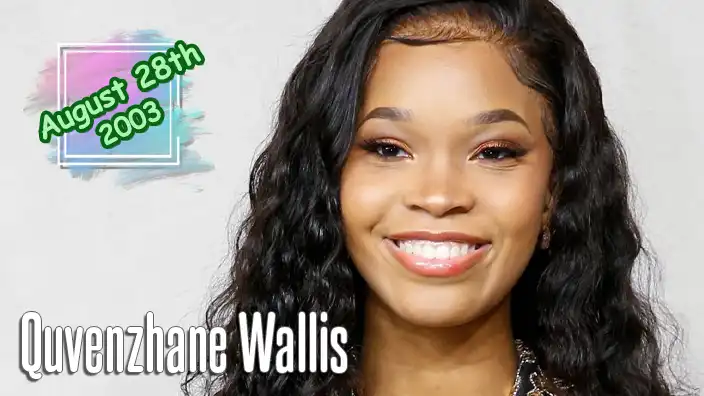
Quvenzhané Wallis made her film debut in Beasts of the Southern Wild and promptly became the youngest Best Actress nominee in Academy Awards history. Most six-year-olds are concentrating on reading, playground politics and negotiating later bedtimes; Wallis was busy launching a Hollywood career that would take her from an independent Louisiana film to Annie, major television roles and children's books.
August 28, 2003, in Houma, Louisiana
Trivia
- Beasts was her film debut.
- She played Hushpuppy at age six.
- She became an Oscar nominee at nine.
- She remains the youngest Best Actress nominee.
- She starred as Annie in 2014.
- Wallis is also a children's author.

- Details
- Category: Celebrity Birthdays - August
Casey could read a grocery list and make you cry halfway through “eggs.” He’s the human equivalent of a slow-burn candle — you don’t notice him at first, but suddenly he’s set the entire emotional atmosphere, and now you’re rethinking your life choices.
August 12, 1975, in Falmouth, Massachusetts
Trivia
- Oscar Winner: Best Actor for Manchester by the Sea (2016).
- Indie Darling: Known for quiet, intense performances.
- Breakthrough: The Assassination of Jesse James by the Coward Robert Ford.
- Early Days: Appeared in Good Will Hunting and the Ocean’s trilogy.
- Hidden Talent: Can make awkward pauses feel like Shakespeare.

- Details
- Category: Celebrity Birthdays - August
Ashley Jensen is the TV friend you didn’t know you needed—the one who’ll help you through a crisis, make you laugh about it, and then accidentally start a whole new mess just to keep life interesting.
August 11, 1969, in Annan, Scotland
Trivia
- Breakout Role: Maggie in Extras (2005–2007).
- Stateside Success: Christina in Ugly Betty.
- Holiday Favorite: Voice of Bryony in Arthur Christmas.
- Mystery Maven: Star of Agatha Raisin.
- Scottish Roots: Born and raised in Annan, Dumfriesshire.
- Details
- Category: Celebrity Birthdays - August
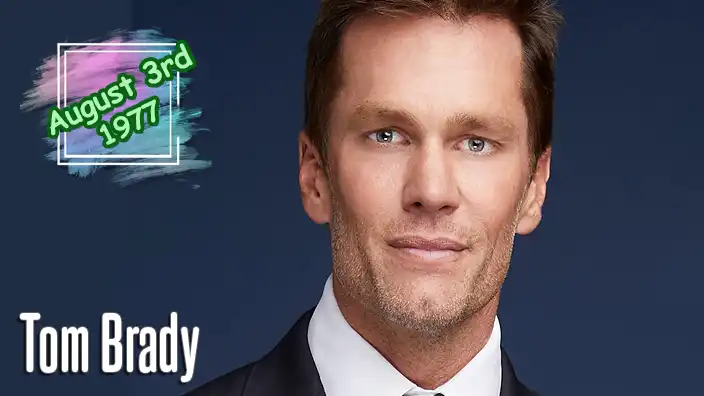
Most football players dream of winning one Super Bowl. Tom Brady apparently treated that as a warm-up exercise. By the time the confetti stopped falling for the seventh time, statisticians had run out of ways to explain what he was doing, opposing defenses had run out of aspirin, and fans had simply accepted that if Brady had the football in the fourth quarter, the game probably wasn't over yet.
August 3, 1977, in San Mateo, California
Trivia
- Played college football at the University of Michigan.
- selected 199th overall in the 2000 NFL Draft.
- Spent 20 seasons with the New England Patriots.
- Finished his career with the Tampa Bay Buccaneers.
- Won a record seven Super Bowl championships.
- Earned five Super Bowl MVP Awards.
- Won three NFL Most Valuable Player Awards.
- Was selected to 15 Pro Bowls.
- Holds numerous NFL career passing records.
- Defeated Patrick Mahomes and the Kansas City Chiefs in Super Bowl LV.
- Is widely considered the greatest quarterback in NFL history.
- Details
- Category: Celebrity Birthdays - August
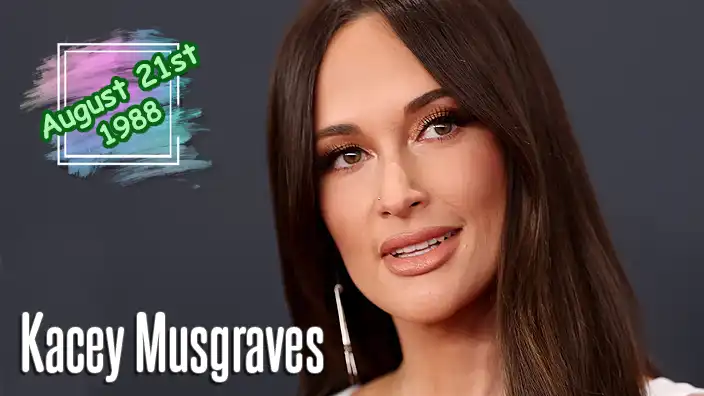
Kacey Musgraves grew up in a tiny Texas town, started writing songs when she was eight, survived a reality television competition without actually winning it, and eventually collected enough Grammy Awards to make seventh place look like an unusually clever career strategy. Along the way, she discovered that country music doesn't necessarily require staying inside the lines—particularly when the person holding the pencil has absolutely no intention of doing so.
August 21, 1988, in Golden, Texas
Trivia
- Musgraves co-wrote Miranda Lambert's hit “Mama's Broken Heart.”
- Her major-label debut, Same Trailer Different Park, won the Grammy for Best Country Album.
- Golden Hour won Album of the Year at the 2019 Grammy Awards and swept all four categories in which Musgraves was nominated that night.
- Her Zach Bryan collaboration “I Remember Everything” gave Musgraves her first number-one single on the Billboard Hot 100.
- Through the 2026 Grammy Awards, Musgraves has won eight Grammys from 17 nominations.
- Details
- Category: Celebrity Birthdays - August
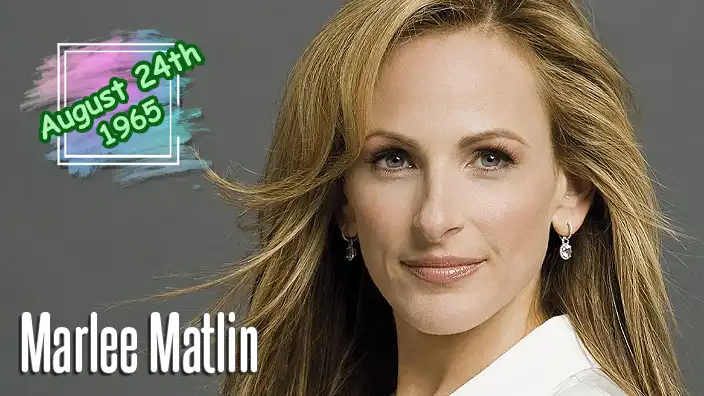
Marlee Matlin began her movie career by winning the Academy Award for Best Actress, apparently deciding that easing into Hollywood was unnecessary. From Children of a Lesser God to The West Wing and CODA, she has spent decades proving that talent doesn't require sound—and neither does a thoroughly impressive career.
August 24, 1965, in Morton Grove, Illinois
Trivia
- She became deaf at 18 months old.
- She began acting at seven.
- Her first movie was Children of a Lesser God.
- She won an Oscar for that debut performance.
- She was 21 when she won Best Actress.
- She competed on Dancing with the Stars.
- Details
- Category: Celebrity Birthdays - August
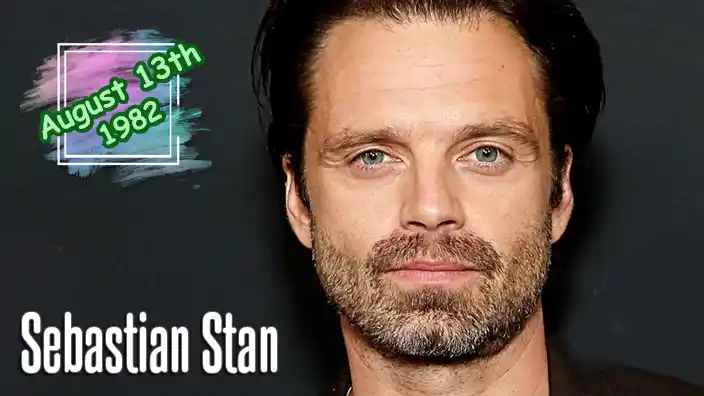
Sebastian Stan is the kind of actor who could play a brainwashed assassin, a romantic lead, and a morally questionable ice skater all before lunch — and somehow make you root for all three. If you ever meet him, just remember: compliment the hair, avoid mentioning the arm, and never, ever challenge him to a staring contest.
August 13, 1982, in Constanța, Romania
Trivia
- Marvel Mainstay: Bucky Barnes / Winter Soldier in multiple MCU films and The Falcon and the Winter Soldier.
- Stage Roots: Performed in several New York theater productions early in his career.
- Chameleon Actor: From Gossip Girl to I, Tonya, he can play both swoon-worthy and scary.
- Accent Shapeshifter: Can switch between Romanian, Russian, and flawless American at will.
- Convention Favorite: Known for being gracious and witty with fans.
- Details
- Category: Celebrity Birthdays - August
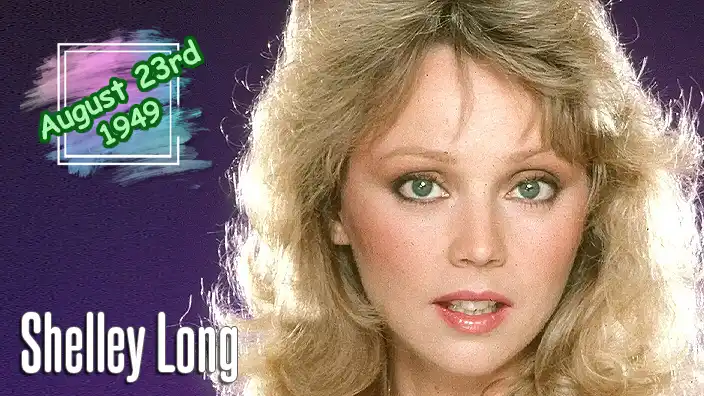
Shelley Long walked into a little Boston bar called Cheers as Diane Chambers and spent five seasons proving that ordering a drink can apparently require a working knowledge of literature, psychology and several French expressions. Sophisticated, stubborn and wonderfully capable of driving Sam Malone completely around the bend, Diane helped make Long one of television’s biggest comedy stars of the 1980s—and gave millions of viewers five years to argue over whether Sam and Diane should kiss, fight or simply stay at opposite ends of the bar.
August 23, 1949, in Fort Wayne, Indiana
Trivia
- Long trained with Chicago's Second City.
- She played Diane Chambers for five seasons of Cheers.
- She won an Emmy for Cheers in 1983.
- She starred with Tom Hanks in The Money Pit.
- She played Phyllis Nefler in Troop Beverly Hills.
- Long portrayed Carol Brady in two Brady Bunch movies.
- She played DeDe Pritchett on Modern Family.
- Details
- Category: Celebrity Birthdays - August
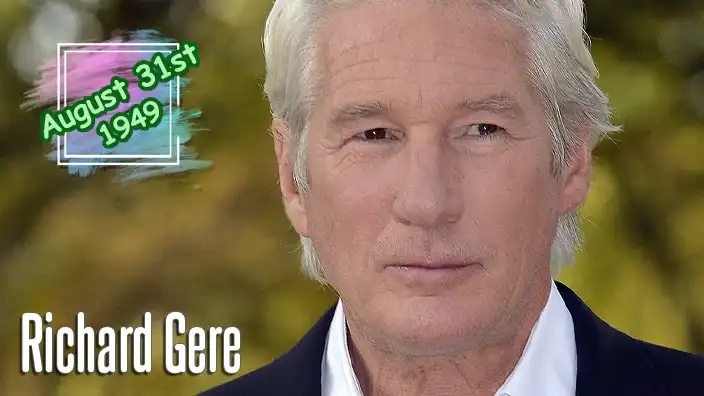
Richard Gere became a Hollywood leading man by wearing an impressive number of expensive suits, sweeping Julia Roberts off her feet in Pretty Woman and somehow making audiences believe that joining the Navy could end with Debra Winger waiting outside the factory. Beneath the movie-star image, however, is an actor whose career has ranged from musicals and romantic comedies to crime dramas, political thrillers and independent films for more than five decades.
August 31, 1949, in Philadelphia, Pennsylvania
Trivia
- Gere attended college on a gymnastics scholarship.
- He played Danny Zuko in Grease onstage.
- American Gigolo made him a major star.
- He reunited with Julia Roberts in Runaway Bride.
- Gere performed his own singing in Chicago.
- He won a Golden Globe for Chicago.
- Details
- Category: Celebrity Birthdays - August
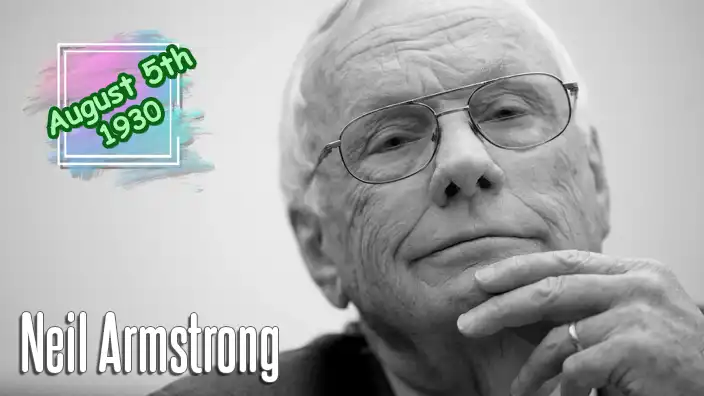
Neil Armstrong traveled nearly a quarter of a million miles, landed a fragile spacecraft on another world with fuel running dangerously low, and then stepped outside as hundreds of millions of people watched. Most of us become flustered when someone watches us parallel park. Armstrong handled the most closely observed arrival in human history with the calm manner of a man who appeared to be checking whether the Moon had been delivered in satisfactory condition.
August 5, 1930, near Wapakoneta, Ohio
August 25, 2012, in Cincinnati, Ohio
Trivia
- Earned his student pilot certificate at age 16.
- Learned to fly before receiving a driver’s license.
- Achieved the rank of Eagle Scout.
- Studied aeronautical engineering at Purdue University.
- Served as a naval aviator during the Korean War.
- Flew 78 combat missions over Korea.
- Piloted the F9F Panther fighter jet.
- Became a civilian experimental test pilot.
- Flew more than 200 types of aircraft.
- Piloted the rocket-powered X-15.
- Details
- Category: Celebrity Birthdays - August
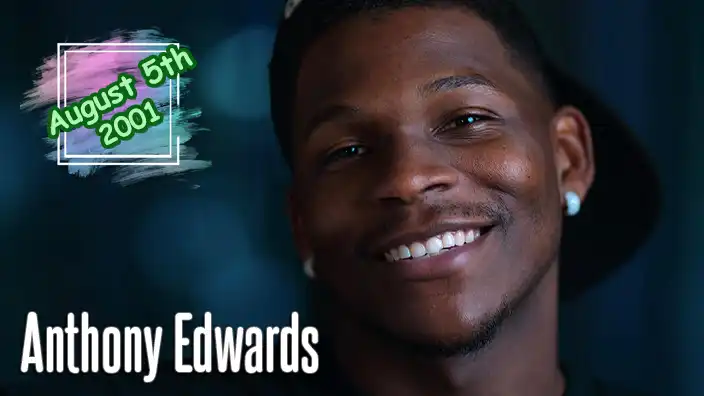
Some basketball players ease into the NBA. Anthony Edwards looked at that idea, shrugged, and decided that highlights were a better introduction. Whether he's throwing down a thunderous dunk, draining a deep three-pointer, or delivering one of his famously entertaining interviews, Edwards has a remarkable talent for making the extraordinary look routine. Opposing defenders have learned an important lesson: if Anthony Edwards starts smiling, someone is probably about to end up on a highlight reel.
August 5, 2001, in Atlanta, Georgia
Trivia
- Drafted by the Minnesota Timberwolves.
- Played one season at the University of Georgia.
- Won SEC Freshman of the Year.
- Named to the NBA All-Rookie First Team.
- Multiple-time NBA All-Star.
- Earned All-NBA honors.
- Nicknamed "Ant."
- Wears No. 5 in honor of his late mother and grandmother.
- Originally excelled in football before choosing basketball.
- Known for spectacular dunks and highlight-reel plays.

- Details
- Category: Celebrity Birthdays - August
Hulk Hogan was the kind of guy who could turn a handshake into an arm-wrestling match and make you feel honored to lose. He didn’t just break wrestling records—he made every “brother” he met feel like they were part of the main event.
August 11, 1953, in Augusta, Georgia
July 24, 2025, in Clearwater Florida
Trivia
- Hulkamania Forever: Six-time WWF/WWE Champion.
- Double Hall of Famer: Inducted solo in 2005, and again in 2020 with the nWo.
- Hollywood Side Hustle: Starred in movies and TV, often as the muscle with a heart.
- Music Roots: Former bassist for a Florida rock band.
- Cultural Impact: Inspired countless kids to tear their T-shirts in their parents’ living rooms.
- Details
- Category: Celebrity Birthdays - August
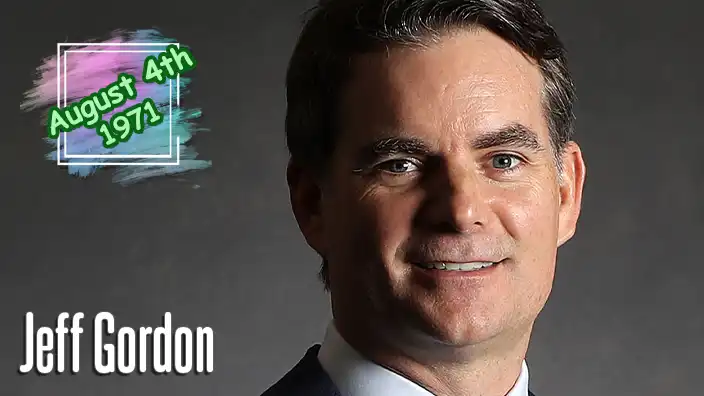
Most people are happy if they can parallel park without embarrassing themselves. Jeff Gordon made a career out of driving inches from other cars at nearly 200 miles per hour while somehow making it look routine. He helped transform NASCAR into a nationwide phenomenon, collected trophies by the truckload, and proved that sometimes the fastest way to become a legend is to keep turning left—very, very well.
August 4, 1971, in Vallejo, California
Trivia
- Four-time NASCAR Cup Series champion.
- Won 93 NASCAR Cup Series races.
- Drove the famous No. 24 Chevrolet.
- Spent his entire Cup career with Hendrick Motorsports.
- Won the Daytona 500 three times.
- Captured his first Cup championship in 1995.
- Inducted into the NASCAR Hall of Fame in 2019.
- Began racing quarter midgets at age five.
- Details
- Category: Celebrity Birthdays - August
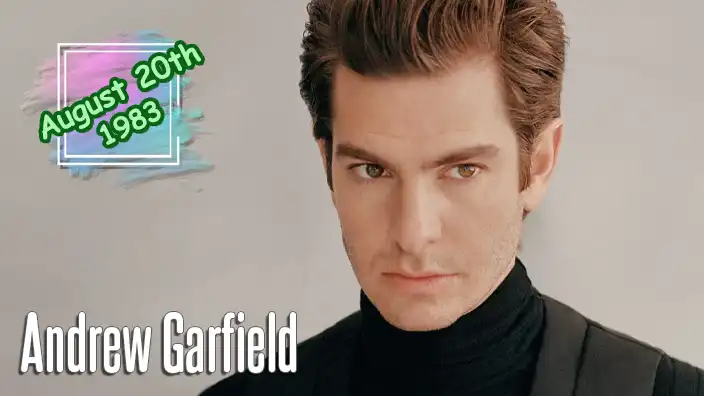
Andrew Garfield has accomplished something particularly difficult in Hollywood: he played Spider-Man, survived the tights, survived the internet arguing about which Spider-Man was best, and emerged with an acclaimed dramatic career firmly intact. From swinging between Manhattan skyscrapers to portraying a conscientious objector who saved wounded soldiers without carrying a weapon, Garfield has demonstrated a remarkable ability to move between blockbuster spectacle and deeply emotional drama. And just when everyone thought his web-slinging days were safely behind him, he returned and reminded audiences that apparently no Spider-Man ever really gets to retire.
August 20, 1983, in Los Angeles, California
Trivia
- He holds British and American citizenship.
- Before concentrating on acting, Garfield was interested in gymnastics and swimming
- He appeared in two episodes of Doctor Who before becoming internationally famous.
- Garfield won a BAFTA Television Award for his performance in Boy A.
- He received Academy Award nominations for Hacksaw Ridge and tick, tick... BOOM!
- Garfield won a Tony Award for playing Prior Walter in Angels in America on Broadway.
- He was a Spider-Man fan as a child, years before being cast as Peter Parker.
- Details
- Category: Celebrity Birthdays - August
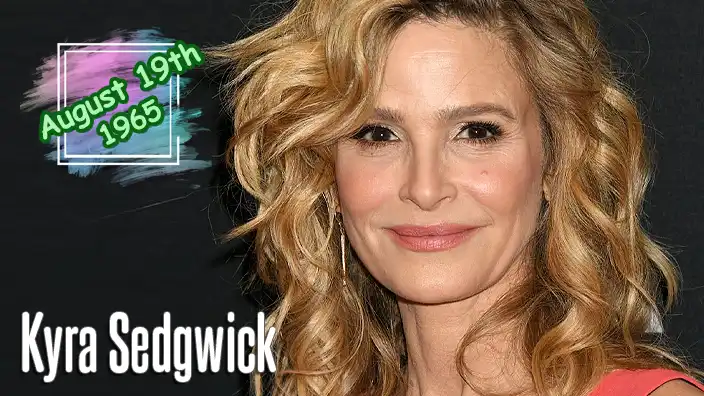
Kyra Sedgwick spent years building an impressive career in movies, television and theater before discovering that the quickest route to television immortality involved adopting a Southern accent, interrogating murder suspects and keeping an emergency supply of chocolate within reach. As Deputy Chief Brenda Leigh Johnson on The Closer, Sedgwick could politely thank a suspect for his cooperation and somehow make the poor fellow realize that prison was probably next.
August 19, 1965, in New York City
Trivia
- She met future husband Kevin Bacon while they were working on Lemon Sky; they married in 1988.
- Sedgwick and Bacon discovered through Finding Your Roots that they are ninth cousins once removed.
- She played Brenda Leigh Johnson in 109 episodes of The Closer between 2005 and 2012.
- Her performance in The Closer earned her both a Golden Globe and a Primetime Emmy Award.
- She received the 2,384th star on the Hollywood Walk of Fame in 2009.
- Her directorial debut Story of a Girl earned her a Directors Guild of America nomination.
- Sedgwick later showed her comic side as Madeline Wuntch, Captain Holt's gloriously antagonistic rival on Brooklyn Nine-Nine.
From Our Marks Catelog
-

Fraudsters are like modern-day tricksters, but instead of selling snake oil, they’ve upgraded to...
-
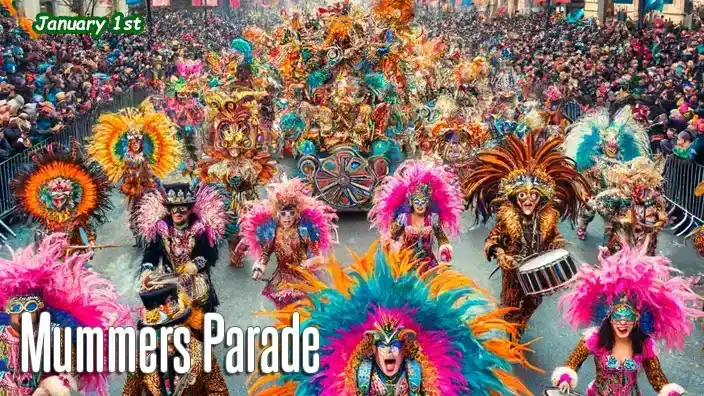
The Mummer's Parade in Philadelphia is like New Year's Day decided to throw on its most flamboyant...
-

When life hands you one of those bright yellow orbs that practically scream "pucker up," you know...
-

If you’re going to pretend to be a princess, you might as well go all in. That means sweeping into...
-

National Adoption Awareness Month is a beacon of hope and transformation, illuminating the...
-

Certified nurses are like superheroes, only with stethoscopes instead of capes and an uncanny...

