Celebrity Birthdays - August

August birthdays are like the last cannonball into the summer pool — big, splashy, and a little bittersweet. School is looming, but August folks insist we squeeze every last drop of sunshine first.
Join us as we salute the stars who own the dog days of summer. They’re proof that even the hottest month can be cool when you know how to celebrate it.

- Details
- Category: Celebrity Birthdays - August
Michael Shannon always looks like he just found out you buried the body—and he’s not mad, he’s just… disappointed and ready to monologue about it. He could be playing a grocery store clerk and still make it feel like the fate of humanity hangs in the balance. If eyebrows were weapons, his would be banned under the Geneva Convention. And yet somehow, we can’t look away.
 August 7, 1974, in Lexington, Kentucky

Trivia
- Theater Roots: Shannon co-founded A Red Orchid Theatre in Chicago and regularly returns to the stage, keeping his dramatic chops razor-sharp.
- Rock On: He’s the lead singer of Corporal, a band that leans toward punk and indie rock. His vocals? Exactly what you’d expect—intense and strangely poetic.
- Reluctant Star: Shannon has little interest in fame or Hollywood glitz. He famously prefers working in theater and low-budget films to big blockbusters.
- That Voice: His voice is so distinctive, it sounds like it was carved out of granite by regret and bourbon.
- Details
- Category: Celebrity Birthdays - August
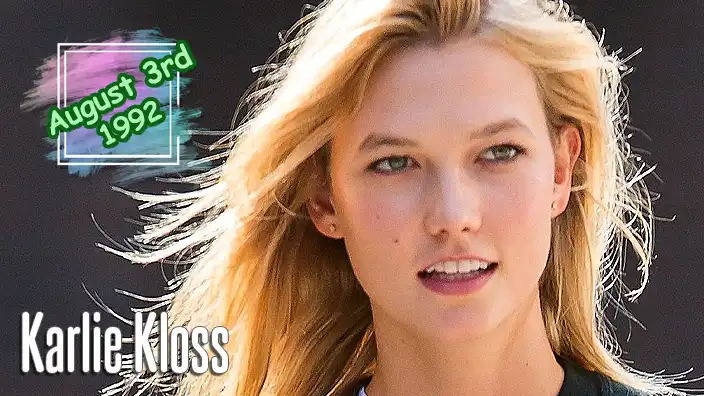
Karlie Kloss has spent so much time on international runways that frequent-flyer miles probably ought to be considered a fashion accessory. One day she's walking for the world's biggest designers, the next she's encouraging young women to learn computer programming. It turns out that while high heels and computer code don't usually appear in the same sentence, Karlie Kloss has made a career out of proving they belong together.
 August 3, 1992, in Chicago, Illinois
Trivia
- Became a Victoria's Secret Angel in 2013.
- Walked for Chanel, Dior, Versace, Valentino, and many other luxury brands.
- Has appeared on dozens of international Vogue covers.
- Founded the nonprofit Kode with Klossy in 2015.
- Promotes coding education for girls and young women.
- Has studied computer programming herself.
- Hosted the television competition series Project Runway.
- Married businessman Joshua Kushner in 2018.
- Is also an entrepreneur and startup investor.
- Frequently supports STEM education initiatives.
- Details
- Category: Celebrity Birthdays - August
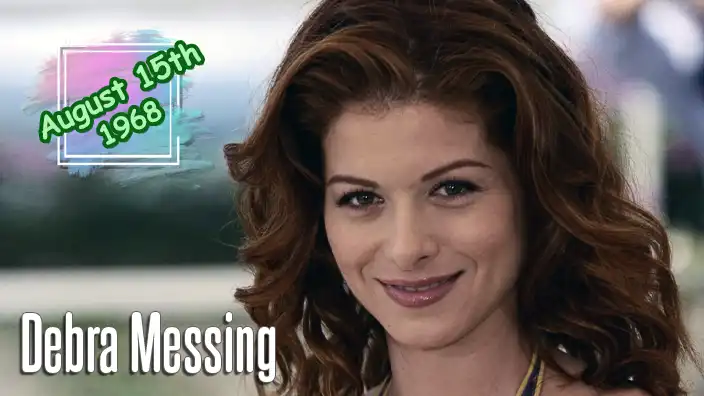
Debra Messing spent years playing Grace Adler, an interior designer whose professional judgment was considerably more reliable than her romantic judgment, and turned the character into one of television's most recognizable sitcom leads. With impeccable comic timing, a willingness to plunge enthusiastically into physical comedy and the ability to exchange insults with Eric McCormack without surrendering an inch of territory, Messing helped make Will & Grace a defining comedy of its era. She also demonstrated an important television principle: when your closest friends include Will, Jack and Karen, you don't actually need enemies. You have a full schedule already.
August 15, 1968, in Brooklyn, New York
Trivia
- Messing earned a bachelor's degree in theater arts from Brandeis University.
- She received an MFA from New York University's Tisch School of the Arts.
- Before Will & Grace, she starred opposite Thomas Haden Church in Ned & Stacey.
- She won the 2003 Emmy for Outstanding Lead Actress in a Comedy Series for Will & Grace.
- All four principal Will & Grace cast members eventually won acting Emmys for the series.
- Messing has played both comedy leads and dramatic roles, including a homicide detective in The Mysteries of Laura.
- Details
- Category: Celebrity Birthdays - August
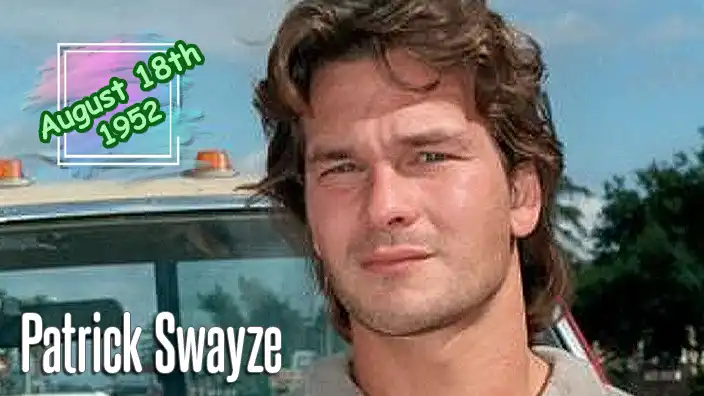
Patrick Swayze could dance ballet, ride horses, handle an action scene, sing a hit song and convince an entire generation that carrying a watermelon was a perfectly reasonable way to arrive at a party. From Dirty Dancing and Ghost to Road House and Point Break, Swayze combined the toughness of an action star with the grace of a professional dancer and an unusually convincing sensitive side. Hollywood has produced plenty of tough guys and plenty of romantic leading men, but very few could throw somebody through a window and then perform a perfectly respectable pirouette.
August 18, 1952, in Houston, Texas
 September 14, 2009, in Los Angeles, California
Trivia
- His mother, Patsy Swayze, was a dancer, choreographer and dance instructor who taught him from an early age.
- Swayze trained at both the Harkness Ballet School and Joffrey Ballet School in New York.
- One of his earliest professional jobs was playing Prince Charming in Disney on Parade.
- He co-wrote and sang "She's Like the Wind," which reached No. 3 on the Billboard Hot 100.
- Swayze received three Golden Globe acting nominations, for Dirty Dancing, Ghost and To Wong Foo, Thanks for Everything! Julie Newmar.
- IMDb credits him with 51 acting credits as well as soundtrack, choreography and producing work.
- He and Lisa Niemi were married for more than 34 years, remaining together until his death in 2009.

- Details
- Category: Celebrity Birthdays - August
George Hamilton is so tan he could walk into a Home Depot, stand in the paint aisle, and people would ask, “What shade is that?” He’s the human embodiment of “eternal summer,” and the only man who could make Count Dracula look like he vacations in the Bahamas.
August 12, 1939, in Memphis, Tennessee
Trivia
- Golden Glow: Famous for his perpetual tan.
- Award Winner: Golden Globe for Crime and Punishment U.S.A.
- Comedy King: Love at First Bite, Zorro, The Gay Blade.
- TV Regular: Frequent talk show guest and reality TV appearances.
- Style Icon: Known for impeccable suits and old-school Hollywood charm.
- Details
- Category: Celebrity Birthdays - August
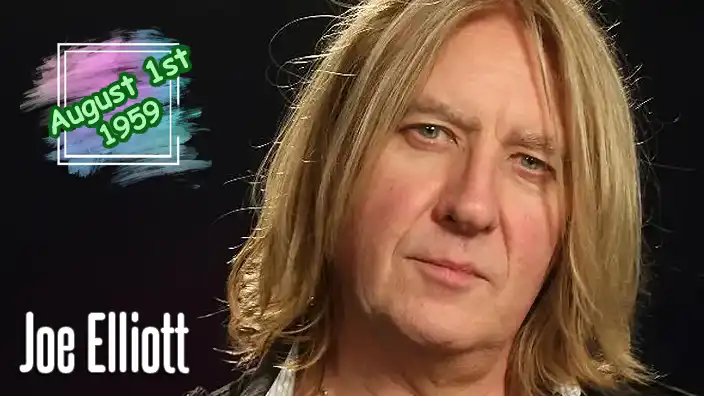
If your morning alarm has ever been replaced by "Pour Some Sugar on Me" played at maximum volume, there's a fair chance Joe Elliott has already done more to wake you up than your coffee maker. For more than four decades, his unmistakable voice has powered arena anthems, inspired countless aspiring rock singers, and convinced generations that air guitar is, in fact, a perfectly acceptable form of exercise.
August 1, 1959, in Sheffield, England
Trivia
- Founding lead vocalist of Def Leppard.
- Suggested the band's famous "Def Leppard" name.
- Fronted the band since 1977.
- Helped sell more than 110 million Def Leppard albums worldwide.
- Inducted into the Rock and Roll Hall of Fame in 2019 with Def Leppard.
- Also fronts the band Down 'n' Outz.
- Hosts rock music programs on Planet Rock and SiriusXM.
- Is a lifelong fan of David Bowie and Mott the Hoople.
- Continues to tour internationally with Def Leppard.
- Is known for his distinctive raspy yet melodic vocal style.

- Details
- Category: Celebrity Birthdays - August
Leslie Odom Jr. has the kind of voice that makes you question your own life decisions—like why you ever thought karaoke was a good idea. Whether he’s belting out show tunes, crooning a jazz ballad, or casually dropping an Oscar-nominated performance, he does it all with the effortless cool of someone who probably even brushes his teeth on beat. If charisma were a superpower, Leslie would already be running the Avengers and producing the soundtrack.
August 6, 1981, in Queens, New York, New York
Trivia
- Award Winner: Odom Jr. has taken home a Tony and a Grammy. The man’s got more hardware than a Home Depot aisle.
- Author: He penned a motivational book called Failing Up, proving that even his setbacks are inspiring.
- Family Man: He’s married to actress Nicolette Robinson, and the two frequently perform and record together—think power couple, but with perfect pitch.
- Voice of Gold: His Christmas albums are so smooth, even Santa puts down the eggnog and listens.
- Details
- Category: Celebrity Birthdays - August
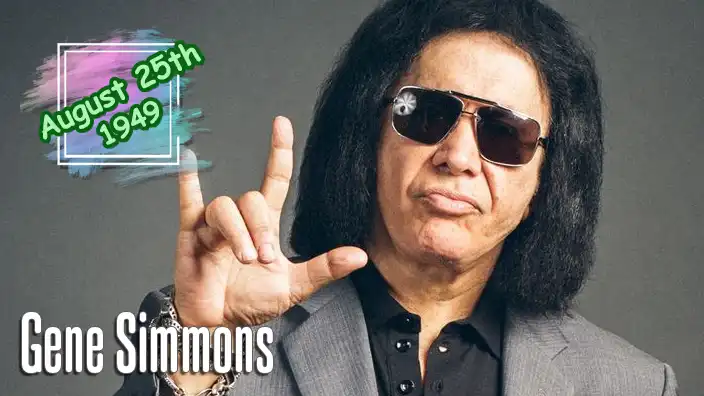
Gene Simmons turned playing bass into a job that apparently also required platform boots, dragon makeup, fire breathing, blood spitting and a tongue famous enough to deserve separate billing. As co-founder of KISS and the fearsome “Demon” onstage, Simmons helped prove that rock music could be part concert, part theater and part controlled explosion—and then discovered there was probably a way to merchandise the explosion.
August 25, 1949, in Haifa, Israel
Trivia
- He immigrated to New York at age eight.
- Simmons once taught sixth grade.
- His KISS character is the Demon.
- He co-wrote “Rock and Roll All Nite.”
- He married Shannon Tweed in 2011.
- KISS entered the Rock Hall in 2014.
- Details
- Category: Celebrity Birthdays - August
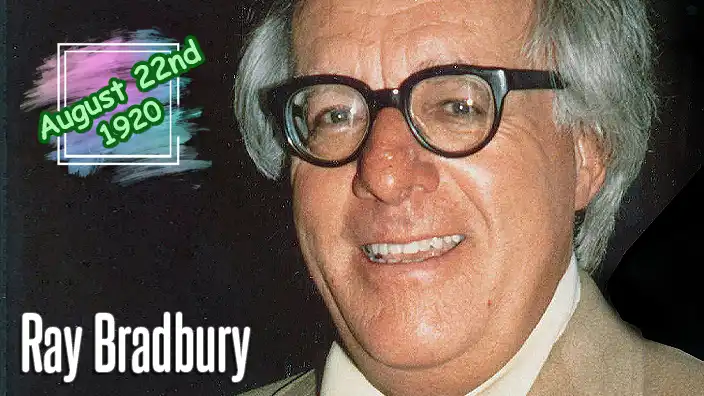
Ray Bradbury turned Mars, burning books, sinister carnivals, childhood summers, time-traveling hunters, and futuristic technology into some of America's most memorable literature. Give Bradbury a typewriter and a library card and apparently the entire universe was fair game—which was considerably cheaper than building a rocket.
August 22, 1920, in Waukegan, Illinois
June 5, 2012, in Los Angeles, California
Trivia
- He never attended college and famously continued his education through years of intensive library reading.
- At age 12, carnival performer Mr. Electrico reportedly touched him with an electrified sword and told him to “Live forever.”
- Bradbury wrote the early version of Fahrenheit 451 using rented typewriters in UCLA's library, paying by the half hour.
- He wrote the screenplay for John Huston's 1956 film adaptation of Moby Dick.
- Bradbury contributed to the story for Spaceship Earth at Walt Disney World's EPCOT.
- He received a special citation from the Pulitzer Prize Board in 2007 for his distinguished and influential career.
- After his death, NASA named the Curiosity rover's Mars landing site Bradbury Landing in his honor.
- Details
- Category: Celebrity Birthdays - August
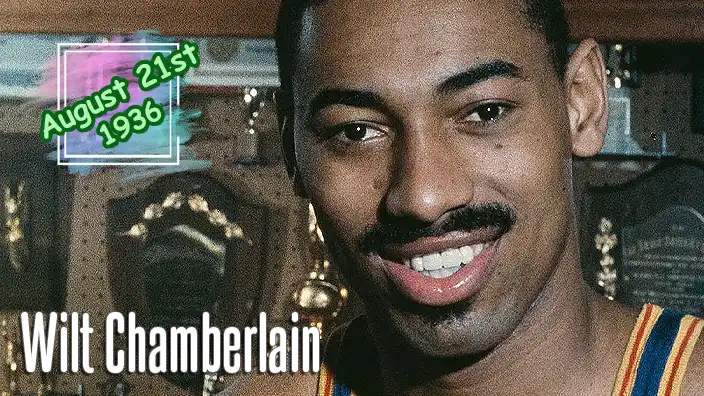
Wilt Chamberlain scored 100 points in one NBA game, grabbed 55 rebounds in another and once averaged 48.5 minutes per game in a sport where regulation games last 48 minutes. At some point you stop describing those numbers as impressive and begin wondering whether Wilt had been informed that basketball records were supposed to be difficult to break.
August 21, 1936, in Philadelphia, Pennsylvania
October 12, 1999, in Bel-Air, California
Trivia
- Chamberlain stood 7 feet 1 inch tall and was an accomplished track-and-field athlete as well as a basketball player.
- He spent a season with the Harlem Globetrotters before entering the NBA.
- As a rookie, he won both NBA Rookie of the Year and league MVP.
- Chamberlain scored 100 points against the New York Knicks on March 2, 1962, a record that still stands.
- During the 1961–62 season, he averaged an almost unbelievable 50.4 points and 48.5 minutes per game.
- His 55 rebounds in a single game remain another NBA record.
- After years of dominating as a scorer, Chamberlain led the NBA in total assists in 1967–68.
- He retired with 23,924 rebounds, still the highest career total in NBA history.

- Details
- Category: Celebrity Birthdays - August
Quvenzhané Wallis made her film debut in Beasts of the Southern Wild and promptly became the youngest Best Actress nominee in Academy Awards history. Most six-year-olds are concentrating on reading, playground politics and negotiating later bedtimes; Wallis was busy launching a Hollywood career that would take her from an independent Louisiana film to Annie, major television roles and children's books.
August 28, 2003, in Houma, Louisiana
Trivia
- Beasts was her film debut.
- She played Hushpuppy at age six.
- She became an Oscar nominee at nine.
- She remains the youngest Best Actress nominee.
- She starred as Annie in 2014.
- Wallis is also a children's author.

- Details
- Category: Celebrity Birthdays - August
Some movie stars become famous for delivering unforgettable lines. Kajol somehow manages to make an entire facial expression memorable before she even says a word. Whether she's making audiences laugh, cry, cheer, or desperately hope Raj catches that train, she has spent decades proving that great acting doesn't require grand speeches—it sometimes just takes perfect timing, expressive eyes, and enough charisma to light up an entire cinema.
August 5, 1974, in Bombay, India
Trivia
- Frequently co-starred with Shah Rukh Khan.
- Married actor Ajay Devgn in 1999.
- Mother of two children.
- Received the Padma Shri in 2011.
- Won the Filmfare Award for Best Performance in a Negative Role for Gupt.
- Has won five Filmfare Best Actress Awards, tying the long-standing record set by Nutan.
- Comes from the famous Mukherjee-Samarth film family.
- Appeared in acclaimed streaming series including The Trial.
- Known for her expressive acting style and natural performances.

- Details
- Category: Celebrity Birthdays - August
Bill Clinton went from a small town in Arkansas to the White House, served two terms as President of the United States and somehow made discussing federal budgets a regular feature of prime-time television. A gifted campaigner famous for remembering names, working a crowd and talking considerably longer than whoever prepared the schedule expected, Clinton presided over economic expansion, major domestic policy battles, international crises and one of the most politically turbulent presidencies of modern times. He also plays the saxophone, which remains considerably more entertaining than watching most former presidents attempt karaoke.
August 19, 1946, in Hope, Arkansas
Trivia
- As a teenager attending Boys Nation in 1963, Clinton met and shook hands with President John F. Kennedy at the White House.
- He attended Georgetown University, studied at Oxford as a Rhodes Scholar and earned his law degree from Yale.
- Clinton was first elected governor of Arkansas at age 32, lost reelection and then successfully returned to the governorship.
- He became known as “The Comeback Kid” during the 1992 Democratic presidential primaries.
- Clinton is an enthusiastic saxophone player and famously performed on The Arsenio Hall Show during his 1992 presidential campaign.
- In 1998, he became the second U.S. president to be impeached; the Senate acquitted him in 1999.
- President Barack Obama awarded Clinton the Presidential Medal of Freedom in 2013.
- Details
- Category: Celebrity Birthdays - August
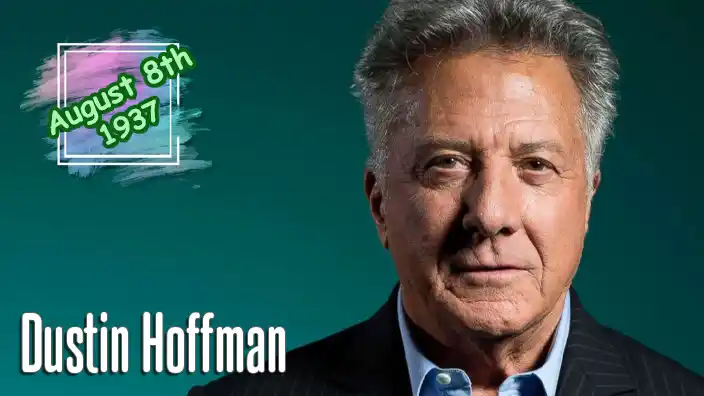
Dustin Hoffman is the only man who could turn nervous fidgeting into an Oscar-worthy skill. He made awkward pauses feel like Shakespeare and somehow convinced us all that Tootsie was both hilarious and profound. If you need someone to cry, yell, whisper, sweat, panic, and win awards—all in one take—Dustin’s your guy. Just don’t ask him to “tone it down.” That’s not in his tool kit.
August 8, 1937, Los Angeles, California
Trivia
- Oscar Gold: He won Best Actor twice—first for Kramer vs. Kramer (1979) and again for Rain Man (1988). Both performances are considered among the finest in film history.
- Method to the Madness: Famously method, he once stayed up for days to appear exhausted for a role—only to be told by co-star Laurence Olivier, “My dear boy, why don’t you just try acting?”
- Animation Fan Favorite: He voiced the villainous (and hilarious) Master Shifu in Kung Fu Panda. Because yes, even animated animals need gravitas.
- Late Start: Hoffman was 30 when he starred in The Graduate—proving it’s never too late to become an icon.

- Details
- Category: Celebrity Birthdays - August
Frances Bean Cobain was born on August 18, 1992, into a family for which keeping a low profile was never going to be particularly easy. As the only child of Nirvana frontman Kurt Cobain and Hole singer Courtney Love, she arrived with rock-and-roll history already waiting outside the maternity ward. Yet rather than simply becoming a professional celebrity offspring, Cobain has built an identity around visual art, modeling and creative projects of her own, while carefully deciding how much of her famous family history belongs to the public.
August 18, 1992, in Los Angeles, California
Trivia
- R.E.M. singer Michael Stipe is her godfather.
- She first exhibited artwork under the pseudonym "Fiddle Tim" rather than using her famous surname.
- Cobain served as an executive producer of Kurt Cobain: Montage of Heck in 2015.
- She surprised many Nirvana fans in 2015 by admitting that she doesn't particularly like Nirvana's music.
- She married Riley Hawk, son of skateboarder Tony Hawk, in 2023.
- Frances and Riley welcomed their son, Ronin Walker Cobain Hawk, in September 2024.
- Details
- Category: Celebrity Birthdays - August
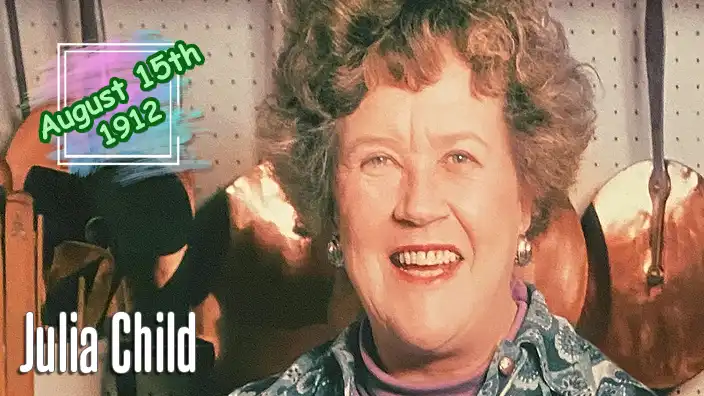
Julia Child taught Americans that French cooking did not require being French, owning a restaurant or having a nervous breakdown whenever somebody mentioned hollandaise sauce. Standing more than six feet tall, speaking in that unmistakable voice and treating the occasional kitchen mishap as something to solve rather than mourn, Child transformed television cooking. She made complicated food approachable without pretending it was effortless, and generations of home cooks discovered that dropping something, burning something or producing a sauce of questionable structural integrity did not mean dinner was ruined. It simply meant you were cooking.
August 15, 1912, in Pasadena, California
August 13, 2004, in Montecito, California
Trivia
- Mastering the Art of French Cooking took years of testing, rewriting and refinement before publication.
- Her television career developed after she demonstrated how to make an omelet during a book-promotion appearance on WGBH.
- Child reportedly enjoyed Dan Aykroyd's famously disastrous impersonation of her on Saturday Night Live.
- Her television kitchen is preserved at the Smithsonian's National Museum of American History.
- France awarded Child the Legion of Honour in 2000.
- She received the Presidential Medal of Freedom in 2003.
- Details
- Category: Celebrity Birthdays - August
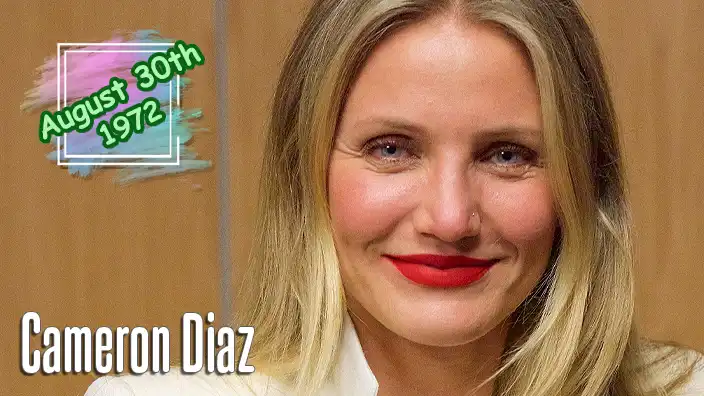
Cameron Diaz has spent her career proving that a former fashion model can battle Jim Carrey's green-faced chaos, survive romantic humiliation involving hair gel best left unexplained, voice an ogre princess and then simply walk away from Hollywood for several years because she felt like it. Born August 30, 1972, the Golden Globe-nominated actress became one of the biggest comedy stars of her generation—and eventually discovered that even movie stars are allowed to take a very long lunch break.
August 30, 1972, in San Diego, California
Trivia
- Cameron attended high school with Snoop Dogg.
- Began modeling at age 16.
- The Mask was her film debut.
- She received four Golden Globe nominations.
- Voiced Princess Fiona in the Shrek films.
- Married musician Benji Madden in 2015.
- Returned to movies with Back in Action.
- Details
- Category: Celebrity Birthdays - August
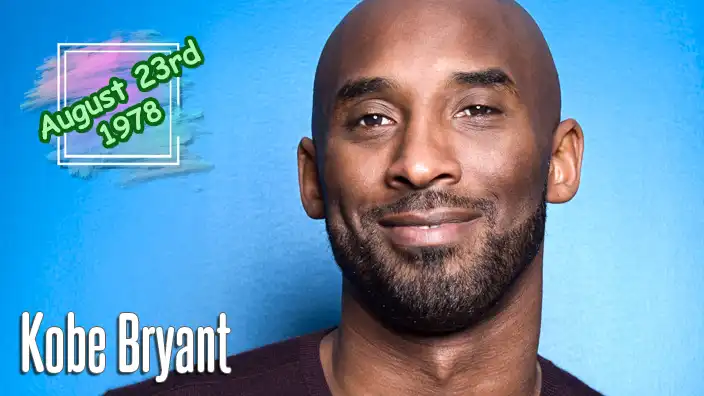
Kobe Bryant spent 20 seasons proving that basketball hoops apparently become considerably larger when the game is on the line. With five NBA championships, 18 All-Star selections, an 81-point game and one of the fiercest competitive reputations in sports, Bryant turned difficult shots into ordinary business and ordinary shots into something he occasionally considered too easy. His relentless approach became known as the “Mamba Mentality,” which sounds considerably more impressive than “refusing to quit until everybody else has gone home.”
August 23, 1978, in Philadelphia, Pennsylvania
January 26, 2020, in Calabasas, California
Trivia
- Kobe entered the NBA directly from high school at age 17.
- Charlotte drafted him 13th overall before trading him to the Lakers.
- He won the 1997 NBA Slam Dunk Contest as a rookie.
- Bryant scored 81 points against Toronto in 2006.
- The Lakers retired both his No. 8 and No. 24 jerseys.
- He won Olympic gold medals in 2008 and 2012.
- Dear Basketball won an Academy Award in 2018.

- Details
- Category: Celebrity Birthdays - August
Merritt Wever is living proof that you don’t have to shout to be heard — sometimes all it takes is a perfectly timed pause, a sideways glance, and the kind of delivery that makes every other actor in the room wonder why they even bothered learning their lines.
August 11, 1980, in New York City
Trivia
- Double Emmy Winner: Nurse Jackie (2013) and Godless (2018).
- Award Speech Legend: Her 2013 Emmy speech was just 11 words long.
- Genre-Hopping: From comedy to gritty drama with ease.
- Stage Roots: Studied at Sarah Lawrence College and honed her craft in theater.
- Reluctant Star: Known for her private, press-shy personality.

- Details
- Category: Celebrity Birthdays - August
Princess Beatrice is the royal who reminds you that even palace-dwellers have wardrobe whoopsies and awkward public moments—and that’s exactly why people love her. Whether she’s rocking a hat that doubles as modern art or juggling motherhood with Zoom meetings, Beatrice is basically the royal family’s version of “relatable content”—with a tiara.
August 8, 1988, in London, England
Trivia
- Royal Rank: Beatrice is currently 9th in the line of succession to the British throne (as of 2025). She used to be 5th, but hey—that's royal family math for you.
- That Hat: Her Philip Treacy hat at Prince William and Kate Middleton’s 2011 wedding broke the internet and was later auctioned for charity. A fashion faux pas with a charitable silver lining.
- Learning Advocate: She’s a strong supporter of children’s education and dyslexia awareness, drawing from her own experiences with the learning difference.
- Private but Present: Beatrice walks a delicate line between royal responsibility and private life, making select appearances at major events while maintaining a relatively normal career.

- Details
- Category: Celebrity Birthdays - August
John Slattery is the kind of man who could walk into a room, order a drink you’ve never heard of, and make you want to order the same thing — even if you’re not sure it’s actually a drink. Give him a suit, a dry one-liner, and 30 seconds, and he’ll convince you it was your idea all along.
August 13, 1962, in Boston, Massachusetts
Trivia
- Sterling Legacy: Roger Sterling on Mad Men (2007–2015).
- Marvel Dad: Played Howard Stark in multiple MCU films.
- Stage Roots: Extensive theater background before television fame.
- Director’s Chair: Directed the 2014 drama God’s Pocket.
- Silver Fox Status: Turned going gray early into a career asset.
From Our Marks Catelog
-

Sitting down at the dinner table, there's always that moment when you spot the mashed potatoes,...
-

Once upon a time, someone looked at tennis and thought, “This would be perfect if it involved less running,...
-

If you’re the kind of person who likes a little thrill with your meal, then one bite of that...
-

If you've ever scratched a dog's ears, rescued a turtle from the middle of the road, or apologized...
-
Who knew that creating a prehistoric masterpiece could lead to such existential questions? Like, did...
-

It's not uncommon to see a normally quiet neighborhood transform overnight into a glittering...

