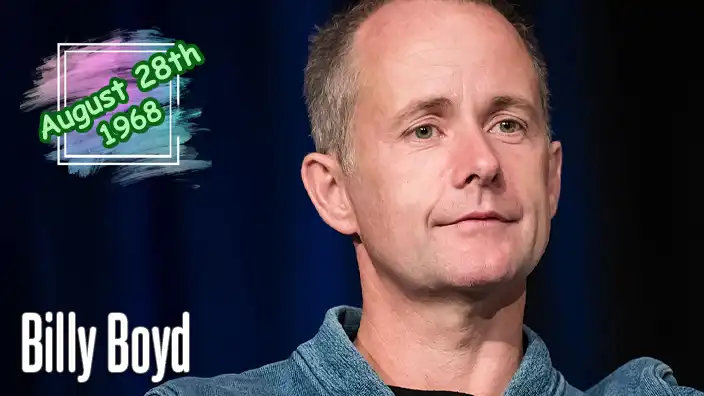
August 28, 1968, in Glasgow, Scotland
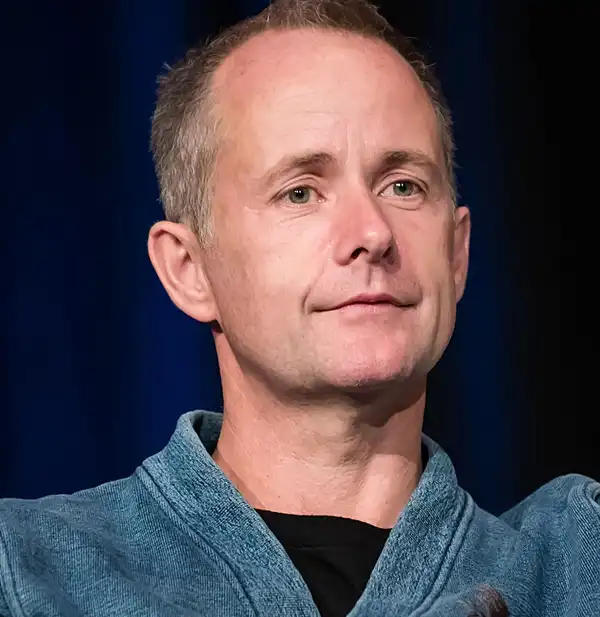
Billy Boyd was born William Nathan Boyd on August 28, 1968, in Glasgow, Scotland. He and his sister Margaret experienced considerable loss while they were young, with both of their parents dying before Boyd had reached his teens, and they were subsequently raised by their grandmother. Growing up in Glasgow, Boyd developed interests in acting and music that would eventually become the two principal threads running through his professional life. Long before international audiences knew him as one of Middle-earth's smallest adventurers, however, he followed the wonderfully practical Scottish tradition of learning a proper trade.
Boyd worked as a bookbinder for several years before committing himself fully to acting. Bookbinding is an unusually appropriate occupation for someone who would later become famous for appearing in adaptations of one of the most celebrated works of fantasy literature ever published, although at the time there was presumably rather less sword fighting involved. He eventually studied acting at the Royal Scottish Academy of Music and Drama in Glasgow, now known as the Royal Conservatoire of Scotland. After graduating, Boyd developed his career through stage and screen work, establishing the theatrical foundation that would later serve him particularly well when he found himself surrounded by hobbits, wizards, Orcs and several thousand computer-generated soldiers.
His early career included extensive theater work, with Boyd performing in productions associated with companies including the Traverse Theatre and the St Andrews-based Byre Theatre. Like many British actors, he built his profession gradually rather than arriving immediately in a starring film role. His screen work included British television appearances and smaller film roles, allowing him to develop experience while continuing to perform onstage. Among his early movie credits was Urban Ghost Story in 1998, a Scottish supernatural drama that gave little indication that only a few years later Boyd would be participating in one of cinema's most ambitious productions.
Everything changed when Boyd was cast as Peregrin Took, better known as Pippin, in Peter Jackson's adaptation of J.R.R. Tolkien's The Lord of the Rings. Pippin is one of the four hobbits who become caught up in the struggle to destroy the One Ring, joining Frodo Baggins, Samwise Gamgee and his close friend Meriadoc "Merry" Brandybuck. Boyd joined Elijah Wood, Sean Astin and Dominic Monaghan as the principal hobbit actors, forming a group whose friendship and chemistry became central to the emotional success of the trilogy.
Pippin begins the story as one of the Fellowship's least likely heroes. Curious, cheerful and occasionally spectacularly unhelpful, he has a remarkable ability to investigate precisely the object that everybody else would prefer he leave alone. One of the character's most memorable early disasters occurs in the Mines of Moria when his curiosity sends the remains of a skeleton tumbling noisily down a well. After an excruciatingly long sequence of crashes echoes through the darkness, Ian McKellen's Gandalf delivers the memorable rebuke, "Fool of a Took!" Moments later the Fellowship discovers that perhaps making an enormous amount of noise inside an ancient underground city filled with Orcs was not the afternoon's best strategic decision.
Yet Pippin's importance grows enormously as the story develops. What begins as comic relief becomes a genuine coming-of-age story. Pippin is captured by the Uruk-hai, escapes with Merry, encounters Treebeard and helps set events in motion that lead the Ents against Isengard. Later, separated from Merry, he travels with Gandalf to Minas Tirith and enters the service of Denethor, Steward of Gondor. By The Return of the King, the carefree hobbit who once seemed barely capable of surviving breakfast has become a courageous participant in the defense of Gondor.
One of Boyd's most memorable moments in the entire trilogy came not from comedy but from music. During The Return of the King, Denethor orders Pippin to sing while Faramir and his soldiers ride toward almost certain death at Osgiliath. Boyd performs the haunting song generally known as "The Edge of Night," based on words adapted from Tolkien's writing. The quiet performance is intercut with the soldiers' doomed charge and Denethor eating alone, producing one of the film's bleakest and most effective sequences. Boyd composed the melody himself, allowing his musical abilities to become part of Pippin's character at a crucial point in the story.
The three Lord of the Rings films—The Fellowship of the Ring, The Two Towers and The Return of the King—were filmed largely in New Zealand in an enormous production that occupied the cast for an extended period. The four actors playing the principal hobbits developed a genuine friendship during filming. Boyd, Wood, Astin and Monaghan famously received matching tattoos representing the Elvish number nine, commemorating the nine members of the Fellowship. Their camaraderie remained visible during interviews, reunions and convention appearances long after filming ended.
The trilogy became a worldwide phenomenon. The Return of the King swept the 2004 Academy Awards, winning all 11 categories in which it had been nominated, including Best Picture and Best Director. For Boyd, the success transformed him from a working Scottish actor into an internationally recognizable performer. Pippin became inseparable from his public identity, and Boyd's combination of humor, vulnerability and eventual courage helped ensure that the character was considerably more than simply the Fellowship member most likely to cause an avoidable emergency.
Boyd did not, however, spend the remainder of his career wandering around convention halls wearing hairy prosthetic feet. While The Lord of the Rings was making him famous, he continued appearing in other films. He played Barrett Bonden in Peter Weir's 2003 historical adventure Master and Commander: The Far Side of the World, starring Russell Crowe and Paul Bettany. Set during the Napoleonic Wars, the film presented Boyd in an entirely different environment from Middle-earth and demonstrated his ability to work comfortably within another large ensemble production.
In 2004, Boyd appeared in Seed of Chucky, entering the considerably less majestic universe of the Child's Play horror franchise. He provided the voice of Glen and Glenda, the offspring of homicidal dolls Chucky and Tiffany. Going from Pippin Took to the troubled child of two murderous dolls is the sort of career transition drama schools probably struggle to prepare students for, but it demonstrated Boyd's willingness to tackle unusual material rather than simply repeat his most famous role.
His subsequent screen work included films such as On a Clear Day, The Flying Scotsman, Stone of Destiny and Space Milkshake, as well as numerous television appearances. He has continued to work extensively in British productions while also maintaining the international audience created by The Lord of the Rings. His career has encompassed drama, comedy, fantasy, science fiction and voice acting, while theater has remained an important part of his professional background.
Music has been equally persistent in Boyd's life. He is a singer and guitarist and formed the Scottish band Beecake, serving as its lead vocalist. The band's name reportedly originated from an incident involving Dominic Monaghan, who sent Boyd a photograph of a cake covered with bees. Most people receiving such an image might simply wonder what had gone wrong with the picnic; Boyd apparently recognized a perfectly serviceable band name. Beecake has released recordings and performed live, giving Boyd an outlet for music separate from his acting career.
His musical connection to Middle-earth unexpectedly returned many years after Pippin's final scenes. Boyd wrote and performed "The Last Goodbye," the song played over the closing credits of Peter Jackson's The Hobbit: The Battle of the Five Armies in 2014. Although Boyd did not appear as Pippin in The Hobbit trilogy, his voice provided the musical farewell to Jackson's six-film journey through Middle-earth. The choice carried considerable emotional weight for audiences who had followed the films since The Fellowship of the Ring arrived in theaters in 2001.
"The Last Goodbye" therefore provided an unusually fitting circle in Boyd's career. The actor who had sung one of The Return of the King's most memorable songs returned more than a decade later to sing the farewell to the entire cinematic saga. For longtime fans, hearing Pippin's familiar voice as the credits rolled provided a connection between the two trilogies and the performers who had helped begin the journey.
Boyd has remained closely connected with his Lord of the Rings colleagues, particularly Dominic Monaghan, whose Merry spent so much of the trilogy beside Pippin. Their friendship has continued publicly through appearances and projects long after filming ended. Boyd has also remained a popular figure at fan conventions, where the enduring affection for Tolkien's world ensures that questions about second breakfast, Ents and poorly considered expeditions through Moria are unlikely to disappear anytime soon.
Away from acting and music, Boyd has maintained strong ties to Scotland. Despite the international nature of his career and the enormous popularity of The Lord of the Rings, he has never seemed particularly interested in reinventing himself as a conventional Hollywood celebrity. His Scottish identity, Glasgow background and musical interests remain prominent parts of his public life, giving his career a somewhat different character from many actors launched into worldwide fame by a blockbuster franchise.
Billy Boyd's career ultimately demonstrates how one extraordinary role can transform an actor's life without having to define everything that follows. Pippin Took gave him international recognition, but Boyd brought years of theatrical experience and genuine musical ability to the role, qualities that helped make the character memorable. His later work as an actor and musician has continued alongside the enormous shadow cast by Middle-earth rather than attempting to escape it.
And Pippin deserves a little more respect than he sometimes receives. He began the journey as a hungry hobbit with questionable judgment and ended it as a knight of Gondor who fought at the Black Gate while helping save Middle-earth.
Admittedly, he did knock that skeleton down the well.
Nobody said character development had to start gracefully.