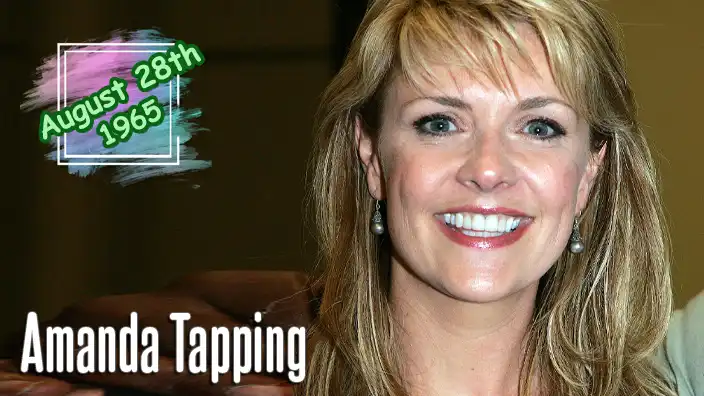
August 28, 1965, in Rochford, England
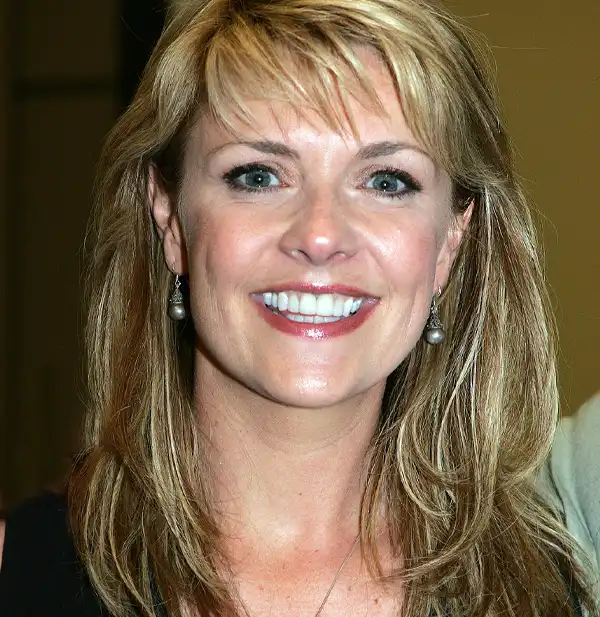
Amanda Tapping was born on August 28, 1965, in Rochford, Essex, England. When she was a young child, her family moved to Ontario, Canada, where she grew up and eventually developed her interest in acting. Tapping attended North Toronto Collegiate Institute and later studied drama at the University of Windsor's School of Dramatic Art. Her theatrical training provided the foundation for a career that would eventually make her internationally recognizable to science fiction audiences, although the road to commanding starships and confronting alien civilizations naturally began somewhat closer to Earth.
After completing her studies, Tapping spent several years developing her craft through theater. She appeared in stage productions and became involved in comedy, co-founding the improvisational comedy troupe Random Acts. Like many actors building careers in Canada, she also appeared in commercials and gradually accumulated television work. During the 1990s, her credits included appearances in series such as The X-Files, Due South, Forever Knight, Kung Fu: The Legend Continues and The Outer Limits. These roles were relatively small, but they provided valuable screen experience while Tapping worked toward the opportunity that would define the first major phase of her career.
That opportunity arrived in 1997 when Tapping was cast as Captain Samantha Carter in Stargate SG-1. The television series continued the premise established by the 1994 film Stargate, in which an ancient device discovered on Earth provides instantaneous transportation to distant worlds. The series assembled a new principal team led by Colonel Jack O'Neill, played by Richard Dean Anderson, alongside Michael Shanks as archaeologist Dr. Daniel Jackson and Christopher Judge as the alien warrior Teal'c. Tapping's Samantha Carter completed the original SG-1 team as an Air Force officer, pilot, astrophysicist and engineer whose scientific knowledge repeatedly proved essential to keeping Earth from experiencing some extremely unpleasant interplanetary consequences.
Carter was particularly significant because she occupied a role that television had historically tended to divide among several characters. She was both a soldier and scientist, equally comfortable discussing theoretical astrophysics or carrying a P90 into battle. The character was never simply the team's designated scientific expert waiting safely at headquarters while everybody else went adventuring. Carter traveled through the Stargate, fought alongside her teammates and frequently found herself directly confronting the same dangers as the rest of SG-1. Over the course of the series she advanced through the Air Force ranks, eventually becoming Lieutenant Colonel Samantha Carter.
The chemistry among the original Stargate SG-1 cast became one of the show's greatest strengths. Carter's scientific enthusiasm contrasted beautifully with O'Neill's tendency to respond to complicated explanations with jokes or expressions suggesting he would very much appreciate the shorter version. Her friendship with Daniel Jackson provided another intellectual partnership, while her relationship with Teal'c grew from professional respect into deep loyalty. The series also developed a long-running romantic tension between Carter and O'Neill, complicated considerably by military regulations, command responsibilities and the inconvenient habit of alien civilizations trying to destroy everybody before anyone could sort out their personal lives.
Stargate SG-1 developed into an unusually durable science fiction series. Originally premiering on Showtime before moving to the Sci Fi Channel in the United States, it ran for ten seasons and more than 200 episodes between 1997 and 2007. Tapping appeared throughout the show's run and became one of the performers most closely associated with the entire Stargate franchise. During those years Carter encountered alternate realities, time travel, artificial intelligence, ancient technology, hostile aliens and enough imminent planetary destruction to make a quiet weekend at home seem thoroughly deserved.
Tapping's performance also allowed Carter to develop substantially over the years. The confident but comparatively junior officer introduced in the first season gradually became an experienced leader who had survived situations that would make most military résumés look rather tame. Carter eventually commanded SG-1 herself, reflecting both the character's progression and Tapping's importance to the series. The scientific jargon remained formidable, but Carter increasingly carried the authority of someone who had spent years saving Earth and had presumably grown accustomed to explaining that, yes, the impossible thing everybody was worried about really could happen.
When Stargate SG-1 ended its regular television run, Tapping was not finished with Samantha Carter. She moved to Stargate Atlantis, joining its fourth season as Colonel Carter and becoming commander of the Atlantis expedition. The move gave Carter responsibility for an entire city and its personnel rather than a four-person field team, demonstrating another stage in the character's evolution. Tapping remained a principal cast member for that season before reducing her involvement as she turned her attention toward another project.
She also reprised Carter in the direct-to-video films Stargate: The Ark of Truth and Stargate: Continuum, both released in 2008, and later appeared in Stargate Universe. Her appearances across SG-1, Atlantis and Universe made Samantha Carter one of the principal connecting figures across the television franchise. Few characters accumulated quite as much experience with the Stargate program, and by that point Carter had risen from the captain introduced in 1997 to an officer carrying considerably greater command responsibility.
Tapping's next major television project was Sanctuary, a science fiction and fantasy series that had an unusual beginning as a web-based production before becoming a television series. Tapping starred as Dr. Helen Magnus, a brilliant and exceptionally long-lived scientist who operates a sanctuary for unusual creatures and people known as Abnormals. The role was dramatically different from Samantha Carter. Magnus was mysterious, sophisticated and frequently several moves ahead of everyone around her, and Tapping adopted dark hair and an English accent for the character.
Sanctuary premiered as a television series in 2008 and ran for four seasons. Tapping was not merely its star; she also served as an executive producer and directed episodes. The project therefore marked an important transition in her career. After years of being known primarily as the woman in front of the camera on Stargate, she was increasingly involved in the creative and production decisions occurring behind it. That development would ultimately shape much of the next phase of her professional life.
Directing had already begun to interest Tapping during Stargate SG-1. She directed the seventh-season episode "Resurrection," gaining experience behind the camera while still starring in the series. Her directing career expanded substantially in subsequent years, eventually encompassing numerous television productions across science fiction, fantasy, drama and supernatural programming.
Her directing credits have included episodes of Continuum, Primeval: New World, Olympus, The Magicians, Dark Matter, Van Helsing, Supernatural, Travelers, The Flash, Batwoman, Motherland: Fort Salem and other television series. She has also worked as an executive producer and director on Motherland: Fort Salem. Rather than treating directing as an occasional sideline between acting jobs, Tapping established herself as a prolific television director with a substantial body of work separate from the role that originally made her famous.
One particularly appropriate directing assignment came with Supernatural. The long-running series was filmed in British Columbia, where Tapping had already spent much of her professional career working within Vancouver's extensive television production community. Her experience both as an actor and director gave her an understanding of the practical demands on performers while also allowing her to manage the technical and storytelling requirements behind the camera. Over time, directing became an increasingly prominent part of her career while her acting appearances became more selective.
Tapping has also been recognized for her charitable work. She co-founded Sanctuary for Kids, an organization established to support children's charities and humanitarian projects around the world. Her involvement with charitable causes has long accompanied her television career, and she has used her visibility within the science fiction community to help raise money and awareness for organizations assisting children and families.
The affection science fiction audiences continue to hold for Samantha Carter is understandable. Carter was intelligent without being reduced to a collection of scientific facts, tough without losing warmth, and capable without becoming invulnerable. She could make mistakes, experience loss and occasionally become exasperated with her teammates, but when an alien device threatened to tear apart the fabric of reality, everybody generally became considerably happier once Carter started examining it.
Amanda Tapping's career, however, has become much larger than Samantha Carter. Stargate SG-1 gave her the role that established her internationally, Stargate Atlantis allowed Carter to move into command, and Sanctuary demonstrated that Tapping could lead another science fiction series while simultaneously taking greater responsibility behind the scenes. Her subsequent directing career has allowed her to influence numerous television productions without necessarily appearing on screen at all.
For longtime Stargate viewers, though, there will probably always be a comforting rule of intergalactic crisis management: if the Stargate has malfunctioned, an alien fleet is approaching Earth and nobody understands what the ancient piece of technology in the corner actually does, find Samantha Carter.
Preferably before somebody presses the glowing button.